Showing posts with label Alcott. Show all posts

Wednesday, October 26, 2022

Infinite regret


October 26


I awoke this morning to infinite regret.

In my dream . . .  I was in my own small pleasure-boat, learning to sail on the sea , and I raised my sail before my anchor, which I dragged far into the sea. I saw the buttons which had come off the coats of drowned men, and suddenly I saw my dog –when I knew not that I had one – standing in the sea up to his chin, to warm his legs . . .

And then I was walking in a meadow . . .  and there I met Mr. Alcott, and we fell to quoting and referring to grand and pleasing couplets and single lines which we had read in times past; and I quoted one which in my waking hours I have no knowledge of, but in my dream it was familiar enough. I only know that those which I quoted expressed regret, and were like the following, though they were not these:
 "The short parenthesis of life was sweet,"
"The remembrance of youth is a sigh," etc.
The instant that I awoke, methought I was a musical instrument from which I heard a strain die out, a bugle, or a clarionet, or a flute.  
My body was the organ and channel of melody, as a flute is of the music that is breathed through it. My flesh sounded and vibrated still to the strain, and my nerves were the chords of the lyre . . .

I heard the last strain or flourish, as I woke, played on my body as the instrument. Such I knew I had been and might be again, and my regret arose from the consciousness how little like a musical instrument my body was now . . . 

I awoke, therefore, to an infinite regret, — to find myself, not the thoroughfare of glorious and world-stirring inspirations, but a scuttle full of dirt . . .

H. D. Thoreau, Journal, October 26, 1851

I awoke this morning. See May 24, 1851 ("Our most glorious experiences are a kind of regret . . . the painful, plaintively sad surprise of our Genius remembering our past lives and contemplating what is possible. . . My most sacred and memorable life is commonly on awaking in the morning. I frequently awake with an atmosphere about me as if my unremembered dreams had been divine, as if my spirit had journeyed to its native place, and, in the act of reentering its native body, had diffused an elysian fragrance around . . .It is glorious for us to be able to regret even such an existence."); June 12, 1851 ("Listen to music religiously, as if it were the last strain you might hear."); June 22, 1851 ("The world is a musical instrument. The very touch affords an exquisite pleasure. I awake to its music with the calmness of a lake when there is not a breath of wind.”);; July 16, 1851 ("This earth was the most glorious musical instrument, and I was audience to its strains. To have such sweet impressions made on us"); March 17, 1852 ("I am conscious of having, in my sleep, transcended the limits of the individual"); September 12, 1853 ("It occurred to me when I awoke this morning . . . that man was to be treated as a musical instrument, and if any viol was to be made of sound timber and kept well tuned always, it was he, so that when the bow of events is drawn across him he may vibrate and resound in perfect harmony. A sensitive soul will be continually trying its strings to see if they are in tune."); December 19, 1856 ("For all Nature is a musical instrument on which her creatures play, celebrating their joy or grief unconsciously "); October 29, 1857 ("Such early morning thoughts as I speak of occupy a debatable ground between dreams and waking thoughts. They are a sort of permanent dream in my mind . . . we cannot tell what we have dreamed from what we have actually experienced. "); January 15, 1857 ("What is there in music that it should so stir our deeps?"); November 30, 1858 ("I can only think of precious jewels, of music, poetry, beauty, and the mystery of life. "); August 27, 1859 ("All our life, i.e. the living part of it, is a persistent dreaming awake.");  November 12, 1859 ("I do not know how to distinguish between our waking life and a dream."); April 1, 1860 ("I occasionally awake in the night simply to let fall ripe a statement which I had never consciously considered before, and as surprising and novel and agreeable to me as anything can be. As if we only thought by sympathy with the universal mind, which thought while we were asleep.") and Walden (“Only that day dawns to which we are awake.”)

October 26.
 See A Book of the Seasons, by Henry Thoreau, October 26 and A Book of the Seasons, by Henry Thoreau, The seasons and all their changes are in me.

I knew I had been 
and might be again and 
my regret arose.

A Book of the Seasons,  by Henry Thoreau,  Infinite regret

A Book of the Seasons,  by Henry Thoreau
"A book, each page written in its own season,
out-of-doors, in its own locality.”
~edited, assembled and rewritten by zphx © 2009-2024

Saturday, May 9, 2020

To paddle now at evening when the water is smooth and the air begins to be warm.


May 9, 2020

Since I returned from Haverhill not only I find the ducks are gone but I no longer hear the chill lill of the blue snowbird or the sweet strains of the fox-colored sparrow and the tree sparrow. The robin's strain is less remarkable. 

I have devoted most of my day to Mr. Alcott. He is broad and genial but indefinite; some would say feeble; forever feeling about vainly in his speech and touching nothing. But this is a very negative account of him for he thus suggests far more than the sharp and definite practical mind. The feelers of his thought diverge — such is the breadth of their grasp — not converge; and in his society almost alone I can express at my leisure with more or less success my vaguest but most cherished fancy or thought. There are never any obstacles in the way of our meeting. He has no creed. He is not pledged to any institution. The sanest man I ever knew; the fewest crotchets after all has he? 

It has occurred to me while I am thinking with pleasure of our day's intercourse, “Why should I not think aloud to you?” Having each some shingles of thought well dried we walk and whittle them trying our knives and admiring the clear yellowish grain of the pumpkin pine. We wade so gently and reverently or we pull together so smoothly that the fishes of thought are not scared from the stream but come and go grandly like yonder clouds that float peacefully through the western sky. When we walk it seems as if the heavens — whose mother-oʻ-pearl and rainbow tints come and go form and dissolve — and the earth had met together and righteousness and peace had kissed each other. I have an ally against the arch-enemy. A blue robed man dwells under the blue concave. The blue sky is a distant reflection of the azure serenity that looks out from under a human brow. We walk together like the most innocent children going after wild pinks with case-knives. Most with whom I endeavor to talk soon fetch up against some institution or particular way of viewing things theirs not being a universal view. They will continually bring their own roofs or — what is not much better — their own narrow skylights between us and the sky when it is the unobstructed heavens I would view. Get out of the way with your old Jewish cobwebs. Wash your windows. 

Saw on Mr. Emerson's firs several parti-colored warblers or finch creepers (Sylvia Americana) a small blue and yellow bird somewhat like but smaller than the indigo-bird; quite tame about the buds of the firs now showing red; often head downward. Heard no note. He says it has been here a day or two. 

At sundown paddled up the river. The pump-like note of a stake-driver from the fenny place across the Lee meadow. 

The greenest and rankest grass as yet is that in the water along the sides of the river. The hylodes are peeping. 

I love to paddle now at evening when the water is smooth and the air begins to be warm. 

The rich warble of blackbirds about retiring is loud and incessant not to mention the notes of numerous other birds. The black willow has started but not yet the button-bush. Again I think I heard the night-warbler. 

Now at starlight that same nighthawk or snipe squeak is heard but no hovering. 

The first bat goes suddenly zigzag overhead through the dusky air; comes out of the dusk and disappears into it. 

That slumbrous snoring croak far less ringing and musical than the toad' s (which is occasionally heard) now comes up from the meadows edge. 

I save a floating plank which exhales and imparts to my hands the rank scent of the muskrats which have squatted on it. I often see their fresh green excrement on rocks and wood. 

Already men are fishing for pouts. 

This has been almost the first warm day; none yet quite so warm. Walking to the Cliffs this afternoon I noticed on Fair Haven Hill a season stillness as I looked over the distant budding forest and heard the buzzing of a fly.

H. D. Thoreau, Journal, May 9, 1853

I no longer hear the chill lill of the blue snowbird or the sweet strains of the fox-colored sparrow and the tree sparrow. See April 17, 1855 ("The fox-colored sparrows seem to be gone, and I suspect that most of the tree sparrows and F. hyemalis, at least, went yesterday.")
I have devoted most of my day to Mr. Alcott. See July 4, 1855 ("So we have to spend the day in Boston, —at Athenaeum gallery, Alcott’s, and at the regatta. Lodge at Alcott’s, who is about moving to Walpole."); September 11, 1856  ("Walked over what Alcott calls Farm Hill, east of his house."); January 17, 1860 ("Alcott said well the other day that this was his definition of heaven, 'A place where you can have a little conversation.'")

Several parti-colored warblers or finch creepers (Sylvia Americana) a small blue and yellow bird quite tame about the buds of the firs now showing red; often head downward. Heard no note. See May 9, 1858  ("The parti-colored warbler . . .— my tweezer-bird, – making the screep screep screep note. It is an almost incessant singer . . . utters its humble notes, like ah twze twze twze, or ah twze twze twze twze."). See also A Book of Seasons,  by Henry Thoreau, the parti-colored warbler (Sylvia Americana)

 The pump-like note of a stake-driver from the fenny place across the Lee meadow. See  May 9, 1857 ("Hear stake-driver"), See also  April 24, 1854 (" As I stand still listening . . . I hear the loud and distinct pump-a-gor of a stake-driver. Thus he announces himself.”)..

That slumbrous snoring croak far less ringing and musical than the toad's now comes up from the meadows edge.
See May 8. 1857 ("The full moon rises, and I paddle by its light, It is an evening for the soft-snoring, purring frogs (which I suspect to be Rana palustris).. . . Their croak is very fine or rapid, and has a soft, purring sound at a little distance")


Friday, January 17, 2020

A splendid sunset.


January 17. 

Another mild day. 


January 17, 2020

P. M. — To Goose Pond and Walden.  Sky overcast, but a crescent of clearer in the northwest. 

I see on the snow in Hubbard's Close one of those rather large flattish black bugs some five eighths of an inch long, with feelers and a sort of shield at the forward part with an orange mark on each side of it. 

In the spring-hole ditches of the Close I see many little water-bugs (Gyrinus) gyrating, and some under water. It must be a common phenomenon there in mild weather in the winter. 

I look again at that place of squirrels (of the 13th). As I approach, I have a glimpse of one or two red squirrels gliding off silently along the branches of the pines, etc. They are gone so quickly and noiselessly, perhaps keeping the trunk of the tree between you and them, that [you] would not commonly suspect their presence if you were not looking for them. 

But one that was on the snow ascended a pine and sat on a bough with its back to the trunk as if there was nothing to pay. Yet when I moved again he scud up the tree, and glided across on some very slender twigs into a neighboring tree, and so I lost him. 

Here is, apparently, a settlement of these red squirrels. 

There are many holes through the snow into the ground, and many more where they have probed and dug up a white pine cone, now pretty black and, for aught I can see, with abortive or empty seeds; yet they patiently strip them on the spot, or at the base of the trees, or at the entrance of their holes, and evidently find some good seed. The snow, however, is strewn with the empty and rejected seeds. 

They seem to select for their own abode a hillside where there are half a dozen rather large and thick white pines near enough together for their aerial travelling, and then they burrow numerous holes and depend on finding (apparently) the pine cones which they cast down in the summer, before they have opened. In the fall they construct a nest of grass and bark-fibres, moss, etc., in one of the trees for winter use, and so apparently have two resources. 

I walk about Ripple Lake and Goose Pond. I see the old tracks of some foxes and rabbits about the edge of these ponds (over the ice) within a few feet of the shore. I think that I have noticed that animals thus commonly go round by the shore of a pond, whether for fear of the ice, or for the shelter of the shore, i. e. not to be seen, or because their food and game is found there. But a dog will oftener bolt straight across.
 
January 16, 2018

When I reached the open railroad causeway returning, there was a splendid sunset. The northwest sky at first was what you may call a lattice sky, the fair weather establishing itself first on that side in the form of a long and narrow crescent, in which the clouds, which were uninterrupted overhead, were broken into long bars parallel to the horizon — 

Alcott said well the other day that this was his definition of heaven, "A place where you can have a little conversation."

H. D. Thoreau, Journal, January 17, 1860

In the spring-hole ditches of the Close I see many little water-bugs (Gyrinus) gyrating. See January 23, 1858 ("Standing on the bridge over the Mill Brook on the Turnpike, there being but little ice on the south side, I see several small water-bugs (Gyrinus) swimming about, as in the spring."); January 24, 1858 ("At Nut Meadow Brook the small-sized water-bugs are as abundant and active as in summer. I see forty or fifty circling together in the smooth and sunny bays all along the brook. This is something new to me. What must they think of this winter?"); January 30, 1860 ("The small water-bugs are gyrating abundantly in Nut Meadow Brook") See also A Book of the Seasons,  by Henry Thoreau, the Water-bug (Gyrinus) and  Skaters (Hydrometridae)

I look again at that place of squirrels (of the 13th). See January 13, 1860 ("I see under some sizable white pines in E. Hubbard's wood, where red squirrels have run about much since this snow.") See also 
 January 17, 1854 ("
Surveying for William O. Benjamin in east part of Lincoln. Saw a red squirrel on the wall, it being thawing weather. ") and A Book of the Seasons by Henry Thoreau, The Red Squirrel

I see the old tracks of some foxes and rabbits about the edge of these ponds (over the ice) within a few feet of the shore. See January 8, 1860 ("We see no fresh tracks. The old tracks of the rabbit, now after the thaw, are shaped exactly like a horse shoe, an unbroken curve. Those of the fox which has run along the side of the pond are now so many snowballs, raised . . . above the level of the water-darkened snow.") See also January 2, 1856 (“As for the fox and rabbit race described yesterday, I find that the rabbit was going the other way, and possibly the fox was a rabbit, for, tracing back the rabbit, I found that it had first been walking with alternate steps, fox-like.”)

When I reached the open railroad causeway returning, there was a splendid sunset. See January 17, 1852 ("In proportion as I have celestial thoughts, is the necessity for me to be out and behold the western sky sunset these winter days.")  See also A Book of the Seasons, by Henry Thoreau, Winter Sunsets and  A Book of the Seasons,  by Henry Thoreau, the Western Sky

Monday, April 3, 2017

In Ricketson’s shanty.

April 3.

In Ricketson’s shanty. 

R. has seen white bellied swallows more than a week. I walk down the side of the river and see Walton’s ice-boat left on the bank.

Hear R. describing to Alcott his bachelor uncle James Thornton. 

When he awakes in the morning he lights the fire in his stove (all prepared) with a match on the end of a stick, without getting up. When he gets up he first attends to his ablutions, being personally very clean, cuts off a head of tobacco to clean his teeth with, eats a hearty breakfast, sometimes, it was said, even buttering his sausages. Then he goes to a relative’s store and reads the Tribune till dinner, sitting in a corner with his back to those who enter. Goes to his boarding—house and dines, eats an apple or two, and then in the afternoon frequently goes about the solution of some mathematical problem (having once been a schoolmaster), which often employs him a week.

H. D. Thoreau, Journal, April 3, 1857


Daniel Ricketson. See Mapping Thoreau Country

Walton’s ice-boat left on the bank
. Walton Ricketson:  Daniel's son. See June 28, 1856 ("Walton was named from I. Walton, the angler . . ."); September 29, 1855 (" R.’s sons Arthur and Walton were just returning from tautog-fishing in Buzzard’s Bay . . .")


April 3. See A Book of the Seasons, by Henry Thoreau, April 3

A Book of the Seasons, by Henry Thoreau
"A book, each page written in its own season,
out-of-doors, in its own locality.”
~edited, assembled and rewritten by zphx © 2009-2022

Thursday, November 10, 2016

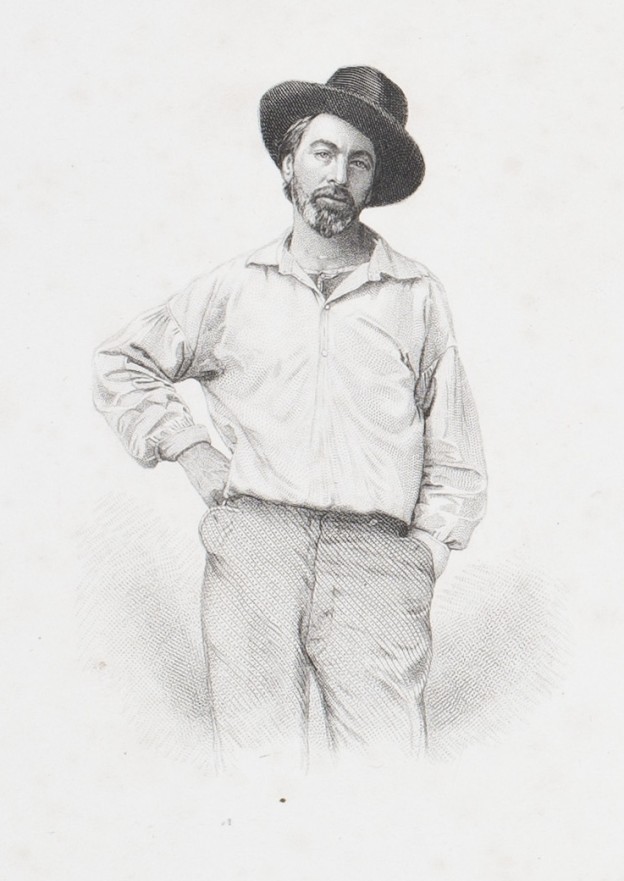
Thoreau called upon me in Brooklyn, 1856, and . . .gave me this volume.

Whitman
November 10.

About the 10th of November, I first noticed long bunches of very small dark-purple or black grapes fallen on the dry leaves in the ravine east of Spring's house. Quite a large mass of clusters remained hanging on the leafless vine, thirty feet overhead there, till I left, on the 24th November. 

These grapes were much shrivelled, but they had a very agreeably spicy acid taste, evidently not acquired till after the frosts. I thought them quite a discovery and ate many from day to day, swallowing the skins and stones, and recommended them to Spring. He said that they were very much like a certain French grape, which he had eaten in France. 

It is a true frost grape, but apparently answers to Vitis aestivalis (?). Vide fruit and leaves. One I opened has only two seeds, while one of the early ones at Brattleboro has four, but one of the late ones of Brattleboro has only two, which also I have called V. aestipalis


Visited the principal antique bookstore, in Fulton Street, upstairs, west of Broadway; also Tunison's antique bookstore, 138 Fulton Street.

H. D. Thoreau,  Journal, November 2, 1856 (sic)

A[lcott] and I heard Beecher preach; and what was more, we visited Whitman the next morning [the 10th of November] (A. had already seen him), and were much interested and provoked. 

He is apparently the greatest democrat the world has seen. Kings and aristocracy go by the board at once, as they have long deserved to. 

A remarkably strong though coarse nature, of a sweet disposition, and much prized by his friends. Though peculiar and rough in his exterior, his skin (all over (?)) red, he is essentially a gentleman.

I am still somewhat in a quandary about him, — feel that he is essentially strange to me, at any rate; but I am surprised by the sight of him. He is very broad, but, as I have said, not fine.

He said that I misapprehended him. I am not quite sure that I do. 

He told us that he loved to ride up and down Broadway all day on an omnibus, sitting beside the driver, listening to the roar of the carts, and sometimes gesticulating and declaiming Homer at the top of his voice. 

He has long been an editor and writer for the newspapers, — was editor of the New Orleans Crescent once; but now has no employment but to read and write in the forenoon, and walk in the afternoon, like all the rest of the scribbling gentry.

H. D. Thoreau, Letter to Blake, November 18, 1856

A and I heard Beecher preach; and what was more, we visited Whitman the next morning. See Alcott's Diary ("(Monday, 10th.) Mrs. Tyndale of Philadelphia goes with us to see Walt, Walt the satyr, the Bacchus, the very god Pan. We sat with him for two hours . . . ")


The Library of Congress contains a second edition of Leaves of Grass inscribed "H.D. Thoreau from Walt Whitman" and a copy of Week on the Concord and Merrimac Rivers with the signature of Walt Whitman and, on the front flyleaf in Whitman's hand:
 "Thoreau call'd upon me in Brooklyn 1856 and upon my giving him L of G first edition-gave me this volume – We had a two hours talk + walk. I liked him well-l think he told me he was busy at a surveying job down on Staten Island. He was full of animation-seemed in good health-looked very well. -W.W." 


See  A Tale of  Two Books; and  Thoreau's New Jersey Connection  See also December 2, 1856 ("As for the sensuality in Whitman's "Leaves of Grass," I do not so much wish that it was not written, as that men and women were so pure that they could read it without harm.")

" Three men , " said Emerson , in his funeral eulogy of Thoreau , " have of late years strongly impressed Mr. Thoreau , - John Brown , his Indian guide in Maine , Joe Polis , and a third person  [Whitman]


https://tinyurl.com/hdtwhman


Sunday, September 11, 2016

A fine view of the Connecticut valley from the hilltop

September 11

P. M. — Walked over what Alcott calls Farm Hill, east of his house. 

Erigeron annuus, four feet high, by roadside; also Ranunculus Pennsylvanicus, or bristly crowfoot, still in bloom. Vide press. 

A fine view of the Connecticut valley from the hilltop, and of Ascutney Mountain, but not of Monadnock. Descended a steep side of the hill by a cow-path, made with great judgment regularly zigzag, well worn and deep. 

Visited the graveyard and Colonel Benjamin Bellows, the founder's, gravestone and more recent monument. 

In the evening read an interesting pamphlet account of the Bellows family of Walpole, prepared by Dr. Bellows of New York, on occasion of the family gathering and erection of the monument. A large part of the inhabitants of Walpole are descendants of Colonel B. Bellows. The writer quotes from a paper in "the Cheshire Gazette of April 28, 1826," "understood to be prepared by our respected townsman, Dr. Morse," Dr. B. saying first, "A Mrs. Watson of Germantown, Pennsylvania, was alive in 1826, who resided in Walpole in 1762, then only 8 years old," but she had a remarkable memory. 

He then quotes Morse, who states that her father came and built a house in Walpole in 1762. "The roof of the house was covered with bark, and the gable ends remained open some time, which enabled them to hear the barking of foxes, the howling of wolves, and the cries of the panther, while sitting before the fire. The latter resembled the voice of a woman in distress, and [seemed] intended to decoy people into the woods, where the salutations of these roving gentry were apt to prove troublesome, unless prevented by the presence of fire-arms." According to this woman (and Morse), "a shad was taken near the falls which had a rattlesnake's head in its stomach." Dr. B. states that there is a tradition that the founder, Colonel B., once killed, on Fall Mountain, two bears and a very large panther, which last alarmed him considerably. According to Morse and the woman, "a large portion of pin money was derived from the sale of golden thread, ginseng, and snakeroot, which were procured from their [the ladies'] own hands." This should probably be "lands," or the preposition, "by.”

In Alcott's yard, sprung up from his bird's seed, hemp, like common except fragrant. These are the plants I obtained on this excursion . . .

H. D. Thoreau, Journal, September 11, 1856

A fine view of the Connecticut valley from the hilltop, and of Ascutney Mountain. See September 13, 1856 ("No view I have had of the Connecticut Valley, at Brattleboro or Walpole, is equal to that of the Concord from Nawshawtuct.")

The barking of foxes, the howling of wolves, and the cries of the panther. See note to September 9, 1856 ("The most interesting sight I saw in Brattleboro was the skin and skull of a panther.")

From Alcott’s Journal:
Thoreau is persistency manly and independent as of old. His criticisms on men and the times as characteristic, individual, and urged with all the honest pertinacity befitting a descent of the Scandinavian Thor. A man of a genealogy like his — Franko-Norman-Scottish-American — may well be forgiven for a little foolhardiness, if not pugnacity, amidst his great common sense and faithfulness to the core of natural things.  ... 

In the evening Thoreau reads Dr. Bellow’s Historical Sketch of the Founder’s Family, and takes all there is known of Walpole to bed with him, to be used for such ornaments of his jaunt this day as our traveller’s humour shall dictate.

Bronson Alcott's Journals
Selected Thoreau entries, from 1848 to 1862

September 11. See A Book of the Seasons,  by Henry Thoreau,  September 11 

A fine view of the 
Connecticut valley and
Ascutney Mountain.


A Book of the Seasons
,  by Henry Thoreau
 "A book, each page written in its own season,
out-of-doors, in its own locality."
 ~edited, assembled and rewritten by zphx ©  2009-2026

https://tinyurl.com/hdt-560911

Thursday, May 12, 2016

How much life the note of the bobolink imparts to the meadow!


May 12. A glorious day.
 
P. M. —Walked round by Dennis’s and Hollowell place with Alcott. 

It is suddenly very warm. A washing day, with a slight haze accompanying the strong, warm wind. 

I see, in the road beyond Luther Hosmer’s, in different places, two bank swallows which were undoubtedly killed by the four days’ northeast rain we have just had. 

Puffer says he has seen two or three dead sparrows also. The sudden heat compels us to sit in the shade at the bars above Puffer's, whence we hear the first bobolink. 

How suddenly the birds arrive after the storm, — even yesterday before it was fairly over, —as if they had foreseen its end! How much life the note of the bobolink imparts to the meadow! 

I see a cultivated cherry in bloom, and Prichard’s Canada plum will probably bloom to-morrow. 

The river is higher than yesterday, about the same as when highest before this spring, and goes no higher. Thus attains its height the day after the rain.

H. D. Thoreau, Journal, May 12, 1856


 A washing day, with a slight haze accompanying the strong, warm wind. See May 10, 1857 ("It is a washing day. I love the wind at last."); May 17, 1852 ("Decidedly fair weather at last; a bright, breezy, flowing, washing day."); May 19, 1854 ("A washing day, — a strong rippling wind, and all things bright."); May 22, 1853 ("This is the third windy day following the two days’ rain. A washing day, such as we always have at this season"); May 30, 1852 ("Now is the summer come. A breezy, washing day.")

The sudden heat compels us to sit in the shade.
See May 17, 1858 (" Puffer came along, and I had a long talk with him, standing under the tree in the cool sprinkling rain till we shivered.”)

We hear the first bobolink. See May 6, 1857 ("While at work I hear the bobolink.”);  May 10, 1853 ("All at once a strain that sounds like old times and recalls a hundred associations. Not at once do I remember that a year has elapsed since I heard it, and then the idea of the bobolink is formed in my mind.”); May 13, 1855 ("As we float down the river through the still and hazy air, enjoying the June-like warmth, . . . the sound of the first bobolink floats to us from over the meadows."); May 16, 1854 ("The earth is all fragrant as one flower. And bobolinks tinkle in the air. Nature now is perfectly genial to man.”) See also 
A Book of the Seasons,  by Henry Thoreau, the Bobolink

How suddenly the birds arrive after the storm. See May 7, 1852 ("The birds I have lately mentioned come not singly, as the earliest, but all at once,");  May 8, 1857 ("Summer has suddenly come upon us, and the birds all together.")   May 10, 1858 ("It is remarkable how many new birds have come all at once to-day.") See also A Book of the Seasons,  by Henry Thoreau. Summer and A Book of the Seasons,  by Henry Thoreau. The Birds of May

I see a cultivated cherry in bloom, and Prichard’s Canada plum will probably bloom to-morrow. See May 5, 1855 ("Canada plum and cultivated cherry and Missouri currant look as if they would bloom to-morrow.");  May 10, 1856 ("Mr. Prichard’s Canada plum will open as soon as it is fair weather.") 

May 12. See A Book of the Seasons by Henry Thoreau, May 12

How suddenly the
birds arrive after the storm –
a glorious day.

A Book of the Seasons, by Henry Thoreau
"A book, each page written in its own season,
out-of-doors, in its own locality.”
~edited, assembled and rewritten by zphx © 2009-2026

https://tinyurl.com/hdt-560512

Saturday, July 4, 2015

Arriving late for sail to Provincetown


July 4

To Boston on way to Cape Cod with C. 

The schooner Melrose is advertised to make her first trip to Provincetown this morning at eight.

We reach City Wharf at 8.30. 
“Well, Captain Crocker, how soon do you start?" 
 “To-morrow morning at 9 o’clock.”  
“But you have advertised to leave at 8 this morning.” 
 “I know it, but we are going to lay over till to-morrow.” !!! 
So we have to spend the day in Boston, —at Athenaeum gallery, Alcott’s, and at the regatta.

Lodge at Alcott’s, who is about moving to Walpole.

H. D. Thoreau, Journal, July 4, 1855

July 4, 2025

See Letter To H.G.O. Blake ("North Truro, July 8, 1855. There being no packet, I did not leave Boston till last Thursday, though I came down on Wednesday, and Charming with me . . .You will find either the schooner Melrose or another, or both, leaving Commerce Street, or else T Wharf, at 9 A. M. (it commonly means 10), Tuesdays, Thursdays, and Saturdays, – if not other days. We left about 10 A. M., and reached Provincetown at 5 P. very good run ")

Regatta: the seccond annual Boston City Regatta.

The schooner Melrose –
her first trip to Provincetown 
this morning at eight.

Tuesday, October 5, 2010

To Walden.


October 5. 

Rain, more or less, yesterday afternoon and this forenoon. The frosts have this year killed all of Stow's artichokes before one of them had blossomed, but those in Alcott's garden had bloomed probably a fortnight ago. About 4 P.M. it is fast clearing up, the clouds withdrawing, with a little dusky scud beyond their western edges against the blue.

We come out on the east shore of Walden. The water is tolerably smooth. The smooth parts are dark and dimpled by many rising fishes. Where it is rippled it is light-colored, and the surface thus presents three or four alternate light and dark bars.

I see a fish hawk, skimming low over it, suddenly dive for one of those little fishes that rise to the surface. He then sits on a bare limb over the water, ready to swoop down again on his finny prey, presenting, as he sits erect, a long white breast and belly and a white head. He can easily find a perch overlooking the lake and discern his prey in the clear water.

No doubt he well knows the habits of these little fishes which dimple the surface of Walden at this season, and I doubt if there is any better fishing-ground for him. 

H. D. Thoreau, Journal, October 5, 1860 

Popular Posts Last 30 Days.

The week ahead in Henry’s journal

The week ahead in Henry’s journal
A journal, a book that shall contain a record of all your joy.
"A stone fruit. Each one yields me a thought." ~ H. D. Thoreau, March 28, 1859


I sit on this rock
wrestling with the melody
that possesses me.