Showing posts with label solomon's seal. Show all posts

Thursday, August 29, 2019

It is so cool a morning that for the first time I move into the entry to sit in the sun.

August 29

August 29, 2019

I hear in the street this morning a goldfinch sing part of a sweet strain.

It is so cool a morning that for the first time I move into the entry to sit in the sun. But in this cooler weather I feel as if the fruit of my summer were hardening and maturing a little, acquiring color and flavor like the corn and other fruits in the field. 

When the very earliest ripe grapes begin to be scented in the cool nights, then, too, the first cooler airs of autumn begin to waft my sweetness on the desert airs of summer. Now, too, poets nib their pens afresh. I scent their first-fruits in the cool evening air of the year. 

By the coolness the experience of the summer is condensed and matured, whether our fruits be pumpkins or grapes. 

Man, too, ripens with the grapes and apples. 

I find that the water-bugs (Gyrinus) keep amid the pads in open spaces along the sides of the river all day, and, at dark only, spread thence all over the river and gyrate rapidly. For food I see them eating or sucking at the wings and bodies of dead devil's-needles which fall on the water, making them too gyrate in a singular manner. If one gets any such food, the others pursue him for it. 

There was a remarkable red aurora all over the sky last night. 

P. M. — To Easterbrooks Country. 

The vernonia is one of the most conspicuous flowers now where it grows, — a very rich color. It is some what past its prime; perhaps about with the red eupatorium. 

Botrychium lunarioides now shows its fertile frond above the shorn stubble in low grounds, but not shedding pollen. 

See the two-leaved Solomon's-seal berries, many of them ripe; also some ripe mitchella berries, contrasting with their very fresh green leaves. 

White cohush berries, apparently in prime, and the arum fruit. The now drier and browner (purplish- brown) looking rabbit's clover, whose heads collected would make a soft bed, is an important feature in the landscape; pussies some call them; more puffed up than before. 

The thorn bushes are most sere and yellowish-brown bushes now. 

I see more snakes of late, methinks, both striped and the small green. 

The slate-colored spots or eyes — fungi — on several kinds of goldenrods are common now. 

The knife-shaped fruit of the ash has strewn the paths of late.

H. D. Thoreau, Journal, August 29, 1859

It is so cool a morning that for the first time I move into the entry to sit in the sun. See August 29, 1854 ("It is so cool that we are inclined to stand round the kitchen fire . . .I enjoy the warmth of the sun now that the air is cool") See also September 4, 1860 ("It is cooler these days and nights, and I move into an eastern chamber in the morning, that I may sit in the sun"); September 17, 1858 (“Cooler weather now for two or three days, so that I am glad to sit in the sun on the east side of the house mornings.”); September 18, 1852 ("In the forenoons I move into a chamber on the east side of the house, and so follow the sun round.”)


The very earliest ripe grapes begin to be scented in the cool nights
. See August 29, 1853 ("Walking down the street in the evening, I detect my neighbor’s ripening grapes by the scent twenty rods off."); August 27, 1859 ("The first notice I have that grapes are ripening is by the rich scent at evening from my own native vine against the house");August 30, 1853 ("Grapes are already ripe; I smell them first.");

Man, too, ripens with the grapes and apples.See November 14, 1853. ("October answers to that period in the life of man when . . . all his experience ripens into wisdom, but every root, branch, leaf of him glows with maturity. What he has been and done in his spring and summer appears. He bears his fruit".)

I see more snakes of late, methinks, both striped and the small green. See September 3, 1858 ("See a small striped snake, some fifteen or eighteen inches long, swallowing a toad"); September 13, 1858 (""Saw a striped snake run into the wall, and just before it disappeared heard a loud sound like a hiss") October 18, 1857 (" Snakes lie out now on sunny banks, amid the dry leaves, now as in spring. They are chiefly striped ones.")

There was a remarkable red aurora all over the sky last night. .See also Wikipedia (Solar Cycle 10 beginning in December 1855 and the Solar storm ( Carrington Event.) of September 1–2, 1859) and A Book of the Seasons, by Henry Thoreau, Northern Lights

So cool a morning 
that for the first time I move 
to sit in the sun.

Monday, July 22, 2019

A strong west wind, saving us from intolerable heat, accompanied by a blue haze, making the mountains invisible.


July 22. 


This morning, though perfectly fair except a haziness in the east, which prevented any splendor, the birds do not sing as yesterday. They appear to make distinctions which we cannot appreciate, and perhaps sing with most animation on the finest mornings. 

1 p. m. — Lee's Bridge, via Conantum; return by Clematis Brook. 

There men in the fields are at work thus indefatigably, more or less honestly getting bread for men. The writer should be employed with at least equal industry to an analogous though higher end.

Flocks of yellow-breasted, russet-backed female bobolinks are seen flitting stragglingly across the meadows. The bobolink loses his song as he loses his colors. 

Tansy is now conspicuous by the roadsides, covered with small red butterflies. It is not an uninteresting plant. I probably put it down a little too early. 

Is that a slender bellflower with entire leaves by the Corner road? 

The green berries of the arum are seen, and the now reddish fruit of the trillium, and the round green-pea-sized green berries of the axil-flowering Solomon's-seal. 

Farmers have commenced their meadow-haying. 

The Aster macrophyllus, large-leafed, in Miles's Swamp. 

Is not that the Lysimachia ciliata, or hairy-stalked loosestrife, by the Corner road, not the lanceolata? Eupatorium sessilifolium now whitish. 

A strong west wind, saving us from intolerable heat, accompanied by a blue haze, making the mountains invisible. We have more of the furnace-like heat to-day, after all. 

The Rhus glabra flowers are covered with bees, large yellowish wasps, and butterflies; they are all alive with them. How much account insects make of some flowers! There are other botanists than I. 

The Asclepias syriaca is going to seed. Here is a kingfisher frequenting the Corner Brook Pond. They find out such places. 

Huckleberrying and blackberrying have commenced. 

The round-leafed sundew. Monotropa uniflora, Indian- pipe. 

Solidago Canadensis (?) almost out.

Either a smooth Polygonum hydropiperoides or a white P. amphibium var. terrestre. 

The spear thistle. [Cirsium lanceolatum.]

Galium circcezans, wild liquorice, in Baker Farm Swamp. 

What is that minute whitish flower with an upright thread-like stem and thread-like linear leaves, with a kind of interrupted spike or raceme of small, whitish, erect, bell-like flowers, the corolla divided by a stout partition, from which projects the style, with three distinct segments in the edge of the bell each side of the partition? [Canada snapdragon.] 

Also found a very small narrow-leaved whitish aster (?).[Erigeron Canadensis.]

H. D. Thoreau, Journal, July 22, 1852

Flocks of yellow-breasted, russet-backed female bobolinks are seen flitting stragglingly across the meadows See August 15, 1852 (" I see a dense, compact flock of bobolinks going off in the air over a field. They cover the rails and alders, and go rustling off with a brassy, tinkling note as I approach, revealing their yellow breasts and bellies. This is an autumnal sight, that small flock of grown birds in the afternoon sky. ") See also A Book of the Seasons,  by Henry Thoreau, The Bobolink

The green berries of the arum are seen. See September 28, 1856 ("The arum berries are still fresh and abundant, perhaps in their prime. A large cluster is two and a half inches long by two wide ")

The now reddish fruit of the trillium. See August 19, 1852 ("The trillium berries, six-sided, one inch in diameter, like varnished and stained cherry wood, glossy red, crystalline and ingrained, concealed under its green leaves in shady swamps. ")

The Aster macrophyllus, large-leafed, in Miles's Swamp. See August 9, 1856 ("The flowers of A. macrophyllus are white with a very slight bluish tinge, in a coarse flat-topped corymb. Flowers nine to ten eighths of an inch in diameter."); August 26, 1856 ("Aster macrophyllus, now in its prime. It grows large and rank, two feet high. On one I count seventeen central flowers withered, one hundred and thirty in bloom, and half as many buds.")

July 22. See A Book of the Seasons, by Henry Thoreau, July 22

A Book of the Seasons, by Henry Thoreau
"A book, each page written in its own season,
out-of-doors, in its own locality."
~edited, assembled and rewritten by zphx © 2009-2024

Saturday, May 18, 2019

I hear of young song sparrows and young robins

May 18. 

May 18, 2019

Surveying for Stow in Lincoln. 

Two-leaved Solomon's-seal. 

I hear of young song sparrows and young robins since the 16th. 

That handsome spawn of Ed. Emerson's aquarium — minute transparent ova in a double row on the glass or the stones — turns out to be snail-spawn, it having just hatched, and there was no salamander-spawn, as I thought on the 18th of April. Not Paludina decisa, but the smaller and simpler one.

H. D. Thoreau, Journal, May 18, 1859

Two-leaved Solomon's-seal. 
May 13, 1855 (" The brook in Yellow Birch Swamp is very handsome now — broad and full, with the light-green hellebore eighteen inches high and the small two-leaved Solomon’s-seal about it, in the open wood.”); May 21, 1856 ("The Polygonatum pubescens there, in shade, almost out; perhaps elsewhere already.”); May 26, 1855 ("Two-leaved Solomon’s-seal pollen not long in most places.”); May 30, 1857 ("two-leaved Solomon's-seal out, . . . abundant.”)

That handsome spawn of Ed. Emerson's aquarium See April 18, 1859 (“Ed. Emerson shows me his aquarium.”)

Tuesday, May 30, 2017

Meditations under a rock in a shower.

May 30. 

P. M. — To chestnut oaks. 

May 30, 2017

I think that there are many chestnut-sided warblers this season. They are pretty tame. One sits within six feet of me, though not still. He is much painted up. 

Blue-stemmed goldenrod is already a foot high. 

I see the geranium and two-leaved Solomon's-seal out, the last abundant. The red pyrus by the path, not yet, but probably the same elsewhere. 

The young black oak leafets are dark red or reddish, thick and downy; the scarlet oak also are somewhat reddish, thick and downy, or thin and green and little downy, like red oak, but rather more deeply cut; the red oak broad, thin, green and not downy; the white pink-red. 

Was it not a whip-poor-will I scared up at the base of a bush in the woods to-day, that went off with a clumsy flight? 

By the path near the northeast shore of Flint's Pond, just before reaching the wall by the brook, I see what I take to be an uncommonly large Uvularia sessilifolia flower, but, looking again, am surprised to find it the Uvularia perfoliata, which I have not found hereabouts before. It is a taller and much more erect plant than the other, with a larger flower, methinks. It is considerably past its prime and probably began with the other. 

Chestnut oak not yet in bloom, though the black and scarlet are well out in ordinary places. Its young leaves have a reddish-brown tinge. All the large trees are cut down. 

The white oak is not out. 

It is remarkable that many beach and chestnut oak leaves, which so recently expanded, have already attained their full size! How they launch themselves forth to the light! How suddenly Nature spreads her umbrellas! How little delay in expanding leaves! They seem to expand before our eyes, like the wings of moths just fallen from the cocoon. 

Buttercups thickly spot the churchyard. 

Perhaps I could write meditations under a rock in a shower. 

When first I had sheltered myself under the rock, I began at once to look out on the pond with new eyes, as from my house. I was at Lee's Cliff as I had never been there before, had taken up my residence there, as it were. Ordinarily we make haste away from all opportunities to be where we have instinctively endeavored to get. 

When the storm was over where I was, and only a few thin drops were falling around me, I plainly saw the rear of the rain withdrawing over the Lincoln woods south of the pond, and, above all, heard the grand rushing sound made by the rain falling on the freshly green forest, a very different sound when thus heard at a distance from what it is when we are in the midst of it. In the latter case we are soothed by a gentle pattering and do not suspect the noise which a rain storm makes. 

This Cliff thus became my house. I inhabited it. When, at length, it cleared up, it was unexpectedly early and light, and even the sun came out and shone warm on my back as I went home. Large puddles occupied the cart-paths and rose above the grass in the fields. 

In the midst of the shower, though it was not raining very hard, a black and white creeper came and in spected the limbs of a tree before my rock, in his usual zigzag, prying way, head downward often, and when it thundered loudest, heeded it not. Birds appear to be but little incommoded by the rain. Yet they do not often sing in it. 

The blue sky is never more celestial to our eyes than when it is first seen here and there between the clouds at the end of a storm, — a sign of speedy fair weather. I saw clear blue patches for twenty minutes or more in the southwest before I could leave my covert, for still I saw successive fine showers falling between me and the thick glaucous white pine beneath.

I think that such a projection as this, or a cave, is the only effectual protection that nature affords us against the storm. 

I sang "Tom Bowling" there in the midst of the rain, and the dampness seemed to be favorable to my voice. There was a slight rainbow on my way home. 

Met Conant riding home, who had been caught in town and detained, though he had an umbrella. 

Already a spider or other insect had drawn together the just expanded leaves of a hickory before my door with its web within them, making a close tent. This twig extended under my rocky roof and was quite dry. 

Probably a portion of the Cliff, being undermined by rain, had anciently fallen out and left this rocky roof above.

H. D. Thoreau, Journal, May 30, 1857

Buttercups thickly spot the churchyard. See May 27, 1853 ("The buttercups in the church-yard and on some hillsides are now looking more glossy and bright than ever after the rain.”); June 2, 1852 (“Buttercups now spot the churchyard.”)

Perhaps I could write meditations under a rock in a shower. See August 13, 1853 (“Could I not write meditations under a bridge at midsummer?”)

The blue sky is never more celestial to our eyes than when it is first seen here and there between the clouds at the end of a storm.
See January 7, 1851 ("The life, the joy, that is in blue sky after a storm!")

I began at once to look out on the pond with new eyes, as from my house. I was at Lee's Cliff as I had never been there before . . .See June 13, 1854 ("When I have stayed out thus late many miles from home, and have heard a cricket beginning to chirp louder near me in the grass I have felt that I was not far from home after all, -- began to be weaned from my village home."); May 23, 1853 ("[A] certain lateeness ... releases me from the obligation to return in any particular season. I have passed the Rubicon of staying out. ...I will wander further from what I have called my home - to the home which is forever inviting me. In such an hour the freedom of the woods is offered me")

May 30 See A Book of the Seasons, by Henry Thoreau, May 30


A Book of the Seasons,  by Henry Thoreau
"A book, each page written in its own season,
out-of-doors, in its own locality.”


~edited, assembled and rewritten by zphx © 2009-2021

Wednesday, June 8, 2016

A great flight of ephemera over the water.

June 8 

We have had six days either rain-threatening or rainy, the last two somewhat rainy or mizzling. 

P. M. -— To Cedar Swamp.

Pulled up a yellow lily root, four feet long and branching, two and a half inches diameter and about same size at each end where it had broken off, tree-like. Broken off, it floats. Great white rootlets put out all along it. 

I find no Andromeda racemosa in flower. It is dead at top and slightly leafed below. Was it the severe winter, or cutting off the protecting evergreens? It grows four or five rods from knoll near a sawed stump between two large red maple clumps. 

The three-leaved Solomon’s-seal has almost entirely done, while the two leaved is quite abundant.

Stellaria longrfolia opposite Barbarea Shore not yet out. It is obviously different from what I call S. borealis, much more tall (one foot high) and upright, with branches ascending (not spreading) (the other grows in a dense mass at Corner Spring); leaves longer and more linear, and not at all ciliate like the other; stem much sharper-angled, almost winged; flower-buds more long and slender; and grows in high grass and is later. 

I observe in a mass of damp shavings and leaves and sand there, in the shade, a little prostrate willow just coming into flower, perhaps a black willow. Pulling it up, I find it to be a twig about sixteen inches long, two thirds buried in the damp mass. This was probably broken off by the ice, brought down, washed up, and buried like a layer there; and now, for two thirds its length, it has put out rootlets an inch or two long abundantly, and leaves and catkins from the part above ground. 

So vivacious is the willow, availing itself of every accident to spread along the river’s bank. The ice that strips it only disperses it the more widely. It never says die. May I be as vivacious as a willow.

Some species are so brittle at the base of the twigs that they break on the least touch, but they are as tough above as tender at base, and these twigs are only thus shed like seeds which float away and plant themselves in the first bank on which they lodge. I commonly litter my boat with a shower of these black willow twigs whenever I run into them. 

A kingbird’s nest on a black cherry, above Barbarea Shore. loosely constructed, with some long white rags dangling; one egg. 

At Cedar Swamp, saw the pe-pe catching flies like a wood pewee, darting from its perch on a dead cedar twig from time to time and returning to it. It appeared to have a black crown with some crest, yellowish (?) bill, gray-brown back, black tail, two faint whitish bars on wings, a dirty cream-white throat, and a gray or ash white breast and beneath, whitest in middle.

I had noticed when coming up the river two or three dead suckers, one with a remarkable redness about the anal fins; and this reminded me of the ephemera. It was the 2d of June, 1854, that I observed them in such numbers. 

When I returned to my boat, about five, the weather being mizzling enough to require an umbrella, with an easterly wind-and dark for the hour, my boat being by chance at the same place where it was in ’54, I noticed a great flight of ephemera over the water, though not so great as that. 

The greater part were flying down-stream against the wind, but if you watched one long enough you would see him suddenly turn at length and fly swiftly back up the stream. They advanced against the wind faster than I floated along. They were not coupled nor coupling, — I only noticed two coupled, — but flew, most of them, with their bodies curved, and from time to time each one descended to the water and touched it, or rested on it a second or two, sometimes several minutes. 

They were generally able to rise, but very often before it arose, or not being able to rise, it was seized by a fish. While some are flying down they are met by others coming up. The water was dimpled with the leaping fish. They reach about ten or fifteen feet high over the water, and I also saw a stream of them about as thick over a narrow meadow a dozen rods from the water in the woods. The weather was evidently unfavorable, what with the wind and the rain, and they were more or less confined to the shore, hovering high over the bushes and trees, where the wind was strong over the river. I had not noticed any on leaves.

At one place, against Dodge’s Brook, where they were driven back by a strong head wind at a bend, more than usual were wrecked on the water and the fishes were leaping more numerously than elsewhere. The river was quite alive with them, and I had not thought there were so many in it, — great black heads and tails continually thrust up on all sides of my boat. You had only to keep your eye on a floating fly a minute to see some fishy monster rise and swallow it with more or less skill and plashing. 

Some skillfully seized their prey without much plashing, rising in a low curve and just showing their backs; others rose up perpendicularly, half their length out of water, showing their black backs or white bellies or gleaming sides; others made a noisy rush at their prey and leaped entirely out of water, falling with a loud plash. You saw twenty black points at once. They seemed to be suckers; large fish, at any rate, and probably various kinds. What a sudden surfeit the fishes must have! 


They are of various sizes, but generally their solid bodies about three quarters of an inch long or less, yellowish tinge, transparent, with rows of brown spots; wings gauze-like, with a few opaque brown spots.

H. D. Thoreau, Journal,  June 8, 1856

I find no Andromeda racemosa in flower. See April 24, 1854 ("New plant (Racemed andromeda) flower-budded at Cedar Swamp . . . — upright dense racemes of reddish flower-buds on reddish terminal shoots.”)   See also  A Book of the Seasons, by Henry Thoreau, The Cedar Swamps

The three-leaved Solomon’s-seal has almost entirely done, while the two leaved is quite abundant. See A Book of the Seasons,  by Henry Thoreau, Three-leaved  false Solomon's-seal (Smilacina trifolia);  A Book of the Seasons, by Henry Thoreau, Two-leaved Solomon's Seal (Canada mayflower or false lily-of-the-valley)

Stellaria longrfolia opposite Barbarea Shore not yet out. It is obviously different from what I call S. borealis See May 15, 1856 ("Just on the brink of this Heywood Spring, I find what may be the Stellaria borealis [boreal starwort/stitchwort](if it is not the longifolia [long-leaved stitchwort], ”); See also June 6, 1854 ("The Stellaria longifolia has been out, apparently, a day or two.");  May 19, 1858  ("Stellaria borealis well out, apparently several days."); June 6, 1859 ("Stellaria longifolia, at Well Meadow Head, how long?")

So vivacious is the willow, availing itself of every accident to spread along the river’s bank.See  June 3, 1857 ("I see a large branch of S. lucida, which has been broken off probably by the ice in the winter and come down from far up-stream and lodged, butt downward, amid some bushes, where it has put forth pink fibres from the butt end in the water, and is growing vigorously. "); See also A Book of the Seasons, by Henry Thoreau, the Propogation of the Willow.

A kingbird’s nest on a black cherry . . . loosely constructed, with some long white rags dangling; one egg. See  June 8, 1858 ("A kingbird's nest with three eggs, lined with some hair, in a fork – or against upright part – of a willow") See also A Book of the Seasons, by Henry Thoreau, the Eastern Kingbird

At Cedar Swamp, saw the pe-pe catching flies like a wood pewee, darting from its perch on a dead cedar twig from time to time and returning to it.  See June 5, 1856. ("The Muscicapa Cooperi sings pe pe pe’, sitting on the top of a pine . . .”); May 15, 1855 ("I hear from the top of a pitch pine in the swamp that loud, clear, familiar whistle . . . I saw it dart out once, catch an insect, and return to its perch muscicapa-like. As near as I could see it had a white throat, was whitish, streaked with dark, beneath, darker tail and wings, and maybe olivaceous shoulders; bright yellow within bill. Probably M. Cooperi.”). See also A Book of the Seasons,  by Henry Thoreau, the Olive-sided flycatcher or pe-pe

I had noticed when coming up the river two or three dead suckers. See June 8, 1858 ("In several places I see where dead suckers have been at last partly devoured by some animal. "); May 23, 1854 ("How many springs shall I continue to see the common sucker (Catostomus Bostoniensis) floating dead on our river!"); May 30, 1853 ("Whence came all those dead suckers, a dozen at least, which we saw floating to-day.")

By chance at the same place where it was in ’54, I noticed a great flight of ephemera over the water . . . See June 2, 1854 ( "The whole atmosphere over the river was full of shad-flies.");
 May 9, 1854 (" [Professor Harris ] says . . . the shad-flies (with streamers and erect wings ) are ephemeræ. ") See also A Book of the Seasons,  by Henry Thoreau, Insect Hatches in Spring (millers, perla, shad-flies or ephemera)

June 8. See A Book of the Seasons, by Henry Thoreau, June 8

Something reminds me
 of the ephemera – now I 
notice a great flight.

A Book of the Seasons,  by Henry Thoreau
"A book, each page written in its own season,
out-of-doors, in its own locality."
 ~edited, assembled and rewritten by zphx ©  2009-2026

https://tinyurl.com/hdt-560608


Wednesday, June 1, 2016

Soothed and cheered by I knew not what

June 1

Horse-radish in yard, to-morrow. 

Picked up an entire sternothaerus shell yesterday, without scales. In the upper shell there appear to be six small segments of shell wholly dorsal, seventeen wholly lateral (nine in front), and twenty-two marginal, forty five in all. The ribs, in this case spreading out and uniting to form a sharp and tight roof, suggest that ribs were the first rafters. 

So we turn our backs to the storm and shelter ourselves under this roof. The scales upon the shell answer to the shingles on the roof, breaking joints. 

Saw the shell of another turtle, apparently a young painted turtle, one inch long, curiously wrinkled and turned up, like that found in Middleborough. This had been washed up on to meadow some weeks ago, apparently. 

P. M. — To Walden. 

June 1, 2016

Somewhat warmer at last, after several very cold, as Well as windy and rainy, days. 

Was soothed and cheered by I knew not what at first, but soon detected the now more general creak of crickets. 

A striped yellow bug in fields. 

Most of the leaves of the Polygonatum pubescens which I gathered yesterday at Island had been eaten up by some creature. 

A chewink’s nest a rod and a half south of Walden road, opposite Goose Pond path, under a young oak, covered by overarching dry sedge; four eggs, pretty fresh. I am pretty sure the bird uttered the unusual hoarse and distressed note while I was looking at them. 

Linaria Canadensis on Emerson Cliff. Rock-rose, a day or two there. 

Whiteweed by railroad at pond to-morrow. Cotton-grass, several days before the 29th May. 

Heard a quail whistle May 30th. 

The late crataegus on hill, about May 31st.

H. D. Thoreau, Journal, June 1, 1856

The now more general creak of crickets. See May 18, 1860 ("The creak of the cricket has been common on all warm, dry hills, banks, etc., for a week, - inaugurating the summer."); May 30, 1855 ("Is it not summer now when the creak of the crickets begins to be general?"); June 4, 1854 ("These warm and dry days, which put spring far behind, the sound of the cricket at noon has a new value and significance, so serene and cool. It is the iced-cream of song. It is modulated shade."); May 22, 1854 ("At Lee's Cliff. --First observe the creak of crickets. It is quite general amid these rocks. . . ."); May 26, 1852 ("To-night I hear many crickets. They have commenced their song. They bring in the summer."); June 13, 1851 ("I listen to the ancient, familiar, immortal, dear cricket sound under all others, and as these cease I become aware of the general earth-song.”).

A chewink’s nest a rod and a half south of Walden road, opposite Goose Pond path, under a young oak, covered by overarching dry sedge; four eggs, pretty fresh. See June 10, 1856 (“Chewink’s nest with four young in the dry sprout-land of Loring’s thick wood that was, under a completely overarching tuft of dry sedge grass.”); July 8, 1857 (“A chewink's nest with four young just hatched, at the bottom of the pyrola hollow and grove, where it is so dry, about seven feet southwest of a white pine.”)

Linaria Canadensis on Emerson Cliff. See May 22, 1855 ("Linaria Canadensis on Cliffs open.")
  • Linaria Canadensis: A native annual or biennial that prefers highly disturbed areas with sandy soils. Its attractive light-blue to blue-violet flowers have a white throat and a nectar spur. (Nuttallanthus canadensisis, Blue Toadflax,, Canada Toadflax. Old-field Toadflax)

To be soothed and cheered 

by I know not what at first . . . 

the creak of crickets.


Sunday, May 22, 2016

Yellow butterfly over the middle of the flooded meadow.

May 22

P. M. —To Viola Muhlenbergii, which is abundantly out; how long? A small pale-blue flower growing in dense bunches, but in spots a little drier than the V. cucullata and blanda

Veronica peregrina, apparently several days. 


May 22, 2015

A yellow butterfly over the middle of the flooded meadow. 

Polygonatum pubescens at rock. 

Aralia nudicaulis, apparently a day or two where heat is reflected from the rock on Island. 

Choke cherry and crataegus there in a day or two. 

The Cornus florida does not bloom this year. 

Hemlock and creeping juniper, not quite yet. 

The red and cream-colored cone-shaped staminate buds of the black spruce will apparently shed pollen in one to three days? They are nearly half an inch long. 

I see beds of anemones amid or under clumps of hazels: a mass of their pretty leaves and flowers, five or six feet in diameter. 

I see a common Vaccinium vacillans (?),with a leaf much like that of the V. Pennsylvanicum, also the common V. vacillans with more rounded glaucous leaves. 

I noticed a cobweb the other day, between the thole-pins of my boat, which was perfectly black with those little fuzzy gnats which fly at that height and take shelter from wind in boats and the like. 

A little clammy hairy cerastium (?) (like a Cerastium viscosum, slender and erect), about three inches high, will open in a day or two on the rock near the bass.

H. D. Thoreau, Journal, May 22, 1856

To Viola Muhlenbergii, which is abundantly out; how long? A small pale-blue flower growing in dense bunches, but in spots a little drier than the V. cucullata and blanda.
See May 22, 1853 ("Found an abundance of the Viola Muhlenbergii (debilis of Bigelow), a stalked violet, pale blue and bearded.") See also May 5, 1859 ("Am surprised to find the Viola Muhlenbergii quite abundant beyond the bayberry and near the wall.”); May 12, 1858 ("Find the Viola Muhlenbergii abundantly out (how long?), in the meadow southwest of Farmer's Spring.”); May 18, 1857 (“Viola Muhlenbergii abundantly out, how long?”). May 29, 1856 ("What a flowery place, a vale of Enna, is that [Painted Cup] meadow! Painted Cup, Erigeron bellidifolius, Thalictrum dioicum, Viola Muhlenbergii, fringed polygala, buck-bean, pedicularis, orobanche, etc., etc. Where you find a rare flower, expect to find more rare ones”) And see A Book of the Seasons,  by Henry Thoreau, the Violets

Veronica peregrina, apparently several days.  See May 25, 1855 ("Veronica peregrina in Mackay’s strawberries, how long?"); May 5, 1859 ("Veronica peregrina, Pratt's garden.”)

A yellow butterfly over the middle of the flooded meadow. See May 5, 1859 (“Near the oak beyond Jarvis land, a yellow butterfly, — how hot! this meteor dancing through the air.”) See also A Book of the Seasons,  by Henry Thoreau, Yellow Butterflies

Aralia nudicaulis, apparently a day or two. See May 25, 1855 ("Aralia nudicaulis, perhaps two days pollen.”); May 25, 1852 ("The sarsaparilla in bloom”).

The Cornus florida does not bloom this year. .See May 25, 1855 ("Cornus florida, no bloom. Was there year before last? Does it not flower every other year?”)

I see beds of anemones . . . a mass of their pretty leaves and flowers. See . April 28, 1856 ("Many Anemone nemorosa in full bloom at the further end of Yellow Thistle Meadow, in that warm nook by the brook, some probably a day or two there"); May 6, 1852 ("The first Anemone nemorosa, wind-flower or wood anemone, its petals more slightly slightly tinged with purple than the rue-leaved.") See also Within the circuit of this plodding life,
There enter moments of an azure hue,
Untarnished fair as is the violet
Or anemone, when the spring strews them
By some meandering rivulet . . .

A little clammy hairy cerastium (?). . . will open in a day or two on the rock. See May 31, 1856 ("That little cerastium on the rock at the Island, noticed the 22d, which probably opened about that time, is now out of bloom.")

May 22. See  A Book of the Seasons,  by Henry Thoreau, May 22

Yellow butterfly 
over the middle of 
the flooded meadow.

 A Book of the Seasons, by Henry Thoreau, 
 A Book of the Seasons, by Henry Thoreau
"A book, each page written in its own season,
out-of-doors, in its own locality.”
~edited, assembled and rewritten by zphx © 2009-2026


https://tinyurl.com/hdt-560522

Saturday, May 21, 2016

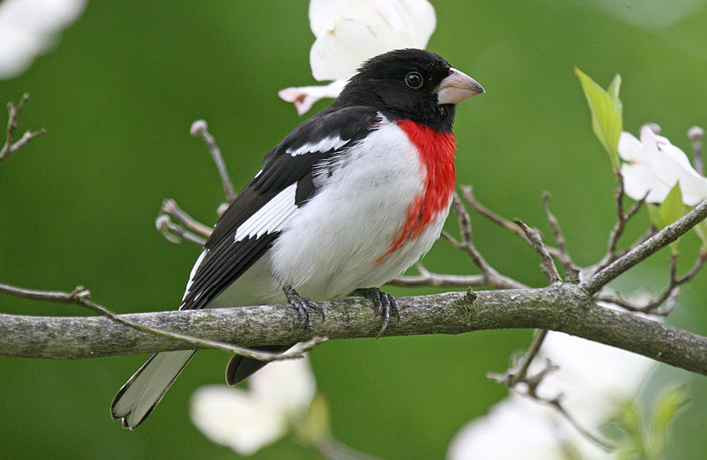
Two splendid rose-breasted grosbeaks.

May 21
Wednesday. P. M. — To Saw Mill Brook. 

Chelidonium.

Rubus triflorus abundantly out at the Saw Mill Brook; how long? 

A robin’s nest without mud, on a young white oak in woods, with three eggs. 

Saw two splendid rose-breasted grosbeaks with females in the young wood in Emerson’s lot. What strong colored fellows, black, white, and fiery rose-red breasts! Strong-natured, too, with their stout bills. A clear, sweet singer, like a tanager but hoarse somewhat, and not shy. 

The redstarts are inquisitive and hop near. 


Solomon’s seal
May 21, 2016
The Polygonatum pubescens there, in shade, almost out; perhaps elsewhere already. 

At the trough near Turnpike, near Hosmer’s Spring, the (perhaps) Stellaria borealis of the 15th. I am still in doubt whether it is a stellaria or cerastium. This is quite smooth, four to five inches high, spreading and forking, with a single flower each fork, on a long peduncle; square-stemmed, oblong—lanceolate leaves, slightly ciliate and connate: ten stamens, five long, five short. Aspect of a smooth cerastium, but this has four to seven styles, oftenest perhaps five, all apetalous, except one petal shorter than the calyx; leaves one-nerved, sepals three-nerved! The bare and small plants are reddish stemmed. Can it be Stellaria longipes

The buck-bean in Everett’s Pool abundantly out, say four or five days. It is earlier than at B. Stow’s.

Myosotis laxa by Turnpike, near Hosmer Spring, may have been out several days; two or three at least.

H. D. Thoreau, Journal, May 21, 1856

Rubus triflorus abundantly out at the Saw Mill Brook; how long? See May 18, 1857 ("The Rubus triflorus is well out there on the hummocks."); May 28, 1855 (" Rubus triflorus at Miles Swamp will apparently open to-morrow."); June 30, 1854 ("Rubus triflorus berries, some time, — the earliest fruit of a rubus. The berries are very scarce, light red, semitransparent, showing the seed") See also A Book of the Seasons,  by Henry Thoreau, the Raspberry

A robin’s nest without mud, on a young white oak in woods, with three eggs. See May 21, 1852 ("Also a robin's nest and eggs in the crotch of a maple.");See also  May 6. 1855 (''A robin’s nest with two eggs, betrayed by peeping."); May 13, 1853 ("A robin's nest, with young, on the causeway"); May 19, 1854 ("The robin's nest and eggs are the earliest I see.") and A Book of the Seasons,  by Henry Thoreau,  Robins in Spring

Two splendid rose-breasted grosbeaks. See May 18, 1856 ("A large bird on a tree top, a sort of flaxen olive. Made me think of a female rose-breasted grosbeak");  May 24, 185 5("Hear a rose-breasted grosbeak. At first think it a tanager, but soon I perceive its more clear and instrumental . . . Black all above except white on wing, with a triangular red mark on breast but, as I saw, all white beneath this. Female quite different, yellowish olivaceous above"); May 25, 1854 ("The rose-breasted grosbeak, a handsome bird with a loud and very rich song, in character between that of a robin and a red-eye. It sings steadily like a robin. Rose breast, white beneath, black head and above, white on shoulder and wings ") See also A Book of the Seasons,  by Henry Thoreau, the Rose-breasted Grosbeak

The redstarts are inquisitive and hop near. See May 10, 1853 ("Is it the redstart? I now see one of these. The first I have distinguished . . . As I sit, it inquisitively hops nearer and nearer.");  May 26, 1855 ("I lay on my back again in Conant's thick wood. Saw a redstart over my head there; black with a sort of brick red on sides [of] breast, spot on wing  and under root of tail. Note heard once next day, at Kalmia Swamp, somewhat like aveet aveet aveet aveet.") See also  A Book of the Seasons, by Henry Thoreau,  The American Redstart

The Polygonatum pubescens there, in shade, almost out; perhaps elsewhere already . See May 12, 1855 ("One flower of the Polygonatum pubescent open there [under Lee’s Cliff]; probably may shed pollen to-morrow.”);  May 20, 1858 ("The Polygonatum pubescens, not quite."); May 22, 1856 ("Polygonatum pubescens at rock."); May 25, 1852 ("Polygonatum pubescens ready to bloom."); See also A Book of the Seasons,  by Henry Thoreau, Solomon's Seal

The (perhaps) Stellaria borealis of the 15th. I am still in doubt whether it is a stellaria or cerastium. See May 15, 1856 ("I find what may be the Stellaria borealis [boreal starwort/stitchwort](if it is not the longifolia [long-leaved stitchwort], but it is not in cymes like that; only a single flower to each axil, now at  least);); May 23, 1856 ("The stellaria at Heywood Spring must be the same with that near the E. Hosmer Spring, though the former has commonly fewer styles and rather slenderer leaves.  It appears to be the S. borealis, though the leaves are narrowly lanceolate; has three to seven styles; a few petals (cleft almost to the bottom) or none; pods, some larger than the calyx  and apparently ten-ribbed; petals, now about the length of the sepals.");  June 8, 1856 ("Stellaria longrfolia opposite Barbarea Shore not yet out. It is obviously different from what I call S. borealis."); See also June 6, 1854 ("The Stellaria longifolia has been out, apparently, a day or two.");  May 19, 1858  ("Stellaria borealis well out, apparently several days."); June 6, 1859 ("Stellaria longifolia, at Well Meadow Head, how long?"); May 29, 1860 ("Saw, in a shaded swamp beyond, the Stellaria borealis, still out, — large, broadish leaves.")

The buck-bean in Everett’s Pool abundantly out. See May 11, 1853 ("The buck-bean is budded, but hard to find now."); May 17, 1853 ("The buck-bean is out, apparently to-day, the singularly fuzzy- looking blossom. How inconspicuous its leaves now!");  May 19, 1858 ("Looking with my glass into the Gourgas pond-hole, I see three or four buck-bean blossoms."); May 24, 1855 ("Buck-bean just fairly begun, though probably first the 18th; a handsome flower.")

Myosotis laxa . . . may have been out several days See June 12, 1852 ("The mouse-ear forget me-not (Myosotis laxa) . . .is one of the most interesting minute flowers. It is the more beautiful for being small and unpretending, for even flowers must be modest..") See also See also A Book of the Seasons, by Henry Thoreau, the Mouse-ear forget-me-not 

May 21.  See A Book of the Seasons,  by Henry Thoreau, May 21

Strong colored fellows
black, white, and fiery red -
rose-breasted grosbeaks.

A Book of the Seasons, by Henry Thoreau
"A book, each page written in its own season,
out-of-doors, in its own locality.”
~edited, assembled and rewritten by zphx © 2009-2026

https://tinyurl.com/hdt-560521

Popular Posts Last 30 Days.

The week ahead in Henry’s journal

The week ahead in Henry’s journal
A journal, a book that shall contain a record of all your joy.
"A stone fruit. Each one yields me a thought." ~ H. D. Thoreau, March 28, 1859


I sit on this rock
wrestling with the melody
that possesses me.