The year is but a succession of days,
and I see that I could assign some office to each day
which, summed up, would be the history of the year.
Henry Thoreau, August 24, 1852
One dense mass of the
bright-golden solidago
waving in the wind.

September 12, 2015
It is worth the while
to see the mountains in the
horizon each day.
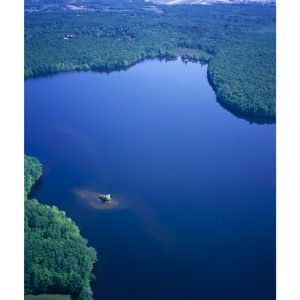
I go to Flint's Pond
for the sake of mountain views
from the hill beyond.
September 12, 1851
We yearn to see the mountains daily. September 12, 1851
September 12, 2016

It occurred to me when I awoke this morning, feeling regret for intemperance of the day before in eating fruit, which had dulled my sensibilities, that man was to be treated as a musical instrument, and if any viol was to be made of sound timber and kept well tuned always, it was he, so that when the bow of events is drawn across him he may vibrate and resound in perfect harmony. September 12, 1853
Not till after 8 a. m. does the fog clear off so much that I see the sun shining in patches on Nawshawtuct. This is the season of fogs. September 12, 1851
I go to Flint's Pond for the sake of the mountain view from the hill beyond. September 12, 1851
A sprinkling drives me back for an umbrella, and I start again for Smith’s Hill 'via Hubbard’s Close. September 12, 1854
I go to Flint's Pond for the sake of the mountain view from the hill beyond. September 12, 1851
I wish to see the earth through the medium of much air or heaven, for there is no paint like the air. Mountains thus seen are worthy of worship. September 12, 1851
A sprinkling drives me back for an umbrella, and I start again for Smith’s Hill 'via Hubbard’s Close. September 12, 1854
The mountains are of a darker blue. September 12, 1858
It is worth the while to see the mountains in the horizon once a day. September 12, 1851
I go to Flint's Pond also to see a rippling lake and a reedy island in its midst, September 12, 1851

How much more the crickets are heard a cool, cloudy day like this! September 12, 1854
I was struck this afternoon with the beauty of the Aster corymbosus with its corymbed flowers, with seven or eight long slender white rays pointed at both ends, ready to curl, shaving-like, and purplish disks, — one of the more interesting asters. September 12, 1853
I see the Epilobium molle in Hubbard’s Close still out, but I cannot find a trace of the fringed gentian. September 12, 1854
Found a violet, apparently Viola cucullata, or hood- leaved violet, in bloom in Baker's Meadow beyond Pine Hill. September 12, 1851.
Also the Bidens cernua, nodding burr-marigold, with five petals, in same place. September 12, 1851
The four kinds of bidens (frondosa, connata, cernua, and chrysanthemoides) abound now , but much of the Beckii was drowned by the rise of the river. September 12, 1859
What we call woodbine is the Vitis hederacea, or common creeper, or American ivy. September 12, 1851
The spring on the west side of Fair Haven Hill is nearly dry; there is no stream flowing from it. What a disappointment to a herd of cows to find their accustomed spring dry! September 12, 1858
It is worth the while to see the mountains in the horizon once a day. September 12, 1851
Very heavy rain all yesterday afternoon, and to-day it is somewhat cooler and clearer and the wind more northwesterly, and I see the unusual sight of ripples or waves curving up-stream off Cardinal Shore, so that the river might seem to be flowing that way. September 12, 1858
I go to Flint's Pond also to see a rippling lake and a reedy island in its midst, September 12, 1851

September 12, 2016
I love to gaze at the low island in the pond, — at any island or inaccessible land. The isle at which you look always seems fairer than the mainland on which you stand. September 12, 1851
I stand in Moore’s Swamp and look at Garfield's dry bank, now before the woods are changed at all. September 12, 1859
How ruddy ripe that dry hillside by the swamp, covered with goldenrods and clumps of hazel bushes here and there, more or less scarlet. The whole hillside is perfectly dry and ripe. September 12, 1859
I stand in Moore’s Swamp and look at Garfield's dry bank, now before the woods are changed at all. September 12, 1859
How ruddy ripe that dry hillside by the swamp, covered with goldenrods and clumps of hazel bushes here and there, more or less scarlet. The whole hillside is perfectly dry and ripe. September 12, 1859
The thermometer at 4 P . M . was 54° . There was pretty high wind in the night. September 12, 1860
How much more the crickets are heard a cool, cloudy day like this! September 12, 1854
A cool, overcast day threatening a storm. Methinks these cool cloudy days are important to show the colors of some flowers, —that with an absence of light their own colors are more conspicuous and grateful against the cool, moist, dark-green earth. September 12, 1854
The golden-rod on the top and the slope of the hill are the Solidago nemoralis, at the base the taller S. altissima. September 12, 1859

Many a dry field now, like that of Sted Buttrick's on the Great Fields, is one dense mass of the bright golden recurved wands of the Solidago nemoralis, waving in the wind and turning upward to the light hundreds, if not a thousand, flowerets each. September 12, 1859
It is the greatest mass of conspicuous flowers in the year, uniformly from one to two feet high, just rising above the withered grass all over the largest fields, now when pumpkins and other yellow fruits begin to gleam, now before the woods are noticeably changed. September 12, 1859
The golden-rod on the top and the slope of the hill are the Solidago nemoralis, at the base the taller S. altissima. September 12, 1859
Many a dry field now, like that of Sted Buttrick's on the Great Fields, is one dense mass of the bright golden recurved wands of the Solidago nemoralis, waving in the wind and turning upward to the light hundreds, if not a thousand, flowerets each. September 12, 1859
It is the greatest mass of conspicuous flowers in the year, uniformly from one to two feet high, just rising above the withered grass all over the largest fields, now when pumpkins and other yellow fruits begin to gleam, now before the woods are noticeably changed. September 12, 1859
Coming to some shady meadow’s edge, you find that the cinnamon fern has suddenly turned this rich yellow. Thus each plant surely acts its part, and lends its effect to the general impression. September 12, 1858
The cinnamon fern has begun to yellow and wither. How rich in its decay! Sic transit gloria mundi! Die like the leaves, which are most beautiful in their decay. September 12, 1858
Thus gradually and successively each plant lends its richest color to the general effect, and in the fittest place, and passes away. Amid the October woods we hear no funereal bell, but the scream of the jay. September 12, 1858
I see plump young bluebirds in small flocks along the fences, with only the primaries and tail a bright blue, the other feathers above dusky ashy-brown, tipped with white. September 12, 1854
The cinnamon fern has begun to yellow and wither. How rich in its decay! Sic transit gloria mundi! Die like the leaves, which are most beautiful in their decay. September 12, 1858
Thus gradually and successively each plant lends its richest color to the general effect, and in the fittest place, and passes away. Amid the October woods we hear no funereal bell, but the scream of the jay. September 12, 1858
I see plump young bluebirds in small flocks along the fences, with only the primaries and tail a bright blue, the other feathers above dusky ashy-brown, tipped with white. September 12, 1854
Crossing east through the spruce swamp, I think that I saw a female redstart. September 12, 1857
I was struck this afternoon with the beauty of the Aster corymbosus with its corymbed flowers, with seven or eight long slender white rays pointed at both ends, ready to curl, shaving-like, and purplish disks, — one of the more interesting asters. September 12, 1853
I see the Epilobium molle in Hubbard’s Close still out, but I cannot find a trace of the fringed gentian. September 12, 1854
Found a violet, apparently Viola cucullata, or hood- leaved violet, in bloom in Baker's Meadow beyond Pine Hill. September 12, 1851.
Also the Bidens cernua, nodding burr-marigold, with five petals, in same place. September 12, 1851
The four kinds of bidens (frondosa, connata, cernua, and chrysanthemoides) abound now , but much of the Beckii was drowned by the rise of the river. September 12, 1859
What we call woodbine is the Vitis hederacea, or common creeper, or American ivy. September 12, 1851
The Lythrum verticillatum, or swamp loosestrife, or grass poly, but I think better named, as in Dewey, swamp-willow-herb. September 12, 1851
What is that running herbaceous vine which forms a dense green mat a rod across at the bottom of the swamp northwest of Corallorhiza Rock? [It is chrysosplenium.] It is of the same form, stem and leaves, with the more brown hairy and woolly linnaea. It also grows in the swamp by the beech trees in Lincoln. September 12, 1857
Methinks that I possess the sense of smell in greater perfection than usual, and have the habit of smelling of every plant I pluck. September 12, 1851
Methinks that I possess the sense of smell in greater perfection than usual, and have the habit of smelling of every plant I pluck. September 12, 1851
White oak acorns have many of them fallen. They are small and very neat light-green acorns, with small cups, commonly arranged two by two close together, often with a leaf growing between them. September 12, 1854 Some black scrub oak acorns have fallen, and a few black oak acorns also have fallen. The red oak began to fall first. September 12, 1854
 In an open part of the swamp, started a very large wood frog, which gave one leap and squatted still. I put down my finger, and, though it shrank a little at first, it permitted me to stroke it as long as I pleased. Having passed, it occurred to me to return and cultivate its acquaintance. To my surprise, it allowed me to slide my hand under it and lift it up, while it squatted cold and moist on the middle of my palm, panting naturally. I brought it close to my eye and examined it. September 12, 1857
It was very beautiful seen thus nearly, not the dull dead-leaf color which I had imagined, but its back was like burnished bronze armor defined by a varied line on each side, where, as it seemed, the plates of armor united. It had four or five dusky bars which matched exactly when the legs were folded, showing that the painter applied his brush to the animal when in that position, and reddish-orange soles to its delicate feet. There was a conspicuous dark-brown patch along the side of the head, whose upper edge passed directly through the eye horizontally, just above its centre, so that the pupil and all below were dark and the upper portion of the iris golden. September 12, 1857
It was very beautiful seen thus nearly, not the dull dead-leaf color which I had imagined, but its back was like burnished bronze armor defined by a varied line on each side, where, as it seemed, the plates of armor united. It had four or five dusky bars which matched exactly when the legs were folded, showing that the painter applied his brush to the animal when in that position, and reddish-orange soles to its delicate feet. There was a conspicuous dark-brown patch along the side of the head, whose upper edge passed directly through the eye horizontally, just above its centre, so that the pupil and all below were dark and the upper portion of the iris golden. September 12, 1857
Very heavy rain to-day (equinoctial), raising the river suddenly. A dark and stormy night (after it). September 12, 1860
The river has at length risen perceptibly, and bathing I find it colder again than on the 2d, so that I stay in but a moment. I fear that it will not again be warm. September 12, 1854
I can hardly believe that there is so great a difference between one year and another as my journal shows. The 11th of this month last year, the river was as high as it commonly is in the spring, over the causeway on the Corner road. It is now quite low. September 12, 1851
Last year, October 9th, the huckleberries were fresh and abundant on Conantum. They are now already dried up. September 12, 1851
The spring on the west side of Fair Haven Hill is nearly dry; there is no stream flowing from it. What a disappointment to a herd of cows to find their accustomed spring dry! September 12, 1858
How autumnal is the scent of ripe grapes now by the roadside! September 12, 1851
The pendulous, drooping barberries are pretty well reddened. I am glad when the berries look fair and plump. September 12, 1851
The prinos berries are pretty red. Any redness like cardinal-flowers, or poke, or the evening sky, or cheronsea, excites us as a red flag does cows and turkeys. September 12, 1851
The Smilacina racemosa berries are well red now; probably with the two-leaved. September 12, 1853
Round-leaved cornel berries nearly all fallen. September 12, 1857
Round-leaved cornel berries nearly all fallen. September 12, 1857
Yew berries still hold on. September 12, 1858
See petty morel berries ripe. September 12, 1858
See petty morel berries ripe. September 12, 1858
Woodsia llvensis under the cave at Cliffs in fruit. September 12, 1858
The handsome crimson-tipped hazelnut burs now and for some time have reminded us that it was time to gather these nuts. They are worth gathering, if only to see the rich color of the fruit brought together in a quantity. September 12, 1858
The Panicum filiforme is very abundant in that old mullein-field of Potter’s, by the Corner road. Its slender culms are purple, and, seen in the right light, where they stand thick, they give a purple gleam to the field. More purple far than the P. sanguinale. September 12, 1858
Some small red maples by water begun to redden. September 12, 1858
Some small red maples by water begun to redden. September 12, 1858
From the pond-side hill I perceive that the forest leaves begin to look rather rusty or brown. September 12, 1851
Lycopodium complanatum, how long? September 12, 1858
Have seen the pigeon’s-egg fungus in pastures some time. September 12, 1858
Even in that little hollow on the hill side, commonly moistened by the spring, grow the soft rush, rhyncospora, etc. What an effect a little moisture on a hillside produces, though only a rod square! The Juncaceoe and Cyperaceoa soon find it out and establish themselves there. September 12, 1858
In Hubbard’s ditched meadow, this side his grove, I see a great many large spider’s webs stretched across the ditches, about two feet from bank to bank, though the thick woven part is ten or twelve inches. They are parallel, a few inches or a foot or more apart, and more or less vertical, and attached to a main cable stretched from bank to bank. They are the yellow-backed spider, commonly large and stout but of various sizes. I count sixty-four such webs there, and in each case the spider occupies the centre, head downward. This is enough, methinks, to establish the rule. They are not afraid of turning their brains then. Many insects must be winging their way over this small river. It reminds me of the Indians catching ducks at Green Bay with nets in old times. September 12, 1858
On Monday, the 15th instant, I am going to perambulate the bounds of the town . . . It is a sort of reconnoissance of its frontiers authorized by the central government of the town, which will bring the surveyor in contact with whatever wild inhabitant or wilderness its territory embraces. September 12, 1851
Lycopodium complanatum, how long? September 12, 1858
Have seen the pigeon’s-egg fungus in pastures some time. September 12, 1858
Even in that little hollow on the hill side, commonly moistened by the spring, grow the soft rush, rhyncospora, etc. What an effect a little moisture on a hillside produces, though only a rod square! The Juncaceoe and Cyperaceoa soon find it out and establish themselves there. September 12, 1858
In Hubbard’s ditched meadow, this side his grove, I see a great many large spider’s webs stretched across the ditches, about two feet from bank to bank, though the thick woven part is ten or twelve inches. They are parallel, a few inches or a foot or more apart, and more or less vertical, and attached to a main cable stretched from bank to bank. They are the yellow-backed spider, commonly large and stout but of various sizes. I count sixty-four such webs there, and in each case the spider occupies the centre, head downward. This is enough, methinks, to establish the rule. They are not afraid of turning their brains then. Many insects must be winging their way over this small river. It reminds me of the Indians catching ducks at Green Bay with nets in old times. September 12, 1858
On Monday, the 15th instant, I am going to perambulate the bounds of the town . . . It is a sort of reconnoissance of its frontiers authorized by the central government of the town, which will bring the surveyor in contact with whatever wild inhabitant or wilderness its territory embraces. September 12, 1851
This reminds me of the halo around my shadow which I notice from the causeway in the morning, — also by moonlight, — as if, in the case of a man of an excitable imagination, this were basis enough for his superstition. September 12, 1851
After I have spent the greater part of a night abroad in the moonlight, I am obliged to sleep enough more the next night to make up for it, September 12, 1851
And there is something gained still by thus turning the day into night. ... He who has spent the night with the gods sleeps more innocently by day than the sluggard who has spent the day with the satyrs sleeps by night. September 12, 1851
He who has travelled to fairyland in the night sleeps by day more innocently than he who is fatigued by the merely trivial labors of the day sleeps by night. That kind of life which, sleeping, we dream that we live awake, in our walks by night, we, waking, live, while our daily life appears as a dream. September 12, 1851
At the entrance to the Deep Cut, I heard the telegraph-wire vibrating like an aeolian harp. September 12, 1851
Where the fence is not painted white I can see nothing, and go whistling for fear I run against some one. Walking with my hands out to feel the fences and trees I come against a stone post and bruise my knees. September 12, 1860
After I have spent the greater part of a night abroad in the moonlight, I am obliged to sleep enough more the next night to make up for it, September 12, 1851
And there is something gained still by thus turning the day into night. ... He who has spent the night with the gods sleeps more innocently by day than the sluggard who has spent the day with the satyrs sleeps by night. September 12, 1851
He who has travelled to fairyland in the night sleeps by day more innocently than he who is fatigued by the merely trivial labors of the day sleeps by night. That kind of life which, sleeping, we dream that we live awake, in our walks by night, we, waking, live, while our daily life appears as a dream. September 12, 1851
At the entrance to the Deep Cut, I heard the telegraph-wire vibrating like an aeolian harp. September 12, 1851
Where the fence is not painted white I can see nothing, and go whistling for fear I run against some one. Walking with my hands out to feel the fences and trees I come against a stone post and bruise my knees. September 12, 1860
A sensitive soul will be continually trying its strings to see if they are in tune. A man's body must be rasped down exactly to a shaving. It is of far more importance than the wood of a Cremona violin. September 12, 1853
March 13, 1853 ("a poet must sustain his body with his poetry.")
*****
See A Book of the Seasons, by Henry Thoreau:
Two-leaved Solomon's Seal ( Canada mayflower)
March 13, 1853 ("a poet must sustain his body with his poetry.")
March 30, 1853 (" when the walker . . . sees, hears, scents, tastes, and feels only himself, - the phenomena that show themselves in him, - his expanding body, his intellect and heart.”)
April 1, 1852 ("I see that there is about an acre of open water, perhaps, over Bush Island in the middle of the pond, and there are some water-fowl there . . .This pond is worth coming to, if only be cause it is larger than Walden")
April 1, 1852 ("I see that there is about an acre of open water, perhaps, over Bush Island in the middle of the pond, and there are some water-fowl there . . .This pond is worth coming to, if only be cause it is larger than Walden")
April 11, 1853 ("Female dark ashy and fainter marks.")
May 17, 1852 ("This pond is the more interesting for the islands in it. The water is seen running behind them. It is pleasant to know that it penetrates quite behind and isolates the land you see, and to see it flowing out from behind an island with shining ripples.")
May 17, 1852 ("This pond is the more interesting for the islands in it. The water is seen running behind them. It is pleasant to know that it penetrates quite behind and isolates the land you see, and to see it flowing out from behind an island with shining ripples.")
May 24, 1854 ("As I go along the causeway the sun rises red, with a great red halo, through the fog")
May 27, 1852 ("Catch a wood frog (Rana sylvatica), the color of a dead leaf. He croaks as I hold him, perfectly frog-like.”)
May 29, 1855 ("females of the redstart, described by Wilson, — very different from the full-plumaged black males");
May 29, 1855 ("females of the redstart, described by Wilson, — very different from the full-plumaged black males");
June 24, 1857 ("Went to Farmer's Swamp to look for the owl's nest Farmer had found.")
July 16, 1851 ("This earth was the most glorious musical instrument, and I was audience to its strains. To have such sweet impressions made on us. . .,")
July 16, 1851 ("This earth was the most glorious musical instrument, and I was audience to its strains. To have such sweet impressions made on us. . .,")
August 10, 1858 ("Am surprised to find the yew with ripe fruit (how long ?),. . . It fruits very sparingly, the berries growing singly here and there, on last year’s wood, and hence four to six inches below the extremities of the upturned twigs. It is the most surprising berry that we have")
August 14, 1854(“I have come forth to this hill at sunset to see the forms of the mountains in the horizon.— to behold and commune with something grander than man. “); October 22, 1857 (" But what a perfect crescent of mountains we have in our northwest horizon! Do we ever give thanks for it?");
August 18, 1854 ("The solidago nemoralis is now abundantly out on the Great Fields.”)
August 18, 1854 ("The solidago nemoralis is now abundantly out on the Great Fields.”)
August 29, 1857 ("Nearby, north [of Indian Rock, west of the swamp], is a rocky ridge, on the east slope of which the Corallorhiza multiflora is very abundant.")
August 31, 1857 ("Lycopodium complanatum out, how long?")September 1, 1856 ("S. nemoralis, not quite in prime, but very abundant.");
September 2, 1860 ("Solidago nemoralis ] apparently in prime.")
September 2, 1854 ("Bathe at Hubbard’s. The water is surprisingly cold . . .. It is a very important and remarkable autumnal change. It will not be warm again probably.")
September 4, 1857 ("The sides of Cornus florida Ravine at Bateman’s Pond are a good place for ferns. There is a Woodsia Ilvensis, a new one to Concord. ")
September 1, 1852 ("Across the pond, beneath where the white stems of three birches diverge, at the point of a promontory next the water, I see two or three small maples already scarlet.")
September 1, 1853 ("Some large maples along the river are beginning to redden.")
September 2, 1860 ("Solidago nemoralis ] apparently in prime.")
September 2, 1854 ("Bathe at Hubbard’s. The water is surprisingly cold . . .. It is a very important and remarkable autumnal change. It will not be warm again probably.")
September 4, 1857 ("The sides of Cornus florida Ravine at Bateman’s Pond are a good place for ferns. There is a Woodsia Ilvensis, a new one to Concord. ")
September 6, 1852 ("Some fields are completely yellow — one mass of yellow — from the solidago.")
September 6, 1854("The cinnamon ferns along the edge of woods next the meadow are many yellow or cinnamon, or quite brown and withered.")
September 6, 1858 ("Solidago nemoralis is apparently in prime on Lupine Hill; some of it past. It is swarming with butterflies")
September 7, 1858 ("It is an early September afternoon,. . . a little distance off the field is yellowed with a Xerxean army of Solidago nemoralis between me and the sun . . .The dry deserted fields are one mass of yellow, like a color shoved to one side on Nature’s palette.")
September 6, 1858 ("Solidago nemoralis is apparently in prime on Lupine Hill; some of it past. It is swarming with butterflies")
September 7, 1858 ("It is an early September afternoon,. . . a little distance off the field is yellowed with a Xerxean army of Solidago nemoralis between me and the sun . . .The dry deserted fields are one mass of yellow, like a color shoved to one side on Nature’s palette.")
September 7, 1857 ("Bidens chrysanthemoides there [Spencer Brook,]; how long?")
September 8, 1854 ("The grapes would no doubt be riper a week hence, but I am compelled to go now before the vines are stripped. I partly smell them out.");
September 8, 1858 (“Gather half my grapes, which for some time have perfumed the house.”)
September 8, 1858 (“Gather half my grapes, which for some time have perfumed the house.”)
September 9, 1858 ("Many Viola cucullata have opened again")
September 11, 1851 ("Bidens cernua and Bidens connata.")September 11, 1852 ("The Bidens cernua")
Amid October woods
we hear no funeral bell but
the scream of the jay.
September 12, 1858
September 13, 1852 (" The great bidens in the sun in brooks affects me as the rose of the fall. They are low suns in the brook. The golden glow of autumn concentrated, more golden than the sun. How surely this yellow comes out along the brooks in autumn. It yellows along the brook.");
September 13, 1856 ("Up Assabet. Gather quite a parcel of grapes, quite ripe.. . . the best are more admirable for fragrance than for flavor. Depositing them in the bows of the boat, they fill all the air with their fragrance, as we row along against the wind, as if we were rowing through an endless vineyard in its maturity.")
September 13, 1856 ("Up Assabet. Gather quite a parcel of grapes, quite ripe.. . . the best are more admirable for fragrance than for flavor. Depositing them in the bows of the boat, they fill all the air with their fragrance, as we row along against the wind, as if we were rowing through an endless vineyard in its maturity.")
September 13, 1859 ("The Bidens chrysanthemoides, now apparently in its prime by the river, now almost dazzles you with its great sunny disk. I feast my eyes on it annually. [Iin this is seen the concentrated heat of autumn.")
September 14, 1854 ("The great bidens, the flower and ornament of the riversides at present, and now in its glory,. . . Full of the sun. It needs a name.")
September 14, 1858 ('Bidens chrysanthemoides in river.")
September 14, 1854 ("The great bidens, the flower and ornament of the riversides at present, and now in its glory, especially at I. Rice’s shore, where there are dense beds. It is a splendid yellow — Channing says a lemon yellow — and looks larger than it is (two inches in diameter, more or less). Full of the sun. It needs a name") ;
September 18, 1856 ("On account of freshet I have seen no Bidens Beckii nor chrysanthemoides")
September 15, 1856 ("What I must call Bidens cernua, like a small chrysanthemoides, is bristly hairy, somewhat connate and apparently regularly toothed")
September 18, 1852 ("The goldenrods have generally lost their brightness.")
September 18, 1857 ("it was exceedingly dark. I met two persons within a mile, and they were obliged to call out from a rod distant lest we should run against each other. ")
September 19, 1851 ("Large-flowered bidens,or beggar-ticks,or bur-marigold,now abundant by riverside.")
September 14, 1854 ("The great bidens, the flower and ornament of the riversides at present, and now in its glory, especially at I. Rice’s shore, where there are dense beds. It is a splendid yellow — Channing says a lemon yellow — and looks larger than it is (two inches in diameter, more or less). Full of the sun. It needs a name") ;
September 18, 1856 ("On account of freshet I have seen no Bidens Beckii nor chrysanthemoides")
September 15, 1856 ("What I must call Bidens cernua, like a small chrysanthemoides, is bristly hairy, somewhat connate and apparently regularly toothed")
September 18, 1852 ("The goldenrods have generally lost their brightness.")
September 18, 1857 ("it was exceedingly dark. I met two persons within a mile, and they were obliged to call out from a rod distant lest we should run against each other. ")
September 19, 1851 ("Large-flowered bidens,or beggar-ticks,or bur-marigold,now abundant by riverside.")
September 20, 1857 ("A great many small red maples in Beck Stow's Swamp are turned quite crimson, when all the trees around are still perfectly green. It looks like a gala day there.")
September 28, 1852 ("I find the hood-leaved violet quite abundant in a meadow, and the pedata in the Boulder Field.")
September 26 1854 ("Took my last bath the 24th . Probably shall not bathe again this year. It was chilling cold.")
September 28, 1852 ("I find the hood-leaved violet quite abundant in a meadow, and the pedata in the Boulder Field.")
September 26 1854 ("Took my last bath the 24th . Probably shall not bathe again this year. It was chilling cold.")
September 26, 1854 ("Some single red maples are very splendid now, the whole tree bright-scarlet against the cold green pines; now, when very few trees are changed, a most remarkable object in the landscape; seen a mile off.")
September 27, 1857 ("Solidago nemoralis nearly done")
September 27, 1857 ("The large common ferns (either cinnamon or interrupted) are yellowish, and also many as rich a deep brown now as ever.")
September 27, 1856 ("The bluebird family revisit their box.")
September 27, 1856 ("Bathing about over.")
September 27, 1857 ("Every leaf ripened to its full, it flashes out conspicuous to the eye of the most casual observer, with all the virtue and beauty of a maple, – Acer rubrum.")
September 27, 1855 ("Some single red maples now fairly make a show along the meadow. I see a blaze of red reflected from the troubled water.");
September 27, 1857 ("Solidago nemoralis nearly done")
September 27, 1857 ("The large common ferns (either cinnamon or interrupted) are yellowish, and also many as rich a deep brown now as ever.")
September 27, 1856 ("The bluebird family revisit their box.")
September 27, 1856 ("Bathing about over.")
September 27, 1857 ("Every leaf ripened to its full, it flashes out conspicuous to the eye of the most casual observer, with all the virtue and beauty of a maple, – Acer rubrum.")
September 27, 1855 ("Some single red maples now fairly make a show along the meadow. I see a blaze of red reflected from the troubled water.");
September 27, 1858 ("Red maples now fairly glow along the shore.")
September 30, 1854 ("The conventional acorn of art is of course of no particular species, but the artist might find it worth his while to study Nature’s varieties again.")
October 6, 1858 ("Most S. nemoralis, and most other goldenrods, now look hoary, killed by frost.");
October 8, 1856 ("S. nemoralis, done, many hoary, though a very few flowers linger.");
October 6, 1858 ("Most S. nemoralis, and most other goldenrods, now look hoary, killed by frost.");
October 8, 1856 ("S. nemoralis, done, many hoary, though a very few flowers linger.");
October 18, 1857 ("The shadows of these bugs on the bottom, half a dozen times as big as themselves, are very distinct and interesting, with a narrow and well-defined halo about them")
October 23, 1853 ("I notice these flowers still along the railroad causeway: fresh sprouts from the root of the Solidago nemoralis in bloom");
October 23, 1853 ("I notice these flowers still along the railroad causeway: fresh sprouts from the root of the Solidago nemoralis in bloom");
November 4, 1857 ("But those grand and glorious mountains, how impossible to remember daily that they are there, and to live accordingly! They are meant to be a perpetual reminder to us, pointing out the way.")
November 10, 1858 ("Some very handsome Solidago nemoralis in bloom on Fair Haven Hill. (Look for these late flowers —November flowers — on hills, above frost.)");
November 17, 1858 ("As I saw it, there was a perfect halo of light resting on the knoll as I moved to right or left. ");
November 20, 1858 ("I was surprised to see a broad halo travelling with me and always opposite the sun to me.")
December 24, 1859 ("I measure the blueberry bushes on Flint's Pond Island. . . .This island appears to be a mere stony ridge three or four feet high, with a very low wet shore on each side, ")
December 11, 1855 ("To perceive freshly, with fresh senses, is to be inspired. My body is all sentient. As I go here or there, I am tickled by this or that I come in contact with, as if I touched the wires of a battery.")
December 22, 1859 ("On what I will call Sassafras Island, in this pond, I notice the largest and handsomest high blueberry.")
If you make the least correctobservation of nature this year,you will have occasion to repeat itwith illustrations the next,and the season and life itself is prolonged.September 11 <<<<<<<<< September 12. >>> >>>>> September 13A Book of the Seasons, by Henry Thoreau, September 12A Book of the Seasons, by Henry Thoreau"A book, each page written in its own season,out-of-doors, in its own locality.”~edited, assembled and rewritten by zphx © 2009-2022