Showing posts with label cuckoo. Show all posts

Saturday, June 27, 2020

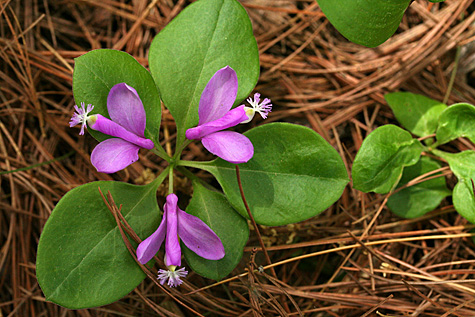
The dogsbane is one of the more interesting little flowers.


 4. 30 A. M. – To Island by river.

The cuckoo’s nest is robbed, or perhaps she broke her egg because I found it.

Thus three out of half a dozen nests which I have revisited have been broken up.

It is a very shallow nest, six or seven inches in diameter by two and a half or three deep, on a low bending willow, hardly half an inch deep within ; concealed by overlying leaves of a swamp white oak on the edge of the river meadow, two to three feet from ground, made of slender twigs which are prettily ornamented with much ramalina lichen, lined with hickory catkins and pitch pine needles.

I have described the rest before.

Saw a little pickerel with a minnow in his mouth.

It was a beautiful little silver-colored minnow, two inches long, with a broad stripe down the middle.

The pickerel held [it] crosswise near the tail, as he had seized it, and as I looked down on him, he worked the minnow along in his mouth toward the head, and then swallowed it head foremost.

Was this instinct? 

Fishermen should consider this in giving form to their bait. The pickerel does not swallow the bait at once, but first seizes it, then probably decides how it can best be swallowed, and no doubt he lets go again in disgust some baits of which he can make neither head nor tail.

The radical leaves (four?) of the floating-heart are triangularly or wedge ovate, on petioles one to two inches long.

The two large potamogetons now common on river  the smaller apparently not long in flower), with ovate or elliptical floating leaves sometimes salmon color, belong to one or two of the first three of Gray.

The smaller has its immersed leaves long, narrowly linear, and semicylindrical ; those of the largest are pellucid, lanceolate, and waved.

That sort of ostrich feather on the bottom appears to be the Potamogeton Robbinsii.

What is that foul, submerged, densely whorled and capillary-leaved and forked utricularia like but bladderless plant? Then there is a pinnate and cut- leafed plant on the bottom.

Is it radical leaves of a proserpinaca? or a milfoil? I find a little bug between the calyx and petals of white lilies which have not opened. It has eaten holes in them.

The dogsbane is one of the more interesting little flowers.

  
H.  D. Thoreau, Journal, June 27, 1853

The dogsbane is one of the more interesting little flowers. See April 24, 1856 (“See a dog’s-bane with two pods open and partially curved backward on each side, but a third not yet open. This soon opens and scatters its down and seeds in my chamber. The outside is a dull reddish or mahogany-color, but the inside is a singularly polished very pale brown. The inner bark of this makes a strong twine like that of the milkweed.”); June 15, 1852 (“Dogsbane is just ready to open.”); June 21, 1852 (“It would be pleasant to write the history of one hillside for one year, , ,. Blackberries, roses, and dogsbane also are now in bloom here.”); July 2, 1858 (“the A. androsoemifolium, quite downy beneath.”); July 3, 1853 ("Dogsbane and Jersey tea are among the prevailing flowers now.");August 1, 1858 (“the common apocynum (also in bloom as well as going and gone to seed) are very common.”);  August 16, 1856 ("I find the dog's-bane (Apocynum androsoemifolium) bark not the nearly so strong as that of the A. cannabinum”).; August 21, 1852 (“The leaves of the dogsbane are turning yellow”) See also notes to August 5, 1856 (“At the Assabet stone bridge, apparently freshly in flower, — though it may have been out nearly as long as the androscemifolium, — apparently the Apocynum var. hypericifolium (?)”) and to September 2, 1856 ("Some years ago I sought for Indian hemp (Apocynum cannabinum) hereabouts in vain, and concluded that it did not grow here. A month or two ago I read again, as many times before, that its blossoms were very small, scarcely a third as large as those of the common species, and for some unaccountable reason this distinction kept recurring to me, and I regarded the size of the flowers I saw, though I did not believe that it grew here; and in a day or two my eyes fell on it, aye, in three different places, and different varieties of it.") and A Book of the Seasons, by Henry Thoreau, Dogsbane and Indian hemp


Thursday, June 13, 2019

The Boston collection

June 13

To Boston. 

My rail's egg of June 1st looks like that of the Virginia rail in the Boston collection. 

A boy brought me a remarkably large cuckoo's egg on the 11th. Was it not that of the yellow-billed? The one in the collection looks like it. This one at B. is not only larger but lighter- colored. 

In the plates of Hooker's "Flora Boreali-Americana," the leaves of Vaccinium coespitosum are not so wide as the fruit; yet mine of Tuckerman's Ravine may be it.

H. D. Thoreau, Journal, June 13, 1859

My rail's egg of June 1st. See June 1, 1859 ("Some boys found yesterday, in tussock of sedge amid some flags in a wet place in Cyrus Hosmer's meadow, west of the willow-row, six inches above the water, the nest evidently of a rail, with seven eggs.I got one to-day. It is cream-colored, sprinkled with reddish-brown spots and more internal purplish ones, on most eggs (not on mine) chiefly about the larger end.")

A large cuckoo's egg. See June 5, 1856 ("A cuckoo’s nest with three light bluish-green eggs partly developed, short with rounded ends, nearly of a size;"); see also June 10, 1856 ("The cuckoo of June 5th has deserted her nest, and I find the fragments of egg-shells in it; probably because I found it.")

Mine of Tuckerman's Ravine. See July 19, 1858 (summing up the prevailing plants on Mt. Washington.)

Sunday, August 20, 2017

I hear a peculiar sound which I mistake for a woodpecker's tapping.

August 20

Thursday. 

P. M. – To Hubbard's Close. 

July 31, 2019

The hillside at Clintonia Swamp is in some parts quite shingled with the rattlesnake-plantain (Goodyera pubescens) leaves overlapping one another. The flower is now apparently in its prime. 

As I stand there, I hear a peculiar sound which I mistake for a woodpecker's tapping, but I soon see a cuckoo hopping near suspiciously or inquisitively, at length within twelve feet, from time to time uttering a hard, dry note, very much like a woodpecker tapping a dead dry tree rapidly, its full clear white throat and breast toward me, and slowly lifting its tail from time to time. Though somewhat allied to that throttled note it makes by night, it was quite different from that. 

I go along by the hillside footpath in the woods about Hubbard's Close. The Goodyera repens grows behind the spring where I used to sit, amid the dead pine leaves. Its leaves partly concealed in the grass. It is just done commonly. 

Helianthus, strumosus-like, at the south end of Stow's cold pool; how long?

H. D. Thoreau, Journal, August 20, 1857

The hillside at Clintonia Swamp is in some parts quite shingled with the rattlesnake-plantain . . . See August 27, 1856 (“Goodyera pubescens, rattlesnake-plantain, is apparently a little past its prime. It is very abundant on Clintonia Swamp hillside. . .”)

A hard, dry note, very much like a woodpecker tapping. . .See May 29, 1856 (“A cuckoo’s note, loud and hollow, from a wood-side.”)

Helianthus, strumosus-like, at the south end of Stow's cold pool. . . See note to August 12, 1856 ("Am surprised to see still a third species or variety of helianthus . . . At edge of the last clearing south of spring. I cannot identify it. . . .In some respects it is most like H. strumosus, but not downy beneath.”)

Friday, June 10, 2016

A painted tortoise laying her eggs ten feet from the wheel-track on the Marlborough road.

June 10

8 A. M. — Getting lily pads opposite Badger’s.

Already the pads are much eaten before they are grown, and underneath, on the under side of almost every one, are the eggs of various species of insect, some so minute as to escape detection at first, in close, flat, straight-sided nests. 

The yellow lily and kalmiana are abundantly out. The under sides of the pads, their stems, and the Ranunculus Purshii and other water-plants are thickly covered and defiled with the sloughs, perhaps of those little fuzzy gnats (in their first state) which have so swarmed over the river. It is quite difficult to clean your specimens of them. 

June 10, 2016

P. M. — To Dugan Desert.

Cornus alternifolia a day or two, up railroad; maybe longer elsewhere. 

Spergularia rubra by railroad, it having been dug up last year, and so delayed. 

The cuckoo of June 5th has deserted her nest, and I find the fragments of egg-shells in it; probably because I found it. 

Oxalis freshly out: how long? Apparently but two or three days. 

I find some linnaea well out, after all, within a rod of the top of the hill, apparently two or three days. If it flowered more abundantly, probably it would be earlier. 

Chewink’s nest with four young in the dry sprout-land of Loring’s thick wood that was, under a completely overarching tuft of dry sedge grass. 

I hear the huckleberry-bird now add to its usual strain a-tea tea tea tea tea

A painted tortoise laying her eggs ten feet from the wheel-track on the Marlborough road. She paused at first, but I sat down within two feet, and she soon resumed her work. Had excavated a hollow about five inches wide and six long in the moistened sand, and cautiously, with long intervals, she continued her work, resting always on the same spot her fore feet, and never looking round, her eye shut all but a narrow slit. 

Whenever I moved, perhaps to brush off a mosquito, she paused. A wagon approached, rumbling afar off, and then there was a pause, till it had passed and long, long after, a tedious, naturlangsam pause of the slow-blooded creature, a sacrifice of time such as those animals are up to which slumber half a year and live for centuries. 

It was twenty minutes before I discovered that she was not making the hole but filling it up slowly, having laid her eggs. She drew the moistened sand under herself, scraping it along from behind with both feet brought together, the claws turned inward. In the long pauses the ants troubled her (as mosquitoes me) by running over her eyes, which made her snap or dart out her head suddenly, striking the shell. She did not dance on the sand, nor finish covering the hollow quite so carefully as the one observed last year. 

She went off suddenly (and quickly at first), with a slow but sure instinct through the wood toward the swamp.

The clustered blackberry of Dugan Desert not yet out, nor apparently for two or three days. 

Sweet Viburnum apparently two or three days at most, by Warren Miles’s, Nut Meadow Pond. 

In a hollow apple tree, hole eighteen inches deep, young pigeon woodpeckers, large and well feathered. They utter their squeaking hiss whenever I cover the hole with my hand, apparently taking it for the approach of the mother. A strong, rank fetid smell issues from the hole. 

Ripe strawberries, even in a meadow on sand thrown out of a ditch, hard at first to detect amid the red radical leaves. The flower-buds of late there have now that rank smell. 

Lambkill out, at Clamshell. 

The Cratoegus Crus-Galli is out of bloom. 

Arenaria serpyllifolia is out of bloom at Clamshell.

Side-flowering sandwort abundantly out this side of Dugan Spring. 

Solanum well out, by Wood’s Bridge.

H. D. Thoreau, Journal, June 10, 1856

I find some linnaea well out. See June 1, 1855 ("I find the Linnaea borealis."); June 4, 1855 ("The Linnæa borealis has grown an inch"); June 6, 1853 ("The linnæa just out."); and  note to June 9, 1851 ("Gathered the Linnæa borealis.")

The one [laying painted tortoise] observed last year.  See June 18, 1855 ("after a slight pause it proceeds in its work, directly under and within eighteen inches of my face.”). See also June 10, 1858 (“See a painted turtle digging her nest in the road at 5.45 P. M.”) and A Book of the Seasons,  by Henry Thoreau, The Painted Turtle (Emys Picta)

Sweet Viburnum apparently two or three days at most. See June 10, 1854 ("The Viburnum lentago is just out of bloom now that the V. nudum is fairly begun.”); June 10, 1857 (“At R.W.E.'s a viburnum, apparently nudum var. cassinoides (?)”) See also A Book of the Seasons,  by Henry Thoreau, The Viburnums

Warren Miles's, Nut Meadow Pond. See May 7, 1856 ("The brook below is full of fishes,--suckers, pouts, eels, trouts,-- endeavoring to get up, but his dam prevents."); April 28, 1856 ("I began to survey the meadow there early, . . .but a great stream of water was already rushing down the brook, and it almost rose over our boots in the meadow before we had done.”); April 25, 1856 ("Warren Miles had caught three more snapping turtles since yesterday, at his mill, . . . These turtles have been disturbed or revealed by his operations.”); April 24 1856 (Warren Miles at his new mill tells me eels can’t get above his mill now, in the spring.”); February 28, 1856 ("Miles is repairing the damage done at his new mill by the dam giving way.”)

Ripe strawberries . . . hard at first to detect amid the red radical leaves.  See June 14, 1859 ("Early strawberries begin to be common. The lower leaves of the plant are red, concealing the fruit."); June 15, 1853 ("Strawberries in the meadow now ready for the picker. They lie deep at the roots of the grass in the shade. You spread aside the tall grass, and deep down in little cavities by the roots of the grass you find this rich fruit.”) See also 
A Book of the Seasons,  by Henry Thoreau: Strawberries

Lambkill out, at Clamshell. See June 9, 1855 ("Lambkill out."); June 10, 1855 ("The Kalmia glauca is done before the lambkill is begun here"); June 13, 1854 ("How beautiful the solid cylinders of the lamb-kill now just before sunset.”) See also A Book of the Seasons,  by Henry Thoreau, Lambkill (Kalmia augustifolia)

Side-flowering sandwort abundantly out this side of Dugan Spring. See May 26, 1853 ("Side-flowering sandwort is abundant, for some time, by wall of Lee's field near Garfield's."); June 3, 1859 ("Arenaria lateriflora well out, how long? "); June 5, 1855 ("Side-flowering sandwort apparently three days out in Clamshell flat meadow."); June 6, 1852 ("The side-flowering sandwort, an inconspicuous white flower like a chickweed.");  June 13, 1858 ("Arenaria lateriflora, how long?")

June 10. See A Book of the Seasons, by Henry Thoreau, June 10

Ripe strawberries hard
at first to detect amid the
red radical leaves.

A Book of the Seasons by Henry Thoreau
"A book, each page written in its own season,
out-of-doors, in its own locality."

~edited, assembled and rewritten by zphx © 2009-2026

https://tinyurl.com/hdt-560610

Sunday, June 5, 2016

Red lady’s-slippers over the red pine leaves on the forest floor,

June 5 

Thursday. P. M. — To Indian Ditch. 

Achillea Millefolium. Black cherry, apparently yesterday. 

The Muscicapa Cooperi sings pe pe pe’, sitting on the top of a pine, and shows white rump (?), etc., unlike kingbird. 

Return by J. Hosmer Desert. 


Everywhere now in dry pitch pine woods stand the red lady’s-slippers over the red pine leaves on the forest floor, rejoicing in June, with their two broad curving green leaves, —some even in swamps. Uphold their rich, striped red, drooping sack. 

This while rye begins to wave richly in the fields. 

A brown thrasher’s nest with four eggs considerably developed, under a small white pine on the old north edge of the desert, lined with root-fibres. The bird utters its peculiar tchuck near by. 

Pitch pine out, the first noticed on low land, maybe a day or two. Froth on pitch pine. 

A blue jay’s nest on a white pine, eight feet from ground, next to the stem, of twigs lined with root-fibres; three fresh eggs, dark dull greenish, with dusky spots equally distributed all over, in Hosmer (?) pines twenty seven paces east of wall and fifty-seven from factory road by wall. Jay screams as usual. Sat till I got within ten feet at first.

A cuckoo’s nest with three light bluish-green eggs partly developed, short with rounded ends, nearly of a size; in the thicket up railroad this side high wood, in a black cherry that had been lopped three feet from ground, amid the thick sprouts; a nest of nearly average depth (?), of twigs lined with green leaves, pine needles, etc., and edged with some dry, branchy weeds. The bird stole off silently at first. Five rods south of railroad. 

I must call that cerastium of May 22d C. nutans (?), at least for the present, though I do not see grooves in stem. Oakes, in his catalogue in Thompson’s “History of Vermont,” says it is not found in New England out of that State. The pods of the common one also turn upward. It is about four flowered; no petals; pods, which have formed in tumbler, more than twice but not thrice as long as calyx, bent down nearly at right angles with peduncles and then curving upward. The common cerastium is in tufts, spreading, a darker green and much larger, hairy but not glutinous, pods but little longer than calyx (as yet) and upright.

H. D. Thoreau, Journal, June 5, 1856

The Muscicapa Cooperi sings pe pe pe’, sitting on the top of a pine. See May 15, 1855 ("I hear from the top of a pitch pine in the swamp that loud, clear, familiar whistle . . . I saw it dart out once, catch an insect, and return to its perch muscicapa-like. As near as I could see it had a white throat .”). See also A Book of the Seasons,  by Henry Thoreau, the Olive-sided flycatcher or pe-pe

Everywhere now in dry pitch pine woods stand the red lady’s-slippers. See  June 5, 1850 ("When the lady’s-slipper and the wild pink have come out in sunny places on the hillsides, then the summer is begun according to the clock of the seasons.") See also note to May 30, 1856 (“The lady’s-slipper in pitch pine wood-side near J. Hosmer’s Desert, probably about the 27th.”) and A Book of the Seasons, by Henry Thoreau, The Lady Slipper

Froth on pitch pine. See June 4, 1854 ("I now notice froth on the pitch and white pines.”); June 15, 1851("A white froth drips from the pitch pines, just at the base of the new shoots. It has no taste.”)

A blue jay’s nest on a white pine, See June 8, 1855 ("A jay’s nest with three young half fledged in a white pine, six feet high. . . made of coarse sticks.”); June 10, 1859 ("A blue jay's nest about four feet up a birch, quite exposed beneath the leafy branches. “) 

I must call that cerastium of May 22d C. nutans See  May 6, 1856 ("Cerastium out there under the bank"); May 22, 1856 ("A little clammy hairy cerastium (?) (like a Cerastium viscosum, slender and erect), about three inches high, will open in a day or two on the rock near the bass."); May 31, 1856 ("That little cerastium on the rock at the Island, noticed the 22d . . . seems to be the C. nutans (?), from size, erectness, and form of pods and leaves.”) 

A brown thrasher’s nest with four eggs considerably developed, under a small white pine See June 6, 1857 ("A brown thrasher's nest, with two eggs, on ground, near lower lentago wall and toward Bittern Cliff. ")  See also A Book of the Seasons, by Henry Thoreau, The Brown Thrasher

Red lady’s-slippers, 
with two broad curving green leaves,
rejoicing in June.

A Book of the Seasons, by Henry Thoreau
"A book, each page written in its own season,
out-of-doors, in its own locality.”
~edited, assembled and rewritten by zphx © 2009-2026

https://tinyurl.com/hdt-560605

Sunday, May 29, 2016

Where you find a rare flower, expect to find more . . .


May 29

P. M. — Ride to Painted-Cup Meadow. 


Dragon mouth
 (Arethusa bulbosa) orchid
Two Arethusa bulbosa at Hubbard’s Close apparently a day or two.

Golden senecio there, a day or two, at least. White clover. Ranunculus repens (sepals not recurved and leaves a spotted look), apparently a day. Geum rivale, well out. Common crataegus, apparently some days. Juniperus communis, a day or two at least, probably more. 

To return to Painted-Cup Meadow, I do not perceive the rank odor of Thalictrum Cornuti expanding leaves to-day. How more than fugacious it is! Evidently this odor is emitted only at particular times. 

A cuckoo’s note, loud and hollow, from a wood-side.

Found a painted-cup with more yellow than usual in it, and at length Edith found one perfectly yellow. 

What a flowery place, a vale of Enna, is that meadow!
Painted Cup, Erigeron bellidifolius, Thalictrum dioicum, Viola Muhlenbergii, fringed polygala, buck-bean, pedicularis, orobanche, etc., etc.

Where you find a rare flower, expect to find more rare ones. 

Saw sanicle well flower-budded. Cherry-birds on the apple trees. Blue-eyed grass, probably to-morrow.

H. D. Thoreau, Journal, May 29, 1856

Ride to Painted-Cup Meadow . . . What a flowery place. See note to June 3, 1853 ("The painted-cup is in its prime. It reddens the meadow, – Painted-Cup Meadow. ")

Arethusa bulbosa at Hubbard’s Close apparently a day or two. . . . See May 28, 1853 ("The bulbous arethusa out a day or two — probably yesterday. Though in a measure prepared for it, still its beauty surprised me; it is by far the highest and richest color yet. Its intense color in the midst of the green meadow made it look twice as large as reality; it looks very foreign in the midst of our plants - its richly speckled, curled, and bearded lip."); May 29, 1858 ("Arethusa bulbosa, well out."); May 30, 1854 ("I am surprised to find arethusas abundantly out in Hubbard's Close, maybe two or three days ... This high-colored plant shoots up suddenly, all flower, in meadows where it is wet walking. A superb flower.”); June 1, 1855 (“Arethusa out at Hubbard’s Close; say two or three days at a venture, there being considerable.“); June 10, 1854 (“The fragrance of the arethusa is like that of the lady's-slipper, or pleasanter.”)

I do not perceive the rank odor of Thalictrum Cornuti. See May 28, 1856 ("I think it was a mass of young Thalictrum Cornuti leaves which had that rank, dog-like scent.")

Found a painted-cup with more yellow than usual in it, and at length Edith found one perfectly yellow. . . . See May 5, 1853  ("The Emerson children found blue and white violets May 1st at Hubbard's Close, . . .  but I have not been able to find any yet.”)  See also June 6, 1858 ("Edith Emerson has found, in the field (Merriam’s) just south of the Beck Stow pine grove, Lepidium campestre"); August 9, 1858 ("Edith Emerson gives me an Asclepias tuberosa from Naushon, which she thinks is now in its prime there.”); July 8, 1857 ("Edith Emerson shows me Oldenlandia purpurea var. longifolia, which she saw very abundantly in bloom on the Blue Hills.”); September 28, 1853 ("The fringed gentian was out before Sunday; was (some of it) withered then, says Edith Emerson.”)

Where you find a rare flower, expect to find more. See April 24, 1854 ("Go to new trees. . . and you hear new birds."); July 2, 1857 (“Having found this in one place, I now find it in another.”); July 31, 1859 ("Where there are rare, wild, rank plants, there too some wild bird will be found.")

May 29. See A Book of the Seasons, by Henry Thoreau, May 29

Painted-Cup Meadow –
where you find a rare flower 
expect to find more.

A Book of the Seasons
,  by Henry Thoreau, 
Where you find a rare flower
 A Book of the Seasons, by Henry Thoreau
"A book, each page written in its own season,
out-of-doors, in its own locality.”
~edited, assembled and rewritten by zphx © 2009-2026

https://tinyurl.com/hdt-560529

Dusk. We go out after the rain to find the Lady's slipper.  The woods are dripping wet, the hemlocks' bright new growth just beginning to show. Along the cliff edge three Lady's slippers bloom.  The hermit thrush sings. 


Lady-slippers bloom 
in the damp evening woods . . .
the hermit thrush sings.

May 29, 2016
zphx


Friday, May 22, 2015

The deciduous trees leafing begin to clothe or invest the evergreens.

May 22, 2015
May 22.

Cerasus pumila in full bloom. How long?

Bank swallows -- ashy-brown above -- have holes at Deep Cut. Have not surely distinguished them before, this season. 


 May 22, 2015

Sage willow may have begun to leaf a week or ten days ago or more. 


Cuckoo. 

Scared up a nighthawk—from the white on wings—amid the dry leaves on the edge of a copse on Fair Haven Hill, where apparently it had been scratching, the leaves looking as if they had been turned up. 

Linaria Canadensis on Cliffs open. 

The deciduous trees leafing begin to clothe or invest the evergreens. The oaks are a little more than in the gray. 

Huckleberry open, possibly yesterday. 


Fringed polygala
Fringed polygala, how long? 

Herd’s-grass (?) on Channing’s bank, pollen. 


Lupine not open yet for two or three days. Not yet chinquapin oak.

H.D. Thoreau, Journal, May 22, 1855

Deciduous trees "investing" the evergreens: See May 18, 1852 ("They are now being invested with the light, sunny, yellowish-green of the deciduous trees.")

Fringed polygala. See May 27, 1852 ("The fringed polygala near the Corner Spring is a delicate flower, with very fresh tender green leaves and red-purple blossoms; beautiful from the contrast of its clear red-purple flowers with its clear green leaves.") See also GoBotany, Polygala paucifolia (fringed milkwort, gaywings).  See also A Book of the Seasons, by Henry Thoreau,The Polygala

Linaria Canadensis:  A native annual or biennial that prefers highly disturbed areas with sandy soils. Its attractive light-blue to blue-violet flowers have a white throat and a nectar spur. (Nuttallanthus canadensisis, Blue Toadflax,, Canada Toadflax. Old-field Toadflax)

Wednesday, May 14, 2014

The leafing goes on now rapidly, these warm and moist showery days.


May 14.

P. M. — To Hill by boat. 

A St. Domingo cuckoo, black-billed with red round eye, a silent, long, slender, graceful bird, dark cinnamon (?) above, pure white beneath. It is in a leisurely manner picking the young caterpillars out of a nest (now about a third of an inch long) with its long, curved bill. Not timid. 

Black willows have begun to leaf, — if they are such in front of Monroe's. 

White ash and common elm began to leaf yesterday, if I have not named the elm before. The former will apparently open to-morrow. 

The black ash, i. e. that by the river, may have been open a day or two. 

Apple in bloom.

Swamp white oak perhaps will open to-morrow.

Celtis has begun to leaf. 

I think I may say that the white oak leaves have now fallen; saw but one or two small trees with them day before yesterday. 

Sumach began to leaf, say yesterday. 

Pear opened, say the 12th. 

The leafing goes on now rapidly, these warm and moist showery days.

H. D. Thoreau, Journal, May 14, 1854

Apple in bloom. See  May 13, 1859 ("Apple in bloom")

The leafing goes on now rapidly, these warm and moist showery days. See  May 11, 1859 ("It is a leafy mist throughout the forest"); May 15, 1859 ("Looking off from hilltop. Trees generally are now bursting into leaf."); See also  A Book of the Seasons,  by Henry Thoreau, Leaf-Out


Thursday, June 30, 2011

A New England summer evening.

June 30.

Haying has commenced. 

I see the farmers in distant fields cocking their hay now at six o'clock. The day has been so oppressively warm that some workmen have lain by at noon, and the haymakers are mowing now in the early twilight.

After hoeing in a dusty garden all this warm afternoon, - so warm that the baker says he never knew the like and expects to find his horses dead in the stable when he gets home, - it is very grateful to wend one's way at evening to some pure and cool stream and bathe therein.


The blue flag (Iris versicolor) enlivens the meadow.

The lark sings a note which belongs to a New England summer evening. 

The cuckoo is faintly heard from a neighboring grove. 

Though so late, I hear the summer hum of a bee in the grass, as I am on my way to the river behind Hubbard's.

July 30, 2018

Now that it is beginning to be dark as I am crossing a pasture, I hear a happy, shrill cricket-like little lay from a sparrow either in the grass or else on that distant tree.

The tree-primrose, which was so abundant in one field last Saturday, is now all gone. The cattle on Bear Garden Hill, seen through the twilight, look monstrously large.

H. D. Thoreau, Journal, June 30,1851

Haying has commenced. See June 30, 1852 ("Haying has commenced.") See also A Book of the Seasons, by Henry Thoreau, Haymaking

The blue flag (Iris versicolor) enlivens the meadow.
See June 14, 1853 ("The blue flag (Iris versicolor) grows in this pure water, rising from the stony bottom all around the shores, and is very beautiful, — not too high-colored, — especially its reflections in the water. There was something [in] its bluish blade which harmonized with the greenish water.. . .. Instead of the white lily, which requires mud, or the sweet flag, here grows the blue flag in the water, thinly about the shore. The color of the flower harmonizes singularly with the water. . . .Large devil's-needles are buzzing back and forth. They skim along the edge of the blue flags, apparently quite round this cove or further, like hen-harriers beating the bush for game. And now comes a hummingbird humming from the woods and alights on the blossom of a blue flag. "); June 30, 1852 ("Is not this period more than any distinguished for flowers, when roses, swamp-pinks, morning-glories, arethusas, pogonias, orchises, blue flags, epilobiums, mountain laurel, and white lilies are all in blossom at once?"); See also A Book of the Seasons, by Henry Thoreau, The Blue Flag Iris (Versicolor)

The lark sings a note which belongs to a New England summer evening.
See July 11, 1857 ("Haying is fairly begun, and for some days I have heard the sound of the mowing-machine, and now the lark must look out for the mowers.'): July 16, 1851 ("The lark sings in the meadow; the very essence of the afternoon is in his strain. This is a New England sound")

Oppressively warm –
haymakers are mowing now
in early twilight.

The lark sings a note 
which belongs to New England
summer evenings.

A Book of the Seasons,  by Henry Thoreau,
 "A book, each page written in its own season,
out-of-doors, in its own locality."
 ~edited, assembled and rewritten by zphx ©  2009-2024
tinyurl.com/hdt-510630


Popular Posts Last 30 Days.

The week ahead in Henry’s journal

The week ahead in Henry’s journal
A journal, a book that shall contain a record of all your joy.
"A stone fruit. Each one yields me a thought." ~ H. D. Thoreau, March 28, 1859


I sit on this rock
wrestling with the melody
that possesses me.