Showing posts with label linnaea. Show all posts

Sunday, June 1, 2025

A Book of the Seasons: Linnaea borealis (Twinflower)


For the first time I perceive this spring
that the year is a circle.  
I would make a chart of our life,
know why just this circle of creatures completes the world.
Henry Thoreau, April 18, 1852
(Linnaea borealis)


Thoreau knew Linnaea from three sites in Concord: the Loring’s Wood west of Loring’s Pond [Linnaea Borealis Wood, Linnaea Hill(s), Linnaea Wood-lot] Stow’s Wood by Deep Cut in the Walden Woods, and in the Holden wood-lot near Nut Meadow Brook   ~ Ray Angelo, Vascular Flora of Concord 

May 30. I find the linnæa, and budded, in Stow's Wood by Deep Cut. May 30, 1854

June 1. I find the Linnaea borealis growing near the end of the ridge in this lot toward the meadow, near a large white pine stump recently cut.  June 1, 1855

June 3. To Annursnack. By way of the linnæa, which I find is not yet out. That thick pine wood is full of birds. June 3, 1853

June 4. The Linnaea borealis has grown an inch. But are not the flowers winter-killed? I see dead and blackened flower-buds. Perhaps it should have opened before. June 4, 1855

June 64.30 A. M. To Linnæa Woods. Famous place for tanagers . . .The linnæa just out. June 6, 1853

June 6.  I hear of linnaea out in a pitcher and probably (?) in woods. June 6, 1858

June 7.  Linnæa abundantly out some days; say 3d or 4th. June 7, 1854 

June 9. Gathered the Linnæa borealis. June 9, 1851

June 10.  I find some linnæa well out, after all, within a rod of the top of the hill, apparently two or three days. If it flowered more abundantly, probably it would be earlier June 10, 1856  
   
June 19. I cannot find the linnæa in Loring's; perhaps because the woods are cut down; perhaps I am too late. June 19, 1852

June 24. The Linnæa borealis just going out of blossom. I should have found it long ago. Its leaves densely cover the ground.  June 24, 1852

July 15. At about one mile or three quarters below the summit [of Lafayette], just above the limit of trees, we came to a little pond. . . In the dwarf fir thickets above and below this pond, I saw the most beautiful linnæas that I ever saw. They grew quite densely, full of rose-purple flowers, — deeper reddish purple than ours, which are pale, — perhaps nodding over the brink of a spring, altogether the fairest mountain flowers I saw, lining the side of the narrow horse track through the fir scrub. As you walk, you overlook the top of this thicket on each side.  July 15, 1858

See also 
On the Trail of Twinflower (Linnaeus adopted the twinflower as his personal symbol.)
A Book of the Seasons, by Henry Thoreau
"A book, each page written in its own season,
out-of-doors, in its own locality.”
~edited, assembled and rewritten by zphx © 2009-2025

https://tinyurl.com/hdt-linnaea 

Wednesday, June 9, 2021

A great part of the meadow once belonged to the pond.


June 9..

James Wood, Senior, told me to-day that Asa (?) Melvin's father told him that he had seen ale wives caught (many of them) in the meadow which we were crossing, on the west of Bateman's Pond, where now there is no stream, and though it is wet you can walk everywhere; also one shad. He thinks that a great part of the meadow once belonged to the pond.

Gathered the Linnæa borealis.


H. D. Thoreau, Journal, June 9, 1851

Twinflower
(Linnaea borealis)


Gathered the Linnæa borealis. See June 1, 1855 ("I find the Linnaea borealis growing near the end of the ridge in this lot toward the meadow, near a large white pine stump recently cut."); June 4, 1855 ("The Linnaea borealis has grown an inch."); June 10, 1856 ("I find some linnaea well out, after all, within a rod of the top of the hill, apparently two or three days. If it flowered more abundantly, probably it would be earlier."); and July 15, 1858 ("At about one mile or three quarters below the summit [of Lafayette], just above the limit of trees, we came to a little pond. . . In the dwarf fir thickets above and below this pond, I saw the most beautiful linnaeas that I ever saw. They grew quite densely, full of rose-purple flowers, — deeper reddish purple than ours, which are pale, — perhaps nodding over the brink of a spring, altogether the fairest mountain flowers I saw.")

June 9. See A Book of the Seasons, by Henry Thoreau, June 9

A Book of the Seasons, by Henry Thoreau
"A book, each page written in its own season,
out-of-doors, in its own locality.”
~edited, assembled and rewritten by zphx © 2009-2024

AMERICAN TWINFLOWER There are about 21 references to this in Thoreau’s Journal. 
His first mention of it is on June 9, 1851 where he records gathering it but not specifying where
  • On January 21, 1852 he lists “Linnaea Borealis Wood” among other woodlands being cut down that winter more seriously than ever. 
  • On June 19, 1852 he notes not being able to find the Linnaea in Loring’s [woods?]|, perhaps because the woods are cut down. This suggests that this is the site referred to as Linnaea Borealis Wood in January of that year. 
  • On June 24, 1852 while in the vicinity of or returning from White Pond he remarks on finding this just going out of blossom and how he should have found it long ago, and how its leaves densely cover the ground. 
  • On June 3, 1853 he mentions going to Annursnack Hill by way of the Linnaea which was not yet flowering. The next sentence refers to “that thick pine wood” in connection with the Linnaea. 
  • On June 6, 1853 he visits the Linnaea Woods, a famous place for tanagers, and finds the Linnaea in flower. 
  • On May 30, 1854 he finds this budded in Stow’s Wood by Deep Cut. 
  • On June 7, 1854 he records going to Dugan Desert via the Linnaea Hills and finding it abundantly in flower. 
  • On June 1, 1855 he discovers a station for this at the end of a ridge while surveying the Holden wood-lot (in the vicinity of Nut Meadow Brook). 
  • On June 10, 1856 on his way to Dugan Desert he notes finding some of it in flower within a rod of the top of the hill [Linnaea Hills]. In the same paragraph he mentions sproutland of Loring’s thick wood that was. 
  • On August 28, 1856 going along Marlborough road he refers to going over “linnaea sprout-lands.”
From the above Journal references it appears that Thoreau knew Linnaea from three sites in Concord: the Loring’s Wood west of Loring’s Pond [Linnaea Borealis Wood, Linnaea Hill(s), Linnaea Wood-lot] Stow’s Wood by Deep Cut in the Walden Woods, and in the Holden wood-lot near Nut Meadow Brook   ~ Ray Angelo, Vascular Flora of Concord Massachusetts,  American Twinflower; See also

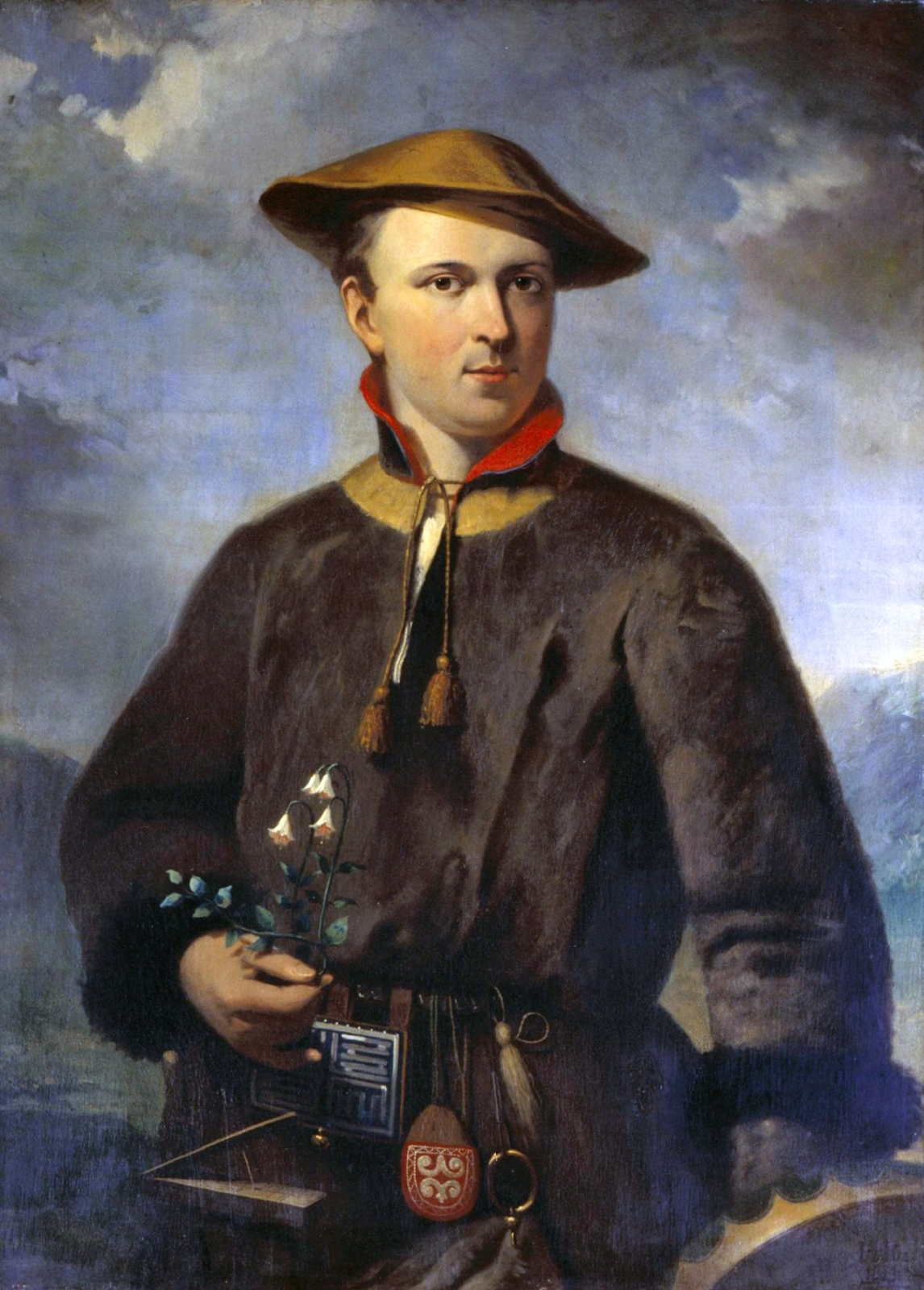
Painting by Hendrik Hollander, 1853. Via Wikimedia Commons.
Linnaeus adopted the twinflower as his personal symbol.


Thursday, May 30, 2019

He may have thought that no one but he came to Gowing's Swamp these afternoons

May 30.

 P. M. — To Gowing's Swamp. 
Gowing's Swamp
August 23, 1854
amid the sphagnum, lambkill, Kalmia glauca, andromeda, cranberry, etc

Sorrel begins to redden fields. 


The peculiarly tender foliage (yellowish) which began to invest the dark evergreens on the 22d lasts a week or more, growing darker.


May 30, 2019
No American mountain-ash out. 

When I entered the interior meadow of Gowing's Swamp I heard a slight snort, and found that I had suddenly come upon a woodchuck amid the sphagnum, lambkill, Kalmia glauca, andromeda, cranberry, etc., there. It was only seven feet off, and, being surprised, would not run. It would only stand erect from time to time, — perfectly erect with its blackish paws held like hands near together in front, — just so as to bring its head, or eyes, above the level of the lambkill, kalmia, etc., and look round, turning now this ear toward me, then that; and every now and then it would make a short rush at me, half a foot or so, with a snort, and then draw back, and also grit its teeth — which it showed — very audibly, with a rattling sound, evidently to intimidate me. I could not drive it, but it would steadily face me and rush toward me thus. Also it made a short motion occasionally as if to bury itself by burrowing there. It impressed me as a singularly wild and grizzly [sic] native, survivor of the red man. 

He may have thought that no one but he came to Gowing's Swamp these afternoons. 

Its colors were gray, reddish brown, and blackish, the gray-tipped wind hairs giving it a grizzly look above, and when it stood up its distinct rust-color beneath was seen, while the top of its head was dark-brown, becoming black at snout, as also its paws and its little rounded ears. Its head from snout to ears, when it stood up erect, made a nearly horizontal line. It did much looking round. When thus erect, its expression and posture were very bear-like, with the clumsiness of the bear. Though I drew off three or four rods, it would not retreat into the thicket (which was only a rod off) while I was there so near. 

The scheuchzeria is at height or past. 

E. Emerson's Calla palustris out the 27th. 

Eleocharis palustris, R. W. E.'s meadow, not long. 

Hear of linnaea out, the 28th.

H. D. Thoreau, Journal, May 30, 1859

Sorrel begins to redden fields. See May 19, 1860 ("Sorrel just begins to redden some fields"); May 22, 1854 ("The grass so short and fresh, the tender yellowish-green and silvery foliage of the deciduous trees lighting up the landscape, the birds now most musical, the sorrel beginning to redden the fields with ruddy health, — all these things make earth now a paradise.");  May 26, 1852 ("Walking home from surveying, the fields are just beginning to be reddened with sorrel. "); June 12, 1859 ("I am struck with the beauty of the sorrel now. . . What a wholesome red! . . . There is hardly a more agreeable sight at this season.")


The peculiarly tender foliage (yellowish) which began to invest the dark evergreens on the 22d lasts a week or more, growing darker. See note to May 22, 1859 ("The foliage is never more conspicuously a tender yellow than now. This lasts a week from this date, and then begins to be confounded with the older green. "). See also May 27, 1855("How important the dark evergreens now seen through the haze in the distance and contrasting with the gauze-like, as yet thin-clad deciduous trees"); May 26, 1857 ("The silvery leafets of the deciduous trees invest the woods like a permanent mist. At the same season with this haze of buds comes also the kindred haziness of the air.")


The interior meadow of Gowing's Swamp. See note to January 30, 1858  ("The pool, where there is nothing but water and sphagnum to be seen and where you cannot go in the summer, is about two rods long and one and a half wide.")

Its colors were gray, reddish brown, and blackish, the gray-tipped wind hairs giving it a grizzly look above, and when it stood up its distinct rust-color beneath was seen, while the top of its head was dark-brown, becoming black at snout, as also its paws and its little rounded ears. See note to April 29, 1855 ("See his shining black eyes and black snout and his little erect ears. He is of a light brown forward at this distance (hoary above, yellowish or sorrel beneath), gradually darkening backward to the end of the tail, which is dark-brown. The general aspect is grizzly.")

May 30 See A Book of the Seasons, by Henry Thoreau, May 30


A Book of the Seasons,  by Henry Thoreau
"A book, each page written in its own season,
out-of-doors, in its own locality.”


~edited, assembled and rewritten by zphx © 2009-2021

Sunday, July 15, 2018

I saw, about west-northwest, a large Green Mountain, perhaps Mansfield Mountain.

July 15. 

Thursday. Continued the ascent of Lafayette, also called the Great Haystack. 

It is perhaps three and a half miles from the road to the top by path along winding ridge. At about a mile and a half up by path, the spruce began to be small. 

Saw there a silent bird, dark slate and blackish above, especially head, with a white line over the brows, then dark slate next beneath, white throat and reddish belly, black bill. A little like a nut hatch. Also saw an F. hyemalis on top of a dead tree. 

The wood was about all spruce here, twenty feet high, together with Vaccinium Canadense, lambkill in bloom, mountain-ash, Viburnum nudum, rhodora, Amelanchier oligocarpa, nemopanthes

As I looked down into some very broad and deep ravines from this point, their sides appeared to be covered chiefly with spruce, with a few bodkin points of fir here and there (had seen two days before some very handsome firs on low ground which were actually concave on sides  of cone), while the narrow bottom or middle of the ravine, as far up and down as trees reached, where, of course, there was most water, was almost exclusively hardwood, apparently birch chiefly. 

As we proceeded, the number of firs began to increase, and the spruce to diminish, till, at about two miles perhaps, the wood was almost pure fir about fourteen feet high; but this suddenly ceased at about half a mile further and gave place to a very dwarfish fir, and to spruce again, the latter of a very dwarfish, procumbent form, dense and flat, one to two feet high, which crept yet higher up the mountain than the fir, —over the rocks beyond the edge of the fir, -- and with this spruce was mixed Empetrum nigrum, dense and matted on the rocks, partly dead, with berries already blackening, also Vaccinium uliginosum

Though the edges all around and the greater part of such a thicket high up the otherwise bare rocks might be spruce, yet the deeper hollows between the rocks, in the midst, would invariably be filled with fir, rising only to the same level, but much larger round. These firs especially made the stag-horns when dead. 

The spruce was mostly procumbent at that height, but the fir upright, though flat-topped. In short, spruce gave place to fir from a mile and a half to a mile below the top, — so you may say firs were the highest trees, — and then succeeded to it in a very dwarfish and procum bent form yet higher up. 

At about one mile or three quarters below the summit, just above the limit of trees, we came to a little pond, maybe of a quarter of an acre (with a yet smaller one near by), the source of one head of the Pemigewasset, in which grew a great many yellow lilies (Nuphar advena) and I think a potamogeton. 

In the flat, dryish bog by its shore, I noticed the Empetrum nigrum (1), ledum (2), Vaccinium Oxycoccus, Smilacina trifolia, Kalmia glauca (3) (in bloom still), Andromeda calyculata (4) (and I think Polifolia), Eriophorum vaginatum, Vaccinium uliginosum (5), Juncus filiformis, four kinds of sedge (e. g. Carex pauciflora .9), C. irrigua with dangling spikes, and a C. lupulzna-like, and the Scirpus caespitosus (?) of Mt. Washington, brown lichens (q. v.), and cladonias, all low and in a moss-like bed in the moss of the bog; also rhodora of good size. 1, 2, 3, 4, and 5 were quite dwarfish. 

The outlet of the pond was considerable, but soon lost beneath the rocks. A willow, rostrata-like but not downy, grew there. 

In the dwarf fir thickets above and below this pond, I saw the most beautiful linnaeas that I ever saw. They grew quite densely, full of rose-purple flowers, — deeper reddish purple than ours, which are pale, — perhaps nodding over the brink of a spring, altogether the fairest mountain flowers I saw, lining the side of the narrow horse track through the fir scrub. As you walk, you overlook the top of this thicket on each side. 

There also grew near that pond red cherry, Aster prenanthes (?) and common rue. 

We saw a line of fog over the Connecticut Valley. Found near summit apparently the Vaccinium angustifolium of Aitman (variety of Vaccinium Pennsylvanicum, Gray), bluets, and a broad-leaved vaccinium lower down (q. ‘12.). 

Just below top, reclined on a dense bed of Salix Uva-ursi, five feet in diameter by four or five inches deep, a good spot to sit on, mixed with a rush, amid rocks. This willow was generally showing its down.

We had fine weather on this mountain, and from the summit a good view of Mt. Washington and the rest, though it was a little hazy in the horizon. It was a wild mountain and forest scene from south-southeast round easterwardly to north-northeast. 

On the northwest the country was half cleared, as from Monadnock, -— the leopard-spotted land. I saw, about west-northwest, a large Green Mountain, perhaps Mansfield Mountain, though the compass was affected here. 

The Carex scirpoidea (?) grew at top, and it was surprising how many large bees, wasps, butterflies, and other insects were hovering and fluttering about the very apex, though not particularly below. What attracts them to such a locality.

Heard one white-throated sparrow above the trees, and also saw a little bird by the pond. Think I heard a song sparrow about latter place. Saw a toad near limit of trees, and many pollywogs in the pond above trees. 

Boiled tea for our dinner by the little pond, the head of the Pemigewasset. Saw tracks in the muddy bog by the pond-side, shaped somewhat like a small human foot sometimes, perhaps made by a bear. We made our fire on the moss and lichens, by a rock, amid the shallow fir and spruce, burning the dead fir twigs, or “deer’s-horns.” 

I cut off a flourishing fir three feet high and not flattened at top yet. This was one and a quarter inches in diameter and had thirty four rings. One, also flourishing, fifteen inches high, had twelve rings at ground. One, a dead one, was twenty nine inches in circumference, and at four feet from ground branched horizontally as much as five feet each way, making a flat top, curving upward again into stag horns, with branches very large and stout at base. 

Another fir, close by and dead, was thirty  inches in circumference at ground and only half an inch in diameter at four and a half feet. 

Another fir, three feet high, fresh and vigorous, without a flat top as yet, had its woody part an inch and an eighth thick (or diameter) at base (the bark being one eighth inch thick) and sixty-one rings. There was no sign of decay, though it was, as usual, mossy, or covered with lichens. 

I cut off at ground one of the little procumbent spruce trees, which spread much like a juniper, but not curving upward. This rose about nine inches above the ground, but I could not count the rings, they were so fine. (Vide piece.) 

The smallest diameter of the wood is forty-one eightieths of an inch. The number of rings, as near as I can count with a microscope, taking much pains, is about seventy, and on one side these are included within a radius of nine fortieths of an inch, of which a little more than half is heart-wood, or each layer on this side is less than one three-hundredth of an inch thick. The bark was three fortieths of an inch thick. It was quite round and easy to cut, it was so fresh. 

If the fir thirty inches in circumference grew no faster than that an inch and an eighth in diameter, then it was about five hundred and forty-nine years old. If as fast as the little spruce, it would be nearly fourteen hundred years old. 

When half-way down the mountain, amid the spruce, we saw two pine grosbeaks, male and female, close by the path, and looked for a nest, but in vain. They were remarkably tame, and the male a brilliant red orange, —neck, head, breast beneath, and rump,—blackish wings and tail, with two white bars on wings. (Female, yellowish.) 

The male flew nearer inquisitively, uttering a low twitter, and perched fearlessly within four feet of us, eying us and pluming himself and plucking and eating the leaves of the Amelanchier oligocarpa on which he sat, for several minutes. The female, meanwhile, was a rod off. 

They were evidently breeding there. Yet neither Wilson nor Nuttall speak of their breeding in the United States. 

At the base of the mountain, over the road, heard (and saw), at the same place where I heard him the evening before, a splendid rose-breasted grosbeak singing. I had before mistaken him at first for a tanager, then for a red-eye, but was not satisfied; but now, with my glass, I distinguished him sitting quite still, high above the road at the entrance of the mountain-path in the deep woods, and singing steadily for twenty minutes. 

It was remarkable for sitting so still and where yesterday. It was much richer and sweeter and, I think, more powerful than the note of the tanager or red-eye. It had not the hoarseness of the tanager, and more sweetness and fullness than the red-eye. Wilson does not give their breeding-place. Nuttall quotes Pennant as saying that some breed in New York but most further north. They, too, appear to breed about the White Mountains. 

Heard the evergreen-forest note on the sides of the mountains often. 

Heard no robins in the White Mountains. 

Rode on and stopped at Morrison’s (once Tilton’s) Inn in West Thornton. 

Heracleum lanatum in Notch and near, very large, some seven feet high. 

Observed, as we rode south through Lincoln, that the face of cliffs on the hills and mountains east of the river, and even the stems of the spruce, reflected a pink light at sunset.

H. D. Thoreau, Journal, July 15, 1858

Two pine grosbeaks, male and female, . . .the male a brilliant red orange, —neck, head, breast beneath, and rump,—blackish wings and tail, with two white bars on wings. See December 24, 1851 (“Saw also some pine grosbeaks, magnificent winter birds . . .with red or crimson reflections, more beautiful than a steady bright red would be. The note I heard, a rather faint and innocent whistle of two bars.”)

A splendid rose-breasted grosbeak singing. See May 25, 1854 ("Hear and see . . . the rose-breasted grosbeak, a handsome bird with a loud and very rich song, in character between that of a robin and a red-eye. . . . Rose breast, white beneath, black head and above, white on shoulder and wings.”); May 24, 1855 (“Hear a rose-breasted grosbeak. At first think it a tanager, but soon I perceive its more clear and instrumental — should say whistle, if one could whistle like a flute; a noble singer, reminding me also of a robin; clear, loud and flute-like; . . . Song not so sweet as clear and strong.”); May 21, 1856 (“What strong colored fellows, black, white, and fiery rose-red breasts! Strong-natured, too, with their stout bills. A clear, sweet singer, like a tanager but hoarse somewhat, and not shy.”) See also A Book of the Seasons,  by Henry Thoreau, the Rose-breasted Grosbeak


July 15. See A Book of the Seasons, by Henry Thoreau July 15

A Book of the Seasons, by Henry Thoreau
"A book, each page written in its own season,
out-of-doors, in its own locality."

~edited, assembled and rewritten by zphx © 2009-2021

Wednesday, June 6, 2018

Tp Painted-Cup Meadow via Assabet Bath.


June 6


June 6, 2018

P. M. – Cornus florida at Island well out, say the 3d. 

I hear of linnaea out in a pitcher and probably (?) in woods. 

Go to Painted-Cup Meadow via Assabet Bath. 

See three or four Emys insculpta about, making their holes in the gravelly bank south of Assabet Bath, and a few holes which must have been made a day or two, probably by the same. 

Golden senecio is not uncommon now. 

Am surprised to find that the buck bean flowers are withered, being killed by the recent frosts. 

Yellow Bethlehem-star.

Edith Emerson has found, in the field (Merriam’s) just south of the Beck Stow pine grove, Lepidium campestre, which may have been out ten days.

H. D. Thoreau, Journal , June 6, 1858

Cornus florida at Island well out, say the 3d. See June 4, 1858 ("I find the Cornus florida out in my pitcher when I get home June 4th, though it was not out on Island May 31st, and it is well out on Island when I look June 6th. I will say, therefore, that it opened June 3d."); See also May 25, 1855 ("Cornus florida, no bloom. Was there year before last? Does it not flower every other year?”); May 22, 1856("The Cornus florida does not bloom this year.")

Golden senecio is not uncommon now. See May 23, 1853 ("I am surprised by the dark orange-yellow of the senecio. At first we had the lighter, paler spring yellows of willows, dandelion, cinquefoil, then the darker and deeper yellow of the buttercup; and then this broad distinction between the buttercup and the senecio, as the seasons revolve toward July."); May 27, 1859 ("Golden senecio, at least to-morrow. ");May 29, 1856 (" Ride to Painted-Cup Meadow. . . . Golden senecio there, a day or two, at least"); June 9, 1853 ("The meadows are now yellow with the golden senecio, a more orange yellow, mingled with the light glossy yellow of the buttercup") See also A Book of the Seasons,  by Henry Thoreau, The Golden Senecio

Yellow Bethlehem-star. See June 5, 1855 ("Yellow Bethlehem-star in prime.")

Edith Emerson has found Lepidium campestre. See note to May 29, 1856 ("Found a painted-cup with more yellow than usual in it, and at length Edith found one perfectly yellow") [ Lepidium campestre--. Cow cress. See June 12, 1859, referring to  Lepidium campestre field.]

Friday, June 10, 2016

A painted tortoise laying her eggs ten feet from the wheel-track on the Marlborough road.

June 10

8 A. M. — Getting lily pads opposite Badger’s.

Already the pads are much eaten before they are grown, and underneath, on the under side of almost every one, are the eggs of various species of insect, some so minute as to escape detection at first, in close, flat, straight-sided nests. 

The yellow lily and kalmiana are abundantly out. The under sides of the pads, their stems, and the Ranunculus Purshii and other water-plants are thickly covered and defiled with the sloughs, perhaps of those little fuzzy gnats (in their first state) which have so swarmed over the river. It is quite difficult to clean your specimens of them. 

June 10, 2016

P. M. — To Dugan Desert.

Cornus alternifolia a day or two, up railroad; maybe longer elsewhere. 

Spergularia rubra by railroad, it having been dug up last year, and so delayed. 

The cuckoo of June 5th has deserted her nest, and I find the fragments of egg-shells in it; probably because I found it. 

Oxalis freshly out: how long? Apparently but two or three days. 

I find some linnaea well out, after all, within a rod of the top of the hill, apparently two or three days. If it flowered more abundantly, probably it would be earlier. 

Chewink’s nest with four young in the dry sprout-land of Loring’s thick wood that was, under a completely overarching tuft of dry sedge grass. 

I hear the huckleberry-bird now add to its usual strain a-tea tea tea tea tea

A painted tortoise laying her eggs ten feet from the wheel-track on the Marlborough road. She paused at first, but I sat down within two feet, and she soon resumed her work. Had excavated a hollow about five inches wide and six long in the moistened sand, and cautiously, with long intervals, she continued her work, resting always on the same spot her fore feet, and never looking round, her eye shut all but a narrow slit. 

Whenever I moved, perhaps to brush off a mosquito, she paused. A wagon approached, rumbling afar off, and then there was a pause, till it had passed and long, long after, a tedious, naturlangsam pause of the slow-blooded creature, a sacrifice of time such as those animals are up to which slumber half a year and live for centuries. 

It was twenty minutes before I discovered that she was not making the hole but filling it up slowly, having laid her eggs. She drew the moistened sand under herself, scraping it along from behind with both feet brought together, the claws turned inward. In the long pauses the ants troubled her (as mosquitoes me) by running over her eyes, which made her snap or dart out her head suddenly, striking the shell. She did not dance on the sand, nor finish covering the hollow quite so carefully as the one observed last year. 

She went off suddenly (and quickly at first), with a slow but sure instinct through the wood toward the swamp.

The clustered blackberry of Dugan Desert not yet out, nor apparently for two or three days. 

Sweet Viburnum apparently two or three days at most, by Warren Miles’s, Nut Meadow Pond. 

In a hollow apple tree, hole eighteen inches deep, young pigeon woodpeckers, large and well feathered. They utter their squeaking hiss whenever I cover the hole with my hand, apparently taking it for the approach of the mother. A strong, rank fetid smell issues from the hole. 

Ripe strawberries, even in a meadow on sand thrown out of a ditch, hard at first to detect amid the red radical leaves. The flower-buds of late there have now that rank smell. 

Lambkill out, at Clamshell. 

The Cratoegus Crus-Galli is out of bloom. 

Arenaria serpyllifolia is out of bloom at Clamshell.

Side-flowering sandwort abundantly out this side of Dugan Spring. 

Solanum well out, by Wood’s Bridge.

H. D. Thoreau, Journal, June 10, 1856

I find some linnaea well out. See June 1, 1855 ("I find the Linnaea borealis."); June 4, 1855 ("The Linnæa borealis has grown an inch"); June 6, 1853 ("The linnæa just out."); and  note to June 9, 1851 ("Gathered the Linnæa borealis.")

The one [laying painted tortoise] observed last year.  See June 18, 1855 ("after a slight pause it proceeds in its work, directly under and within eighteen inches of my face.”). See also June 10, 1858 (“See a painted turtle digging her nest in the road at 5.45 P. M.”) and A Book of the Seasons,  by Henry Thoreau, The Painted Turtle (Emys Picta)

Sweet Viburnum apparently two or three days at most. See June 10, 1854 ("The Viburnum lentago is just out of bloom now that the V. nudum is fairly begun.”); June 10, 1857 (“At R.W.E.'s a viburnum, apparently nudum var. cassinoides (?)”) See also A Book of the Seasons,  by Henry Thoreau, The Viburnums

Warren Miles's, Nut Meadow Pond. See May 7, 1856 ("The brook below is full of fishes,--suckers, pouts, eels, trouts,-- endeavoring to get up, but his dam prevents."); April 28, 1856 ("I began to survey the meadow there early, . . .but a great stream of water was already rushing down the brook, and it almost rose over our boots in the meadow before we had done.”); April 25, 1856 ("Warren Miles had caught three more snapping turtles since yesterday, at his mill, . . . These turtles have been disturbed or revealed by his operations.”); April 24 1856 (Warren Miles at his new mill tells me eels can’t get above his mill now, in the spring.”); February 28, 1856 ("Miles is repairing the damage done at his new mill by the dam giving way.”)

Ripe strawberries . . . hard at first to detect amid the red radical leaves.  See June 14, 1859 ("Early strawberries begin to be common. The lower leaves of the plant are red, concealing the fruit."); June 15, 1853 ("Strawberries in the meadow now ready for the picker. They lie deep at the roots of the grass in the shade. You spread aside the tall grass, and deep down in little cavities by the roots of the grass you find this rich fruit.”) See also 
A Book of the Seasons,  by Henry Thoreau: Strawberries

Lambkill out, at Clamshell. See June 9, 1855 ("Lambkill out."); June 10, 1855 ("The Kalmia glauca is done before the lambkill is begun here"); June 13, 1854 ("How beautiful the solid cylinders of the lamb-kill now just before sunset.”) See also A Book of the Seasons,  by Henry Thoreau, Lambkill (Kalmia augustifolia)

Side-flowering sandwort abundantly out this side of Dugan Spring. See May 26, 1853 ("Side-flowering sandwort is abundant, for some time, by wall of Lee's field near Garfield's."); June 3, 1859 ("Arenaria lateriflora well out, how long? "); June 5, 1855 ("Side-flowering sandwort apparently three days out in Clamshell flat meadow."); June 6, 1852 ("The side-flowering sandwort, an inconspicuous white flower like a chickweed.");  June 13, 1858 ("Arenaria lateriflora, how long?")

June 10. See A Book of the Seasons, by Henry Thoreau, June 10

Ripe strawberries hard
at first to detect amid the
red radical leaves.

A Book of the Seasons by Henry Thoreau
"A book, each page written in its own season,
out-of-doors, in its own locality."

~edited, assembled and rewritten by zphx © 2009-2026

https://tinyurl.com/hdt-560610

Monday, June 1, 2015

Twinflower

June 1.

A very windy day, the third, drowning the notes of birds, scattering the remaining apple blossoms. 

Rye, to my surprise, three or four feet high and glaucous. 

Cloudy and rain, threatening withal. 

Surveying at Holden wood-lot, I notice the Equisetum hyemale, its black-scaled flowerets now in many cases separated so as to show the green between, but not yet in open rings or whorls like the limosum.

Twinflower
(Linnaea borealis)
I find the Linnaea borealis growing near the end of the ridge in this lot toward the meadow, near a large white pine stump recently cut. 


C. has found the arethusa out at Hubbard’s Close; say two or three days at a venture, there being considerable.


H. D. Thoreau, Journal, June 1, 1855

I find the Linnaea borealis [twinflower] See June 4, 1855 ("The Linnæa borealis has grown an inch."); June 7, 1854 ("Linnæa abundantly out"); June 10, 1856 ("I find some linnaea well out and  note to June 9, 1851 ("Gathered the Linnæa borealis.")  See also  A Book of the Seasons, by Henry Thoreau, Linnaea borealis (Twinflower) and  Nature and Culture in the Northern Forest, 19; On the Trail of Twinflower

Arethusa at Hubbard's Close. See May 30, 1854 ("I am surprised to find arethusas abundantly out in Hubbard's Close, maybe two or three days ... This high-colored plant shoots up suddenly, all flower, in meadows where it is wet walking. A superb flower.”); May 29, 1856 ("Arethusa bulbosa at Hubbard’s Close apparently a day or two.”).

June 1. See A Book of the Seasons,  by Henry Thoreau, June 1

Third windy day
scattering  apple blossoms
and drowning bird song.

A Book of the Seasons, by Henry Thoreau
"A book, each page written in its own season,
out-of-doors, in its own locality.”
~edited, assembled and rewritten by zphx © 2009-2025

Monday, June 3, 2013

Painted-Cup Meadow


June 3

Friday. P. M. - To Annursnack. By way of the linnæa, which I find is not yet out. That thick pine wood is full of birds. 

Castilleja coccinea
(Masebrock, Public domain, via Wikimedia Commons)

The painted-cup is in its prime. It reddens the meadow, – Painted-Cup Meadow. 

It is a splendid show of brilliant scarlet, the color of the cardinal flower, and surpassing it in mass and profusion. They first appear on the side of the hill in drier ground, half a dozen inches high, and their color is most striking then, when it is most rare and precious; but they now cover the meadow, mingled with buttercups, etc., and many are more than eighteen inches high. It reminds me of a flame when it first appears. It might be called flame-flower, or scarlet-tip. Here is a large meadow full of it, and yet very few in the town have ever seen it.

The song of the robin and the chirp (?) of the chip-bird now begin prominently to usher in and to conclude the day. The robin's song seems not so loud as in the early spring, perhaps because there are so many other sounds at present. 

H. D. Thoreau, Journal, June 3, 1853

To Annursnack. By way of the linnæa, which I find is not yet out. See June 6, 1853 ("To Linnæa Woods . . . The linnæa just out."); See also A Book of the Seasons, by Henry Thoreau, Linnaea borealis (Twinflower) [At 365 feet, Annursnack is the highest elevation in Concord; its name derives from an Algonquian word meaning “lookout place.” ~  Ray Angelo, Place Names of Henry David Thoreau in Concord

Painted Cup Meadow.  See May 15, 1853 ("The tall buttercup on the west edge of Painted-Cup Meadow for a day or two at least, and the fringed polygala as long.");  May 28, 1856 ("To Painted-Cup Meadow. Potentilla argentea, maybe several days. Trifolium pratense."); May 29, 1856 ("Ride to Painted-Cup Meadow . . . Found a painted-cup with more yellow than usual in it  and at length Edith found one perfectly yellow. What a flowery place, a vale of Enna, is that meadow! Painted-cup, Erigeron bellidifolius, Thalictrum dioicum, Viola Muhlenbergii, fringed polygala, buck-bean, pedicularis, orobanche, etc., etc. Where you find a rare flower, expect to find more rare ones."); June 2, 1854 ("The Painted-Cup Meadow is all lit up with ferns, on its springy slopes."); June 10, 1860 ("There is much handsome interrupted fern in the Painted-Cup Meadow."); July 28, 1860 ("Holcus lanatus long done; very abundant on the west and northwest side of Painted-Cup Meadow."); September 2, 1856 ("In Painted- Cup Meadow the ferns are yellowing, imbrowned, and crisped, as if touched by frost (?), yet it may be owing to the rains."); October 12, 1857 ("The fringed gentian . . . along the north edge of the Painted-Cup Meadows."); September 13, 1858 ("Fringed gentian out well, on easternmost edge of the Painted- Cup Meadows, by wall.") 

The painted-cup is in its prime. It reddens the meadow . . . yet very few in the town have ever seen it. See May 8, 1853 ("At the foot of Annursnack, rising from the Jesse Hosmer meadow, was surprised by the brilliant pale scarlet flowers of the painted-cup (Castilleja coccinea) just coming into bloom. Some may have been out a day or two. Methinks this the most high-colored and brilliant flower yet, not excepting the columbine . . .  In color it matches Sophia's cactus blossoms exactly. It is all the more interesting for being a painted leaf and not petal . . . It is now from three to six inches high, rising from the moist base of the hill. It is wonderful what a variety of flowers may grow within the range of a walk, and how long some very conspicuous ones may escape the most diligent walker. if you do not chance to visit their localities the right week or fortnight, when their signs are out. It is a flaming leaf. The very leaf has flowered; not the ripe tints of autumn, but the rose in the cheek of infancy; a more positive flowering."); May 9, 1855 ("Castilleja show red, one, but will not bloom under a week probably."); May 29, 1856 ("Found a painted-cup with more yellow than usual in it, and at length Edith found one perfectly yellow. What a flowery place, a vale of Enna, is that meadow!”)

[Scarlet painted-cup [Castilleja coccinea] is an annual herb that is hemiparasitic . . . formerly found in several New England states, but is now apparently restricted to Connecticut, where only a small handful of populations remain. GoBotany]

The song of the robin and the chirp of the chip-bird now begin prominently to usher in and to conclude the day. See June 2, 1853 ("3.30 A.M.- When I awake I hear the low universal chirping or twittering of the chip-birds, like the bursting bead on the surface of the uncorked day."); June 16, 1853 ("Before 4 A.M., or sunrise, the sound of chip-birds and robins and bluebirds, etc., fills the air and is incessant.")

June 3. See  A Book of the Seasons,  by Henry Thoreau, June 3

It might be called flame-
flower or scarlet tip – few 
have ever seen it.

 A Book of the Seasons, by Henry Thoreau
"A book, each page written in its own season,
out-of-doors, in its own locality.”
~edited, assembled and rewritten by zphx © 2009-2025

https://tinyurl.com/hdt-530603

Popular Posts Last 30 Days.

The week ahead in Henry’s journal

The week ahead in Henry’s journal
A journal, a book that shall contain a record of all your joy.
"A stone fruit. Each one yields me a thought." ~ H. D. Thoreau, March 28, 1859


I sit on this rock
wrestling with the melody
that possesses me.