Showing posts with label pine cones. Show all posts

Sunday, February 21, 2021

A Book of the Seasons: Plucking and stripping a pine cone.


February 21. This plucking and stripping a pine cone is a business which [the squirrel] and his family understand perfectly. That is their forte.  I doubt if you could suggest any improvement.

After ages of experiment their instinct has settled on the same method that our reason would finally, if we had to open a pine cone with our teeth; and they were thus accomplished before our race knew that a pine cone contained any seed.

He does not prick his fingers, nor pitch his whiskers, nor gnaw the solid core any more than is necessary.

Having sheared off the twigs and needles that may be in his way, – for like a skillful woodchopper he first secures room and verge enough, – he neatly cuts off the stout stem of the cone with a few strokes of his chisels, and it is his.

To be sure, he may let it fall to the ground and look down at it for a moment curiously, as if it were not his; but he is taking note where it lies and adding it to a heap of a hundred more like it in his mind, and it now is only so much the more his for his seeming carelessness.

And, when the hour comes to open it, observe how he proceeds.

He holds it in his hands, – a solid embossed cone, so hard it almost rings at the touch of his teeth.

He pauses for a moment perhaps, – but not because he does not know how to begin, – he only listens to hear what is in the wind, not being in a hurry.

He knows better than try to cut off the tip and work his way downward against a chevaux-de-frise of advanced scales and prickles, or to gnaw into the side for three quarters of an inch in the face of many armed shields.

But he does not have to think of what he knows, having heard the latest æolian rumor.

If there ever was an age of the world when the squirrels opened their cones wrong end foremost, it was not the golden age at any rate.

He whirls the cone bottom upward in a twinkling, where the scales are smallest and the prickles slight or none and the short stem is cut so close as not to be in his way, and then he proceeds to cut through the thin and tender bases of the scales, and each stroke tells, laying bare at once a couple of seeds.

He whirls the cone bottom upward in a twinkling, where the scales are smallest and the prickles slight or none and the short stem is cut so close as not to be in his way, and then he proceeds to cut through the thin and tender bases of the scales that you cannot tell how he does it till you drive him off and inspect his unfinished work.


H. D. Thoreau, Journal, February 21, 1861

He whirls the cone bottom upward in a twinkling, and then he proceeds to cut through the thin and tender bases of the scales. See February 28, 1860 ("The squirrel always begins to gnaw a cone thus at the base, as if it were a stringent law among the squirrel people, — as if the old squirrels taught the young ones a few simple rules like this."); January 25, 1856 ("But the squirrel has the key to this conical and spiny chest of many apartments. He sits on a post, vibrating his tail, and twirls it as a plaything.")

 
February 13. I see where the squirrels have been eating the pitch pine cones since the last snow. February 13, 1855

February 22. Pitch pine cones must be taken from the tree at the right season, else they will not open or “blossom” in a chamber. I have one which was gnawed off by squirrels, apparently of full size, but which does not open. February 22, 1855

February 25.  The white pine cones have been blowing off more or less in every high wind ever since the winter began, and yet perhaps they have not more than half fallen yet.  February 25, 1860

February 27. Each scale, which is very elaborately and perfectly constructed, is armed with a short spine, pointing downward, as if to protect its seed from squirrels and birds. That hard closed cone, which defied all violent attempts to open it has thus yielded to the gentle persuasion of warmth and dryness. The expanding of the pine cones, that, too, is a season. February 27, 1853

February 28. I see twenty-four cones brought together under one pitch pine in a field, evidently gnawed off by a squirrel, but not opened. February 28, 1858


February 28. I take up a handsomely spread (or blossomed) pitch pine cone, but I find that a squirrel has begun to strip it first, having gnawed off a few of the scales at the base. The squirrel always begins to gnaw a cone thus at the base, as if it were a stringent law among the squirrel people, — as if the old squirrels taught the young ones a few simple rules like this. February 28, 1860

I see, in another place under a pitch pine, many cores of cones which the squirrels have completely stripped.
March 1. I see a pitch pine seed with its wing, far out on Walden..  March 1, 1856.

March 3. A few rods from the broad pitch pine beyond, I find a cone which was probably dropped by a squirrel in the fall, for I see the marks of its teeth where it was cut off; and it has probably been buried by the snow till now, for it has apparently just opened, and I shake its seeds out. Not only is this cone, resting upright on the ground, fully blossomed, a very beautiful object, but the winged seeds which half fill my hand, small triangular black seeds with thin and delicate flesh colored wings, remind me of fishes. I see, in another place under a pitch pine, many cores of cones which the squirrels have completely stripped of their scales, These you find left on and about stumps where they have sat, and under the pines. Most fallen pitch pine cones show the marks of squirrels’ teeth, showing they were cut off. March 3, 1855

March 5.  White pine cones half fallen. March 5, 1860

March 6. Part of the pitch pine cones are yet closed. March 6, 1853

March 7. Picked up a very handsome white pine cone some six and a half inches long by two and three eighths near base and two near apex, perfectly blossomed. It is a very rich and wholesome brown color, of various shades as you turn it in your hand, —a light ashy or gray brown, somewhat like unpainted wood. as you look down on it, or as if the lighter brown were covered with a gray lichen, seeing only those parts of the scales always exposed, —with a few darker streaks or marks and a drop of pitch at the point of each scale. Within, the scales are a dark brown above (i.e. as it hangs) and a light brown beneath, Very distinctly being marked beneath by the same darker brown, down the centre and near the apex somewhat anchor wise.  March 7, 1855

March 21.  I see several white pine cones in the path by Wheildon's which appear to have fallen in the late strong winds, but perhaps the ice in the winter took them off. Others still hold on.  March 21, 1859


April 2. I find under one small pitch pine tree a heap of the cones which have been stripped of their scales, evidently by the red squirrels, the last winter and fall, they having sat upon some dead limbs above. They were all stripped regularly from the base upward, excepting the five to seven uppermost and barren scales, making a pretty figure. I counted two hundred and thirty-nine cones under this tree alone, and most of them lay within two feet square upon a mass of the scales one to two inches deep and three or four feet in diameter. There were also many cones under the surrounding pines. Those I counted would have made some three quarts or more. These had all been cut off by the squirrels and conveyed to this tree and there stripped and eaten. They appeared to have devoured all the fruit of that pitch pine grove, and probably it was they that nibbled the wintergreen. No fruit grows in vain. The red squirrel harvests the fruit of the pitch pine. His body is about the color of the cone. I should like to get his recipe for taking out pitch, for he must often get his chaps defiled, methinks. These were all fresh cones, the fruit of last year, perhaps. There was a hole in the ground where they lodged by that tree. April 2, 1859


April 19. As dryness will open the pitch pine cone, so moisture closes it up again. April 19, 1856

June 25. I am too late for the white pine flowers. The cones are half an inch long and greenish, and the male flowers effete. June 25, 1852 

September 1Saw a red squirrel cutting off white pine cones.  He had strewn the ground with them, as yet untouched, under the tree. September 1, 1853

September 1 Green white pine cones are thrown down. An unusual quantity of these have been stripped for some time past, and I see the ground about the bases of the trees strewn with them. September 1, 1859

September 9.  Wednesday. P. M. – To the Hill for white pine cones. Very few trees have any. I can only manage small ones, fifteen or twenty feet high, climbing till I can reach the dangling green pickle-like fruit in my right hand, while I hold to the main stem with my left. The cones are now all flowing with pitch, and my hands are soon so covered with it that I cannot easily cast down the cones where I would, they stick to my hands so. I cannot touch the basket, but carry it on my arm; nor can I pick up my coat, which I have taken off, un less with my teeth, or else I kick it up and catch it on my arm. Thus I go from tree to tree, from time to time rubbing my hands in brooks and mud-holes, in the hope of finding something that will remove pitch like grease, but in vain. It is the stickiest work I ever did. I do not see how the squirrels that gnaw them off and then open them scale by scale keep their paws and whiskers clean. They must know of, or possess, some remedy for pitch that we know nothing of. How fast I could collect cones, if I could only contract with a family of squirrels to cut them off for me! Some are already brown and dry and partly open, but these commonly have hollow seeds and are worm-eaten. The cones collected in my chamber have a strong spirituous scent, almost rummy, or like a molasses hogshead, agreeable to some.  September 9, 1857

September 16. I see green and closed cones beneath, which the squirrels have thrown down. On the trees many are already open. Say within a week have begun. In one small wood, all the white pine cones are on the ground, generally unopened, evidently freshly thrown down by the squirrels, and then the greater part have already been stripped. They begin at the base of the cone, as with the pitch pine. It is evident that they have just been very busy throwing down the white pine cones in all woods. Perhaps they have stored up the seeds separately. September 16, 1858

September 18.  There is an abundant crop of cones on the white pines this year, and they are now for the most part brown and open.  The tops of the high trees for six or ten feet downward are quite browned with them, hanging straight downward.  It is worth a long walk to look from some favorable point over a pine forest whose tops are thus covered with the brown cones just opened, — from which the winged seeds have fallen or are ready to fall.  How little observed are the fruits which we do not use! How few attend to the ripening and dispersion of the pine seed!  September 18, 1859

September 18. White pine cones (a small crop), and all open that I see. [Are they not last year's ?] September 18, 1860

September 24. I walk to that very dense and handsome white pine grove east of Beck Stow’s Swamp . . . The ground was completely strewn with white pine cones, apparently thrown down by the squirrels, still generally green and closed, but many stripped of scales, about the base of almost every pine, sometimes all of them. Now and for a week a good time to collect them. You can hardly enter such a wood but you will hear a red squirrel chiding you from his concealment in some pine-top. It is the sound most native to the locality. September 24, 1857

October 6. Going through Ebby Hubbard's woods, I see thousands of white pine cones on the ground, fresh light brown, which lately opened and shed their seeds and lie curled up on the ground. The seeds are rather pleasant or nutritious tasting, taken in quantity, like beech nuts, methinks.  October 6, 1857

October 8. At length I discover some white pine cones, a few, on Emerson Heater Piece trees. They are all open, and the seeds, all the sound ones but one, gone. So September is the time to gather them. The tip of each scale is covered with fresh flowing pitch. October 8, 1856

October 13. So far as I have observed, if pines or oaks bear abundantly one year they bear little or nothing the next year.  This year, so far as I observe, there are scarcely any white pine cones. October 13, 1860

October 15.  Go to look for white pine cones, but see none.October 15, 1855 

October 19. I see at last a few white pine cones open on the trees, but almost all appear to have fallen. October 19, 1855

 
November 3. I see many white pine cones fallen and open, with a few seeds still in them. November 3, 1853

November 4. I have failed to find white pine seed this year, though I began to look for it a month ago. The cones were fallen and open. Look the first of September.  November 4, 1855

 November 14. It is a general and sudden bursting or expanding of all the scales with a sharp crackling sound and motion of the whole cone, as by a force pent up within it. I suppose the strain only needed to be relieved in one point for the whole to go off..November 14, 1855


November 20. the whole cone opens its scales with a smart crackling. November 20, 1855

December 8. I visit the door of many a squirrel’s burrow, and see his nutshells and cone-scales and tracks in the sand, but a snow would reveal much more. December 8, 1855

December 17.  The snow being some three or four inches deep,  . . .You see many places where they [squirrels] have probed the snow for these white pine cones, evidently those which they cut off green and which accordingly have not opened so as to drop the seeds. This was perhaps the design in cutting them off so early, — thus to preserve them under the snow (not dispersed). . December 17, 1859

January 6. At every post along the brook-side, and under almost every white pine, the snow strewn with the scales and seeds of white pine cones left by the squirrels . . . To return to the squirrels, I saw where they had laid up a pitch pine cone in the fork of a rider in several places. January 6, 1854

January 8. All of the pitch pine cones that I see, but one, are open. January 8, 1856

January 13. Picked up a pitch pine cone which had evidently been cut off by a squirrel. The successive grooves made by his teeth while probably he bent it down were quite distinct. The woody stem was a quarter of an inch thick, and I counted eight strokes of his chisel. January 13, 1855

January 13. I see under some sizable white pines in E. Hubbard's wood, where red squirrels have run about much since this snow. They have run chiefly, perhaps, under the surface of the snow, so that it is very much under mined by their paths under these trees, and every now and then they have come to the surface, or the surface has fallen into their gallery. They seem to burrow under the snow about as readily as a meadow mouse. There are also paths raying out on every side from the base of the trees. And you see many holes through the snow into the ground where they now are, and other holes where they have probed for cones and nuts. The scales of the white pine cones are scattered about here and there. They seek a dry place to open them, — a fallen limb that rises above the snow, or often a lower dead stub projecting from the trunk of the tree. January 13, 1860


January 17. I look again at that place of squirrels (of the 13th). As I approach, I have a glimpse of one or two red squirrels gliding off silently along the branches of the pines, etc. They are gone so quickly and noiselessly, perhaps keeping the trunk of the tree between you and them, that [you] would not commonly suspect their presence if you were not looking for them. But one that was on the snow ascended a pine and sat on a bough with its back to the trunk as if there was nothing to pay. Yet when I moved again he scud up the tree, and glided across on some very slender twigs into a neigh boring tree, and so I lost him. Here is, apparently, a settlement of these red squirrels. There are many holes through the snow into the ground, and many more where they have probed and dug up a white pine cone, now pretty black and, for aught I can see, with abortive or empty seeds; yet they patiently strip them on the spot, or at the base of the trees, or at the entrance of their holes, and evidently find some good seed. The snow, however, is strewn with the empty and rejected seeds. They seem to select for their own abode a hillside where there are half a dozen rather large and thick white pines near enough together for their aerial travelling, and then they burrow numerous holes and depend on finding (apparently) the pine cones which they cast down in the summer, before they have opened. In the fall they construct a nest of grass and bark-fibres, moss, etc., in one of the trees for winter use, and so apparently have two resources. January 17, 1860


January 22. At Walden, near my old residence, I find that since I was here on the 11th, apparently within a day or two, some gray or red squirrel or squirrels have been feeding on the pitch pine cones extensively. The snow under one young pine is covered quite thick with the scales they have dropped while feeding overhead. I count the cores of thirty-four cones on the snow there, and that is not all. Under another pine there are more than twenty, and a well-worn track from this to a fence post three rods distant, under which are the cores of eight cones and a corresponding amount of scales. The track is like a very small rabbit. They have gnawed off the cones which were perfectly closed. I see where one has taken one of a pair and left the other partly off. He had first sheared off the needles that were in the way, and then gnawed off the sides or cheeks of the twig to come at the stem of the cone, which as usual was cut by successive cuts as with a knife, while bending it.


One or two small, perhaps dead, certainly unripe ones were taken off and left unopened. I find that many of those young pines are now full of unopened cones, which apparently will be two years old next summer, and these the squirrel now eats. There are also some of them open, perhaps on the most thrifty twigs. January 22, 1856

January 23. I see where the squirrels have torn the pine cones in pieces to come at their seeds. And in some cases the mice have nibbled the buds of the pitch pines, where the plumes have been bent down by the snow.  January 23, 1852

January 25. A closed pitch pine cone gathered January 22d opened last night in my chamber. If you would be convinced how differently armed the squirrel is naturally for dealing with pitch pine cones, just try to get one off with your teeth. He who extracts the seeds from a single closed cone with the aid of a knife will be constrained to confess that the squirrel earns his dinner. It is a rugged customer, and will make your fingers bleed. But the squirrel has the key to this conical and spiny chest of many apartments. He sits on a post, vibrating his tail, and twirls it as a plaything. January 25, 1856


A Book of the Seasons,  by Henry Thoreau
 "A book, each page written in its own season,
out-of-doors, in its own locality."
 ~edited, assembled and rewritten by zphx ©  2009-2024

Wednesday, January 6, 2021

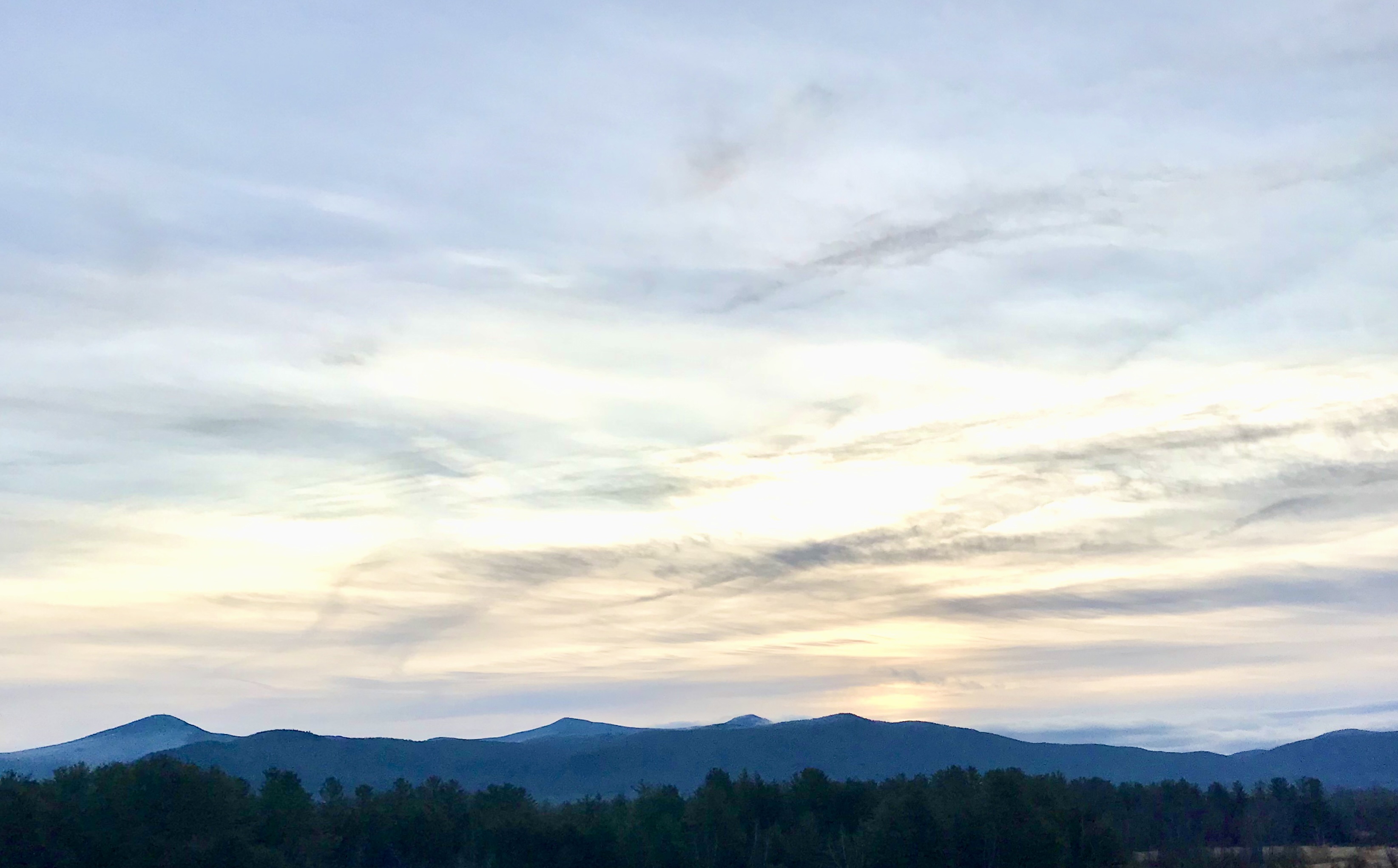
A low, narrow, clear segment of sky in the west – coppery yellow.


January 6

A low, narrow, clear
segment of sky in the west -
coppery yellow.
January 6, 1854

Walked Tappan in P. M. down railroad to Heywood Brook, Fair Haven, and Cliffs.

At every post along the brook-side, and under almost every white pine, the snow strewn with the scales and seeds of white pine cones left by the squirrels. They have sat on every post and dropped them for a great distance, also acorn-shells.

The surface of the snow was sometimes strewn with the small alder scales, i. e. of catkins; also, here and there, the large glaucous lichens (cetrarias?).

Showed Tappan a small shad bush, which interested him and reminded him of a greyhound, rising so slender and graceful with its narrow buds above the snow.

To return to the squirrels, I saw where they had laid up a pitch pine cone in the fork of a rider in several places.

Many marks of partridges, and disturbed them on evergreens.

A winter (?) gnat out on the bark of a pine.

On Fair Haven we slumped nearly a foot to the old ice.

The partridges were budding on the Fair Haven orchard, and flew for refuge to the wood, twenty minutes or more after sundown.

There was a low, narrow, clear segment of sky in the west at sunset, or just after (all the rest overcast), of the coppery yellow, perhaps, of some of Gilpin's pictures, all spotted coarsely with clouds like a leopard's skin.

I took up snow in the tracks at dark, but could find no fleas in it then, though they were exceedingly abundant before. Do they go into the snow at night? 

Frequently see a spider apparently stiff and dead on snow.

H. D. Thoreau Journal, January 6, 1854


A small shad bush. . . rising so slender and graceful with its narrow buds above the snow.
See November 4, 1854 ("The shad-bush buds have expanded into small leaflets); December 1, 1852 ("At this season I observe the form of the buds which are prepared for spring, "); January 12, 1855 ("Well may the tender buds attract us at this season, no less than partridges, for they are the hope of the year, the spring rolled up. The summer is all packed in them.") See also A Book of the Seasons, by Henry Thoreau, Shad-bush, Juneberry, or Service-berry

The scales and seeds of white pine cones left by the squirrels
. See January 13, 1860 ("The scales of the white pine cones are scattered about here and there. They seek a dry place to open them, — a fallen limb that rises above the snow, or often a lower dead stub projecting from the trunk of the tree.");  January 22,  1856 ("he snow under one young pine is covered quite thick with the scales they have dropped while feeding overhead.").See also A Book of the Seasons, by Henry Thoreau, Plucking and Stripping a Pine Cone.

The surface of the snow was sometimes strewn with the small alder scales. See December 30, 1855 ("For a few days I have noticed the snow sprinkled with alder and birch scales."); January 5, 1851 ("The catkins of the alders are now frozen stiff !!") January 20, 1860 (" The snow along the sides of the river is also all dusted over with birch and alder seed, and I see where little birds have picked up the alder seed") See also A Book of the Seasons,  by Henry Thoreau, The Alders

Winter gnats? See February 2, 1854 ("The winter gnat is seen in the warm air.");  March 19, 1858  ("Are not these the winter gnat? They keep up a circulation in the air like water-bugs on the water.");  See also A Book of the Seasons, by Henry Thoreau, Fuzzy Gnats (tipulidæ)

On Fair Haven we slumped nearly a foot to the old ice.
See January 6, 1855 ("The skating is for the most part spoiled by a thin, crispy ice on top of the old ice, which is frozen in great crystals and crackles under your feet.")

The partridges were budding on the Fair Haven orchard, and flew for refuge to the wood, twenty minutes or more after sundown. See February 18, 1852 ("I find the partridges among the fallen pine-tops on Fair Haven these afternoons, an hour before sundown, ready to commence budding in the neighboring orchard")

There was a low, narrow, clear segment of sky in the west at sunset.  See January 2, 1854 ("The tints of the sunset sky are never purer and ethereal than in the coldest winter days. "); January 5, 1852 ("I thought I saw an extensive fire in the western horizon . It was a bright coppery-yellow fair-weather cloud along the edge of the horizon  gold with some alloy of copper"); January 7, 1852 ("I go forth each afternoon and look into the west a quarter of an hour before sunset , with fresh curiosity , to see what new picture will be painted there") See also A Book of the Seasons, by Henry Thoreau, the Western Sky and A Book of the Seasons, by Henry Thoreau, Winter Sunsets

Gilpin. William Gilpin, English writer, printmaker, clergyman and schoolmaster, best known as one of the originators of the idea of the picturesque. See January 8, 1854 ("Gilpin, in his essay on the "Art of Sketching Landscape," says: "When you have finished your sketch therefore with Indian ink, as far as you propose, tinge the whole over with some light horizon hue. It may be the rosy tint of morning; or the more ruddy one of evening; or it may incline more to a yellowish, or a greyish cast. . . . By washing this tint over your whole drawing, you lay a foundation for harmony." I have often been attracted by this harmonious tint in his and other drawings, and sometimes, especially, have observed it in nature when at sunset I inverted my head.")

I took up snow in the tracks at dark, but could find no fleas in it then, though they were exceedingly abundant before.  See January 5, 1854 ("The snow is covered with snow-fleas . . . sprinkled like pepper for half a mile in the tracks of a woodchopper in deep snow."); January 9, 1854 ("Find many snow-fleas, apparently frozen, on the snow. "); January 10, 1854 ("I cannot thaw out to life the snow-fleas which yesterday covered the snow like pepper, in a frozen state.") See also A Book of the Seasons, by Henry Thoreau, The Snow Flea

Frequently see a spider apparently stiff and dead on snow. See December 18, 1855 ("See to-day a dark-colored spider of the very largest kind on ice."); December 23, 1859 ("A little black, or else a brown, spider (sometimes quite a large one) motionless on the snow or ice. . . .The spiders lie torpid and plain to see on the snow.") See also A Book of the Seasons, by Henry Thoreau, Spiders on Ice

January 6.  See A Book of the Seasons, by Henry Thoreau, January 6.


A Book of the Seasons, by Henry Thoreau,
"A book, each page written in its own season,
out-of-doors, in its own locality.”
~edited, assembled and rewritten by zphx © 2009-2024
tinyurl.com/hdt540106

Sunday, March 15, 2020

Here is the first fair, and at the same time calm and warm, day.

March 15. 

I hear that there was about one acre of ice only at the southwest corner (by the road) of Flint's Pond on the 13th. It will probably, then, open entirely to-day, with Walden. 

Though it is pretty dry and settled travelling on open roads, it is very muddy still in some roads through woods, as the Marlborough road or Second Division road. 

2 P. M. – To Lee's Cliff. Thermometer 50°. 
March 15, 2020
On the whole the finest day yet (the thermometer was equally high the 3d), considering the condition of the earth as well as the temperature of the air. Yet I think I feel the heat as much if not more than I did on the 23d of February, when the thermometer rose to 58º. Is it because there was more snow lying about then? The comparative stillness, as well as the absence of snow, has an effect on our imaginations, I have no doubt. Our cold and blustering days this month, thus far, have averaged about 40°. Here is the first fair, and at the same time calm and warm, day.

Looking over my Journal, I find that the -
  • 1st of March was rainy.
  • 2 at 2 P. M.         56°
  • 3                         50
  • 4                         44
  • 5 ( probably as low )
  • 6 at 3 P . M .     44
  • 7 at 3 P . M       34
  • 8 2 P. M.           50
  • 9 2 P. M.           41
  • 10                     30
  • 11                     44
  • 12                     40
  • 13                     36
  • 14                     39
  • 15                     50
The temperature has been as high on three days this month, and on the 2nd considerably higher, and yet this has seemed the warmest and most summer-like, evidently owing to the calmness and greater absence of snow. 

How admirable in our memory lies a calm warm day amid a series of cold and blustering ones! The 11th was cold and blustering at 40; to-day delightfully warm and pleasant (being calm) at 50°.

I see those devil's-needle-like larvæ in the warm pool south of Hubbard's Grove (with two tails) swimming about and rising to the top. 

What a difference it makes whether a pool lies open to the sun or is within a wood, — affecting its breaking up. This pool has been open at least a week, while that three or four rods from it in the woods is still completely closed and dead. 

It is very warm under the south edge of the wood there, and the ground, as for some time, — since snow went off, — is seen all strewn with the great white pine cones which have been blown off during the winter,  part of the great crop of last fall, — of which apparently as many, at least, still remain on the trees. 

A hen-hawk sails away from the wood southward. I get a very fair sight of it sailing overhead. What a perfectly regular and neat outline it presents! an easily recognized figure anywhere. Yet I never see it represented in any books. The exact correspondence of the marks on one side to those on the other, as the black or dark tip of one wing to the other, and the dark line mid way the wing. 

I have no idea that one can get as correct an idea of the form and color of the undersides of a hen-hawk's wings by spreading those of a dead specimen in his study as by looking up at a free and living hawk soaring above him in the fields. The penalty for obtaining a petty knowledge thus dishonestly is that it is less interesting to men generally, as it is less significant. 

Some, seeing and admiring the neat figure of the hawk sailing two or three hundred feet above their heads, wish to get nearer and hold it in their hands, not realizing that they can see it best at this distance, better now, perhaps, than ever they will again. What is an eagle in captivity! — screaming in a courtyard! I am not the wiser respecting eagles for having seen one there. I do not wish to know the length of its entrails. 

How neat and all compact this hawk! Its wings and body are all one piece, the wings apparently the greater part, while its body is a mere fullness or protuberance between its wings, an inconspicuous pouch hung there. It suggests no insatiable maw, no corpulence, but looks like a larger moth, with little body in proportion to its wings, its body naturally more etherealized as it soars higher. 

These hawks, as usual, began to be common about the first of March, showing that they were returning from their winter quarters. 

I see a little ice still under water on the bottom of the meadows by the Hubbard's Bridge causeway. The frost is by no means out in grass upland. 

I see to-day in two places, in mud and in snow, what I have no doubt is the track of the woodchuck that has lately been out, with peculiarly spread toes like a little hand. 

Am surprised to hear, from the pool behind Lee's Cliff, the croaking of the wood frog. It is all alive with them, and I see them spread out on the surface. Their note is somewhat in harmony with the rustling of the now drier leaves. It is more like the note of the classical frog, as described by Aristophanes, etc. How suddenly they awake! yesterday, as it were, asleep and dormant, to-day as lively as ever they are. The awakening of the leafy woodland pools. They must awake in good condition. 

As Walden opens eight days earlier than I have known it, so this frog croaks about as much earlier. 

Many large fuzzy gnats and other insects in air. 

It is remarkable how little certain knowledge even old and weather-wise men have of the comparative earliness of the year. They will speak of the passing spring as earlier or later than they ever knew, when perchance the third spring before it was equally early or late, as I have known.

H. D. Thoreau, Journal, March 15, 1860


I hear that there was about one acre of ice only at the southwest corner (by the road) of Flint's Pond on the 13th. It will probably, then, open entirely to-day, with Walden. Compare April 1, 1852 (" I am surprised to find Flint's Pond frozen still, which should have been open a week ago. How unexpectedly dumb and poor and cold does Nature look, when, where we had expected to find a glassy lake reflecting the skies and trees in the spring, we find only dull, white ice!")

A hen-hawk sails away from the wood southward. See March 4, 1860 ("A hen-hawk rises and sails away over the Holden Wood as in summer.")

Many large fuzzy gnats and other insects in air. See March 2, 1860 ("We see one or two gnats in the air."); March 7, 1860 ("C. says that he saw a swarm of very small gnats in the air yesterday."). See also  A Book of the Seasons, by Henry Thoreau, The Fuzzy Gnats

Am surprised to hear, from the pool behind Lee's Cliff, the croaking of the wood frog. . . . As Walden opens eight days earlier than I have known it, so this frog croaks about as much earlier. See March 14, 1860 ("I am surprised to find Walden almost entirely open. . . . I have not observed it to open before before the 23d of March."); March 30, 1858 ("Later, in a pool behind Lee's Cliff, I hear them, – the waking up of the leafy pools.");/ See also March 23, 1859 ("I hear a single croak from a wood frog. . . . Thus we sit on that rock, hear the first wood frog's croak"); March 24, 1859 ("I am sitting in Laurel Glen, listening to hear the earliest wood frogs croaking. . . .. Now, when the leaves get to be dry and rustle under your feet, dried by the March winds, the peculiar dry note, wurrk wurrk wur-r-r-k wurk of the wood frog is heard faintly by ears on the alert, borne up from some unseen pool in a woodland hollow which is open to the influences of the sun. "); March 26, 1857 ("I hear a faint, stertorous croak from a frog in the open swamp; at first one faint note only, which I could not be sure that I had heard"); March 26, 1860 (“The wood frog [first] may be heard March 15, as this year, or not till April 13, as in '56,”); March 27, 1853 ("Tried to see the faint-croaking frogs at J. P. Brown's Pond in the woods. They are remarkably timid and shy; had their noses and eyes out, croaking, but all ceased, dove, and concealed themselves, before I got within a rod of the shore."); March 28, 1858 ("Coming home, I hear the croaking frogs in the pool on the south side of Hubbard’s Grove. It is sufficiently warm for them at last."); March 30, 1858 ("I do not remember that I ever hear this frog in the river or ponds. They seem to be an early frog, peculiar to pools and small ponds in the woods and fields.");  March 31, 1855 (“I go listening for the croak of the first frog, or peep of a hylodes."); March 31, 1857 (“As I rise the east side of the Hill, I hear the distant faint peep of hylodes and the tut tut of croaking frogs from the west of the Hill.”); April 13, 1856 ("As I go by the Andromeda Ponds, I hear the tut tut of a few croaking frogs,"); See also April 18, 1856 ("Walden is open entirely to-day for the first time.")

Tuesday, February 25, 2020

High dark-blue waves half a mile off running incessantly along the edge of white ice.

February 25. 

P. M. - Round via Clamshell to Hubbard's Bridge. 

Colder, and frozen ground; strong wind, northwest. 

I noticed yesterday in the street some dryness of stones at crossings and in the road and sidewalk here and there, and even two or three boys beginning to play at marbles, so ready are they to get at the earth. 

The fields of open water amid the thin ice of the meadows are the spectacle to-day. They are especially dark blue when I look southwest. Has it anything to do with the direction of the wind? 

It is pleasant to see high dark-blue waves half a mile off running incessantly along the edge of white ice. There the motion of the blue liquid is the most distinct. As the waves rise and fall they seem to run swiftly along the edge of the ice. 

The white pine cones have been blowing off more or less in every high wind ever since the winter began, and yet perhaps they have not more than half fallen yet. 

For a day or two past I have seen in various places the small tracks apparently of skunks. They appear to come out commonly in the warmer weather in the latter part of February. 

I noticed yesterday the first conspicuous silvery sheen from the needles of the white pine waving in the wind. A small one was conspicuous by the side of the road more than a quarter of a mile ahead. I suspect that those plumes which have been appressed or contracted by snow and ice are not only dried but opened and spread by the wind. 

Those peculiar tracks which I saw some time ago, and still see, made in slosh and since frozen at the Andromeda Ponds, I think must be mole-tracks, and those “nicks” on the sides are where they shoved back the snow with their vertical flippers. This is a very peculiar track, a broad channel in slosh, and at length in ice.

H. D. Thoreau, Journal, February 25, 1860


The fields of open water amid the thin ice of the meadows are the spectacle to-day. They are especially dark blue when I look southwest. Has it anything to do with the direction of the wind. See 
February 12, 1860 ("That dark-eyed water, especially when I see it at right angles with the direction of the sun, is it not the first sign of spring? "); February 25, 1851 ("The waves on the meadows make a fine show."); March 29, 1852 ("The water on the meadows looks very dark from the street. Their color depends on the position of the beholder in relation to the direction of the wind.") See alsoo A Book of the Seasons, by Henry Thoreau, Signs of the Spring: Bright Blue Water

For a day or two past I have seen in various places the small tracks apparently of skunks. They appear to come out commonly in the warmer weather in the latter part of February. see February 24, 1857 ("I have seen the probings of skunks for a week or more. “); March 10, 1854 ("See a skunk in the Corner road, which I follow. . .. It is a slender black (and white) animal, with its back remarkably arched, standing high behind and carrying its head low; runs, even when undisturbed, with singular teeter or undulation, like the walking of a Chinese lady. Very slow; I hardly have to run to keep up with it. It has a long tail, which it regularly erects when I come too near and prepares to discharge its liquid. It is white at the end of the tail, and the hind head and a line on the front of the face, — the rest black, except the flesh-colored nose (and I think feet). . . .I have no doubt they have begun to probe already where the ground permits, — or as far as it does. But what have they eat all winter?") See also A Book of the Seasons, by Henry Thoreau, Signs of the Spring: Skunks Active

I noticed yesterday the first conspicuous silvery sheen from the needles of the white pine waving in the wind . . .those plumes which have been appressed or contracted by snow and ice are not only dried but opened and spread by the wind. See February 4, 1852 ("Now the white pine are a misty blue; anon a lively, silvery light plays on them, and they seem to erect themselves unusually"); February 5, 1852 ("The boughs, feathery boughs, of the white pines, tier above tier, reflect a silvery light against the darkness of the grove.");  February 10, 1860 ("I see that Wheildon's pines are rocking and showing their silvery under sides as last spring, — their first awakening, as it were. "); March 2, 1860 ("I see a row of white pines, too, waving and reflecting their silvery light.")

This is a very peculiar track, a broad channel in slosh, and at length in ice. See February 20, 1852 ("No wonder that we so rarely see these animals, though their tracks are so common.  . . .The mole goes behind and beneath, rather than before and above.")

Monday, January 13, 2020

The thin ice of the Mill Brook sides at the Turnpike bridge is sprinkled over with large crystals.


January 13

January 13, 2020

Tuttle was saying to-day that he did remember a certain man's living with him once, from something that occurred. It was this: The man was about starting for Boston market for Tuttle, and Mrs. Tuttle had been telling him what to get for her. The man inquired if that was all, and Mrs. Tuttle said no, she wanted some nutmegs. "How many," he asked. Tuttle, coming along just then, said, "Get a bushel." 

When the man came home he said that he had had a good deal of trouble about the nutmegs. He could not find so many as were wanted, and, besides, they told him that they did not sell them by the bushel. But he said that he would take a bushel by the weight. Finally he made out to get a peck of them, which he brought home. It chanced that nutmegs were very high just then, so Tuttle, after selecting a few for his own use, brought the remainder up to town and succeeded in disposing of them at the stores for just what he gave for them. 

One man at the post-office said that a crow would drive a fox. He had seen three crows pursue a fox that was crossing the Great Meadows, and he fairly ran from [them] and took refuge in the woods. 

Farmer says that he remembers his father's saying that as he stood in a field once, he saw a hawk soaring above and eying something on the ground. Looking round, he saw a weasel there eying the hawk. Just then the hawk stooped, and the weasel at the same instant sprang upon him, and up went the hawk with the weasel; but by and by the hawk began to come down as fast as he went up, rolling over and over, till he struck the ground. His father, going up, raised him up, when out hopped the weasel from under his wing and ran off none the worse for his fall. 

The surface of the snow, now that the sun has shone on it so long, is not so light and downy, almost impalpable, as it was yesterday, but is somewhat flattened down and looks even as if [it] had had a skim-coat of some whitewash. I can see sparkles on it, but they are finer than at first and therefore less dazzling. 

The thin ice of the Mill Brook sides at the Turnpike bridge is sprinkled over with large crystals which look like asbestos or a coarse grain. This is no doubt the vapor of last evening crystallized. I see vapor rising from and curling along the open brook and also rising from the end of a plank in the sun, which is wet with melted snow, though the thermometer was 16° only when I left the house. 

I see in low grounds numerous heads of bidens, with their seeds still. 

I see under some sizable white pines in E. Hubbard's wood, where red squirrels have run about much since this snow. They have run chiefly, perhaps, under the surface of the snow, so that it is very much under mined by their paths under these trees, and every now and then they have come to the surface, or the surface has fallen into their gallery. They seem to burrow under the snow about as readily as a meadow mouse. There are also paths raying out on every side from the base of the trees. And you see many holes through the snow into the ground where they now are, and other holes where they have probed for cones and nuts. The scales of the white pine cones are scattered about here and there. They seek a dry place to open them, — a fallen limb that rises above the snow, or often a lower dead stub projecting from the trunk of the tree.

H. D. Thoreau, Journal, January 13, 1860

The scales of the white pine cones are scattered about here and there. See October 6 1857 ("Going through Ebby Hubbard's woods, I see thousands of white pine cones on the ground, fresh light brown, which lately opened and shed their seeds and lie curled up on the ground.")


A Book of the Seasons,  by Henry Thoreau
"A book, each page written in its own season,
out-of-doors, in its own locality.”
~edited, assembled and rewritten by zphx © 2009-2022

Sunday, September 1, 2019

The cherry-birds and robins seem to know the locality of every wild cherry in the town.

September 1

P. M. — To Saw Mill Brook and Flint's Pond.

That reach in the road this side Britton's Camp might be called Nabalus Road, they are so abundant there. Some of them are fully six feet high, — a singularly tall and slender plant.

See, I think, my first tobacco-pipe this afternoon, now that they are about done, and have seen no pine- sap this year, abundant as both the above were last year. Like fungi, these plants are apparently scarce in a dry year, so that you might at first think them rare plants. This is a phenomenon of drought.

I see in different places small grubs splitting leaves now, and so marking them curiously with light brown or whitish on the green. Here are two at work in a Rhus Toxicodendron leaf. They appear to have been hatched within the leaf at the apex, and each has eaten upward on its own side of the midrib and equally fast, making a light-colored figure shaped like a column of smoke in the midst of the green. They perfectly split the leaf, making no visible puncture in it, even at the ribs or veins. Some creatures are so minute that they find food enough for them between the two sides of a thin leaf, without injuring the cuticle. The ox requires the meadows to be shorn for him, and cronches both blade and stalk, even of the coarsest grass, as corn; but these grubs do their browsing in narrower pastures, pastures not so wide as their own jaws, between fences (inviolable to them) of their own establishing, or along narrow lanes. There, secure from birds, they mine, and no harm can they do now that the green leaf has so commonly done its office.

If you would study the birds now, go where their food is, i. e. the berries, especially to the wild black cherries, elder-berries, poke berries, mountain-ash berries, and ere long the barberries, and for pigeons the acorns.

In the sprout-land behind Britton's Camp, I came to a small black cherry full of fruit, and then, for the first time for a long while, I see and hear cherry-birds — their shrill and fine seringo — and the note of robins, which of late are scarce. We sit near the tree and listen to the now unusual sounds of these birds, and from time to time one or two come dashing from out the sky toward this tree, till, seeing us, they whirl, disappointed, and perhaps alight on some neighboring twigs and wait till we are gone.

The cherry-birds and robins seem to know the locality of every wild cherry in the town. You are as sure to find them on them now, as bees and butterflies on the thistles. If we stay long, they go off with a fling, to some other cherry tree, which they know of but we do not. The neighborhood of a wild cherry full of fruit is now, for the notes of birds, a little spring come back again, and when, a mile or two from this, I was plucking a basketful of elder-berries (for which it was rather early yet), there too, to my surprise, I came on a flock of golden robins and of bluebirds, apparently feeding on them.

Excepting the vacciniums, now past prime and drying up, the cherries and elder berries are the two prevailing fruits now. We had remarked on the general scarcity and silence of the birds, but when we came to the localities of these fruits, there again we found the berry-eating birds assembled, — young (?) orioles and bluebirds at the elder-berries.

Green white pine cones are thrown down. An unusual quantity of these have been stripped for some time past, and I see the ground about the bases of the trees strewn with them.

The spikenard berries in the shade at Saw Mill have but just begun to turn.

The Polygonatum biflorum with its row of bluish-green berries (the blue a bloom), pendulous from the axils of the recurved stem, apparently now in its prime.

Red choke-berry ripe.

Smooth sumach probably hardly ripe yet generally.

The fruit of the arum is the most remarkable that I see this afternoon, such its brilliancy, color, and form; perhaps in prime now. It is among the most easily detected now on the floor of the swamp, its bright- scarlet cone above the fallen and withered leaves and amid its own brown or whitish and withering leaves. Its own leaves and stem perhaps soft and decaying, while it is perfectly fresh and dazzling. It has the brightest gloss of any fruit I remember, and this makes the green ones about as remarkable as the scarlet. With, perchance, a part of the withered spathe still investing and veiling it. The scarlet fruit of the arum spots the swamp floor.

September 1, 2023

Now, also, bright-colored fungi of various colors on the swamp floor begin to compete with these fruits. I see a green one.

The elder-berry cyme, held erect, is of very regular form, four principal divisions drooping toward each quarter around an upright central one. Are said to make a good dye. They fill your basket quickly, the cymes are so large and lie up so light.

The autumnal dandelion is a prevailing flower now, but since it shuts up in the afternoon it might not be known as common unless you were out in the morning or in a dark afternoon. Now, at 11 a. m., it makes quite a show, yet at 2 p. m. I do not notice it.

Bought a pair of shoes the other day, and, observing that as usual they were only wooden-pegged at the toes, I required the seller to put in an extra row of iron pegs there while I waited for them. So he called to his boy to bring those zinc pegs, but I insisted on iron pegs and no zinc ones. He gave me considerable advice on the subject of shoes, but I suggested that even the wearer of shoes, of whom I was one, had an opportunity to learn some of their qualities. I have learned to respect my own opinion in this matter. As I do not use blacking and the seller often throws in a box of blacking when I buy a pair of shoes, they accumulate on my hands.

Saw this afternoon, on a leaf in the Saw Mill woodpath, a very brilliant beetle a quarter or a third of an inch in length with brilliant green and copper reflections. The same surface, or any part of the upper surface, of the bug was green from one point of view and burnished copper from another. Yet there was nothing in its form to recommend this bug.

You must be careful not to eat too many nuts. I one winter met a young man whose face was broken out into large pimples and sores, and when I inquired what was the matter, he answered that he and his wife were fond of shagbarks, and therefore he had bought a bushel of them, and they spent their winter evenings eating them, and this was the consequence.

H. D. Thoreau, Journal, September 1, 1859


The cherry-birds and robins seem to know the locality of every wild cherry in the town. See August 19, 1852 ("The small fruits of most plants are now generally ripe or ripening, and this is coincident with the flying in flocks of such young birds now grown as feed on them."); August 29, 1854 ("Many birds nowadays resort to the wild black cherry tree, as here front of Tarbell's. I see them continually coming and going directly from and to a great distance, — cherry birds, robins, and kingbirds "); September 1, 1860: ("Cherries are especially birds' food, and . . . I shall think the birds have the best right to them..")

The fruit of the arum is the most remarkable that I see this afternoon, such its brilliancy, color, and form; perhaps in prime now. See August 22, 1852 ("The arum berries are mostly devoured, apparently by birds . . . Perhaps fruits are colored like the trillium berry and the scarlet thorn to attract birds to them."); September 2, 1853 ("The dense oval bunches of arum berries now startle the walker in swamps. They are a brilliant vermilion on a rich ground."); September 4, 1856 ("Splendid scarlet arum berries there now in prime.”); September 4, 1857 ("Arum berries ripe.”); September 24, 1856 ("Aarum berries still fresh"); September 28, 1856 ("The arum berries are still fresh and abundant, perhaps in their prime. A large cluster is two and a half inches long by two wide and rather flattish. . . . These singular vermilion-colored berries, about a hundred of them, surmount a purple bag on a peduncle six or eight inches long. ") See also A Book of the Seasons,  by Henry Thoreau,  Arum Berries

Now, also, bright-colored fungi of various colors on the swamp floor. See September 1, 1856  ("There are many very beautiful lemon- yellow ones of various forms, some shaped like buttons, some becoming finely scalloped on the edge, some club-shaped and hollow, of the most delicate and rare but decided tints, contrasting well with the decaying leaves about them. There are others also pure white, others a wholesome red, others brown, and some even a light indigo-blue above and beneath and throughout.") See also A Book of the Seasons, by Henry Thoreau, The Season for Fungi

The autumnal dandelion is a prevailing flower now. See August 4. 1854 ("The autumnal dandelion is now more common."); September 2, 1854 ("The autumnal dandelion is conspicuous on the shore."); September 13, 1856 ("Surprised at the profusion of autumnal dandelions in their prime on the top of the hill")

Green white pine cones are thrown down.  See September 16, 1857("I see green and closed cones beneath, which the squirrels have thrown down.")

Bought a pair of shoes the other day. See EDK August 9, 1860 (" Bot a pair of shoes for $1.25"); December 4, 1856 ("When I bought my boots yesterday, Hastings ran over his usual rigmarole.")

Thursday, August 22, 2019

It is very dry now.

August 22

Monday. 

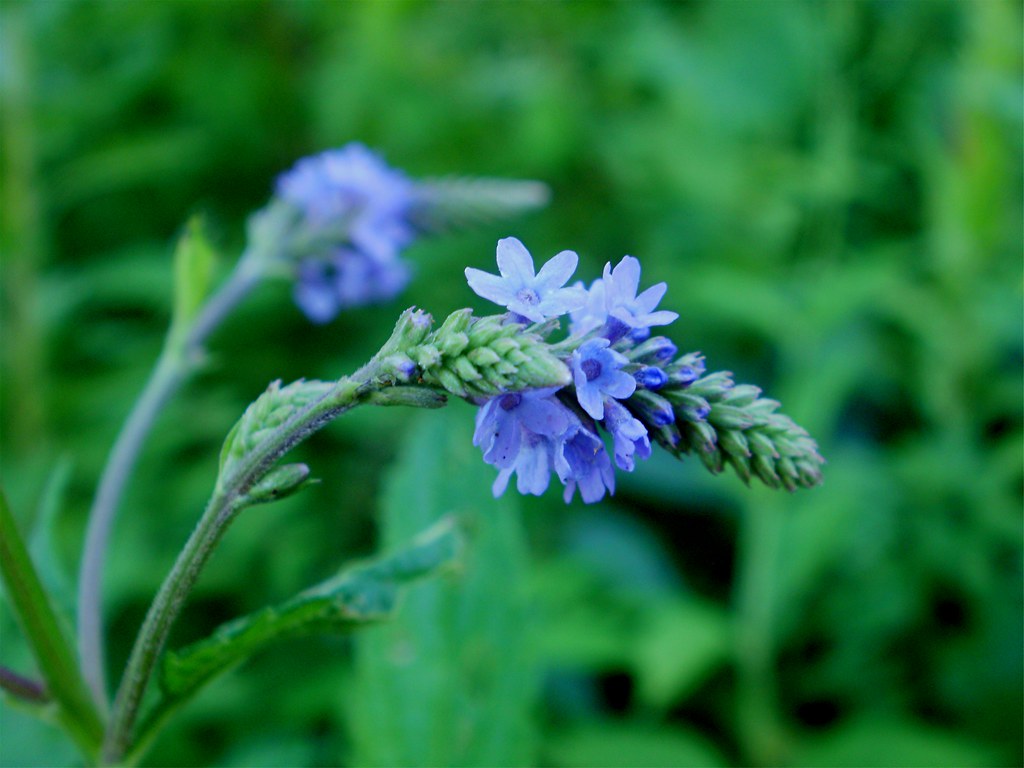
The circles of the blue vervain flowers, now risen near to the top, show how far advanced the season is. 


Blue vervain (Verbena hastata)

The savory-leaved aster (Diplopappus linariifolius) out; how long? 


WOOD ASTER AUGUST 20, 2017

Saw the Aster corymbosus on the 19th. 

Have seen where squirrels have eaten, i.e. stripped, many white pine cones, for a week past, though quite green. 

That young pitch pine whose buds the crossbills (?) plucked has put out shoots close by them, but they are rather feeble and late. 

Riding to the factory, I see the leaves of corn, planted thick for fodder, so rolled by the drought that I mistook one row in grass for some kind of rush or else reed, small and terete. 

At the factory, where they were at work on the dam, they showed large and peculiar insects which they were digging up amid the gravel and water of the dam, nearly two inches long and half an inch wide, with six legs, two large shield-like plates on the forward part of the body, — under which they apparently worked their way through wet sand, — and two large claws, some what lobster-like, forward. The abdomen long, of many rings, and fringed with a kind of bristles on each side. 

The other day, as I was going by Messer's, I was struck with the pure whiteness of a tall and slender buttonwood before his house. The southwest side of it for some fifty or more feet upward, as far as the outer bark had recently scaled off, was as white, as distinct and bright a white, as if it had been painted, and when I put my finger on it, a white matter, like paint not quite dry, came off copiously, so that I even suspected it was paint. When I scaled off a piece of bark, the freshly exposed surface was brown. This white matter had a strong fungus-like scent, and this color is apparently acquired after a little exposure to the air. Nearly half the tree was thus uninterruptedly white as if it had been rounded and planed and then painted. No birch presents so uniformly white a surface. 

It is very dry now, but I perceive that the great star-shaped leaves of the castor bean plants in Mr. Rice's garden at twilight are quite cold to the touch, and quite shining and wet with moisture wherever I touch them. Many leaves of other plants, as cucumbers, feel quite dry.

H. D. Thoreau, Journal, August 22, 1859

The circles of the blue vervain flowers, now risen near to the top, show how far advanced the season is. See August 6, 1852 ("Blue vervain is now very attractive to me, and then there is that interesting progressive history in its rising ring of blossoms. It has a story."); August 20, 1851 ("The flowers of the blue vervain have now nearly reached the summit of their spikes."); August 21, 1851 ("It is very pleasant to measure the progress of the season by this and similar clocks. So you get, not the absolute time, but the true time of the season.");August 23, 1851 ("The Verbena hastata at the pond has reached the top of its spike, a little in advance of what I noticed yesterday; only one or two flowers are adhering.")

The savory-leaved aster (Diplopappus linariifolius) out; how long?
 July 29, 1852 ("That common rigid narrow-leaved faint-purplish aster in dry woods by shrub oak path, Aster linariifolius of Bigelow, but it is not savory leaved. I do not find it in Gray."); August 3, 1858 ("Savory-leaved aster."); September 18, 1856 ("Diplopappus linariifolius in prime.") see also A Book of the Seasons, by Henry Thoreau, Savory-leaved aster  

;
Saw the Aster corymbosus on the 19th. See August 9, 1856 ("What I have called Aster corymbosus out a day, above Hemlocks.. It has eight to twelve white rays, smaller than those of the macrophyllus, and a dull-red stem commonly."); August 11, 1852 ("Aster corymbosus, path beyond Corner Spring and in Miles Swamp.");  September 1, 1856 ("A. corymbosus, in prime, or maybe past."); September 6, 1856 ("For the first time distinguish the Aster cordifolius, a prevailing one in B[rattleboro] and but just beginning to flower"); September 9, 1856 [at Brattleboro] ("High up the mountain the Aster macrophyllus as well as corymbosus.");September 22, 1858 [from Salem to Cape Ann on foot] ("saw A. corymbosus, which is a handsome white wood aster"); September 24, 1856 ("A. corymbosus, still fresh though probably past prime."); October 8, 1856 ("A. corymbosus, looks fresh! . . . of asters, only corymbosus, undulatus,Tradescanti, and longifolius . . .are common. ")

Aster corymbosus . now known as Eurybia divaricata , commonly known as the white wood aster, can be found in dry open woods as well as along wood-edges and clearings. Its flower heads have yellow centers and white rays that are arranged in flat-topped corymbiform arrays (growing in such a fashion that the outermost are borne on longer pedicels than the inner, bringing all flowers up to a common level. to flattish top superficially resembling an umbel,). It flowers in the late summer through fall. Other distinguishing characteristics include its serpentine stems and sharply serrated narrow heart-shaped leaves. ~Wikipedia


Have seen where squirrels have eaten, i.e. stripped, many white pine cones, for a week past, though quite green. See September 9, 1857 ("How fast I could collect cones, if I could only contract with a family of squirrels to cut them off for me!"); September 16, 1857 ("I see green and closed cones beneath, which the squirrels have thrown down. On the trees many are already open. Say within a week have begun. In one small wood, all the white pine cones are on the ground, generally unopened, evidently freshly thrown down by the squirrels, and then the greater part have already been stripped.");September 24, 1857 ("The ground was completely strewn with white pine cones, apparently thrown down by the squirrels, still generally green and closed, but many stripped of scales, about the base of almost every pine, sometimes all of them. Now and for a week a good time to collect them.")

That young pitch pine whose buds the crossbills (?) plucked has put out shoots. See March 8, 1859 ("I see, under the pitch pines on the southwest slope of the hill, the reddish bud-scales scattered on the snow . . . and, examining, I find that in a great many cases the buds have been eaten by some creature and the scales scattered about. . .I am inclined to think that these were eaten by the red squirrel; or was it the crossbill? for this is said to visit us in the winter. Have I ever seen a squirrel eat the pine buds?")

Popular Posts Last 30 Days.

The week ahead in Henry’s journal

The week ahead in Henry’s journal
A journal, a book that shall contain a record of all your joy.
"A stone fruit. Each one yields me a thought." ~ H. D. Thoreau, March 28, 1859


I sit on this rock
wrestling with the melody
that possesses me.