Showing posts with label spring sky. Show all posts

Friday, May 18, 2012

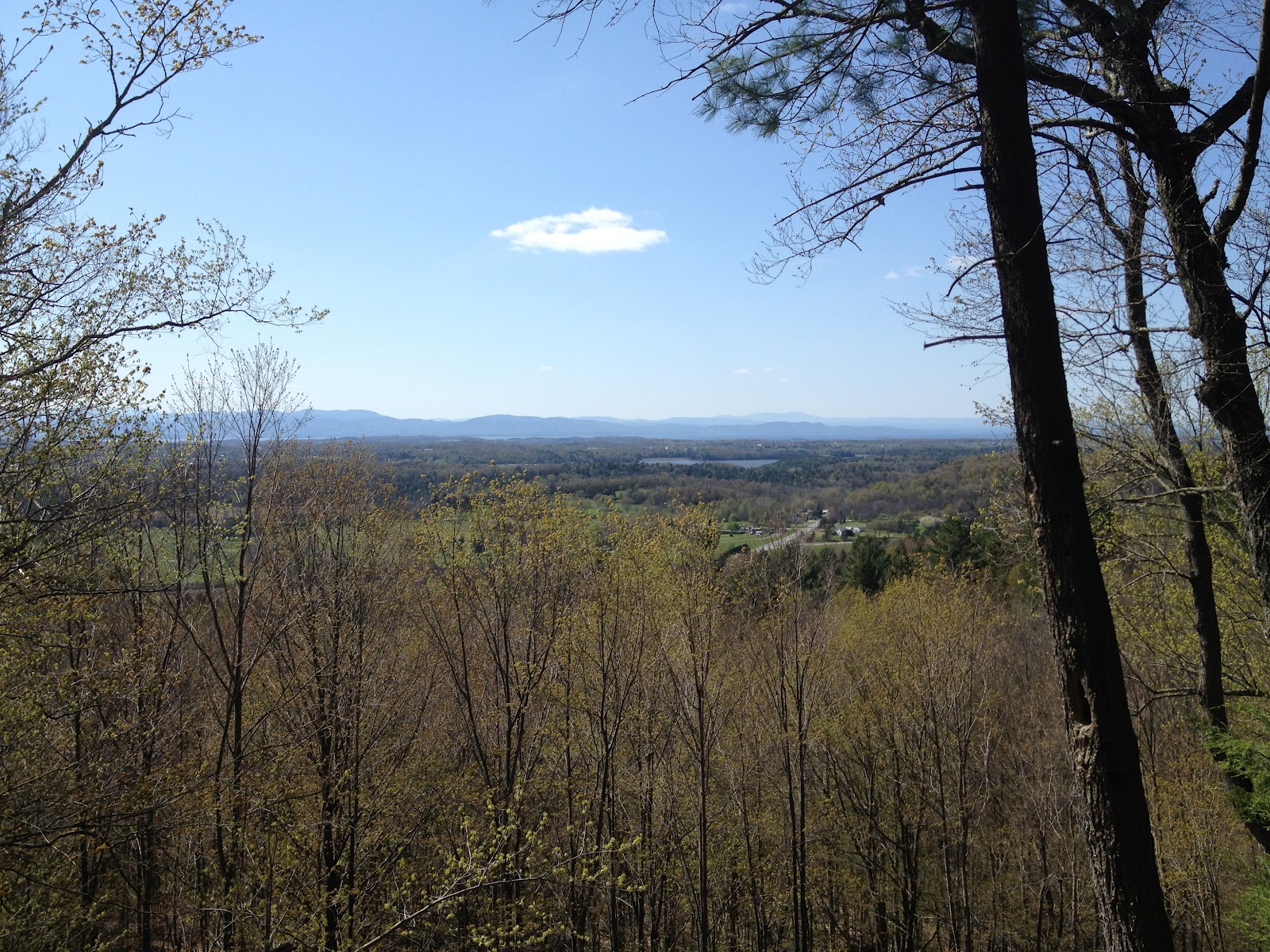
The world can never be more beautiful than now


May 18


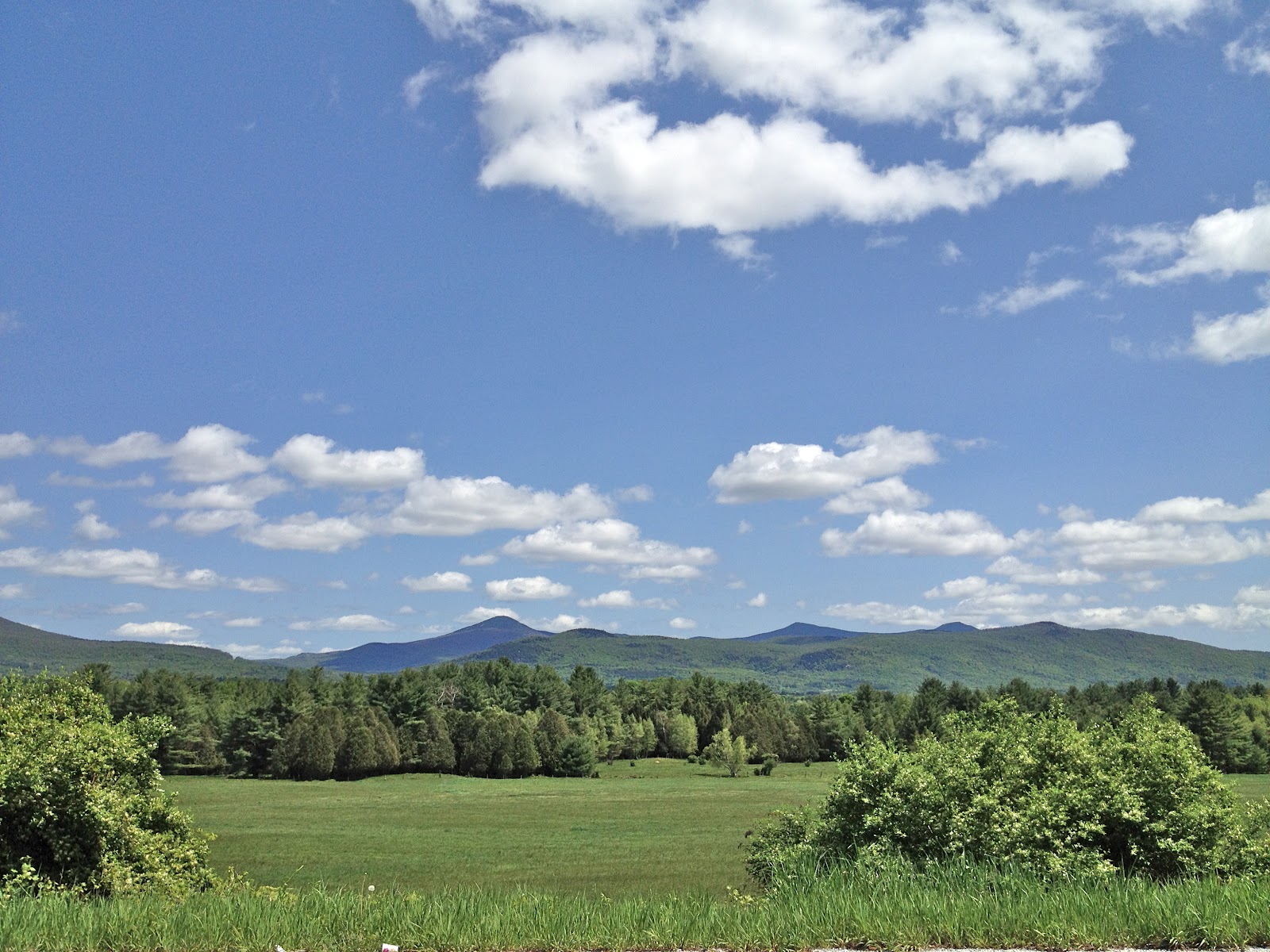
It is fine clear atmosphere, only the mountains blue.  Shall we have much of this weather after this? There is scarcely a flock of cloud in the sky. 

The heaven is now broad and open to the earth in these longest days. 


The world can never be more beautiful than now, for, combined with the tender fresh green, you have this remarkable clearness of the air. 

I doubt if the landscape will be any greener.

H. D. Thoreau, Journal, May 18, 1852

The world can never be more beautiful than now.  See May 1850 ("I still sit on its Cliff in a new spring day, and look over the awakening woods and the river, and hear the new birds sing, with the same delight as ever. It is as sweet a mystery to me as ever, what this world is."); May 5, 1852 ("Every part of the world is beautiful today.”); May 17, 1852 ("I was surprised, on turning round, to behold the serene and everlasting beauty of the world."); May 22, 1854 ("How many times I have been surprised thus, on turning about on this very spot, at the fairness of the earth!”); 
 October 7, 1857 ("When I turn round half-way up Fair Haven Hill, by the orchard wall, and look northwest, I am surprised for the thousandth time at the beauty of the landscape."); December 5, 1856 ("I have never got over my surprise that I should have been born into the most estimable place in all the world, and in the very nick of time, too.") See also A Book of the Seasons, by Henry Thoreau, The world can never be more beautiful than now.

 May 18. See A Book of the Seasons, by Henry Thoreau, May 18 

This tender fresh green –
the world can never be more
beautiful than now.


A Book of the Seasons,  by Henry Thoreau
"A book, each page written in its own season,
out-of-doors, in its own locality."
 ~edited, assembled and rewritten by zphx ©  2009-2026

https://tinyurl.com/hdt-520518

Saturday, May 5, 2012

The vast wild earth.

May 3

5 a. m. — To Cliffs. A great brassy moon going down in the west.

A flock of neat sparrows, small, striped-throated, whitish over eye, on an apple tree by J. Potter's. At Hayden's orchard, quite a concert from some small sparrows, forked-tailed, many jingling together like canaries. Their note still somewhat like the chip-sparrow's. Can it be this?

Fair Haven. How cheering and glorious any landscape viewed from an eminence! For every one has its horizon and sky. It is so easy to take wide views. Snow on the mountains. 

The wood thrush reminds me of cool mountain springs and morning walks. 

That oven-birdish note which I heard here on May 1st I now find to have been uttered by the black and white warbler or creeper. He has a habit of looking under the branches. 

The towhee finch is the loudest singer here now.

Looking from the Cliff, now, about 6 A.M.  the landscape is as if seen in a mirage, the Cliff being both in shadow and in the fresh and dewy sunshine (not much dew yet). Cool sunlight. The landscape lies in a fresh morning light; the earth and water smell fresh and new; the,   water is marked by a few smooth streaks. 

The white pine is beautiful in the morning light--the early sun light and the dew on it -- before the water is rippled and the morning song of the birds is quenched.


Evening.--The moon is full. The air is filled with a certain luminous, liquid, white light. You can see the moonlight, as it were, reflected from the atmosphere,- which some might mistake for a haze, - a glow of mellow light,  as if the air were a very thin but transparent liquid, not dry, as in winter, nor gross, as in summer.  The sky has depth, and not merely distance.  The sky is not so withdrawn, clear, tight, and cold as last moon.

I go along the side of Fair Haven Hill. The clock strikes distinctly, showing the wind is easterly. There is a grand, rich, musical echo trembling on the air long after the clock has ceased to strike, like a vast organ, filling the air with a trembling music like a flower of sound. Nature adopts it. Beautiful is sound. 

From the Hill the river is a broad blue stream exactly the color of the heavens which it reflects. Sit on the Cliff with comfort, in greatcoat.  All the tawny and russet earth--for no green is seen on the ground at this hour--  sending only this faint multitudinous sound (of frogs) to heaven. The vast, wild earth.

Summer is coming apace. Within three or four days the birds have come so fast I can hardly keep the run of them  - much faster than the flowers. I did not watch for the very earliest, however. 

The little peeping frogs make a background of sound in the horizon, which you do not hear unless you attend. The little peeper prefers a pool on the edge of a wood, which mostly dries up at midsummer, whose shore is covered with leaves and [where] twigs lie in the water, as where choppers have worked. Theirs is a clear, sharp, earpiercing peep, not shrill, - sometimes a squeak from one whose pipe is out of order, frequently a quavering, curving (?) trill, as if of alarm (?). My little peepers when they slept, the pulsation in their throats stopped. There was a wrinkled bag there. They begin to peep in earnest at or before sundown, and they keep it up now at 10 P. M. But I rarely hear any numbers in the morning, when they probably sleep. 

H. D. Thoreau, Journal, May 3, 1852 

How cheering and glorious any landscape viewed from an eminence!
See A Book of the Seasons, by Henry Thoreau, Seen from a Hillside

That oven-birdish note which I heard here on May 1st I now find to have been uttered by the black and white warbler or creeper. See May 1, 1852 ("I think I heard an oven-bird just now, wicher wicher whicher wich."); May 3, 1858 ("Heard the black and white creeper April 25th. I hear it and see it well to-day."); See also April 28, 1856 ("I hear to-day frequently the seezer seezer seezer of the black and white creeper, . . .”); May 4, 1858 ("I hear the weese wese wese of the creeper continually from the swamp. It is the prevailing note there.") See also A Book of the Seasons,   by Henry Thoreau, The Black and White Creeper


The clock strikes distinctly, showing the wind is easterly.
See August 8, 1851 ("I hear the nine o'clock bell ringing in Bedford. Pleasantly sounds the voice of one village to another."); January 21, 1853 ("I hear the nine-o'clock bell in Bedford five miles off, which I might never hear in the village, but here its music surmounts the village din and has something very sweet and noble and inspiring in it, associated, in fact, with the hooting of owls"); April 18, 1852 ("An east wind. I hear the clock strike plainly ten or eleven P.M."); October 21, 1855 ("The wind must be east, for I hear the church bell very plainly.") and An East Wind. See also A Book of the Seasons, by Henry Thoreau, Bells and Whistles and April 5, 1855 ("[W]e on the water hear the loud and musical sound of bells ringing for church in the surrounding towns."); April 15, 1855 ("The sound of church bells sounds very sweet to us on the water this still day. It is the song of the villages."); September 13, 1851 ("The Bedford sunrise bell rings sweetly and musically at this hour, when there is no bustle in the village to drown it. Bedford deserves a vote of thanks from Concord for it. It is a great good at these still and sacred hours, when towns can hear each other. ")

Within three or four days the birds have come so fast.
See May 7, 1852 (" The birds I have lately mentioned come not singly, as the earliest, but all at once, i.e. many yellowbirds all over town.")

The little peeping frogs make a background of sound in the horizon, which you do not hear unless you attend.   See  May 3, 1857 ("A hylodes or two were heard close about me, but not one was seen. The nearest seemed to have his residence in my ear alone. It took such possession of my ear that I was unable to appreciate the source whence it came. ") See also March 31, 1857  ("How gradually and imperceptibly the peep of the hylodes mingles with and swells the volume of sound which makes the voice of awakening nature! If you do not listen carefully for its first note, you probably will not hear it, and, not having heard that, your ears become used to the sound, so that you will hardly notice it at last, however loud and universal.")

Popular Posts Last 30 Days.

The week ahead in Henry’s journal

The week ahead in Henry’s journal
A journal, a book that shall contain a record of all your joy.
"A stone fruit. Each one yields me a thought." ~ H. D. Thoreau, March 28, 1859


I sit on this rock
wrestling with the melody
that possesses me.