I heard from time to time a new note from my Rana palustris in the firkin in my chamber. It was that strong vibratory purr or prr-r-r-a-a-a, as if it began with a p, lasting two or three seconds and sometimes longer. In the firkin near my bed, it sounded just like a vibrating sliver which struck hard and rapidly against the rail [it] belonged to, – dry, like a fine and steady watchman's rattle sounding but little while. I recognized it as a sound I hear along the riverside. It was like the tut tut tut more sharply and very rapidly or closely sounded perchance; perhaps even like the tapping of a woodpecker. Yes, quite like it thus close by.
This morning that spawn laid night before last has expanded to three and a half inches in diameter.
P. M. — To Trillium Wood.
It is a muggy and louring afternoon, and I go looking for toad spawn and for frogs.
In all cases in which I have noticed frogs coupled this year, — the sylvatica, halecina, and palustris, - the female has been considerably the largest.
The most common frog that I get sight of along the brooks and ditches this afternoon, and indeed for some weeks in similar localities and even in some parts of the river shore, is what I have called the young R. pipiens, with commonly a dull-green head and sides of head, sometimes bright green, and back dusky-spotted. Can this be the bull frog? Is it not the fontinalis with less bright green and a white throat? Sometimes it is yellow-throated.
I saw lately in the river a full-grown bullfrog, with, I think, a white throat. I see a Rana sylvatica by a ditch in Stow’s meadow, fifteen rods from the (Trillium) Wood.
The Salix rostrata staminate flowers are of very peculiar yellow, — a bright, what you might call yellow yellow.
A boy brings me to-day an Attacus Cecropia moth which has come out of a cocoon in his trunk. It is, I think, the male, a dark brown above, and considerably larger than mine. It must be about seven inches in alar extent.
Minott remembers the Rana palustris, or yellow legged one, as “ the one that stinks so,” as if that scent were peculiar to it. I suppose it is. He says that the white-legged one (the halecina) was preferred for invalids, i. e. their legs, as being sweeter. He says that there used to be a great many more bullfrogs than there are now, and what has got them he does not know.
About 9 P. M. I went to the edge of the river to hear the frogs. It was a warm and moist, rather foggy evening, and the air full of the ring of the toad, the peep of the hylodes, and the low growling croak or stertoration of the Rana palustris. Just there, however, I did not hear much of the toad, but rather from the road, but I heard the steady peeping of innumerable hylodes for a background to the palustris snoring, further over the meadow.
There was a universal snoring of the R. palustris all up and down the river on each side, the very sounds that mine made in my chamber last night, and probably it began in earnest last evening on the river. It is a hard, dry, unmusical, fine watchman’s-rattle-like stertoration, swelling to a speedy conclusion, lasting say some four or five seconds usually. The rhythm of it is like that of the toads’ ring, but not the sound. This is considerably like that of the tree-toad, when you think of it critically, after all, but is not so musical or sonorous as that even. There is an occasional more articulate, querulous, or rather quivering, alarm note such as I have described (May 2d).
Each shore of the river now for its whole length is all alive with this stertorous purring. It is such a sound as I make in my throat when I imitate the growling of wild animals. I have heard a little of it at intervals for a week, in the warmest days, but now at night it [is] universal all along the river. If the note of the R. halecina, April 3d, was the first awakening of the river meadows, this is the second, —considering the hylodes and toads less (?) peculiarly of the river meadows. Yet how few distinguished this sound at all, and I know not one who can tell what frog makes it, though it is almost as universal as the breeze itself.
The sounds of those three reptiles now fill the air, especially at night. The toads are most regardless of the light, and regard less a cold day than the R. palustris does. In the mornings now, I hear no R. palustris and no hylodes, but a few toads still, but now, at night, all ring together, the toads ringing through the day, the hylodes beginning in earnest toward night and the palustris at evening. I think that the different epochs in the revolution of the seasons may perhaps be best marked by the notes of reptiles. They express, as it were, the very feelings of the earth or nature. They are perfect thermometers, hygrometers, and barometers.
One of our cherries opens.
I heard a myrtle-bird's tull-lull yesterday, and that somebody else heard it four or five days ago.
Many are catching pouts this louring afternoon, in the little meadow by Walden.

May 6, 2017
The thinker, he who is serene and self-possessed, is the brave, not the desperate soldier. He who can deal with his thoughts as a material, building them into poems in which future generations will delight, he is the man of the greatest and rarest vigor, not sturdy diggers and lusty polygamists. He is the man of energy, in whom subtle and poetic thoughts are bred. Common men can enjoy partially; they can go a-fishing rainy days; they can read poems perchance, but they have not the vigor to beget poems. They can enjoy feebly, but they cannot create. Men talk of freedom! How many are free to think? free from fear, from perturbation, from prejudice? Nine hundred and ninety-nine in a thousand are perfect slaves. How many can exercise the highest human faculties? He is the man truly — courageous, wise, ingenious - who can use his thoughts and ecstasies as the material of fair and durable creations. One man shall derive from the fisherman’s story more than the fisher has got who tells it. The mass of men do not know how to cultivate the fields they traverse. The mass glean only a scanty pittance where the thinker reaps an abundant harvest. What is all your building, if you do not build with thoughts? No exercise implies more real manhood and vigor than joining thought to thought. How few men can tell what they have thought! I hardly know half a dozen who are not too lazy for this. They cannot get over some difficulty, and therefore they are on the long way round. You conquer fate by thought. If you think the fatal thought of men and institutions, you need never pull the trigger. The consequences of thinking inevitably follow. There is no more Herculean task than to think a thought about this life and then get it expressed. - Horticulturalists think that they make flower-gardens, though in their thoughts they are barren and flowerless, but to the poet the earth is a flower-garden wherever he goes, or thinks. Most men can keep a horse or keep up a certain fashionable style of living, but few indeed can keep up great expectations. They justly think very meanly of themselves.
H. D. Thoreau, Journal, May 6, 1858
The Salix rostrata staminate flowers are of very peculiar yellow, — a bright, what you might call yellow yellow. See May 5, 1857 ("Staminate Salix rostrata, possibly yesterday.”); June 6, 1856 ("That willow, male and female, opposite to Trillium Woods on the railroad, I find to be the Salix rostrata, or long-beaked willow, one of the ochre-flowered . . . willows”); May 2, 1859 (“I see on the Salix rostrata by railroad many honey bees laden with large and peculiarly orange-colored pellets of its pollen.”)
A boy brings me to-day an Attacus Cecropia moth . . . considerably larger than mine. See June 2, 1855 (“I gave it ether and so saved it in a perfect state. As it lies, not spread to the utmost, it is five and nine tenths inches by two and a quarter.”)
I heard a myrtle-bird's tull-lull yesterday, and that somebody else heard it four or five days ago. See May 5, 1857 (“Hear the tull-lull of a myrtle-bird (very commonly heard for three or four days after).”); May 6, 1855 (“Myrtle-birds very numerous just beyond Second Division. They sing like an instrument, teee teee te, t t t, t t t, on very various keys . . . Many white-throated sparrows there.”
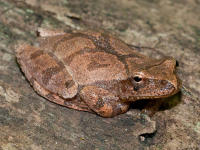
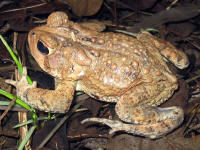
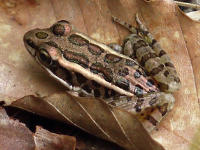
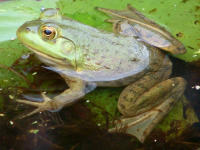
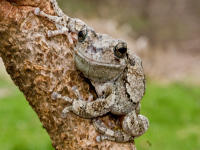
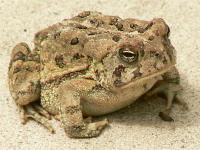
In all cases in which I have noticed frogs coupled this year, — the sylvatica, halecina, and palustris, - the female has been considerably the largest. . .The young R. pipiens, with commonly a dull-green head and sides of head, sometimes bright green, and back dusky-spotted. Can this be the bull frog? Is it not the fontinalis with less bright green and a white throat? Sometimes it is yellow-throated. I saw lately in the river a full-grown bullfrog, with, I think, a white throat. . . .the air full of the ring of the toad, the peep of the hylodes, and the low growling croak or stertoration of the Rana palustris. . . .The rhythm of it is like that of the toads’ ring, but not the sound. This is considerably like that of the tree-toad. See The 10 frog species in Massachusetts. (Mass Audubon) (HDT’s halecina is the northern leopard frog, his fontinalis is the green frog, his hylodes the peeper):
Spring peeper (Pseudacris crucifer)[hylodes]