Showing posts with label warmth. Show all posts

Saturday, March 18, 2023

A Book of the Seasons, Signs of the Spring: The New Warmth of the Sun


No mortal is alert enough 
to be present at the first dawn of the spring. 
Henry Thoreau, March 17, 1857

 Perhaps what most moves us in winter 
is some reminiscence of far-off summer . . .  
It is in the cawing of the crow, the crowing of the cock, 
the warmth of the sun on our backs. 
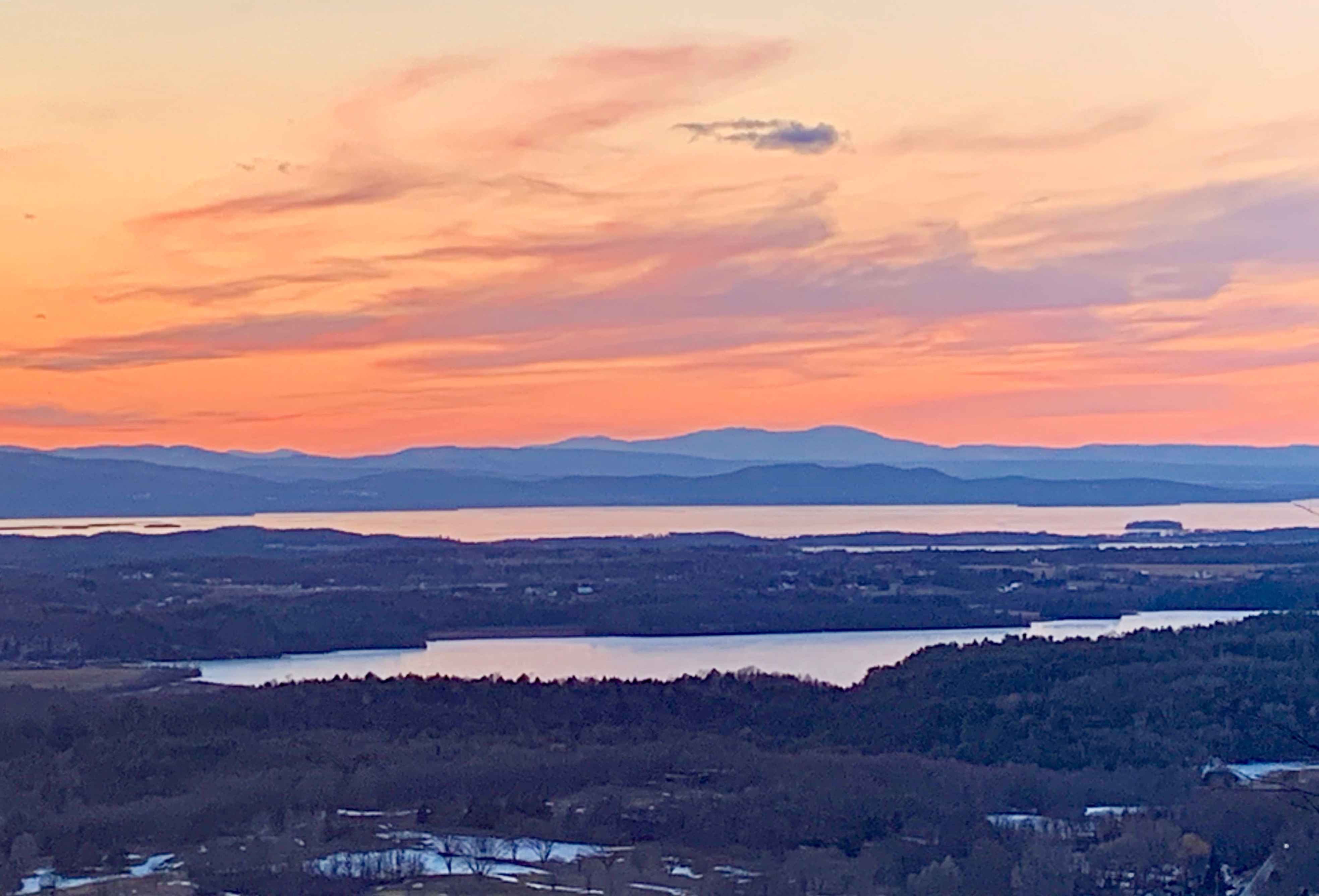
March 18,  2019

Sun now warm and bright
the walker goes home at eve 
to dream of summer.


January 25. It is glorious to be abroad this afternoon . . . The warmth of the sun reminds me of summer. January 25, 1852


January 31.  The wind is more southerly, and now the warmth of the sun prevails, and is felt on the back. The snow softens and melts. It is a beautiful clear and mild winter day. January 31, 1854

February 12 It is very pleasant to stand now in a high pine wood where the sun shines in amid the pines and hemlocks and maples as in a warm apartment.  February 12, 1855

February 16. The sun is most pleasantly warm on my cheek; the melting snow shines in the ruts; the cocks crow more than usual in barns; my greatcoat is an incumbrance. February 16, 1856

February 18Though not particularly warm, the light of the sun (now travelling so much higher) on the russet fields, —the ground being nearly all bare, —and on the sand and the pines, is suddenly yellower. February 18, 1855


February 21. A warmth begins to be reflected from the partially dried ground here and there in the sun in sheltered places, very cheering to invalids who have weak lungs, who think they may weather it till summer now. Nature is more genial to them. February 21, 1855

February 23.  It is inspiriting to feel the increased heat of the sun reflected from the snow. February 23, 1856

February 23.   I have seen signs of the spring.  February 23, 1857

March 1. The sunlight looks and feels warm, and a fine vapor fills the lower atmosphere. I hear the phoebe or spring note of the chickadee, and the scream of the jay is perfectly repeated by the echo from a neighboring wood.  March 1, 1854

March 1.  The dusty banks of snow by the railroad reflect a wonderfully dazzling white due to the higher sun. March 1, 1855

March 4. The sun has got a new power in his rays after all, cold as the weather is. He could not have warmed me so much a month ago. March 4, 1852

March 8. There is something of spring in all seasons . . . Nowadays we separate the warmth of the sun from the cold of the wind and observe that the cold does not pervade all places, but being due to strong northwest winds, if we get into some sunny and sheltered nook where they do not penetrate, we quite forget how cold it is elsewhere.  March 8, 1860

March 15. This afternoon I throw off my outside coat. A mild spring day.  The air is full of bluebirds. . . . The villagers are out in the sun, and every man is happy whose work takes him outdoors.  March 15, 1852

March 15.  Notwithstanding this day is so cold that I keep my ears covered, the sidewalks melt in the sun, such is its altitude.  March 15, 1853

March 18. The season is so far advanced that the sun affects me as I have not been affected for a long time. I must go forth . . .  All nature is thus forward to move with the revolution of the seasons . . . This the foreglow of the year, when the walker goes home at eve to dream of summer.  March 18, 1853

March 18.  Two little water-bugs . . . Notwithstanding the backwardness of the season, all the town still under deep snow and ice, here they are, in the first open and smooth water, governed by the altitude of the sun.  March 18, 1856

March 18.  My spirit is like a lit tree . . . Is it not the higher sun, and cleansed air, and greater animation of nature?  There is a warmer red to the leaves of the shrub oak, and to the tail of the hawk circling over them. March 18, 1858

March 18Examining the skunk-cabbage , now generally and abundantly in bloom . . . I hear the hum of honeybees  in the air, attracted by this flower . . . The first sunny and warmer day in March the honeybee leaves its home, probably a mile off, and wings its way to this warm bank. There is but one flower in bloom in the town, and this insect knows where to find it . . . No doubt this flower, too, has learned to expect its winged visitor knocking at its door in the spring. March 18, 1860

March 22.  The phenomena of an average March are increasing warmth . . .some calm and pleasant days reminding us of summer, with a blue haze or a thicker mist wreathing the woods at last, in which, perchance, we take off our coats awhile and sit without a fire a day. March 22, 1860
*****
So I came in and
shut the door and passed my first
spring night in the woods.
Walden, Spring
*****

See also Signs of the Spring:


  <<<<< Signs of Spring                                                                                   Early Spring >>>>>


A Book of the Seasons,  by Henry Thoreau,  Signs of the Spring: 

A Book of the Seasons
, by Henry Thoreau
"A book, each page written in its own season,
out-of-doors, in its own locality."
~edited, assembled and rewritten by zphx © 2009-2024

tinyurl.com/HDTnewwarmth

Thursday, November 25, 2021

A Book of the Seasons: November 25 (warmth and cold, ice and sunlight)


The year is but a succession of days,
and I see that I could assign some office to each day
which, summed up, would be the history of the year.
Henry Thoreau, August 24, 1852


Winter in the air 
and ice on the water but
no snow on the ground.
November 25, 1850

Late these afternoons,
yellow sunlight reflected
through the clear cold air.

The unexpected
exhilarating yellow
light of November.

November 25, 2018

This morning the ground
is again covered with snow
deeper than before.
November 25, 1851

This morning some windows are as handsomely covered with frost as ever in winter. November 25, 1860  

A clear, cold, windy day. November 25, 1853 

A clear, cold, windy afternoon. November 25, 1857

(It is Thanksgiving Day.) November 26, 1857

This is November of the hardest kind, — bare frozen ground covered with pale-brown or straw-colored herbage, a strong, cold, cutting northwest wind which makes me seek to cover my ears, a perfectly clear and cloudless sky. November 25, 1857

November Eatheart, — is that the name of it?  November 25, 1857 

This month taxes a walker's resources more than any.  November 25, 1857

Most keep close to their parlor fires this cold and blustering Thanksgiving afternoon. November 25, 1858

Our hands and feet are quite cold, and the water freezes on the paddles, November 25, 1859

There is a thin ice for half a rod in width along the shore, which shivers and breaks in the undulations of my boat. November 25, 1859 

Winter weather has come suddenly this year. Last night and to-day are very cold and blustering. The house was shaken by wind last night November 25, 1860

There is much ice on the meadows now, the broken edges shining in the sun. November 25, 1860

The water on the meadows . . .  is skimmed over and reflects a whitish light, like silver plating, while the unfrozen river is a dark blue. November 25,1853

I found Fair Haven skimmed entirely over, though the stones which I threw down on it from the high bank on the east broke through.November 23, 1850

Pools under the north sides of hills are frozen pretty thick. November 25, 1857

Ice on the water and winter in the air, but yet not a particle of snow on the ground. November 25, 1850

The landscape looked singularly clean and pure and dry, the air, like a pure glass, being laid over the picture. November 25, 1850

The mountains are remarkably distinct and appear near and elevated, but there is no snow on them. November 25, 1853

The landscape, seen from the side of the hill looking westward to the horizon through this clear and sparkling air, though simple to barrenness, is very handsome. November 25, 1853

The clean light-reflecting russet earth, the dark-blue water, the dark or dingy green evergreens, the dull reddish-brown of young oaks and shrub oaks, the gray of maples and other leafless trees, and the white of birch stems. November 25, 1853

I think that we have summer days from time to time the winter through, and that it is often the snow on the ground makes the whole difference. November 25, 1850

This afternoon, late and cold as it is, has been a sort of Indian summer. November 25, 1850

I thought that there was a finer and purer warmth than in summer; a wholesome, intellectual warmth, in which the body was warmed by the mind's contentment. November 25, 1850

I find the sunny south side of this swamp as warm as their parlors, and warmer to my spirit. November 25, 1858

Aye, there is a serenity and warmth here which the parlor does not suggest, enhanced by the sound of the wind roaring on the northwest side of the swamp a dozen or so rods off. What a wholesome and inspiring warmth is this! November 25, 1858

Most shrub oaks there have lost their leaves (Quercus ilicifolia), which, very fair and perfect, cover the ground. November 25, 1858 

The Kalmia glauca has fewer leaves now, opposite, glossy above; a very sharp two-edged twig . . . so that when the twig is held up to the light it appears alternately thicker and thinner. November 25, 1857 

I see aspen (tremuliformis) leaves, which have long since fallen, turned black, which also shows the relation of this tree to the willow, many species of which also turn black. November 25, 1858

Methinks there has been more pine-sap than usual the past summer. I never saw a quarter part so much. It stands there withered in dense brown masses, six or eight inches high, partly covered with dead leaves. The tobacco-pipes are a darker brown. November 25, 1857

I experience such an interior comfort, far removed from the sense of cold, as if the thin atmosphere were rarefied by heat, were the medium of invisible flames, as if the whole landscape were one great hearthside, that where the shrub oak leaves rustle on the hillside, I seem to hear a crackling fire and see the pure flame, November 25, 1850

The warmth was hardly sensuous, but rather the satisfaction of existence. November 25, 1850

Just as the sun shines into us warmly and serenely, our Creator breathes on us and re-creates us. November 25, 1850

This afternoon the air was indescribably clear and exhilarating. November 25, 1850

I am often unexpectedly compensated, and the thinnest yellow light of November is more warming and exhilarating than any wine they tell of. November 25, 1857

You are surprised, late these afternoons, a half an hour perhaps before sunset, . . . to see the singularly bright yellow light of the sun reflected from pines. . .through the clear, cold air, the wind, it may be, blowing strong from the northwest.. . . and when I look round northeast I am greatly surprised by the very brilliant sunlight of which I speak, surpassing the glare of any noontide, it seems to me. November 25, 1858

The sun is unseen behind a hill. Only this bright white light like a fire falls on the trembling needles of the pine. November 25, 1851.

There is the sun a quarter of an hour high, shining on it through a perfectly clear sky, but to my eye it is singularly dark or dusky. And now the sun has disappeared. November 25, 1857

The sun had set and there was a very clear amber light in the west, and, turning about, we were surprised at the darkness in the east, the crescent of night. November 25, 1851

The landscape looks darker than at any season, — like arctic scenery. November 25, 1857

Saw a tree on the turnpike full of hickory-nuts which had an agreeable appearance. November 25, 1851

For some days since colder weather, I notice the snow-fleas skipping on the surface the shore. I see them today skipping by thousands in the wet clamshells left by the muskrats. These are rather a cool-weather phenomenon.  November 25, 1859 

I saw a muskrat come out of a hole in the ice . . . While I am looking at him, I am thinking what he is thinking of me. November 25, 1850

He would dive when I went nearer, then reappear again, and had kept open a place five or six feet square so that it had not frozen, by swimming about in it. Then he would sit on the edge of the ice and busy himself about something, 

I see a fox run across the road in the twilight . . . He is on a canter, but I see the whitish tip of his tail. November 25 1857

Ditches and pools are fast skimming over, and a few slate-colored snowbirds, with thick, shuffling twitter, and fine-chipping tree sparrows flit from bush to bush, November 25, 1857

 As I go up the meadow-side toward Clamshell, I see a very great collection of crows far and wide on the meadows, evidently gathered by this cold and blustering weather. They flit before me in countless numbers, flying very low on account of the strong northwest wind that comes over the hill, and a cold gleam is reflected from the back and wings of each, as from a weather-stained shingle. November 25, 1860

A large whitish-breasted bird is perched on an oak under Lee's Cliff, for half an hour at least. I think it must be a fish hawk.  November 25, 1859

In this clear, cold water I see no fishes now, and it is as empty as the air. November 25, 1859

Saw also quite a flock of the pine grosbeak, a plump and handsome bird as big as a robin. November 25, 1851

I shiver about awhile on Pine Hill, waiting for the sun to set. November 25, 1857 

It was warm on the face of the rocks, and I could have sat till the sun disappeared, to dream there. November 25, 1850

When I got up so high on the side of the Cliff the sun was setting like an Indian-summer sun. November 25, 1850

I hear at sundown what . . . proved to be a flock of wild geese going south. November 25, 1852

The mountains are remarkably distinct and appear near and elevated, but there is no snow on them. The white houses of the village, also, are remarkably distinct and bare and brought very near. November 25, 1853


November 25, 2017

I hear at sundown 
what proves to be a flock of 
wild geese going south.  


November 25, 2015


A Book of the Seasons,  by Henry Thoreau, The hour before sunset

November 25, 2018

November 18, 1858 ("Am surprised to see Fair Haven Pond completely frozen over during the last four days. It will probably open again.")
November 20, 1853 ("Methinks the geese are wont to go south just before a storm, and, in the spring, to go north just after one, say at the end of a long April storm.”)
November 20, 1860 ("Decidedly finger cold tonight.")
November 21, 1852 ("I am surprised this afternoon to find the river skimmed over in some places, and Fair Haven Pond one-third frozen or skimmed over, though commonly there is scarcely any ice to be observed along the shores.")
November 22, 1860 ("Though you are finger-cold toward night, and you cast a stone on to your first ice, and see the unmelted crystals under every bank, it is glorious November weather, and only November fruits are out.”)
November 22, 1851 ("The light of the setting sun, just emerged from a cloud and suddenly falling on and lighting up the needles of the white pine.")
November 22, 1853 (“Geese went over yesterday, and to-day also.”)
November 23, 1853 ("At 5 P. M. I saw, flying southwest high overhead, a flock of geese, and heard the faint honking of one or two. . . . This is the sixth flock I have seen or heard of since the morning of the 17th , i . e . within a week .")
November 23, 1850 ("To-day it has been finger-cold. Unexpectedly I found ice by the side of the brooks this afternoon nearly an inch thick.  ")
November 23, 1852 ("There is something genial even in the first snow, and Nature seems to relent a little of her November harshness."
November 23, 1852 ("I am surprised to see Fair Haven entirely skimmed over")
November 23, 1851 ("Another such a sunset to-night as the last.")
November 24, 1855 ("Geese went over on the 13th and 14th, on the 17th the first snow fell, and the 19th it began to be cold and blustering.”)
November 24, 1858 ("Fair Haven Pond is closed still")


November 26, 1855 ("The ice next the shore bears me and my boat")
November 26, 1857 ("Got my boat up this afternoon. (It is Thanksgiving Day.) One end had frozen in")
November 26, 1858 ("Got in boat on account of Reynolds’s new fence going up (earlier than usual).")
November 27, 1853 (“Now a man will eat his heart, if ever, now while the earth is bare, barren and cheerless, and we have the coldness of winter without the variety of ice and snow”)
November 27, 1853 ("The days are short enough now. The sun is already setting before I have reached the ordinary limit of my walk.")
November 28, 1859 ("We make a good deal of the early twilights of these November days, they make so large a part of the afternoon.")
November 29, 1860 ("Get up my boat, 7 a. m. Thin ice of the night is floating down the river."); November 30, 1855 ("River skimmed over behind Dodd’s and elsewhere. Got in my boat. River remained iced over all day.")
November 30, 1858 ("The river may be said to have frozen generally last night.")
November 30, 1857 ("The air is full of geese. I saw five flocks within an hour, about 10 A. M., containing from thirty to fifty each, and afterward two more flocks, making in all from two hundred and fifty to three hundred at least”)


November 25, 2013

If you make the least correct
observation of nature this year,
 you will have occasion to repeat it
 with illustrations the next, 
and the season and life itself is prolonged.

November 24 <<<<<<<<  November 25 >>>>>>>> November 26


A Book of the Seasons,  by Henry Thoreau
 "A book, each page written in its own season, 
out-of-doors, in its own locality."
 ~edited, assembled and rewritten by zphx ©  2009-2022

Monday, April 20, 2020

The men killed them, and laid them all in a line on the ground, and they measured several hundred feet.

April 20. 

The Salix purpurea in prime; began, say, 18th. 

A warm day. Now begin to sit without fires more commonly, and to wear but one coat commonly. 

Moore tells me that last fall his men, digging sand in that hollow just up the hill, dug up a parcel of snakes half torpid. They were both striped and black together, in a place somewhat porous, he thought where a horse had been buried once. 

The men killed them, and laid them all in a line on the ground, and they measured several hundred feet. This seems to be the common practice when such collections are found; they are at once killed and stretched out in a line, and the sum of their lengths measured and related.  

It is a warm evening, and I hear toads ring distinctly for the first time. 

C. sees bluets and some kind of thrush to-day, size of wood thrush, — he thought probably hermit thrush.

H. D.. Thoreau, Journal, April 20, 1860

The Salix purpurea in prime; began, say, 18th. See April 10, 1860 ("Salix purpurea apparently will not open for four or five days");. See also April 22, 1859 ("The Salix purpurea in prime, out probably three or four days; say 19th.")

 Now begin to sit without fires more commonly, and to wear but one coat commonly. See April 16, 1855 ("A perfectly clear and very warm day, . . . and I have not got far before, for the first time, I regret that I wore my greatcoat"); April 17, 1855 ("I leave off my greatcoat, though the wind rises rather fresh before I return. It is worth the while to walk so free and light, having got off both boots and greatcoat.");. April 19, 1855 ("Warm and still and somewhat cloudy. Am without greatcoat"); April 25, 1854 (" I swelter under my greatcoat. . . . (I have not left it at home yet),. . . For some time we have done with little fire, nowadays let it go out in the afternoon."); April 26, 1854 ("It is now so warm that I go back to leave my greatcoat for the first time.");April 30, 1859 (" The warmest afternoon yet. Sat in sun without fire this forenoon."); May 2, 1858 ("Sit without fire to-day and yesterday."); May 3, 1857 ("To-day we sit without fire.")

The men killed them. See  note to April 26, 1857 ("I have the same objection to killing a snake that I have to the killing of any other animal, yet the most humane man that I know never omits to kill one.") See also A Book of the Seasons, by Henry Thoreau, the Striped Snake

I hear toads ring distinctly for the first time.  See  April 20, 1853 ("Saw a toad and a small snake.") See also April 5, 1860 ("I hear, or think that I hear, a very faint distant ring of toads, which, though I walk and walk all the afternoon, I never come nearer to. . . .. Thus gradually and moderately the year begins. It creeps into the ears so gradually that most do not observe it, and so our ears are gradually accustomed to the sound, and perchance we do not perceive it when at length it has become very much louder and more general. ");  April 25, 1859 ("[A] new season has arrived.  . . . It begins when the first toad is heard. Methinks I hear through the wind to-day . . . a very faint, low ringing of toads, as if distant and just begun. It is an indistinct undertone, and I am far from sure that I hear anything. It may be all imagination").  Also see A Book of the Seasons, by Henry Thoreau, The Ring of Toads.

C. sees bluets and some kind of thrush to-day, size of wood thrush, — he thought probably hermit thrush. See April 19, 1858 ("Hear of bluets found on Saturday, the 17th; how long? ");  April 21, 1855 ("At Cliffs, I hear at a distance a wood [sic] thrush. It affects us as a part of our unfallen selves..") and note to April 24, 1856 ("Behold my hermit thrush, with one companion, flitting silently through the birches."). See also A Book of the Seasons, by Henry Thoreau, Signs of Spring: The Arrival of the Hermit Thrush

See also  A Book of the Seasons,  by Henry Thoreau, April 20

A Book of the Seasons,  by Henry Thoreau
 "A book, each page written in its own season,
out-of-doors, in its own locality."
 ~edited, assembled and rewritten by zphx ©  2009-2023

Thursday, September 21, 2017

The warmth of the sun is just beginning to be appreciated again on the advent of cooler days.

September 21

Monday. P. M. – To Corallorhiza Rock. and Tobacco-pipe Wood, northeast of Spruce Swamp. 

Peaches are now in their prime. 

Came through that thick white pine wood on the east of the spruce swamp. This is a very dense white pine grove, consisting of tall and slender trees which have been thinned, yet they are on an average only from three to six feet asunder. Perhaps half have been cut. It is a characteristic white pine grove, and I have seen many such. The trees are some ten inches in diameter, larger or smaller, and about fifty feet high. They are bare for thirty-five or forty feet up, — which is equal to at least twenty-five years of their growth, or with only a few dead twigs high up. Their green crowded tops are mere oval spear-heads in shape and almost in proportionate size, four to eight feet wide, – not enough, you would think, to keep the tree alive, still less to draw it upward. In a dark day the wood is not only thick but dark with the boles of the trees. 

Under this dense shade, the red-carpeted ground is almost bare of vegetation and is dark at noon. There grow Goodyera pubescens and repens, Corallorhiza multiflora (going to seed), white cohosh berries, Pyrola secunda, and, on the low west side and also the east side, an abundance of tobacco-pipe, which has begun to turn black at the tip of the petals and leaves. 

The Solidago casia is very common and fresh in copses, perhaps the prevailing solidago now in woods. 

Rudbeckia laciniata done, probably some time. 

The warmth of the sun is just beginning to be appreciated again on the advent of cooler days. 

Measured the large white willow north the road near Hildreth's. At a foot and a half from the ground it is fourteen feet in circumference; at five feet, the smallest place, it is twelve feet in circumference. It was once still larger, for it has lost large branches.[Cut down in '59.]

H. D. Thoereau, Journal, September 21, 1857


Corallorhiza Rock. See August 29, 1857 ("Nearby, north [of Indian Rock, west of the swamp], is a rocky ridge, on the east slope of which the Corallorhiza multiflora is very abundant.")

Corallorhiza multiflora [spotted coral root
(going to seed)... See note to August 13, 1857

Under this dense shade, the red-carpeted ground is almost bare of vegetation and is dark at noon. There grow Goodyera pubescens and repens See August 20, 1857 ("The Goodyera repens grows behind the spring where I used to sit, amid the dead pine leaves") and note to August 27, 1856 (“Goodyera pubescens, rattlesnake-plantain, is apparently a little past its prime. It is very abundant on Clintonia Swamp hillside. . .”)

An abundance of tobacco-pipe, which has begun to turn black . . . See July 24, 1856 ("Tobacco-pipe much blackened, out a long time.")

The Solidago casia is very common and fresh in copses, perhaps the prevailing solidago now in woods. See October 8, 1856 ("S. casia, much the worse for the wear, but freshest of any [goldenrod] seen.")

The warmth of the sun is just beginning to be appreciated again on the advent of cooler days. See  September 18, 1860 ("This is a beautiful day, warm but not too warm, a harvest day . . ."If you are not happy to-day you will hardly be so to-morrow.”); August 29, 1854 ("I enjoy the warmth of the sun now that the air is cool, and Nature seems really more genial. ")

Popular Posts Last 30 Days.

The week ahead in Henry’s journal

The week ahead in Henry’s journal
A journal, a book that shall contain a record of all your joy.
"A stone fruit. Each one yields me a thought." ~ H. D. Thoreau, March 28, 1859


I sit on this rock
wrestling with the melody
that possesses me.