Showing posts with label New Bedford. Show all posts

Sunday, December 9, 2018

At New Bedford.


December 9

At New Bedford. 

See a song sparrow and a pigeon woodpecker. Dr. Bryant tells of the latter picking holes in blinds, and also in his barn roof and sides in order to get into it; holes in the window sashes or casings as if a nail had been driven into them. 

Asked a sailor at the wharf how he distinguished a whaler. He said by the “davits,” large upright timbers with sheaves curving over the sides to hold up the boats (a merchantman has only a few and small at the stern); also by the place for the man to stand at masthead (crosstrees, I should say they were) and look out for whales, which you do not see on a merchant-ship; i. e., the crosstrees of the latter are very slight . . .

H. D. Thoreau, Journal, December 9, 1858

See a song sparrow.  See January 15, 1857 ("I saw, to my surprise, that it must be a song sparrow, . . taken refuge in this shed”); January 28, 1857("Am again surprised to see a song sparrow sitting for hours on our wood-pile in the yard.”). Also January 22, 1857 ("Minott tells me that Sam Barrett told him once when he went to mill that a song sparrow took up its quarters in his grist-mill and stayed there all winter.”) See also
A Book of the Seasons, by Henry Thoreau, the Song Sparrow (Fringilla melodia)

Asked a sailor at the wharf. See December 25, 1854 (“At New Bedford see casks of oil covered with seaweed to prevent fire. The weed holds moisture. Town not lively; whalers abroad at this season.”)

Saturday, April 15, 2017

The season is more backward in New Bedford


April 15

Wednesday. Leave New Bedford. 

I had been surprised to find the season more backward, i. e. the vegetation, in New Bedford than in Concord. I could find no alder and willow and hazel catkins and no caltha and saxifrage so forward as in Concord. 

The ground was a uniform russet when I left, but when I had come twenty miles it was visibly greener, and the greenness steadily increased all the way to Boston. Coming to Boston, and also to Concord, was like coming from early spring to early summer. It was as if a fortnight at least had elapsed. 

Yet New Bedford is much warmer in the winter. Why is it more backward than Concord? 


  • The country is very flat and exposed to southerly winds from the sea, which, to my surprise, were raw and chilly. 
  • Also the soil is wet and cold, unlike our warm sandy soil, which is dry the day after a rain storm. 
  • Perhaps, as the ground is more bare in the winter, vegetation suffers more after all. 
  • One told me that there was more cloudy weather than here. 
  • It seemed to me that there was a deficiency of warm hollows and sheltered places behind hills and woods, which abound with us. 


On such cliffs as they have facing the south, vegetation was much more backward than in like positions with us, apparently owing to sea-turns and chilly south winds.

H. D. Thoreau, Journal, April 15, 1857

Thursday, April 13, 2017

A strange turtle at Long Pond

April 13

Monday. 

To Middleborough ponds. There was no boat on Little Quitticus; so we could not explore it. 

Set out to walk round it, but, the water being high,— higher than anciently even, on account of dams, — we had to go round a swamp at the south end, about Joe’s Rocks, and R. gave it up. 

I went to Long Pond and waited for him. 

Saw a strange turtle, much like a small snapping turtle or very large Sternothaerus odoratus, crawling slowly along the bottom next the shore. Poked it ashore with a stick. It had a peculiarly square snout, two hinges to the sternum and both parts movable. Was very sluggish; would not snap nor bite. Looked old, being mossy above on the edge, and the scales greenish and eaten beneath. The flesh slate colored.* 

I saw that it was new and wished to bring it away, but had no paper to wrap it in. So I peeled a white birch, getting a piece of bark about ten inches long. I noticed that the birch sap was flowing. This bark at once curled back so as to present its yellow side out ward. I rolled it about the turtle and folded the ends back and tied it round with a strip of birch bark, making a very nice and airy box for the creature, which would not be injured by moisture, far better than any paper, and so I brought it home to Concord at last. 

As my coat hung in R.’s shanty, over a barrel of paper, the morning that I came away the turtle made a little noise, scratching the birch bark in my pocket. R. observed, 


“ There is a mouse in that barrel. What would you do about it?”

“Oh, let him alone,” said I, “ he ’ll get out directly.”

“ They often get among my papers,” he added.

“ I guess I ’d better set the barrel outdoors.” 

I did not explain, and perhaps he experimented on the barrel after my departure.

As I sat on the shore there, waiting for R., I saw many mosquitoes flying low over the water close to the sandy shore. 

The turtle when I first saw him was slowly and tremblingly pacing along the bottom, rather toward the shore, with its large head far out on its outstretched neck. From its size and general color and aspect, I did not doubt at first that it was a snapping turtle, notwithstanding the season.

H  D. Thoreau, Journal, April 13, 1857 

To Middleborough ponds. See June 30, 1856 ("To Middleborough ponds in the new town of Lakeville") and  June 24, 1856 ("To Sassacowen Pond and to Long Pond")

I rolled [the strip of birch bark]about the turtle and folded the ends back and tied it round with a strip of birch bark, making a very nice and airy box for the creature. . .and so I brought it home to Concord at last. See April 25, 1857 ("I find that I can very easily make a convenient box of the birch bark, at this season at least, when the sap is running") See also   April 23, 1856 ("Brought it [a beetle] home in a clam’s shells tied up, —a good insect-box."); June 23, 1852 ("I am inclined to think that my hat, whose lining is gathered in midway so as to make a shelf, is about as good a botany-box as I could have and far more convenient. . .").

* The Freetown Turtle compared with Storer’s Sternothoerus.

Answers to the generic description, except perhaps that the posterior valve of the sternum is movable.

Compared with the S. odoratus

There is no peculiar scent to it. The upper shell is flattened on the dorsal ridge for the width of the dorsal plates and is not carinated there. (I find one as flat, and others are not carinated.) Color out of water a dirty brown. The marginal plates are a little narrower. 

The sternum (as well as that of my S. odomtus) is apparently composed of 11 instead of 9 plates, the anterior portion being composed of 5 instead of 3 plates. The posterior portion is distinctly movable, much more than the odoratus, and it is quite rounded on the sides. 

Irides not distinct. It appears as if blind. No yellow lines what ever on the head or neck. Jaws not dark-brown, but bluish-slate, as is the skin generally.

My two S. odoratus are 3 3/5 inches long by 2 1/2 wide and 1 1/2 inches high, being highest behind. The Freetown turtle is 4 inches long by 2 3/4 and 1 5/8  high, being highest forward. It has much green moss (?) on the rear and marginal plates, and the scales of the sternum are greenish and worn or carious. It is quite sluggish. Otherwise it apparently answers to Storer’s S. odoratus.


Wednesday, April 12, 2017

As the bay-wing sang many thousand years ago, so sang he to-night.

April 12.

Sunday. 

I think I hear the bay-wing here.

H. D. Thoreau, Journal, April 12, 1857

See April 13, 1854 ("Did I see a bay-wing?"); April 13, 1855(“See a sparrow without marks on throat or breast, running peculiarly in the dry grass in the open field beyond, and hear its song, and then see its white feathers in tail; the bay-wing”); April 13, 1856 (“I hear a bay-wing on the railroad fence sing, the rhythm somewhat like, char char (or here here), che che, chip chip chip (fast), chitter chitter chitter chit (very fast and jingling), tchea tchea (jinglingly). It has another strain, considerably different, but a second also sings the above. Two on different posts are steadily singing the same, as if contending with each other, notwithstanding the cold wind”); May 12, 1857 ("As the bay-wing sang many thousand years ago, so sang he to-night.") See also A Book of the Seasons, by Henry Thoreau, the Bay-Wing Sparrow

Tuesday, April 11, 2017

This is the critical season of a river, when it is fullest of life.

April 11. 

Saturday. 8 P. M. —Went to the Head of the River to see them catch smelts. 

The water there is fresh when the tide is out. They use nets five or six feet square, stretched from the ends of crossed semicircular hoops, at the ends of poles about twelve feet long. The net bags down when raised. 

There were twenty or thirty fishermen standing close together, half on each side of the narrow river, each managing one of these nets, while a good part of the village appeared to be collected on the bridge. The tide was then coming in, but the best time is when it is going out. 

A fisherman told me that the smelt run up in the night only. These fishers stood just below a two-arched bridge. The tide was coming up between the arches, while the fresh water which the smelt preferred was running down next the shore on each side. The smelt were ascending in these streams of fresh water on each side. 

The shore for half a dozen rods on each side was lined with fishers, each wielding a single net. This man told me that the smelt had been running up about one month and were now about done. The herring had been seen for a fortnight. They will run this month and all the next. The former leave off when the latter begin. Shad have not been caught yet. They come after herring. Eels, too, are occasionally caught now, going up from the deeper river below. These fishes spawn in the little pond just above the bridge. 

They let the net rest on the bottom and every two ,or three minutes lift it up. They get thirty or many more smelt sometimes at one lift and catch other fish in the same way, even bass, sea perch, pickerel, eels, and sometimes a trout. The shad make a ripple like a harrow, and you know when to raise the net. 

The villagers were talking across the stream, calling each other by their Christian names. Even mothers mingled with the fishermen, looking for their children. 

It suggested how much we had lost out of Concord River without realizing it. This is the critical season of a river, when it is fullest of life, its flowering season, the wavelets or ripples on its surface answering to the scales of the fishes beneath. 

If salmon, shad, and alewives were pressing up our river now, as formerly they were, a good part of the villagers would thus, no doubt, be drawn to the brink at this season. Many inhabitants of the neighborhood of the ponds in Lakeville, Freetown, Fairhaven, etc., have petitioned the legislature for permission to connect Little Quitticus Pond with the Acushnet River by digging, so that the herring can come up into it. 

The very fishes in countless schools are driven out of a river by the improvements of the civilized man, as the pigeon and other fowls out of the air. I can hardly imagine a greater change than this produced by the influence of man in nature. 

Our Concord River is a dead stream in more senses than we had supposed. In what sense now does the spring ever come to the river, when the sun is not reflected from the scales of a single salmon, shad, or alewife? No doubt there is some compensation for this loss, but I do not at this moment see clearly what it is. 

That river which the aboriginal and indigenous fishes have not deserted is a more primitive and interesting river to me. It is as if some vital quality were to be lost out of a man’s blood and it were to circulate more lifelessly through his veins. We are reduced to a few migrating (?) suckers, perchance.

I saw the herring on sticks at the doors of many shops in New Bedford.

I saw the myrtle-bird here about a week ago.

H. D. Thoreau, Journal, April 11, 1857

The very fishes in countless schools are driven out of a river by the improvements of the civilized man, as the pigeon and other fowls out of the air. See March 23, 1856 ("All the great trees and beasts, fishes and fowl are gone.")

The sun is not reflected from the scales of a single salmon, shad, or alewife ... See April 15, 1856 ("First salmon and shad at Haverhill to-day.");April 13, 1853 ("First shad caught at Haverhill to-day.")

Monday, April 10, 2017

Ricketson's shanty

April 10

Friday. Rain. 

D. R.’s shanty is about half a dozen rods southwest of his house (which may be forty rods from the road), nearly between his house and barn; is twelve by fourteen feet, with seven-feet posts, with common pent roof. In building it, he directed the carpenter to use Western boards and timber, though some Eastern studs (spruce?) were inserted. He had already occupied a smaller shanty at “ Woodlee ” about a mile south. The roof is shingled and the sides made of matched boards and painted a light clay-color with chocolate (?) colored blinds. 

Within, it is not plastered and is open to the roof, showing the timbers and rafters and rough boards and cross-timbers overhead as if ready for plastering. 

The door is at the east end with a small window on each side of it; a similar window on each side the building, and one at the west end, the latter looking down the garden walk. In front of the last window is a small box stove with a funnel rising to a level with the plate, and there inserted in a small brick chimney which rests on planks. 

On the south side the room, against the stove, is a rude settle with a coarse cushion and pillow; on the opposite side, a large low desk, with some book-shelves above it; on the same side, by the window, a small table covered with books; and in the northeast corner, behind the door, an old-fashioned secretary, its pigeonholes stuffed with papers. 

On the opposite side as you enter, is place for fuel, which the boy leaves each morning, a place to hang greatcoats. There were two small pieces of carpet on the floor, and Ricketson or one of his guests swept out the shanty each morning. There was a small kitchen clock hanging in the southwest Corner and a map of Bristol County behind the settle. 

The west and northwest side is well-nigh covered with slips of paper, on which are written some sentence or paragraph from R.’s favorite books. I noticed, among the most characteristic, Dibdin’s “ Tom Tackle,” a translation of Anaereon’s “Cicada,” lines celebrating tobacco, Milton’s “How charming is divine philosophy,” etc., “Inveni requiem: Spes et Fortuna valete. Nil mihi vobiscum est: ludite nunc alios” (is it Petrarch?) (this is also over the door), “ Mors aequo pulsat,” etc., some lines of his own in memory of A. J. Downing, “Not to be in a hurry,” over the desk, and many other quotations celebrating retirement, country life, simplicity, humanity, sincerity, etc., etc., from Cowper and other English poets, and similar extracts from newspapers. 

There were also two or three advertisements, — one of a cattle-show exhibition, another warning not to kill birds contrary to law (he being one of the subscribers ready to enforce the act), advertisement of a steamboat on Lake Winnepiseogee, etc., cards of his business friends. The size of different brains from Hall’s Journal of Health, and “Take the world easy.” A sheet of blotted blotting—paper tacked up, and of Chinese character from a tea-chest. 

Also a few small pictures and pencil sketches, the latter commonly caricatures of his visitors or friends, as “ The Trojan ” (Charming) and “ Van Best.” I take the more notice of these particulars because his peculiarities are so commonly unaffected. He has long been accustomed to put these scraps on his walls and has a basketful somewhere, saved from the old shanty. Though there were some quotations which had no right there, I found all his peculiarities faithfully expressed, —his humanity, his fear of death, love of retirement, simplicity, etc. 

The more characteristic books were Bordley’s “ Husbandry,” Drake’s “Indians,” Barber’s “Historical Collections,” Zimmermann on Solitude, Bigelow’s “Plants of Boston, etc.,” Farmer’s “Register of the First Settlers of New England,” Marshall’s “Garden ing,” Nicol’s “ Gardener,” John Woolman. “The Mod ern Horse Doctor,” Downing‘s “Fruits, etc.,” “The Farmer’s Library,” “Walden,” Dymond’s Essays, Job Scott’s Journal, Morton’s Memorial, Bailey’s Diction ary, Downing’s “Landscape Gardening, etc.,” “The Task,” Nuttall’s Ornithology, Morse’s Gazetteer, “The Domestic Practice of Hydropathy,” “ John Buncle,” Dwight’s Travels, Virgil, Young’s “Night Thoughts,” “ History of Plymouth,” and other “ Shanty Books.” 

There was an old gun, hardly safe to fire, said to be loaded with an inextractable charge, and also an old sword over the door, also a tin sign “D. Ricketson’s a small crumpled horn there. I counted more than twenty rustic canes scattered about, a dozen (or fifteen pipes of various patterns, mostly the common,, two spy glasses, an open paper of tobacco, an Indian’s jaw dug up, a stuffed blue jay and pine grosbeak, and a. rude Indian stone hatchet, etc., etc.

There was a box with fifteen or twenty knives, mostly very large and old: fashioned jack-knives, kept for curiosity, occasionally given away to a boy or friend. A large book full of pencil sketches to be inspected by whomsoever, containing countless sketches of his friends and acquaintances and himself and of wayfaring men whom he had met, Quakers, etc., etc., and now and then a vessel under full sail or an old-fashioned house, sketched on a peculiar pea-green paper. 

A pail of water stands behind the door, with a peculiar tin cup for drinking made in France.

H.D. Thoreau, Journal, April 10, 1857

Sunday, April 9, 2017

Hauling seines at New Bedford

April 9

Thursday. A. M. — To the cove south of the town. 

April 9, 2017

See them haul two seines. They caught chiefly alewives, from sixty to a hundred at a haul, seine twelve to fifteen feet wide. There were also caught with the alewives, skates, two or three “ drums ” (like flatfish, only the mouth twisted the other way and not good), flatfish, smelts, sculpins, five-fingers, and a lobster with red claws. This was what the seine would catch in making a large circuit. It seemed to be pretty hard work hauling it in, employing two or three men or boys at each end. A fisherman said that they caught the first alewife the 28th of March there. 

Picked up many handsome scallop shells beyond the ice-houses, with wormy-shaped parasites on them.

H. D. Thoreau, Journal,  April 9, 1857

They caught chiefly alewives, from sixty to a hundred at a haul. A fisherman said that they caught the first alewife the 28th of March there. See April 11, 1857 ("This man told me that the smelt had been running up about one month and were now about done. The herring had been seen for a fortnight. They will run this month and all the next. . . . Shad have not been caught yet.")

Saturday, April 8, 2017

The usefulness of bayberries


April 8


April 8, 2017

I discovered one convenient use the bayberries served, — that if you got your hands pitched in pine woods, you had only to rub a parcel of these berries between your hands to start the pitch off. Arthur said the shoemakers at the Head of the River used the tallow to rub the soles of their shoes with to make them shine. 

I gathered a quart in about twenty minutes with my hands. You might gather them much faster with a suitable rake and a large shallow basket, or if one were clearing a field he could cut the bushes and thresh them in a heap.

H. D. Thoreau, Journal, April 8, 1857 

If you got your hands pitched in pine woods, you had only to rub a parcel of these berries between your hands to start the pitch off. See September 9, 1857 ( [Squirrels] must know of, or possess, some remedy for pitch that we know nothing of.")
I gathered a quart in about twenty minutes with my hands.  See April 7, 1857 (“Holding a basket beneath, I rubbed them off into it between my hands, and so got about a quart.”); see also December 14, 1850 ("I find a low, branching shrub frozen into the edge of the ice, with a fine spicy scent . . .. When I rub the dry-looking fruit in my hands, it feels greasy and stains them a permanent yellow, which I cannot wash out. It lasts several days, and my fingers smell medicinal. I conclude that it is sweetgale, and we name the island Myrica Island.")


Surprised to see snow flakes flying under the spotlight. When dawn comes the first phoebe sings.
And now the branches outside my window are all lacy white with snow – and the phoebe sings  persistently. Zphx20170408

Friday, April 7, 2017

Boiling bayberries for the tallow.


April 7

Tuesday. 

April 7, 2019
he would deliberate which course i would take

Went to walk in the woods. When I had got half a mile or more away in the woods alone, and was sitting on a rock, was surprised to be joined by R.’s large Newfoundland dog Ranger, who had smelled me out and so tracked me. Would that I could add his woodcraft to my own! 

He would trot along before me as far as the winding wood-path allowed me to see him, and then, with the shortest possible glance over his shoulder, ascertain if I was following. At a fork in the road he would pause, look back at me, and deliberate which course I would take. 

At sundown I went out to gather bayberries to make tallow of. Holding a basket beneath, I rubbed them off into it between my hands, and so got about a quart, to which were added enough to make about three pints. 

They are interesting little gray berries clustered close about the short bare twigs, just below the last year’s growth. The berries have little prominences, like those of an orange, encased with tallow, the tallow also filling the interstices, down to the nut. 

They require a great deal of boiling to get out all the tallow. The outmost case soon melted off, but the inmost part I did not get even after many hours of boiling. The oily part rose to the top, making it look like a savory black broth, which smelled just like balm or other herb tea. 

I got about a quarter of a pound by weight from these say three pints of berries, and more yet remained. Boil a great while, let it cool, then skim off the tallow from the surface: melt again and strain it.

What I got was more yellow than what I have seen in the shops. A small portion cooled in the form of small corns (nuggets I called them when I picked them out from amid the berries), flat hemispherical, of a very pure lemon yellow, and these needed no straining. The berries were left black and massed together by the remaining tallow.

Cat-briar (Smilax) they call here “the devil’s wrapping yarn.” 

I see several emperor moth cocoons, with small eggs on the back, apparently of the ichneumon-fly, that has destroyed the nymph.

H. D. Thoreau, Journal, April 7, 1857

In the woods alone, and was sitting on a rock, was surprised to be joined by R.’s large Newfoundland dog Ranger, who had smelled me out and so tracked me. See April 22, 1852 ("A strange dog accompanies us today, a hunting dog, gyrating about us at a great distance, beating every bush and barking at the birds, with great speed, gyrating his tail too all the while."); October 10, 1856 ("With what tireless energy and abandonment they dash through the brush and up the sides of hills! I meet two white foxhounds, led by an old red one. How full of it they are! How their tails work! They are not tied to paths; they burst forth from the thickest shrub oak lot, and immediately dive into another as the fox did.")


The berries have little prominences, like those of an orange, encased with tallow . .
. Compare December 14, 1850 ("When I rub the dry-looking fruit in my hands, it feels greasy and stains them a permanent yellow, which I cannot wash out. It lasts several days, and my fingers smell medicinal. I conclude that it is sweetgale, and we name the island Myrica Island."); April 13, 1855 ("Great quantities of odoriferous sweetgale seed are collected with the scum at the outlet of Nut Meadow, for they float"); .April 22, 1855 ("The blossoms of the sweet-gale are now on fire over the brooks, contorted like caterpillars").

I see several emperor moth cocoons . . . see January 14, 1857 ("Almost every one is already empty, or contains only the relics of a nymph. It has been attacked and devoured by some foe. "); June 2 , 1855 ("I had pinned the cocoon to the sash at the upper part of my window and quite forgotten it. About the middle of the forenoon Sophia came in and exclaimed that there was a moth on my window.")

Thursday, April 6, 2017

Reading the Report of the State Entomologist on Injurious and other Insects of the State of New York

April 6

P. M. — To New Bedford Library. 

Mr. Ingraham, the librarian, says that he once saw frog-spawn in New Bedford the 4th of March. 

Take out Emmons’s Report on the insects injurious to vegetation in New York. See a plate of the Colias Philodice, or common sulphur-yellow butterfly, male and female of different tinge. 


Areoda lanigera is apparently the common yellow dor-bug. 

Arthur has Tabanus, the great horse-fly. 

Emmons says of Scutelleridae: “The disagreeable smelling bugs that frequent berry bushes and strawberry vines belong here. . . . Of this family the genus Pentatoma is one of the most common and feeds upon the juice of plants. Sometimes it has only to pass over a fruit, to impart to it its offensive odor.” The one represented looks like the huckleberry one.

H. D. Thoreau, Journal, April 6, 1857


Frog-spawn. See April 4, 1857 ("Caught a croaking frog . . .. Nearby was its spawn, in very handsome spherical masses of transparent jelly. . . consisting of globules. . . with a black or dark centre as big as a large shot.")

Wednesday, April 5, 2017

I hear the croaking frogs

April 5. 

Sunday. 

Arthur R. has been decking a new Vineyard boat which he has bought, and making a curb about the open part.  

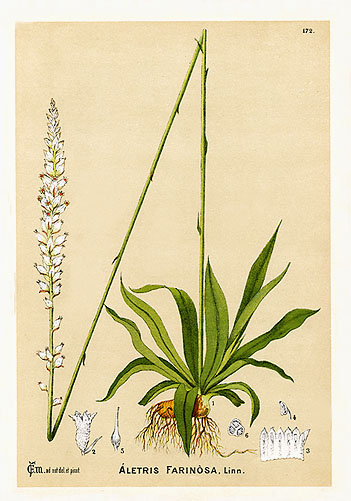
P. M. —-Walked round by the ruins of the factory. See in many places the withered leaves of the aletris in rather low ground, about the still standing withered stems. It was well called husk-root by the squaw. 

Arthur says that he just counted, at 9.30 P. M., twenty toads that had hopped out from under the wall on to the sidewalk near the house. This, then, is apparently the way with the toads. They very early hop out from under walls on to sidewalks in the warmer nights, long before they are heard to ring, and are often frozen and then crushed there. Probably single ones ring earlier than I supposed. 

I hear the croaking frogs at 9.30 P. M., also the speed speed over R.’s meadow, which I once referred to the snipe, but R. says is the woodcock, whose other strain he has already heard.

H. D. Thoreau, Journal, April 5, 1857


See in many places the withered leaves of the
aletris . . . See June 26, 1856 (I had been expecting to find the aletris about New Bedford . . ."')

Frozen toads. . . .Probably single ones ring earlier than I supposed. See April 5, 1860 ("I hear, a very faint distant ring of toads, which, though I walk and walk all the afternoon, I never come nearer to.");See also  April 2, 1857 ("On the sidewalk in Cambridge I see a toad, which apparently hopped out from under a fence last evening, frozen quite hard in a sitting posture.");  April 6, 1860 ("A toad has been seen dead on the sidewalk, flattened.")

I hear the croaking frogs. See March 31, 1857 ("The dry croaking and tut tut of the frogs (a sound which ducks seem to imitate, a kind of quacking...) is plainly enough down there in some pool in the woods, but the shrill peeping of the hylodes locates itself nowhere in particular. . ."); April 8, 1852 ("To-day I hear the croak of frogs in small pond-holes in the woods,");  April 13, 1855 ("The small croaking frogs are now generally heard in all those stagnant ponds or pools in woods floored with leaves, which are mainly dried up in the summer.") See also A Book of the Seasons, by Henry Thoreau, the Wood Frog (Rana sylvatica)

I hear the speed speed over R.’s meadow, which I once referred to the snipe, but R. says is the woodcock. See April 5, 1855 ("Scare up a snipe close to the water’s edge ") See also March 28, 1854 ("See this afternoon either a snipe or a woodcock."); I. April 22, 1860 ("It is evident that we very often come quite near woodcocks and snipe thus concealed on the ground, without starting them and so without suspecting that they are near.") and A Book of Seasons, by Henry Thoreau, The American Woodcock

Tuesday, April 4, 2017

Caught a croaking frog in some smooth water in the railroad gutter.

April 4. 

April 4;, 2017


Saturday. Walk down the shore of the river. 

A Dutchman pushes out in his skiff after quahogs. He also took his eel-spear, thinking to try for eels if he could not get quahogs, for, owing to the late cold weather, they might still be buried in the mud. I saw him raking up,the quahogs on the flats at high (?) tide, in two or three feet of water. He used a sort of coarse, long-pronged hoe. Keeps anchoring on the flats and searches for a clam on the bottom with his eye, then rakes it up and picks it off his rake. 

Am not sure what kind of large gulls I see there, some more white, some darker, methinks, than the herring gull.

R. tells me that he found dead in his piazza the south side of his house, the 23d of last January, the snow being very deep and the thermometer -12° at sunrise, a warbler, which he sent to Brewer. I read Brewer’s note to him, in which he said that he took it to be the Sylvicola coronata and would give it to the Natural History Society, thinking it remarkable that it was found at that time. B. says that he discovered “for the first time its nest in the heart of Nova Scotia near Parrsboro mountains [I think last season]. It was the only new egg of that trip. Yet I felt well repaid, for ‘no other white man had ever before seen that egg to know it,’ as Audubon says of another species.” 

Caught a croaking frog in some smooth water in the railroad gutter. Above it was a uniform (perhaps olive?) brown, without green, and a yellowish line along the edge of the lower jaws. It was, methinks, larger than a common Rana palustris

Nearby was its spawn, in very handsome spherical masses of transparent jelly, two and a half to three inches in diameter, suspended near the surface of some weed, as goldenrod or aster, and consisting of globules about a third of an inch in diameter, with a black or dark centre as big as a large shot. Only these black centres were visible at a little distance in the water, and so much the more surprising and interesting is the translucent jelly when you lift it to the light. It even suggested the addition of cream and sugar, for the table. Yet this pool must have been frozen over last night! What frog can it be?

H. D. Thoreau, Journal, April 4, 1857


Caught a croaking frog . . . larger than a common Rana palustris. What frog can it be?
See April 5, 1858 (“I go to the meadow at the mouth of the Mill Brook to find the spawn of the R. halecina. They are croaking and coupling there by thousands") and note to April 3, 1858 (Resolved to identify this frog, one or two of whose heads I could already see above the surface with my glass, I picked my way to the nearest pool. . . .They were the R. halecina. . . .This, I think, is the first frog sound I have heard from the river meadows or anywhere, except the croaking leaf-pool frogs and the hylodes.") See also the 10 frog species in Massachusetts. (Mass Audubon) (HDT’s halecina is the northern leopard frog,)


The Sylvicola coronata
:  Possibly Sylvia coronata the Yellow-crowned or Yellow-rumped Warbler, Dendroica coronata [Eastern Myrtle Warbler]. now Setophaga coronata

Monday, April 3, 2017

In Ricketson’s shanty.

April 3.

In Ricketson’s shanty. 

R. has seen white bellied swallows more than a week. I walk down the side of the river and see Walton’s ice-boat left on the bank.

Hear R. describing to Alcott his bachelor uncle James Thornton. 

When he awakes in the morning he lights the fire in his stove (all prepared) with a match on the end of a stick, without getting up. When he gets up he first attends to his ablutions, being personally very clean, cuts off a head of tobacco to clean his teeth with, eats a hearty breakfast, sometimes, it was said, even buttering his sausages. Then he goes to a relative’s store and reads the Tribune till dinner, sitting in a corner with his back to those who enter. Goes to his boarding—house and dines, eats an apple or two, and then in the afternoon frequently goes about the solution of some mathematical problem (having once been a schoolmaster), which often employs him a week.

H. D. Thoreau, Journal, April 3, 1857


Daniel Ricketson. See Mapping Thoreau Country

Walton’s ice-boat left on the bank
. Walton Ricketson:  Daniel's son. See June 28, 1856 ("Walton was named from I. Walton, the angler . . ."); September 29, 1855 (" R.’s sons Arthur and Walton were just returning from tautog-fishing in Buzzard’s Bay . . .")


April 3. See A Book of the Seasons, by Henry Thoreau, April 3

A Book of the Seasons, by Henry Thoreau
"A book, each page written in its own season,
out-of-doors, in its own locality.”
~edited, assembled and rewritten by zphx © 2009-2022

Sunday, April 2, 2017

A genuine wayfaring man

April 2

Go to New Bedford. 

A great change in the weather. I set out apple trees yesterday, but in the night it was very cold, with snow, which is now several inches deep. 

April 2, 2017

On the sidewalk in Cambridge I see a toad, which apparently hopped out from under a fence last evening, frozen quite hard in a sitting posture. Carried it into Boston in my pocket, but could not thaw it into life. 

The other day as I came to the front of the house I caught sight of a genuine wayfaring man, an oldish countryman, with a frock and a bundle strapped to his back, who was speaking to the butcher, just then driving off in his cart. He was a gaunt man with a flashing eye, as if half crazy with travel, and was complaining, “You see it shakes me so, I would rather travel the common road.” I supposed that he referred to the railroad, which the butcher had recommended for shortness. I was touched with compassion on observing the butcher’s apparent indifference, as, jumping to his seat, he drove away before the traveller had finished his sentence, and the latter fell at once into the regular wayfarer’s gait, bending under his pack and holding the middle of the road with a teetering gait. 

On my way to New Bedford, see within a couple of rods of the railroad, in some country town, a boy’s box trap set for some muskrat or mink by the side of a little pond. The lid was raised, and I could see the bait on its point. 

A black snake was seen yesterday in the Quaker burying-ground here.

H. D. Thoreau, Journal, April 2, 1857


In the night it was very cold, with snow, which is now several inches deep. See note to April 2, 1861 ("A drifting snow-storm, perhaps a foot deep on an average.”)

I see a toad frozen quite hard in a sitting posture. Carried it into Boston in my pocket, but could not thaw it into lifeApril 22, 1857 (“Near Tall's Island, rescue a little pale or yellowish brown snake that was coiled round a willow half a dozen rods from the shore and was apparently chilled by the cold.”); December 31, 1857 ("found . . . a bull frog . . . It was evidently nearly chilled to death and could not jump, though there was then no freezing. I looked round a good while and finally found a hole to put it into,"); May 19, 1856 ("Saw a small striped snake in the act of swallowing a Rana palustris . . . The snake, being frightened, released his hold, and the frog hopped off to the water."); August 23, 1851 ([A snake] had a toad in his jaws, which he was preparing to swallow with his jaws distended to three times his width, but he relinquished his prey in haste and fled"); July 23, 1856 ("Saw . . . a small bullfrog in the act of swallowing a young but pretty sizable apparently Rana palustris . . . I sprang to make him disgorge, but it was too late to save him.")

 A wayfaring man
bending under his pack with 
a teetering gait. 

 A Book of the Seasons, by Henry Thoreau, A genuine wayfaring man
 A Book of the Seasons, by Henry Thoreau
"A book, each page written in its own season,
out-of-doors, in its own locality.”
~edited, assembled and rewritten by zphx © 2009-2026


Wednesday, June 29, 2016

A man by the riverside.


June 29

Sunday. P. M. —Bathed in the creek, which swarms with terrapins, as the boys called them. I find no account of them in Storer!! They put their heads out and floated about just like the Emys picta, and often approached and played (?) with each other. Some were apparently seven or eight inches long and of a yellowish color. 

A man by the riverside told us that he had two young ducks which he let out to seek their food along the riverside at low tide that morning. At length he noticed that one remained stationary amid the grass or salt weeds and something prevented its following the other. He went to its rescue and found its foot shut tightly in a quahog’s shell amid the grass which the tide had left. He took up all together, carried to his house, and his wife opened the shell with a knife, released the duck, and cooked the quahog.

Bathed again near Dogfish Bar. It was warm and dirty water, muddy bottom. 

I probably found an Indian’s bone at Throgg’s Point, where their bodies have been dug up. 

H. D. Thoreau, Journal, June 29, 1856

Bathed in the creek, which swarms with terrapins . . . I find no account of them in Storer!! See July 20, 1857 ("Holbrook makes the Emys terrapin to be found from Rhode Island to Florida and South America. . . . So did not know it was found at New Bedford.")

She opened the shell 
with a knife, released the duck 
and cooked the quahog.

A Book of the Seasons,  by Henry Thoreau
 "A book, each page written in its own season, 
out-of-doors, in its own locality."
~edited, assembled and rewritten by zphx ©  2009-2026

https://tinyurl.com/hdt-560629

Tuesday, June 28, 2016

Two arrowheads amid oyster and clam shells by a rock at the head of the creek.


June 28

Lamium amplexicaule still out behind R.’s shanty. 

I pick up two arrowheads amid oyster and clam shells by a rock at the head of the creek opposite R.’s. One was of peculiar form, quite blunt and small, of quartz, apparently to knock over small game without breaking the skin. 

(P. M. — I paddle up the Acushnet, about a mile above the paper-mill, as far as the ruined mill, in Walton’s skiff with Arthur R. (Walton was named from I. Walton, the angler, and Arthur from Dana’s hero in “Sun not set yet,” etc.) 

I never saw such an abundance of peltandra as borders that sluggish and narrow stream, in bunches alternating with pickerel-weed; leaves of very various forms and sizes.

H. D. Thoreau, Journal, June 28, 1856


Lamium amplexicaule
(henbit dead-nettle).

Peltandra virginica
(green arrow-arum).

Monday, June 27, 2016

A Tour of the Elizabeth Islands

June 27

June 27, 2016

P. M. — Went with R. and his boys in the Steamer Eagle’s Wing, with a crowd and band of music, to the northeast end of Naushon, “Woods Hole,” some fifteen miles from New Bedford; about two hours going. 

Talked with a Mr. Congdon, cashier of a bank and a vegetarian. 

Saw all the Elizabeth Isles, going and coming. They are mostly bare, except the east end of Naushon. This island is some seven miles long, by one to two wide. I had some two and a half hours there. 

I was surprised to find such a noble primitive wood, chiefly beech, such as the English poets celebrate, and oak (black oak, I think), large and spreading like pasture oaks with us, though in a wood. The ground under the beeches was covered with the withered leaves and peculiarly free from vegetation. 

On the edge of a swamp I saw great tupelos running up particularly tall, without lower branches, two or three feet in diameter, with a rough light-colored bark. Noticed a thorn, perhaps cockspur, with an undivided leaf, gooseberries, stag-horn sumach, not in bloom. Most of the passengers expected to find strawberries. 

Saw a common wild grape—vine running over a beech, which was apparently flattened out by it, which vine measured, at six feet from ground, twenty-three inches in circumference. It was large below, where it had already forked. At five feet from ground it divided into three great branches. It did not rise directly, but with a great half-spiral sweep or anguish. No sight could be more primeval. It was partly or chiefly dead. 

This was in the midst of the woods, by a path-side. Just beyond we started up two deer. 

I suppose the white gull I saw and heard (somewhat like the sound of the small mackerel gull of the Cape) at Naushon was the Sterna hirundo, or great tern, with long forked tail. 

A Mr. Wall, artist, at New Bedford, told me of a high pine wood or swamp some miles down Naushon with “storks’ nests” (!) in the pines. Were they blue herons?

Naushon is said to be part of the township of Chilmark, Martha’s Vineyard, and to belong to Mr. Swain of New Bedford and Forbes of Boston; some say to Swain alone. 

Walton Ricketson went down in a schooner the next day again, and found the pond near Swain’s well stocked with pickerel, of which he caught many in a few hours. 

Returning, I caught sight of Gay Head and its light house with my glass, between Pasque and Nashawena. This lighthouse, according to Congdon, who says he measured it trigonometrically, is not more than one hundred and fifty feet above the sea.

The passages between the islands are called “holes.” Quick’s is one. 

Cuttyhunk was very plain. Congdon said that he was there about thirty years ago, but could see no traces of Gosnold there, and does not believe there are any. Captain Slocum (of the day before), who has relations there, never saw any. Mr. Wall said that there was one old gentleman still alive, a Mr. Howland, who went on there with Belknap, who could tell all about it. The island is cultivated.

H. D. Thoreau, Journal, June 27, 1856


Gosnold: a town that encompasses the Elizabeth Islands, including Nonamesset Island, Uncatena Island, Naushon Island, Pasque Island, Nashawena Island,Penikese Island, Cuttyhunk Island, and several smaller islands


The Eagle's Wing was  439 tons, 173 feet long, 27 feet beam. In October 1854 she made the trip from New York to New Bedford in 13 1-2 hours, and arrived at Nantucket for the first time on Saturday, October 21st, 1854, commencing her regular trips the following week. She was.kept on the Nantucket route two years, and then operated between New Bedford and Edgartown. On July 24 1861 she caught fire opposite Pawtuxet on the Providence River and was totally destroyed.

 Ricketson's account of this tour can be found here.

Sunday, June 26, 2016

I ought to have had my hat full of plants.

June 26

According to Audubon’s and Wilson’s plates, the Fringilla passerina has for the most part clear yellowish-white breast (vide May 28th), but the Savannah sparrow no conspicuous yellow on shoulder, a yellow brow, and white crown line. 

Rode to Sconticut Neck or Point in Fairhaven, five or six miles, and saw, apparently, the F. Savanna near their nests (my seringo note), restlessly flitting about me from rock to rock within a rod. Distinctly yellow-browed and spotted breast, not like plate of passerina

Audubon says that the eggs of the Savannah sparrow “are of a pale bluish color, softly mottled with purplish brown,” and those of the yellow-winged sparrow are “of a dingy white, sprinkled with brown spots.” The former is apparently my seringo’s egg of May 28th.

When R. decided to take another road home from the latter place, because it was less hilly, I said I had not observed a hill in all our ride. 

I found on the rocky and rather desolate extremity of this point the common Oxalis stricta on the seashore, abundant, going to seed; apparently carrots (?) naturalized; atriplex not yet out; beach pea, still out and going to seed. An abundance of the small iris in the field near by. 

It was thick weather, after a drizzling forenoon, and we could just see across Buzzard’s Bay from the point to Falmouth.

I had been expecting to find the aletris about New Bedford,
and when taking our luncheon on this neck what should I see rising above the luncheon-box, between me and R., but what I knew must be the Aletris farinosa; not yet out, but one near by would open apparently in two or three days.

Heard of, and sought out, the hut of Martha Simons, the only pure-blooded Indian left about New Bedford. She lives alone on the narrowest point of the Neck, near the shore, in sight of New Bedford. Her hut stands some twenty-five rods from the road on a small tract of Indian land, now wholly hers . . .

We knocked and walked in, and she asked us to sit down. She had half an acre of the real tawny Indian face, broad with high cheek-bones, black eyes, and straight hair, originally black but now a little gray, parted in the middle. Her hands were several shades darker han her face. She had a peculiarly vacant expression, perhaps characteristic of the Indian, and answered our questions listlessly, without being interested or implicated, mostly in monosyllables, as if hardly present there. To judge from her physiognomy, she might have been King Philip’s own daughter.


She was born on that spot. Her grandfather also lived on the same spot, though not in the same house. He was the last of her race who could speak Indian.

The question she answered with most interest was, “What do you call that plant?” and I reached her the aletris from my hat. She took it, looked at it a moment, and said, “That’s husk-root. It ’s good to put into bitters for a weak stomach.” 

The last year’s light-colored and withered leaves surround the present green star like a husk. This must be the origin of the name. Its root is described as intensely bitter. 

I ought to have had my hat full of plants.

H. D. Thoreau, Journal, June 26, 1856

Savannah sparrow no conspicuous yellow on shoulder, a yellow brow, and white crown line. . . Audubon says that the eggs “are of a pale bluish color, softly mottled with purplish brown,”  See ; April 22, 1856 ("The seringo also sits on a post, with a very distinct yellow line over the eye,_and the rhythm of its strain is ker chick | ker che | ker-char—r-r-r-r | chick, the last two bars being the part chiefly heard."); 
May 28, 1856 ("A seringo or yellow-browed (?) sparrow’s nest . . . Egg, bluish-white ground, thickly blotched with brown.”); July 16, 1854 ("Is it the yellow-winged or Savannah sparrow with yellow alternating with dark streaks on throat, as well as yellow over eye, reddish flesh-colored legs, and two light bars on wings?";) October 22, 1855 ("I sit on a bank at the brook crossing, beyond the grove, to watch a flock of seringos, perhaps Savannah sparrows, which, with some F. hyemalis and other sparrows, are actively flitting about amid the alders and dogwood. ") See also Guide to Thoreau’s Birds "(Thoreau frequently called the Savannah Sparrow Passerculus sandwichensis the seringo or seringo-bird, but he also applied the name to other small birds.)” and  A Book of the Seasons, by Henry Thoreau, The Savannah Sparrow (Fringilla savanna)

I had been expecting to find the aletris about New Bedford. . . See June 25 1856 ( “[i]n answer to my question what were the rare or peculiar plants thereabouts, [Green] named the Aletris farinosa, or star-grass”); See also November 4, 1858 ("We cannot see any thing until we are possessed with the idea of it, . . . In my botanical rambles I find that first the idea, or image, of a plant occupies my thoughts, . . . expecting it unconsciously, and at length I surely see it . . . This is the history of my finding a score or more of rare plants which I could name.”)

Aletris / husk root . . .withered leaves surround the present green star like a husk. See April 5, 1857 ("See in many places the withered leaves of the aletris in rather low ground, about the still standing withered stems. It was well called husk-root by the squaw.")

I ought to have had my hat full of plants. See June 23, 1852 ("I am inclined to think that my hat, whose lining is gathered in midway so as to make a shelf, is about as good a botany-box as I could have and far more convenient. . ."); September 7, 1852 ("We reach . . . Concord . . . four hours from the time we were picking blueberries on the mountain, with the plants of the mountain fresh in my hat.”); December 4, 1856 ("About half a dozen years ago I found myself again attending to plants with more method, looking out the name of each one and remembering it. I began to bring them home in my hat, a straw one with a scaffold lining to it, which I called my botany- box. I never used any other, and when some whom I visited were evidently surprised at its dilapidated look, as I deposited it on their front entry table, I assured them it was not so much my hat as my botany-box.”)
Heard of and sought out 
the hut of Martha Simons,
the last of her race
She named the plant in 
my hat,  I ought to have had 
my hat full of plants.

Popular Posts Last 30 Days.

The week ahead in Henry’s journal

The week ahead in Henry’s journal
A journal, a book that shall contain a record of all your joy.
"A stone fruit. Each one yields me a thought." ~ H. D. Thoreau, March 28, 1859


I sit on this rock
wrestling with the melody
that possesses me.