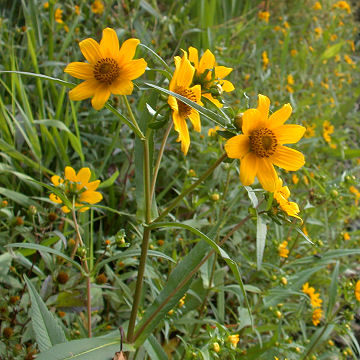
Showing posts with label hazelnut. Show all posts

Monday, September 9, 2019

Screech owls at evening from over the river

September 9

I start many pigeons now in a sprout-land. 

I have noticed for a week or more some swarms of light-colored and very small fuzzy gnats in the air, yet not in such concentrated swarms as I shall see by and by.

Now for hazelnuts, — where the squirrels have not got them. 

Within a week I think I have heard screech owls at evening from over the river once or twice.

September 9, 2019


H. D. Thoreau, Journal, September 9, 1859

I have noticed for a week or more some swarms of light-colored and very small fuzzy gnats in the air. See September 3, 1860 ("Though it is warm enough, I notice again the swarms of fuzzy gnats dancing in the cooler air, which also is decidedly autumnal.")

I think I have heard screech owls at evening from over the river once or twice. See  September 23, 1855 ("I hear from my chamber a screech owl about Monroe’s house this bright moonlight night, — a loud, piercing scream, much like the whinny of a colt perchance, a rapid trill, then subdued or smothered a note or two.");  June 25, 1860 ("Hear four or five screech owls on different sides of the river, uttering those peculiar low screwing or working, ventriloquial sounds.")

Wednesday, October 3, 2018

The maples about Walden are quite handsome now.

October 3

One brings me this morning a Carolina rail alive, this year’s bird evidently from its marks. He saved it from a cat in the road near'the Battle-Ground. On being taken up, it peeked a little at first, but was soon quiet. It staggers about as if weak on my window sill and pecks at the glass, or stands with its eyes shut, half asleep, and its back feathers hunched up. Possibly it is wounded. I suspect it may have been hatched here. Its feet are large and spreading, qualifying it to run on mud or pads. Its crown is black, but chin white, and its back feathers are distinctly edged with white in streaks. 

I compare my hazelnuts gathered some time ago. The beaked are pointed nuts, while the common are blunt; and the former are a much paler brown, also have a yellower and much sweeter meat. 

A fringed gentian, plucked day before yesterday, at length, this forenoon, untwists and turns its petals partially, in my chamber.

Have noticed a very brilliant scarlet blackberry patch within a week. 

The red maples which changed first, along the river, are now faded and partly fallen. They look more pink. But others are lit, and so there is more color than before. Some particular maple among a hundred will be of a peculiarly bright and pure scarlet, and, by its difference of tint and intenser color, attract our eyes even at a distance in the midst of the crowd. Looking all around Fair Haven Pond yesterday, where the maples were glowing amid the evergreens, my eyes invariably rested on a particular small maple of the purest and intensest scarlet. 

P. M. — Paddle about Walden. 

As I go through the Cut, I discover a new locality for the crotalaria, being attracted by the pretty blue-black pods, now ripe and dangling in profusion from these low plants, on the bare sandy and gravelly slope of the Cut. The vines or plants are but half a dozen times longer (or higher) than the pods. It was the contrast of these black pods with the yellowish sand which betrayed them.

How many men have a fatal excess of manner! There was one came to our house the other evening, and behaved very simply and well till the moment he was passing out the door. He then suddenly put on the airs of a well-bred man, and consciously described some are of beauty or other with his head or hand. It was but a slight flourish, but it has put me on the alert. 

It is interesting to consider how that crotalaria spreads itself, sure to find out the suitable soil. One year I find it on the Great Fields and think it rare; the next I find it in a new and unexpected place. It flits about like a flock of sparrows, from field to field. 

The maples about Walden are quite handsome now. Standing on the railroad, I look across the pond to Pine Hill, where the outside trees and the shrubs scattered generally through the wood glow through the green, yellow, and scarlet, like fires just kindled at the base of the trees, — a general conflagration just fairly under way, soon to envelop every tree. The hillside forest is all aglow along its edge and in all its cracks and fissures, and soon the flames will leap upward to the tops of the tallest trees. About the pond I see maples of all their tints, and black birches (on the southwest side) clear pale yellow; and on the peak young chestnut clumps and walnuts are considerably yellowed. 

I hear, out toward the middle, or a dozen rods from me, the plashing made apparently by the shiners, — for they look and shine like them, — leaping in schools on the surface. Many lift themselves quite out for a foot or two, but most rise only part way out, — twenty black points at once. There are several schools indulging in this sport from time to time as they swim slowly along. This I ascertain by paddling out to them. Perhaps they leap and dance in the water just as gnats dance in the air at present. I have seen it before in the fall. Is it peculiar to this season? 

Hear a hylodes peeping on shore. 

A general reddening now of young and scrub oaks. Some chinquapin bright-red. 

White pines fairly begin to change. 

The large leaves of some black oak sprouts are dark-purple, almost blackish, above, but greenish beneath. 

See locust leaves all crisped by frost in Laurel Glen Hollow, but only part way up the bank, as on the shore of a lake.

H. D. Thoreau, Journal, October 3, 1858

A Carolina rail alive. Its crown is black, but chin white, and its back feathers are distinctly edged with white in streaks. Compare September 18, 1858 ("In R. Virginianus. . . the crown and whole upper parts are black, streaked with brown; the throat, breast, and belly, orange-brown; sides and vent, black tipped with white; legs and feet, dark red-brown; none of which is true of the R. Carolinus.")

The beaked are pointed nuts, while the common are blunt. See September 9, 1858 ("I find an abundance of beaked hazelnuts at Blackberry Steep, one to three burs together, but, gathering them, I get my fingers full of fine shining bristles, while the common hazel burs are either smooth or covered with a softer glandular down; i. e., its horns are brazen tipped.")

A fringed gentian, plucked day before yesterday, at length, this forenoon, untwists and turns its petals partially, in my chamber.See October 1, 1858 ("The fringed gentians are now in prime. . . .They who see them closed, or in the afternoon only, do not suspect their beauty.")

Have noticed a very brilliant scarlet blackberry patch within a week. See September 23, 1854 ("Low blackberry vines generally red. "); September 25, 1854 ("I am detained by the very bright red blackberry leaves strewn along the sod")

Some particular maple among a hundred will be of a peculiarly bright and pure scarlet, and, by its difference of tint and intenser color, attract our eyes even at a distance in the midst of the crowd. See September 25, 1857 (“A single tree becomes the crowning beauty of some meadowy vale and attracts the attention of the traveller from afar.”); September 26, 1854 ("Some single red maples are very splendid now, the whole tree bright-scarlet against the cold green pines; now, when very few trees are changed, a most remarkable object in the landscape; seen a mile off. "); September 27, 1855 ("Some single red maples now fairly make a show along the meadow. I see a blaze of red reflected from the troubled water.");  September 27, 1857 (“At last, its labors for the year being consummated and every leaf ripened to its full, it flashes out conspicuous to the eye of the most casual observer, with all the virtue and beauty of a maple, – Acer rubrum.”); October 8, 1852 (“Nothing can exceed the brilliancy of some of the maples which stand by the shore and extend their red banners over the water.”);)

I discover a new locality for the crotalaria, being attracted by the pretty blue-black pods, now ripe and dangling in profusion from these low plants, on the bare sandy and gravelly slope of the Cut. See October 3, 1856 ("I detect the crotalaria behind the Wyman site, by hearing the now rattling seeds in its pods as I go through the grass, like the trinkets about an Indian's leggins, or a rattlesnake.")

Hear a hylodes peeping on shore. See October 3, 1852 ("I hear a hylodes (?) from time to time.")

 White pines fairly begin to change. See October 3, 1852 ("The pine fall, i.e. change, is commenced, and the trees are mottled green and yellowish."); October 3, 1856 ("The white pines are now getting to be pretty generally parti-colored, the lower yellowing needles ready to fall.") See also November 9, 1850 (" I expect to find that it is only for a few weeks in the fall after the new leaves have done growing that there are any yellow and falling, — that there is a season when we may say the old pine leaves are now yellow, and again, they are fallen."); See also A Book of the Seasons, by Henry Thoreau, The October Pine Fall


Thursday, September 13, 2018

Many yellow butterflies in road and fields all the country over.

September 13

P. M._—To Annursnack.


September 13, 2018
 Solidago puberula, apparently in prime and handsome, roadside, Colburn’s Hill. 

I noticed the black willows quite imbrowned on the 10th, and the button-bushes beginning to look yellowish. 

A. Hosmer is pleased because from the cupola of his new barn he can see a new round-topped mountain in the northwest. Is curious to know what one it is. Says that if he lived as near Annursnack as Heywood does, he should go up it once a week, but he supposes that Heywood does not go up it more than once a year. 

What is that grass still in bloom a foot or more in height in Heywood’s potato-field, some fifty rods west of house leek? It is somewhat like what I have wrongly called Danthonia spicata, but with a longer and a round spike, etc., etc. Vide press. 

There is a man there mowing the Panicum Crus-galli, which is exceedingly rank and dense, completely concealing the potatoes, which have never been hoed, it was so wet. He saves this grass and says the cattle like it well. 

I notice that the large ant-hills, though they prevent bushes and ferns from growing where they are built, keeping open a space four to seven feet wide in their midst, do not keep out grass, but they are commonly little grassy mounds with bare tops. 

Looking from the top of Annursnack, the aspect of the earth generally is still a fresh green, especially the woods, but many dry fields, where apparently the June-grass has withered uncut, are a very pale tawny or lighter still. It is fit that some animals should be nearly of this color. The cougar would hardly be observed stealing across these plains. In one place I still detect the ruddiness of sorrel. 

Euphorbia hypericifolia still, and gone to seed, on the top of Annursnack. 

From many a barn these days I hear the sound of the flail. For how many generations this sound will continue to be heard here! At least until they discover a new way of separating the chaff from the wheat.

Saw one raking cranberries on the 10th; rather early.

A small dense flock of wild pigeons dashes by over the side of the hill, from west to east, — perhaps from Wetherbee’s to Brooks’s, for I see the latter’s pigeon place. They make a dark slate-gray impression. 

Fringed gentian out well, on easternmost edge of the Painted-Cup Meadows, by wall.[Caroline Pratt tells me the 20th that her father found it out full a fortnight before that date!]

Saw a striped snake run into the wall, and just before it disappeared heard a loud sound like a hiss! I think it could hardly have been made by its tail among leaves. 

The squirrels know better than to open unsound hazelnuts. At most they only peep into them. I see some on the walls with a little hole gnawed in them, enough to show that they are empty. 

Muskmelons and squashes are turning yellow in the ‘  gardens, and ferns in the swamps. 

Hear many warbling vireos these mornings.

Many yellow butterflies in road and fields all the country over.

H. D. Thoreau, Journal, September 13, 1858

Fringed gentian out well, on easternmost edge of the Painted-Cup Meadows, by wall. See October 12, 1857 ("To Annursnack. . . .The fringed gentian by the brook opposite is in its prime, and also along the north edge of the Painted-Cup Meadows")

Many yellow butterflies in road and fields all the country over. See September 4, 1856 ("Butterflies in road a day or two. "); September 3, 1854 (“I see some fleets of yellow butterflies in the damp road after the rain, as earlier.”); September 11, 1852 ("I see some yellow butterflies and others occasionally and singly only."); September 17, 1852 ("Still the oxalis blows, and yellow butterflies are on the flowers"); September 19, 1859 (" See many yellow butterflies in the road this very pleasant day after the rain of yesterday. One flutters across between the horse and the wagon safely enough, though it looks as if it would be run down.")

Wednesday, September 12, 2018

Thus gradually and successively each plant lends its richest color to the general effect, and in the fittest place, and passes away

September 12


Sunday. P. M. — To Cliffs.

The handsome crimson-tipped hazelnut burs now and for some time have reminded us that it was time to gather these nuts. They are worth gathering, if only to see the rich color of the fruit brought together in a quantity.

Lycopodium complanatum, how long? 

Have seen the pigeon’s-egg fungus in pastures some time. 

Yew berries still hold on. 

The cinnamon fern has begun to yellow and wither. How rich in its decay! Sic transit gloria mundi! Die like the leaves, which are most beautiful in their decay. 

Thus gradually and successively each plant lends its richest color to the general effect, and in the fittest place, and passes away. Amid the October woods we hear no funereal bell, but the scream of the jay. Coming to some shady meadow’s edge, you find that the cinnamon fern has suddenly turned this rich yellow. Thus each plant surely acts its part, and lends its effect to the general impression. 

See petty morel berries ripe. 

Woodsia llvensis under the cave at Cliffs in fruit. 

Very heavy rain all yesterday afternoon, and to-day it is somewhat cooler and clearer and the wind more northwesterly, and I see the unusual sight of ripples  or waves curving up-stream off Cardinal Shore, so that the river might seem to be flowing that way. 

The mountains are of a darker blue. 

The spring on the west side of Fair Haven Hill is nearly dry; there is no stream flowing from it. What a disappointment to a herd of cows to find their accustomed spring dry! 

Even in that little hollow on the hill side, commonly moistened by the spring, grow the soft rush, rhyncospora, etc. What an effect a little moisture on a hillside produces, though only a rod square! The Juncaceoe and Cyperaceoa soon find it out and establish themselves there. 

The Panicum filiforme is very abundant in that old mullein-field of Potter’s, by the Corner road. Its slender culms are purple, and, seen in the right light, where they stand thick, they give a purple gleam to the field. More purple far than the P. sanguinale

Some small red maples by water begun to redden. 

In Hubbard’s ditched meadow, this side his grove, I see a great many large spider’s webs stretched across the ditches, about two feet from bank to bank, though the thick woven part is ten or twelve inches. They are parallel, a few inches or a foot or more apart, and more or less vertical, and attached to a main cable stretched from bank to bank. They are the yellow-backed spider, commonly large and stout but of various sizes. I count sixty-four such webs there, and in each case the spider occupies the centre, head downward. This is enough, methinks, to establish the rule. They are not afraid of turning their brains then. Many insects must be winging their way over this small river. It reminds me of the Indians catching ducks at Green Bay with nets in old times.

H. D. Thoreau, Journal, September 12, 1858

Lycopodium complanatum, how long? See August 31, 1857  ("Lycopodium complanatum out, how long?")

Yew berries still hold on. See August 10, 1858 ("Am surprised to find the yew with ripe fruit (how long ?),. . . It fruits very sparingly, the berries growing singly here and there, on last year’s wood, and hence four to six inches below the extremities of the upturned twigs. It is the most surprising berry that we have")

The cinnamon fern has begun to yellow and wither. See September 27, 1857 ("The large common ferns (either cinnamon or interrupted) are yellowish, and also many as rich a deep brown now as ever."); September 6, 1854("The cinnamon ferns along the edge of woods next the meadow are many yellow or cinnamon, or quite brown and withered.")

Woodsia llvensis under the cave at Cliffs in fruit. See September 4, 1857 ("The sides of Cornus florida Ravine at Bateman’s Pond are a good place for ferns. There is a Woodsia Ilvensis, a new one to Concord. ")

Sunday, September 9, 2018

A botanist in pursuit of grasses tramples down oaks in his walk.

September 9

P. M. — To Waban Cliff. 

A very hot day, — 90°, as I hear. Yesterday was hot, too. 

Now it is about time to gather elder-berries. 

Many Viola cucullata have opened again. 

What is that short squeaking note heard from time to time from amid the weeds on the west side the river at Hubbard’s Bath? 

There are broad patches, sometimes of several acres, on the edge of the meadow, where it is wettest and weediest, which the farmers do not mow. There especially stands the brown-headed wool-grass. There are small tracts still, as it were, in their primitive condition, — wild tracts where the bittern rises and where, no doubt, the meadow-hen lurks.

(Was it the note of the last I heard?)

Heard a short plover-like note from a bird flying high across the river. 

Watched a little dipper some ten rods off with my glass, but I could see no white on the breast. It was all black and brownish, and head not enlarged. Who knows how many little dippers are sailing and sedulously diving now along the edge of the pickerel-weed and the button-bushes on our river, unsuspected by most? 

This hot September afternoon all may be quiet amid the weeds, but the dipper, and the bittern, and the yellow legs, and the blue heron, and the rail are silently feeding there. At length the walker who sits meditating on a distant bank sees the little dipper sail out from amid the weeds and busily dive for its food along their edge: Yet ordinary eyes might range up and down the river all day and never detect its small black head above the water. 

It requires a different intention of the eye in the same locality to see different plants, as, for example, Juncaceoa and Gramineoe; even; i. e., I find that when I am looking for the former, I do not see the latter in their midst. 

How much more, then, it requires different intentions of the eye and of the mind to attend to different departments of knowledge! How differently the poet and the naturalist look at objects! A man sees only what concerns him. A botanist absorbed in the pursuit of grasses does not distinguish the grandest pasture oaks. He as it were tramples down oaks unwittingly in his walk. 

Bidens cernua, how long?


The river is about at its height to-day or yesterday. Much bur-reed and heart-leaf is floating and washed up, apparently the first important contribution to the river wrack. The sportsman will paddle a boat now five or six miles, and wade in water up to his knees, being out all day without his dinner, and think himself amply compensated if he bags two or three yellow-legs. The most persistent and sacrificing endeavors are necessary to success in any direction. 

Woodbine scarlet, like a brilliant scarf on high, wrapped around the stem of a green tree. By a blush betrays where it hangs upon an elm. 

I find an abundance of beaked hazelnuts at Blackberry Steep, one to three burs together, but, gathering them, I get my fingers full of fine shining bristles, while the common hazel burs are either smooth or covered with a softer glandular down; i. e., its horns are brazen tipped

Under the rocks near the slippery elm, the Gymnostichum Hystrix, bottle-brush grass, hedgehog grass, long done. 


Rice says he saw two meadow-hens when getting his hay in Sudbury some two months ago, and that they breed there. They kept up a peculiar note. My egg (named Sept. 7th) was undoubtedly a meadow-hen’s Rallus Virginiana

R. says that he has caught pigeons which had ripe grapes in their crops long before any were ripe here, and that they came from the south west. 

We live in the same world with the Orientals, far off as they may seem. Nature is the same here to a chemist’s tests. 

The weeping willow (Salix Babylonica) will grow here. The peach, too, has been transplanted, and is agreeable to our palates. So are their poetry and philosophy near and agreeable to us.

H. D. Thoreau, Journal, September 9, 1858

It requires a different intention of the eye in the same locality to see different plants. A man sees only what concerns him. A botanist absorbed in the pursuit of grasses does not distinguish the grandest pasture oaks. See  November 18 1851 ("A man can hardly be said to be there if he knows that he is there, or to go there if he knows where he is going.".); September 13, 1852 ("I must walk more with free senses. I must let my senses wander as my thoughts, my eyes see without looking. Carlyle said that how to observe was to look, but I say that it is rather to see, and the more you look the less you will observe. Be not preoccupied with looking. Go not to the object; let it come to you. What I need is not to look at all, but a true sauntering of the eye."); March 23, 1853 ("Man cannot afford to be a naturalist, to look at Nature directly, but only with the side of his eye."); June 14, 1853 (". . . you are in that favorable frame of mind described by De Quincey, open to great impressions, and you see those rare sights with the unconscious side of the eye, which you could not see by a direct gaze before.”); December 11, 1855 ("It is only necessary to behold thus the least fact or phenomenon, however familiar, from a point a hair’s breadth aside from our habitual path or routine, to be overcome, enchanted by its beauty and significance.”); April 28, 1856 ("Again, as so many times, I am reminded of the advantage to the poet, and philosopher, and naturalist, and whomsoever, of pursuing from time to time some other business than his chosen one, — seeing with the side of the eye.") July 2, 1857 (“Many an object is not seen, though it falls within the range of our visual ray, because it does not come within the range of our intellectual ray, i. e., we are not looking for it. So, in the largest sense, we find only the world we look for.”); October 13, 1857 (“We ordinarily do not see what is before us, but what our prejudices presume to be there.”); November 4, 1858 ("Objects are concealed from our view not so much because they are out of the course of our visual ray (continued) as because there is no intention of the mind and eye toward them”) Autumnal tints.("Objects are concealed from our view, not so much because they are out of the course of our visual ray as because we do not bring our minds and eyes to bear on them”)

Many Viola cucullata have opened again. See September 4, 1856 (“Viola pedata again.”); September 10, 1857 ("I see lambkill ready to bloom a second time.”); September 16, 1852 (“Some birds, like some flowers, begin to sing again in the fall.”); and note to October 10, 1856 ("Indian summer itself is a similar renewal of the year, with the faint warbling of birds and second blossoming of flowers.”)

There are broad patches, sometimes of several acres, on the edge of the meadow, where it is wettest and weediest, which the farmers do not mow. There are small tracts still, as it were, in their primitive condition, — wild tracts where the bittern rises and where, no doubt, the meadow-hen lurks. See Walden (“Our village life would stagnate if it were not for the unexplored forests and meadows which surround it. We need the tonic of wildness, — to wade sometimes in marshes where the bittern and the meadow-hen lurk, and hear the booming of the snipe; to smell the whispering sedge where only some wilder and more solitary fowl builds her nest, and the mink crawls with its belly close to the ground.”); Walking (“A town is saved by the woods and swamps that surround it.”); January 22, 1852 (“I see, one mile to two miles distant on all sides from my window, the woods, which still encircle our New England towns. They still bound almost every view. They have been driven off only so far. Where still wild creatures haunt. How long will these last?”)

Monday, September 3, 2018

The squirrel lives in a hazel grove.

September 3

P. M. — Up Assabet a-hazelnutting. 

I see a small striped snake, some fifteen or eighteen inches long, swallowing a toad, all but the head and one foreleg taken in. It is a singular sight, that of the little head of the snake directly above the great, solemn, granitic head of the toad, whose eyes are open, though I have reason to think that he is not alive, for when I return some hours after I find that the snake has disgorged the toad and departed. 

The toad had been swallowed with the hind legs stretched out and close together, and its body is compressed and elongated to twice its length, while the head, which had not been taken in, is of the original size and full of blood. The toad is quite dead, apparently killed by being so far crushed; and its eyes are still open. The body of the snake was enlarged regularly from near the middle to its jaws. It appeared to have given up this attempt at the eleventh hour. Probably the toad is very much more elongated when perfectly swallowed by a small snake. It would seem, then, that snakes undertake to swallow toads which are too big for them. 

I see where the bank by the Pokelogan is whitewashed, i. e. the grass, for a yard or two square, by the thin drop pings of some bird which has roosted on a dead limb above. It was probably a blue heron, for I find some slate-blue feathers dropped, apparently curving breast feathers, broadly shafted with white. 

I hear a faint warble from time to time from some young or old birds, from my window these days. Is it the purple finch again, — young birds practicing?

Zizania still. 

The hazelnut bushes up this way are chiefly confined to the drier river-bank. At least they do not extend into the lower, somewhat meadowy land further inland. They appear to be mostly stripped. The most I get are left hanging over the water at the swimming-ford. 

How important the hazelnut to the ground squirrel! They grow along the walls where the squirrels have their homes. They are the oaks that grow before their doors. They have not far to go to their harvesting.  These bushes are generally stripped, but isolated ones in the middle of fields, away from the squirrel-walks, are still full of burs. 

The wall is highway and rampart to these little beasts. They are almost inaccessible in their holes beneath it, and on either side of it spring up, also defended by the wall, the hazel bushes on whose fruit the squirrels in a great measure depend. Notwithstanding the abundance of hazelnuts here, very little account is made of them, and I think it is because pains is not taken to collect them before the squirrels have done so. Many of the burs are perfectly green yet, though others are brightly red-edged. 

The squirrel lives in a hazel grove. There is not a hazel bush but some squirrel has his eye on its fruit, and he will be pretty sure to anticipate you. As we say, “The tools to those who can use them,” so we may say, “The nuts to those who can get them.” 

That floating grass by the riverside whose lower leaves, so flat and linear, float on the surface of the water, though they are not now, at least, lake-colored, is apparently the Glyceria fluitans, floating fescue grass, still blooming and for a good while. I got it yesterday at Merrick’s shore. 

At the sand-bar by the swimming-ford, I collect two small juncuses, not knowing but I have pressed them before. One appears to be Juncus scirpoides (?), small as it is; the other, Juncus articulates (? ?). 

At Prichard’s shore I see where they have plowed up and cast into the river a pile of elm roots, which interfered with their laying down the adjacent field. One which I picked up I at first thought was a small lead pipe, partly coiled up and muddy in the water, it being apparently of uniform size. It was just nineteen feet and eight inches long; the biggest end was twenty-one fortieths of an inch in diameter, and the smallest nineteen fortieths. This difference was scarcely obvious to the eye. No doubt it might have been taken up very much longer. It looked as if, when green and flexible, it might answer the purpose of a rope, — of a cable, for instance, when you wish to anchor in deep water. The wood is very porous. 

The narrow brown sheaths from the base of white pine leaves now strew the ground and are washed up on the edge of puddles after the rain.

H. D. Thoreau, Journal, September 3, 1858

See a small striped snake, some fifteen or eighteen inches long, swallowing a toad, all but the head and one foreleg taken in. See May 19, 1856 (“Saw a small striped snake in the act of swallowing a Rana palustris, within three feet of the water. The snake, being frightened, released his hold, and the frog hopped off to the water. ”)

The narrow brown sheaths from the base of white pine leaves now strew the ground. September 5, 1857 ("I now see those brown shaving like stipules of the white pine leaves, which
are falling, i.e. the stipules, and caught in cobwebs.”) See also A Book of the Seasons, by Henry Thoreau, The October Pine Fall

Wednesday, August 29, 2018

My knowledge now becomes communicable and grows by communication.

August  29

I hear this morning one eat it potter from a golden robin. They are now rarely seen. 

The ghost-horse (Spectrum) is seen nowadays, — several of them. 

All these high colors in the stems and leaves and other portions of plants answer to some maturity in us. I presume if I am the wiser for having lived this season through, such plants will emblazon the truth of my experience over the face of nature, and I shall be aware of a beauty and sweetness there. 

Has not the mind, too, its harvest? Do not some scarlet leaves of thought come scatteringly down, though it may be prematurely, some which, perchance, the summer’s drought has ripened,and the rain loosened? Are there my mind ?

 I remember when boiled green corn was sold piping hot on a muster-field in this town, and my father says that he remembers when it used to be carried about the streets of Boston in large baskets on the bare heads of negro women, and gentlemen would stop, buy an ear, and eat it in the street. 

Ah! what a voice was that hawk’s or eagle’s of the 22d! Think of hearing, as you walk the earth, as usual in leaden shoes, a fine, shrill scream from time to time, which you would vainly endeavor to refer to its truje source if you had not watched the bird in its upward flight. It comes from yonder black spot on the bosom of a cloud. I should not have suspected that sound to have issued from the bosom of a cloud if I had not seen the bird. What motive can an eagle have for screaming among the clouds, unobserved by terrestrial creatures? We walk invested by sound, -— the cricket in the grass and the eagle in the clouds. And so it circled over, and I strained my eyes to follow it, though my ears heard it without effort. ,

Almost the very sands confess the ripening influence of the August sun, and, methinks, with the slender grasses waving over them, reflect a purple tinge. The empurpled sands. Such is the consequence of all this sun shine absorbed into the pores of plants and of the earth. All sap or blood is wine-colored. The very bare sands, methinks, yield a purple reflection. At last we have not only the purple sea, but the purple land

P. M. — To J. Farmer’s via Assabet. 

As, standing up in my boat, I am watching some minnows at the Prichard bend steadily stemming the current in the sunny water between the waving potamogeton, right under my face, I see a musquash gliding along above the sand directly beneath them, a perfect denizen of the water as much as they. This rat was a pale brown, as light as pale-brown paper or perfectly withered white oak leaves. Its coat is never of this color out of water, and I suppose it was because it was completely coated with air. This makes it less visible on a sandy bottom. 

Is not that Eleocharis tenuis, long since out of bloom, growing in the water along the Merrick shore, near the oak; round culms, fifteen inches to two feet high? A spiked rush, without a leaf, and round. I can hardly find a head left on it. Yet Flint says this blooms in August! It grows in dense fields like pipes. Did I find it before this year? 

The mikania is apparently in prime or a little past. Perhaps the front-rank polygonum is in prime now, for there is apparently more than before.

I look along Mantatuket Field hedge to see if there are hazelnuts there, but am surprised to find that thereabouts the bushes have been completely stripped by squirrels already and the rich brown burs are strewn on the ground beneath. What a fine brown these dried burs have already acquired, — not chestnut nor hazel! I fear it is already too late for me, though I find some yet quite green in another place. They must have been very busy collecting these nuts and husking them for a fortnight past, climbing to the extremities of the slender twigs. Who witnesses the gathering of the hazelnuts, the hazel harvest? Yet what a busy and important season to the striped squirrel! Now, if ever, he needs to get up a bee. Every nut that I could find left in that field was a poor one. By more frequented paths the squirrels have not worked yet. Take warning from the squirrel, which is already laying up his winter store.

I see some Cornus sericea berries turning. 

The Assabet helianthus (apparently variety of decapetalus), well out some days at least. Are not the petals peculiarly reflexed? 

Small botrychium in the bobolink meadow, not yet. 

Gentiana Andrewsii, one not quite shedding pollen.

Before bathing at the Pokelogan, I see and hear a school of large suckers, which have come into this narrow bay and are swiftly dashing about and rising to the surface, with a bubbling sound, as if to snatch something from the surface. They agitate the whole bay. They [are] great ruddy-looking fellows, limber with life. How intelligent of all watery knowledge! They seem to measure the length, breadth, and depth of that cove — which perhaps they never entered before — with every wave of their fins. They feel it all at once. With what superfluous vigor they seem to move about restlessly in their element! Lift them but six inches, and they would quirk their tails in vain. They are poor, soft fish, however, large as they are, and taste when cooked at present much like boiled brown, paper. 

The wild Monarda fistulosa is apparently nearly done. 

Cicuta maculata, apparently generally done. 

J. Farmer shot a sharp-shinned hawk this morning, which was endeavoring to catch one of his chickens. I bring it home and find that it measures seventeen inches in length and thirty in alar extent, and the tail extends four inches beyond the closed wings. It has a very large head, and the wing is six and a half inches wide at the secondaries. It is dark-brown above, skirted with ferruginous; scapulars, with white spots; legs, bright-yellow; iris, yellow. Has those peculiar pendulous lobes to the feet, which Farmer thinks are to enable it to hold a small bone of its prey between the nail and the lobe, as it feeds, while perching. The breast and belly feathers are shafted with dark-brown pointed spots. Vent white. There are three obvious slate-colored bars to tail, alternating with the black.

F. says that he has seen the nest of a smaller hawk, the pigeon hawk, heretofore, on an oak (in Owl-Nest Swamp), made of sticks, some fifteen feet from ground. R. Rice says that he has found the nest of the pigeon hawk hereabouts. 

We go to see a bittern nest by Spencer Brook. F. says they call the cardinal-flower “ slink-weed,” and say that the eating it will cause cows to miscarry. He calls the Viburnum nudum “withe-wood,” and makes a withe by treading on one end and twisting by the other till he cracks it and makes it flexible so that it will bend without breaking. 

The bittern’s nest was close to the edge of the brook, eighteen inches above the water, and was made of the withered sedge that had grown close by (i. e. wool-grass, etc.) and what I have called pages back Eleocharis tenuis. It was quite a deep nest, like and as big as a hen’s nest, deep in the grass. He or his son saw the young about it a month ago. 

He hears — heard a week ago — the sound of a bird flying over, like cra-a-ack, cr-r-r-a-k, only in the night, and thinks it may be a blue heron.

We saw where many cranberries had been frost-bitten, F. thinks the night of the 23d. They are much injured. 

Spiranthes cemua, how long? 

Near the bittern-nest, grows what F. calls blue-joint grass; out of bloom. 

Returning, rather late afternoon, we saw some forty martins sitting in a row and twittering on the ridge of his old house, apparently preparing to migrate. He had never seen it before. Soon they all took to flight and filled the air in the neighborhood. 

The sharp-shinned hawk of to-day is much larger than that of July 21st, though the colors, etc., etc., appear to be essentially the same. Yet its leg is not so stout as that which Farrar gave me, but is at least half an inch longer. The toes, especially, are longer and more slender, but I am not sure whether Farrar’s hawk has those pendulous lobes, the foot is so dry, nor if it had sharp-edged shin, it being eaten away by worms. The inner vanes of the primaries of Farrar’s bird are brighter white with much narrower bars of blackish. The longest primary of Farrar’s bird is about ten inches; that of to day, about eight inches. I find the outside tail-feathers of to-day’s bird much harder to pull than the inside ones!‘

Our black willow is of so peculiar and light a green, so ethereal, that, as I look back forty rods at those by the Heron Rock, their outlines are seen with perfect distinctness against the darker green of maples, etc., three or four rods behind them, as if they were a green cloud or smoke blown by. They are seen as distinctly against these other trees as they would be against the sky. 

Rice tells me a queer story. Some twenty-five years ago he and his brother William took a journey in their wagon into the northwest part of Maine, carrying their guns and fishing-tackle with them. At Fryeburg they visited the scene of Lovewell’s Fight, and, seeing some trout in the stream there, they tried to dig some fishworms for bait, but they could not find any. So they asked a boy where they got fishworms, but he did not know what they meant. “Long, slender worms, angle worms,” said they; but he only answered that he had seen worms in their manure-heap (which were grubs). On inquiring further, they found that the inhabitants had never seen nor heard of angleworms, and one old settler, who had come from Massachusetts and had lived there thirty years, declared that there was no such worm in that neighborhood. 

Mr. Farmer gave me a turtle-shaped bug found by Melvin on a board by the river, some time ago. 

I hear A. W. complained of for overworking his cattle and hired men, but there is this to be said in his favor, that he does not spare himself. They say that he made his horse “Tom” draw twenty-nine hundred of hay to Boston the other day, — or night, — but then he put his shoulder to the wheel at every hill. I hear that since then the horse has died, but W. is alive and working.

How hard one must work in order to acquire his language,—-words by which to express himself! I have known a particular rush, for instance, for at least twenty years, but have ever been prevented from describing some [of] its peculiarities, because I did not know its name nor any one in the neighborhood who could tell me it. With the knowledge of the name comes a distincter recognition and knowledge of'the thing. 

That shore is now more describable, and poetic even. My knowledge was cramped and confined before, and grew rusty be cause not used, — for it could not be used. My knowledge now becomes communicable and grows by communication. I can now learn what others know about the same thing.

H. D. Thoreau, Journal, August 29, 1858

The Assabet helianthus (apparently variety of decapetalus), well out some days at least. Are not the petals peculiarly reflexed? See August 29, 1856 ("To J. Farmer's by river. The Helianthus decapetalus, apparently a variety, with eight petals, about three feet high, leaves petioled, but not wing-petioled")

The sharp-shinned hawk of to-day is much larger than that of July 21st, yet its leg is not so stout as that which Farrar gave me. See July 21, 1858 ("A young man killed one of the young hawks, and I saw it. It was the Falco fuscus, the American brown or slate-colored hawk"); October 11, 1856 (“Farrar gave me a wing and foot of a hawk which he shot about three weeks ago . . . . This foot has a sharp shin and stout claws")  See also A Book of the Seasons, by Henry Thoreau, the sharp-shinned hawk.

With the knowledge of the name comes a distincter recognition and knowledge of'the thing. See August 20, 1851 ("Botany is worth studying if only for the precision of its terms, — to learn the value of words and of system."); March 1, 1852 (""There is a certain advantage in these hard and precise terms, such as the lichenist uses.); January 15, 1853 ("I have long known this dust, but, as I did not know the name of it, i. e . what others called it, I therefore could not conveniently speak of it, and it has suggested less to me and I have made less use of it. I now first feel as if I had got hold of it."); March 23, 1853 ("One studies books of science merely to learn the language of naturalists , — to be able to communicate with them.")

Friday, August 24, 2018

My stub sail frightens a haymakers’ horse tied under a maple.

August 24.
August 24, 2018
Edward Hoar brings Cassia Chamoecrista from Greenport, L. I., which must have been out a good while. 

P. M. —Sail to Ball’s (?) Hill.

It is a strong but fitful northwest wind, stronger than before. Under my new sail the boat dashes off like a horse with the bits in his teeth. Coming into the main stream below the island, a sudden flaw strikes me, and in my efforts to keep the channel I run one side under, and so am compelled to beach my boat there and bail it. 

They are haying still in the Great Meadows; indeed, not half the grass is cut, I think. 

I am flattered because my stub sail frightens a haymakers’ horse tied under a maple while his masters are loading. His nostrils dilate; he snorts and tries to break loose. He eyes with terror this white wind steed. No wonder he is alarmed at my introducing such a competitor into the river meadows. Yet, large as my sail is, it being low I can scud down for miles through the very meadows in which dozens of haymakers are at work, and they may not detect me. 

The zizania is the greater part out of bloom; i. e., the yellowish-antlered (?) stamens are gone; the wind has blown them away. 

The Bidens Beckii has only begun a few days, it being rather high water. 

No hibiscus yet.

The white maples in a winding row along the river and the meadow’s edge are rounded hoary-white masses, as if they showed only the under sides of their leaves. Those which have been changed by water are less bright than a week ago. They now from this point (Abner Buttrick’s shore) are a pale lake, mingling very agreeably with the taller hoary-white ones. This little color in the hoary meadow edging is very exhilarating to behold and the most memorable phenomenon of the day. It is as when quarters of peach of this color are boiled with white apple-quarters. Is this anything like murrey color? In some other lights it is more red or scarlet. 

Climbing the hill at the bend, I find Gerardia Pedicularia, apparently several days, or how long? 

Looking up and down the river this sunny, breezy afternoon, I distinguish men busily haying in gangs of four or five, revealed by their white shirts, some two miles below, toward Carlisle Bridge, and others still, further up the stream. They are up to their shoulders in the grassy sea, almost lost in it. I can just discern a few white specks in the shiny grass, where the most distant are at work. 

What an adventure, to get the hay from year to year from these miles on miles of river meadow! You see some carrying out the hay on poles, where it is too soft for cattle, and loaded carts are leaving the meadows for distant barns in the various towns that border on them. 

I look down a straight reach of water to the hill by Carlisle Bridge, —and this I can do at any season, — the longest reach we have. It is worth the while to come here for this prospect, — to see a part of earth so far away over the water that it appears islanded between two skies. If that place is real, then the places of my imagination are real. 

Desmodium Marylandicum apparently in prime along this Ball’s (?) Hill low shore, and apparently another kind, Dillenii (??) or rigidum (??), the same. These and lespedezas now abound in dry places. 

Carrion flower fruit is blue; how long? 

Squirrels have eaten hazelnuts and pitch pine cones for some days. Now and of late we remember hazel bushes, —we become aware of such a fruit-bearing bush. They have their turn, and every clump and hedge seems composed of them. The burs begin to look red on their edges. 

I notice, in the river, opposite the end of the meadow path, great masses of ranunculus stems, etc., two or three feet through by a rod or more long, which look as if they had been washed or rolled aside by the wind and waves, amid the potamogeton. 

I have just read of a woodchuck that came to a boat on Long Island Sound to be taken in! 

Pipes (Equisetum limosum) are brown and half-withered along the river, where they have been injured by water.

H. D. Thoreau, Journal, August 24, 1858

The Bidens Beckii has only begun a few days, it being rather high water. See August 1, 1859 ("The B. Beckii (just beginning to bloom) just shows a few green leafets above its dark and muddy masses, now that the river is low."); August 2, 1856("Very common now are the few green emerald leafets of the Bidens Beckii, which will ere long yellow the shallow parts."); August 9, 1856 ("All the Bidens Beckii is drowned too, and will be delayed, if not exterminated for this year."); August 11, 1853 ("The weeds still covered by the flood, so that we have no Bidens Beckii."); August 12, 1854 ("The Bidens Beckii yellows the side of the river just below the Hubbard Path, but is hardly yet in fullest flower generally."); September 12, 1859 (" much of the Beckii was drowned by the rise of the river");  September 14, 1854 ("The Bidens Beckii is drowned or dried up, and has given place to  the great bidens, the flower and ornament of the riversides at present, and now in its glory, "); September 18, 1856 ("On account of freshet I have seen no Bidens Beckii");  September 25, 1852 ("Found the Bidens Beckii (?) September 1st"); October 20, 1856 ("Owing to the great height of the river, there has been no Bidens Beckii . . . this year,") See also A Book of the Seasons, by Henry Thoreau, The Bidens Beckii


Bidens cernua
Large-flowered bidens,
or beggar-ticks,or bur-marigold,
now abundant by riverside.
September 19, 1851


 a straight reach of water to the hill by Carlisle Bridge, —— the longest reach we have. See April 10, 1852("This meadow is about two miles long at one view from Carlisle Bridge southward, appearing to wash the base of Pine hill, and it is about as much longer northward and from a third to a half a mile wide."); April 24, 1852 ("The water is still over the causeway on both sides of Carlisle Bridge for a long distance. It is a straight flood now for about four miles")

I look down a straight reach of water to see a part of earth so far away over the water that it appears islanded between two skies. If that place is real, then the places of my imagination are real. See August 23, 1851 ("Our little river reaches are not to be forgotten. I noticed that seen northward on the Assabet from the Causeway Bridge near the second stone bridge. There was [a] man in a boat in the sun, just disappearing in the distance round a bend, lifting high his arms and dipping his paddle as if he were a vision bound to land of the blessed, — far off, as in picture. When I see Concord to purpose, I see it as if it were not real but painted,")

I distinguish men busily haying in gangs of four or five, revealed by their white shirts. See August 18, 1854 ("Men in their white shirts look taller and larger than near at hand.");  See also July 30, 1856 ("I saw haymakers at work dressed simply in a straw hat, boots, shirt, and pantaloons, the shirt worn like a frock over their pants. The laborer cannot endure the contact with his clothes."); August 3, 1859 ("The haymakers are quite busy on the Great Meadows, it being drier than usual. It being remote from public view, some of them work in their shirts or half naked. "); August 5, 1854 ("I find that we are now in the midst of the meadow-haying season, and almost every meadow or section of a meadow has its band of half a dozen mowers and rakers, either bending to their manly work with regular and graceful motion.")

Sunday, September 4, 2016

Grasshoppers trouble me by getting into my shoes.

September 4

P. M. — To Miles Swamp, Conantum. 

What are those small yellow birds with two white bars on wings, about the oak at Hubbard's Grove?

Aralia racemosa berries just ripe, at tall helianthus by bass beyond William Wheeler's; not edible. 

Indian hemp out of bloom. 

Butterflies in road a day or two. 

The crackling flight of grasshoppers. The grass also is all alive with them, and they trouble me by getting into my shoes, which are loose, and obliging me to empty them occasionally. 

Angelica archangelica
(wikipedia)

Measured an archangelica stem (now of course dry) in Corner Spring Swamp, eight feet eight inches high, and seven and a quarter inches in circumference at ground. It is a somewhat zigzag stem with few joints and a broad umbelliferous top, so that it makes a great show. One of those plants that have their fall early. 

There are many splendid scarlet arum berries there now in prime, forming a dense ovate head on a short peduncle; the individual berries of various sizes, between pear and mitre and club form, flattened against each other on a singular (now purple and white) core, which is hollow. What rank and venomous luxuriance in this swamp sprout-land! 

Viola pedata again. 

I see where squirrels have eaten green sweet viburnum berries on the wall, together with hazelnuts. The former, gathered red, turn dark purple and shrivelled, like raisins, in the house, and are edible, but chiefly seed. 

The fever-bush is conspicuously flower-budded. Even its spicy leaves have been cut by the tailor bee, and circular pieces taken out. He was, perhaps, attracted by its smoothness and soundness. 
            

Large puffballs, sometime.

H. D. Thoreau, Journal, September 4, 1856


Aralia racemosa berries just ripe. . . not edible.
See September 4, 1859 ("See a very large mass of spikenard berries fairly ripening, eighteen inches long.")

Indian hemp out of bloom. See note to September 2, 1856 ("Some years ago I sought for Indian hemp (Apocynum cannabinum) hereabouts in vain.”) See also A Book of the Seasons, by Henry Thoreau, Dogsbane and Indian hemp

Butterflies in road a day or two. See September 3, 1854 (“I see some fleets of yellow butterflies in the damp road after the rain, as earlier.”) See also A Book of the Seasons,  by Henry Thoreau, Yellow Butterflies

The crackling flight of grasshoppers . . . getting into my shoes. See August 21, 1852 ("The grass . . . is alive with grasshoppers."); August 21, 1854 ("Have noticed winged grasshoppers or locusts a week or more.");  September 7, 1858 ("It is an early September afternoon . . . the thousands of grasshoppers leaping before you reflect gleams of light.")

Measured an archangelica stem . . . eight feet eight inches high. See October 19, 1859 ("Find the seedling archangelica grown about two feet high and still quite green and growing, though the full-grown plants are long since dead.")

Splendid scarlet arum berries there now in prime. See 
September 4, 1853 ("Arum in prime."); September 4, 1857 ("Arum berries ripe.") See also September 2, 1853 ("The dense oval bunches of arum berries now startle the walker in swamps. They are a brilliant vermilion on a rich ground.”) and A Book of the Seasons,  by Henry Thoreau, The Arum Berries

Viola pedata again. See August 12, 1858 (“Saw a Viola pedata blooming again.”); October 22, 1859 (" In the wood-path below the Cliffs I see perfectly fresh and fair Viola pedata flowers . . . No flower by its second blooming more perfectly brings back the spring to us.”); 
October 23, 1853 ("The Viola pedata looking up from so low in the wood-path makes a singular impression."); 

I see where squirrels have eaten green sweet viburnum berries on the wall, together with hazelnuts. See September 3, 1858 ("How important the hazelnut to the ground squirrel! They grow along the walls where the squirrels have their homes.")

Green sweet viburnum berries . . . gathered red, turn dark purple.  See August 31, 1851 ("The handsome sweet viburnum berries, now red on one cheek.");  September 11, 1859 ("The clusters of the Viburnum Lentago berries, now in their prime, are exceedingly and peculiarly handsome, and edible withal . . .  Each berry in the cyme is now a fine, clear red on the exposed side and a distinct and clear green on the opposite side. Many are already purple, and they turn in your hat, but they are handsomest when thus red and green.") See also A Book of the Seasons,  by Henry Thoreau, The Viburnums

He was, perhaps, attracted by its smoothness and soundness.  See August 11, 1852 ("I am attracted by the clear dark-green leaves of the fever-bush.”); August 19, 1852 (The clear dark-green leaves of the fever-bush overhang the stream.”); September 6, 1859 ("The fever-bush leaves are remarkably round and entire yet, as if by their odor defended from insects")

September 4. See A Book of the Seasons,  by Henry Thoreau,  September 4

Archangelica –
broad umbelliferous top
on a zigzag stem.

I see on the wall, 
squirrels have eaten green sweet 
viburnum berries.

A Book of the Seasons
,  by Henry Thoreau
 "A book, each page written in its own season,
out-of-doors, in its own locality."
 ~edited, assembled and rewritten by zphx ©  2009-2026

https://tinyurl.com/hdt-560904

Popular Posts Last 30 Days.

The week ahead in Henry’s journal

The week ahead in Henry’s journal
A journal, a book that shall contain a record of all your joy.
"A stone fruit. Each one yields me a thought." ~ H. D. Thoreau, March 28, 1859


I sit on this rock
wrestling with the melody
that possesses me.