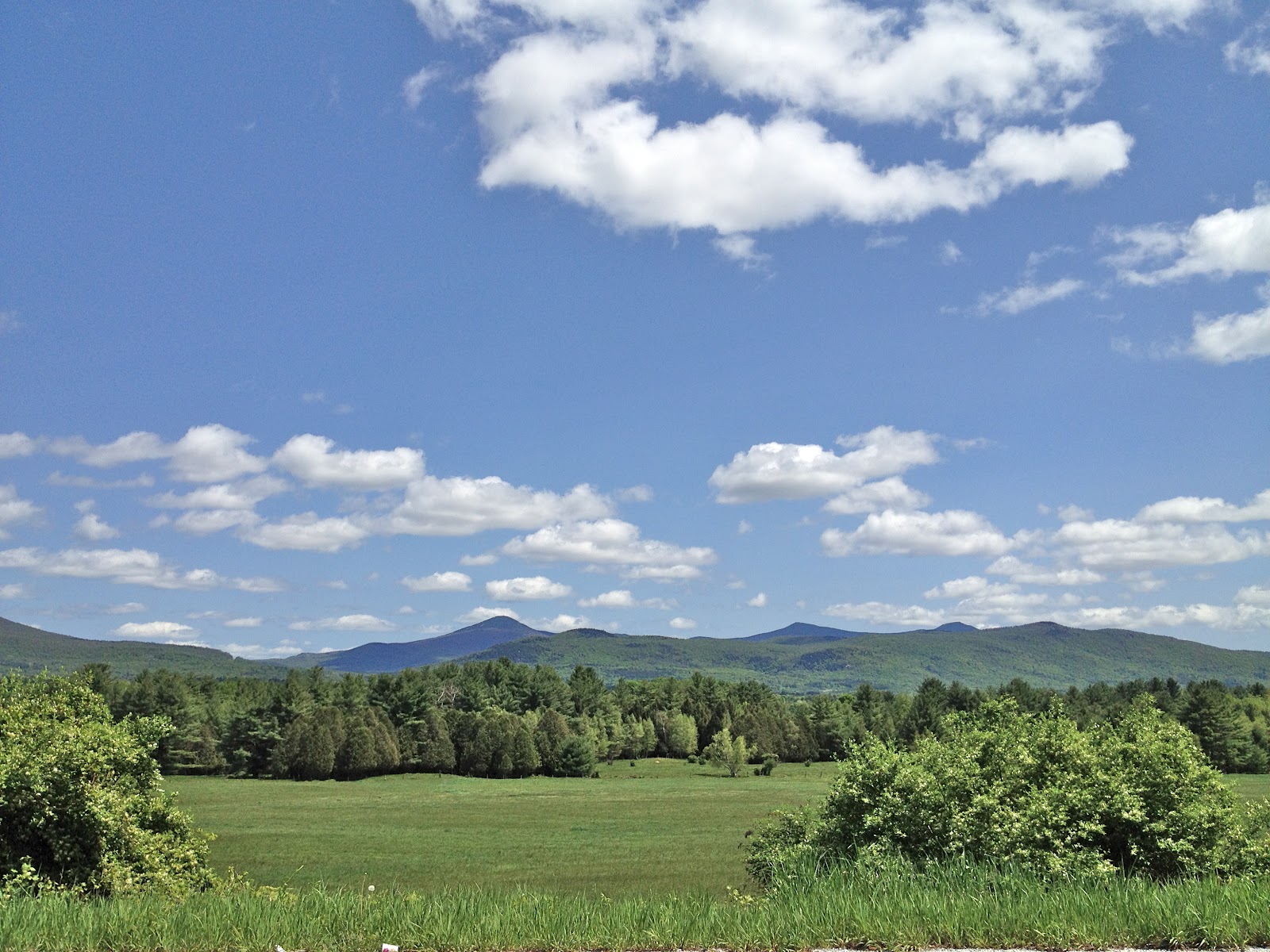
The last day for skating. It is a very pleasant and warm day, the finest yet, with considerable coolness in the air however, — winter still.
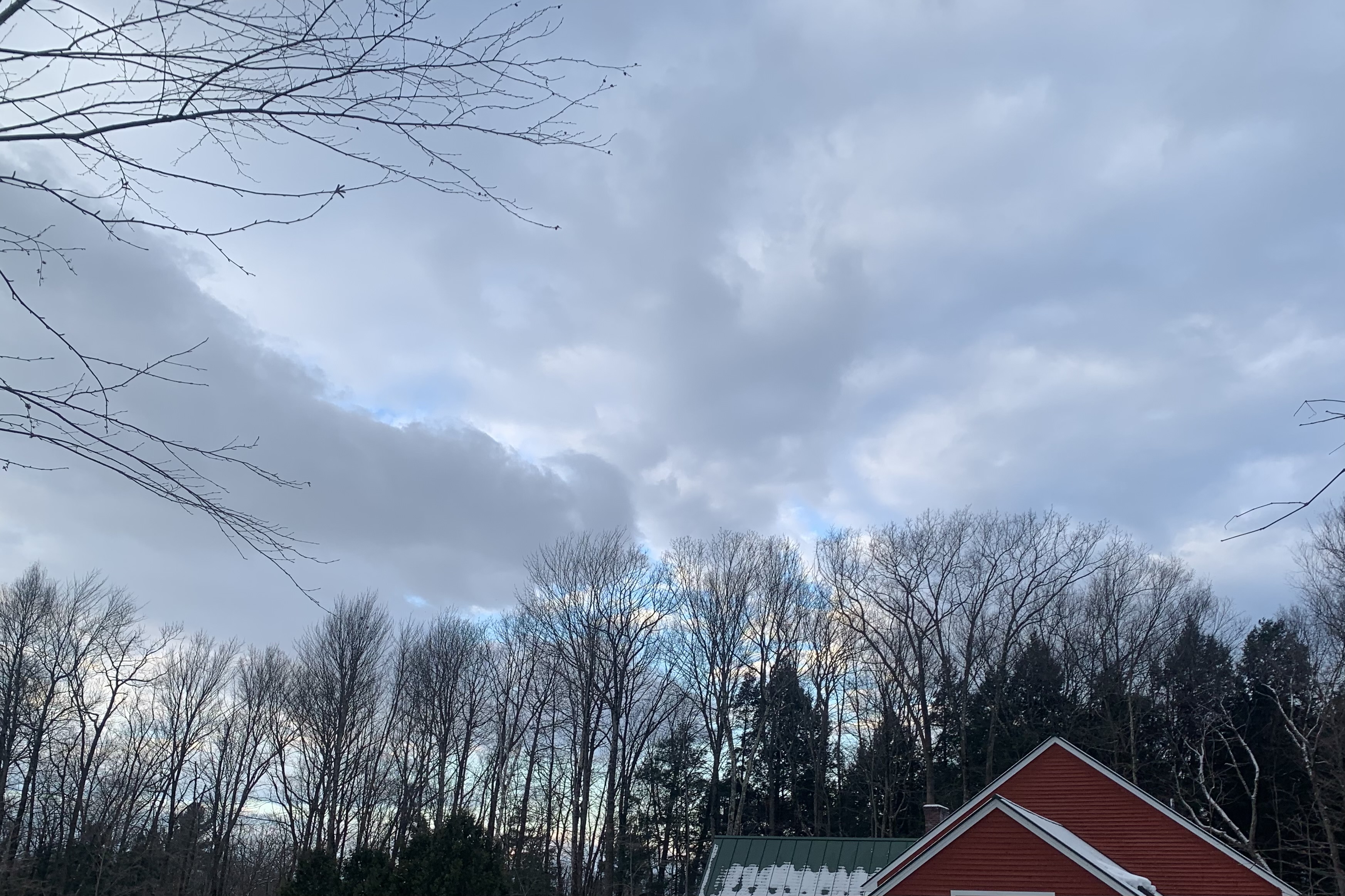
March 1, 2025
We go listening for bluebirds, but only hear crows and chickadees.
A fine seething air over the fair russet fields.
The dusty banks of snow by the railroad reflect a wonderfully dazzling white due to the higher sun.
I am surprised to find the North River more frozen than the South, and we can cross it in many places. The spring sun shining on the sloping icy shores makes numerous dazzling ice-blinks, still brighter and prolonged with rectilinear sides in the reflection.
I did well to walk in the forenoon, the fresh and inspiring half of this bright day.
H. D. Thoreau, Journal, March 1, 1855
The last day for skating. See February 3, 1855 ("This will deserve to be called the winter of skating."); See also A Book of the Seasons, by Henry Thoreau, The Winter of Skating
I am surprised to find the North River more frozen than the South. See March 1, 1856 ("Ask the sheldrake whether the rivers are completely sealed up.") and A Book of the Seasons, by Henry Thoreau, Ice-out
The spring sun shining on the sloping icy shores. See March 1, 1854 ("For some days past the surface of the earth, covered with water, or with ice where the snow is washed off, has shone in the sun as it does only at the approach of spring.")
We go listening for bluebirds, but only hear crows and chickadees. A fine seething air over the fair russet fields. See February 22, 1855 ("Remarkably warm and pleasant weather, perfect spring. I even listen for the first bluebird. I see a seething in the air over clean russet fields. "); March 1, 1854 ("I hear the phoebe or spring note of the chickadee, and the scream of the jay is perfectly repeated by the echo from a neighboring wood "); March 1, 1856 ("I hear several times the fine-drawn phe-be note of the chickadee. . .Singular that I should hear this on the first spring day."). See also A Book of the Seasons, by Henry Thoreau, Signs of the Spring:
We go listening
A Book of the Seasons, by Henry Thoreau
March 1. 10 A. M. — To Derby's Bridge and return by Sam Barrett's, to see ice cakes and meadow crust.
The last day for skating.
It is a very pleasant and warm day, the finest yet, with considerable coolness in the air, however, — winter still.
The air is beautifully clear, and through [ it ] I love to trace at a distance the roofs and outlines of sober - colored farmhouses amid the woods.
We go listening for bluebirds, but only hear crows and chickadees.
A fine seething air over the fair russet fields.
The dusty banks of snow by the railroad reflect a wonderfully dazzling white from their pure crannies, being melted into an uneven, sharp, wavy surface.
This more dazzling white must be due to the higher sun.
I see some thick cakes of ice where an ice - car has broken up : I detect a large bubble four inches in diameter about a foot be neath the upper surface and six inches from the lower.
In confirmation of my theory, the grain of the ice, as indicated by the linear bubbles within it, was converging beneath this bubble, as the rays of light under a burning glass, and what was the under surface at that time was melted in a concave manner to within one and a half inches of the bubble, as appeared by the curvature in the horizontal grain of the more recently formed ice beneath.
I omit to draw the other horizontal grain.
The situation of this bubble also suggests that ice perhaps increases more above than below the plane of its first freezing in the course of a winter, by the addition of surface water and snow ice.
Examined again the ice and meadow - crust deposited just south of Derby's Bridge.
The river is almost down to summer level there now, being only three to four feet deep at that bridge.
It has fallen about eight feet since February 17. The ice is piled up there three or four feet deep, and no water beneath, and most of the cakes, which are about one foot thick, have a crust of meadow of equal thickness (i. e. from six inches to a foot) attached beneath.
I saw in one place three cakes of ice each with a crust of meadow frozen to it beneath, lying one directly upon another and all upon the original ice there, alternately ice and meadow, and the middle crust of meadow measured twenty eight by twenty - two feet.
In this case the earth was about six inches thick only for the most part, three to four feet high in all above original ice.
This lay on a gentle ridge or swell between the main Derby Bridge and the little one beyond, and it suggested that that swell might have been thus formed or increased.
As we went down the bank through A. Hosmer's land we saw great cakes, and even fields of ice, lying up high and dry where you would not suspect otherwise that water had been.
Some have much of the withered pickerel - weed, stem and leaves, in it, causing it to melt and break up soon in the sun.
I saw one cake of ice, six inches thick and more than six feet in diameter, with a cake of meadow of exactly equal dimensions attached to its underside, exactly and evenly balanced on the top of a wall in a pasture forty rods from the river, and where you would not have thought the water ever came.
We saw three white maples about nine inches in diameter which had been torn up, roots and sod together, and in some cases carried a long distance.
One quite sound, of equal size, had been bent flat and broken by the ice striking it some six or seven feet from the ground.
Saw some very large pieces of meadow lifted up or carried off at mouth of G. M. Barrett's Bay.
One measured seventy - four by twenty - seven feet.
Topped with ice almost always, and the old ice still beneath.
In some cases the black, peaty soil thus floated was more than one and a half feet thick, and some of this last was carried a quarter of a mile without trace of ice to buoy it, but probably it was first lifted by ice.
Saw one piece more than a rod long and two feet thick of black, peaty soil brought from I know not where.
The edge of these meadow - crusts is singularly abrupt, as if cut with a turf - knife.
Of course a great surface is now covered with ice on each side of the river, under which there is no water, and we go constantly getting in with impunity.
The spring sun shining on the sloping icy shores makes numerous dazzling ice - blinks, still brighter, and prolonged with rectilinear sides, in the reflection.
I am surprised to find the North River more frozen than the South, and we can cross it in many places.
I think the meadow is lifted in this wise: First, you have a considerable freshet in midwinter, succeeded by severe cold before the water ' has run off much.
Then, as the water goes down, the ice for a certain width on each side the river meadows rests on the ground, which freezes to it.
Then comes another freshet, which rises a little higher than the former.
This gently lifts up the river ice, and that meadow ice on each side of it which still has water under it, without breaking them, but overflows the ice which is frozen to the bot tom.
Then, after some days of thaw and wind, the latter ice is broken up and rises in cakes, larger or smaller with or without the meadow - crust beneath it, and is floated off before the wind and current till it grounds somewhere, or melts and so sinks, frequently three cakes one upon another, on some swell in the meadow or the edge of the upland.
The ice is thus with us a wonderful agent in changing the aspect of the surface of the river - valley.
I think that there has been more meadow than usual moved this year, because we had so great a freshet in midwinter succeeded by severe cold, and that by another still greater freshet before the cold weather was past.
Saw a butcher-bird, as usual on top of a tree, and distinguished from a jay by black wings and tail and streak side of head.
I did well to walk in the forenoon, the fresh and inspiring half of this bright day, for now, at mid afternoon, its brightness is dulled, and a fine stratus is spread over the sky.
Is not “the starry puff (Lycoperdon stellatum)” of the “Journal of a Naturalist,” which “remains driving about the pastures, little altered until spring," my five fingered fungus ?
The same tells of goldfinches (Fringilla carduelis) (Bewick calls it the " thistle - finch ”) "scattering all over the turf the down of the thistle, as they pick out the seed for their food.” It is singular that in this particular it should resemble our goldfinch, a different bird.
I am surprised to find the North River more frozen than the South, and we can cross it in many places. The spring sun shining on the sloping icy shores makes numerous dazzling ice-blinks, still brighter and prolonged with rectilinear sides in the reflection.
I did well to walk in the forenoon, the fresh and inspiring half of this bright day.
H. D. Thoreau, Journal, March 1, 1855
The last day for skating. See February 3, 1855 ("This will deserve to be called the winter of skating."); See also A Book of the Seasons, by Henry Thoreau, The Winter of Skating
It is a very pleasant and warm day, the finest yet. See March 2, 1855 ("Another still, warm, beautiful day like yesterday. "); March 15, 1860 ("On the whole the finest day yet . . . Here is the first fair, and at the same time calm and warm, day") See also A Book of the Seasons, by Henry Thoreau, The world can never be more beautiful than now.
I am surprised to find the North River more frozen than the South. See March 1, 1856 ("Ask the sheldrake whether the rivers are completely sealed up.") and A Book of the Seasons, by Henry Thoreau, Ice-out
The spring sun shining on the sloping icy shores. See March 1, 1854 ("For some days past the surface of the earth, covered with water, or with ice where the snow is washed off, has shone in the sun as it does only at the approach of spring.")
We go listening for bluebirds, but only hear crows and chickadees. A fine seething air over the fair russet fields. See February 22, 1855 ("Remarkably warm and pleasant weather, perfect spring. I even listen for the first bluebird. I see a seething in the air over clean russet fields. "); March 1, 1854 ("I hear the phoebe or spring note of the chickadee, and the scream of the jay is perfectly repeated by the echo from a neighboring wood "); March 1, 1856 ("I hear several times the fine-drawn phe-be note of the chickadee. . .Singular that I should hear this on the first spring day."). See also A Book of the Seasons, by Henry Thoreau, Signs of the Spring:
March 1. See A Book of the Seasons, by Henry Thoreau, March 1
I did well to waik
the fresh and inspiring half
of this bright day.
We go listening
for bluebirds, but only hear
crows and chickadees.
A Book of the Seasons, by Henry Thoreau, A fresh and inspiring dazzling bright day.
A Book of the Seasons, by Henry Thoreau
"A book, each page written in its own season,
out-of-doors, in its own locality."
~edited, assembled and rewritten by zphx © 2009-2025
https://tinyurl.com/hdt-550301
***
March 1. 10 A. M. — To Derby's Bridge and return by Sam Barrett's, to see ice cakes and meadow crust.
The last day for skating.
It is a very pleasant and warm day, the finest yet, with considerable coolness in the air, however, — winter still.
The air is beautifully clear, and through [ it ] I love to trace at a distance the roofs and outlines of sober - colored farmhouses amid the woods.
We go listening for bluebirds, but only hear crows and chickadees.
A fine seething air over the fair russet fields.
The dusty banks of snow by the railroad reflect a wonderfully dazzling white from their pure crannies, being melted into an uneven, sharp, wavy surface.
This more dazzling white must be due to the higher sun.
I see some thick cakes of ice where an ice - car has broken up : I detect a large bubble four inches in diameter about a foot be neath the upper surface and six inches from the lower.
In confirmation of my theory, the grain of the ice, as indicated by the linear bubbles within it, was converging beneath this bubble, as the rays of light under a burning glass, and what was the under surface at that time was melted in a concave manner to within one and a half inches of the bubble, as appeared by the curvature in the horizontal grain of the more recently formed ice beneath.
I omit to draw the other horizontal grain.
The situation of this bubble also suggests that ice perhaps increases more above than below the plane of its first freezing in the course of a winter, by the addition of surface water and snow ice.
Examined again the ice and meadow - crust deposited just south of Derby's Bridge.
The river is almost down to summer level there now, being only three to four feet deep at that bridge.
It has fallen about eight feet since February 17. The ice is piled up there three or four feet deep, and no water beneath, and most of the cakes, which are about one foot thick, have a crust of meadow of equal thickness (i. e. from six inches to a foot) attached beneath.
I saw in one place three cakes of ice each with a crust of meadow frozen to it beneath, lying one directly upon another and all upon the original ice there, alternately ice and meadow, and the middle crust of meadow measured twenty eight by twenty - two feet.
In this case the earth was about six inches thick only for the most part, three to four feet high in all above original ice.
This lay on a gentle ridge or swell between the main Derby Bridge and the little one beyond, and it suggested that that swell might have been thus formed or increased.
As we went down the bank through A. Hosmer's land we saw great cakes, and even fields of ice, lying up high and dry where you would not suspect otherwise that water had been.
Some have much of the withered pickerel - weed, stem and leaves, in it, causing it to melt and break up soon in the sun.
I saw one cake of ice, six inches thick and more than six feet in diameter, with a cake of meadow of exactly equal dimensions attached to its underside, exactly and evenly balanced on the top of a wall in a pasture forty rods from the river, and where you would not have thought the water ever came.
We saw three white maples about nine inches in diameter which had been torn up, roots and sod together, and in some cases carried a long distance.
One quite sound, of equal size, had been bent flat and broken by the ice striking it some six or seven feet from the ground.
Saw some very large pieces of meadow lifted up or carried off at mouth of G. M. Barrett's Bay.
One measured seventy - four by twenty - seven feet.
Topped with ice almost always, and the old ice still beneath.
In some cases the black, peaty soil thus floated was more than one and a half feet thick, and some of this last was carried a quarter of a mile without trace of ice to buoy it, but probably it was first lifted by ice.
Saw one piece more than a rod long and two feet thick of black, peaty soil brought from I know not where.
The edge of these meadow - crusts is singularly abrupt, as if cut with a turf - knife.
Of course a great surface is now covered with ice on each side of the river, under which there is no water, and we go constantly getting in with impunity.
The spring sun shining on the sloping icy shores makes numerous dazzling ice - blinks, still brighter, and prolonged with rectilinear sides, in the reflection.
I am surprised to find the North River more frozen than the South, and we can cross it in many places.
I think the meadow is lifted in this wise: First, you have a considerable freshet in midwinter, succeeded by severe cold before the water ' has run off much.
Then, as the water goes down, the ice for a certain width on each side the river meadows rests on the ground, which freezes to it.
Then comes another freshet, which rises a little higher than the former.
This gently lifts up the river ice, and that meadow ice on each side of it which still has water under it, without breaking them, but overflows the ice which is frozen to the bot tom.
Then, after some days of thaw and wind, the latter ice is broken up and rises in cakes, larger or smaller with or without the meadow - crust beneath it, and is floated off before the wind and current till it grounds somewhere, or melts and so sinks, frequently three cakes one upon another, on some swell in the meadow or the edge of the upland.
The ice is thus with us a wonderful agent in changing the aspect of the surface of the river - valley.
I think that there has been more meadow than usual moved this year, because we had so great a freshet in midwinter succeeded by severe cold, and that by another still greater freshet before the cold weather was past.
Saw a butcher-bird, as usual on top of a tree, and distinguished from a jay by black wings and tail and streak side of head.
I did well to walk in the forenoon, the fresh and inspiring half of this bright day, for now, at mid afternoon, its brightness is dulled, and a fine stratus is spread over the sky.
Is not “the starry puff (Lycoperdon stellatum)” of the “Journal of a Naturalist,” which “remains driving about the pastures, little altered until spring," my five fingered fungus ?
The same tells of goldfinches (Fringilla carduelis) (Bewick calls it the " thistle - finch ”) "scattering all over the turf the down of the thistle, as they pick out the seed for their food.” It is singular that in this particular it should resemble our goldfinch, a different bird.