Showing posts with label sun. Show all posts

Saturday, March 18, 2023

A Book of the Seasons, Signs of the Spring: The New Warmth of the Sun


No mortal is alert enough 
to be present at the first dawn of the spring. 
Henry Thoreau, March 17, 1857

 Perhaps what most moves us in winter 
is some reminiscence of far-off summer . . .  
It is in the cawing of the crow, the crowing of the cock, 
the warmth of the sun on our backs. 
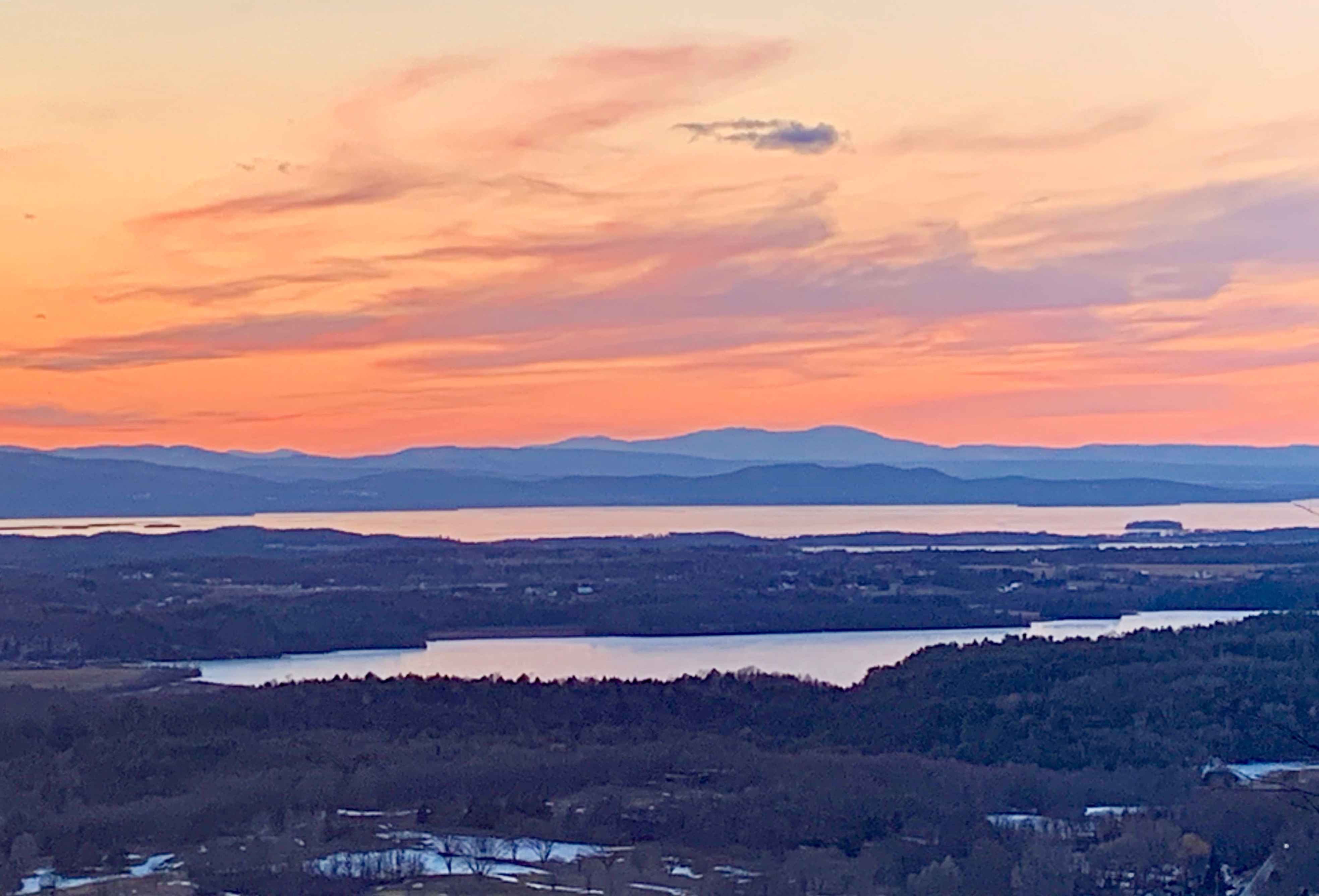
March 18,  2019

Sun now warm and bright
the walker goes home at eve 
to dream of summer.


January 25. It is glorious to be abroad this afternoon . . . The warmth of the sun reminds me of summer. January 25, 1852


January 31.  The wind is more southerly, and now the warmth of the sun prevails, and is felt on the back. The snow softens and melts. It is a beautiful clear and mild winter day. January 31, 1854

February 12 It is very pleasant to stand now in a high pine wood where the sun shines in amid the pines and hemlocks and maples as in a warm apartment.  February 12, 1855

February 16. The sun is most pleasantly warm on my cheek; the melting snow shines in the ruts; the cocks crow more than usual in barns; my greatcoat is an incumbrance. February 16, 1856

February 18Though not particularly warm, the light of the sun (now travelling so much higher) on the russet fields, —the ground being nearly all bare, —and on the sand and the pines, is suddenly yellower. February 18, 1855


February 21. A warmth begins to be reflected from the partially dried ground here and there in the sun in sheltered places, very cheering to invalids who have weak lungs, who think they may weather it till summer now. Nature is more genial to them. February 21, 1855

February 23.  It is inspiriting to feel the increased heat of the sun reflected from the snow. February 23, 1856

February 23.   I have seen signs of the spring.  February 23, 1857

March 1. The sunlight looks and feels warm, and a fine vapor fills the lower atmosphere. I hear the phoebe or spring note of the chickadee, and the scream of the jay is perfectly repeated by the echo from a neighboring wood.  March 1, 1854

March 1.  The dusty banks of snow by the railroad reflect a wonderfully dazzling white due to the higher sun. March 1, 1855

March 4. The sun has got a new power in his rays after all, cold as the weather is. He could not have warmed me so much a month ago. March 4, 1852

March 8. There is something of spring in all seasons . . . Nowadays we separate the warmth of the sun from the cold of the wind and observe that the cold does not pervade all places, but being due to strong northwest winds, if we get into some sunny and sheltered nook where they do not penetrate, we quite forget how cold it is elsewhere.  March 8, 1860

March 15. This afternoon I throw off my outside coat. A mild spring day.  The air is full of bluebirds. . . . The villagers are out in the sun, and every man is happy whose work takes him outdoors.  March 15, 1852

March 15.  Notwithstanding this day is so cold that I keep my ears covered, the sidewalks melt in the sun, such is its altitude.  March 15, 1853

March 18. The season is so far advanced that the sun affects me as I have not been affected for a long time. I must go forth . . .  All nature is thus forward to move with the revolution of the seasons . . . This the foreglow of the year, when the walker goes home at eve to dream of summer.  March 18, 1853

March 18.  Two little water-bugs . . . Notwithstanding the backwardness of the season, all the town still under deep snow and ice, here they are, in the first open and smooth water, governed by the altitude of the sun.  March 18, 1856

March 18.  My spirit is like a lit tree . . . Is it not the higher sun, and cleansed air, and greater animation of nature?  There is a warmer red to the leaves of the shrub oak, and to the tail of the hawk circling over them. March 18, 1858

March 18Examining the skunk-cabbage , now generally and abundantly in bloom . . . I hear the hum of honeybees  in the air, attracted by this flower . . . The first sunny and warmer day in March the honeybee leaves its home, probably a mile off, and wings its way to this warm bank. There is but one flower in bloom in the town, and this insect knows where to find it . . . No doubt this flower, too, has learned to expect its winged visitor knocking at its door in the spring. March 18, 1860

March 22.  The phenomena of an average March are increasing warmth . . .some calm and pleasant days reminding us of summer, with a blue haze or a thicker mist wreathing the woods at last, in which, perchance, we take off our coats awhile and sit without a fire a day. March 22, 1860
*****
So I came in and
shut the door and passed my first
spring night in the woods.
Walden, Spring
*****

See also Signs of the Spring:


  <<<<< Signs of Spring                                                                                   Early Spring >>>>>


A Book of the Seasons,  by Henry Thoreau,  Signs of the Spring: 

A Book of the Seasons
, by Henry Thoreau
"A book, each page written in its own season,
out-of-doors, in its own locality."
~edited, assembled and rewritten by zphx © 2009-2024

tinyurl.com/HDTnewwarmth

Saturday, June 12, 2021

I feel well into summer when I see this redness.


June 12

June 12, 2019

Saturday. P. M. – To Lupine Hill via Depot Field Brook.

For some time I have noticed the grass whitish and killed at top by worms (?).

The meadows are yellow with golden senecio.

Marsh speedwell (Veronica scutellata), lilac - tinted, rather pretty.

The mouse-ear forget me-not (Myosotis laxa) has now extended its racemes (?) very much, and hangs over the edge of the brook. It is one of the most interesting minute flowers. It is the more beautiful for being small and unpretending, for even flowers must be modest.

The blue flag (Iris versicolor). Its buds are a dark indigo-blue tip beyond the green calyx. It is rich but hardly delicate and simple enough; a very handsome sword-shaped leaf.

The blue-eyed grass is one of the most beautiful of flowers. It might have been famous from Proserpine down. It will bear to be praised by poets.

The blue flag, notwithstanding its rich furniture, its fringed recurved parasols over its anthers, and its variously streaked and colored petals, is loose and coarse in its habit.

How completely all character is expressed by flowers !

This is a little too showy and gaudy, like some women's bonnets. Yet it belongs to the meadow and ornaments it much.

The critchicrotches are going to seed.

I love the sweet-flag as well as the muskrat (?). Its tender inmost leaf is very palatable below.

Enothera pumila, dwarf tree-primrose. Ever it will be some obscure small and modest flower that will most please us.

Some of the ferns have branches wholly covered with fruit.

How difficult, if not impossible, to do the things we have done! as fishing and camping out. They seem to me a little fabulous now.

Boys are bathing at Hubbard's Bend, playing with a boat (I at the willows).

The color of their bodies in the sun at a distance is pleasing, the not often seen flesh-color. I hear the sound of their sport borne over the water.

As yet we have not man in nature.

What a singular fact for an angel visitant to this earth to carry back in his note-book, that men were forbidden to expose their bodies under the severest penalties ! A pale pink, which the sun would soon tan.

White men ! There are no white men to contrast with the red and the black; they are of such colors as the weaver gives them. I wonder that the dog knows his master when he goes in to bathe and does not stay by his clothes.

Small white-bellied (?) swallows in a row ( a dozen ) on the telegraph - wire over the water by the bridge. This perch is little enough departure from unobstructed air to suit them. Pluming themselves.

If you could furnish a perch aerial enough, even birds of paradise would alight.

Swallows have forked tails, and wings and tails are about the same length. They do not alight on trees, methinks, unless on dead and bare boughs, but stretch a wire over water and they perch on it.

This is among the phenomena that cluster about the telegraph.

Hedge-mustard.

(Turned into the lane beyond Dennis's.

Some fields are almost wholly covered with sheep's-sorrel, now turned red, — its valves (?). It helps thus agreeably to paint the earth, contrasting even at a distance with the greener fields, blue sky, and dark or downy clouds. It is red, marbled, watered, mottled, or waved with greenish, like waving grain, — three or four acres of it.

To the farmer or grazier it is a troublesome weed, but to the landscape-viewer an agreeable red tinge laid on by the painter. I feel well into summer when I see this redness.

It appears to be avoided by the cows.

The petals of the sidesaddle-flower, fully expanded, hang down. How complex it is, what with flowers and leaves! It is a wholesome and interesting plant to me, the leaf especially.

Rye that has sown itself and come up scatteringly in bunches is now nearly ripe.

They are beginning to cut rank grass on the village street.

I should say the summer began with the leafiness, umbrageous summer! 

The glory of Dennis's lupines is departed, and the white now shows in abundance beneath them.

So I cannot walk longer in those fields of Enna in which Proserpine amused herself gathering flowers.

The steam whistle at a distance sounds even like the hum of a bee in a flower.

So man's works fall into nature.

The flies hum at mid-afternoon, as if peevish and weary of the length of the days.

The river is shrunk to summer width; on the sides smooth whitish water, or rather it is the light from the pads; - in the middle, dark blue or slate, rippled.

The color of the earth at a distance where a wood has been cut off is a reddish brown.

Nature has put no large object on the face of New England so glaringly white as a white house.

The Ranunculus filiformis on the muddy shore of the river.

The locusts' blossoms in the graveyard fill the street with their sweet fragrance.

It is day, and we have more of that same light that the moon sent us, but not reflected now, but shining directly. The sun is a fuller moon.

Who knows how much lighter day there may be?


H. D. Thoreau, Journal, June 12, 1852

The meadows are yellow with golden senecio. See June 9, 1853 ("The meadows are now yellow with the golden senecio, a more orange yellow, mingled with the light glossy yellow of the buttercup."); June 10, 1854 ("The meadows now begin to be yellow with senecio.") See also A Book of the Seasons, by Henry Thoreau, The Golden Senecio

It is one of the most interesting minute flowers. See A Book of the Seasons, by Henry Thoreau, the Mouse-ear forget-me-not (Myosotis laxa small-flowered forget- me- not)

The blue-eyed grass is one of the most beautiful of flowers . . .It will bear to be praised by poets.  See June 15, 1851 ("The blue-eyed grass, wellnamed, looks up to heaven."); A Book of the Seasons,  by Henry Thoreau,  Blue-Eyed Grass

The critchicrotches are going to seed. I love the sweet-flag as well as the muskrat (?). Its tender inmost leaf is very palatable below. See May 23, 1860 ("Critchicrotches some two or three days; now tender to eat . How agreeable and surprising the peculiar fragrance of the sweet flag when bruised! That this plant alone should have extracted this odor surely for so many ages each summer from the moist earth!");   May 27, 1852 ("The fruit of the sweet flag is now just fit to eat, and reminds me of childhood, — the critchicrotches. They would help sustain a famished traveller. The inmost tender leaf, also, near the base, is quite palatable, as children know. I love it as well as muskrats (?)."); July 20, 1852. "Dug open a muskrat's gallery ... there was half a critchicrotch in it." May 29 1854  (Critchicrotches have been edible some time in some places. It must be a kind of water milfoil, whose leaves I now see variously divided under water, and some nearly two feet long. ") See also Critchicrotches · iNaturalist ("It turns out Thoreau is referring to the fruit of Acorus calamus. This wetland plant goes by dozens of common names . . . sweet flag, calamus, beewort, bitter pepper root, gladdon, myrtle grass, myrtle sedge, pine root, rat root, sea sedge, sweet cane, sweet cinnamon, sweet grass, sweet myrtle, sweet root, sweet rush, and sweet sedge. . . . I continue to be amazed at how often I can observe the same plant or animal on the exact same date as Thoreau observes it.") and Journal IV 74, 92, 240, V 155, VI 307, VII 387.

Sheep's-sorrel, now turned red, helps thus agreeably to paint the earth, contrasting even at a distance with the greener fields, blue sky, and dark or downy clouds. See June 12, 1859 ("I am struck with the beauty of the sorrel now. . . . What a wholesome red! . . . There is hardly a more agreeable sight at this season."); June 12, 1854 ("Clover now reddens the fields."); See also June 11, 1853 ("In the sorrel-fields, also, what lately was the ruddy, rosy cheek of health, now that the sorrel is ripening and dying, has become the tanned and imbrowned cheek of manhood."); May 22, 1854 ("The sorrel beginning to redden the fields with ruddy health, — all these things make earth now a paradise. How many times I have been surprised thus, on turning about on this very spot, at the fairness of the earth!"); June 5, 1853 ("The distant fields are seen, reddened with sorrel, and the meadows wet green, full of fresh grass, and the trees in their first beautiful, bright, untarnished and unspotted green."); June 6, 1857(“A year is made up of a certain series and number of sensations and thoughts which have their language in nature. Now I am ice, now I am sorrel. Each experience reduces itself to a mood of the mind.”)

The petals of the sidesaddle-flower, fully expanded, hang down. See note to June 12, 1856 ("Sidesaddle flower numerously out now.") See also A Book of the Seasons, by Henry Thoreau, The Purple Pitcher Plant

I should say the summer began with the leafiness, umbrageous summer! See May 27, 1853 ("A new season has commenced - summer - leafy June.”); June 1, 1853 ("Summer begins now about a week past, with the expanded leaves, the shade and warm weather");June 4, 1860 (''The leafy season has fairly commenced."); June 6, 1855 ("The dark eye and shade of June”); June 9, 1852 (The general leafiness, shadiness, and waving of grass and boughs in the breeze characterize the season")

Nature has put no large object on the face of New England so glaringly white as a white house. See June 24, 1852 ("I have not heard that white clouds, like white houses, made any one's eyes ache.");  November 25, 1853 ("The white houses of the village, also, are remarkably distinct and bare and brought very near."); November 29, 1858 ("[After a snowfall ] White houses no longer stand out and stare in the landscape.")

The locusts' blossoms in the graveyard fill the street with their sweet fragrance.  See June 7, 1854 ("The locusts so full of pendulous white racemes five inches long, filling the air with their sweetness and resounding with the hum of humble and honey bees"); June 9, 1852 ("The locust in bloom"); June 10, 1853 ("The locust bloom is now perfect, filling the street with its sweetness."); June 11, 1856 ("The locust in graveyard shows but few blossoms yet.")


Monday, March 8, 2021

A spring sheen on the snow – signs of the morrow


March 8

10 A. M. Rode to Saxonville with F. Brown to look at a small place for sale, via Wayland. Return by Sudbury. On wheels in snow.


A spring sheen on the snow. The melting snow, running and sparkling down-hill in the ruts, was quite springlike. The snow pure white, but full of water and dissolving through the heat of the sun.

Saw a mink run across the road in Sudbury, a large black weasel, to appearance, worming its supple way over the snow. Where it ran, its tracks were thus: 

the intervals between the fore and hind feet sixteen or eighteen inches by two and a half. 

The distant view of the open flooded Sudbury meadows, all dark blue, surrounded by a landscape of white snow, gave an impulse to the dormant sap in my veins. Dark-blue and angry waves, contrasting with the white but melting winter landscape. Ponds, of course, do not yet afford this water prospect; only the flooded meadows.

There is no ice over or near the stream, and the flood has covered or broken up much of the ice on the meadows. The aspect of these waters at sunset, when the air is still, begins to be unspeakably soothing and promising. Waters are at length, and begin to reflect, and, instead of looking into the sky, I look into the placid reflecting water for the signs and promise of the morrow.

These meadows are the most of ocean that I have fairly learned.

Now, when the sap of the trees is probably beginning to flow, the sap of the earth, the river, overflows and bursts its icy fetters. This is the sap of which I make my sugar after the frosty nights, boiling it down and crystallizing it.

I must be on the lookout now for the gulls and the ducks.

That dark-blue meadowy revelation.

It is as when the sap of the maple bursts forth early and runs down the trunk to the snow.

Saw two or three hawks sailing.

Saw the remains of four cows and a horse that were burned in a barn a month ago. Where the paunch was, a large bag of coarse hay and stalks was seen in the midst of an indistinct circumference of ribs.

Saw some very large willow buds expanded (their silk) to thrice the length of their scales, indistinctly carved or waved with darker lines around them. They look more like, are more of, spring than anything I have seen.

Heard the phebe, or spring note of the chickadee, now, before any spring bird has arrived.

I know of no more pleasing employment than to ride about the country with a companion very early in the spring, looking at farms with a view to purchasing if not paying for them.

Heard the first flies buzz in the sun on the south side of the house.


H. D. Thoreau, Journal, March 8, 1853

The heat of the sun. See March 8, 1860 (" Nowadays we separate the warmth of the sun from the cold of the wind and observe that the cold does not pervade all places. "); see also February 23, 1856 ("t is inspiriting to feel the increased heat of the sun reflected from the snow. "); March 4, 1852 (" The sun has got a new power in his rays after all, cold as the weather is. He could not have warmed me so much a month ago.") See also A Book of the Seasons,  by Henry Thoreau,  Signs of the Spring: the new warmth of the sun 

The melting snow, running and sparkling down-hill in the ruts, was quite springlike. See February 16, 1856 ("The melting snow shines in the ruts."); February 21, 1860 ("When you see the sparkling stream from melting snow in the ruts, know that then is to be seen this braid of the spring"); March 9, 1859 (" The earth shines, its icy armor reflecting the sun, and the rills of melting snow in the ruts shine, too.") See also A Book of the Seasons,  by Henry Thoreau,  Signs of the Spring: Braided ripples of melting snow

Saw a mink run across the road in Sudbury, a large black weasel, to appearance, worming its supple way over the snow.  See 
 December 2, 1852 ("Above the bridge . . . we see a mink, slender, black, very like a weasel in form");  November 9, 1853 ("We saw a mink swimming in the agitated water close to the shore, east side, above Nut Meadow Brook. It showed the whole top of the back and part of the tail, unlike the muskrat, and did not dive. Stopped a moment when we headed toward it, and held up its head at the end of its long neck toward us, reminding me of pictures of the otter, then turned and swam and ran the other way; dark-brown."); March 26, 1855 ("At the Hubbard Bath, a mink comes teetering along the ice by the side of the river. I am between him and the sun, and he does not notice me. He runs daintily, lifting his feet with a jerk as if his toes were sore. They seem to go a-hunting at night along the edge of the river r; perhaps I notice them more at this season, when the shallow water freezes at night and there is no vegetation along the shore to conceal them."); November 13, 1855 (“Going over Swamp Bridge Brook at 3 P. M., I saw in the pond by the roadside, a few rods before me, the sun shining bright, a mink swimming . . . It was a rich brown fur . . . not black as it sometimes appears, especially on ice.”); April 28, 1857 (“It crossed to my side about twenty-five feet off, apparently not observing me, and disappeared in the woods. It was perfectly black, for aught I could see (not brown), some eighteen or twenty inches or more in length from tip to tip, and I first thought of a large black weasel, then of a large black squirrel, then wondered if it could be a pine marten. I now try to think it a mink”); April 15, 1858 ("Having stood quite still on the edge of the ditch close to the north edge of the maple swamp some time, and heard a slight rustling near me from time to time, I looked round and saw a mink under the bushes within a few feet. It was pure reddish-brown above, with a blackish and somewhat bushy tail, a blunt nose, and somewhat innocent-looking head. It crept along toward me and around me, within two feet, in a semicircle, snuffing the air, and pausing to look at me several times.");  April 29, 1860 ("I now actually see one small-looking rusty or brown black mink scramble along the muddy shore and enter a hole in the bank.") See also March 13, 1859 ("Garfield . . . asked if I had seen any mink. I said that I commonly saw two or three in a year. He said that he had not seen one alive for eight or ten years. [but] catch thirty or forty dollars' worth every winter.")

Now, when the sap of the trees is probably beginning to flow, the sap of the earth, the river, overflows and bursts its icy fetters . . . That dark-blue meadowy revelation. See  February 12, 1860 ("That dark-eyed water . . .  is it not the first sign of spring?"; )February 27, 1852 (" If rivers come out of their icy prison thus bright and immortal, shall not I too resume my spring life with joy and hope ?") See also A Book of the Seasons,  by Henry Thoreau,  Signs of the Spring: Red Maple Sap Flows and  A Book of the Seasons,  by Henry Thoreau, Signs of the Spring: Bright Blue Water

Saw two or three hawks sailing. See March 8, 1857 ("Get a glimpse of a hawk, the first of the season.") See also March 6, 1858 (" I see the first hen-hawk, or hawk of any kind, methinks, since the beginning of winter, Its scream, even, is inspiring as the voice of a spring bird.") and A Book of the Seasons,  by Henry Thoreau,  Signs of the Spring: the Hawks of March

 Saw some very large willow buds expanded . . . look more like, are more of, spring than anything I have seen. See  March 7, 1855 ("Methinks the buds of the early willows, the willows of the railroad bank, show more of the silvery down than ten days ago.");  March 8, 1860 ("Willow catkins expanding and peeping out a little further every warm day from the very beginning of winter.");  March 10, 1853 ("Methinks the first obvious evidence of spring is the pushing out of the swamp willow catkins.") See also A Book of the Seasons,  by Henry Thoreau, Signs of the Spring: Alder and Willow Catkins Expanding

Heard the phebe, or spring note of the chickadee, now, before any spring bird has arrived. See Walden ("On the 13th of March, after I had heard the bluebird, song-sparrow, and red-wing, the ice was still nearly a foot thick. "); February 24, 1857 ("A chickadee with its winter lisp flits over, and I think it is time to hear its phebe note, and that instant it pipes it forth. "); March 1, 1854 ("I hear the phoebe or spring note of the chickadee"); March 1, 1856 ("I hear several times the fine-drawn phe-be note of the chickadee, which I heard only once during the winter. Singular that I should hear this on the first spring day."); March 10, 1852 ("Hear the phoebe note of the chickadee to-day for the first time.."): March 22, 1855 ("My first distinct spring note (phe-be) of the chickadee.”) See also A Book of the Seasons, by Henry Thoreau,  Signs of the Spring: The Spring Note of the Chickadee

Heard the first flies buzz in the sun on the south side of the house. 
See March 4, 1855 (" It is very warm in the sun. . . The rustle of the dry leaves . . . reminds me of fires in the woods . . . I see a fly on the rock."); See also A Book of the Seasons,  by Henry Thoreau, Signs of the Spring: Buzzing flies

The distant view of
now dark blue open meadows –
sign of the morrow.


A Book of the Seasons,  by Henry Thoreau
 "A book, each page written in its own season, 
out-of-doors, in its own locality."
 ~edited, assembled and rewritten by zphx ©  2009-2026

https://tinyurl.com/hdt-530308

Tuesday, October 13, 2020

The alert and energetic man leads a more intellectual life in winter than in summer.


October 13.

October 13, 2021

Drizzling, misty showers still, with a little misty sunshine at intervals.

The trees have lost many of their leaves in the last twenty-four hours.

The sun has got so low that it will do to let his rays in on the earth; the cattle do not need their shade now, nor men. Warmth is more desirable now than shade.

The alert and energetic man leads a more intellectual life in winter than in summer.

  • In summer the animal and vegetable in him are perfected as in a torrid zone; he lives in his senses mainly.
  • In winter cold reason and not warm passion has her sway; he lives in thought and reflection; he lives a more spiritual, a less sensual, life.
  • If he has passed a merely sensual summer, he passes his winter in a torpid state like some reptiles and other animals.
  • The mind of man in the two seasons is like the atmosphere of summer compared with the atmosphere of winter.
  • He depends more on himself in winter, — on his own resources, — less on outward aid.
  • Insects, it is true, disappear for the most part, and those animals which depend upon them; but the nobler animals abide with man the severity of winter.
  • He migrates into his mind, to perpetual summer.
  • And to the healthy man the winter of his discontent never comes.

Mr. Pratt told me that Jonas? Melvin found a honey-bee's nest lately near Beck Stow's swamp with twenty-five pounds of honey in it, in the top of a maple tree which was blown down.

There is now a large swarm in the meeting-house chimney, in a flue not used.

Many swarms have gone off that have not been heard from.


H. D. Thoreau, Journal, October 13, 1851


Man in winter.
 See December 8, 1850 ( "The dear privacy and retirement and solitude which winter makes possible!"); October 27, 1851 ("The cold numbs my fingers. Winter, with its inwardness, is upon us. A man is constrained to sit down, and to think."); January 17, 1852 ("In proportion as I have celestial thoughts, is the necessity for me to be out and behold the western sky sunset these winter days. That is the symbol of the unclouded mind that knows neither winter nor summer ") April 1, 1852 ("We have had a good solid winter, which has put the previous summer far behind us; intense cold, deep and lasting snows, and clear, tense winter sky. It is a good experience to have gone through with."); January 30, 1854 ("The winter was made to concentrate and harden and mature the kernel of man's brain, to give tone and firmness and consistency to his thought. This harvest of thought the great harvest of the year. The human brain is the kernel which the winter itself matures. Now we burn with a purer flame like the stars."); December 5, 1856 ("I love the winter, with its imprisonment and its cold,"); December 11, 1855 ("The winter, with its snow and ice, . . . is as it was designed and made to be.")

Melvin found a honey-bee's nest lately. See February 10, 1852 ("I saw yesterday on the snow on the ice, on the south side of Fair Haven Pond, some hundreds of honey-bees,. . .. Pratt says he would advise me to remove the dead bees, lest somebody else should be led to discover their retreat, and I may get five dollars for the swarm, and perhaps a good deal of honey."); September 30, 1852 ("custom gives the first finder of the nest a right to the honey and to cut down the tree "). See also A Book of the Seasons, by Henry Thoreau, Bees


October 13. See A Book of the Seasons, by Henry Thoreau, October 13


A Book of the Seasons,  by Henry Thoreau, 
A Book of the Seasons,  by Henry Thoreau 
"A book, each page written in its own season,
out-of-doors, in its own locality.”
~edited, assembled and rewritten by zphx © 2009-2024

Monday, September 17, 2018

Sparrows in flocks now about in garden

September 17. 

P. M. — Ride to Beaver Pond and beyond. 

I see several apple trees that were blown down yesterday and some pretty large elm limbs. The orchards are strewn with windfalls, mostly quite green. 

Paddle round Beaver Pond in a boat, which I calked with newspaper. It has a very boggy and generally inaccessible shore, now more inaccessible than usual on account of the rain and high water. A singularly muddy hole. 

See elecampane, quite out of bloom. 

Also the Solidago odora, which I see has just done. 

River rising fast, from yesterday’s rain. 

Cooler weather now for two or three days, so that I am glad to sit in the sun on the east side of the house mornings. 

Methinks, too, that there are more sparrows in flocks now about in garden, etc.

H. D. Thoreau, Journal, September 17, 1858

I am glad to sit in the sun on the east side of the house mornings. See September 4, 1860 ("It is cooler these days and nights, and I move into an eastern chamber in the morning, that I may sit in the sun. September 18, 1852 ("In the forenoons I move into a chamber on the east side of the house, and so follow the sun round.”)

Friday, August 29, 2014

The warmth of the sun now the air is cool


August 29.

It is a great pleasure to walk in this clearer atmosphere, though cooler. 

August 29, 2016

How great a change, and how sudden, from that sultry and remarkably hazy atmosphere to this clear, cool autumnal one, in which all things shine, and distance is restored to us! It is so cool that we are inclined to stand round the kitchen fire a little while these mornings, though we sit and sleep with open windows still.

The cymes of elder-berries, black with fruit, are now conspicuous. I see a boy already raking cranberries. The moss rose hips will be quite ripe in a day or two. Many birds nowadays resort to the wild black cherry tree, as here front of Tarbell's. I see them continually coming and going directly from and to a great distance, — cherry birds, robins, and kingbirds.

At Clamshell Bank the barn swallows are very lively, filling the air with their twittering now, at 6 p.m. They rest on the dry mullein-tops, then suddenly all start off together as with one impulse and skim about over the river, hill, and meadow. Some sit on the bare twigs of a dead apple tree. Are they not gathering for their migration?

I enjoy the warmth of the sun now that the air is cool, and Nature seems really more genial. I love to sit on the withered grass on the sunny side of the wall. My mistress is at a more respectful distance, for, by the coolness of the air, I am more continent in my thought and held aloof from her, while by the genial warmth of the sun I am more than ever attracted to her. 

Early for several mornings I have heard the sound of a flail.  It leads me to ask if I have spent as industrious a spring and summer as the farmer, and gathered as rich a crop of experience.

If so, the sound of my flail will be heard by those who have ears to hear, separating the kernel from the chaff all the fall and winter, and a sound no less cheering it will be . . .  

Have you commenced to thresh your grain? 

The lecturer must commence his threshing as early as August, that his fine flour may be ready for his winter customers. The fall rains will make full springs and raise his streams sufficiently to grind his grist. We shall hear the sound of his flail all the fall, early and late.

For him there is no husking-bee, but he does it all alone and by hand, at evening by lamplight, with the barn door shut and only the pile of husks behind him for warmth. For him, too, I fear there is no patent corn-sheller, but he does his work by hand, ear by ear, on the edge of a shovel over a bushel, on his hearth, and after he takes up a handful of the yellow grain and lets it fall again, while he blows out the chaff; and he goes to bed happy when his measure is full. 

H. D. Thoreau, Journal, August 29, 1854

It is so cool that we are inclined to stand round the kitchen fire . See  August 29, 1859 ("It is so cool a morning that for the first time I move into the entry to sit in the sun.") .See also  September 11, 1853 "Cool weather. Sit with windows shut, and many by fires. . . .The air has got an autumnal coolness which it will not get rid of again.")

The sound of a flail . . . leads me to ask if I have spent as industrious a spring and summer as the farmer, and gathered as rich a crop of experience. See August 9, 1853 ("This is the season of small fruits. I trust, too, that I am maturing some small fruit as palatable in these months, which will communicate my flavor to my kind."); August 18, 1853 (“The season of flowers or of promise may be said to be over, and now is the season of fruits; but where is our fruit?") July 31, 1856 ("I hear the distant sound of a flail, and thoughts of autumn occupy my mind, and the memory of past years."); August 18, 1856 ("It reminds me of past autumns and the lapse of time, suggests a pleasing, thoughtful melancholy, like the sound of the flail"); September 13,1858 ("From many a barn these days I hear the sound of the flail.") September 14, 1859 ("Now all things suggest fruit and the harvest, and flowers look late, and for some time the sound of the flail has been heard in the barns."); October 31, 1860 ("I hear the sound of the flailing . . . and gradually draw near to it from the woods, t
hinking many things")

August 29. See A Book of the Seasons, by Henry Thoreau, August 29

How sudden a change
this clear cool autumnal air
in which all things shine.

Now that air is cool
genial nature provides
the warmth of the sun.


A Book of the Seasons
,  by Henry Thoreau, 
 "A book, each page written in its own season,
out-of-doors, in its own locality."
 ~edited, assembled and rewritten by zphx ©  2009-2024

https://tinyurl.com/hdt-540829

Popular Posts Last 30 Days.

The week ahead in Henry’s journal

The week ahead in Henry’s journal
A journal, a book that shall contain a record of all your joy.
"A stone fruit. Each one yields me a thought." ~ H. D. Thoreau, March 28, 1859


I sit on this rock
wrestling with the melody
that possesses me.