Showing posts with label may 30. Show all posts

Sunday, May 30, 2021

The dog lies with his paws hanging over the door-sill this agreeably cool morning.


May 30.

May 30, 2014


The morning wind forever blows; the poem of the world is uninterrupted, but few are the ears that hear it.

Forever that strain of the harp which soothed the Cerberus and called me back to life is sounding.

Olympus is the outside of the earth everywhere.

5 A. M. To Cliffs.

High blackberry out.

As I go by Hayden's in the still cool morning, the farmer's door is open — probably his cattle have been attended to — and the odor of the bacon which is being fried for his breakfast fills the air.


The dog lies with his paws hanging over the door-sill this agreeably cool morning.

The cistus out, probably yesterday, a simple and delicate flower, its stamens all swept to one side. It upholds a delicate saffron-golden (?) basin about nine inches from the ground.

As I look off from Fair Haven I perceive that that downy, silvery hoariness has mostly left the leaves (it now comes off on to the clothes), and they are of a uniform smooth light green, while the pines are a dirty dark brown, almost purple, and are mostly merged and lost in the deciduous trees.

The Erigeron bellidifolius is a tender-looking, pale-purple, aster-like flower a foot high in little squads, nodding in the wind on the bare slopes of hill pastures.

Young bush like black cherries a day or two, on Cliffs and in such favorable places.

The hylodes were about done peeping before those last few warm days, 
— when the toads began in earnest in the river, — but last night being somewhat cooler they were not so loud.

P. M. - To Carlisle Bridge by boat.

A strong but somewhat gusty southerly wind, before which C. and I sailed all the way from home to Carlisle Bridge in not far from an hour; the river unusually high for the season.

Very pleasant to feel the strong, fresh southerly wind from over the water.

There are no clouds in the sky, but a high haziness, as if the moisture drawn up by yesterday's heat was condensed by to-day's comparative coolness.

The water a dull slate-color and waves running high, 
— a dirty yellow where they break, — and long streaks of white foam, six or eight feet apart, stretching north and south between Concord and Bedford, — without end.

The common blue flag just out at Ball's Hill.

The white maples, especially those shaped like large bushes, on the banks are now full of foliage, showing the white under sides of the leaves in the wind, and the swamp white oak, having similar silvery under sides to its leaves, and both growing abundantly and prevailing here along the river, make or impart a peculiar flashing light to the scenery in windy weather, all bright, flashing, and cheerful.

On the meadows are large yellow-green patches of ferns beginning to prevail.

Passed a large boat anchored off in the meadows not far from the boundary of Concord. It was quite a piece of ocean scenery, we saw it so long before reaching it and so long after; and it looked larger than reality, what with the roaring of the wind in our shrouds and the dashing of the waves. The incessant drifting about of a boat so anchored by a long cable, playing with its halter, now showing more, now less, of its side, is a pleasing sight.

Landed at a high lupine bank by Carlisle Bridge. How many such lupine banks there are! — whose blue you detect many rods off.

There I found, methinks, minute Specularia perfoliata, with small crenate clasping leaves alternate at some distance apart, on upright stems about three inches high, but apparently fruiting in the bud.

Also the Silene antirrhina very abundant there.

The Viola palmata, which is later, and therefore, methinks, fresher than most, is now quite prevalent, one of the most common, in fact, in low ground and a very handsome purple, with more red than usual in its violet.

The pines now dotted with white shoots, the pitch pines a little red dish, are an interesting sight now.

Whence came all those dead suckers, a dozen at least, which we saw floating to-day, some on their sides, transversely barred, some on their backs with their white bellies up and dark fins on each side? Why are they suckers only that we see Can it be because the spearers have thrown them away? Or has some bird of prey dropped them? I rarely see other fish floating.

Melvin gave George Brooks some pink azaleas yesterday, said to have grown in the north part of the town.

The white maple keys falling and covering the river.

H. D. Thoreau, Journal, May 30, 1853

The Erigeron bellidifolius is a tender-looking, pale-purple, aster-like flower a foot high in little squads, nodding in the wind on the bare slopes of hill pastures. See May 29, 1856 ("What a flowery place, a vale of Enna, is that meadow! Painted Cup, Erigeron bellidifolius, Thalictrum dioicum, Viola Muhlenbergii, fringed polygala, buck-bean, pedicularis, orobanche, etc., etc. Where you find a rare flower, expect to find more rare ones”); May 8, 1853 ("It is wonderful what a variety of flowers may grow within the range of a walk, and how long some very conspicuous ones may escape the most diligent walker, if you do not chance to visit their localities the right week or fortnight, when their signs are out.")

The common blue flag just out at Ball's Hill. See June 10, 1858 ("Common blue flag, how long?"); June 14, 1853  ("The blue flag (Iris versicolor) grows in this pure water, rising from the stony bottom all around the shores, and is very beautiful, . . . especially its reflections in the water.; June 15, 1859 ("Blue flag abundant."); June 30,1851 ("The blue flag (Iris versicolor) enlivens the meadow.”)

The Viola palmata, which is later, and therefore, methinks, fresher than most, is now quite prevalent. See May 30, 1852 ("Violets everywhere spot the meadows, some more purple, some more lilac. . . . Distinguished the Viola palmata in Hubbard's meadow") See also May 14, 1858 ("Saw the Viola palmata, early form, yesterday; how long?”); May 17, 1853 ("The Viola palmata is out there, in the meadow. ");  May 21, 1855 ("Viola palmata  pretty common, apparently two or three days.") and A Book of the Seasons,  by Henry Thoreau, the Violets

Whence came all those dead suckers? See April 18, 1852 ("The sight of the sucker floating on the meadow at this season affects me singularly"); May 23, 1854 ("How many springs shall I continue to see the common sucker (Catostomus Bostoniensis) floating dead on our river!"); ("When I realize that the mortality of suckers in the spring is as old a phenomenon, perchance, as the race of suckers itself, I contemplate it with serenity and joy even, as one of the signs of spring")

Melvin gave George Brooks some pink azaleas yesterday, See May 31, 1853 (' I am going in search of the Azalea nudiflora. Sophia brought home a single flower without twig or leaf from Mrs. Brooks's last evening. Mrs. Brooks. I find, has a large twig in a vase of water, still pretty fresh, which she says George Melvin gave to her son George. . . . Melvin and I and his dog, - and crossed the river in his boat, and he conducted me to where the Azalea nudiflora grew.")

The white maple keys falling and covering the river. See May 21, 1853 ("The white maple keys are nearly two inches long by a half-inch wide, in pairs, with waved inner edges like green moths ready to bear off their seeds"); May 28, 1858 ("See already one or two (?) white maple keys on the water"); May 29, 1854 ("The white maple keys have begun to fall and float down the stream like the wings of great insects.”); June 9, 1858 ("White maple keys are abundantly floating.")

May 30 See A Book of the Seasons, by Henry Thoreau, May 30

The dog lies with his 
paws hanging over the door–
–sill this cool morning.


 uninterrupted –

morning wind forever blows

poem of the world 


A Book of the Seasons,  by Henry Thoreau
"A book, each page written in its own season,
out-of-doors, in its own locality.”


~edited, assembled and rewritten by zphx © 2009-2026


Saturday, May 30, 2020

The brown panicles of the June-grass now paint some fields with the color of early summer.


May 30 .

May 30, 2020
P. M. – To Second Division. A washing southwest wind. 

George Melvin said yesterday that he was still grafting, and that there had been a great blow on the apple trees this year, and that the blossoms had held on unusually long. I suggested that it might be because we had not had so much wind as usual. 

On the wall, at the brook behind Cyrus Hosmer’s barn, I start a nighthawk within a rod or two. It alights again on his barn-yard board fence, sitting diagonally. I see the white spot on the edge of its wings as it sits. It flies thence and alights on the ground in his corn-field, sitting flat, but there was no nest under it. This was unusual. Had it not a nest nearby? 

I observed that some of the June-grass was white and withered, being eaten off by a worm several days ago, or considerably before it blossoms. 

June-grass fills the field south of Ed. Hosmer’s ledge by the road, and gives it now a very conspicuous and agreeable brown or ruddy(?)-brown color, about as ruddy as chocolate, perhaps. This decided color stretching afar with a slightly undulating surface, like a mantle, is a very agreeable phenomenon of the season. The brown panicles of the June-grass now paint some fields with the color of early summer. 

Front-yard grass is mowed by some. 

The stems of meadow saxifrage are white now. 

The Salix tristis generally shows its down now along dry wood-paths. 

The Juncus filiformis not out yet, though some panicles are grown nearly half an inch. Much of it seems to be merely chaffy or effete, but much also plumper, with green sepals and minute stamens to be detected within. It arises, as described, from matted running rootstocks. Perhaps will bloom in a week. 

A succession of moderate thunder and lightning storms from the west, two or three, an hour apart. 

Saw some devil’s-needles (the first) about the 25th. 

I took refuge from the thunder-shower this afternoon by running for a high pile of wood near Second Division, and while it was raining, I stuck three stout cat-sticks into the pile, higher than my head, each a little lower than the other, and piled large flattish wood on them and tossed on dead pine-tops, making a little shed, under which I stood dry.

H. D. Thoreau, Journal, May 30, 1860

A nighthawk alights on the ground in his corn-field, sitting flat, but there was no nest under it. See June 1, 1853 ("Walking up this side-hill, I disturb a nighthawk eight or ten feet from me . .Without moving, I look about and see its two eggs on the bare ground, on a slight shelf of the hill, on the dead pine-needles and sand, without any cavity or nest whatever.") and note to June 3, 1859 ("Nighthawk, two eggs, fresh. ")

The brown panicles of the June-grass now paint some fields with the color of early summer. See June 11, 1853 ("The upland fields are already less green where the June-grass is ripening its seeds.")

I took refuge from the thunder-shower this afternoon by running for a high pile of wood.  See May 30, 1857 ("When first I had sheltered myself under the rock, I began at once to look out on the pond with new eyes, as from my house. I was at Lee's Cliff as I had never been there before. .. .  This Cliff thus became my house. I inhabited it. . . I think that such a projection as this, or a cave, is the only effectual protection that nature affords us against the storm. ") See also  August 9, 1851 ("I meet the rain at the edge of the wood, and take refuge under the thickest leaves, where not a drop reaches me, and, at the end of half an hour, the renewed singing of the birds alone advertises me that the rain has ceased, and it is only the dripping from the leaves which I hear in the woods."); June 14, 1855 (“It suddenly begins to rain with great violence, and we in haste draw up our boat on the Clamshell shore, upset it, and get under, sitting on the paddles, . . .  It is very pleasant to lie there half an hour close to the edge of the water and see and hear the great drops patter on the river, each making a great bubble”); July 22, 1858 ("Took refuge from a shower under our boat at Clamshell; staid an hour at least. A thunderbolt fell close by."); August 17, 1858 (“Being overtaken by a shower, we took refuge in the basement of Sam Barrett’s sawmill, where we spent an hour, and at length came home with a rainbow over arching the road before us.”); October 17, 1859 ("The rain drives me from my berrying and we take shelter under a tree. It is worth the while to sit under the lee of an apple tree trunk in the rain, if only to study the bark and its inhabitants. ")
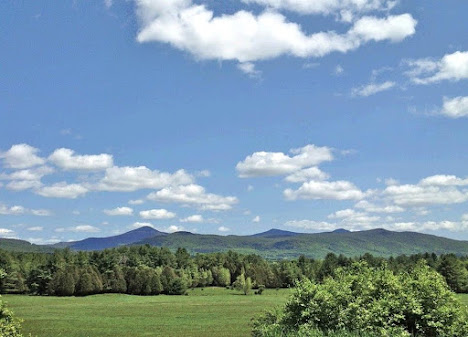
May 30 See A Book of the Seasons, by Henry Thoreau, May 30


A Book of the Seasons,  by Henry Thoreau
"A book, each page written in its own season,
out-of-doors, in its own locality.”


~edited, assembled and rewritten by zphx © 2009-2021

Thursday, May 30, 2019

He may have thought that no one but he came to Gowing's Swamp these afternoons

May 30.

 P. M. — To Gowing's Swamp. 
Gowing's Swamp
August 23, 1854
amid the sphagnum, lambkill, Kalmia glauca, andromeda, cranberry, etc

Sorrel begins to redden fields. 


The peculiarly tender foliage (yellowish) which began to invest the dark evergreens on the 22d lasts a week or more, growing darker.


May 30, 2019
No American mountain-ash out. 

When I entered the interior meadow of Gowing's Swamp I heard a slight snort, and found that I had suddenly come upon a woodchuck amid the sphagnum, lambkill, Kalmia glauca, andromeda, cranberry, etc., there. It was only seven feet off, and, being surprised, would not run. It would only stand erect from time to time, — perfectly erect with its blackish paws held like hands near together in front, — just so as to bring its head, or eyes, above the level of the lambkill, kalmia, etc., and look round, turning now this ear toward me, then that; and every now and then it would make a short rush at me, half a foot or so, with a snort, and then draw back, and also grit its teeth — which it showed — very audibly, with a rattling sound, evidently to intimidate me. I could not drive it, but it would steadily face me and rush toward me thus. Also it made a short motion occasionally as if to bury itself by burrowing there. It impressed me as a singularly wild and grizzly [sic] native, survivor of the red man. 

He may have thought that no one but he came to Gowing's Swamp these afternoons. 

Its colors were gray, reddish brown, and blackish, the gray-tipped wind hairs giving it a grizzly look above, and when it stood up its distinct rust-color beneath was seen, while the top of its head was dark-brown, becoming black at snout, as also its paws and its little rounded ears. Its head from snout to ears, when it stood up erect, made a nearly horizontal line. It did much looking round. When thus erect, its expression and posture were very bear-like, with the clumsiness of the bear. Though I drew off three or four rods, it would not retreat into the thicket (which was only a rod off) while I was there so near. 

The scheuchzeria is at height or past. 

E. Emerson's Calla palustris out the 27th. 

Eleocharis palustris, R. W. E.'s meadow, not long. 

Hear of linnaea out, the 28th.

H. D. Thoreau, Journal, May 30, 1859

Sorrel begins to redden fields. See May 19, 1860 ("Sorrel just begins to redden some fields"); May 22, 1854 ("The grass so short and fresh, the tender yellowish-green and silvery foliage of the deciduous trees lighting up the landscape, the birds now most musical, the sorrel beginning to redden the fields with ruddy health, — all these things make earth now a paradise.");  May 26, 1852 ("Walking home from surveying, the fields are just beginning to be reddened with sorrel. "); June 12, 1859 ("I am struck with the beauty of the sorrel now. . . What a wholesome red! . . . There is hardly a more agreeable sight at this season.")


The peculiarly tender foliage (yellowish) which began to invest the dark evergreens on the 22d lasts a week or more, growing darker. See note to May 22, 1859 ("The foliage is never more conspicuously a tender yellow than now. This lasts a week from this date, and then begins to be confounded with the older green. "). See also May 27, 1855("How important the dark evergreens now seen through the haze in the distance and contrasting with the gauze-like, as yet thin-clad deciduous trees"); May 26, 1857 ("The silvery leafets of the deciduous trees invest the woods like a permanent mist. At the same season with this haze of buds comes also the kindred haziness of the air.")


The interior meadow of Gowing's Swamp. See note to January 30, 1858  ("The pool, where there is nothing but water and sphagnum to be seen and where you cannot go in the summer, is about two rods long and one and a half wide.")

Its colors were gray, reddish brown, and blackish, the gray-tipped wind hairs giving it a grizzly look above, and when it stood up its distinct rust-color beneath was seen, while the top of its head was dark-brown, becoming black at snout, as also its paws and its little rounded ears. See note to April 29, 1855 ("See his shining black eyes and black snout and his little erect ears. He is of a light brown forward at this distance (hoary above, yellowish or sorrel beneath), gradually darkening backward to the end of the tail, which is dark-brown. The general aspect is grizzly.")

May 30 See A Book of the Seasons, by Henry Thoreau, May 30


A Book of the Seasons,  by Henry Thoreau
"A book, each page written in its own season,
out-of-doors, in its own locality.”


~edited, assembled and rewritten by zphx © 2009-2021

Wednesday, May 30, 2018

The hawk rises when we approach and circles about over the wood.

May 30. 

Hear of lady's-slipper seen the 23d; how long? 

I saw the Nuphar advena above water and yellow in Shrewsbury the 23d. 

P. M.–To hen-harrier's nest and to Ledum Swamp.

Edward Emerson shows me the nest which he and another discovered. It is in the midst of the low wood, sometimes inundated, just southwest of Hubbard's Bath, the island of wood in the meadow.

The hawk rises when we approach and circles about over the wood, uttering a note singularly like the common one of the flicker. 

The nest is in a more bushy or open place in this low wood, and consists of a large mass of sedge and stubble with a very few small twigs, as it were accidentally intermingled. It is about twenty inches in diameter and remarkably flat, the slight depression in the middle not exceeding three quarters of an inch. The whole opening amid the low bushes is not more than two feet in diameter. The thickness of it raises the surface about four inches above the ground. The inner and upper part is uniformly rather fine and pale-brown sedge. 

There are two dirty, or rather dirtied, white eggs left (of four that were), one of them one and seven tenths inches long, and not “spherical,” as Brewer says, but broad in proportion to length. [Another is one and seven eighths inches long by one and a half inches. Vide the last (which was addled).]

Ledum, one flower out, but perhaps if Pratt had not plucked some last Sunday it might have bloomed here yesterday? It is decidedly leafing also.

Andromeda Polifolia by the ditch well out, how long?

I perceive the turpentine scent of the ledum in the air as I walk through it. 

As I stand by the riverside some time after sundown, I see a light white mist rising here and there in wisps from the meadow, far and near, — less visible within a foot of me, — to the height of three or four or ten feet. It does not rise generally and evenly from every part of the meadow, but, as yet, over certain spots only, where there is some warm breath of the meadow turned into cloud.

H. D. Thoreau, Journal  May 30, 1858

Hear of lady's-slipper seen the 23d.
 See note to May 30, 1856 ("The lady’s-slipper in pitch pine wood-side near J. Hosmer’s Desert, probably about the 27th.")

The nest is in the midst of the low wood, sometimes inundated, just southwest of Hubbard's Bath, the island of wood in the meadow. The hawk rises when we approach and circles about over the wood, uttering a note singularly like the common one of the flicker. See May 14, 1857 ("See a pair of marsh hawks, the smaller and lighter-colored male, with black tips to wings, and the large brown female, sailing low over J. Hosmer's sprout-land and screaming, apparently looking for frogs or the like. Or have they not a nest near? They hover very near me.");  See May 20, 1856 (“Two marsh hawks, male and female, flew about me a long time, screaming, the female largest, with ragged wing ,. . . they have, no doubt, a nest thereabouts. ”)

Ledum, one flower out, but perhaps if Pratt had not plucked some last Sunday it might have bloomed here yesterday. See February 4, 1858 ("Discover the Ledum latifolium, quite abundant over a space about six rods in diameter just east of the small pond-hole")

May 30 See A Book of the Seasons, by Henry Thoreau, May 30


A Book of the Seasons,  by Henry Thoreau
"A book, each page written in its own season,
out-of-doors, in its own locality.”


~edited, assembled and rewritten by zphx © 2009-2021

Tuesday, May 30, 2017

Meditations under a rock in a shower.

May 30. 

P. M. — To chestnut oaks. 

May 30, 2017

I think that there are many chestnut-sided warblers this season. They are pretty tame. One sits within six feet of me, though not still. He is much painted up. 

Blue-stemmed goldenrod is already a foot high. 

I see the geranium and two-leaved Solomon's-seal out, the last abundant. The red pyrus by the path, not yet, but probably the same elsewhere. 

The young black oak leafets are dark red or reddish, thick and downy; the scarlet oak also are somewhat reddish, thick and downy, or thin and green and little downy, like red oak, but rather more deeply cut; the red oak broad, thin, green and not downy; the white pink-red. 

Was it not a whip-poor-will I scared up at the base of a bush in the woods to-day, that went off with a clumsy flight? 

By the path near the northeast shore of Flint's Pond, just before reaching the wall by the brook, I see what I take to be an uncommonly large Uvularia sessilifolia flower, but, looking again, am surprised to find it the Uvularia perfoliata, which I have not found hereabouts before. It is a taller and much more erect plant than the other, with a larger flower, methinks. It is considerably past its prime and probably began with the other. 

Chestnut oak not yet in bloom, though the black and scarlet are well out in ordinary places. Its young leaves have a reddish-brown tinge. All the large trees are cut down. 

The white oak is not out. 

It is remarkable that many beach and chestnut oak leaves, which so recently expanded, have already attained their full size! How they launch themselves forth to the light! How suddenly Nature spreads her umbrellas! How little delay in expanding leaves! They seem to expand before our eyes, like the wings of moths just fallen from the cocoon. 

Buttercups thickly spot the churchyard. 

Perhaps I could write meditations under a rock in a shower. 

When first I had sheltered myself under the rock, I began at once to look out on the pond with new eyes, as from my house. I was at Lee's Cliff as I had never been there before, had taken up my residence there, as it were. Ordinarily we make haste away from all opportunities to be where we have instinctively endeavored to get. 

When the storm was over where I was, and only a few thin drops were falling around me, I plainly saw the rear of the rain withdrawing over the Lincoln woods south of the pond, and, above all, heard the grand rushing sound made by the rain falling on the freshly green forest, a very different sound when thus heard at a distance from what it is when we are in the midst of it. In the latter case we are soothed by a gentle pattering and do not suspect the noise which a rain storm makes. 

This Cliff thus became my house. I inhabited it. When, at length, it cleared up, it was unexpectedly early and light, and even the sun came out and shone warm on my back as I went home. Large puddles occupied the cart-paths and rose above the grass in the fields. 

In the midst of the shower, though it was not raining very hard, a black and white creeper came and in spected the limbs of a tree before my rock, in his usual zigzag, prying way, head downward often, and when it thundered loudest, heeded it not. Birds appear to be but little incommoded by the rain. Yet they do not often sing in it. 

The blue sky is never more celestial to our eyes than when it is first seen here and there between the clouds at the end of a storm, — a sign of speedy fair weather. I saw clear blue patches for twenty minutes or more in the southwest before I could leave my covert, for still I saw successive fine showers falling between me and the thick glaucous white pine beneath.

I think that such a projection as this, or a cave, is the only effectual protection that nature affords us against the storm. 

I sang "Tom Bowling" there in the midst of the rain, and the dampness seemed to be favorable to my voice. There was a slight rainbow on my way home. 

Met Conant riding home, who had been caught in town and detained, though he had an umbrella. 

Already a spider or other insect had drawn together the just expanded leaves of a hickory before my door with its web within them, making a close tent. This twig extended under my rocky roof and was quite dry. 

Probably a portion of the Cliff, being undermined by rain, had anciently fallen out and left this rocky roof above.

H. D. Thoreau, Journal, May 30, 1857

Buttercups thickly spot the churchyard. See May 27, 1853 ("The buttercups in the church-yard and on some hillsides are now looking more glossy and bright than ever after the rain.”); June 2, 1852 (“Buttercups now spot the churchyard.”)

Perhaps I could write meditations under a rock in a shower. See August 13, 1853 (“Could I not write meditations under a bridge at midsummer?”)

The blue sky is never more celestial to our eyes than when it is first seen here and there between the clouds at the end of a storm.
See January 7, 1851 ("The life, the joy, that is in blue sky after a storm!")

I began at once to look out on the pond with new eyes, as from my house. I was at Lee's Cliff as I had never been there before . . .See June 13, 1854 ("When I have stayed out thus late many miles from home, and have heard a cricket beginning to chirp louder near me in the grass I have felt that I was not far from home after all, -- began to be weaned from my village home."); May 23, 1853 ("[A] certain lateeness ... releases me from the obligation to return in any particular season. I have passed the Rubicon of staying out. ...I will wander further from what I have called my home - to the home which is forever inviting me. In such an hour the freedom of the woods is offered me")

May 30 See A Book of the Seasons, by Henry Thoreau, May 30


A Book of the Seasons,  by Henry Thoreau
"A book, each page written in its own season,
out-of-doors, in its own locality.”


~edited, assembled and rewritten by zphx © 2009-2021

Monday, May 30, 2016

A Book of the Seasons: May 30 (now is the summer come, moving shadows, waving grass – shelter from the storm; lady's slippers, arethusas and buttercups)


The year is but a succession of days,
and I see that I could assign some office to each day
which, summed up, would be the history of the year.
Henry Thoreau, August 24, 1852


Strong lights and shades now.
It is a day of shadows,
the leaves have so grown –

and of wind –

A day for shadows
of fast moving clouds over
fields of waving grass.

The morning wind blows.
The poem of the world is
uninterrupted.
May 30, 1853

The dog lies with his 
paws hanging over the door-
sill this cool morning.

Aster-like flower
a foot high in little squads,
nodding in the wind.

The arethusa
shoots up unexpectedly.
It is all color.

Perhaps I could write
meditations under a
rock in a shower.


The blue sky first seen 
here and there between the clouds 
– the end of a storm.
 May 30, 1857

The turpentine scent
of the ledum in the air
as I walk through it.
May 30, 1858

The Salix tristis 
generally shows its down now 
along dry wood-paths. 
May 30, 1860


May 30, 2017
Now is the summer come.

May 30. 2012
May 30, 2026

The morning wind forever blows; the poem of the world is uninterrupted, but few are the ears that hear it.  May 30, 1853

Strong lights and shades now.  It is a day of shadows, the leaves have so grown, and of wind. May 30, 1852

A day for shadows, even of moving clouds, over fields in which the grass is beginning to wave. May 30, 1852

The peculiarly tender foliage (yellowish) which began to invest the dark evergreens on the 22d lasts a week or more, growing darker. May 30, 1859

As I look off from Fair Haven I perceive that that . . . the pines are a dirty dark brown, almost purple, and are mostly merged and lost in the deciduous trees. May 30, 1853

The apple trees are about out of blossom. It is but a week they last. May 30, 1852

A breezy, washing day. May 30, 1852

Now is the summer come. May 30, 1852

The white maples, especially those shaped like large bushes, on the banks are now full of foliage, showing the white under sides of the leaves in the wind, and the swamp white oak, having similar silvery under sides to its leaves, and both growing abundantly and prevailing here along the river, make or impart a peculiar flashing light to the scenery in windy weather, all bright, flashing, and cheerful. May 30, 1853

The brown panicles of the June-grass now paint some fields with the color of early summer. May 30, 1860

Is it not summer now when the creak of the crickets begins to be general? May 30, 1855

The bass leaf is now large and handsome. May 30, 1852

Green lice from birches (?) get on my clothes. May 30, 1855

Chestnut oak not yet in bloom, though the black and scarlet are well out in ordinary places. Its young leaves have a reddish-brown tinge. May 30, 1857

The white oak is not out. May 30, 1857

It is remarkable that many beach and chestnut oak leaves, which so recently expanded, have already attained their full size! How they launch themselves forth to the light! How suddenly Nature spreads her umbrellas! How little delay in expanding leaves! They seem to expand before our eyes, like the wings of moths just fallen from the cocoon. May 30, 1857

The young black oak leafets are dark red or reddish, thick and downy; the scarlet oak also are somewhat reddish, thick and downy, or thin and green and little downy, like red oak, but rather more deeply cut; the red oak broad, thin, green and not downy; the white pink-red. May 30, 1857

A strong west wind and much haze. May 30, 1855

Very pleasant to feel the strong, fresh southerly wind from over the water. There are no clouds in the sky, but a high haziness. May 30, 1853

The common blue flag just out at Ball's Hill. May 30, 1853

Yellow clover abundantly out, though the heads are small yet. Are they quite open? May 30, 1856

The yellow water ranunculus by the Corner causeway. May 30, 1852

Buttercups thickly spot the churchyard. May 30, 1857

Comandra umbellata, apparently a day or two. May 30, 1856

Buttonwood flowers now effete; fertile flowers were not brown on the 24th, but were the 28th; say, then, about the 26th. May 30, 1855

Lepidium virginicum, roadside bank at Minott’s. May 30, 1855

The myrica, bayberry, plucked on the 23d, now first sheds pollen in house, the leaf being but little more expanded on the flowering shoot. May 30, 1855

Silvery potentilla, four or five days at least. May 30, 1855\

Senecio in open meadows, say yesterday. May 30, 1855 -- Senecio in bloom. May 30, 1852

Cinquefoil and houstonia cover the ground, mixed with the grass and contrasting with each other. May 30, 1852

The stems of meadow saxifrage are white now. May 30, 1860

Sorrel begins to redden fields. May 30, 1859

Violets everywhere spot the meadows, some more purple, some more lilac. ... Distinguished the Viola palmata in Hubbard's meadow, near the sidesaddle-flowers, which last are just beginning to blossom. May 30, 1852

The last are quite showy flowers when the wind turns them so as to show their under sides. May 30, 1852

The Viola palmata, which is later, and therefore, methinks, fresher than most, is now quite prevalent, one of the most common, in fact, in low ground and a very handsome purple, with more red than usual in its violet. May 30, 1853

The lupine, which I saw almost in blossom a week ago at Plymouth, I hear is in blossom here. May 30, 1852

How many such lupine banks there are! — whose blue you detect many rods off. May 30, 1853

There I found, methinks, minute Specularia perfoliata, with small crenate clasping leaves alternate at some distance apart, on upright stems about three inches high, but apparently fruiting in the bud. May 30, 1853

Also the Silene antirrhina very abundant there. May 30, 1853

White cohosh in bloom May 30, 1852

The cistus out, probably yesterday, a simple and delicate flower, its stamens all swept to one side. It upholds a delicate saffron-golden (?) basin about nine inches from the ground. May 30, 1853

Smilacina stellata. May 30, 1852

The flowers of the sassafras have not such a fragrance as I perceived last year. May 30, 1852

Ladies’ slipper, apparently, May 30, 1855 

The lady’s-slipper in pitch pine wood-side near J. Hosmer’s Desert, probably about the 27th. May 30, 1856

Hear of lady's-slipper seen the 23d; how long? May 30, 1858

The Erigeron bellidifolius is a tender-looking, pale-purple, aster-like flower a foot high in little squads, nodding in the wind on the bare slopes of hill pastures. May 30, 1853

The bulbous arethusa, the most splendid, rich, and high-colored flower thus far, methinks, all flower and color, almost without leaves, and looking much larger than it is, and more conspicuous on account of its intense color. A flower of mark. It appeared two or three times as large as reality when it flashed upon me from the meadow. May 30, 1852

I am surprised to find arethusas abundantly out in Hubbard's Close. . .It is so leafless that it shoots up unexpectedly. It is all color, a little hook of purple flame projecting from the meadow into the air. . . . This high-colored plant shoots up suddenly, all flower, in meadows where it is wet walking. A superb flower. May 30, 1854

I see what I take to be an uncommonly large Uvularia sessilifolia flower, but, looking again, am surprised to find it the Uvularia perfoliata, which I have not found hereabouts before. It is a taller and much more erect plant than the other, with a larger flower, methinks. May 30, 1857

High blueberry flowers are quite conspicuous. May 30, 1852

The fruit of the amelanchier is as big as small peas. I have not noticed any other berry so large yet. May 30, 1852

I see now green high blueberries, and gooseberries in Hubbard's Close, as well as shad-bush berries and strawberries. May 30, 1854

The sumach (glabra) is well under weigh now. May 30, 1852

The narrow- leaved cotton-grass. May 30, 1852

The Equisetum sylvaticum, or wood horse-tail in the meadows. May 30, 1852

The tall pipe-grass (Equisetum uliginosum) . May 30, 1852

Yellow lilies are abundant. May 30, 1852

The Drosera rotundifolia now glistens with its dew at midday, a beautiful object closely examined. May 30, 1852

The Juncus filiformis not out yet, though some panicles are grown nearly half an inch. . . . Perhaps will bloom in a week. May 30, 1860

The Salix tristis generally shows its down now along dry wood-paths. May 30, 1860

No American mountain-ash out. May 30, 1859

Cornus Canadensis out, how long? May 30, 1855

Poison-dogwood has grown three or four inches at ends of last year’s shoots, which are three to six feet from ground. May 30, 1855

Setophaga magnolia May 30, 1855

E. Emerson's Calla palustris out the 27th. May 30, 1859

Eleocharis palustris, R. W. E.'s meadow, not long. May 30, 1859

Hear of linnaea out, the 28th. May 30, 1859

The anemones appear to be nearly gone. May 30, 1852

I saw the Nuphar advena above water and yellow in Shrewsbury the 23d. May 30, 1858

The scheuchzeria is at height or past. May 30, 1859

Ledum, one flower out, . . . It is decidedly leafing also . . . I perceive the turpentine scent of the ledum in the air as I walk through it. May 30, 1858

Blue-stemmed goldenrod is already a foot high. May 30, 1857

I see the geranium and two-leaved Solomon's-seal out, the last abundant. May 30, 1857

The geranium is a delicate flower and be longs especially to shady places under trees and shrubs, — better if about springs, — in by-nooks, so modest. May 30, 1852

The early gnaphaliums are gone to seed, having run up seven or ten inches. May 30, 1852

The field plantain, which I saw in Plymouth a week ago, abundant there. May 30, 1852

The red pyrus by the path, not yet, but probably the same elsewhere.

I do not yet observe a difference between the two kinds of Pyrus arbutifolia, if, indeed, I have compared the two, i. e. my early black and later red-fruited, which last holds on all winter. May 30, 1852

Edward Emerson shows me the nest which he and another discovered. . . .The hawk rises when we approach and circles about over the wood, uttering a note singularly like the common one of the flicker. May 30, 1858

On the wall, at the brook behind Cyrus Hosmer’s barn, I start a nighthawk within a rod or two. It alights again on his barn-yard board fence, sitting diagonally. I see the white spot on the edge of its wings as it sits. It flies thence and alights on the ground in his corn-field, sitting flat, but there was no nest under it. This was unusual. Had it not a nest nearby? May 30, 1860

Was it not a whip-poor-will I scared up at the base of a bush in the woods to-day, that went off with a clumsy flight? May 30, 1857

There are young robins in nests. May 30, 1852

A bird's nest in grass, with coffee-colored eggs. May 30, 1852

To what sparrow belong the coffee-colored eggs in Hubbard's field by the brook? May 30, 1852

See bird’s nest on an apple by roadside, seven feet high; one egg. May 30, 1855

Cherry-bird on a cherry; also pecking at the apple blossoms. 1855

Wild cherry on the low shrubs, but not yet the trees, a rummy scent. May 30, 1852

Young bush like black cherries a day or two, on Cliffs and in such favorable places. May 30, 1853

Hear the evergreen forest note, and see probably the bird, — black throat, greenish-yellow or yellowish-green head and back, light-slate (?) wings with two white bars. Is it not the black-throated green warbler? May 30, 1855

I think that there are many chestnut-sided warblers this season. They are pretty tame. One sits within six feet of me, though not still. He is much painted up. May 30, 1857

Hear a familiar warbler not recognized for some years, in the thick copse in Dennis’s Swamp, south of railroad; considerably yellowbird-like (the note).May 30, 1855

When I entered the interior meadow of Gowing's Swamp I heard a slight snort, and found that I had suddenly come upon a woodchuck amid the sphagnum, lambkill, Kalmia glauca, andromeda, cranberry, etc., there. It was only seven feet off, and, being surprised, would not run. . . .He may have thought that no one but he came to Gowing's Swamp these afternoons. May 30, 1859

Andromeda Polifolia by the ditch well out, how long? May 30, 1858
The dwarf andromeda is about out of bloom. Its new shoots from the side of the old stem are an inch or more long. May 30, 1852

On the meadows are large yellow-green patches of ferns beginning to prevail. May 30, 1853

In this dark, cellar-like maple swamp are scattered at pretty regular intervals tufts of green ferns, Osmunda cinnamomea, above the dead brown leaves, broad, tapering fronds, curving over on every side from a compact centre, now three or four feet high. May 30, 1854

The branches or branchlets of the maidenhair fern are so disposed as to form two thirds of a cup around the stem. May 30, 1852

What kind of blackberry did I find in blossom in Hubbard's Swamp? May 30, 1852

High blackberry out. May 30, 1853

A succession of moderate thunder and lightning storms from the west, two or three, an hour apart. May 30, 1860

I took refuge from the thunder-shower this afternoon by running for a high pile of wood . . . making a little shed, under which I stood dry. May 30, 1860

Perhaps I could write meditations under a rock in a shower. May 30, 1857

Birds appear to be but little incommoded by the rain. Yet they do not often sing in it. May 30, 1857

When first I had sheltered myself under the rock, I began at once to look out on the pond with new eyes . . . Ordinarily we make haste away from all opportunities to be where we have instinctively endeavored to get. May 30, 1857

When the storm was over where I was, and only a few thin drops were falling around me, I plainly saw the rear of the rain withdrawing over the Lincoln woods south of the pond, and, above all, heard the grand rushing sound made by the rain falling on the freshly green forest. May 30, 1857

In the midst of the shower, though it was not raining very hard, a black and white creeper came and inspected the limbs of a tree before my rock, in his usual zigzag, prying way, head downward often, and when it thundered loudest, heeded it not. May 30, 1857

See a small black snake run along securely through thin bushes (alders and willows) three or four feet from the ground, passing intervals of two feet easily,—very readily and gracefully, —ascending or descending. May 30, 1855

Wood frogs skipping over the dead leaves, whose color they resemble. May 30, 1854

Saw some devil’s-needles (the first) about the 25th. May 30, 1860

Passed a cow that had just dropped her calf in the meadow. May 30, 1852


The white maple keys falling and covering the river. May 30, 1853

The river is my own highway, the only wild and unfenced part of the world hereabouts. May 30, 1852

The blue sky is never more celestial to our eyes than when it is first seen here and there between the clouds at the end of a storm . . . There was a slight rainbow on my way home. May 30, 1857

As I stand by the riverside some time after sundown, I see a light white mist rising here and there in wisps from the meadow, far and near . . . there is some warm breath of the meadow turned into cloud. May 30, 1858


*****

Now is the summer come. . . . A day for shadows, even of moving clouds, over fields in which the grass is beginning to wave.
See May 27, 1853 ("A new season has commenced - summer - leafy June.”); May 27, 1855 ("The fields now begin to wear the aspect of June, their grass just beginning to wave;. . .”); May 26, 1854 (At sight of this deep and dense field all vibrating with motion and light, winter recedes many degrees in my memory. . . . The season of grass, now everywhere green and luxuriant.”); May 19, 1860 ("The grass, especially the meadow-grasses, are seen to wave distinctly, and the shadows of the bright fair-weather cumuli are sweeping over them.")

Buttercups thickly spot the churchyard. See May 27, 1853 ("The buttercups in the church-yard and on some hillsides are now looking more glossy and bright than ever after the rain.”); June 2, 1852 (“Buttercups now spot the churchyard.”)

Arethusa  abundantly out at Hubbard's Close. .See May 29, 1856 ("Arethusa bulbosa at Hubbard’s Close apparently a day or two.”).; June 1, 1855(“Arethusa out at Hubbard’s Close; say two or three days at a venture, there being considerable.“)

The lady’s-slipper .  See May 27, 1852 ("Ladies'-slippers out. They perfume the air.”); May 26, 1857 (“A lady's-slipper. At Cliffs, no doubt, before. ”); May 20, 1852 ("A lady's-slipper well budded”); May19, 1860 (“At the Ministerial Swamp I see a white lady's-slipper almost out, fully grown, with red ones.”); May 18, 1851 ("Lady's-slipper almost fully blossomed”).

Perhaps I could write meditations under a rock in a shower. See August 13, 1853 (“Could I not write meditations under a bridge at midsummer?”)

The blue sky is never more celestial to our eyes than when it is first seen here and there between the clouds at the end of a storm.
 See January 7, 1851 ("The life, the joy, that is in blue sky after a storm!")

I began at once to look out on the pond with new eyes, as from my house. I was at Lee's Cliff as I had never been there before . . .See June 13, 1854 ("When I have stayed out thus late many miles from home, and have heard a cricket beginning to chirp louder near me in the grass I have felt that I was not far from home after all, -- began to be weaned from my village home."); May 23, 1853 ("[A] certain lateeness ... releases me from the obligation to return in any particular season. I have passed the Rubicon of staying out. ...I will wander further from what I have called my home - to the home which is forever inviting me. In such an hour the freedom of the woods is offered me")

I took refuge from the thunder-shower this afternoon by running for a high pile of wood.  / This Cliff thus became my house. I inhabited it. . . I think that such a projection as this, or a cave, is the only effectual protection that nature affords us against the storm. See also  August 9, 1851 ("I meet the rain at the edge of the wood, and take refuge under the thickest leaves, where not a drop reaches me, and, at the end of half an hour, the renewed singing of the birds alone advertises me that the rain has ceased, and it is only the dripping from the leaves which I hear in the woods."); June 14, 1855 (“It suddenly begins to rain with great violence, and we in haste draw up our boat on the Clamshell shore, upset it, and get under, sitting on the paddles, . . .  It is very pleasant to lie there half an hour close to the edge of the water and see and hear the great drops patter on the river, each making a great bubble”); July 22, 1858 ("Took refuge from a shower under our boat at Clamshell; staid an hour at least. A thunderbolt fell close by."); August 17, 1858 (“Being overtaken by a shower, we took refuge in the basement of Sam Barrett’s sawmill, where we spent an hour, and at length came home with a rainbow over arching the road before us.”); October 17, 1859 ("The rain drives me from my berrying and we take shelter under a tree. It is worth the while to sit under the lee of an apple tree trunk in the rain, if only to study the bark and its inhabitants. ")


May 30, 2012
A day for shadows, for fast moving clouds over fields of waving grass.


If you make the least correct 
observation of nature this year,
 you will have occasion to repeat it
 with illustrations the next, 
and the season and life itself is prolonged.


May 29< <<<<<. May 30.    >>>>> May 31


A Book of the Seasons, by Henry Thoreau,  May 30
A Book of the Seasons,  by Henry Thoreau
"A book, each page written in its own season,
out-of-doors, in its own locality.”
~edited, assembled and rewritten by zphx © 2009-2022


Popular Posts Last 30 Days.

The week ahead in Henry’s journal

The week ahead in Henry’s journal
A journal, a book that shall contain a record of all your joy.
"A stone fruit. Each one yields me a thought." ~ H. D. Thoreau, March 28, 1859


I sit on this rock
wrestling with the melody
that possesses me.