Showing posts with label pout. Show all posts

Thursday, July 23, 2020

The rhexia is seen afar on the islets.


July 23.

P. M. – To P. Hutchinson's.

I cannot find a single crotalaria pod there this year.

Stone-crop is abundant and has now for some time been out at R. Brown's watering-place; also the water plantain, which is abundant there.

About the water further north the elodea is very common, and there, too, 
the rhexia is seen afar on the islets, — its brilliant red like a rose. It is fitly called meadow-beauty. Is it not the handsomest and most striking and brilliant flower since roses and lilies began? 
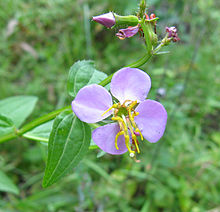
rhexia virginica

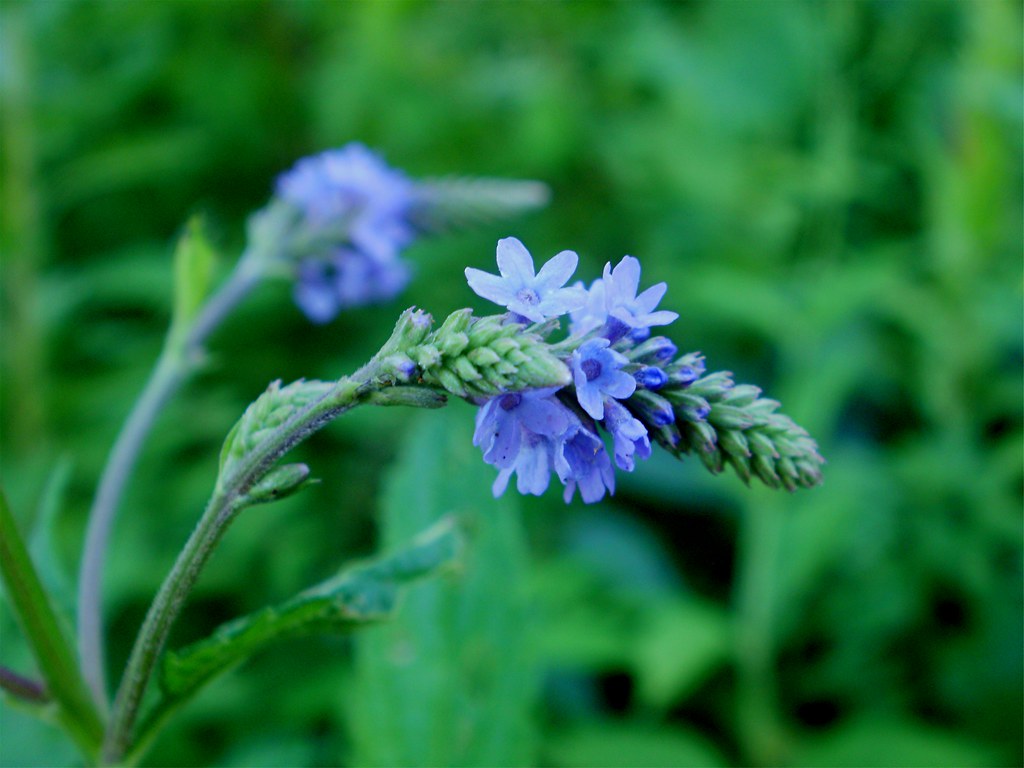
Blue vervain out some days. 

blue vervain

Bathing yesterday in the Assabet, I saw that many breams, apparently an old one with her young of various sizes, followed my steps and found their food in the water which I had muddied. The old one pulled lustily at a Potamogeton hybridus, drawing it off one side horizontally with her mouth full, and then swallowed what she tore off.

The young pouts were two and a half inches long in Flint's Pond the 17th.

H. D. Thoreau, Journal, July 23, 1853


I cannot find a single crotalaria pod there this year. See October 3, 1858 ("It is interesting to consider how that crotalaria spreads itself, sure to find out the suitable soil. One year I find it on the Great Fields and think it rare; the next I find it in a new and unexpected place. It flits about like a flock of sparrows, from field to field.")

Water plantain, abundant. See July 19, 1853 ("The alisma will open to-morrow or next day")

About the water further north the elodea is very common.  See July 22, 1853 ("The elodea out."): see also June 13, 1858 ("One of the prevailing front-rank plants [in Ledump Swmp], standing in the sphagnum and water, is the elodea. "); July 31, 1856 ("Elodea two and a half feet high, how long? The flowers at 3 p. m. nearly shut, cloudy as it is. Yet the next day, later, I saw some open, I think"); August 11, 1858 ("Saw the elodea (not long) . . . at Beck Stow’s")


The rhexia is seen afar on the islets.
See July 18, 1852 ("The petals of the rhexia have a beautiful clear purple with a violet tinge."); August 1, 1856 (" They make a splendid show, these brilliant rose-colored patches . .  Yet few ever see them in this perfection, unless the haymaker who levels them, or the birds that fly over the meadow. Far in the broad wet meadows, on the hummocks and ridges, these bright beds of rhexia turn their faces to the heavens, seen only by the bitterns and other meadow birds that fly over. We, dwelling and walking on the dry upland, do not suspect their existence..") See also   A Book of the Seasons, by Henry Thoreau, Rhexia Virginica (meadow-beauty)

Blue vervain. See August 6, 1852 ("Blue vervain is now very attractive to me, and then there is that interesting progressive history in its rising ring of blossoms. It has a story.")

An old bream with her young of various sizes, followed my steps and found their food in the water. See November 30, 1858 ("The bream, appreciated, floats in the pond as the centre of the system, another image of God. Its life no man can explain more than he can his own.")

The young pouts were two and a half inches long. 
See July 15, 1856 ("wading into the shallow entrance of the meadow, I saw a school of a thousand little pouts about three quarters of an inch long")

July 23. See A Book of the Seasons, by Henry Thoreau, July 23

A Book of the Seasons, by Henry Thoreau
"A book, each page written in its own season,
out-of-doors, in its own locality.” 
~edited, assembled and rewritten by zphx © 2009-2021

Saturday, June 21, 2014

A wild and strange place

June 21.

Now there is a dense mass of weeds along the waterside, where the muskrats lurk, and overhead a canopy of leaves conceals the birds and shuts out the sun. 

In the little meadow pool, or bay, in Hubbard's shore, I see two old pouts tending their countless young close to the shore. The former are slate-colored. The latter are about half an inch long and very black, forming a dark mass from eight to twelve inches in diameter. The old are constantly circling around them, -over and under and through, as if anxiously endeavoring to keep them together, from time to time moving off five or six feet to reconnoitre. The whole mass of the young and there must be a thousand of them at least is incessantly moving, pushing forward and stretching out. Are often in the form of a great pout, apparently keeping together by their own instinct chiefly, now on the bottom, now rising to the top. Alone they might be mistaken for polly-wogs. The old, at any rate, do not appear to be very successful in their apparent efforts to communicate with and direct them. At length they break into four parts. The old are evidently very careful parents. One has some wounds apparently . . . I think also that I see the young breams in schools hovering over their nests while the old are still protecting them. 

Up the grassy hollows in the sprout-lands north of Goose Pond I feel as if in a strange country, — a pleasing sense of strangeness and distance. 

Here are numerous open hollows more or less connected, where for some reason the wood does not spring up, — and I am glad of it, — filled with a fine wiry grass, with the panicled andromeda, which loves dry places, now in blossom around the edges, and small black cherries and sand cherries straggling down into them. 

As wild and strange a place as you might find in the unexplored West or East. The quarter of a mile of sprout-land which separates it from the highway seems as complete a barrier as a thousand miles of earth. 

Your horizon is there all your own.

Again I am attracted by the deep scarlet of the wild moss rose half open in the grass , all glowing with rosy light.

H. D. Thoreau, Journal, June 21, 1854

See August 6, 1851 ("After how few steps, how little exertion, the student stands in pine woods . . .in a place still unaccountably strange and wild to him.")

June 21. See A Book of the Seasons, by Henry Thoreau, June 21

The deep scarlet of
the wild moss rose, half open,
glowing in the grass.

A Book of the Seasons, by Henry Thoreau,
"A book, each page written in its own season, 
out-of-doors, in its own locality."
~edited, assembled and rewritten by zphx © 2009-2024

tinyurl.com/hdt-540621


Popular Posts Last 30 Days.

The week ahead in Henry’s journal

The week ahead in Henry’s journal
A journal, a book that shall contain a record of all your joy.
"A stone fruit. Each one yields me a thought." ~ H. D. Thoreau, March 28, 1859


I sit on this rock
wrestling with the melody
that possesses me.