Showing posts with label circaea. Show all posts

Sunday, July 12, 2020

The green-flowered lanceolate-leafed orchis at Azalea Brook.

July 12. 

White vervain. 

Checkerberry, maybe some days. 

Spikenard, not quite yet. 

The green-flowered lanceolate-leafed orchis at Azalea Brook will soon flower. Either 
Gymnadenia tridentata or Platanthera flava.

Platanthera clavellata


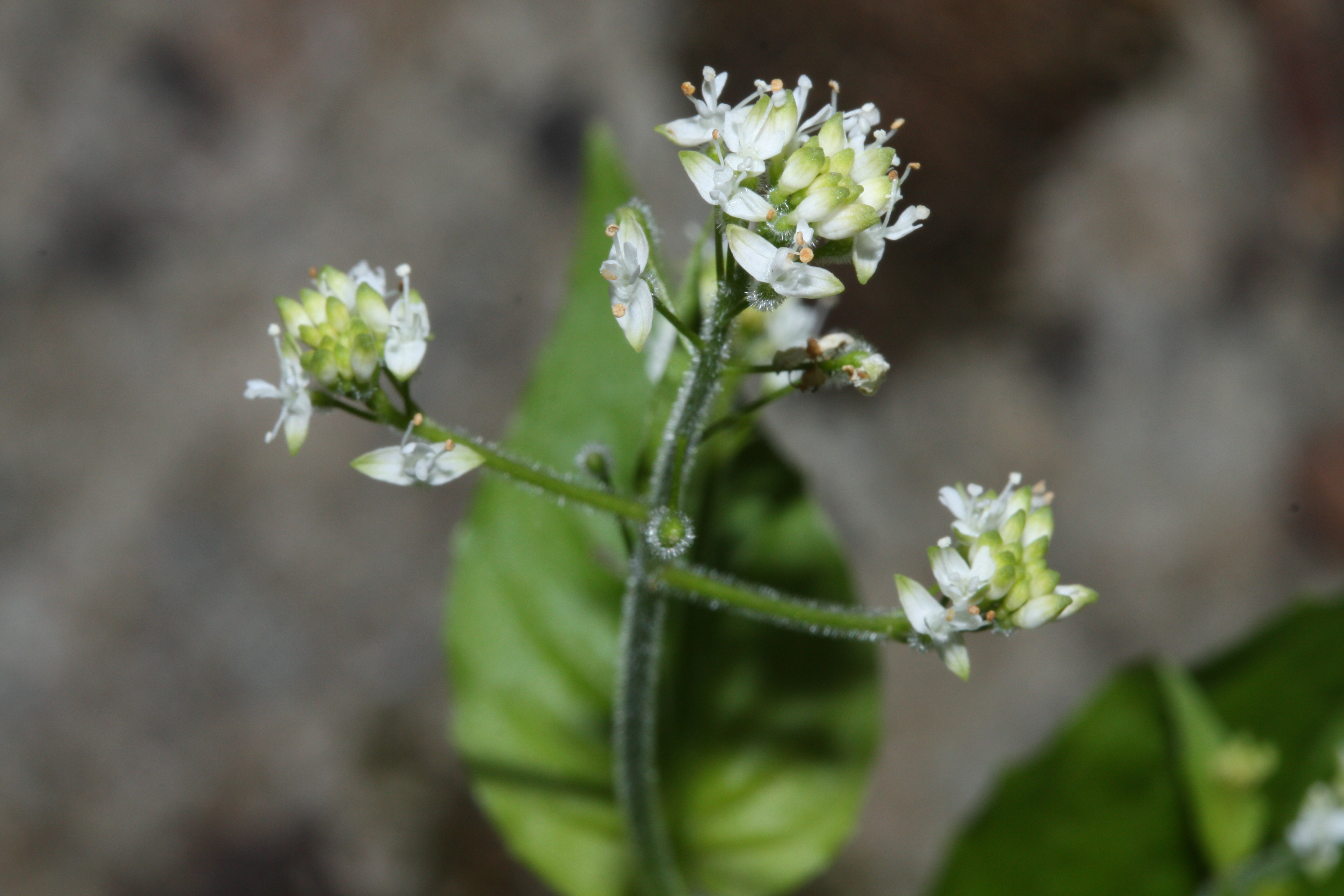
Circæa alpina (?) there, but nearly eighteen inches high. 

Lycopus Virginicus, not open in shade; probably in a day or two. 

Wood horse-tail very large and handsome there.

H. D. Thoreau, Journal, July 12, 1853

White vervain. See July 12, 1856 (“White vervain.”) See also July 28, 1853 ("Saw lower leaves of the white vervain turned a reddish lake or claret."); August 6, 1853 ("lower leaves of some catnip and a white vervain have turned. "); August 29, 1856 ("An apparent white vervain with bluish flowers, as blue as bluets even or more so.")

The green-flowered lanceolate-leafed orchis : Platanthera clavellata (Small Green Wood Orchid) aka Gymnadeniopsis clavellata, Habenaria clavellata , Gymnadenia tridentata (Green Woodland Orchid, Club-spur Orchid, Little Club Spur Bog Orchid). See August 14, 1856 ("Gymnadenia nearer the brook, how long?") Compare the TUBERCLED ORCHIS June 18, 1854 ("Platanthera flava at the Harrington Bathing - Place, possibly yesterday , — an unimportant yellowish - green spike of flowers."); June 21, 1852 ("The dwarf orchis Platanthera flava (Gray) at the bathing-place in Hubbard's meadow, not remarkable.")

Checkerberry, maybe some days. See July 16, 1856 (“Checkerberry, a day or two”). Note: “checkerberry" is another name for American wintergreen (Gaultheria procumbens).See A Book of the Seasons, by Henry Thoreau: Checkerberry.


July 12. See A Book of the Seasons,  by Henry Thoreau, July 12

A Book of the Seasons,  by Henry Thoreau
"A book, each page written in its own season,
out-of-doors, in its own locality.”
~edited, assembled and rewritten by zphx © 2009-2021

Saturday, August 13, 2016

Does not the season require this tonic?

August 13 

P. M. — To Conantum. 

alpine enchanter’s-nightshade
(Circaea alpina)

Beck says of the small circaea (C. alpina), "Many botanists consider this a mere variety of the preceding." I am not sure but it is more deeply toothed than the large. Its leaves are of the same color with those of the large at Bittern Cliff, but more decidedly toothed; q. v. Why does it not grow larger at Corner Spring? 


The root of the Polygala verticillata also has the checkerberry odor. 

In Bittern Cliff Woods that (apparently) very oblong elliptical leafed Lespedeza violacea (?), growing very loose and open on a few long petioles, one foot high by four or five inches wide. Is this because it grows in woods? It is not in bloom. 

Is there not now a prevalence of aromatic herbs in prime? — The polygala roots, blue-curls, wormwood, pennyroyal, Solidago odora, rough sunflowers, horse-mint, etc., etc. Does not the season require this tonic? 

I stripped off a shred of Indian hemp bark and could not break it. It is as strong as anything of the kind I know.

H. D. Thoreau, Journal, August 13, 1856

The small circaea (C. alpine). . . leaves are of the same color with those of the large at Bittern Cliff.  See June 19, 1856 ("enchanter’s-nightshade"); July 8, 1856 ("Circaea alpina, some days, a foot high with opaque leaves and bracts . . .  the same with the small, also bracted, one at Corner Spring”); August 1, 1855 ("Pennyroyal and alpine enchanter’s-nightshade well out, how long?”)

A prevalence of aromatic herbs in prime. See August 11, 1853  ("Evening draws on while I am gathering bundles of pennyroyal on the further Conantum height. I find it amid the stubble mixed with blue-curls and, as fast as I get my hand full, tie it into a fragrant bundle.”); August 13, 1852 ("Pennyroyal abundant in bloom. I find it springing from the soil lodged on large rocks in sprout-lands, and gather a little bundle, which scents my pocket for many days."); August 26, 1856 ("I gather a bundle of pennyroyal; it grows largest and rankest high and close under these rocks, amid the loose stones.") See also December 14, 1855 ("In a little hollow I see the sere gray pennyroyal rising above the snow, which, snuffed, reminds me of garrets full of herbs.”)  See also June 6, 1851 ("Bigelow says, “The leaves of the Solidago odora have a delightfully fragrant odor, partaking of that of anise and sassafras, but different from either.”)  See also A Book of the Seasons,by Henry Thoreau, the Aromatic Herbs  A Book of the Seasonsby Henry Thoreau,The Polygala

Indian hemp . . . is as strong as anything of the kind I know. See August 9, 1856 ("Again I am surprised to see the Apocynum cannabinum close to the rock at the Island”); August 16, 1856 ("I find the dog's-bane (Apocynum androsoemifolium) bark not the nearly so strong as that of the A. cannabinum. "); September 2, 1856 ("Some years ago I sought for Indian hemp (Apocynum cannabinum) hereabouts in vain, and concluded that it did not grow here. A month or two ago . . .my eyes fell on it, aye, in three different places, and different varieties of it. ");  Compare January 19,   1856 (“ I strip off some  [milkweed] bark . . . and, separating ten or twelve fibres from the epidermis, roll it in my fingers, making a thread about the ordinary size. This I can not break by direct pulling . . .I  doubt if a thread of flax or hemp of the same size could be made so strong."). See also   A Book of the Seasons, by Henry Thoreau, Dogsbane and Indian hemp

August 13. See A Book of the Seasons, by Henry Thoreau, August 13.

A prevalence of 
aromatic herbs in prime –
the season's tonic.
 A Book of the Seasons,  by Henry Thoreau
"A book, each page written in its own season,
out-of-doors, in its own locality.”
~edited, assembled and rewritten by zphx © 2009-2026

https://tinyurl.com/hdt-560813 

Saturday, August 1, 2015

Young Adams of Waltham tells me he has been moose-hunting at Chesuncook.


August 1.

P. M. -- To Conantum by boat. 

Squirrels have eaten and stripped pitch pine cones. 

Small rough sunflower a day or two. 

Diplopappus cornifolius (how long?) at Conant Orchard Grove. 

In the spring there, which has not been cleared out lately, I find a hairworm, eight or nine inches long and big as a pin-wire; is biggest in the middle and tapers thence to tail; at head is abruptly cut off; curly in your fingers like the tendril of a vine. 

I spent half an hour overhauling the heaps of clamshells under the rocks there. Was surprised to find the anodon and the green-rayed clams there. 
alpine enchanter’s-nightshade
(Circaea alpina)

Pennyroyal and alpine enchanter’s-nightshade well out, how long? 

Young Adams of Waltham tells me he has been moose-hunting at Chesuncook. Hunted with a guide in evening without horn, it being too early to call them out. Heard the water dropping from their muzzles when they lifted their heads from feeding on the pads, as they stood in the river.

H. D. Thoreau, Journal,  August 1, 1855


Small rough sunflower a day or two.
See August 1, 1852 ("The small rough sunflower (Helianthus divaricatus) tells of August heats") See also July 28, 1856 ("By factory road clearing, the small rough sunflower, two or three days."); July 29, 1853 (“The sight of the small rough sunflower about a dry ditch bank and hedge advances me at once further toward autumn.”); August 11, 1858 ("Also the small rough sunflower (now abundant)"); August 19, 1851 ("Small rough sunflower by side of road between canoe birch and White Pond")

Alpine enchanter’s-nightshade See June 19, 1856 ("enchanter’s-nightshade"); July 8, 1856 ("Circaea alpina, some days, a foot high with opaque leaves and bracts . . .  the same with the small, also bracted, one at Corner Spring”);;

Popular Posts Last 30 Days.

The week ahead in Henry’s journal

The week ahead in Henry’s journal
A journal, a book that shall contain a record of all your joy.
"A stone fruit. Each one yields me a thought." ~ H. D. Thoreau, March 28, 1859


I sit on this rock
wrestling with the melody
that possesses me.