Showing posts with label helianthus. Show all posts

Monday, August 13, 2018

I come to get the now empty nests of the wood pewees found June 27th.

August 13. 

This month thus far has been quite rainy. It has rained more or less at least half the days. You have had to consider each afternoon whether you must not take an umbrella. It has about half the time either been dogdayish or mizzling or decided rain. It would rain five minutes and be fair the next five, and so on, alternately, a whole afternoon. The farmers have not been able to get much of their hay. On the whole it has been rather cool. It has been still decidedly summer, with some reminiscences of autumn. The last week has been the heart of the huckleberry season. 

P. M. — Up Assabet. 

The dullish-blue or lead-colored Viburnum dentatum berries are now seen, not long, overhanging the side of the river, amid cornels and willows and button-bushes. They make a dull impression, yet held close in some lights they are glossy. The umbelled fruits —viburnums and cornels, aralias, etc. — have begun. 

As I am paddling up the north side above the Hemlocks, I am attracted by the singular shadows of the white lily pads on the rich-brown muddy bottom. It is remarkable how light tends to prevail over shadow there. It steals in under the densest curtain of pads and illustrates the bottom. The shadows of these pads, seen (now at 3 P. M.) a little one side, where the water is eighteen inches or two feet deep, are rarely orbicular or entire-edged or resembling the leaf, but are more or less perfect rosettes, generally of an oval form, with five to fifteen or more regularly rounded petals, open half-way to the centre. You cannot commonly refer the shadow to its substance but by touching the leaf with your paddle. 

Light knows a thousand tricks by which it prevails. Light is the rule, shadow the exception. The leaf fails to cast a shadow equal in area to itself. While it is a regular and almost solid disk, the shadow is a rosette or palmate, as if the sun, in its haste [to] illustrate every nook, shone round the shortest corner. Often if you connect the extremities of the petals, you have the general outline and size of the leaf, and the shadow is less than the substance by the amount of the openings. These petals seem to depend for their existence on the some what scalloped, waved, or undulating edge of the pad, and the manner in which the light is reflected from it. Generally the two sharp angles of the pad are almost entirely eroded in the shadow. The shadows, too, have a slight halo about them. 

Such endless and varied play of light and shadow is on the river bottom! It is protean and somewhat weird even. The shadow of the leaf might be mistaken for that of the flower. The sun playing with a lily leaf draws the outline of a lily on the bottom with its shadow. 

The broad-leaved helianthus on bank opposite Assabet Spring is not nearly out, though the H. divaricatus was abundantly out on the 11th. 

I landed to get the wood pewee nest in the Lee Wood. Perhaps those woods might be called Mantatukwet’s, for he says he lived at the foot of Nawshawtuct about fifty years before 1684. 

Hypopytis abundantly out (how long ?), apparently a good while, in that long wood-path on the left side, under the oak wood, before you begin to rise, going from the river end. Very little indeed is yet erect, and that which is not is apparently as forward as the rest. Not generally quite so high as the Monotropa uniflora which grows with it. I see still in their midst the dry upright brown spikes of last year’s seed-vessels. The chimaphila is more of an umbel. 

Where that dense young birch grove, four to eight feet high, was burned over in the spring, — I am pretty sure it was early in May,— I see now a yet more dense green crop of Solidago altissima, three or four feet high and budded to bloom. Where did all the seed come from? I think the burning was too late for any seed to have blown on since. Did it, then, lie in the ground so low as to escape the fire? The seed may have come from plants which grow in the old path along the fence on the west side. 

It is a singular fact, at any rate, that a dense grove of young white birches, covering half a dozen acres, may be burned over in May, so as to kill nearly all, and now, amid the dead brown trees, you see [a] dense green crop of Solidago altissima covering the ground like grass, four feet high. Nature practices a rotation of crops, and always has has some seed ready in the ground. 

Young white maples below Dove Rock are an inch and a half high, and red maples elsewhere about one inch high. 

I come to get the now empty nests of the wood pewees found June 27th

In each case, on approaching the spot, I hear the sweet note of a pewee lingering about, and this alone would have guided me within four or five rods. I do not know why they should linger near the empty nest, but perhaps they have built again near there or intend to use the same nest again (?). Their full strain is pe-ah-ee' (perhaps repeated), rising on the last syllable and emphasizing that, then pe’-ee, emphasizing the first and falling on the last, all very sweet and rather plaintive, suggesting innocence and confidence in you. In this case the bird uttered only its last strain, regularly at intervals. 

These two pewee nests are remarkably alike in their position and composition and form, though half a mile apart. They are both placed on a horizontal branch of a young oak (one about fourteen, the other about eighteen, feet from ground) and three to five feet from main trunk, in a young oak wood. Both rest directly on a horizontal fork, and such is their form and composition that they have almost precisely the same color and aspect from below and from above. 

The first is on a dead limb, very much exposed, is three inches in diameter outside to outside, and two inches in diameter within, the rim being about a quarter of an inch thick, and it is now one inch deep within. Its framework is white pine needles, especially in the rim, and a very little fine grass stem, covered on the rim and all without closely with small bits of lichen (cetraria?), slate-colored without and blackish beneath, and some brown caterpillar (?) or cocoon (?) silk with small seed—vessels in it. They are both now thin and partially open at the bottom, so that I am not sure they contain all the original lining. This one has no distinct lining, unless it is a very little green usnea amid the loose pine needles. The lichens of the nest would readily be confounded with the lichens of the limb. Looking down on it, it is a remarkably round and neat nest. 

The second nest is rather more shallow now and half an inch wider without, is lined with much more usnea (the willow down which I saw in it June 27 is gone; perhaps they cast it out in warm weather !), and shows a little of some slender brown catkin (oak ?) beneath, without. 

These nests remind me of what I suppose to be the yellow-throat vireo’s and hummingbird’s. The lining of a nest is not in good condition — perhaps is partly gone — when the birds have done with it. 

The remarkable difference between the two branches of our river, kept up down to the very junction, indicates a different geological region for their channels.

H. D. Thoreau, Journal, August 13, 1858

The dullish-blue or lead-colored Viburnum dentatum berries overhanging the side of the river. See August 27, 1856 ("Then there are the Viburnum dentatum berries, in flattish cymes, dull leadcolored berries, depressed globular, three sixteenths of an inch in diameter, with a mucronation, hard, seedy, dryish, and unpalatable.")

The remarkable difference between the two branches of our river indicates a different geological region for their channels. See July 16, 1859 ("The stream is remarkably different from the [Concord]. It is not half so deep. It is considerably more rapid. The bottom is not muddy but sandy and occasionally stony. Though far shallower, it is less weedy than the other. ... This is owing, perhaps, not only to the greater swiftness of the current, but to the want of mud under the sand. You wonder what makes the difference between this stream and the other. It seems impossible that it should be a geological difference in the beds of the streams so near together. Is it not owing simply to the greater swiftness of this stream?"); July 5, 1852 ("We are favored in having two rivers, flowing into one, whose banks afford different kinds of scenery, the streams being of different characters; one a dark, muddy, dead stream, full of animal and vegetable life, with broad meadows and black dwarf willows and weeds, the other comparatively pebbly and swift, with more abrupt banks and narrower meadows. To the latter I go to see the ripple, and the varied bottom with its stones and sands and shadows; to the former for the influence of its dark water resting on invisible mud, and for its reflections. It is a factory of soil, depositing sediment.")

August 13. See A Book of the Seasons,  by Henry Thoreau, August 13.


A Book of the Seasons,  by Henry Thoreau
"A book, each page written in its own season,
out-of-doors, in its own locality.”
~edited, assembled and rewritten by zphx © 2009-202


Saturday, August 11, 2018

I smell the fragrant everlasting concealed in the higher grass and weeds, some distance off.

August 11

P. M. — To Beck Stow’s. 

I see of late a good many young sparrows (and old) of different species flitting about. That blackberry-field of Gowing’s in the Great Fields, this side of his swamp, is a famous place for them. I see a dozen or more, old and young, perched on the wall. As I walk along, they fly up from the grass and alight on the wall, where they sit on the alert with outstretched necks. 

Nearest and unalarmed sit the huckleberry-birds; next, quite on the alert, the bay-wings, with which and further off the yellow-browed sparrows, of whom one at least has a clear yellowish breast; add to which that I heard there abouts the seringo note. If made by this particular bird, I should infer it was Fringilla passerina. I still hear there at intervals the bay-wing, huckleberry-bird, and seringo. 

Now is our rainy season. It has rained half the days for ten days past. Instead of dog-day clouds and mists, we have a rainy season. You must walk armed with an umbrella. It is wettest in the woods, where the air has had no chance to dry the bushes at all. 

The Myriophyllum ambiguum, apparently variety natans, is now apparently in its prime. Some buds have gone to seed; others are not yet open. It is floating all over the surface of the pool, by the road, at the swamp, — long utricularia-like masses without the bladders. The emersed part, of linear or pectinate leaves, rises only about half an inch; the rest, eighteen inches more or less in length, consists of an abundance of capillary pinnate leaves, covered with slime or conserve (?) as a web. Evidently the same plant, next the shore and creeping over the mud, only two or three inches long, is without the capillary leaves, having roots instead, and apparently is the variety limosum (?), I suspect erroneously so called. 

Heard a fine, sprightly, richly warbled strain from a bird perched on the top of a bean-pole. It was at the same time novel yet familiar to me. I soon recognized it for the strain of the purple finch, which I have not heard lately. But though it appeared as large, it seemed a different-colored bird. With my glass, four rods off, I saw it to be a goldfinch. It kept repeating this warble of the purple finch for several minutes. A very surprising note to be heard now, when birds generally are so silent. Have not heard the purple finch of late. 

I conclude that the goldfinch is a very fine and powerful singer, and the most successful and remarkable mocking-bird that we have. In the spring I heard it imitate the thrasher exactly, before that bird had arrived, and now it imitates the purple finch as perfectly, after the latter bird has ceased to sing! It is a surprising vocalist. It did not cease singing till I disturbed it by my nearer approach, and then it went off with its usual mew, succeeded by its watery twitter in its ricochet flight. Have they not been more common all summer than formerly?

I go along plum path behind Adolphus Clark’s. This is a peculiar locality for plants. The Desmodium Canadense is now apparently in its prime there and very common, with its rather rich spikes of purple flowers, — the most (?) conspicuous of the desmodiums. It might be called Desmodium Path. 

Also the small rough sunflower (now abundant) and the common apocynum (also in bloom as well as going and gone to seed) are very common. 

I smell the fragrant everlasting concealed in the higher grass and weeds there, some distance off. It reminds me of the lateness of the season. 

Saw the elodea (not long) and a dangle-berry ripe (not long) at Beck Stow’s. 

See a small variety of helianthus growing with the divaricatus, on the north side of Peter’s path, two rods east of bars southeast of his house. It is an imperfect flower, but apparently answers best to the H. tracheliifolius. There is evidently a great variety in respect to form, petiole, venation, roughness, thickness, and color of the leaves of helianthuses. 

Saw yesterday the Utricularia vulgaris, apparently in its prime, yellowing those little pools in Lincoln at the town bound by Walden. Their stems and leaves seem to half fill them. Some pools, like that at bath-place by pond in R. W. E.’s wood, will have for all vegetation only the floating immersed stems and leaves, light brown, of this plant, without a flower, perhaps on account of shade. 

The great bullfrogs, of various colors from dark brown to greenish yellow, lie out on the surface of these slimy pools or in the shallow water by the shore, motionless and philosophic. Toss a chip to one, and he will instantly leap and seize and drop it as quick. Motionless and indifferent as they appear, they are ready to leap upon their prey at any instant.

H. D. Thoreau, Journal, August 11, 1858

Nearest sit the huckleberry-birds; next the bay-wings, with which and further off the yellow-browed sparrows, of whom one at least has a clear yellowish breast I infer was Fringilla passerina. See August 8, 1858 (“I see at Clamshell Hill a yellow-browed sparrow sitting quite near on a haycock, pluming itself.”); and note to July 26, 1858 (“ A broad egg, white with large reddish and purplish brown spots chiefly about large end. . .  Could not see the bird; only saw bay-wings and huckleberry-birds. I suspect it may be the Fringilla passerina? He says the bird had a clear yellowish-white breast!”); June 28, 1858 (“According to Audubon’s and Wilson’s plates, the Fringilla passerina has for the most part clear yellowish-white breast.... Audubon says that the eggs . . .of the yellow-winged sparrow are “of a dingy white, sprinkled with brown spots.”); May 28, 1856 (“A seringo or yellow-browed (?) sparrow’s nest . . .Egg, bluish-white ground, thickly blotched with brown, yet most like a small ground bird’s egg, rather broad at one end, pretty fresh.”)

The seringo note. See April 22, 1856 ("The seringo also sits on a post, with a very distinct yellow line over the eye,and the rhythm of its strain is ker chick | ker che | ker-char—r-r-r-r chick, the last two bars being the part chiefly heard."). See June 26, 1856 (" According to Audubon’s and Wilson’s plates, ... the Savannah sparrow no conspicuous yellow on shoulder, a yellow brow, and white crown line. Rode to Sconticut Neck or Point in Fairhaven, five or six miles, and saw, apparently, the F. Savanna near their nests (my seringo note), restlessly flitting about me from rock to rock within a rod. Distinctly yellow-browed and spotted breast, not like plate of passerina. Audubon says that the eggs of the Savannah sparrow “are of a pale bluish color, softly mottled with purplish brown,””)May 28, 1856 ("A seringo or yellow-browed (?) sparrow’s nest . . . Egg, bluish-white ground, thickly blotched with brown . . ..”); October 22, 1855 ("I sit on a bank at the brook crossing, beyond the grove, to watch a flock of seringos, perhaps Savannah sparrows, which, with some F. hyemalis and other sparrows, are actively flitting about amid the alders and dogwood. "); July 16, 1854 ("Is it the yellow-winged or Savannah sparrow with yellow alternating with dark streaks on throat, as well as yellow over eye, reddish flesh-colored legs, and two light bars on wings?“). See also Guide to Thoreau’s Birds "(Thoreau frequently called the Savannah Sparrow Passerculus sandwichensis the seringo or seringo-bird, but he also applied the name to other small birds.)”


Heard a fine, sprightly, richly warbled strain from a bird perched on the top of a bean-pole.I conclude that the goldfinch is a very fine and powerful singer, and the most successful and remarkable mocking-bird that we have. See April 19, 1858 ("This was the most varied and sprightly performer of any bird I have heard this year, and it is strange that I never heard the strain before. It may be this note which is taken for the thrasher’s before the latter comes.") See also June 25, 1853 ("I think it must be the purple finch . . . which I see and hear singing so sweetly and variedly in the gardens . .. on a bean-pole or fence-picket. It has a little of the martin warble and of the canary bird.")

I smell the fragrant everlasting concealed in the higher grass and weeds. See August 10, 1856 ("Fragrant everlasting, maybe some days.”);  August 13, 1856 (“Is there not now a prevalence of aromatic herbs in prime?. . . Does not the season require this tonic?“); August 29, 1856 ("Fragrant everlasting in prime and very abundant, whitening Carter's pasture.”); September 19, 1852 ("The small-flowering Bidens cernua (?) and the fall dandelion and the fragrant everlasting abound. "); September 26, 1852 ("The small cottony leaves of the fragrant everlasting in the fields for some time, protected, as it were, by a little web of cotton against frost and snow, — a little dense web of cotton spun over it, — entangled in it, — as if to restrain it from rising higher."); February 25, 1857 (“The fragrant everlasting has retained its fragrance all winter. ”)


The small rough sunflower (now abundant) and see a small variety of helianthus growing with the divaricatus, on the north side of Peter’s path. See August 1, 1852 ("The small rough sunflower (Helianthus divaricatus) tells of August heats”); August 11, 1856 ("A new sunflower at Wheeler's Bank, . . ., which I will call the tall rough sunflower; opened say August 1st”); August 12, 1856 (“Am surprised to see still a third species or variety of helianthus (which may have opened near August 1st)”); August 29, 1856 (The Helianthus decapetalus, apparently a variety, with eight petals, about three feet high, leaves petioled, but not wing-petioled, and broader-leaved than that of August 12th“)

It reminds me of the lateness of the season. See July 26, 1853 ("This the afternoon of the year. How apt we are to be reminded of lateness, even before the year is half spent!”); July 30 1852 (After midsummer we have a belated feeling . . .") ; August 18, 1853 ("What means this sense of lateness that so comes over one now”)

August 11 See A Book of the Seasons, by Henry Thoreau, August 11


A Book of the Seasons,  by Henry Thoreau
"A book, each page written in its own season,
out-of-doors, in its own locality.”
~edited, assembled and rewritten by zphx © 2009-2021

Sunday, August 20, 2017

I hear a peculiar sound which I mistake for a woodpecker's tapping.

August 20

Thursday. 

P. M. – To Hubbard's Close. 

July 31, 2019

The hillside at Clintonia Swamp is in some parts quite shingled with the rattlesnake-plantain (Goodyera pubescens) leaves overlapping one another. The flower is now apparently in its prime. 

As I stand there, I hear a peculiar sound which I mistake for a woodpecker's tapping, but I soon see a cuckoo hopping near suspiciously or inquisitively, at length within twelve feet, from time to time uttering a hard, dry note, very much like a woodpecker tapping a dead dry tree rapidly, its full clear white throat and breast toward me, and slowly lifting its tail from time to time. Though somewhat allied to that throttled note it makes by night, it was quite different from that. 

I go along by the hillside footpath in the woods about Hubbard's Close. The Goodyera repens grows behind the spring where I used to sit, amid the dead pine leaves. Its leaves partly concealed in the grass. It is just done commonly. 

Helianthus, strumosus-like, at the south end of Stow's cold pool; how long?

H. D. Thoreau, Journal, August 20, 1857

The hillside at Clintonia Swamp is in some parts quite shingled with the rattlesnake-plantain . . . See August 27, 1856 (“Goodyera pubescens, rattlesnake-plantain, is apparently a little past its prime. It is very abundant on Clintonia Swamp hillside. . .”)

A hard, dry note, very much like a woodpecker tapping. . .See May 29, 1856 (“A cuckoo’s note, loud and hollow, from a wood-side.”)

Helianthus, strumosus-like, at the south end of Stow's cold pool. . . See note to August 12, 1856 ("Am surprised to see still a third species or variety of helianthus . . . At edge of the last clearing south of spring. I cannot identify it. . . .In some respects it is most like H. strumosus, but not downy beneath.”)

Tuesday, July 11, 2017

And now the lark must look out for the mowers.

July 11

July11,  2016


P. M. — To Corner Spring and Cliffs. 

Haying is fairly begun, and for some days I have heard the sound of the mowing-machine, and now the lark must look out for the mowers. 

The flowering fern, which is so much larger in the copses, though much is brown and effete, is still perhaps in prime. 

Vaccinium Pennsylvanicum ripe. Their dark blue with a bloom is a color that surprises me. 

The cymbidium is really a splendid flower, with its spike two or three inches long,  of commonly three or five large, irregular, concave, star-shaped purple flowers, amid the cool green meadow-grass. It has an agreeable fragrance withal. 

I see more berries than usual of the Rubus triflorus in the open meadow near the southeast corner of the Hubbard meadow blueberry swamp. Call it, perhaps, Cymbidium Meadow. They are dark shining red and, when ripe, of a very agreeable flavor and somewhat of the raspberry's spirit. 

Petty morel not yet, by the bars this side Corner Spring; nor is the helianthus there budded yet.

Apocynum cannabinum, with its small white flowers and narrow sepals half as long as whole corolla, apparently two or three days. 

The trumpet-weed is already as high as my head, with a rich glaucous bloom on its stem. 

Indeed, looking off into the vales from Fair Haven Hill, where a thin blue haze now rests almost universally, I see that the earth itself is invested with a glaucous bloom at this season like some fruits and rapidly growing stems. 

Thermometer at 93° + this afternoon. 

Am surprised to find the water of Corner Spring spoiled for the present, however much I clear it out, by the numbers of dead and dying frogs in it (Rana palustris). There is a mortality among which has made them hop to this spring to die. 

There is an abundance of corydalis on the top of the Cliffs, but most of it is generally out of bloom, i. e. excepting a twig or two, and it is partly withered, not so fresh as that in our garden; but some in the shade is quite green and fresh and abundantly blooming still.

H. D. Thoreau, Journal, July 11, 1857

And now the lark must look out for the mowers. See July 11, 1854 ("I hear Conant's cradle cronching the rye behind the fringe of bushes in the Indian field. Reaping begun."); July 29, 1853 ("About these times some hundreds of men with freshly sharpened scythes make an irruption into my garden when in its rankest condition, and clip my herbs all as close as they can,") See also A Book of the Seasons, by Henry Thoreau, Haymaking and June 30,1851 ("The lark sings a note which belongs to a New England summer evening. "); July 16, 1851 ("The lark sings in the meadow; the very essence of the afternoon is in his strain. This is a New England sound"); July 18, 1852 ("The larks and blackbirds and kingbirds are heard in the meadows."); July 26, 1853 ("Lark, too seen now, four or five together, sing as of yore"); July 26, 1856 ("I see young larks fly pretty well before me.")

Rubus triflorus in the open meadow near the southeast corner of the Hubbard meadow blueberry swamp. See note to July 6, 1857 ("Rubus triflorus well ripe.") See also A Book of the Seasons,  by Henry Thoreau, the Raspberry

Apocynum cannabinum, with its small white flowers and narrow sepals. See note to September 2, 1856 ("Some years ago I sought for Indian hemp (Apocynum cannabinum) hereabouts in vain, and concluded that it did not grow here. A month or two ago I read again, as many times before, that its blossoms were very small, scarcely a third as large as those of the common species, and for some unaccountable reason this distinction kept recurring to me, and I regarded the size of the flowers I saw, though I did not believe that it grew here; and in a day or two my eyes fell on it, aye, in three different places, and different varieties of it.")

Thermometer at 93° + this afternoon. See July 2, 1855 ("At 2 P. M. — Thermometer north side of house ... 93°") 

Dead and dying frogs in Corner Spring (Rana palustris). See A Book of the Seasons, by Henry Thoreau,  The   Pickerel frog  (Rana palustris or Lithobates palustris)

July 11. See A Book of the Seasons, by Henry Thoreau, July 11

A Book of the Seasons, by Henry Thoreau
"A book, each page written in its own season,
out-of-doors, in its own locality.”
~edited, assembled and rewritten by zphx © 2009-2021

Tuesday, October 4, 2016

Reading Harper's Magazine

October 4

Helianthus tuberosus, apparently several days, in Reynolds's yard (the butcher's). 

P. M. — Down river. 

Wind from northeast. Some water milkweed flying. Its pods small, slender, straight, and pointed perfectly upright; seeds large with much wing. 

The hibiscus gone to seed, and pods opened showing the seed, opposite Ostrya Island (Burr's Island) or Rock below Battle-Ground. 

In an article on the alligator in Harper's Magazine for December, 1854, it is said that mosquitoes "surround its head in clouds; and we have heard the negroes assert that the reptile opened its mouth until its interior was fully lined, and suddenly closing it up, would swallow the accumulated marauders, and then set its huge jaws as a trap for more." This reminds me of the swarms of mosquitoes about frogs and, I think, turtles. 

In another article, of May, 1855, on "The Lion and his Kind," the animals are placed in this order: the domestic cat, wildcat, the ocelot or tiger-cat of Peru and Mexico, the caracal of Asia and Africa, the lynx of North America, the chetah of India and Africa, the ounce of India (perhaps a rough variety of the leopard), the leopard, the jaguar, the cougar, the tiger, the lion. 

"The Cougar is the American lion — at least it bears a closer resemblance to that noble brute than any other of the feline family, for it is destitute of the stripes of the tiger, the spots of the leopard, and the rosettes of the jaguar; but when full-grown possesses a tawny-red color, almost uniform over the whole body, and hence the inference that it is like the lion." 

"Cougar is a corruption of the Mexican name." Ranges between Paraguay and the Great Lakes of North America. "In form it is less attractive than the generality of its species, there being an apparent want of symmetry; for it is observable that its back is hollow, its legs short and thick, and its tail does not gracefully taper; yet nature has invested the cougar with other qualities as a compensation, the most remarkable of which is an apparent power to render itself quite invisible; for so cunningly tinged is its fur, that it perfectly mingles with the bark of trees — in fact, with all subdued tints — and stretched upon a limb, or even extended upon the floor of its dimly lighted cage, you must prepare your eye by consider able mental resolution to be assured of its positive presence." Its flesh is eaten by some. 

Mrs. Jane Swisshelm kept one which grew to be nine feet long, and, according to her, in this writer's words, "If in exceeding good-humor he would purr; but if he wished to intimidate, he would raise his back, erect his hair, and spit like a cat. In the twilight of the evening the animal was accustomed to pace back and forth to the full extent of his limits, ever and anon uttering a short, piercing shriek, which made the valley reverberate for half a mile or more in every direction. Mrs. Swisshelm says these sounds were the shrillest, and at the same time the most mournful she ever heard. They might, perhaps, be likened to the scream of a woman in an agony of terror." He once sprang at her, but was brought up by his chain. When preparing to spring, his eyes were "green and blazing, and the tip of his tail moving from side to side." 

This paper describes "a full-grown royal tiger, measuring four feet seven inches from the nose to the insertion of the tail. . . . Unlike the miserable wretches we see in our menageries, etc." 

The Brattleboro paper makes the panther four feet eleven inches, so measured!! 

I hear that a Captain Hurd, of Wayland or Sudbury, estimates the loss of river meadow-hay this season in those two towns on account of the freshet at twelve hundred tons.

H. D. Thoreau, Journal, October 4, 1856

The Brattleboro paper makes the panther four feet eleven inches  . . . See September 9, 1856 ("The most interesting sight I saw in Brattleboro was the skin and skull of a panther (Felis concolor) (cougar, catamount, painter, American lion, puma), . . . The Brattleboro newspaper says its body was "4 feet 11 inches in length, and the tail 2 feet 9 inches; the animal weighed 108 pounds."

The loss of river meadow-hay this season . . . See September 30, 1856 "Speaking of the meadow-hay which is lost this year, Minott said that the little they had got since the last flood before this was good for nothing.")

Wednesday, September 7, 2016

The Concord is worth a hundred of it for my purposes.

September 7.

Sunday.

At Brattleboro, Vt. a. m. — Climbed the hill behind Mr. Addison Brown's. 

The leaves of the Tiarella cordifolia very abundant in the woods, but hardly sharp-lobed. 

Also observed the leaves of the Hepatica triloba

Was that Sium lineare in the pool on the hilltop? Oakes allows only S. latifolium to grow in Vermont. The seeds are apparently ribbed like ours. (Vide press.) 

Found the lemna mantling that pool. Mrs. Brown has found it in flower there. 

Flowering dogwood on hill. 

P. M. — Up the bank of the Connecticut to West River, up that to a brook, and up that nearly to hospital. 

The Connecticut, though unusually high (several feet more than usual), looks low, there being four or five or six rods of bare gravel on each side, and the bushes and weeds covered with clayey soil from a freshet. Not a boat to be seen on it. The Concord is worth a hundred of it for my purposes. It looks narrow as well as shallow. No doubt it is dwarfed by the mountain rising directly from it in front, which, as usual, looking nearer than it is, makes the opposite shore seem nearer. 

The Solidago Canadensis, and the smooth three - ribbed one, and nemoralis, etc., the helianthus (apparently decapetalus), and Aster or Diplopappus linariifolius, Vitis cordifolius (?) (now beginning to be ripe) are quite common along the bank. 

On a bank-side on West River, Urtica Canadensis, apparently in prime and going to seed, the same that Mr. Whitlow once recommended as a substitute for hemp. 

Near by the phryma, or lopseed, with still a few small rose-white flowers. I at first thought it a circrea. 

Plenty of harebells thereabouts, and, by the brook, Polygonum Virginianum, three feet high, mostly gone to seed. 

Apparently Cornus stolonifera (?) by brook (vide press), with the sericea. 

Aster macrophyllus much past prime.

H. D. Thoreau, Journal, September 7, 1856

Monday, August 29, 2016

The Helianthus decapetalus, apparently a variety, with eight petals.

August 29.
Heavy rain in the night and this forenoon. 

P. M. — To J. Farmer's by river. 

The Helianthus decapetalus, apparently a variety, with eight petals, about three feet high, leaves petioled, but not wing-petioled, and broader-leaved than that of August 12th, quite ovate with a tapering point, with ciliate petioles, thin but quite rough beneath and above, stem purple and smoothish, Hosmer's bank, opposite Azalea Swamp. 

Fragrant everlasting in prime and very abundant, whitening Carter's pasture. 

Ribwort still. 

An apparent white vervain with bluish flowers, as blue as bluets even or more so, roadside beyond Farmer's barn.

H. D. Thoreau, Journal, August 29, 1856

Helianthus . . . broader-leaved than that of August 12th . . . See August 12, 1856 ("Am surprised to see still a third species or variety of helianthus. . . I cannot identify it."); see also August 11, 1856 ("A new sunflower at Wheeler's Bank, this side Corner Spring, which I will call the tall rough sunflower; . . . It does not correspond exactly to any described.”);  August 11, 1858 (“See a small variety of helianthus growing with the divaricatus, on the north side of Peter’s path, two rods east of bars southeast of his house. It is an imperfect flower, but apparently answers best to the H. tracheliifolius.”)

Fragrant everlasting in prime and very abundant . . . See August 10, 1856 ("Fragrant everlasting, maybe some days.”); August 11, 1858 (“I smell the fragrant everlasting concealed in the higher grass and weeds there, some distance off.”)

White vervain with bluish flowers . . . See August 6, 1853 ("lower leaves of some catnip and a white vervain have turned. ")

Friday, August 12, 2016

I see a deep full river on which vessels may float.

August 12. 

11 a. m. — To Hill. 

The Hypericum mutilum is well out at this hour. 

The river is now at a standstill, some three feet above its usual level. The pickerel-weed is all covered, and lilies, and much of the button-bush and mikania. It is as great an accident as can befall these flowers. It is novel to behold this great, full tide in which you perceive some current by the eddies, in which no snarl of weeds is seen. So different from that Potamogeton River, where you caught a crab at every stroke of the oar, and farmers drove their hay-carts across. Instead of watery gleaming fields of potamogetons in which the boatman was entangled, and drifting vallisneria on which the dragon-flies alighted, I see a deep full river on which vessels may float, and I feel at a distance from terra firma when on its bosom. 

P. M. — To Moore's Swamp.

Gerardia purpurea, two or three days. 

The mulgedium in that swamp is very abundant and a very stately plant, so erect and soldier-like, in large companies, rising above all else, with its very regular long, sharp, elliptic head and bluish-white flowers. 

Again I examine that very strict solidago, which perhaps I must call wand-stemmed. Perhaps it is only a swamp variety of S. stricta, yet the leaves are thicker and darker(?)-green, and the upper commonly broader, often elliptic, pointed, less recurved and not wavy. Stem and head is now commonly much more strict and branches more erect, and racemes less one-sided, but in larger and maturer ones they are at length recurving and forming a pyramid like S. stricta. Rays are fewer and broader, five or six; stem reddish, with apparently more branchlets or leafets in axils.

Am surprised to see still a third species or variety of helianthus (which may have opened near August 1st, say only a week). Only the first flowers out. At edge of the last clearing south of spring. I cannot identify it. It has very short but not margined petioles; leaves narrower than yesterday's, and rough beneath as well as above. The outer scales of involucre a little the longest; but I think this of little importance, for the involucre of the H. divaricatus is very variable, hardly two alike; rays about ten. In some respects it is most like H. strumosus, but not downy beneath. The bruised leaves of these helianthuses are rather fragrant. 

It is thick, smoky, dog-day weather again. 

Bradford speaks of the dog's-tooth violet as a plant which disappears early. 

The Aster patens is very handsome by the side of Moore's Swamp on the bank, — large flowers, more or less purplish or violet, each commonly (four or five) at the end of a long peduncle, three to six inches long, at right angles with the stem, giving it an open look. 

Snake-head, or chelone. 

On the edge of the ditch opposite the spring, Epilobium coloratum, and also what I must call E. palustre of Willdenow and Pursh and Eaton. It is smooth or smoothish, leaves somewhat toothed or subdenticulate, peduncle one inch long, flowers white. 

The most interesting domes I behold are not those of Oriental temples and palaces, but of the toadstools. On this knoll in the swamp they are little pyramids of Cheops or Cholula, which also stand on the plain, very delicately shaded off. They have burst their brown tunics as they expanded, leaving only a clear-brown apex, and on every side these swelling roofs or domes are patched and shingled with the fragments, delicately shaded off thus into every tint of brown to the edge. As if this creation of a night would thus imitate the weather-stains of centuries. Toads' temples. So charming is gradation! 

Gerardia pedicularia, how long? 

What a wilderness of weeds is Moore's Swamp now! Tall rough goldenrods, erechthites, poke, Aster Radula, dogwood, etc., etc. It looks as if the potatoes which grew there would be poisonous. 

An arrowhead in Peter's Path. How many times I have found an arrowhead by that path, as if that had been an Indian trail! Perchance it was, for some of the paths we travel are much older than we think, especially some which the colored race in our midst still use, for they are nearest to the Indian trails.

The Emerson children say that Aralia nudicaulis berries are good to eat. The leaves of Sericocarpus conyzoides are fragrant when bruised. Black cherries ripe. 

Saw the primrose open at sundown. The corolla burst part way open and unfolded rapidly; the sepals flew back with a smart spring. In a minute or two the corolla was opened flat and seemed to rejoice in the cool, serene light and air. 

Lespedeza capitata, not long. The sarothra — as well as small hypericums generally — has a lemon scent.

The late rains have tried the roofs severely. Tenants have complained to their landlords, and now I see carpenters setting up their staging and preparing to shingle on various sides.

H. D. Thoreau, Journal, August 12, 1856

Gerardia purpurea, two or three days. See August 20, 1852 ("The purple gerardia is very beautiful now in green grass.")
Saw the primrose open at sundown. . . . seemed to rejoice in the cool, serene light and air.
 See July 5, 1856 ("The large evening-primrose below the foot of our garden does not open till some time between 6.30 and 8 P. M. or sundown. . . . freshly out in the cool of the evening at sundown, as if enjoying the serenity of the hour.”)

Snake-head, or chelone: The name of the genus Chelone comes from the Greek word meaning a tortoise, from the resemblance of the corolla to a tortoise-head. Snake-head. Turtle-head. Turtle-bloom. Shell flower. Not the snake-head arethusa of July 7, 1856.  See August 1, 1852  ("Chelone glabra [white turtlehead] just out.”)

Am surprised to see still a third species or variety of helianthus . . . See August 11, 1856 ("A new sunflower at Wheeler's Bank, . . ., which I will call the tall rough sunflower; opened say August 1st”); August 1, 1852 ("The small rough sunflower (Helianthus divaricatus) tells of August heats; also Helianthus annuus, common sunflower.”); August 13, 1858 ("The broad-leaved helianthus on bank opposite Assabet Spring is not nearly out, though the H. divaricatus was abundantly out on the 11th.")  GoBotany lists:
Helianthus annuus, common sunflower
Helianthus divaricatus, woodland sunflower
Helianthus strumosus, pale-leaved sunflower


What a wilderness of weeds is Moore's Swamp now!
See August 31, 1853 (The rank growth of flowers (commonly called weeds) in this swamp now impresses me like a harvest of flowers. . . .One would think that all the poison that is in the earth and air must be extracted out of them by this rank vegetation.")

Wednesday, June 18, 2014

Another round red sun of dry and dusty weather – Stawberries in season.


June 18.

The Rosa lucida is pale and low on dry sunny banks like that by Hosmer's pines. 


There are many strawberries this season, in meadows now, just fairly begun there. The meadows, like this Nut Meadow, are now full of the taller grasses, just beginning to flower.


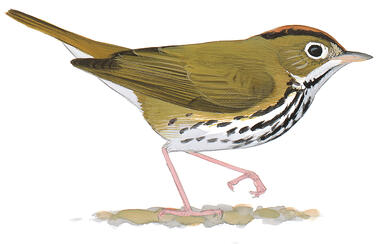
Ovenbird
Observe in two places golden-crowned thrushes, near whose nests I must have been, hopping on the lower branches and in the underwood, — a somewhat sparrow-like bird, with its golden-brown crest and white circle about eye, carrying the tail somewhat like a wren, and inclined to run along the branches. Each had a worm in its bill, no doubt intended for its young. That is the chief employment of the birds now, gathering food for their young. I think I heard the anxious peep of a robin whose young have just left the nest.

Small grasshoppers very abundant in some dry grass. 

Another round red sun of dry and dusty weather to-night, — a red or red-purple helianthus. Every year men talk about the dry weather which has now begun as if it were something new and not to be expected.

H. D. Thoreau, Journal, June 18, 1854

And more today on slavery:
My advice to the State is simply this: to dissolve her union with the slaveholder instantly. ... And to each inhabitant of Massachusetts, to dissolve his union with the State, as long as she hesitates to do her duty.
See May 29, 1854 , June 9, 1854, June 16, 1854, June 17, 1854 and ""Slavery in Massachusetts.

The Rosa lucida is pale and low on dry sunny banks. See June 13, 1854 ("Is not the rose-pink Rosa lucida paler than the R. nitida?"); June 16, 1854 ("The R. lucida, with its broader and duller leaves, but larger and perhaps deeper-colored and more purple petals, perhaps yet higher scented, and its great yellow centre of stamens.") See also A Book of the Seasons, by Henry Thoreau, The Wild Rose

There are many strawberries this season, in meadows now, just fairly begun there. See June 17, 1854 ("Already the season of small fruits has arrived.") See also A Book of the Seasons, by Henry Thoreau: Strawberries

Observe in two places golden-crowned thrushes, near whose nests I must have been . . . See June 10, 1855 ("Oven-bird’s nest with four eggs two thirds hatched, under dry leaves, composed of pine-needles and dry leaves and a hair or two for lining,”)

Another round red sun.  See June 17, 1854 ("The sun goes down red again, like a high-colored flower of summer.")

I think I heard the anxious peep of a robin whose young have just left the nestSee June 10, 1853 ("We hear the cool peep of the robin calling to its young, now learning to fly.") See also May 13, 1853 ("A robin's nest, with young, on the causeway."): May 24, 1855 ("Young robins some time hatched");June 9, 1856 ("A young robin abroad. "); June 15, 1855 ("Robin’s nest in apple tree, twelve feet high — young nearly grown."): June 15, 1852 ("Young robins,speck dark-led,"); June 20, 1855 (" A robin’s nest with young, which was lately, in the great wind, blown down and somehow lodged on the lower part of an evergreen by arbor,—without spilling the young!")

Every year men talk about the dry weather which has now begun as if it were something new and not to be expected. See July 7, 1853 ("Now is that annual drought which is always spoken of as something unprecedented and out of the common course.")

June18. See A Book of the Seasons, by Henry Thoreau, June 18

Many strawberries 
this season in meadows now –
just fairly begun.

A Book of the Seasons, by Henry Thoreau, Strawberries in Season
A Book of the Seasons, by Henry Thoreau
"A book, each page written in its own season,
out-of-doors, in its own locality.”


~edited, assembled and rewritten by zphx © 2009-2024
https://tinyurl.com/hdt-540618

Wednesday, August 1, 2012

The pewee sings yet.


August 1, 2014

The berries of what I have called the alternate-leaved cornel [dogwood] are now ripe, a very dark blue – blue-black – and round, but dropping off prematurely, leaving handsome red cymes, which adorn the trees from a distance. 

Chelone glabra [white turtlehead] just out. 

Is not that the small-flowered hypericum?

Singing birds are scarce. I have not heard the catbird or the thrush for a long time. The pewee sings yet.

Early apples are ripe, and the sopsivine scents my handkerchief before I have perceived any odor from the orchards. 

Find a long, dense spike of the Orchis psycodes. Much later this than the great orchis. The same, only smaller and denser, not high-colored enough.

The small rough sunflower (Helianthus divaricatus) tells of August heats; also Helianthus annuus, common sunflower. May it not stand for the character of August?

H. D. Thoreau, Journal,  August 1, 1852

The berries of what I have called the alternate-leaved cornel are now ripe. See August 2, 1854 ("How interesting the small alternate cornel trees with often a flat top, a peculiar ribbed and green leaf, and pretty red stems supporting its harmless blue berries inclined to drop off.");August 3, 1856 ("Cornus alternifolia berries ripe, as I go from Holden Swamp shore to Miles Swamp. They are in open cymes, dull-blue, somewhat depressed globular, tipped with the persistent styles, yet already, as usual, mostly fallen. But handsomer far are the pretty (bare) red peduncles and pedicels, like fairy fingers spread. They make a show at a distance of a dozen rods even. Something light and open about this tree, but a sort of witch's tree nevertheless. ") See also A Book of the Seasons,  by Henry Thoreau, Alternate-leafed dogwood (Cornus alternifolia)

Singing birds are scarce . . .The pewee sings yet. See August 6, 1858 ("The note of the wood pewee is now more prominent, while birds generally are silent. "); August 18, 1860 ("The note of the wood pewee sounds prominent of late."); September 5, 1858 (" I hear two or more wood pewees this afternoon, but had not before for a fortnight or more. The pewee days are over for some time.") See also A Book of the Seasons, by Henry Thoreau, the Eastern Wood-Pewee

Find a long, dense spike of the Orchis psycodes
. See August 2, 1852 ("It is a new era with the flowers when the small purple fringed orchis, as now, is found in shady swamps standing along the brooks. It appears to be alone of its class. Not to be overlooked, it has so much flower, ") See also A Book of the Seasons, by Henry Thoreau, The Purple Fringed Orchids

The small rough sunflower tells of August heats. See note to  August 1, 1855 ("Small rough sunflower a day or two"). See also A Book of the Seasons, by Henry Thoreau, Helianthus

August 1. See A Book of the Seasons, by Henry Thoreau, August 1.

No catbird or thrush.
The singing birds are scarce but
the pewee sings yet. 

A Book of the Seasons, by Henry Thoreau,
"A book, each page written in its own season,
out-of-doors, in its own locality."
 ~edited, assembled and rewritten by zphx ©  2009-2024

tinyurl.com/hdt-520801 


Popular Posts Last 30 Days.

The week ahead in Henry’s journal

The week ahead in Henry’s journal
A journal, a book that shall contain a record of all your joy.
"A stone fruit. Each one yields me a thought." ~ H. D. Thoreau, March 28, 1859


I sit on this rock
wrestling with the melody
that possesses me.