Showing posts with label Holt. Show all posts

Friday, April 17, 2020

It invites us to walk in the yard and inspect the springing plants.


I hear this forenoon the soothing and simple, though monotonous, notes of the chip-bird, telling us better than our thermometers what degree of summer warmth is reached; adds its humble but very pleasant contribution to the steadily increasing quire of the spring. It perches on a cherry tree, perchance, near the house, and unseen, by its steady che-che-che-che-che che, affecting us often without our distinctly hearing it, it blends all the other and previous sounds of the season together. It invites us to walk in the yard and inspect the springing plants.

The evenings are very considerably shortened. We begin to be more out of doors, the less housed, think less, stir about more, are fuller of affairs and chores, come in chiefly to eat and to sleep.

The amelanchier flower-buds are conspicuously swollen.

Willows (Salix alba) probably (did not four or five days ago).

P. M. – Sail to Ball’s Hill.

It is quite warm — 67 at 2 P. M. — and hazy, though rather strong and gusty northwest wind.

We land at the Holt and walk a little inland. It is unexpectedly very warm on lee side of hilltop just laid bare and covered with dry leaves and twigs. See my first Vanessa Antiopa


Looking off on to the river meadow, I noticed, as I thought, a stout stake aslant in the meadow, three or more rods off, sharp at the top and rather light-colored on one side, as is often the case; yet, at the same time, it occurred to me that a stake-driver often resembled a stake very much, but I thought, nevertheless, that there was no doubt about this being a stake. I took out my glass to look for ducks, and my companion, seeing what I had, and asking if it was not a stake-driver, I suffered my glass at last to rest on it, and I was much surprised to find that it was a stake-driver after all. The bird stood in shallow water near a tussock, perfectly still, with its long bill pointed upwards in the same direction with its body and neck, so as perfectly to resemble a stake aslant. If the bill had made an angle with the neck it would have been betrayed at once.

Its resource evidently was to rely on its form and color and immobility solely for its concealment. This was its instinct, whether it implies any conscious artifice or not.

I watched it for fifteen minutes, and at length it relaxed its muscles and changed its attitude, and I observed a slight motion; and soon after, when I moved toward it, it flew. It resembled more a piece of a rail than anything else, — more than anything that would have been seen here before the white man came.

It is a question whether the bird consciously coöperates in each instance with its Maker, who contrived this concealment. I can never believe that this resemblance is a mere coincidence, not designed to answer this very end — which it does answer so perfectly and usefully.


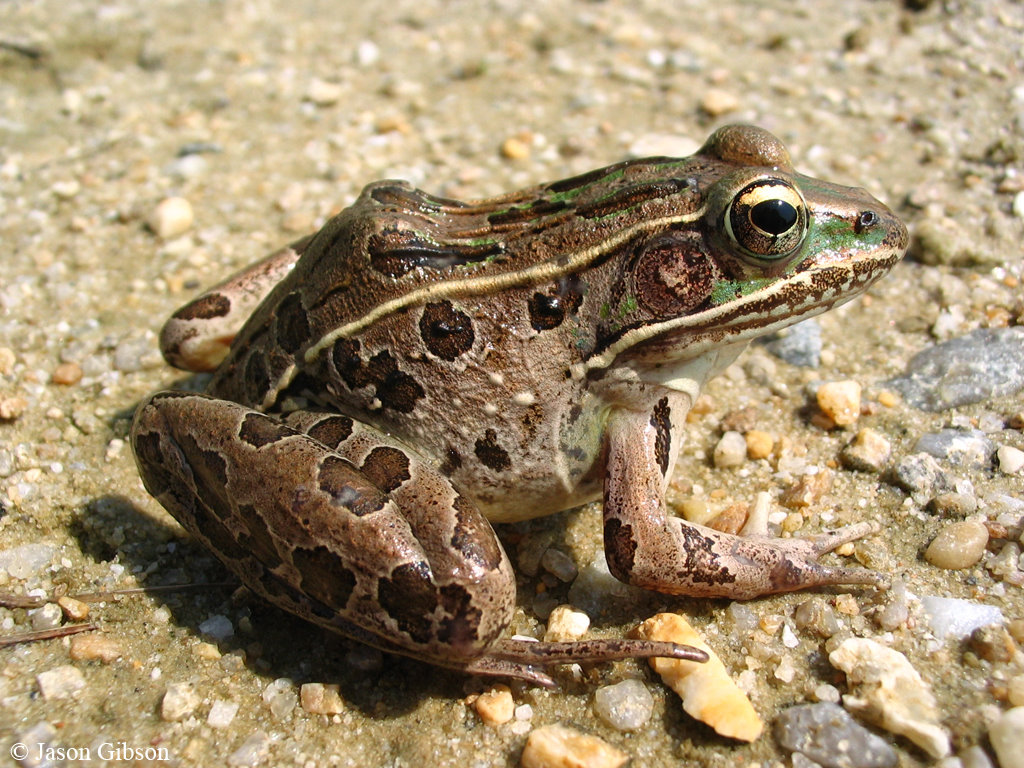
The meadows are alive with purring frogs.

J. Brown says that he saw martins on his box on the 13th and 14th, and that his son saw one the 8th(?).

I notice now and of late holes recently dug, — woodchuck? or fox?

Lake grass was very long — a foot or two — and handsome, the 15th.

Heard a pigeon woodpecker on the 16th.

H. D. Thoreau, Journal, April 17, 1860


The soothing and simple, though monotonous, notes of the chip-bird, telling us better than our thermometers what degree of summer warmth is reached. See April 17, 1856 ("Hear a chip-bird high on an elm this morning,. . . You would not be apt to distinguish the note of the earliest."). See also  April 9, 1853 ("The chipping sparrow, with its ashy-white breast and white streak over eye and undivided chestnut crown, holds up its head and pours forth its che che che che che che.");   April 27, 1852  ("Heard also a chipping sparrow (F. socialis).") See also A Book of the Seasons,  by Henry Thoreau, The Chipping Sparrow (Fringilla socialis ).

The amelanchier flower-buds are conspicuously swollen. See April 13, 1856  ("Also the amelanchier flower-buds are bursting."); April 18, 1855 ("The shad-bush flower-buds, beginning to expand, look like leaf-buds bursting now.")

Willows (Salix alba) probably. See April 29, 1855 ("For two or three days the Salix alba, with its catkins (not yet open) and its young leaves, or bracts (?), has made quite a show, before any other tree, —a pyramid of tender yellowish green in the russet landscape.")


It is unexpectedly very warm on lee side of hilltop just laid bare and covered with dry leaves and twigs. See my first Vanessa Antiopa. See March 21, 1853 ("On the warm, dry cliff, looking south over Beaver Pond, I am surprised to see a large butterfly, black with buff-edged wings, so tender a creature to be out so early ."); March 28, 1857 ("The broad buff edge of the Vanessa Antiopa's wings harmonizes with the russet ground it flutters over,");   April 9, 1853 ("You see the buff-edged . . . in warm, sunny southern exposures on the edge of woods or sides of rocky hills and cliffs, above dry leaves and twigs."); April 16, 1855 ("A great many of the large buff-edged are fluttering over the leaves in wood-paths this warm afternoon."). See also A Book of the Seasons,  by Henry Thoreau, the Buff-edged Butterfly


It was a stake-driver after all.
See October 26, 1858 ("[Minott] says that some call the stake-driver “'belcher squelcher,” and some, “wollerkertoot. ” I used to call them “pump-er-gor’. ” Some say “slug-toot.”) See also A Book of the Seasons, by Henry Thoreau, American Bittern (the Stake-Diver)

It is a question whether the bird consciously coöperates in each instance with its Maker, who contrived this concealment. See February 19, 1854 (''Each and all such disguises and other resources remind us that not some poor worm's instinct merely, as we call it, but the mind of the universe rather, which we share, has been intended upon each particular object. All the wit in the world was brought to bear on each case to secure its end. ")


The meadows are alive with purring frogs. See  April 17, 1855 ("To-day I see a Rana palustris — I think the first."  Rana palustris. Pickerel frog (Lithobates palustris) See also April 11, 1854 ("Hear a slight snoring of frogs on the bared meadows. Is it not the R. palustris? This the first moon to walk by.”)April 30, 1858 ('It is some what more softly purring, with frequently a low quivering, chuckling, or inquisitive croak, . . . I suspect it is the R. palustris, now breeding."); May 2, 1859  ("I heard yesterday, and perhaps for several days, the soft purring sound of what I take to be the Rana palustris, breeding, though I did not this time see the frog."); May 3, 1857 ("I hear the soft, purring, stertorous croak of frogs on the meadow. "); May 8. 1857 ("It is an evening for the soft-snoring, purring frogs (which I suspect to be Rana palustris). . . . Their croak is very fine or rapid, and has a soft, purring sound at a little distance."); May 8, 1857 ("The full moon rises, and I paddle by its light. It is an evening for the soft-snoring, purring frogs "); June 16, 1860 ("It appears to me that these phenomena occur simultaneously, say June 12th, viz.: -• Heat about. 85° at 2 P.M.• Hylodes cease to peep.• Purring frogs (Rana palustris) cease.")

J. Brown says that he saw martins on his box on the 13th and 14th, and that his son saw one the 8th(?). See April 17, 1854 ("Every shopkeeper makes a record of the arrival of the first martin or bluebird to his box. . . .: John Brown, merchant, tells me this morning that the martins first came to his box on the 13th, he "made a minute of it." Beside so many entries in their day-books and ledgers, they record these things")

I notice now and of late holes recently dug. See April 17, 1855 ("See a woodchuck. His deep reddish-brown rear, somewhat grizzled about, looked like a ripe fruit mellowed by winter. . . .They have several holes under Lee’s Cliff.")")

Heard a pigeon woodpecker on the 16th. Compare March 17, 1858 ("Ah! there is the note of the first flicker, a prolonged, monotonous wick-wick-wick-wick-wick-wick, etc.,); April 8, 1855 ("Hear and see a pigeon woodpecker, something like week-up week-up."); April 12. 1860 ("Hear a pigeon woodpecker' s prolonged cackle."); April 14, 1856 ("Hear the flicker’s cackle on the old aspen, and his tapping sounds afar over the water.") See also A Book of the Seasons, by Henry Thoreau, The Pigeon Woodpecker (flicker).


Tuesday, March 24, 2020

The duck most common and most identified with the stream at this season.


March 24

Cold and rather blustering again, with flurries of snow. 

March 24, 2020
The boatman, when the chain of his boat has been broken with a stone by some scamp, and he cannot easily transport his boat to the blacksmith's to have it mended, gets the latter to bend him a very stout iron wire in the form of an S, then, hooking this to the two broken ends and setting it upright on a rock, he hammers it down till it rests on itself in the form of an 8, which is very difficult to pry open. 

2 P. M. — About 39. To Copan. 

I see a male frog hawk beating a hedge, scarcely rising more than two feet from the ground for half a mile, quite below the level of the wall within it. How unlike the hen-hawk in this! 

They are real wind-clouds this afternoon; have an electric, fibry look. Sometimes it is a flurry of snow falling, no doubt. Peculiar cold and windy cumuli are mixed with them, not black like a thunder cloud, but cold dark slate with very bright white crowns and prominences. 

I find on Indian ground, as to-day on the Great Fields, very regular oval stones like large pebbles, sometimes five or six inches long, water-worn, of course, and brought hither by the Indians. They commonly show marks of having been used as hammers. Often in fields where there is not a stone of that kind in place for a mile or more. 

From Holbrook's clearing I see five large dark-colored ducks, probably black ducks, far away on the meadow, with heads erect, necks stretched, on the alert, only one in water. Indeed, there is very little water on the meadows. For length of neck those most wary look much like geese. They appear quite large and heavy. They probably find some sweet grass, etc., where the water has just receded. 

There are half a dozen gulls on the water near. They are the large white birds of the meadow, the whitest we have. As they so commonly stand above water on a piece of meadow, they are so much the more conspicuous. They are very conspicuous to my naked eye a mile off, or as soon as I come in sight of the meadow, but I do not detect the sheldrakes around them till I use my glass, for the latter are not only less conspicuously white, but, as they are fishing, sink very low in the water. Three of the gulls stand together on a piece of meadow, and two or three more are standing solitary half immersed, and now and then one or two circle slowly about their companions. 

The sheldrakes appear to be the most native to the river, briskly moving along up and down the side of the stream or the meadow, three-fourths immersed and with heads under water, like cutters collecting the revenue of the river bays, or like pirate crafts peculiar the stream. They come the earliest and seem to be most at home. The water is so low that all these birds are collected near the Holt. 

The inhabitants of the village, poultry fanciers, perchance, though they be, [know not] these active and vigorous wild fowl (the sheldrakes) pursuing their finny prey ceaselessly within a mile of them, in March and April. Probably from the hen-yard fence with a good glass you can see them at it. 

They are as much at home on the water as the pickerel is within it. Their serrated bill reminds me of a pickerel's snout. You see a long row of these schooners, black above with a white stripe beneath, rapidly gliding along, and occasionally one rises erect on the surface and flaps its wings, showing its white lower parts  They are the duck most common and most identified with the stream at this season. They appear to get their food wholly within the water. Less like our domestic ducks. 

I saw two red squirrels in an apple tree, which were rather small, had simply the tops of their backs red and the sides and beneath gray! 

Fox-colored sparrows go flitting past with a faint, sharp chip, amid some oaks. 

According to a table in the "American Almanac" for ’49, page 84, made at Cambridge, from May, '47, to May, '48, the monthly mean force of the wind . . . March, April, and May were equal, and were inferior to July and June; for quantity of clouds March and May were equal, and were preceded by December, November, September, January, June, and August. 

For depth of rain, September stood first, and March ninth, succeeded only by May, October, and April. 

The wind's force was observed at sunrise, 9 A. M., 3 P. M., and 9 P. M., and in March the greatest force was at 3 P. M., the least at 9 P. M. So, for the whole year the greatest force was at 3 P. M., but the least at sunrise and 9 P. M. both alike. 

The clouds were observed at the same time, and in March there was the greatest quantity at 9 P. M. and the least at sunrise, but for the year the greatest quantity at 3 P. M. and the least at sunrise and 9 A. M. alike. 

At Mendon, Mass., for the whole year 1847 alone (i. e. a different January, February, March, and April from the last) it stood, for force of wind,. . . March , July , September , November , and December were equal, and were inferior to April , June , August , and October; and for clouds March was sixth . 

The wind's force for March was greatest at 9 A. M. and 3 P. M., which were equal; but for the year greatest at 9 A. M. and least at sunrise. 

For March there was the greatest quantity of clouds at 9 A. M., but for the year at both sunrise and 9 A. M. 

In the last table eight points of the wind were noticed viz. northwest, north, northeast, east, southeast, south, southwest, west. During the year the wind was southwest 130 days, northwest 87, northeast 59, south 33, west 29, east 14, southeast 10, north 3 days.

In March it was northwest 9 days, southwest 8, northeast 5, south 4, west 3, north 2.

H. D. Thoreau, Journal, March 24, 1860

They are real wind-clouds this afternoon; have an electric, fibry look. Peculiar cold and windy cumuli are mixed with them. See March 4, 1860 ("Very strong and gusty northwest wind, with electric-looking wind-clouds");   March 22, 1858 ("I see those peculiar spring clouds, scattered cumuli with dark level bases. No doubt the season is to be detected by the aspect of the clouds no less than by that of the earth."); March 23, 1860 ("Small dark-based cumuli spring clouds, mostly in rows parallel with the horizon.").

I see a male frog hawk beating a hedge, scarcely rising more than two feet from the ground for half a mile. See March 27, 1855 ("See my frog hawk. (C. saw it about a week ago.) It is the hen-harrier, i.e. marsh hawk, male. Slate-colored; beating the bush; black tips to wings and white rump") See Also Henry Thoreau, A Book of the Seasons, The Marsh Hawk (Northern Harrier)

They are the duck most common and most identified with the stream at this season. See  February 27, 1860 ("This is the first bird of the spring that I have seen or heard of."); and note to March 16, 1860  ("Saw a flock of sheldrakes a hundred rods off, on the Great Meadows, mostly males with a few females, all intent on fishing. ") See also Henry Thoreau, A Book of the Seasons, The Sheldrake (Merganser, Goosander)

March 24. See A Book of the Seasons, by Henry Thoreau, March 24


Cold and blustering
again with flurries of snow--
cold dark slate wind-clouds.
March 24, 1860


A Book of the Seasons, by Henry Thoreau, Cold and rather blustering again
A Book of the Seasons, by Henry Thoreau
"A book, each page written in its own season,
out-of-doors, in its own locality."
~edited, assembled and rewritten by zphx © 2009-2024

Saturday, April 7, 2018

The river is low. The meadows dry.


April 7. 

A cold and gusty, blustering day. We put on greatcoats again. 


April 7, 2018
P. M. — Down the Great Meadows. 

The river is low, even for summer. The ground about the outmost willow at my boat's place is high and dry. I cross the meadows and step across the Mill Brook near Mrs. Ripley's. 

You hear no stertorous sounds of the Rana halecina this cold and blustering day, unless a few when you go close to their breeding places and listen attentively. Scarcely one has his head out of water, though I see many at the bottom. I wear india-rubber boots and wade through the shallow water where they were found. 

In a shallow sheet of water on the meadow, with a grassy bottom, the spawn will commonly all be collected in one or two parcels in the deepest part, if it is generally less than eight or ten inches deep, to be prepared for a further fall. You will also find a little here and there in weedy ditches in the meadow. One of the first-named parcels will consist of even a hundred separate deposits about three or four inches in diameter crowded together. 

The frogs are most numerous to-day about and beneath the spawn. 

Each little mass of ova is pretty firmly attached to the stubble, – not accidentally,  but designedly and effectually, — and when you pull it off, leaves some of the jelly adhering to the stubble. If the mass is large it will run out of your hand this side or that, like a liquid, or as if it had life, — like “sun squall.” It is not injured by any ordinary agitation of the water, but the mass adheres well together. It bears being carried any distance in a pail. When dropped into the water again, it falls wrong side up, showing the white sides of the cores or yolks (?). 

On the Great Meadows, I stand close by two coupled. The male is very much the smallest, an inch, at least, the shortest, and much brighter-colored. The line, or “halo” (?), or margin about its blotches is a distinct yellow or greenish yellow. The female has a distended paunch full of spawn. 

Snipes rise two or three times as I go over the meadow. 

The remarkable spawn of the 3d, just below the Holt (?), does not show its cylindrical form so well as before; appears to have been broken up considerably, perhaps by creatures feeding on it. 

I see the remains of a duck which has died on this meadow, and the southeast edge of the meadow is strewn with the feathers of the water-fowl that plumed themselves here before the water went down. 

There is no water anywhere on these meadows now — except the one or two permanent pools — which I cannot walk through in my boots. 

Where they have been digging mud the past winter in Beck Stow's Swamp, I perceive that the crust, for one foot deep at least, consists chiefly, or perhaps half of it, — the rest mainly sphagnum, - of the dead and fallen stems of water andromeda which have accumulated in course of time. 

I brought home the above two kinds of spawn in a pail. Putting some of the Rana halecina spawn in a tumbler of water, I cannot see the gelatinous part, but only the dark or white cores, which are kept asunder by it at regular intervals. 

The other (probably fish) spawn is seen to be arranged in perfect hexagons; i. e., the ova so impinge on each other; but where there is a vent or free side, it is a regular arc of a circle. Is not this the form that spheres pressing on each other equally on all sides assume? I see the embryo, already fish-like (?), curved round the yolk, with a microscope.

H. D. Thoreau, Journal, April 7, 1858

The river is low, even for summer. See April 6, 1858 ("They with whom I talk do not remember when the river was so low at this season.") Compare April 8, 1856 ("River had risen so since yesterday I could not get under the bridge, but was obliged to find a round stick and roll my boat over the road.”)

You hear no stertorous sounds of the Rana halecina this cold and blustering day. Compare April 3, 1858 (" This might be called the Day of the Snoring Frogs, or the Awakening of the Meadows.") and see note to April 7, 1860 ("This is the Rana halecina day, — awakening of the meadows. — though not very warm.")

I see the embryo, already fish-like (?), curved round the yolk, with a microscope. See April 3, 1858 ("When returning , we discovered , on the south side of the river , just at the old crossing - place from the Great Meadows , north of the ludwigia pool , a curious kind of spawn . It was white , each ovum about as big as a robin - shot or larger , with mostly a very minute white core , no black core , and these were agglutinated together in the form of zigzag hollow cylinders , two or three inches in di ameter and one or two feet long"); April 14, 1858 ("with his microscope I see the heart beating in the embryo fish and the circulations distinctly along the body."); April 16, 1858 ("For more than a week the embryos have been conspicuously active, hardly still enough to be observed with a microscope. Their tails, eyes, pectoral fins, etc., were early developed and conspicuous. They keep up a regular jerking motion as they lie curved in the egg,. . . ( Some are still in the egg on the 18th . )")

Tuesday, April 3, 2018

The Day of the Snoring Frogs, or the Awakening of the Meadows.

April 3. 

Going down-town this morning, I am surprised by the rich strain of the purple finch from the elms. Three or four have arrived and lodged against the elms of our street, which runs east and west across their course, and they are now mingling their loud and rich strains with that of the tree sparrows, robins, bluebirds, etc. 

The hearing of this note implies some improvement in the acoustics of the air. It reminds me of that genial state of the air when the elms are in bloom. 

They sit still over the street and make a business of warbling. They advertise me surely of some additional warmth and serenity. How their note rings over the roofs of the village! You wonder that even the sleepers are not awakened by it to inquire who is there, and yet probably not another than myself in all the town observes their coming, and not half a dozen ever distinguished them in their lives. And yet the very mob of the town know the hard names of Germanians or Swiss families which once sang here or elsewhere. 

About 9 A. M., C. and I paddle down the river. 

It is a remarkably warm and pleasant day. The shore is alive with tree sparrows sweetly warbling, also black birds, etc. The crow blackbirds which I saw last night are hoarsely clucking from time to time. 

Approaching the island, we hear the air full of the hum of bees, which at first we refer to the near trees. It comes from the white maples across the North Branch, fifteen rods off. We hear it from time to time, as we paddle along all day, down to the Bedford line. There is no pause to the hum of the bees all this warm day. It is a very simple but pleasing and soothing sound, this susurrus, thus early in the spring. 

When off the mouth of the Mill Brook, we hear the stertorous tut tut tut of frogs from the meadow, with an occasional faint bullfrog-like er er er intermingled. I land there to reconnoitre. 

The river is remarkably low, quite down to summer level, and there is but very little water anywhere on the meadows. I see some shallow lagoons (west of the brook), whence the sound comes. 

There, too, are countless painted turtles out, around on the banks and hummocks left by the ice. Their black and muddy backs shine afar in the sun, and though now fifteen to twenty rods off, I see through my glass that they are already alarmed, have their necks stretched out and are beginning to slip into the  water, where many heads are seen. 

Resolved to identify this frog, one or two of whose heads I could already see above the surface with my glass, I picked my way to the nearest pool. Close where I landed, an R. halecina lay out on some sedge. In went all the turtles immediately, and soon after the frogs sank to the bottom, and their note was heard only from more distant pools. 

I stood perfectly still, and ere long they began to reappear one by one, and spread themselves out on the surface. They were the R. halecina. I could see very plainly the two very prominent yellow lines along the sides of the head and the large dark ocellated marks, even under water, on the thighs, etc. Gradually they begin to recover their voices, but it is hard to say at first which one of the dozen within twenty feet is speaking. They begin to swim and hop along the surface toward each other. Their note is a hard dry tut tut tut tut, not at all ringing like the toad’s, and produced with very little swelling or motion of the throat, but as much trembling of the whole body; and from time to time one makes that faint somewhat bullfrog-like er er er. Both these sounds, then, are made by one frog, and what I have formerly thought an early bullfrog note was this. 

This, I think, is the first frog sound I have heard from the river meadows or anywhere, except the croaking leaf-pool frogs and the hylodes. They are evidently breeding now like toads, and probably are about the water as exclusively as the toads will soon be. 

This sound we continue to hear all day long, especially from the broad meadows in Bedford. Close at hand a single one does not sound loud, yet it is surprising how far a hundred or thousand croaking ( ? ) at once can be heard. It comes borne on the breeze from north over the Bedford meadows a quarter of a mile off, filling the air. It is like the rattling of a wagon along some highway, or more like a distant train on a railroad, or else of many rills emptying in, or more yet like the sound of a factory, and it comes with an echo which makes it seem yet more distant and universal. At this distance it is a soft and almost purring sound, yet with the above-named bullfrog-like variation in it. 

Sometimes the meadow will be almost still; then they will begin in earnest, and plainly excite one an other into a general snoring or eructation over a quarter of a mile of meadow. It is unusually early to hear them so numerously, and by day, but the water, being so very low and shallow on the meadows, is unusually warm this pleasant day. This might be called the Day of the Snoring Frogs, or the Awakening of the Meadows. 

Probably the frost is out of the meadows very early this year. It is a remarkable spring for reptile life. 

It remains now to detect the note of the palustris, wood frog, and fontinalis. I am not sure but I heard one kind of bullfrog’s note along the river once or twice. I saw several middle-sized frogs with green noses and dark bodies, small, bullfrog-like (? ?), sitting along the shore. 

At what perhaps is called the Holt just below N. Barrett’s, many grackles and red-wings together flit along the willows by our side, or a little ahead, keeping up a great chattering, while countless painted turtles are as steadily rustling and dropping into the water from the willows, etc., just ahead. 

We land at Ball's Hill and eat our dinners. It is so warm we would fain bathe. We seek some shade and cannot easily find it. You wonder that all birds and insects are not out at once in such a heat. We find it delicious to take off our shoes and stockings and wade far through the shallows on the meadow to the Bedford shore, to let our legs drink air. 

How pretty the white fibrous roots of the eriocaulon, floating in tufts on the meadow, like beaded chains! 

In the hazy atmosphere yesterday we could hardly see Garfield's old unpainted farmhouse. It was only betrayed by its elms. This would be the right color for painters to imitate. When the sun went into a cloud we detected the outlines of the windows only. 

When returning, we discovered, on the south side of the river, just at the old crossing-place from the Great Meadows, north of the ludwigia pool, a curious kind of spawn. It was white, each ovum about as big as a robin-shot or larger, with mostly a very minute white core, no black core, and these were agglutinated together in the form of zigzag hollow cylinders, two or three inches in diameter and one or two feet long, looking like a lady's ruff or other muslin work, on the bottom or on roots and twigs of willow and button-bush, where the water was two or three feet deep. The greater part lay on the bottom, looking like a film, these cylinders being somewhat coiled about there. When you took it up, the two sides fell together, and it was flat in your hand like the leg of a stocking. In one place there were a dozen very large red-bellied and brown-backed leeches in it, evidently battening on it. This must be frog or fish spawn. 

If frog-spawn, I think it must be that of the Rana halecina [No. Vide April 5th. Is it not fish-spawn?], the only ones fairly awake along the river; but how are leeches propagated? There was a great abundance of it, many bushels, for at least a dozen rods along the shore, and it must afford food to many creatures. The consistency of a jelly we eat. We saw one perch there. Some on the ruts was quite up to the surface, but most lower. When you had taken up a handful and broken it, on dropping it into the water it recovered its form for the most part. I noticed that the fine willow root-fibres and weeds, potamogeton, etc., there were thickly covered with a whitish film or fuzz, an eighth to a quarter of an inch deep, or long, apparently connected with this spawn, which made them look like plants covered with frost in a winter morning, though it was a duller white; but out of water you did not perceive anything. Probably this was the milt. 

When I have been out thus the whole day and spend the whole afternoon returning, it seems to me pitiful and ineffectual to be out as usual only in the afternoon, – as if you had come late to a feast, after your betters had done. The afternoon seems coarse and reversed, or at best a long twilight, after the fresh and bright forenoon. 

The gregariousness of men is their most contemptible and discouraging aspect. See how they follow each other like sheep, not knowing why. Day & Martin's   blacking was preferred by the last generation, and also is by this. They have not so good a reason for preferring this or that religion as in this case even. Apparently in ancient times several parties were nearly equally matched. They appointed a committee and made a compromise, agreeing to vote or believe so and so, and they still helplessly abide by that. Men are the inveterate foes of all improvement. Generally speaking, they think more of their hen-houses than of any desirable heaven. If you aspire to anything better than politics, expect no cooperation from men. They will not further anything good. You must prevail of your own force, as a plant springs and grows by its own vitality. 

Hear the Rana halecina in the evening also, from my window.


Rana halecina

I could see very plainly the two very prominent yellow lines along the sides of the head
and the large dark ocellated marks, even under water, on the thighs, etc.

H. D. Thoreau, Journal, April 3, 1858

We hear the air full of the hum of bees, which . . .comes from the white maples across the North Branch, fifteen rods off. . .It is a very simple but pleasing and soothing sound, this susurrus, thus early in the spring. See April 6, 1854 ("I am surprised to find so much of the white maples already out. . . . They resound with the hum of honey-bees, heard a dozen rods off, and you see thousands of them about the flowers against the sky. . . .This susurrus carries me forward some months toward summer --"); April 6, 1853 ("Notice a white maple with almost all the staminate flowers above or on the top, most of the stamens now withered, before the red maple has blossomed. Another maple, all or nearly all female. The staminiferous flowers look light yellowish, the female dark crimson”); April 6,1855 ("A very few white maple stamens stand out already loosely enough to blow in the wind.") White maple stamens stand out already loosely enough to blow in the wind.");  April 7, 1861 (" The white maple at the bridge not quite out.”); April 8, 1855 (I find some anthers effete and dark, and others still mealy with pollen. There are many in this condition. The crimson female stigmas also peeping forth. It evidently began to shed pollen yesterday.”); April 9, 1852 ("The maple by the bridge in bloom”);


This might be called the Day of the Snoring Frogs, or the Awakening of the Meadows. See April 5, 1855 ("Hear from one half-flooded meadow that low, general, hard, stuttering tut tut tut of frogs,—the awakening of the meadow.”);   April 5, 1858 ("The woods resound with the one [R. sylvatica], and the meadows day and night with the other [R. halecina], so that it amounts to a general awakening of the pools and meadows. "); April 5, 1860 (" a very faint distant ring of toads.");  April 9, 1853 (“The whole meadow resounds, probably from one end of the river to the other, this evening, with this faint, stertorous breathing. It is the waking up of the meadows."); 

Rana halecina (Lithobates pipiens) – Northern Leopard Frog. See  April 8, 1852 ("To-day I hear the croak of frogs in small pond-holes in the woods"); August 22, 1854 ("There are now hopping all over this meadow small Rana palustris, and also some more beautifully spotted halecina or shad frogs.");April 13, 1855 ("The small croaking frogs are now generally heard in all those stagnant ponds or pools in woods floored with leaves, which are mainly dried up in the summer.");  April 15, 1855 ("That general tut tut tut tut, or snoring, of frogs on the shallow meadow heard first slightly the 5th. There is a very faint er er er now and then mixed with it."); April 13, 1856 ("As I go by the Andromeda Ponds, I hear the tut tut of a few croaking frogs. . ."); June 17, 1856 ("Went to Rev. Horace James’s reptiles (Orthodox). . . . He distinguished the Rana halecina in the alcohol by more squarish (?) spots.");  March 31,1857 ("The dry croaking and tut tut of the frogs"); April 4, 1857 ("Caught a croaking frog in some smooth water in the railroad gutter. Above it was a uniform (perhaps olive?) brown, without green, and a yellowish line along the edge of the lower jaws.. . .What frog can it be?"); September 6, 1857 ("I observe to-day, away at the south end of our dry garden, a moist and handsome Rana halecina. It is the only frog that I ever see in such localities. He is quite a traveller."); April 1, 1858 ("A Rana halecina on the bank"); April 2, 1858 ("I catch a large Rana halecina, which puffs itself up “); April 5, 1858 (“I go to the meadow at the mouth of the Mill Brook to find the spawn of the R. halecina. They are croaking and coupling there by thousands")

We could hardly see Garfield's old unpainted farmhouse. See August 26, 1858 ("A weather-painted house and barn, with an orchard by its side, in midst of a sandy field surrounded by green woods, with a small blue lake on one side. A sympathy between the color of the weather-painted house and that of the lake and sky. . . .The weather-painted house. This is the New England color.")


April 3. See A Book of the Seasons, by Henry Thoreau, April 3

A Book of the Seasons, by Henry Thoreau
"A book, each page written in its own season,
out-of-doors, in its own locality.”
~edited, assembled and rewritten by zphx © 2009-2022


Monday, October 16, 2017

How beautifully they die, making cheerfully their annual contribution to the soil!

October 16

Friday. P. M. — Up Assabet. 

It clears up entirely by noon, having been cloudy in the forenoon, and is as warm as before now. I stop a while at Cheney's shore to hear an incessant musical twittering from a large flock of young goldfinches which have dull-yellow and drab and black plumage, on maples, etc., while the leaves are falling. Young birds can hardly restrain themselves, and if they did not leave us, might perchance burst forth into song in the later Indian summer days.

I see dwarf cornel leaves on the hemlock bank, some green, some bright crimson. 

The onoclea has faded whiter still. 

Hemlock leaves are falling now faster than ever, and the trees are more parti-colored. The falling leaves look pale-yellow on the trees, but become reddish on the ground. 

The large poplar (P. grandidentata) is now at the height of its change, – clear yellow, but many leaves have fallen. 

The ostrya still holds its leaves. It is about the color of the elm at its height. 

I see red oaks now turned various colors, – red-brown or yellow-brown or scarlet-brown, – not commonly bright. 

The swamp white are greener yet. 

Melvin is fishing for pickerel. Thinks this the best day for fishing we have had this long time; just wind enough. Says there are some summer ducks up the stream, the same I saw here the other day. Thinks they are here after acorns. He once caught seven summer ducks by baiting his steel traps with acorns under water. They dove for them, and he caught them by the neck. He saw yesterday a green chestnut bur on the Great Meadows (now bare), fifty rods from the Holt. Could not tell how it came there. 

Am surprised to find an abundance of witch-hazel, now at the height of its change, where S. Wheeler cut off, at the bend of the Assabet. The tallest bushes are bare, though in bloom, but the lowest are full of leaves, many of them green, but chiefly clear and handsome yellow of various shades, from a pale lemon in the shade or within the bush to a darker and warmer yellow with out. Some are even a hue of crimson; some green, with bright yellow along the veins. 

This reminds me that, generally, plants exposed turn early, or not at all, while the same species in the shade of the woods at a much later date assume very pure and delicate tints, as more withdrawn from the light. 

You notice now many faded, almost white dicksonia ferns, and some brakes about as white. 

A great part of the pine-needles have just fallen. See the carpet of pale-brown needles under this pine. How light it lies up on the grass, and that great rock, and the wall, resting thick on its top and its shelves, and on the bushes and underwood, hanging lightly! They are not yet flat and reddish, but a more delicate pale brown, and lie up light as joggle-sticks just dropped. The ground is nearly concealed by them. 

How beautifully they die, making cheerfully their annual contribution to the soil! They fall to rise again; as if they knew that it was not one annual deposit alone that made this rich mould in which pine trees grow. They live in the soil whose fertility and bulk they increase, and in the forests that spring from it. 

The leaves that were floating before the rain have now sunk to the bottom, being wetted above as well as below. 

I see a delicate pale brown-bronze wood frog. I think I can always take them up in my hand. They, too, vary in color, like the leaves of many species of plants at present, having now more yellow, now more red; and perhaps for the same reason. 

I saw some blackbirds, apparently grackles, singing, after their fashion, on a tree by the river. Most had those grayish-brown heads and necks; some, at least, much ferruginous or reddish brown reflected. They were pruning themselves and splitting their throats in vain, trying to sing as the other day. All the melody flew off in splinters.” 

Also a robin sings once or twice, just as in spring! 

I think that the principal stages in the autumnal changes of trees are these, thus far, as I remember, this year: — 

First, there were in September the few prematurely blushing white maples, or blazing red ones in water, that reminded us of October. 

Next, the red maple swamps blazed out in all their glory, attracting the eyes of all travellers and contrasting with other trees. 

And hard upon these came the ash trees and yellowing birches, and walnuts, and elms, and the sprout-land oaks, the last streaking the hillsides far off, often occupying more commanding positions than the maples. All these add their fires to those of the maples. 

But even yet the summer is unconquered. Now the red maple fires are gone out (very few exceptions), and the brightness of those accompanying fires is dulled, their leaves falling; but a general, though duller, fire, yellowish or red, growing more reddish, has seized the masses of the forest, and betrays the paucity of the evergreens, but mingled with it are the delicate tints of aspens, etc., and, beneath, of protected underwoods whose exposed specimens gave us such promise. 

What is acorn-color! Is it not as good as chestnut?”

H. D. Thoreau, Journal, October 16, 1857

Also a robin sings once or twice, just as in spring! See October 10, 1853 ("The faint suppressed warbling of the robins sounds like a reminiscence of the spring.")

A great part of the pine-needles have just fallen. ... They are not yet flat and reddish, but a more delicate pale brown, and lie up light as joggle-sticks just dropped. See October 16, 1855 ("The freshly fallen needles lay as evenly strewn as if sifted over the whole surface, giving it a uniform neat fawn-color ...  They rest alike on the few green leaves of weeds and the fallen cones and the cobwebs between them, in every direction across one another like joggle-sticks. ")

Sunday, August 17, 2014

A time to visit swamps and meadows

August 18

A great drought now for several weeks.  A good time to visit swamps and meadows. 

We can walk across the Great Meadows now in any direction. They are quite dry. Even the pitcher-plant leaves are empty. The meadows are covered with spatular sundew. Saw a snipe. 

There are fifteen or twenty haymakers here yet, but almost done. They and their loads loom at a distance. Men in their white shirts look taller and larger than near at hand. 

The bobolinks alight on the wool-grass. Do they eat its seeds? 

The zizania on the north side of the river near the Holt, or meadow watering-place, is very conspicuous and abundant.

The solidago nemoralis is now abundantly out on the Great Fields.

H. D. Thoreau, Journal, August 18, 1854

Men in their white shirts look taller and larger than near at hand. See August 24, 1858 ("I distinguish men busily haying in gangs of four or five, revealed by their white shirts, some two miles below, toward Carlisle Bridge, and others still, further up the stream. They are up to their shoulders in the grassy sea, almost lost in it. I can just discern a few white specks in the shiny grass, where the most distant are at work. ")
The bobolinks alight on the wool-grass. See August 18, 1858 (“Almost every bush along this brook is now alive with these birds.”)

The zizania on the north side of the river near the Holt, or meadow watering-place, is very conspicuous and abundant. See August 14, 1859 ("The zizania now makes quite a show along the river"); August 24, 1858 ("The zizania is the greater part out of bloom; i. e., the yellowish-antlered (?) stamens are gone; the wind has blown them away")

The solidago nemoralis is now abundantly out on the Great Fields. See August 21, 1856 ("The prevailing solidagos now are, 1st, stricta (the upland and also meadow one which I seem to have called puberula); 2d, the three-ribbed, of apparently several varieties, which I have called arguta or gigantea (apparently truly the last); 3d, altissima, though commonly only a part of its panicles; 4th, nemoralis, just beginning generally to bloom.Then there is the odora, 5th, out some time, but not common; and, 6th, the bicolor, just begun in some places."); August 30, 1853 ("The sun has shone on the earth, and the goldenrod is his fruit. ")

Popular Posts Last 30 Days.

The week ahead in Henry’s journal

The week ahead in Henry’s journal
A journal, a book that shall contain a record of all your joy.
"A stone fruit. Each one yields me a thought." ~ H. D. Thoreau, March 28, 1859


I sit on this rock
wrestling with the melody
that possesses me.