Showing posts with label red. Show all posts

Monday, July 11, 2022

Now is the time for meadow walking.

July 11. 

July 11, 2015

4.30 A. M. -To the river.

The shore is strewn with quite a long grove of young red maples two inches high, with the samaræ attached. So they are dispersed.

The heart-leaf flower is abundant more than ever, but shut up at this hour.

The first lily I noticed opened about half an hour after sunrise, or at 5 o'clock.

The Polygonum hydropiperoides, I think it is, now in blossom in the mud by the river.

Morning-glories are in perfection now, some dense masses of this vine with very red flowers, very attractive and cool-looking in dry mornings. They are very tender and soon defaced in a nosegay.

The large orange lily with sword-shaped leaves, strayed from cultivation, by the roadside beyond the stone bridge.

It is a sufficient reason for walking in the forenoon sometimes that some flowers shut up at noon and do not open again during the day, thus showing a preference for that portion of the day.

P. M. — To Conantum.

The wind makes it rather more comfortable to-day.

That small globose white flower with glossy radical leaves is common now on the muddy shore of the river.

The fishes' nests are left high and dry, and I perceive that they are distinctly hollowed, five or six inches deep, in the sand, i. e. below the surrounding surface.

Here are some which still contain their panful of water, but are no longer connected with the river. They have a distinct raised edge of sand about one and a half inches high and three or four wide.

The lilies I have tried in water this warmest weather have wilted the first day. Only the water can produce and sustain such flowers. Those which are left high and dry, or even in very shallow water, are wont to have a dwarfed growth.

The Victoria lily is a water flower.

The river is low. 

Now is the time for meadow walking. (I am in the meadow north of Hubbard's Bridge.) You go dry-shod now through meadows which were comparatively impassable before, —- those western reserves which you had not explored. We are thankful that the water has preserved them inviolate so long.

There is a cheerful light reflected from the undersides of the ferns in the drier meadows now, and has been for some time, especially in breezy weather.

It was so in June.

The dusty roads and roadsides begin to show the effects of drouth.

The corn rolls.

The bass on Conantum is now well in blossom. It probably commenced about the 9th. Its flowers are conspicuous for a tree, and a rather agreeable odor fills the air. The tree resounds with the hum of bees on the flowers. On the whole it is a rich sight.

Is it not later than the chestnut?

The elder is a very conspicuous and prevalent flower now, with its large flat cymes.

Pogonias and calopogons are very abundant in the meadows. They are interesting, if only for their high color.

Any redness is, after all, rare and precious. It is the color of our blood. The rose owes its preëminence in great measure to its color. It is said to be from the Celtic rhos, red. It is nature's most precious color.

Impatiens fulva, by Corner Spring.

I hear often nowadays the kingbird's chattering twitter.

As you walk under oaks, you perceive from time to time a considerable twig come gently falling to the ground, whose stem has been weakened by a worm, and here and there lie similar twigs whose leaves are now withered and changed.

How valuable and significant is shade now! Trees appear valuable for shade mainly, and we observe their shadows as much as their form and foliage.

The waving of the meadow-grass near Fair Haven Isle is very agreeable and refreshing to one looking down from an elevation. It appears not merely like a waving or undulation, but a progress, a creeping, as of an invisible army, over it, its flat curly head.

The grass appears tufted, watered.

On the river the ripple is continued into the pads, where it is smoother,-- a longer undulation.

Pines or evergreens do not attract so much attention now. They have retired on the laurels of the winter campaign.

What is called genius is the abundance of life or health, so that whatever addresses the senses, as the flavor of these berries, or the lowing of that cow, which sounds as if it echoed along a cool mountain-side just before night, where odoriferous dews perfume the air and there is everlasting vigor, serenity, and expectation of perpetual untarnished morning, — each sight and sound and scent and flavor, 
— intoxicates with a healthy intoxication.  The shrunken stream of life overflows its banks, makes and fertilizes broad intervals, from which generations derive their sustenances.

This is the true overflowing of the Nile. 

So exquisitely sensitive are we, it makes us embrace our fates, and, instead of suffering or indifference, we enjoy and bless. If we have not dissipated the vital, the divine, fluids, there is, then, a circulation of vitality beyond our bodies. The cow is nothing. Heaven is not there, but in the condition of the hearer.

I am thrilled to think that I owe a perception to the commonly gross sense of taste, that I have been inspired through the palate, that these berries have fed my brain. After I had been eating these simple, wholesome, ambrosial fruits on this high hillside, I found my senses whetted, I was young again, and whether I stood or sat I was not the same creature.

The yellow lily is not open-petalled like the red, nor is its flower upright, but drooping. On the whole I am most attracted by the red. They both make freckles beautiful.

Fragrances must not be overpowering, however sweet. I love the sweet fragrance of melilot.

The Circæa alpina, enchanter's-nightshade, by Corner Spring, low, weed-like, somewhat like touch-me-not leaves. Was it not the C. Lutetiana (a larger plant) that I found at Saw Mill Brook?


H. D. Thoreau, Journal, July 11, 1852

The shore is strewn with quite a long grove of young red maples two inches high, with the samaræ attached. See A Book of the Seasons, by Henry Thoreau, The Maple Keys

It is a sufficient reason for walking in the forenoon sometimes that some flowers shut up at noon and do not open again during the day. See June 20, 1853 (" Coming home at twelve, I see that the white lilies are nearly shut."); July 1, 1852 ("After eating our luncheon I can not find one open anywhere for the rest of the day.")

The bass on Conantum is now well in blossom. See July 16, 1852 ("The bass on Conantum is a very rich sight now, . . . The tree resounds with the hum of bees, — bumblebees and honey-bees ; rose-bugs and butterflies, also, are here, — a perfect susurrus, a sound, as C. says, unlike any other in nature, — not like the wind, as that is like the sea. . . . The air is full of sweetness. The tree is full of poetry.");. July 17, 1854 ("I was surprised by the loud humming of bees, etc., etc., in the bass tree; thought it was a wind rising at first. Methinks none of our trees attract so many"); . July 17, 1856 ("Hear at distance the hum of bees from the bass with its drooping flowers at the Island, a few minutes only before sunset. It sounds like the rumbling of a distant train of cars"); July 18, 1854 (" We have very few bass trees in Concord, but walk near them at this season and they will be betrayed, though several rods off, by the wonderful susurrus of the bees, etc., which their flowers attract. It is worth going a long way to hear. ") Compare June 3, 1857 (“The bass at the Island will not bloom this year. (?)”); June 21, 1853 (There are no flowers nor flower-buds on the bass this year, though it was so full last year.""); June 30, 1852 ("The bass tree is budded"); July 3, 1853("There are no flowers on bass trees commonly this year."); July 4, 1853 ("The bass appears now — or a few trees — to have bloomed here and there prematurely."); July 9, 1857 (“I see no flowers on the bass trees by this river this year, nor at Conantum.”); and see also A Book of Seasons, by Henry Thoreau, The Basswood

Now is the time for meadow walking. See August 22, 1854 ("I go again to the Great Meadows, to improve this remarkably dry season and walk where in ordinary times I cannot go."); August 21, 1859 ("There is quite a drought, and I can walk almost anywhere over these meadows without wetting my feet.."); June 26, 1860 ("You cross the meadows dry-shod by following the winding lead of the blue-eyed grass, which grows only on the firmer, more elevated, and drier parts.") Compare July 10, 1852 (“I make quite an excursion up and down the river in the water, a fluvial, a water walk. It seems the properest highway for this weather."); January 20, 1856 ("Here, where you cannot walk at all in the summer, is better walking than elsewhere in the winter.")

Whatever addresses the senses . . . each sight and sound and scent and flavor, — intoxicates with a healthy intoxication. See  July 16, 1851 ("To have such sweet impressions made on us,. . . This is a pleasure, a joy, an existence which I have not procured myself.");   August 3, 1852 ("By some fortunate coincidence of thought or circumstance I am attuned to the universe, I am fitted to hear, my being moves in a sphere of melody."); December 11, 1855 ("My body is all sentient. As I go here or there, I am tickled by this or that I come in contact with, as if I touched the wires of a battery."); See also A Book of the Seasons, by Henry Thoreau, A body awake in the world; Walden (“To him whose elastic and vigorous thought keeps pace with the sun, the day is a perpetual morning. It matters not what the clocks say . . . Morning is when I am awake and there is a dawn in me.”)

Sunday, October 14, 2018

The blue of the sky deepens in the reflection. / A sort of afterglow in the flowery year.

October 14. 

P. M. — Sail to Ball’s Hill. 

October 14, 2018

The white maples are now apparently in their autumnal dress. The leaves are much curled and of a pale hoary or silvery yellow, with often a rosaceous cheek, though not so high-colored as two months ago. They are beginning to lose their leaves. Though they still hold on, they have lost much of their vitality. 

On the top of Ball’s Hill, nearly half-way its length, the red pine-sap, quite fresh, apparently not long in bloom, the flower recurved. As last year, I suspect that this variety is later than the yellowish one, of which I have seen none for a long time. The last, in E. Hubbard’s wood, is all brown and withered. This is a clear and distinct deep-red from the ground upward, all but the edges and tips of the petals, and is very handsome amid the withered lower leaves, as it were the latest flower of the year. The roots have not only a sweet earthy, but decidedly checkerberry, scent. At length this fungus-like plant bursts red-ripe, stem and all, from the ground. 

Its deep redness reminds me of the deeper colors of the western sky after the sun has set, — a sort of afterglow in the flowery year. I suspect that it is eminently an autumnal flower. 

The tufts of Andropogon scoparius, which is common on the sandy shore under Ball’s Hill and yet more on the hill just behind Reuben Brown’s place, are now in their autumnal state, — recurved [?] culms adorned with white fuzzy spikes. The culms still are of a dull-red color, quite agreeable in the sun. 

Paddling slowly back, we enjoy at length very perfect reflections in the still water. The blue of the sky, and indeed all tints, are deepened in the reflection.

H. D. Thoreau, Journal, October 14, 1858


The white maples are now apparently in their autumnal dress though not so high-colored as two months ago. See August 8, 1854 ("I see one large white maple crisped and tinged with a sort of rosaceous tinge, just above the Golden Horn.”); August 15, 1858 (“The smaller white maples are very generally turned a dull red, and their long row, seen against the fresh green of Ball’s Hill, is very surprising.”); August 22, 1856 (“I notice three or four clumps of white maples, at the swamp up the Assabet, which have turned as red (dull red) as ever they do, fairly put on their autumnal hue.”); September 8, 1858 ("I perceive the dark-crimson leaves, quite crisp, of the white maple on the meadows, recently fallen.") September 10, 1857 (“the white maples by the bank of the river a mile off now give a rosaceous tinge to the edge of the meadow.”); October 4, 1858 (“The white maples that changed first are about bare. ”); October 8, 1857 (“Those white maples that were so early to change in the water have more than half lost their leaves.”); October 15, 1857 ("some white maples by the river are nearly bare."); October 17, 1858 ("I see one or two large white maples quite bare”); October 28, 1858 (“The majority of the white maples are bare, but others are still thickly leaved the leaves being a greenish yellow. It appears, then, that they hold their leaves longer than our other maples, or most trees. The majority of them do not acquire a bright tint at all, and, though interesting for their early summer blush, their autumnal colors are not remarkable. ”); November 5, 1858 (“A few white maples are not yet bare, but thinly clothed with dull-yellow leaves which still have life in them. ")

The red pine-sap, quite fresh, apparently not long in bloom, a clear and distinct deep-red afterglow in the flowery year. See July 8, 1857 ("Edith Emerson . . .[s]ays she has seen the pine-sap this year in Concord.”);  August 14, 1856 (“Hypopitys, just beyond the last large (two-stemmed) chestnut at Saw Mill Brook, about done. Apparently a fungus like plant. It erects itself in seed.”); August 23, 1858 (“See an abundance of pine-sap on the right of Pine-sap Path.”); September 23, 1857 (“The red variety is very common and quite fresh generally there.”);September 23, 1860 (“Red pine-sap by north side of Yew Path some ten rods east of yew, not long done. The root of the freshest has a decided checkerberry scent, and for a long time — a week after — in my chamber, the bruised plant has a very pleasant earthy sweetness. ”); October 6, 1857 (“I see a great quantity of hypopitys, now all sere, along the path in the woods beyond. Call it Pine-Sap Path. It seems to have been a favorable season for it”) and note to September 9, 1857 (“C. brings me a small red hypopitys. It has a faint sweet, earthy, perhaps checkerberry, scent”)  See also A Book of the Seasons, by Henry Thoreau, Pine-sap and Tobacco-pipe

Its deep redness reminds me of the deeper colors of the western sky after the sun has set, — a sort of afterglow in the flowery year. See July 20, 1852 ("And now the evening redness deepens till all the west or northwest horizon is red; as if the sky were rubbed there with some rich Indian pigment, a permanent dye; as if the Artist of the world had mixed his red paints on the edge of the inverted saucer of the sky. An exhilarating, cheering redness, most wholesome "); July 21, 1852 ("Do we perceive such a deep Indian red after the first starlight at any other season as now in July?"); July 23, 1852 (" About three quarters of an hour after sunset the evening red is deepest.'); November 14, 1853 ("October is the month of painted leaves, . . .it is the sunset month of the year, when the earth is painted like the sunset sky. . A Book of the Seasons, by Henry Thoreau, the Western Sky.

Perfect reflections in the still water. The blue of the sky deepened in the reflection.  See April 14, 1855 (“The waters, too, are smooth and full of reflections.”);  August 31, 1852 ("That part of the sky just above the horizon seen reflected . . . is as light a blue as the actual, but it goes on deepening as your eye draws nearer to the boat, until, when you look directly down at the reflection of the zenith, it is lost in the blackness of the water.”); September 20, 1852 (“The reflected sky is a deeper blue.”); October 17, 1858 ("One reason why I associate perfect reflections from still water with this and a later season may be that now, by the fall of the leaves, so much more light is let in to the water. The river reflects more light, therefore, in this twilight of the year, as it were an afterglow.")J

October 14. See A Book of the Seasonsby Henry Thoreau, October 14

Paddling slowly back
the blue of the sky deepens 
in the reflection. 

A Book of the Seasons by Henry Thoreau, 

 A Book of the Seasons  by Henry Thoreau
 "A book, each page written in its own season,
out-of-doors, in its own locality."
 ~edited, assembled and rewritten by zphx ©  2009-2024

https://tinyurl.com/hdt-581014

Wednesday, December 21, 2016

Winter colors

December 21.
Sunday. 

Think what a pitiful kind of life ours is, eating our kindred animals! and in some places one another! Some of us (the Esquimaux), half whose life is spent in the dark, wholly dependent on one or two animals not many degrees removed from themselves for food, clothing, and fuel, and partly for shelter; making their sledges "of small fragments of porous bones of whale, admirably knit together by thongs of hide" (Kane's last book, vol. i, page 205), thus getting about, sliding about, on the bones of our cousins.

Where Kane wintered in the Advance in 1853-54, on the coast of Greenland, about 78 1° north latitude, or further north than any navigator had been excepting Parry at Spitzbergen, he meets with Esquimaux, and "the fleam-shaped tips of their lances were of unmistakable steel." "The metal was obtained in traffic from the more southern tribes." Such is trade. 

P. M. — To Walden. 

The pond is open again in the middle, owing to the rain of yesterday. 

I go across to the cliffs by way of the Andromeda Ponds. How interesting and wholesome their color now! A broad level thick stuff, without a crevice in it, composed of the dull brown-red andromeda. Is it not the most uniform and deepest red that covers a large surface now? No withered oak leaves are nearly as red at present. In a broad hollow amid the hills, you have this perfectly level red stuff, marked here and there only with gray streaks or patches of bare high blueberry bushes, etc., and all surrounded by a light border of straw-colored sedge, etc. 

Even the little red buds of the Vaccinium Pennsylvanicum and vacillans on the now bare and dry-looking stems attract me as I go through the open glades between the first Andromeda Pond and the Well Meadow Field. 

Many twigs of the Vaccinium vacillans appear to have been nibbled off, and some of its buds have unfolded, apparently in the fall. 

I observe sage willows with many leaves on them still. 

Apparently the red oak retains much fewer leaves than the white, scarlet, and black. I notice the petioles of both the black and red twisted in that peculiar way. 

The red oak leaves look thinner and flatter, and therefore perhaps show the lobes more, than those of the black. 

The white oak leaves are the palest and most shrivelled, the lightest, perhaps a shade of buff, but they are of various shades, some pretty dark with a salmon tinge. 

The swamp white oak leaves (which I am surprised to find Gray makes a variety (discolor) of the Quercus Prinus) are very much like the shrub oak, but more curled. These two are the best preserved, though they do not hang on so well as the white and scarlet. Both remarkable for their thick, leathery, sound leaves, uninjured by insects, and their very light downy under sides. 

The black oak leaves are the darkest brown, with clear or deep yellowish-brown under sides, obovate in outline. 

The scarlet oak leaves, which are very numerous still, are of a ruddy color, having much blood in their cheeks. They are all winter the reddest on the hillsides. They still spread their ruddy fingers to the breeze. After the shrub and swamp white, they are perhaps the best preserved of any I describe. 

The red oak leaves are a little lighter brown than the black oak, less yellowish beneath. Their lobes, methinks, are narrower and straighter-sided. They are the color of their own acorns.

H. D. Thoreau, Journal, December 21, 1856

Think what a pitiful kind of life ours is, eating our kindred animals!  See December 12, 1856 ("At length, without having solved any of these problems, we fatten and kill and eat some of our cousins!"); and Knud Rasmussen (“The greatest peril of life lies in the fact that human food consists entirely of souls. All the creatures that we to kill and eat, all those that we have to strike down and destroy to make clothes for ourselves, have souls, . . .” )

The pond is open again in the middle, owing to the rain of yesterday.
See December 19,1856 ("Walden froze completely over last night. . .");  December 20, 1858 (“Walden is frozen over, except two small spots, less than half an acre in all, in middle.”);  December 21, 1855 (“Walden is skimmed over, all but an acre, in my cove.”); December 21, 1854 (“Walden is frozen over, apparently about two inches thick.”)

Winter colors and oak leaves. See  December 21, 1854  ("Fair Haven Pond, for instance, a perfectly level plain of white snow, untrodden as yet by any fisherman, surrounded by snow-clad hills, dark evergreen woods, and reddish oak leaves, so pure and still.  The last rays of the sun falling on the Baker Farm reflect a clear pink color.");  December 21, 1855 ("A few simple colors now prevail.”) See also November 29, 1857 ("Again I am struck by the singularly wholesome colors of the withered oak leaves, especially the shrub oak");  December 11, 1858 ("While the oak leaves look redder and warmer, the pines look much darker since the snow has fallen (the hemlocks darker still)"); December 13, 1856 (“A fine healthy and handsome scarlet oak . . .The leaves have a little redness in them.”); December 13, 1858 ("A damp day brings out the color of oak leaves, somewhat as of lichens. They are of a brighter and deeper leather-color, richer and more wholesome"); December 18, 1859 (“The withered oak leaves, being thoroughly saturated with moisture, are of a livelier color.”);  December 20, 1851 ("Red, white, green, and, in the distance, dark brown are the colors of the winter landscape. . . . The red shrub oaks on the white ground of the plain beneath make a pretty scene. . . .The red oak leaves are even more fresh and glossy than the white."); December 21, 1856 (“The red oak leaves are a little lighter brown than the black oak, less yellowish beneath.”);  December 23, 1855 ("These are the colors of the earth now."); December 31, 1854 ("The shadows on the snow are indigo-blue. The pines look very dark. The white oak leaves are a cinnamon-color, the black and red oak leaves a reddish brown or leather-color.’);  January 2, 1859 (“The color of young oaks of different species is still distinct, but more faded and blended, becoming a more uniform brown”); January 3, 1854 ("From the Peak, I look over the wintry landscape. First there is the white ground, then the dark, dulled green of evergreens, then the reddish brown of the oaks, which generally retain their leaves, then the gray of maples and other trees, which are bare. Modest Quaker colors seen above the snow.")

Wednesday, September 28, 2016

Scarlet berry season.


September 28. 

P. M. — To old mill-site behind Ponkawtasset.


Black or purplish-black
poke berries hanging around
the bright-purple stems.

Poke berries in the sprout-land east of the red huckleberry still fresh and abundant, perhaps a little past prime. I never saw so many. The plants stand close together, and their drooping racemes three to five inches long, of black or purplish-black berries , almost crowd one another, hanging around the bright-purple, now for the most part bare, stems.

I hear some birds about, but see none feeding on the berries. I could soon gather bushels there. 

The arum berries are still fresh and abundant, perhaps in their prime. A large cluster is two and a half inches long by two wide and rather flattish. One, which has ripened prematurely, the stalk being withered and drooping, resembles a very short thick ear of scarlet corn. This might well enough be called snake-corn. These singular vermilion-colored berries, about a hundred of them, surmount a purple bag on a peduncle six or eight inches long. 

It is one of the most remarkable and dazzling, if not the handsomest, fruits we have. These were by violet wood-sorrel wall. 

How many fruits are scarlet now! — barberries, prinos, etc.

A flock of vireo-like, somewhat yellowish birds, very neat, white beneath and olive above, in garden.

H. D. Thoreau, Journal, September 28, 1856


Poke, arum ... See August 23, 1853 ("Poke stems are now ripe. . . .Their stems are a deep, rich purple with a bloom, contrasting with the clear green leaves. Its stalks, thus full of purple wine, are one of the fruits of autumn.");  August 28, 1856 ("See the great oval masses of scarlet berries of the arum now in the meadows."); September 2, 1853 (" The dense oval bunches of arum berries now startle the walker in swamps. They are a brilliant vermilion .”); September 3, 1853  ("Now is the season for those comparatively rare but beautiful wild berries which are not food for man."); September 27, 1852 ("The arum berries are now in perfection, cone-shaped spikes an inch and a half long, of scarlet or vermilion- colored, irregular, somewhat pear-shaped berries springing from a purplish core.")

How many fruits are scarlet now! See September 28, 1851 ("The swamp is bordered with the red-berried alder, or prinos,") See also August 22, 1852 ("Perhaps fruits are colored like the trillium berry and the scarlet thorn to attract birds to them.")

September 28.  See A Book of the Seasons, by Henry Thoreau, September 28

The arum berries 
are still fresh and abundant –
perhaps in their prime. 

A Book of the Seasons, by Henry Thoreau, Scarlet berry season.
A Book of the Seasons, by Henry Thoreau
"A book, each page written in its own season,
out-of-doors, in its own locality.”
~edited, assembled and rewritten by zphx © 2009-2025

Saturday, January 24, 2015

The Andromeda Ponds – This beautiful blushing ice!


January 24

Those Andromeda Ponds are very attractive spots to me. They are filled with a dense bed of the small andromeda, a dull red mass as commonly seen, brighter or translucent red looking toward the sun, grayish looking from it, two feet or more high, as thick as a moss bed, springing out of a still denser bed of sphagnum beneath.

Above the general level rise in clumps here and there the panicled andromeda, with brown clustered fruit, and the high blueberry. But I observe that the andromeda does not quite fill the pond, but there is an open wet place, with coarse grass, swamp loosestrife, and some button-bush, about a rod wide, surrounding the whole.

Dr. Harris spoke of this andromeda as a rare plant in Cambridge. There was one pond-hole where he had found it, but he believed they had destroyed it now getting out the mud. What can be expected of a town where this is a rare plant?

Here is Nature’s parlor; here you can talk with her in the lingua vernacula, if you can speak it,—if you have anything to say, —her little back sitting-room, her withdrawing, her keeping room.

January 24, 2022

I was surprised to find the ice in the middle of the last pond a beautiful delicate rose-color for two or three rods, deeper in spots. It reminded me of red snow, and may be the same. It extended several inches into the ice, at least, and had been spread by the flowing water recently. 

It was this delicate rose tint, with internal bluish tinges like mother-o’-pearl or the inside of a conch. It was quite conspicuous fifteen rods off, and the color of spring-cranberry juice. This beautiful blushing ice! What are we coming to?

H. D. Thoreau, Journal, January 24, 1855


Those Andromeda Ponds are very attractive spots to me. A dull red mass as commonly seen, brighter or translucent red looking toward the sun, grayish looking from it. See April 19 1852 ("That phenomenon of the andromeda seen against the sun cheers me exceedingly."); January 10,1855 ("As I go toward the sun now at 4 P. M., the translucent leaves are lit up by it and appear of a soft red, more or less brown, like cathedral windows, but when I look back from the sun, the whole bed appears merely gray and brown or less reddish.”); November 24, 1857 ("Looking toward the sun, the andromeda in front of me is a very warm red brown and on either side of me, a pale silvery brown; looking from the sun, a uniform pale brown. . . .These andromeda swamps charmed me more than twenty years sgo, — I knew not why") See also A Book of the Seasons, by Henry Thoreau, The Andromeda Phenomenon

 Rose-color ice. See January 22, 1860 ("At the west or nesaea end of the largest Andromeda Pond, I see that there has been much red ice, more than I ever saw, but now spoiled by the thaw and snow.");   January 25, 1855 ("I have come with basket and hatchet to get a specimen of the rose-colored ice . . . The redness is all about an inch below the surface, the little bubbles in the ice there for half an inch vertically being coated interruptedly within or without with what looks like a minute red dust when seen through a microscope.");  February 23, 1855 ("See at Walden . . . ice formed over the large square where ice has been taken out for Brown’s ice-house has a decided pink or rosaceous tinge.");  March 4, 1855 ("Returning by the Andromeda Ponds, I am surprised to see the red ice visible still . . . It is melted down to the red bubbles, and I can tinge my finger with it there by rubbing it in the rotted ice."); March 7, 1855 ("The redness in the ice appears mostly to have evaporated, so that, melted, it does not color the water in a bottle."); December 21, 1855 ("Fair Haven is entirely frozen over, probably some days . . . I see, close under the high bank on the east side, a distinct tinge of that red in the ice for a rod.")

Surprised to find ice
a delicate rose-color
like cranberry juice.

A Book of the Seasons,  by Henry Thoreau 
"A book, each page written in its own season,
out-of-doors, in its own locality.”
~edited, assembled and rewritten by zphx © 2009-2025

https://tinyurl.com/hdt-550124

Friday, September 26, 2014

Single red maples bright against the cold green pines, now seen a mile off.


September 26.


Took my last bath the 24th. Probably shall not bathe again this year. It was chilling cold.

It is a warm and very pleasant afternoon, and I walk along the riverside in Merrick’s pasture. I hear a faint jingle from some sparrows on the willows ––tree or else song sparrows. 

Many swamp white oak acorns have turned brown on the trees. 


Some single red maples are very splendid now, the whole tree bright-scarlet against the cold green pines; now, when very few trees are changed, a most remarkable object in the landscape; seen a mile off. It is too fair to be believed, especially seen against the light. Some are a reddish or else greenish yellow, others with red or yellow cheeks. I suspect that the yellow maples had not scarlet blossoms.

The bunches of panicled cornel are purple, though you see much of the gray under sides of the leaves. 

Viburnum dentatum berries still hold on.

H. D. Thoreau, Journal, September 26, 1854


Probably shall not bathe again this year.
 See September 26, 1852 ("The river is getting to be too cold for bathing") See also September 25, 1851 ("I find the water suddenly cold, and that the bathing days are over."); September 25, 1852 ("The river is getting to be too cold for bathing."); September 27, 1856 ("Bathed at Hubbard's Bath, but found the water very cold. Bathing about over”) and A Book of the Seasons, by Henry Thoreau, The Luxury of Bathing


I hear a faint jingle from some sparrows on the willows.
 See September 24, 1854 ("Do I see an F. hyemalis in the Deep Cut? It is a month earlier than last year. "); September 29, 1854 ("I hear a very pleasant and now unusual strain on the sunny side of an oak wood from many — I think F. hyemalis, though I do not get a clear view of them. Even their slight jingling strain is remarkable at this still season") Compare March 23, 1854 ("The birds in yard active now, — hyemalis, tree sparrow, and song sparrow. The hyemalis jingle easily distinguished.")

Many swamp white oak acorns have turned brown on the trees. See September 30, 1859 ("Some acorns (swamp white oak) are browned on the trees ") See also September 30, 1854 ("The conventional acorn of art is of course of no particular species, but the artist might find it worth his while to study Nature’s varieties again.")

Some single red maples are very splendid now, the whole tree bright-scarlet against the cold green pines. See September 19, 1852 ("A
nd in the distance is a maple or two by the water, beginning to blush.");  September 20, 1857   ("A great many small red maples in Beck Stow's Swamp are turned quite crimson, when all the trees around are still perfectly green. It looks like a gala day there."); September 25, 1857 ("The whole tree, thus ripening in advance of its fellows, attains a singular preéminence"); September 27, 1855 ("Some single red maples now fairly make a show along the meadow. I see a blaze of red reflected from the troubled water."); September 27, 1857 ("It flashes out conspicuous to the eye of the most casual observer, with all the virtue and beauty of a maple, – Acer rubrum."). See also A Book of the Seasons, by Henry Thoreau,The Red Maple

Panicled cornel are purple, though you see much of the gray under sides of the leaves. See September 24, 1854 ("The panicled cornel green with a tinge of reddish purple.")

Viburnum dentatum berries still hold on. See August 13, 1858 ("The dullish-blue or lead-colored Viburnum dentatum berries are now seen, not long, overhanging the side of the river."); August 27, 1856 ("Then there are the Viburnum dentatum berries, in flattish cymes, dull lead colored berries, depressed globular, three sixteenths of an inch in diameter, with a mucronation, hard, seedy, dryish, and unpalatable.") See also A Book of the Seasons, by Henry Thoreau, The Viburnums

September 26. See A Book of the Seasons, by Henry Thoreau, September 26

Single red maples
bright against the cold green pines –
now seen a mile off.

A Book of the Seasons, by Henry Thoreau
"A book, each page written in its own season,
out-of-doors, in its own locality.”
~edited, assembled and rewritten by zphx © 2009-2024

https://tinyurl.com/hdt-540926

Monday, September 2, 2013

Dense oval bunches of arum berries

September 2.

The maple-leaved viburnum berries are a dark purple or black now. They are scarce.

The red pyrus berries are ripe.

The dense oval bunches of arum berries now startle the walker in swamps. They are a brilliant vermilion on a rich ground, seen where they have fallen off, which ground turns dark-purpl
e.

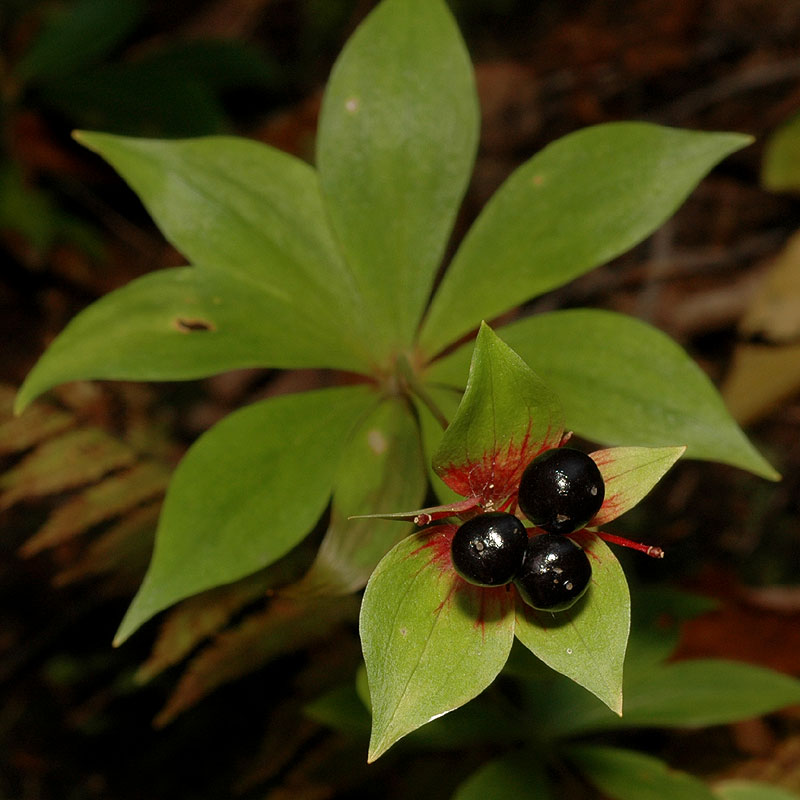
The medeola berries are now dull glossy and almost blue-black; about three, on slender threads one inch long, arising in the midst of the cup formed by the purple bases of the whorl of three upper leaves.

H. D. Thoreau, Journal, September 2, 1853


The dense oval bunches of arum berries now startle the walker in swamps. See September 1, 1859 ("The fruit of the arum is the most remarkable that I see this afternoon, such its brilliancy, color, and form; ") September 4, 1856 ("There are many splendid scarlet arum berries there now in prime, forming a dense ovate head on a short peduncle; the individual berries of various sizes."); September 28, 1856 (“The arum berries are still fresh and abundant, perhaps in their prime. . . .It is one of the most remarkable and dazzling, if not the handsomest, fruits we have.”) See also A Book of the Seasons,  by Henry Thoreau,  Arum Berries

The medeola berries are now dull glossy and almost blue-black. . . arising in the midst of the cup formed by the purple bases of the whorl of three upper leaves.
See  May 25, 1852 ("Medeola or cucumber-root in bud, with its two-storied whorl of leaves. "); June 2, 1853 ("The medeola has been out a day or two . . . -- another green flower."); August 27, 1851 ("The Medeola Virginica, cucumber-root, the whorl-leaved plant, is now in green fruit.")  See also A Book of the Seasons, by Henry Thoreau, Cucumber Root (medeola)

Dense oval bunches 
of arum berries startle 
the walker in swamps.


A Book of the Seasons
,  by Henry Thoreau,

A Book of the Seasons
,  by Henry Thoreau
 "A book, each page written in its own season,
out-of-doors, in its own locality."
 ~edited, assembled and rewritten by zphx ©  2009-2025

Tuesday, August 6, 2013

A season of fruits and berries. Nature is now a Bacchanal

August 6. 

More dog-days. The sun, now at 9 a. m., has not yet burst through the mists. It has been warmer weather for a week than for at least three weeks before, — nights when all windows were left open, though not so warm as in June. This morning a very heavy fog. The sun has not risen clear or even handsomely for some time, nor have we had a good sunset. 

P. M. — To J. Farmer's Cliff.

I see the sunflower's broad disk now in gardens, probably a few days, — a true sun among flowers, monarch of August. Do not the flowers of August and September generally resemble suns and stars? 

— sunflowers and asters and the single flowers of the goldenrod. 

I once saw one as big as a milk-pan, in which a mouse had its nest. 

Already I notice that the lower leaves of some catnip and a white vervain have turned. They are in fact matured, and high-colored or wine-colored like the fruits. It suggests that the whole plant tends toward an equal richness and maturity and to become one flower. It is the blush of its evening sky. I have seen some red leaves on the low choke-berry. 

Now begins the vintage of their juices. Nature is now a Bacchanal, drunk with the wines of a thousand plants and berries. 

The rudbeckia must have been out at least a week or more; half the buds have opened. 

Cranberries show red cheeks, and some are wholly red, like varnished cherry wood. 

Yesterday I ate early summer apples. 

The huckleberries were many of them burst open in consequence of the copious rains. 

And now it begins to rain again and compels us to return.

H. D. Thoreau, Journal, August 6, 1853

Do not the flowers of August and September generally resemble suns and stars?
See August 30, 1853 ("The sun has shone on the earth, and the goldenrod is his fruit. The stars, too, have shone on it, and the asters are their fruit.”)

August 6. See A Book of the Seasons, by Henry Thoreau, August 6


A Book of the Seasons,  by Henry Thoreau
"A book, each page written in its own season,
out-of-doors, in its own locality.” 
~edited, assembled and rewritten by zphx © 2009-2021


Sunday, June 16, 2013

The distant river is like molten silver at this hour

June 16.

June 16, 2020

Before 4 A.M., or sunrise, the sound of chip-birds and robins and bluebirds, etc., fills the air and is incessant.  

At sunrise a slight mist curls along the surface of the water. When the sun falls on it, it looks like a red dust.  

From top of the hill, the sun, just above the horizon, red and shorn of beams, is somewhat pear-shaped; and then it becomes a broad ellipse, the lower half a dun red. It appears as if it rose in the northeast, - over Ball's Hill at any rate. 

The distant river is like molten silver at this hour; it merely reflects the light, not the blue.

H. D. Thoreau, Journal, June 16, 1853

Monday, October 8, 2012

Perfect autumn. Walden

October 8


The autumnal tints about the pond are now perfect.


Nothing can exceed the brilliancy of some of the maples which stand by the shore and extend their red 
banners over the water.


H. D. Thoreau, Journal, October 8, 1852


The autumnal tints about the pond are now perfect.
See October 7, 1852 ("It is perfect autumn. It is the mellowing year"); October 7, 1857 ("I see, some fifty rods off, looking toward the sun, the top of the maple swamp just appearing over the sheeny russet edge of the hill . . . the most intensely brilliant scarlet, orange, and yellow, equal to any flowers or fruits or any tints ever painted."); October 9, 1853 ("The red maples are now red and also yellow and reddening.")

Nothing can exceed the brilliancy of some of the maples which stand by the shore and extend their red banners over the water. See  October 3, 1858 ("Some particular maple among a hundred will be of a peculiarly bright and pure scarlet, and, by its difference of tint and intenser color, attract our eyes even at a distance in the midst of the crowd")

Today, October 3, 1852, HDT also records in his Journal the story of the loon diving and dodging him that was to be incorporated into "Walden." See A Book of the Seasons, by Henry Thoreau, The wildest sound I ever heard

October 8. See A Book of the Seasons, by Henry Thoreau, October 8

Maples by the shore
extending their red banners
over the water.

A Book of the Seasons, by Henry Thoreau
"A book, each page written in its own season,
out-of-doors, in its own locality.”
~edited, assembled and rewritten by zphx © 2009-2024

https://tinyurl.com/hdt-521008


Popular Posts Last 30 Days.

The week ahead in Henry’s journal

The week ahead in Henry’s journal
A journal, a book that shall contain a record of all your joy.
"A stone fruit. Each one yields me a thought." ~ H. D. Thoreau, March 28, 1859


I sit on this rock
wrestling with the melody
that possesses me.