Showing posts with label Brown. Show all posts

Wednesday, March 27, 2019

Seven indigenous flowers which begin to bloom in March,

March 27. 

7 a. m. — Was that the Alauda, shore lark (?), which flew up from the corn-field beyond Texas house, and dashed off so swiftly with a peculiar note, — a small flock of them? 

P. M. — Sail from Cardinal Shore up Otter Bay, close to Deacon Farrar's. I see a gull flying over Fair Haven Pond which appears to have a much duskier body beneath than the common near by, though about the same size. Can it be another species? 

The wind is so nearly west to-day that we sail up from Cardinal Shore to the pond, and from the road up what I will call Otter Bay, behind Farrar's, and, returning, sail from the road at Creel (or Pole) Brook to Pond Island and from Hallowell willows to railroad. 

The water is quite high still, and we sail up Otter Bay, I think, more than half a mile, to within a very short distance of Farrar's. This is an interesting and wild place. There is an abundance of low willows whose catkins are now conspicuous, rising four to six or seven feet above the water, thickly placed on long wand-like osiers. They look, when you look from the sun, like dead gray twigs or branches (whose wood is exposed) of bushes in the light, but, nearer, are recognized for the pretty bright buttons of the willow. We sail by masses of these silvery buttons two or three rods long, rising above the water. By their color they have relation to the white clouds and the sky and to the snow and ice still lingering in a few localities. In order to see these silvery buttons in the greatest profusion, you must sail amid them on some flooded meadow or swamp like this. 

Our whole course, as we wind about in this bay, is lined also with the alder, whose pretty tassels, now many of them in full bloom, are hanging straight down, suggesting in a peculiar manner the influence of gravity, or are regularly blown one side. It is remarkable how modest and unobtrusive these early flowers are. The musquash and duck hunter or the farmer might and do commonly pass by them without perceiving them. They steal into the air and light of spring without being noticed for the most part. The sportsman seems to see a mass of weather-stained dead twigs showing their wood and partly covered with gray lichens and moss, and the flowers of the alder, now partly in bloom, maybe half, make the impression at a little distance of a collection of the brown twigs of winter — also are of the same color with many withered leaves. 

Twenty rods off, masses of alder in bloom look like masses of bare brown twigs, last year's twigs, and would be taken for such. 

Of our seven indigenous flowers which begin to bloom in March, four, i. e. the two alders, the aspen, and the hazel, are not generally noticed so early, if at all, and most do not observe the flower of a fifth, the maple. The first four are yellowish or reddish brown at a little distance, like the banks and sward moistened by the spring rain. 

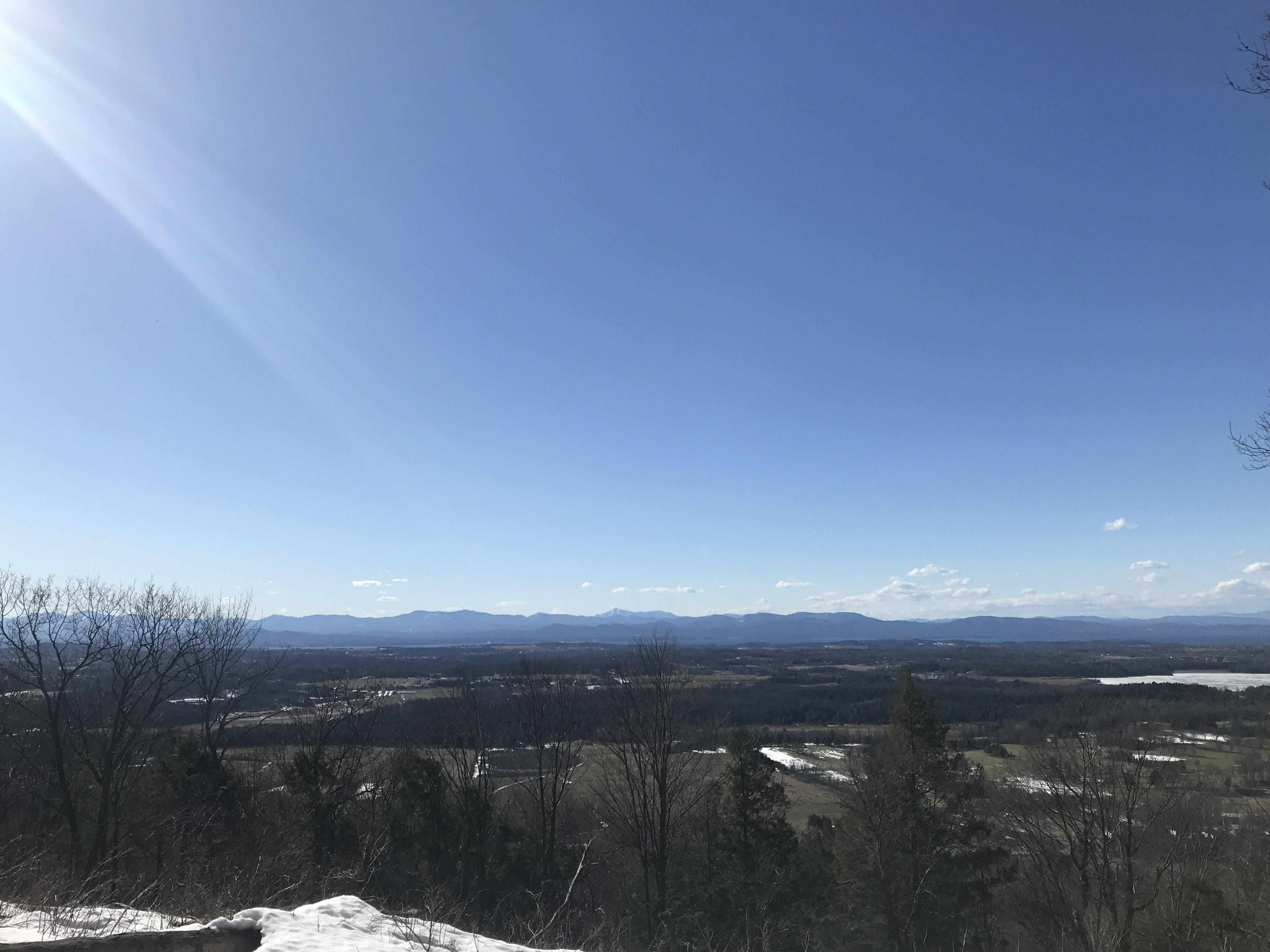
The browns are the prevailing shades as yet, as in the withered grass and sedge and the surface of the earth, the withered leaves, and these brown flowers. 

I see from a hilltop a few very bright green spots a rod in diameter in the upper part of Farrar's meadow, which the water has left within a day or two. Going there, I find that a very powerful spring is welling up there, which, with water warm from the bowels of the earth, has caused the grass and several weeds, as Cardamine rhomboidca, etc., to grow thus early and luxuriantly, and perhaps it has been helped by the flood standing over it for some days. These are bright liquid green in the midst of brown and withered grass and leaves. Such are the spots where the grass is greenest now. 

C. says that he saw a turtle dove on the 25th. 

It is remarkable how long many things may be preserved by excluding the air and light and dust, moisture, etc. Those chalk-marks on the chamber-floor joists and timbers of the Hunt house, one of which was read by many "Feb. 1666," and all of which were in an ancient style of writing and expression, — "ye" for " the," etc., "enfine Brown," — were as fresh when exposed (having been plastered and cased over) as if made the day before. Yet a single day's rain completely obliterated some of them. 

Cousin Charles says that, on the timbers of a very old house recently taken down in Haverhill, the chalk-marks made by the framers, numbering the sticks, [were] as fresh as if just made. 

I saw a large timber over the middle of the best room of the Hunt house which had been cased, according to all accounts, at least a hundred years ago, the casing having just been taken off. I saw that the timber appeared to have been freshly hewn on the under side, and I asked the carpenter who was taking down the house what he had been hewing that timber for, — for it had evidently been done since it was put up and in a very inconvenient position, and I had no doubt that he had just done it, for the surface was as fresh and distinct from the other parts as a fresh whittling, — but he answered to my surprise that he had not touched it, it was so when he took the casing off. When the casing was put on, it had been roughly hewn by one standing beneath it, in order to reduce its thickness or perhaps to make it more level than it was. So distinct and peculiar is the weather-stain, and so indefinitely it may be kept off if you do not allow this painter to come [?] to your wood. 

Cousin Charles says that he took out of the old Haverhill house a very broad panel from over the fire place, which had a picture of Haverhill at some old period on it. The panel had been there perfectly sheltered in an inhabited house for more than a hundred years. It was placed in his shop and no moisture allowed to come near it, and yet it shrunk a quarter of an inch in width when the air came to both sides of it. 

He says that his men, who were digging a cellar last week on a southwest slope, found fifty-one snakes of various kinds and sizes — green, black, brown, etc. — about a foot underground, within two feet square (or cube ?). The frost was out just there, but not in many parts of the cellar. They could not run, they were so stiff, but they ran their tongues out. They did [not] take notice of any hole or cavity.

H.. D. Thoreau, Journal, March 27, 1859


Seven indigenous flowers which begin to bloom in March:
  • two alders.  See March 22, 1853 (" The very earliest alder is in bloom and sheds its pollen. I detect a few catkins at a distance by their distinct yellowish color. This the first native flower.")
  • the aspen. See March 21, 1855 ("aspen catkins are very conspicuous now.")
  • the hazel. See March 27, 1853 ("The hazel is fully out. The 23d was perhaps full early to date them. It is in some respects the most interesting flower yet, though so minute that only an observer of nature, or one who looked for them, would notice it. It is the highest and richest colored yet, - ten or a dozen little rays at the end of the buds which are at the ends and along the sides of the bare stems. Some of the flowers are a light, some a dark crimson. The high color of this minute, unobserved flower, at this cold, leafless, and almost flowerless season! It is a beautiful greeting of the spring, when the catkins are scarcely relaxed and there are no signs of life in the bush.")
  • the maple.  See March 27, 1857 ("Leave the boat and run down to the white maples by the bridge. The white maple is well out with its pale [?] stamens on the southward boughs, and probably began about the 24th.")
See also March 21, 1858("The skunk-cabbage at Clamshell is well out, shedding pollen. It is evident that the date of its flowering is very fluctuating"); March 26, 1857 ("The buds of the cowslip are very yellow, and the plant is not observed a rod off, it lies so low and close to the surface of the water in the meadow. It may bloom and wither there several times before villagers discover or suspect it")

Monday, March 25, 2019

How we enjoy a warm and pleasant day at this season! We dance like gnats in the sun.

March 25. 

A rainy day. 

P. M.— To Clamshell. 

I heard the what what what what of the nuthatch this forenoon. Do I ever hear it in the afternoon ? It is much like the cackle of the pigeon woodpecker and suggests a relation to that bird. 

Again I walk in the rain and see the rich yellowish browns of the moist banks. These Clamshell hills and neighboring promontories, though it is a dark and rainy day, reflect a certain yellowish light from the wet withered grass which is very grateful to my eyes, as also the darker more reddish browns, as the radical leaves of the Andropogon scoparius in low tufts here and there. (Its culms, where they stand, are quite light yellow.) 

Surely russet is not the name which describes the fields and hillsides now, whether wet or dry. There is not red enough in it. I do not know a better name for this (when wet) yellowish brown than "tawny." 

On the south side of these warm hills, it may perhaps be called one of the fawn-colors, i. e. brown inclining to green. 

Much of this peculiar yellowish color on the surface of the Clamshell plain is due to a little curled sedge or grass growing at short intervals, loosely covering the ground (with green mosses intermixed) in little tufts  like curled hair. 

I saw yesterday, in Laurel Glen, where the early sedge had been grazed very close to the ground, and the same, perhaps digested, fine as green-paint dust, lay around. Was it the work of a mouse? 

Day before yesterday, in clear, dry weather, we had pale-brown or fawn-colored earth, i. e., a dry, withered grass blade [color]; to-day, a more yellow brown or tawny, the same being wet. The wet brings out an agreeable yellow light, as if the sun were shining through a mist on it. The earth is more truly russet in November, when there is more redness left in the withered and withering vegetation. Such is the change in the color of the bare portions of the earth (i. e. bare of trees and bushes) produced by rain. 

Also the oak leaves are much redder. In fair weather the light color of these objects was simply a light reflected from them, originating in the sun and sky; now it is a more proper and inward light, which attracts and confines our attention to moist sward itself. 

A snipe flies away from the moist Clamshell shore, uttering its cr-a-ack c-r-r-rack

I thought the other day, How we enjoy a warm and pleasant day at this season! We dance like gnats in the sun. 

A score of my townsmen have been shooting and trapping musquash and mink of late. Some have got nothing else to do. If they should strike for higher wages now, instead of going to the clam-banks, as the Lynn shoemakers propose, they would go to shooting musquash. They are gone all day; early and late they scan the rising tide; stealthily they set their traps in remote swamps, avoiding one another. 

Am not I a trapper too, early and late scanning the rising flood, ranging by distant wood-sides, setting my traps in solitude, and baiting them as well as I know how, that I may catch life and light, that my intellectual part may taste some venison and be invigorated, that my nakedness may be clad in some wild, furry warmth? 

The color of spring hitherto, — I should say that in dry weather it was fawn-colored, in wet more yellowish or tawny. When wet, the green of the fawn is supplied by the lichens and the mosses.

H. D. Thoreau, Journal, March 25, 1859

Lynn shoemakers. See Lynn Shoeworkers Strike ("On March 17th,  1860 a demonstration by 10,000 shoeworkers from Lynn, Salem, Marblehead, and other Essex County towns caused Lynn officials to call in police and militia units from Boston. . . by the end of March growing numbers of shoeworkers had returned to their jobs. By early April, the historic strike was over.")

I heard the what what what what of the nuthatch this forenoon. It is much like the cackle of the pigeon woodpecker. See March 25, 1853 (“I see the white-breasted nuthatch, head downward, on the oaks. First heard his rapid and, as it were, angry gnah gnah gna, and a faint, wiry creaking note about grubs as he moved round the tree. ”); March 25, 1856 (“There have been few if any small migratory birds the past winter. I have not seen a tree sparrow, nuthatch, creeper, nor more than one redpoll since Christmas. ”)  See also note to March 5, 1859 ("Going down-town this forenoon, I heard a white-bellied nuthatch on an elm within twenty feet, uttering peculiar notes and more like a song than I remember to have heard from it. . . .It was something like to-what what what what what, rapidly repeated, and not the usual gnah gnah; and this instant it occurs to me that this may be that earliest spring note which I hear, and have referred to a woodpecker!. . . It is the spring note of the nuthatch”) and A Book of the Seasons, by Henry Thoreau, The Nuthatch

I do not know a better name for this (when wet) yellowish brown than "tawny." The wet brings out an agreeable yellow light, as if the sun were shining through a mist on it. When wet, the green of the fawn is supplied by the lichens and the mosses. See March 26, 1860 ("The brown season extends from about the 6th of March ordinarily into April. . . .. The latter part is dry, the whitish-tawny pastures being parded with brown and green mosses and pale-brown lecheas, which mottle it very pleasingly. This dry whitish-tawny or drab color of the fields - withered grass lit by the sun - is the color of a teamster's coat. It is one of the most interesting effects of light now, when the sun, coming out of clouds, shines brightly on it. It is the fore-glow of the year");  March 16, 1859 ("This first sight of the bare tawny and russet earth, seen afar, perhaps, over the meadow flood in the spring, affects me as the first glimpse of land, his native land, does the voyager who has not seen it a long time.")

Wednesday, March 13, 2019

The bright catkins of the willow are the springing most generally observed

March 13.


The Hunt House
7 a. m. — F. hyemalis in yard. 

Going down railroad, listening intentionally, I hear, far through the notes of song sparrows (which are very numerous), the song of one or two larks. 

Also hearing a coarse chuck, I look up and see four blackbirds, whose size and long tails betray them crow blackbirds.  

Also I hear, I am pretty sure, the cackle of a pigeon woodpecker. 

The bright catkins of the willow are the springing most generally observed. 

P. M. — To Great Fields. 

Water rising still. Winter-freshet ice on meadows still more lifted up and partly broken in some places. The broad light artery of the river (and some meadows, too) very fair in the distance from Peter's. 

Talking with Garfield to-day about his trapping, he said that mink brought three dollars and a quarter, a remarkably high price, and asked if I had seen any. 


I said that I commonly saw two or three in a year. 

He said that he had not seen one alive for eight or ten years. 

"But you trap them?"

 "O yes," he said. "I catch thirty or forty dollars' worth every winter." 

This suggests how little a trapper may see of his game. 

Garfield caught a skunk lately.

In some meadows I see a great many dead spiders on the ice, where apparently it has been overflowed — or rather it was the heavy rain, methinks — when they had no retreat. 

Hear a ground squirrel's sharp chirrup, which makes you start, it is so sudden; but he is probably earthed again, for I do not see him. 

On the northeast part of the Great Fields, I find the broken shell of a Cistudo Blandingii, on very dry soil. This is the fifth, then, I have seen in the town. All the rest were three in the Great Meadows (one of them in a ditch) and one within a rod or two of Beck Stow's Swamp. 

It is remarkable that the spots where I find most arrowheads, etc., being light, dry soil, — as the Great Fields, Clamshell Hill, etc., — are among the first to be bare of snow, and the frost gets out there first. It is very curiously and particularly true, for the only parts of the northeast section of the Great Fields which are so dry that I do not slump there are those small in area, where perfectly bare patches of sand occur, and there, singularly enough, the arrowheads are particularly common. 

Indeed, in some cases I find them only on such bare spots a rod or two in extent where a single wigwam might have stood, and not half a dozen rods off in any direction. Yet the difference of level may not be more than a foot, — if there is any. It is as if the Indians had selected precisely the driest spots on the whole plain, with a view to their advantage at this season. If you were going to pitch a tent to-night on the Great Fields, you would inevitably pitch on one of these spots, or else lie down in water or mud or on ice. It is as if they had chosen the site of their wigwams at this very season of the year. 

I see a small flock of blackbirds flying over, some rising, others falling, yet all advancing together, one flock but many birds, some silent, others tchucking, — incessant alternation. This harmonious movement as in a dance, this agreeing to differ, makes the charm of the spectacle to me. One bird looks fractional, naked, like a single thread or ravelling from the web to which it belongs. Alternation! Alternation! Heaven and hell ! Here again in the flight of a bird, its ricochet motion, is that undulation observed in so many materials, as in the mackerel sky. 

If men were to be destroyed and the books they have written [were to] be transmitted to a new race of creatures, in a new world, what kind of record would be found in them of so remarkable a phenomenon as the rainbow? 

I cannot easily forget the beauty of those terrestrial browns in the rain yesterday. The withered grass was not of that very pale hoary brown that it is to-day, now that it is dry and lifeless, but, being perfectly saturated and dripping with the rain, the whole hillside seemed to reflect a certain yellowish light, so that you looked around for the sun in the midst of the storm. All the yellow and red and leather-color in the fawn-colored weeds was more intense than at any other season. The withered ferns which fell last fall — pin weeds, sarothra, etc. — were actually a glowing brown for the same reason, being all dripping wet. 

The cladonias crowning the knolls had visibly expanded and erected themselves, though seen twenty rods off, and the knolls appeared swelling and bursting as with yeast. 

All these hues of brown were most beautifully blended, so that the earth appeared covered with the softest and most harmoniously spotted and tinted tawny fur coat of any animal. The very bare sand slopes, with only here and there a thin crusting of mosses, was [sic] a richer color than ever it is. 

In short, in these early spring rains, the withered herbage, thus saturated, and reflecting its brightest withered tint, seems in a certain degree to have revived, and sympathizes with the fresh greenish or yellowish or brownish lichens in its midst, which also seem to have withered. It seemed to me — and I think it may be the truth — that the abundant moisture, bringing out the highest color in the brown surface of the earth, generated a certain degree of light, which, when the rain held up a little, reminded you of the sun shining through a thick mist.

Oak leaves which have sunk deep into the ice now are seen to be handsomely spotted with black (of fungi or lichens?), which spots are rarely perceived in dry weather. 

All that vegetable life which loves a superfluity of moisture is now rampant, cold though it is, compared with summer. 

Radical leaves are as bright as ever they are. 

The barrenest surfaces, perhaps, are the most interesting in such weather as yesterday, when the most terrene colors are seen. 

The wet earth and sand, and especially subsoil, are very invigorating sights. 

The Hunt house, to draw from memory, — though I have given its measures within two years in my Journal, — looked like this : 

This is only generally correct, without a scale.

Probably grackles have been seen some days. I think I saw them on the 11th? Garfield says he saw black ducks yesterday.

H. D. Thoreau, Journal, March 13, 1859

The bright catkins of the willow are the springing most generally observed. See March 2, 1859 ("Go and measure to what length the silvery willow catkins have crept out beyond their scales, if you would know what time o' the year it is by Nature's clock"); March 10, 1853 (“Methinks the first obvious evidence of spring is the pushing out of the swamp willow catkins"); March 20, 1858 (“How handsome the willow catkins! Those wonderfully bright silvery buttons, so regularly disposed in oval schools in the air, or, if you please, along the seams which their twigs make, in all degrees of forwardness, from the faintest, tiniest speck of silver, just peeping from beneath the black scales, to lusty pussies which have thrown off their scaly coats and show some redness at base on a close inspection.”) March 20, 1858 (“How handsome the willow catkins! Those wonderfully bright silvery buttons, so regularly disposed in oval schools in the air, or, if you please, along the seams which their twigs make, in all degrees of forwardness, from the faintest, tiniest speck of silver, just peeping from beneath the black scales, to lusty pussies which have thrown off their scaly coats and show some redness at base on a close inspection.”)

Garfield to-day said that mink brought three dollars and a quarter, See March 15, 1855 ("He [Farmer] sells about a hundred mink skins in a year. . . .He says (I think) a mink’s skin is worth two dollars!”)


The Hunt house, to draw from memory
. See February 17, 1857 ("To the old Hunt house. . . .The rear part has a wholly oak frame, while the front is pine."); February 9, 1858 ("The stairs of the old back part are white pine or spruce, each the half of a square log; those of the cellar in front, oak, of the same form."); March 11, 1859 ("To Hunt house. I go to get one more sight of the old house which Hosmer is pulling down, but I am too late to see much of it.")

Tuesday, March 12, 2019

This kind of light, the air being full of rain and all vegetation dripping with it, brings out the browns wonderfully.

March 12

 Saturday. P. M. — Walk in rain to Ministerial Swamp. 

Going up the railroad in this rain, with a south wind, I see a pretty thick low fog extending across the rail road only against Dennis's Swamp. There being much more ice and snow within the swamp, the vapor is condensed and is blown northward over the railroad. I see these local fogs with always the same origin, i. e., large masses of snow or ice, in swamps or woods, perhaps the north sides of hills, in several places afterward. The air is warm. 

As often as we came to a particularly icy or snowy place, as Harrington's road in woods, we found ourselves in a fog. It is a regular spring rain, such as I remember walking in, — windy but warm. It alternately rains hard and then holds up a little. A similar alternation we see in the waves of water and all undulating surfaces, — in snow and sand and the clouds (the mackerel sky). Now you walk in a comparative lull, anticipating fair weather, with but a slight drizzling, and anon the wind blows and the rain drives down harder than ever. In one of these lulls, as I passed the Joe Hosmer (rough-cast) house, I thought I never saw any bank so handsome as the russet hillside behind it. 

Brown Season
March 12, 2021

It is a very barren, exhausted soil, where the cladonia lichens abound, and the lower side is a flowing sand, but this russet grass with its weeds, being saturated with moisture, was in this light the richest brown, methought, that I ever saw. 

There was the pale brown of the grass, red browns of some weeds (sarothra and pinweed probably), dark browns of huckleberry and sweet-fern stems, and the very visible green of the cladonias thirty rods off, and the rich brown fringes where the broken sod hung over the edge of the sand-bank. 

I did not see the browns of withered vegetation so rich last fall, and methinks these terrestrial lichens were never more fair and prominent. On some knolls these vivid and rampant lichens as it were dwarf the oaks. 

A peculiar and unaccountable light seemed to fall on that bank or hillside, though it was thick storm all around. A sort of Newfoundland sun seemed to be shining on it. It was such a light that you looked around for the sun that might be shining on it. 

Both the common largest and the very smallest hypericums (Sarothra) and the pinweeds were very rich browns at a little distance, coloring whole fields, and also withered and fallen ferns, reeking wet. 

It was a prospect to excite a reindeer.

These tints of brown were as softly and richly fair and sufficing as the most brilliant autumnal tints. In fair and dry weather these spots may be common place, but now they are worthy to tempt the painter's brush. The picture should be the side of a barren lichen-clad hill with a flowing sand-bank beneath, a few blackish huckleberry bushes here and there, and bright white patches of snow here and there in the ravines, the hill running east and west and seen through the storm from a point twenty or thirty rods south. 

March 12, 2016

This kind of light, the air being full of rain and all vegetation dripping with it, brings out the browns wonderfully. 

I notice now particularly the sallows by the railroad, full of dark cones, as a fruit. The broad radical leaves of (apparently) water dock are very fresh and conspicuous. 

See two ducks flying over Ministerial Swamp. 

In one place in the meadow southeast of Tarbell's, I find on the ice, about a couple of holes an inch across where a little stubble shows itself, a great many small ants dead, — say a thousand. They are strewn about the holes for six or eight inches, and are collected in a dense heap about the base of the stubble. I take up a mass of them on my knife, each one entire, but now, of course, all wet and adhering together. It looks as if they had been tempted out by the warmth of the sun and had been frozen or drowned; or is it possible that they were killed by the frost last fall and now washed up through the ice? I think, from their position around the base of the stubble in that little hole in the ice, that they came out of the earth and clustered there since the ice melted to that extent. 

There are many other insects and worms and caterpillars (and especially spiders, dead) on the ice, there as well as else where. 

I perceive that a freshet which washes the earth bare in the winter and causes a great flow of water over it in that state — when it is not soaked up — must destroy a great many insects and worms. I find a great many that appear to have been drowned rather than frozen. May not this have tempted the bluebirds on early this year ?

H. D. Thoreau, Journal, March 12, 1859

See two ducks flying over Ministerial Swamp. See  March 12, 1855 ("Two ducks in river, good size, white beneath with black heads, as they go over."); March 16, 1855 (“[S]care up two large ducks just above the bridge. . . . I think it the goosander or sheldrake.”). See also A Book of the Seasons, by Henry Thoreau, Signs of the Spring, Ducks Afar, Sailing on the Meadow

This kind of light, the air being full of rain and all vegetation dripping with it, brings out the browns wonderfully. See March 12, 1854 ("Memorable is the warm light of the spring sun on russet fields in the morning.") See also March 5, 1855 ("This blue haze, and the russet earth seen through it, remind me that a new season has come"); March 26, 1860 ("The brown season extends from about the 6th of March ordinarily into April. ") See also A Book of the Seasons, by Henry Thoreau, the Colors of March-- Brown Season

Wednesday, January 2, 2019

The earth is our ship.


January 2

January 2, 2019


P. M. — To Cliffs and Walden. 

Going up the hill through Stow’s young oak wood land, I listen to the sharp, dry rustle of the withered oak leaves. This is the voice of the wood now. 

It would be comparatively still and more dreary here in other respects, if it were not for these leaves that hold on. It sounds like the roar of the sea, and is enlivening and inspiriting like that, suggesting how all the land is seacoast to the aerial ocean. It is the sound of the surf, the rut of an unseen ocean, billows of air breaking on the forest like water on itself or on sand and rocks. It rises and falls, wells and dies away, with agreeable alternation as the sea surf does. Perhaps the landsman can foretell a storm by it. 

It is remarkable how universal these grand murmurs are, these backgrounds of sound, —the surf, the wind in the forest, waterfalls, etc.,-—which yet to the ear and in their origin are essentially one voice, the earth-voice, the breathing or snoring of the creature. 

The earth is our ship, and this is the sound of the wind in her rigging as we sail. 

Just as the inhabitant of Cape Cod hears the surf ever breaking on its shores, so we countrymen hear this kindred surf on the leaves of the forest. Regarded as a voice, — though it is not articulate, — (but this is nearer a consonant sound), labials, dentals, palatals, sibilants, mutes, aspirate, etc., so this may be called folial or frondal, produced by air driven against the leaves, and comes nearest to our sibilants or as pirate. 

The color of young oaks of different species is still distinct, but more faded and blended, becoming a more uniform brown. 

Michaux said that white oaks would be distinguished by their retaining their leaves in the winter, but as far as my observation goes they cannot be so distinguished. All our large oaks may retain a few leaves at the base of the lower limbs and about the trunks, though only a few, and the white oak scarcely more than the others, while the same trees when young are all alike thickly clothed in the winter, but the leaves of the white oaks are the most withered and shrivelled of them all. 

Why do young oaks retain their leaves while old ones shed them? Why do they die on the stem, having some life at the base in the one case, while they wither through at the base in the other case? Is it because in the former case they have more sap and vigor? 

There being some snow on the ground, I can easily distinguish the forest on the mountains (the Peterboro Hills, etc.) and tell which are forested, those parts and those mountains being dark like a shadow. I cannot distinguish the forest thus far in the summer. 

The white pines, etc., as I look down on them from this hill, are now darker, as becomes the sterner season, like a frost-bitten apple, — a sombre green.

When I hear the hypercritical quarrelling about grammar and style, the position of the particles, etc., etc., stretching or contracting every speaker to certain rules of theirs, — Mr. Webster, perhaps, not having spoken according to Mr. Kirkham’s rule, — I see that they forget that the first requisite and rule is that expression shall be vital and natural, as much as the voice of a brute or an interjection: first of all, mother tongue; and last of all, artificial or father tongue. 

Essentially your truest poetic sentence is as free and lawless as a lamb’s bleat. 

The grammarian is often one who can neither cry nor laugh, yet thinks that he can express human emotions. So the posture-masters tell you how you shall walk, — turning your toes out, perhaps, excessively, — but so the beautiful walkers are not made. 

Mediaeval, or law, Latin seems to have invented the word “forest,” not being satisfied with silva, nemus, etc. Webster makes it from the same root with “L. foris, Fr. hors, and the Saxon faran, to go, to depart.” The allied words “all express distance from cities and civilization, and are from roots expressing departure or wandering,” —as if this newer term were needed to describe those strange, wild woods furthest from the centres of civilization. 

The earth, where quite bare, is now, and for five or six weeks, russet without any lively red, —not golden-russet. 

I notice on the top of the Cliffs that the extremities of the smooth sumach are generally dead and withered, while those of the staghorn, which art so downy, are alive. Is this a prevailing difference? Which extends furthest north? 

The outside bark-scales of some large pitch pines in the midst of the woods having dropped off gives a peculiar flatness to the ridges, as if it had been shaved or scraped. 

Minott says that a fox will lead a dog on to thin ice in order that he may get in. Tells of Jake Lakin losing a hound so, which went under the ice and was drowned below the Holt; was found afterward by Sted Buttrick, his collar taken off and given to Lakin. They used to cross the river there on the ice, going to market, formerly. 

Looking from the southwest side of Walden toward Heywood's Peak before sunset, the brown light on the oak leaves is almost dazzling.

H. D. Thoreau, Journal, January 2, 1859


I listen to the sharp, dry rustle of the withered oak leaves. See November 1, 1857 (“When I enter the woods I notice the drier crispier rustle of withered leaves on the oak trees, – a sharper susurrus”)

First of all, mother tongue; and last of all, artificial or father tongue. See December 16, 1859 (“How much better to describe your object in fresh English words rather than in conventional Latinisms!”); February 3, 1860 ("Any fool can make a rule /  And every fool will mind it.")

Minott says that a fox will lead a dog on to thin ice in order that he may get in. Compare January 30, 1855 ("Minott . . .told how Jake Lakin lost a dog, a very valuable one, by a fox leading him on to the ice on the Great Meadows and drowning him.")

January 2. See A Book of the Seasons,   by Henry Thoreau,  January 2

The sharp dry rustle
of withered oak leaves is the
voice of the wood now –

The earth is our ship
and this is the sound of the
rigging as we sail.

A Book of the Seasons,  by Henry Thoreau
 "A book, each page written in its own season, 
out-of-doors, in its own locality."
 ~edited, assembled and rewritten by zphx ©  2009-2025

tinyurl.com/hdt590102

Monday, October 22, 2018

Each humblest plant has sooner or later its peculiar autumnal tint

October 22. 

P. M. — To Cliffs and Walden. 

A thickly overcast yet thick and hazy day. 

October 22, 2018
I see a Lombardy poplar or two yellowing at last; many leaves clear and handsome yellow. They thus, like the balm-of-Gilead and aspens, show their relation to the willows. Horse-chestnuts are yellow and apparently in prime. I see locusts are generally yellow but thinly leaved, and those at extremities. 

Going by Farrar’s field bought of John Reynolds, I examined those singular barren spots produced by putting on too much meadow mud of a certain quality. In some places the sod was entirely gone; there was no grass and only a small sandy desert with the yellowish Fimbristylis capillaris and sorrel on it. In most places this sand was quite thickly covered with sarothra, now withered and making a dark show at a distance, and sorrel, which had not risen from the surface. These are both sour-juiced plants. It was surprising how completely the grass had been killed.

I see the small narrow leaves of the Aster dumosus and also the yet finer ones of the Diplopappus linariifolius in wood-paths, turned a clear light-yellow. The sagittate leaves of the Viola ovata, too, now flat in the path, and the prettily divided leaves or fingers of the V. pedata, with purple petioles (also fallen flatter than usual ?), are both turned a clear handsome light-yellow. Also the V. cucullata is turned yellow. These are far more conspicuous now than ever before, contrasted with the green grass; so that you do not recognize them at first on account of their very conspicuousness or brightness of color. 

Many other small plants have changed now, whose color we do not notice in the midst of the general changing. Even the Lycopodium complanatum (evergreen) is turned a light yellow (a part of it) in its season, like the pines (or evergreen trees).  

I go up the hill from the spring. Oaks (except the scarlet), especially the small oaks, are generally withered or withering, yet most would not suspect it at a little distance, they have so much color yet. Yet, this year at least, they must have been withered more by heat than frost, for we have had very hot weather and little if any frost since the oaks generally changed. Many of the small scarlet ones are withered too, but the larger scarlet appear to be in their prime now. Some large white, black, and red are still pretty fresh.

It is very agreeable to observe now from an eminence the different tints of red and brown in an oak sprout land or young woodland, the brownish predominating. The chocolate is one. Some will tell you that they prefer these more sober colors which the landscape wears at present to the bright ones it exhibited a few days ago, as some prefer the sweet brown crust to the yellow inside. It is interesting to observe how gradually but steadily the woods advance through deeper and deeper shades of brown to their fall. You can tell the young white oak in the midst of the sprout-land by its light brown color, almost like that of the russet fields seen beyond, also the scarlet by its brighter red, but the pines are now the brightest of them all. 

Apple orchards throughout the village, or on lower and rich ground, are quite green, but on this drier Fair Haven Hill all the apple trees are yellow, with a sprinkling of green and occasionally a tinge of scarlet, i. e. are russet. 

I can see the red of young oaks as far as the horizon on some sides. 

I think that the yellows, as birches, etc., are the most distinct this very thick and cloudy day in which there is no sun, but when the sun shines the reds are lit up more and glow. 

The oaks stand browned and crisped (amid the pines), their bright colors for the most part burnt out, like a loaf that is baked, and suggest an equal wholesomeness. The whole tree is now not only ripe but, as it were, a fruit perfectly cooked by the sun. That same sun which called forth its leaves in the spring has now, aided by the frost, sealed up their fountains for the year and withered them. The order has gone forth for them to rest. As each tree casts its leaves it stands careless and free, like a horse freed from his harness, or like one who has done his year’s work and now stands unnoticed, but with concentrated strength and contentment, ready to brave the blasts of winter without a murmur. 

You get very near wood ducks with a boat nowadays. 

I see, from the Cliffs, that color has run through the shrub oak plain like a fire or a wave, not omitting a single tree, though I had not expected it, — large oaks do not turn so completely,—and now is for the most part burnt out for want of fuel, i. e. excepting the scarlet ones. The brown and chocolate colors prevail there. 

That birch swamp under the Cliff is very interesting. The birches are now but thinly clad and that at top, its flame shaped top more like flames than ever now. At this distance their bare slender stems are very distinct, dense, and parallel, apparently on a somewhat smoky ground (caused by the bare twigs), and this pretty thicket of dense parallel stems is crowned or surmounted by little cones or crescents of golden spangles. 

Hear a cuckoo and grackles. 

The birches have been steadily changing and falling for a long, long time. The lowermost leaves turn golden and fall first; so their autumn change is like a fire which has steadily burned up higher and higher, consuming the fuel below, till now it has nearly reached their tops. These are quite distinct from the reddish misty maze below, fit if they are young trees, or the fine and close parallel white stems if they are larger. Nevertheless the topmost leaves at the extremities of the leaves [sic] are still green.

I am surprised to find on the top of the Cliff, near the dead white pine, some small staghorn sumachs. (Mother says she found them on the hill behind Charles Davis’s!) These are now at the height of their change,‘ as is ours in the yard, turned an orange scarlet, not so dark as the smooth, which is now apparently fallen. But ours, being in a shady and cool place, is probably later than the average, for I see that one at Flood’s cottage has fallen. I guess that they may have been at height generally some ten days ago.

Near by, the Aralia hispida, turned a very clear dark red.

I see Heavy Haynes fishing in his old gray boat, sinking the stern deep. It is remarkable that, of the four fishermen who most frequent this river, — Melvin, Goodwin, and the two Hayneses, — the last three have all been fishermen of the sea, have visited the Grand Banks, and are well acquainted with Cape Cod. These fishermen who sit thus alone from morning till night must be greater philosophers than the shoemakers. 

You can still pluck a variegated and handsome nosegay on the top of the Cliff. I see a mullein freshly out, very handsome Aster undulatus, and an abundance of the little blue snapdragon, and some Polygonum Persicaria, etc., etc. 

The black shrub oak on the hillside below the bear berry fast falling and some quite bare. Some chinquapin there not fallen. Notice a chestnut quite bare. The leaves of the hickory are a very rich yellow, though they may be quite withered and fallen, but they become brown. Looking to Conantum, the huckleberries are apparently fallen.  

The fields are now perhaps truly and most generally russet, especially where the blackberry and other small reddish plants are seen through the fine bleached grass and stubble, —-like a golden russet apple. This occurs to me, going along the side of the Well Meadow Field.

Apparently the scarlet oak, large and small (not shrubby), is in prime now, after other oaks are generally withered or withering. The clumps of Salix tristis, half yellow, spotted with dark-brown or blackish and half withered and turned dark ash-colored, are rather interesting. The S. humilis has similar dark spots. ’ 

Hornets’ nests are now being exposed, deserted by the hornets; and little wasp (?) nests, one and a half inches wide,on huckleberry (?) and sweet-fern (?).

White pines have for the most part fallen. All the underwood is hung with their brown fallen needles, giving to the woods an untidy appearance. _

C. tells of hearing after dark the other night frequent raucous notes which were new to him, on the ammannia meadow, in the grass. Were they not meadow-hens?  Rice says he saw one within a week. Have they not lingered to feed in our meadows the late warm and pleasant nights?

The haze is still very thick, though it is comparatively cool weather, and if there were no moon to-night, I think it would be very dark. Do not the darkest nights occur about this time, when there is a haze produced by the Indian-summer days, succeeded by a moonless night?

These bright leaves are not the exception but the rule, for I believe that all leaves, even grasses, etc., etc., — Panicum clandestinum, — and mosses, as sphagnum, under favorable circumstances acquire brighter colors just before their fall. When you come to observe faithfully the changes of each humblest plant, you find, it may be unexpectedly, that each has sooner or later its peculiar autumnal tint or tints, though it may be rare and unobserved, as many a plant is at all seasons. And if you undertake to make a complete list of the bright tints, your list will be as long as a catalogue of the plants in your vicinity.

Think how much the eyes of painters, both artisans and artists, and of the manufacturers of cloth and paper, and the paper-stainers, etc., are to be educated by these autumnal colors. The stationer’s envelopes may be of very various tints, yet not so various as those of the leaves of a single tree sometimes. If you want a different shade or tint of a particular color, you have only to look further within or without the tree, or the wood. The eye might thus be taught to distinguish color and appreciate a difference of tint or shade.

H. D. Thoreau, Journal, October 22, 1858


It is interesting to observe how gradually but steadily the woods advance through deeper and deeper shades of brown to their fall.
See October 22, 1857 ("Large oaks are already generally brown. Reddish brown is the prevailing color of deciduous woods")

The birches are now but thinly clad its flame shaped top more like flames than ever now surmounted by little cones or crescents of golden spangles.  See October 22, 1855; ("I see at a distance the scattered birch-tops, like yellow flames amid the pines"); October 26, 1860 ("This is the season of the fall when the leaves are whirled through the air like flocks of birds, the season of birch spangles, when you see afar a few clear-yellow leaves left on the tops of the birches.')

On the top of the Cliff I see a mullein freshly out, very handsome Aster undulatus, and an abundance of the little blue snapdragon. See October 22, 1851 ("the Canada snapdragon still blooms bluely by the roadside."); October 11, 1856 ("Here on the Cliffs are fresh poke flowers and small snapdragon and corydalis."); October 22, 1859 ("In the wood-path below the Cliffs I see perfectly fresh and fair Viola pedata flowers, as in the spring, though but few together.")

Hornets’ nests are now being exposed, deserted by the hornets. See October 15, 1855 ("The hornets’ nests are exposed, the maples being bare, but the hornets are gone");

White pines have for the most part fallen. See October 22, 1851 ("The pines, both white and pitch, have now shed their leaves, and the ground in the pine woods is strewn with the newly fallen needles.")

Sunday, October 14, 2018

The blue of the sky deepens in the reflection. / A sort of afterglow in the flowery year.

October 14. 

P. M. — Sail to Ball’s Hill. 

October 14, 2018

The white maples are now apparently in their autumnal dress. The leaves are much curled and of a pale hoary or silvery yellow, with often a rosaceous cheek, though not so high-colored as two months ago. They are beginning to lose their leaves. Though they still hold on, they have lost much of their vitality. 

On the top of Ball’s Hill, nearly half-way its length, the red pine-sap, quite fresh, apparently not long in bloom, the flower recurved. As last year, I suspect that this variety is later than the yellowish one, of which I have seen none for a long time. The last, in E. Hubbard’s wood, is all brown and withered. This is a clear and distinct deep-red from the ground upward, all but the edges and tips of the petals, and is very handsome amid the withered lower leaves, as it were the latest flower of the year. The roots have not only a sweet earthy, but decidedly checkerberry, scent. At length this fungus-like plant bursts red-ripe, stem and all, from the ground. 

Its deep redness reminds me of the deeper colors of the western sky after the sun has set, — a sort of afterglow in the flowery year. I suspect that it is eminently an autumnal flower. 

The tufts of Andropogon scoparius, which is common on the sandy shore under Ball’s Hill and yet more on the hill just behind Reuben Brown’s place, are now in their autumnal state, — recurved [?] culms adorned with white fuzzy spikes. The culms still are of a dull-red color, quite agreeable in the sun. 

Paddling slowly back, we enjoy at length very perfect reflections in the still water. The blue of the sky, and indeed all tints, are deepened in the reflection.

H. D. Thoreau, Journal, October 14, 1858


The white maples are now apparently in their autumnal dress though not so high-colored as two months ago. See August 8, 1854 ("I see one large white maple crisped and tinged with a sort of rosaceous tinge, just above the Golden Horn.”); August 15, 1858 (“The smaller white maples are very generally turned a dull red, and their long row, seen against the fresh green of Ball’s Hill, is very surprising.”); August 22, 1856 (“I notice three or four clumps of white maples, at the swamp up the Assabet, which have turned as red (dull red) as ever they do, fairly put on their autumnal hue.”); September 8, 1858 ("I perceive the dark-crimson leaves, quite crisp, of the white maple on the meadows, recently fallen.") September 10, 1857 (“the white maples by the bank of the river a mile off now give a rosaceous tinge to the edge of the meadow.”); October 4, 1858 (“The white maples that changed first are about bare. ”); October 8, 1857 (“Those white maples that were so early to change in the water have more than half lost their leaves.”); October 15, 1857 ("some white maples by the river are nearly bare."); October 17, 1858 ("I see one or two large white maples quite bare”); October 28, 1858 (“The majority of the white maples are bare, but others are still thickly leaved the leaves being a greenish yellow. It appears, then, that they hold their leaves longer than our other maples, or most trees. The majority of them do not acquire a bright tint at all, and, though interesting for their early summer blush, their autumnal colors are not remarkable. ”); November 5, 1858 (“A few white maples are not yet bare, but thinly clothed with dull-yellow leaves which still have life in them. ")

The red pine-sap, quite fresh, apparently not long in bloom, a clear and distinct deep-red afterglow in the flowery year. See July 8, 1857 ("Edith Emerson . . .[s]ays she has seen the pine-sap this year in Concord.”);  August 14, 1856 (“Hypopitys, just beyond the last large (two-stemmed) chestnut at Saw Mill Brook, about done. Apparently a fungus like plant. It erects itself in seed.”); August 23, 1858 (“See an abundance of pine-sap on the right of Pine-sap Path.”); September 23, 1857 (“The red variety is very common and quite fresh generally there.”);September 23, 1860 (“Red pine-sap by north side of Yew Path some ten rods east of yew, not long done. The root of the freshest has a decided checkerberry scent, and for a long time — a week after — in my chamber, the bruised plant has a very pleasant earthy sweetness. ”); October 6, 1857 (“I see a great quantity of hypopitys, now all sere, along the path in the woods beyond. Call it Pine-Sap Path. It seems to have been a favorable season for it”) and note to September 9, 1857 (“C. brings me a small red hypopitys. It has a faint sweet, earthy, perhaps checkerberry, scent”)  See also A Book of the Seasons, by Henry Thoreau, Pine-sap and Tobacco-pipe

Its deep redness reminds me of the deeper colors of the western sky after the sun has set, — a sort of afterglow in the flowery year. See July 20, 1852 ("And now the evening redness deepens till all the west or northwest horizon is red; as if the sky were rubbed there with some rich Indian pigment, a permanent dye; as if the Artist of the world had mixed his red paints on the edge of the inverted saucer of the sky. An exhilarating, cheering redness, most wholesome "); July 21, 1852 ("Do we perceive such a deep Indian red after the first starlight at any other season as now in July?"); July 23, 1852 (" About three quarters of an hour after sunset the evening red is deepest.'); November 14, 1853 ("October is the month of painted leaves, . . .it is the sunset month of the year, when the earth is painted like the sunset sky. . A Book of the Seasons, by Henry Thoreau, the Western Sky.

Perfect reflections in the still water. The blue of the sky deepened in the reflection.  See April 14, 1855 (“The waters, too, are smooth and full of reflections.”);  August 31, 1852 ("That part of the sky just above the horizon seen reflected . . . is as light a blue as the actual, but it goes on deepening as your eye draws nearer to the boat, until, when you look directly down at the reflection of the zenith, it is lost in the blackness of the water.”); September 20, 1852 (“The reflected sky is a deeper blue.”); October 17, 1858 ("One reason why I associate perfect reflections from still water with this and a later season may be that now, by the fall of the leaves, so much more light is let in to the water. The river reflects more light, therefore, in this twilight of the year, as it were an afterglow.")J

October 14. See A Book of the Seasonsby Henry Thoreau, October 14

Paddling slowly back
the blue of the sky deepens 
in the reflection. 

A Book of the Seasons by Henry Thoreau, 

 A Book of the Seasons  by Henry Thoreau
 "A book, each page written in its own season,
out-of-doors, in its own locality."
 ~edited, assembled and rewritten by zphx ©  2009-2024

https://tinyurl.com/hdt-581014

Popular Posts Last 30 Days.

The week ahead in Henry’s journal

The week ahead in Henry’s journal
A journal, a book that shall contain a record of all your joy.
"A stone fruit. Each one yields me a thought." ~ H. D. Thoreau, March 28, 1859


I sit on this rock
wrestling with the melody
that possesses me.