Showing posts with label fog. Show all posts

Sunday, July 26, 2020

My interest in the sun and the moon, in the morning and the evening.


July 26.

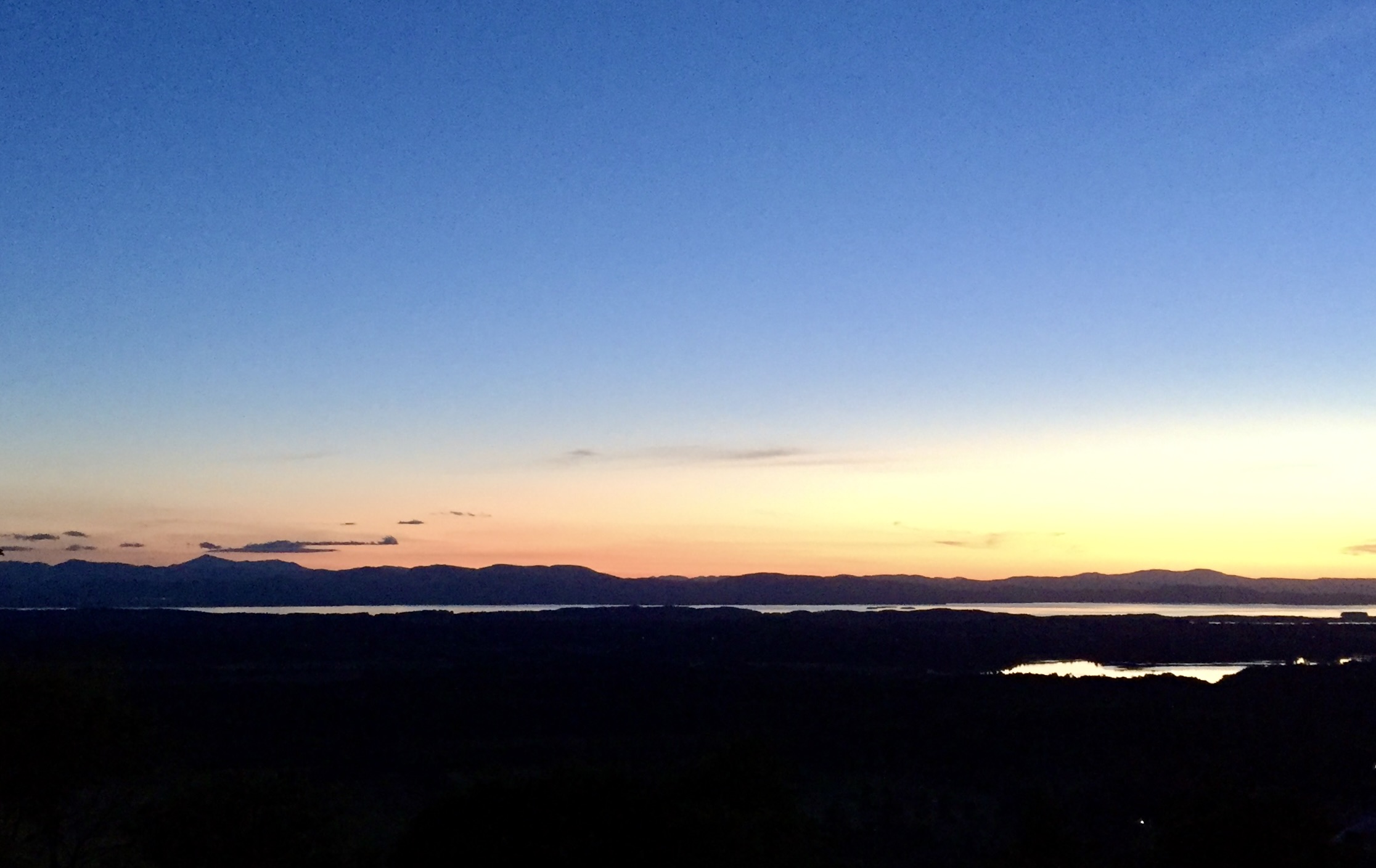
By my intimacy with nature I find myself withdrawn from man. My interest in the sun and the moon, in the morning and the evening, compels me to solitude.

The grandest picture in the world is the sunset sky.


In your higher moods what man is there to meet? You are of necessity isolated.

The mind that perceives clearly any natural beauty is in that instant withdrawn from human society.

My desire for society is infinitely increased; my fitness for any actual society is diminished.

Went to Cambridge and Boston to-day.

Dr. Harris says that my great moth is the Attacus luna; may be regarded as one of several emperor moths. They are rarely seen, being very liable to be snapped up by birds.

Once, as he was crossing the College Yard, he saw the wings of one coming down, which reached the ground just at his feet. What a tragedy! The wings came down as the only evidence that such a creature had soared, — wings large and splendid, which were designed to bear a precious burthen through the upper air.

So most poems, even epics, are like the wings come down to earth, while the poet whose adventurous flight they evidence has been snapped up [by] the ravenous vulture of this world.

If this moth ventures abroad by day, some bird will pick out the precious cargo and let the sails and rigging drift, as when the sailor meets with a floating spar and sail and reports a wreck seen in a certain latitude and longitude.

For what were such tender and defenseless organizations made?

The one I had, being put into a large box, beat itself — its wings, etc. — all to pieces in the night, in its efforts to get out, depositing its eggs, nevertheless, on the sides of its prison.

Perchance the entomologist never saw an entire specimen, but, as he walked one day, the wings of a larger species than he had ever seen came fluttering down.

The wreck of an argosy in the air. 


He tells me the glow-worms are first seen, he thinks, in the last part of August. Also that there is a large and brilliant glow-worm found here, more than an inch long, as he measured it to me on his finger, but rare. 

Perhaps the sunset glows are sudden in proportion as the edges of the clouds are abrupt, when the sun finally reaches such a point that his rays can be reflected from them.

At 10 p. m. I see high columns of fog, formed in the lowlands and lit by the moon, preparing to charge this higher ground. It is as if the sky reached the solid ground there, for they shut out the woods.

H. D. Thoreau, Journal, July 26, 1852


My interest in the sun and the moon, in the morning and the evening, compels me to solitude.  See March 17, 1852 (“There is a moment in the dawn,. . . when we see things more truly than at any other time.”);  June 13, 1852 ("All things in this world must be seen with the morning dew on them, must be seen with youthful, early-opened, hopeful eyes"); August 31, 1852 ("The wind is gone down; the water is smooth; a serene evening is approaching; the clouds are dispersing. . . .The reflections are the more perfect for the blackness of the water. This is the most glorious part of this day, the serenest, warmest, brightest part, and the most suggestive. Evening is fairer than morning. Morning is full of promise and vigor. Evening is pensive. The serenity is far more remarkable to those who are on the water") ; January 26, 1853 (“ I look back . . . not into the night, but to a dawn for which no man ever rose early enough.”); May 17, 1853 ("Ah, the beauty of this last hour of the day — when a power stills the air and smooths all waters and all minds — that partakes of the light of the day and the stillness of the night"); August 11, 1853 (" What shall we name this season? — this very late afternoon, or very early evening, this season of the day most favorable for reflection, after the insufferable heats and the bustle of the day are over and before the twilight? The serene hour, the season of reflection! The pensive season.The few sounds now heard, far or near, are delicious. Each sound has a broad and deep relief of silence. It is not more dusky and obscure, but clearer than before. The poet arouses himself and collects his thoughts.");.Walden (“To him whose elastic and vigorous thought keeps pace with the sun, the day is a perpetual morning. It matters not what the clocks say . . . Morning is when I am awake and there is a dawn in me.”);  and A Book of the Seasons, The hour before sunset


The mind that perceives clearly any natural beauty is in that instant withdrawn from human society. See January 17, 1852 ("As the skies appear to a man, so is his mind. Some see only clouds there; some behold there serenity, purity, beauty ineffable."): June 21, 1852 ("The perception of beauty is a moral test."); November 18, 1857 ("You cannot perceive beauty but with a serene mind.")


Dr. Harris says that my great moth is the Attacus luna. See July 8, 1852  ("I found a remarkable moth lying flat on the still water as if asleep (they appear to sleep during the day), as large as the smaller birds. Five and a half inches in alar extent and about three inches the thing like the smaller figure in one position of the wings (with a remarkably narrow lunar-cut tail), of a sea-green color, with four conspicuous spots whitish within, then a red line, then yellowish border below or toward the tail, but brown, brown orange, and black above, toward head; a very robust body, covered with a kind of downy plumage, an inch and a quarter long by five eighths thick. The sight affected me as tropical, . . .  It suggests into what productions Nature would run if all the year were a July.")  See also June 27, 1858 ("See an Attacus luna in the shady path");June 27, 1859 ("At the further Brister's Spring, under the pine, I find an Attacus luna.");   June 29, 1859 ("I found the wing of an Attacus luna, — and July 1st another wing near Second Division, which makes three between June 27th and July 1st."); July 1, 1853 ; ("Saw one of those great pea-green emperor moths, like a bird, fluttering over the top of the woods this forenoon, 10 a. m., near Beck Stow's")  See also A Book of the Seasons, by Henry Thoreau, the Luna Moth (Attacus luna)

July 26. See A Book of the Seasons, by Henry Thoreau, July 26

A Book of the Seasons, by Henry Thoreau
"A book, each page written in its own season,
out-of-doors, in its own locality."
~edited, assembled and rewritten by zphx © 2009-2021

Sunday, July 19, 2020

What is that small conyza-like aster,?

July 19

Clematis has been open a day or two. 

The alisma will open to-morrow or next day. 

This morning a fog and cool.

What is that small conyza-like aster, with flaccid linear leaves, in woods near Boiling Spring? 

Some woodbine, cultivated, apparently long since flowered. The same of some on Lee's Cliff, where it is early.


H. D. Thoreau, Journal, July 19, 1853

Clematis has been open a day or two. See July 14, 1853 ('The Clematis  [by the Heywood Brook](near the water-plantain) will open in a day or two.")

This morning a fog and cool. See July 22, 1851 ("The season of morning fogs has arrived. . . .These are our fairest days, which are born in a fog."); July 22, 1854 ("Fogs almost every morning now."); July 25, 1852 ("the sun having risen, I see great wreaths of fog far northeast, revealing the course of the river.")


What is that small conyza-like aster, with flaccid linear leaves?. See July 18, 1854 ("Methinks the asters and goldenrods begin, like the early ripening leaves, with midsummer heats."); July 26, 1853 ("I mark again, about this time when the first asters open. . . This the afternoon of the year."); July 28, 1852 ("Goldenrod and asters have fairly begun; i. e. there are several kinds of each out. ") [Note; Conyza (horseweed, butterweed or fleabane) is a genus of flowering plants in the sunflower family.

Woodbine, long since flowered. See September 12, 1851 ("What we call woodbine is the Vitis hederacea, or common creeper, or American ivy.")

Tuesday, July 14, 2020

In Beck Stow’s Swamp to-day; approached and discovered the Andromeda Polifolia

July 14.

Heavy fog. 

I see a rose, now in its prime, by the river, in the water amid the willows and button-bushes, while others, lower on shore, are nearly out of bloom.

Is it not the R. Carolina?

Saw something blue, or glaucous, in Beck Stow’s Swamp to-day; approached and discovered the Andromeda Polifolia, in the midst of the swamp at the north end, not long since out of bloom. 

This is another instance of a common experience. When I am shown from abroad, or hear of, or in any [way] become interested in, some plant or other thing, I am pretty sure to find it soon. 

Within a week R. W. E. showed me a slip of this in a botany, as a great rarity which George Bradford brought from Watertown. I had long been interested in it by Linnæus’s account. I now find it in abundance. 


Andromeda Polifolia


It is a neat and tender-looking plant, with the pearly new shoots now half a dozen inches long and the singular narrow revolute leaves. I suspect the flower does not add much to it.

There is an abundance of the buck-bean there also. 

Holly berries are beginning to be ripe. 

The Polygonum Hydropiper, by to-morrow. 

Spergula arvensis gone to seed and in flower. 

A very tall ragged orchis by the Heywood Brook, two feet high, almost like a white fringed one. Lower ones I have seen some time. 

The clematis there (near the water-plantain) will open in a day or two.  

Mallows gone to seed and in bloom.

Erigeron Canadensis, butter-weed. 

 H. D. Thoreau, Journal, July 14, 1853

In Beck Stow’s Swamp to-day approached and discovered the Andromeda Polifolia. See February 17, 1854 ("In the open part of Gowing's Swamp I find the Andromeda Polifolia. Neither here nor in Beck Stow's does it grow very near the shore. . . . in the middle or deepest part will be an open space not yet quite given up to water, where the Andromeda calyculata and a few A. Polifolia reign almost alone. These are pleasing gardens.”); May 24, 1854 ("Surprised to find the Andromeda Polifolia in bloom and apparently past its prime. . .A timid botanist would never pluck it."); November 15,1857 ("At C. Miles Swamp [Ledum Swamp] [f]ind plenty of Andromeda Polifolia ... where you can walk dry-shod in the spruce wood”); See also February 12, 1858 ("There is, apparently, more of the Andromeda Polifolia in [C.Miles] swamp than anywhere else in Concord."); November 23, 1857 ("This [Gowing's] swamp appears not to have had any natural outlet, though an artificial one has been dug. The same is perhaps the case with the C. Miles Swamp. And is it so with Beck Stow's These three are the only places where I have found the Andromeda Polifolia."). See also  Vascular Flora of Concord, Massachusetts

This is another instance of a common experience. When I become interested in some plant or other thing, I am pretty sure to find it soon. See  May 31, 1853 ("The fact that a rare and beautiful flower which we never saw. . . may be found in our immediate neighborhood, is very suggestive."); August 23, 1854 (“I find a new cranberry on the sphagnum amid the A. calyculata, — V. Oxycoccus . . .It has small, now purplish-dotted fruit, flat on the sphagnum, some turned scarlet partly, on terminal peduncles, with slender, thread-like stems and small leaves strongly revolute on the edges.”); January 9, 1855 (“Make a splendid discovery this afternoon. Walking through Holden’s white spruce swamp, I see peeping above the snow-crust some slender delicate evergreen shoots very much like the Andromeda Polifolia, amid sphagnum, lambkill, Andromeda calyculata, blueberry bushes, etc., though there is very little to be seen above the snow. It is, I have little doubt, the Kalmia glauca var. rosmarinifolia.”); August 30, 1856 ("I have come out this afternoon a-cranberrying, chiefly to gather some of the small cranberry, Vaccinium Oxycoccus . . . “I noticed also a few small peculiar-looking huckleberries hanging on bushes amid the sphagnum, and, tasting, perceived that they were hispid, a new kind to me. Gaylussacia dumosa var. hirtella . . .. Has a small black hairy or hispid berry, shining but insipid and inedible, with a tough, hairy skin left in the mouth.”);  September 2, 1856 ("It commonly chances that I make my most interesting botanical discoveries when I am in a thrilled and expectant mood, perhaps wading in some remote swamp where I have just found something novel and feel more than usually remote from the town. Or some rare plant which for some reason has occupied a strangely prominent place in my thoughts for some time will present itself. My expectation ripens to discovery. I am prepared for strange things."); February 4, 1858 ("It is a remarkable fact that, in the case of the most interesting plants which I have discovered in this vicinity, I have anticipated finding them perhaps a year before the discovery.") November 4, 1858 ("We cannot see any thing until we are possessed with the idea of it, and then we can hardly see anything else. In my botanical rambles I find that first the idea, or image, of a plant occupies my thoughts, though it may at first seem very foreign to this locality, and for some weeks or months I go thinking of it and expecting it unconsciously, and at length I surely see it, and it is henceforth an actual neighbor of mine. This is the history of my finding a score or more of rare plants which I could name.”); August 22, 1860 ("I never find a remarkable Indian relic but I have first divined its existence, and planned the discovery of it. Frequently I have told myself distinctly what it was to be before I found it.") See also  January 27, 1857 ("The most poetic and truest account of objects is generally by those who first observe them, or the discoverers of them, whether a sharper perception and curiosity in them led to the discovery or the greater novelty more inspired their report.")

Beck Stow's Swamp. See July 17, 1852 ("Beck Stow's Swamp! What an incredible spot to think of in town or city! When life looks sandy and barren, is reduced to its lowest terms, we have no appetite, and it has no flavor, then let me visit such a swamp as this, deep and impenetrable, where the earth quakes for a rod around you at every step, with its open water where the swallows skim and twitter, its meadow and cotton-grass, its dense patches of dwarf andromeda, now brownish-green, with clumps of blue berry bushes, its spruces and its verdurous border of woods imbowering it on every side. ") A Book of the Seasons,  by Henry Thoreau,  at Beck Stow's Swamp

There is an abundance of the buck-bean there also See August 30, 1856 ("Consider how remote and novel that [Gowings] swamp. Beneath it is a quaking bed of sphagnum, and in it grow Andromeda Polifolia, Kalmia glauca, menyanthes (or buck -bean), Gaylussacia dumosa, Vaccinium Oxycoccus, — plants which scarcely a citizen of Concord ever sees.”) See also  May 29, 1856 (" Where you find a rare flower, expect to find more rare ones”)

A very tall ragged orchis by the Heywood Brook, two feet high, almost like a white fringed one. See July 21, 1851 ("The ragged orchis on Conantum."); July 13, 1856 ("Orchis lacera, apparently several days, lower part of spike, willow-row, Hubbard side, opposite Wheildon's land.")

Wednesday, June 10, 2020

The cool peep of the robin calling to its young.

June 10.

Friday.

June 10, 2016

Another great fog this morning.

Haying commencing in front yards.

P. M. – To Mason ‘s pasture in Carlisle.

Cool but agreeable easterly wind.

Streets now beautiful with verdure and shade of elms, under which you look, through an air clear for summer, to the woods in the horizon.

By the way, I amused myself yesterday afternoon with looking from my window, through a spy glass, at the tops of the woods in the horizon.

It was pleasant to bring them so near and individualize the trees, to examine in detail the tree-tops which before you had beheld only in the mass as the woods in the horizon.

It was an exceedingly rich border, seen thus against (sic), and the imperfections in a particular tree-top more than two miles off were quite apparent.

I could easily have seen a hawk sailing over the top of the wood, and possibly his nest in some higher tree.

Thus to contemplate, from my attic in the village, the hawks circling about their nests above some dense forest or swamp miles away, almost as if they were flies on my own premises! I actually distinguished a taller white pine with which I am well acquainted, with a double top rising high above the surrounding woods, between two and three miles distant, which, with the naked eye, I had confounded with the nearer woods.

But to return, as C. and I go through the town, we hear the cool peep of the robin calling to its young, now learning to fly.

The locust bloom is now perfect, filling the street with its sweetness, but it is more agreeable to my eye than my nose.

The curled dock out.

The fuzzy seeds or down of the black (?) willows is filling the air over the river and, falling on the water, covers the surface.

By the 30th of May, at least, white maple keys were falling. How early, then, they had matured their seed!

Cow-wheat out, and Iris Virginica, and the grape.

The mountain laurel will begin to bloom to-morrow.

The frost some weeks since killed most of the buds and shoots, except where they were protected by trees or by themselves, and now new shoots have put forth and grow four or five inches from the sides of what were the leading ones.

It is a plant which plainly requires the protection of the wood. It is stunted in the open pasture.

We continued on, round the head of “Cedar Swamp,” and may say that we drank at the source of it or of Saw Mill Brook, where a spring is conducted through a hollow log to a tub for cattle.

Crossed on to the old Carlisle road by the house north of Isaiah Green ‘s, and then across the road through the woods to the Paul Adams house by Bateman‘s Pond.

Saw a hog-pasture of a dozen acres in the woods, with thirty or forty large hogs and a shelter for them at night, a half-mile east of the last house, — something rare in these days here abouts.

What shall this great wild tract over which we strolled be called?

Many farmers have pastures there, and wood-lots, and orchards. It consists mainly of rocky pastures.

It contains what I call the Boulder Field, the Yellow Birch Swamp, the Black Birch Hill, the Laurel Pasture, the Hog-Pasture, the White Pine Grove, the Easterbrooks Place, the Old Lime-Kiln, the Lime Quarries, Spruce Swamp, the Ermine Weasel Woods; also the Oak Meadows, the Cedar Swamp, the Kibbe Place, and the old place northwest of Brooks Clark‘s.

Ponkawtasset bounds it on the south.

There are a few frog-ponds and an old mill-pond within it, and Bateman‘s Pond on its edge.

What shall the whole be called?

The old Carlisle road, which runs through the middle of it, is bordered on each side with wild apple pastures, where the trees stand without order, having, many if not most of them, sprung up by accident or from pomace sown at random, and are for the most part concealed by birches and pines.

These orchards are very extensive, and yet many of these apple trees, growing as forest trees, bear good crops of apples.

It is a paradise for walkers in the fall.

There are also boundless huckleberry pastures as well as many blueberry swamps.

Shall we call it the Easterbrooks Country? It would make a princely estate in Europe, yet it is owned by farmers, who live by the labor of their hands and do not esteem it much.

Plenty of huckleberries and barberries here.

A second great uninhabited tract is that on the Marlborough road, stretching westerly from Francis Wheeler‘s to the river, and beyond about three miles, and from Harrington‘s on the north to Dakin‘s on the south, more than a mile in width.

A third, the Walden Woods.

A fourth, the Great Fields.

These four are all in Concord.

There are one or two in the town who probably have Indian blood in their veins, and when they exhibit any unusual irascibility, their neighbors say they have got their Indian blood roused.

C. proposes to call the first-named wild the Melvin Preserve, for it is favorite hunting-ground with George Melvin. It is a sort of Robin Hood Ground.

Shall we call it the Apple Pastures?

Now, methinks, the birds begin to sing less tumultuously, with, as the weather grows more constantly warm, morning and noon and evening songs, and suitable recesses in the concert.

High blackberries conspicuously in bloom, whitening the side of lanes.

Mention is made in the Town Records, as quoted by Shattuck, page 33, under date of 1654, of “the Hogepen-walke about Annursnake," and reference is at the same time made to “the old hogepen.” The phrase is “in the Hogepen-walke about Annursnake," i. e. in the hog-pasture.

There is some propriety in calling such a tract a walk, methinks, from the habit which hogs have of walking about with an independent air and pausing from time to time to look about from under their flapping ears and snuff the air.

The hogs I saw this afternoon, all busily rooting without holding up their heads to look at us, — the whole field looked as if it had been most miserably plowed or scarified with a harrow, — with their shed to retreat to in rainy weather, affected me as more human than other quadrupeds.

They are comparatively clean about their lodgings, and their shed, with its litter bed, was on the whole cleaner than an Irishman ‘s shanty.

I am not certain what there was so very human about them.

In 1668 the town had a pasture near Silas Holden‘s and a herd of fifty cattle constantly watched by a “herdsman,” etc. (page 43).

In 1672 there is an article referring to the “crane field and brickil field.”

H. D. Thoreau, Journal, June 10, 1853


Streets now beautiful with verdure and shade of elms, under which you look, through an air clear for summer, to the woods in the horizon. See May 27, 1853 ("A new season has commenced - summer - leafy June. The elms begin to droop and are heavy with shade."); June 2, 1852 ("The elms now hold a good deal of shade and look rich and heavy with foliage. You see darkness in them"); June 4, 1860 ("The foliage of the elms over the street impresses me as dense and heavy already."); June 9, 1856 ("Now I notice where an elm is in the shadow of a cloud,—the black elm-tops and shadows of June. It is a dark eyelash which suggests a flashing eye beneath")

I amused myself yesterday afternoon with looking from my window, through a spy glass. See June 9, 1853 ("I have come with a spy-glass to look at the hawks.")

Crossed on to the old Carlisle road by the house north of Isaiah Green ‘s, and then across the road through the woods . . . saw a hog-pasture of a dozen acres in the woods, with thirty or forty large hogs. See September 19, 1851 ("Mr. Isaiah Green of Carlisle. . .spoke of one old field, now grown up, which [we] were going through, as the "hog-pasture.");  October 3, 1859 ("Looking from the hog-pasture over the valley of Spencer Brook westward, we see the smoke rising from a huge chimney above a gray roof amid the woods, at a distance, where some family is preparing its evening meal.")

Shall we call it the Easterbrooks Country? See October 20, 1857 (“What a wild and rich domain that Easterbrooks Country . . . the miles of huckleberries, and of barberries, and of wild apples, so fair, both in flower and fruit,”); October 15, 1859 (“Each town should have a park, or rather a primitive forest, of five hundred or a thousand acres, where a stick should never be cut for fuel, a common possession forever, for instruction and recreation. . . All Walden Wood might have been preserved for our park forever, with Walden in its midst, and the Easterbrooks Country, an unoccupied area of some four square miles, might have been our huckleberry-field”) See also A Book of the Seasons, by Henry Thoreau, The Cedar Swamps

We hear the cool peep of the robin calling to its young, now learning to fly. See June 9, 1856 ("A young robin abroad. ");  June 18, 1854 ("I think I heard the anxious peep of a robin whose young have just left the nest.") See also A Book of the Seasons,  by Henry Thoreau,  Robins in Spring

The locust bloom is now perfect, filling the street with its sweetness. See June 7, 1854 ("The locusts so full of pendulous white racemes five inches long, filling the air with their sweetness and resounding with the hum of humble and honey bees"); June 9, 1852 ("The locust in bloom"); June 11, 1856 ("The locust in graveyard shows but few blossoms yet.")

June 10. 
See A Book of the Seasons, by Henry Thoreau, June 10

The cool peep of the 
robin calling to its young
now learning to fly.

A Book of the Seasons, by Henry Thoreau
"A book, each page written in its own season,
out-of-doors, in its own locality."

~edited, assembled and rewritten by zphx © 2009-2025

https://tinyurl.com/hdt-530610

Tuesday, June 9, 2020

I have come with a spy-glass to look at the hawks


4. 30 A. M.— To Nawshawtuct by boat.

A prevalent fog, though not quite so thick as the last described.

It is a little more local, for it is so thin southwest of this hill that I can see the earth through it, but as thick as before northeast. Yet here and there deep valleys are excavated in it, as painters imagine the Red Sea for the passage of Pharaoh's host, wherein trees and houses appear as it were at the bottom of the sea.

What is peculiar about it is that it is the tops of the trees which you see first and most distinctly, before you see their trunks or where they stand on earth.

Far in the northeast there is, as before, apparently a tremendous surf breaking on a distant shoal. It is either a real shoal, i. e. a hill over which the fog breaks, or the effect of the sun's rays on it. 


I was amused by the account which Mary, the Irish girl who left us the other day, gave of her experience at-- the milkman's, in the north part of the town. She said that twenty-two lodged in the house the first night, including two pig men, that Mr. —-kept ten men, had six children and a deaf wife, and one of the men had his wife with him, who helped sew, beside taking care of her own child. Also all the cooking and washing for his father and mother, who live in another house and whom he is bound to carry through, is done in his house, and she, Mary, was the only girl they hired; and the workmen were called up at four by an alarm clock which was set a quarter of an hour ahead of the clock down stairs, — and that more than as much ahead of the town clock, — and she was on her feet from that hour till nine at night. Each man had two pairs of overalls in the wash, and the cans to be scalded were countless. Having got through washing the breakfast dishes by a quarter before twelve, Sunday noon, by — ' s time, she left, no more to return. He had told her that the work was easy, that girls had lived with him to recover their health, and then went away to be married. He is regarded as one of the most enterprising and thrifty farmers in the county, and takes the premiums of the Agricultural Society. He probably exacts too much of his hands.

June 9, 2023

The steam of the engine streaming far behind is regularly divided, as if it were the vertebræ of a serpent, probably by the strokes of the piston.

The reddish seeds or glumes of grasses cover my boots now in the dewy or foggy morning.

The diervilla out apparently yesterday.

The first white lily bud.

White clover is abundant and very sweet on the common, filling the air, but not yet elsewhere as last year.


8 A. M. – To Orchis Swamp; Well Meadow.

Hear a goldfinch; this the second or third only that I have heard.

Whiteweed now whitens the fields.

There are many star flowers. I remember the anemone, especially the rue anemone, which is not yet all gone, lasting longer than the true one above all the trientalis, and of late the yellow Bethlehem-star, and perhaps others.

I have come with a spy-glass to look at the hawks. They have detected me and are already screaming over my head more than half a mile from the nest.

I find no difficulty in looking at the young hawk (there appears to be one only, standing on the edge of the nest), resting the glass in the crotch of a young oak. I can see every wink and the color of its iris.

It watches me more steadily than I it, now looking straight down at me with both eyes and outstretched neck, now turning its head and looking with one eye.

How its eye and its whole head express anger! Its anger is more in its eye than in its beak.

It is quite hoary over the eye and on the chin.

The mother meanwhile is incessantly circling about and above its charge and me, farther or nearer, sometimes withdrawing a quarter of a mile, but occasionally coming to alight for a moment almost within gunshot, on the top of a tall white pine; but I hardly bring my glass fairly to bear on her, and get sight of her angry eye through the pine-needles, before she circles away again.

Thus for an hour that I lay there, screaming every minute or oftener with open bill. Now and then pursued by a kingbird or a blackbird, who appear merely to annoy it by dashing down at its back.

Meanwhile the male is soaring, apparently quite undisturbed, at a great height above, evidently not hunting, but amusing or recreating himself in the thinner and cooler air, as if pleased with his own circles, like a geometer, and enjoying the sublime scene.

I doubt if he has his eye fixed on any prey, or the earth. He probably descends to hunt.


Got two or three handfuls of strawberries on Fair Haven. They are already drying up.

The huckleberry bedbug-smelling bug is on them.It is natural that the first fruit which the earth bears should emit and be as it were an embodiment of that vernal fragrance with which the air has teemed.

Strawberries are its manna, found ere long where that fragrance has filled the air. Little natural beds or patches on the sides of dry hills, where the fruit sometimes reddens the ground. But it soon dries up, unless there is a great deal of rain.

Well, are not the juices of early fruit distilled from the air? 


Prunella out.

The meadows are now yellow with the golden senecio, a more orange yellow, mingled with the light glossy yellow of the buttercup.

The green fruit of the sweet-fern now.

The Juniperus repens appears, though now dry and effete, to have blossomed recently.

The tall white Erigeron annuus ( ? ), for this is the only one described as white tinged with purple, just out.

The bullfrogs are in full blast to-night.

I do not hear a toad from my window; only the crickets beside. The toads I have but rarely heard of late. So there is an evening for the toads and another for the bullfrogs.


H. D. Thoreau, Journal, June 9, 1853

June 9, 2013

The steam of the engine streaming far behind is regularly divided, as if it were the vertebræ of a serpent.  
See December 25, 1851 ("If there is not something mystical in your explanation, something unexplainable to the understanding, some elements of mystery, it is quite insufficient.  . . Just as inadequate to a pure mechanic would be a poet's account of a steam-engine.") See also A Book of the Seasons, by Henry Thoreau, The Steam of the Engine

I have come with a spy-glass to look at the hawks. See June 8, 1853 ("At length I detect the nest about eighty feet from the ground, in a very large white pine by the edge of the swamp. It is about three feet in diameter, of dry sticks, and a young hawk, apparently as big as its mother, stands on the edge of the nest looking down at me")

So there is an evening for the toads and another for the bullfrogs.  See June 13, 1851 ("The different frogs mark the seasons pretty well,- the peeping hyla, the dreaming frog, and the bullfrog."); See also  June 1, 1853 ("The birds have now all come and no longer fly in flocks. The hylodes are no longer heard. The bullfrogs begin to trump.”); June 11, 1853 ("Another fog this morning. The mosquitoes first troubled me a little last night. On the river at dusk I hear the toads still, with the bullfrogs.");  June 15, 1860 ("A new season begun. The bullfrogs now commonly trump at night, and the mosquitoes are now really troublesome. For some time I have not heard toads by day, and the hylodes appear to have done.")

The meadows are now yellow with the golden senecio, a more orange yellow, mingled with the light glossy yellow of the buttercup. See May 23, 1853 ("I am surprised by the dark orange-yellow of the senecio. At first we had the lighter, paler spring yellows of willows, dandelion, cinquefoil, then the darker and deeper yellow of the buttercup; and then this broad distinction between the buttercup and the senecio, as the seasons revolve toward July."); June 6, 1858 ("Golden senecio is not uncommon now") See also A Book of the Seasons,  by Henry Thoreau, The Golden Senecio

Tuesday, December 31, 2019

To the sweet-gale meadow or swamp up Assabet.

December 31

Thermometer at 7.45 a. m., -1°, yet even more vapor is rising from the open water below my boat's place than on the 29th, when it was -15°. 

The wind is southwesterly, i. e. considerably south of west. This shows that fog over the water is a phenomenon of the morning chiefly, as well in winter as in summer. You will see a fog over the water in a winter morning, though the temperature may be considerably higher than at midday when no fog is seen. 

There has evidently been a slight fog generally in the night, and the trees are white with it. The crystals are directed southwesterly, or toward the wind. I think that these crystals are particularly large and numerous, and the trees (willows) particularly white, next to the open water spaces, where the vapor even now is abundantly rising. 

Is this fog in the night occasioned by the cold earth condensing the moisture which a warmer wind has brought to us?

At 10 a. m., thermometer 18°.

December 30, 2018

I see no vapor from the water. 

Crows yesterday flitted silently, if not ominously, over the street, just after the snow had fallen, as if men, being further within, were just as far off as usual. This is a phenomenon of both cold weather and snowy. You hear nothing; you merely see these black apparitions, though they come near enough to look down your chimney and scent the boiling pot, and pass between the house and barn. 

Just saw moved a white oak, Leighton's, some five inches in diameter, with a frozen mass of earth some five or five and a half feet in diameter and two plus thick. It was dug round before the frost, — a trench about a foot wide and filled with stalks, etc., — and now pried up with levers till on a level with the ground, then dragged off. It would not have cost half so much if a sloping path had been dug to it on one side so that the drag could have been placed under it in the hole and another dug at the hole it was removed to, — unless the last were planked over and it was dragged on to it. 

They were teaming ice before sunrise (from Sam Barrett's Pond) on the morning of the 29th, when the thermometer was 16 or 20 degrees below. Cold work, you would say. Yet some say it is colder in thawing weather, if you have to touch the ice. 

P. M. — To the sweet-gale meadow or swamp up Assabet. 

I notice that one or more of the terminal leafets remain on the branches of the flowering fern commonly. 

See where probably a shrike (do I ever see a small hawk in winter ?) has torn a small bird in pieces and its slate-colored down and its feathers have been blown far and wide over the snow. 

There is a great deal of hemlock scales scattered over the recent snow (at the Hemlocks), evidently by birds on the trees, and the wind has blown them south east, — scales, seeds, and cones, — and I see the tracks of small birds that have apparently picked the seeds from the snow also. It may have been done by gold finches. I see a tree sparrow hopping close by, and perhaps they eat them on the snow. Some of the seeds have blown at least fifteen rods southeast. So the hemlock seed is important to some birds in the winter. 

All the sound witch-hazel nuts that I examine are empty. 

How vain to try to teach youth, or anybody, truths ! They can only learn them after their own fashion, and when they get ready. I do not mean by this to condemn our system of education, but to show what it amounts to. A hundred boys at college are drilled in physics and metaphysics, languages, etc. There may be one or two in each hundred, prematurely old perchance, who approaches the subject from a similar point of view to his teachers, but as for the rest, and the most promising, it is like agricultural chemistry to so many Indians. They get a valuable drilling, it may be, but they do not learn what you profess to teach. They at most only learn where the arsenal is, in case they should ever want to use any of its weapons. The young men, being young, necessarily listen to the lec turer in history, just as they do to the singing of a bird.

They expect to be affected by something he may say. It is a kind of poetic pabulum and imagery that they get. Nothing comes quite amiss to their mill. 

I think it will be found that he who speaks with most authority on a given subject is not ignorant of what has been said by his predecessors. He will take his place in a regular order, and substantially add his own knowledge to the knowledge of previous generations. 

The oblong-conical sterile flower-buds or catkins of the sweet-gale, half a dozen at the end of each black twig, dark-red, oblong-conical, spotted with black, and about half an inch long, are among the most interesting buds of the winter. The leaf-buds are comparatively minute. The white edges of their scales and their regular red and black colors make the imbrication of the bud very distinct. The sterile and fertile flowers are not only on distinct plants, but they commonly grow in distinct patches. Sometimes I detect the one only for a quarter of a mile, and then the other begins to prevail, or both may be found together. It grows along the wet edge of banks and the river and in open swamps. 

The mulleins are full of minute brown seeds, which a jar sprinkles over the snow, and [they] look black there; also the primrose, of larger brown seeds, which rattle out in the same manner. 

One of the two large docks, perhaps obtusifolius, commonly holds its seeds now, but they are very ready to fall. (Mainly one-seeded; vide three-ribbed goldenrod meadow.) 

There appears to be not much (compared with the fall) seed left on the common or gray goldenrod, its down being mostly gone, and the seed is attached to that.

Potentilla Norvegica appears to have some sound seed in its closed heads. 

The very gray flattish heads of the calamint are quite full of minute dark-brown seed. 

The conical heads of the cone-flower also are full of long blackish seeds. Both the last drop their seeds on being inverted and shaken. 

I see also the yellow lily (L. Canadense) pods with its three now gray divisions spreading open like the petals of a flower, and more than half the great red flattish triangularish or semicircularish seeds gone. The pod boys throw with a humming sound. 

Even the sidesaddle-flower, where it shows its head above the snow, now gray and leathery, dry, is covered beneath its cap with pretty large close-set light-brown seeds. 

I see one or more sedges with seeds yet, one apparently the Carex debilis, if it is not flava

A man may be old and infirm. What, then, are the thoughts he thinks? what the life he lives? They and it are, like himself, infirm. But a man may be young, athletic, active, beautiful. Then, too, his thoughts will be like his person. They will wander in a living and beautiful world. If you are well, then how brave you are! How you hope! You are conversant with joy! A man thinks as well through his legs and arms as his brain. We exaggerate the importance and exclusiveness of the headquarters. Do you suppose they were a race of consumptives and dyspeptics who in vented Grecian mythology and poetry? The poet's words are, "You would almost say the body thought!" I quite say it. I trust we have a good body then.

H. D. Thoreau, Journal, December 31, 1859

Thermometer at 7.45 a. m., -1°, yet even more vapor is rising from the open water . . . wind is southwesterly, i. e. considerably south of west
. See A Book of the Seasons, by Henry Thoreau, The weather, New Year's Eve

There has evidently been a slight fog generally in the night, and the trees are white with it. The crystals are directed southwesterly, or toward the wind. See December 31, 1855 ("It is one of the mornings of creation, and the trees, shrubs, etc., etc., are covered with a fine leaf frost, as if they had their morning robes on, seen against the sun. There has been a mist in the night . . . This accounts for the frost on the twigs. It consists of minute leaves, the longest an eighth of an inch, all around the twigs, but longest commonly on one side, in one instance the southwest side.")

Crows yesterday flitted silently, if not ominously, over the street. See December 15, 1855 ("How like a bird of ill omen the crow behaves!") See also A Book of the Seasons, by Henry Thoreau, the American Crow

They were teaming ice before sunrise (from Sam Barrett's Pond) on the morning of the 29th, when the thermometer was 16 or 20 degrees below. See  January 10, 1859 ("At Sam Barrett’s Pond, where Joe Brown is now get ting his ice, I think I see about ten different freezings in ice some fifteen or more inches thick. Perhaps the successive cold nights might be discovered recorded in each cake of ice."); January 30, 1854 (Sometimes one of those great cakes of green ice from Walden or Sam Barrett's Pond slips from the ice-man's sled in the street and lies there like a great emerald, an object of interest to all travellers)

There is a great deal of hemlock scales scattered over the recent snow (at the Hemlocks), evidently by birds on the trees. See January 14, 1857 ("Up Assabet on ice . . . Hemlock seeds are scattered over the snow."); January 20, 1860 ("The snow and ice under the hemlocks is strewn with cones and seeds and tracked with birds and squirrels. What a bountiful supply of winter food is here provided for them!") See also November 1. 1853 ("As I paddle under the Leaning Hemlocks, the breeze rustles the boughs, and showers of their fresh winged seeds come wafted down to the water and are carried round and onward in the great eddy there.") and note to October 13, 1859 ("The hemlock seed is now in the midst of its fall, some of it, with the leaves, floating on the river. The cones, being thus expanded, are more conspicuous on the trees.") and A Book of the Seasons, by Henry Thoreau, at the Leaning Hemlocks

Sweet-gale grows along the wet edge of banks and the river and in open swamps. See November 29, 1857 (" Going through a partly frozen meadow . . .i, scraping through the sweet-gale, I am pleasantly scented with its odoriferous fruit."); December 19, 1850 ("I find the sweet-gale (Myrica) by the river also."); December 14, 1850 ("I find a low, branching shrub frozen into the edge of the ice, with a fine spicy scent . . .. When I rub the dry-looking fruit in my hands, it feels greasy and stains them a permanent yellow, which I cannot wash out. It lasts several days, and my fingers smell medicinal. I conclude that it is sweetgale, and we name the island Myrica Island."); January 31, 1854 ("In the winter, when there are no flowers and leaves are rare, even large buds are interesting and somewhat exciting. I go a-budding like a partridge. I am always attracted at this season by the buds of the swamp-pink, the poplars, and the sweet-gale.");  February 9, 1854 ("I have brought home some alder and sweet-gale and put them in water.") See also April 13, 1860 (“It distinctly occurred to me that, perhaps, if I came against my will, as it were, to look at the sweet-gale as a matter of business, I might discover something else interesting.”) and note to April 30, 1852 ("The sweet gale is in blossom.")

The sidesaddle-flower, where it shows its head above the snow. Sarracenia purpurea, also known as the purple pitcherplant or northern pitcher plant, the only pitcherplant native to New England. See note to June 12, 1856 ("Sidesaddle flower numerously out now.") and A Book of the Seasons, by Henry Thoreau, The Purple Pitcher Plant

The poet's words are, "You would almost say the body thought!" I quite say it. See November 9, 1851 ("Facts which the mind perceived, thoughts which the body thought -- with these I deal."); See also September 2, 1851 ("Expression is the act of the whole man.") See also A Book of the Seasons, by Henry Thoreau, A body awake in the world.

Elegy on Mistress Elizabeth Drury
By John Donne (1572–1631)
 
SHE, of whose soul, if we may say, ’twas gold,
Her body was the Electrum, and did hold
Many degrees of that; we understood
Her by her sight; her pure and eloquent blood
Spoke in her cheeks, and so distinctly wrought,        5
That one might almost say, her body thought.

Wednesday, July 31, 2019

This sixteen miles up river.

July 31. 

7.30 A. M. — Up river. 

C. and I, having left our boat at Rice's Bend last night, walk to it this forenoon on our way to Saxonville. Water three quarters of an inch above summer level. 

It is emphatically one of the dog-days. A dense fog, not clearing off till we are far on our way, and the clouds (which did not let in any sun all day) were the dog-day fog and mist, which threatened no rain. A muggy but comfortable day. As we go along the Corner road, the dense fog for a background relieves pleasantly the outlines of every tree, though only twenty rods off, so that each is seen as a new object, especially that great oak scrag behind Hubbard's, once bent into a fence, now like a double-headed eagle, dark on the white ground. 

We go in the road to Rice's on account of the heavy dew, yet the fine tops of red-top, drooping with dew over the path, with a bluish hue from the dew, — blue with dew, — wet our shoes through. 

The roads are strewn with meadow-hay, which the farmers teamed home last evening (Saturday). 

The grass is thickly strewn with white cobwebs, tents of the night, which promise a fair day. I notice that they are thickest under the apple trees. Within the woods the mist or dew on them is so very fine that they look smoke-like and dry, yet even there, if you put your finger under them and touch them, you take off the dew and they become invisible. They are revealed by the dew, and perchance it is the dew and fog which they reveal which are the sign of fair weather. 

It is pleasant to walk thus early in the Sunday morning, while the dewy napkins of the cobwebs are visible on the grass, before the dew evaporates and they are concealed. 

Returning home last evening, I heard that exceedingly fine z-ing or creaking of crickets (?), low in the grass in the meadows. You might think it was a confused ringing in your head, it is so fine. Heard it again toward evening. Autumnalish.

On the 26th I saw quails which had been picking dung in a cart-path. Probably their broods are grown. 

The goldfinch's note, the cool watery twitter, is more prominent now. 

We had left our paddles, sail, etc., under one of Rice's buildings, on some old wagon-bodies. Rice, who called the big bittern "cow-poke, baked-plum- pudding." 

It is worth the while to get at least a dozen miles on your journey before the dew is off. 

Stopped at Weir Hill Bend to cut a pole to sound with, and there came two real country boys to fish. One little fellow of seven or eight who talked like a man of eighty, — an old head, who had been, probably, brought up with old people. He was not willing to take up with my companion's jesting advice to bait the fish by casting in some of his worms, because, he said, "It is too hard work to get them where we live." 

Begin to hear the sharp, brisk dittle-ittle-ittle of the wren amid the grass and reeds, generally invisible. I only hear it between Concord line and Framingham line. 

What a variety of weeds by the riverside now, in the water of the stagnant portions! Not only lilies of three kinds, but heart-leaf, Utricularia vulgaris and purpurea, all (at least except two yellow lilies) in prime. Sium in bloom, too, and Bidens Beckii just begun, and Ranunculus Purshii still. 

The more peculiar features of Concord River are seen in these stagnant, lake-like reaches, where the pads and heart-leaf, pickerel-weed, button-bush, utricularias, black willows, etc., abound. 

Above the Sudbury causeway, I notice again that remarkable large and tall typha, apparently T. latifolia (yet there is at least more than an inch interval between the two kinds of flowers, judging from the stump of the sterile bud left on). It is seven or eight feet high (its leaves), with leaves flat on one side (only concave at base, the sheathing part) and regularly convex on the other. They are so much taller than any I see elsewhere as to appear a peculiar species. Long out of bloom. They are what you may call the tallest reed of the meadows, unless you rank the arundo with them, but these are hardly so tall. 

The button-bush, which is, perhaps, at the height of its bloom, resounds with bees, etc., perhaps as much as the bass has. It is remarkable that it is these late flowers about which we hear this susurrus. You notice it with your back to them seven or eight rods off. 

See a blue heron several times to-day and yesterday. They must therefore breed not far off. We also scare up many times green bitterns, perhaps young, which utter their peculiar note in the Beaver Hole Meadows and this side. 

For refreshment on these voyages, [we] are compelled to drink the warm and muddy-tasted river water out of a clamshell which we keep, — so that it reminds you of a clam soup, — taking many a sup, or else leaning over the side of the boat while the other leans the other way to keep your balance, and often plunging your whole face in at that, when the boat dips or the waves run. 

At about one mile below Saxonville the river winds from amid high hills and commences a great bend called the Ox-Bow. Across the neck of this bend, as I paced, it is scarcely twenty rods, while it must be (as I judged by looking, and was told) a mile or more round. Fisher men and others are accustomed to drag their boats overland here, it being all hard land on this neck. A man by the bridge below had warned us of this cut-off, which he said would save us an hour! 

A man fishing at the Ox-Bow said without hesitation that the stone-heaps were made by the sucker, at any rate that he had seen them made by the sucker in Charles River, — the large black sucker (not the horned one). 

Another said that the water rose five feet above its present level at the bridge on the edge of Framingham, and showed me about the height on the stone. It is an arched stone bridge, built some two years ago. 

About the Sudbury line the river becomes much narrower and generally deeper, as it enters the first large meadows, the Sudbury meadows, and is very winding, — as indeed the Ox-Bow was. It is only some thirty or forty feet wide, yet with firm upright banks a foot or two high, — canal-like. This canal-like reach is the transition from the Assabet to the lake-like or Musketaquid portion. 

At length, off Pelham Pond, it is almost lost in the weeds of the reedy meadow, being still more narrowed and very weedy, with grassy and muddy banks. This meadow, which it enters about the Sudbury line, is a very wild and almost impenetrable one, it is so wet and muddy. It is called the Beaver-Hole Meadows and is a quite peculiar meadow, the chief growth being, not the common sedges, but great bur-reed, five or six feet high and all over it, mixed with flags, Scirpus fluviatilis, and wool-grass, and rank canary grass. Very little of this meadow can be worth cutting, even if the water be low enough.

This great sparganium was now in fruit (and a very little in flower). I was surprised by the sight of the great bur-like fruit, an inch to an inch and a half in diameter, the fruit-stems much branched and three or four feet high. It is a bur of sharp-pointed cones; stigmas linear. I can hardly believe that this is the same species that grows in C. It is apparently much earlier than ours. Yet ours may be a feeble growth from its very seeds floated down. Can it be that in this wild and muddy meadow the same plant grows so rankly as to look like a new species? It is decidedly earlier as well as larger than any I find in C. It does not grow in water of the river, but densely, like flags, in the meadow far and wide, five or six feet high, and this, with the Scirpus fluviatilis, etc., makes a very novel sight. 

Where there are rare, wild, rank plants, there too some wild bird will be found. The marsh wrens and the small green bitterns are especially numerous there. Doubtless many rails here. They lurk amid these reeds.

Behind the reeds on the east side, opposite the pond, was a great breadth of pontederia. Zizania there just begun. 

This wren (excepting, perhaps, the red-wing black bird) is the prevailing bird of the Sudbury meadows, yet I do not remember to have heard it in Concord. I get a nest, suspended in a patch of bulrush (Scirpus lacustris) by the river's edge, just below the Sudbury causeway, in the afternoon. It is a large nest (for the bird), six inches high, with the entrance on one side, made of coarse material, apparently withered bulrush and perhaps pipes and sedge, and no particular lining; well woven and not very thick; some two and a half or three feet above water. The bird is shy and lurks amid the reeds. 

We could not now detect any passage into Pelham Pond, which at the nearest, near the head of this reach, came within thirty rods of the river. 

Do not the lake-like reaches incline to run more north and south? 

The potamogetons do not abound anywhere but in shallows, hence in the swifter places. The lake-like reaches are too deep for them. 

Cardinal-flower. Have seen it formerly much earlier. Perhaps the high water in June kept it back. 

This sixteen miles up, added to eleven down, makes about twenty-seven that I have boated on this river, to which may be added five or six miles of the Assabet.

H. D. Thoreau, Journal, July 31, 1859

The grass is thickly strewn with white cobwebs, tents of the night, which promise a fair day. . . . perchance it is the dew and fog which they reveal which are the sign of fair weather. See July 22, 1851 ("These are our fairest days, which are born in a fog."); July 25, 1852 ("This is one of those ambosial, white, ever-memorable fogs presaging fair weather. ")

The goldfinch's note, the cool watery twitter, is more prominent now. See July 31, 1855 ("Have observed the twittering over of goldfinches for a week."); August 4, 1852 ("I hear the singular watery twitter of the goldfinch, ter tweeter e et or e ee, as it ricochets over, he and his russet ( ?) female."); August 6, 1852 (“With the goldenrod comes the goldfinch. About the time his cool twitter is heard, does not the bobolink, thrasher, catbird, oven-bird, veery, etc., cease?”); August 9, 1856 (“The n
otes of the wood pewee and warbling vireo are more prominent of late, and of the goldfinch twittering over.”) See also A Book of the Seasons, by Henry Thoreau the Goldfinch

See a blue heron several times to-day and yesterday. They must therefore breed not far off. August 12, 1853 ("See the blue herons opposite Fair Haven Hill, as if they had bred here."); ;August 19, 1858 (" Blue herons, which have bred or been bred not far from us (plainly), are now at leisure, or are impelled to revisit our slow stream. I have not seen the last since spring. ") See also A Book of the Seasons, by Henry Thoreau, the Blue Heron

Where there are rare, wild, rank plants, there too some wild bird will be found. See May 29, 1856 ("Where you find a r
are flower, expect to find more rare ones.")

Begin to hear the sharp, brisk dittle-ittle-ittle of the wren amid the grass and reeds, generally invisible.
See August 5, 1858 ("The short-billed marsh wren. It was peculiarly brisk and rasping, not at all musical, the rhythm something like shar te dittle ittle ittle ittle ittle, but the last part was drier or less liquid than this implies. It was a small bird, quite dark above and apparently plain ashy white beneath, and held its head up when it sang, and also commonly its tail. It dropped into the deep sedge . . . then reappeared and uttered its brisk notes quite near us, and, flying off, was lost in the sedge again.")

This sixteen miles up, added to eleven down, makes about twenty-seven that I have boated on this river. See January 31, 1855 ("I skated up as far as the boundary between Wayland and Sudbury just above Pelham’s Pond, about twelve miles, . . . It was, all the way that I skated, a chain of meadows, with the muskrat-houses still rising above the ice. I skated past three bridges above Sherman’s —or nine in all—and walked to the fourth."); September 14, 1854 ("To opposite Pelham’s Pond by boat. . . We went up thirteen or fourteen miles at least, and, as we stopped at Fair Haven Hill returning, rowed about twenty-five miles to-day.")


The goldfinch's note
the cool watery twitter
is more prominent. 

Popular Posts Last 30 Days.

The week ahead in Henry’s journal

The week ahead in Henry’s journal
A journal, a book that shall contain a record of all your joy.
"A stone fruit. Each one yields me a thought." ~ H. D. Thoreau, March 28, 1859


I sit on this rock
wrestling with the melody
that possesses me.