Showing posts with label February. Show all posts

Saturday, February 1, 2025

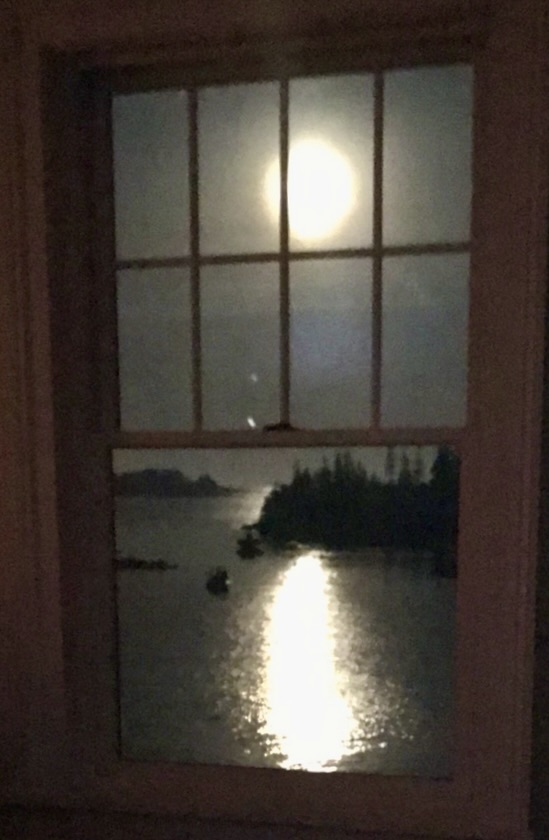
A Book of the Seasons: February Moonlight


The landscape covered with snow two feet thick
seen by moonlight from these Cliffs –
my owl sounds hoo hoo hoo, ho-O.

Henry Thoreau, February 3, 1852


February 2. Snows again half an inch more in the evening, after which, at ten o’clock, the moon still obscured, I skate on the river and meadows . . . Our skates make but little sound in this coating of snow about an inch thick, as if we had on woollen skates  and we can easily see our tracks in the night . . . In the meanwhile we hear the distant note of a hooting owl, and the distant rumbling of approaching or retreating cars sounds like a constant waterfall. February 2, 1855

February 3. The moon is nearly full tonight, and the moment is passed when the light in the east (i. e. of the moon) balances the light in the west. Venus is now like a little moon in the west, and the lights in the village twinkle like stars. It is perfectly still and not very cold. The shadows of the trees on the snow are more minutely distinct than at any other season, finely reticulated, each limb and twig represented, as cannot be in summer. The heavens appear less thickly starred than in summer, —  rather a few bright stars, brought nearer by this splendid twinkling in the cold sky. I hear my old acquaintance, the owl, from the Causeway. As I stand over Deep Cut the cars do not make much noise, or else I am used to it. And now whizzes the boiling, sizzling kettle by me, in which the passengers make me think of potatoes, which a fork would show to be done by this time. The steam is denser for the cold, and more white; like the purest downy clouds in the summer sky, its volumes roll up between me and the moon, and far behind, when the cars are a mile off, it still goes shading the fields with its wreaths, - the breath of the panting traveller. I now cross from the railroad to the road. This snow, the last of which fell day before yesterday, is two feet deep, pure and powdery. From a myriad little crystal mirrors the moon is reflected, which is the untarnished sparkle of its surface. Here, in the midst of a clearing, where the choppers have been leaving the woods in pieces to-day, I hear the hooting of an owl, whose haunts the chopper is laying waste. The ground is all pure white powdery snow, which his sled, etc., has stirred up. I can see every track distinctly where the teamster drove his oxen to the choppers' piles and loaded his sled, and even the tracks of his dog in the moonlight, and plainly to write this. The moonlight now is very splendid in the untouched pine woods above the Cliffs, alternate patches of shade and light. The light has almost the brightness of sunlight. The stems of the trees are more obvious than by day, being simple black against the moonlight and the snow. I can tell where there is wood and where open land for many miles in the horizon by the darkness of the former and whiteness of the latter. The landscape covered with snow two feet thick, seen by moonlight from these Cliffs, gleaming in the moon and of spotless white. Who can believe that this is the habitable globe? The scenery is wholly arctic. It looks as if the snow and ice of the arctic world, travelling like a glacier, had crept down southward and overwhelmed and buried New England. See if a man can think his summer thoughts now. But the evening star is preparing to set, and I will return. Floundering through snow, sometimes up to my middle, my owl sounds hoo hoo hoo, ho-OFebruary 3, 1852


February 411 P. M. — Coming home through the village by this full moonlight, it seems one of the most glorious nights I ever beheld. Though the pure snow is so deep around, the air, by contrast perhaps with the recent days, is mild and even balmy to my senses, and the snow is still sticky to my feet and hands . And the sky is the most glorious blue I ever beheld, even a light blue on some sides, as if I actually saw into day, while small white, fleecy clouds, at long intervals, are drifting from west-north west to south-southeast. If you would know the direction of the wind, look not at the clouds, which are such large bodies and confuse you , but consider in what direction the moon appears to be wading through them. The outlines of the elms were never more distinctly seen than now. It seems a slighting of the gifts of God to go to sleep now; as if we could better afford to close our eyes to daylight, of which we see so much. Has not this blueness of the sky the same cause with the blue ness in the holes in the snow, and in some distant shadows on the snow? — if, indeed, it is true that the sky is bluer in winter when the ground is covered with snow.  February 4, 1852

February 14.  Higginson told me yesterday . . . of a person in West Newbury, who told him that he once saw the moon rising out of the sea from his house in that place, and on the moonlight in his room the distinct shadow of a vessel which was somewhere on the sea between him and the moon!!  February 14, 1857

February 27.  To-night a circle round the moon. February 27, 1852

See also:


A Book of the Seasons,  by Henry Thoreau
 "A book, each page written in its own season,
out-of-doors, in its own locality."
 ~edited, assembled and rewritten by zphx ©  2009-2025

A Book of the Seasons: February Days


A year is made up of 
a certain series and number 
of sensations and thoughts 
which have their language in nature.

Henry Thoreau, June 6, 1857


The river is one 
level white blanket of snow
 quite to each shore now.
February 1, 1855


The scream of the jay
wholly without sentiment
a true winter sound.
February 2, 1854

This coating of snow mysterious muffled sounds the moon still obscured. February 2, 1855


The skater sails midst
a moving world of snow-steam
as high as his knees.
February 3, 1855


The tracks of a mink
in shallow snow along the 
edge of the river.
February 4, 1854

Distinct otter-track by the rock at the junction of the two rivers. February 4, 1855

Partridges feeding on the sumach berries make fresh tracks every snow. February 4, 1856


Silvery-lighted boughs
and shadowy intervals
belong to one tree.
February 5, 1852

Though on the back track
I draw nearer to the fox.
My thoughts grow foxy.
February 5, 1854


A mistiness makes
the woods look denser darker
and more primitive.
February 6, 1852

The coldest morning – all day well below zero, frostwork on windows. February 6, 1855


Single trees distinct
and black on the hill under
dull mist-covered sky.
February 7, 1856


First crust to walk on.
Now no difference between
rivers ponds and fields.
February 8, 1852

My vaporous life now radiant as frost in a winter morning. February 8, 1857


Though days are longer
cold sets in ever stronger.
It is midwinter.
February 9, 1851

The sun reflected from a hundred rippling sluices – melted snow-water. Listening for the first bluebird in this warm moist softened sunlit air. February 9, 1854

Drifted this morning. A very fine and dry snow about a foot deep. February 9, 1855


My shadow is blue.
Bright sunlight on pure white snow – celestial me. February 10, 1855


Willows shed pollen
how many aeons before
man was created?
February 11, 1854

Minus ten degrees. A blue atmosphere tinges the distant pine woods. February 11, 1855


Ice forced up on edge
like mirrors reflects the sun.
A fleet of ice boats.
February 12, 1851

The scream of a jay.
Cold hard tense frozen music
 like the winter sky.
February 12 , 1854

Sun shines in amid the pines and hemlocks as in a warm apartment. February 12, 1855

Sunlight thawing snow
 strangely excites a springlike
melting in my thoughts.
February 12, 1856

Return on green ice
to walk amid purple clouds
of the sunset sky.
February 12, 1860


They come with the storm
the falling and driving snow–
a flock of snowbirds.
February 13, 1853

Walking toward the sun
rainbow colors reflected
from powdery snow.

The red of sunsets
and of the snow at evening
and in rainbow flocks.

The blue of the sky and
of the ice and water
of shadows on snow.
 
Yellow of the sun
the morning and evening sky
and sedge bright when lit.

White of snow and clouds
and the black of clouds and of
thin wet snow on ice.

Purple of mountains
of the snow in drifts and of
clouds at evening.

The green of the sky
and of the ice and water
toward evening.


We are made to love the river and the meadow – wind ripples water.


The steady rushing
musical sound of rain soaks
into my spirit.
February 15, 1855

And another leaf or feather frost on the trees – handsome ghosts of trees. February 14, 1855


This cold afternoon
I inhale the clear bright air --
the sky undimmed blue.

Two large hawks circling 
over the woods by Walden – 
the first I have seen. 

The fog is so thick
we cannot see the engine  
almost upon us.

My voice is distinct under the pines draped with mist – you hear yourself speak. Oak leaves show more red amid the pines this wet day – agreeably so. And I feel as if I stood a little nearer – the heart of nature. February 16, 1855

The musical sound of rain on the shingles soaks into my spirit. February 15, 1855

Look back from the road 
through the sun to white-pine tops
this soft afternoon. 

What we call wildness is a civilization other than our own. February 16, 1859

This crystalline snow
lies up so light and downy –
semitransparent.


The first springlike note at the stone bridge from the hill in the misty air
February 17, 1855


Pleasant day
gathering nuts and apples
(still sound)
colors red and green
on the bare ground.
Strong south wind
skunk-cabbage in flower.
February 18, 1851

Now for the first time something in the air and light is spring-suggesting. February 18, 1855

A cloud in the west
changes the whole character
of the afternoon. 
February 18, 1860


Cold unvaried snow now stretching mile after mile and no place to sit.
February 19, 1852

I tend to walk where
I cannot walk in summer.
Swamps river and ponds.
 
Who placed us with eyes
between microscopic and
telescopic worlds?
February 19, 1854


The bright-blue water
here and there between the ice  
and on the meadow.

The northerly wind
roaring in the woods to-day
reminds me of March.

February 20, 1855


In new fallen snow
you cannot walk too early
to sense novelty.
February 21, 1854

Sheltered from the wind
I feel new life in Nature –
 season’s warmer sun.

Chickadee passes
the news through all the forest –
spring is approaching.

Snow on the mountains
now a silver rim to this
basin of the world.
February 21, 1855


Raw westerly wind 
but deliciously warm now
in sheltered places.

Such remarkably
pleasant weather – I  listen
for the first bluebird.

February 22, 1855

Fine snow drives along
like steam curling from a roof.
I see the drifts form.
February 23, 1854


Though snow covers ground
the quality of the air
reminds me of spring.

Observe the poplar's
swollen buds and the brightness
of the willow's bark.

February 24, 1852

Waves on the meadows.
Large cakes of ice blown up-stream 
against Hubbard’s Bridge.
February 25, 1851

Morning snow turns to
fine freezing rain with a glaze
changing to pure rain.
February 26, 1854


The North Branch has burst its icy fetters. 

This restless and now 
swollen stream flowing with ice 
on either side sparkles 
in the clear cool air. 
If rivers come out 
of their icy prison thus 
bright and immortal
shall not I too 
resume my spring life 
with joy and hope?

Bright and immortal
the unfettered stream sparkles
in the clear cool air.


To get the value of the storm we must be out long and travel far.

To-day it snows again
covering the ground.
 
To get the value of the storm 
we must be out a long time 

and travel far in it
so that it may fairly penetrate our skin 

and we be as it were 
turned inside out to it

 and there be no part in us 
but is wet or weather beaten –
 
so that we become storm men 
instead of fair weather men.

The snow finally turns 
to a drenching rain.
February 28, 1852

The westering sun
reflected from their edges
makes them shine finely.

February 28, 1855


From Pine Hill the snow-
crust shines in the sun as far
as the eye can reach.


“The year is but a succession of days,
and I see that I could assign some office to each day
which, summed up, would be the history of the year.”
Henry Thoreau, August 24, 1852


<<<<<<Last Month                                                       Next Month >>>>>


A Book of the Seasons
,  by Henry Thoreau 
"A book, each page written in its own season,
out-of-doors, in its own locality.”
~edited, assembled and rewritten by zphx © 2009-2025

Monday, March 9, 2020

February began cold; March began warm.

March 9 


Snows this forenoon, whitening the ground again.

2 and 3 P. M. — Thermometer 41°.

I have seen three or four pieces of coral in the fields of Concord, and Mr. Pratt has found three or four on his farm. How shall they be accounted for? Who brought them here? and when?

These barns shelter more beasts than oxen and horses. If you stand awhile in one of them now, especially where grain is piled, you will hear ever and anon a rustling in it made by the mice, which take the barn to be their home, as much as the house is yours.

As I recall it, February began cold, with some dry and fine driving snow, making those shell-shaped drifts behind walls, and some days after were some wild but low drifts on the meadow ice. I walked admiring the winter sky and clouds.

After the first week, methinks, it was much milder, and I noticed that some sounds, like the tinkling of rail road rails, etc., were springlike. Indeed, the rest of the month was earine, river breaking up a part and closing again, and but little snow.

About 8th and 12th, the beauty of the ice on the meadows, partly or slightly rotted, was noticeable, with the curious figures in it, and, in the coolest evenings, the green ice and rosy isles of flat drifts.

About the 9th, noticed the very black water of some open reaches, in a high wind and cold.

About the middle of the month was a moist, lodging snow, and the 18th a fine granular one, making about a foot, — the last.

Then sudden warm weather and rain come and dissolve it all at once, and the ruts, flowing with melted snow, shone in the sun, and the little sleighing was all gone. And from the 25th to 27th the river generally broke up.

March began warm, and I admired the ripples made by the gusts on the dark-blue meadow flood, and the light-tawny color of the earth, and was on the alert for several days to hear the first birds.

For a few days past it has been generally colder and rawer, and the ground has been whitened with snow two or three times, but it has all been windy.

You incline to walk now along the south side of hills which will shelter you from the blustering northwest and north winds.

The sidewalks are wet in the morning from the frost coming out.

H. D. Thoreau, Journal, March 9, 1860

The blustering northwest and north winds. See March 9, 1852 ("These March winds, which make the woods roar and fill the world with life and bustle, appear to wake up the trees out of their winter sleep"); March 9, 1859 ("It is worthwhile to hear the wind roar in the woods to-day."). See also note to  March 8, 1860 ("Nowadays we separate the warmth of the sun from the cold of the wind and observe that the cold does not pervade all places, but being due to strong northwest winds, if we get into some sunny and sheltered nook where they do not penetrate, we quite forget how cold it is elsewhere. ")

Sunday, February 23, 2020

May we measure our lives by our joys.

February 23

2 P. M. — Thermometer 56°. Wind south. 

3 P. M. — Thermometer 58° and snow almost gone. River rising. 

We have not had such a warm day since the beginning of December (which was remarkably warm). 

I walk over the moist Nawshawtuct hillside and see the green radical leaves of the buttercup, shepherd's purse (circular), sorrel, chickweed, cerastium, etc., revealed. 

February 23, 2019

About 4 P. M. a smart shower, ushered in by thunder and succeeded by a brilliant rainbow and yellow light from under the dark cloud in the west. Thus the first remarkable heat brings a thunder-shower. 

The words “pardall” and “libbard,” applied by Gesner to the same animal, express as much of the wild beast as any. 

I read in Brand's “Popular Antiquities  that “Bishop Stillingfleet observes, that among the Saxons of the northern nations, the Feast of the New Year was observed with more than ordinary jollity: thence , as Olaus Wormius and Scheffer observe, they reckoned their age by so many Iolas.” (Iola, to make merry. – Gothic.) 

So may we measure our lives by our joys. We have lived, not in proportion to the number of years that we have spent on the earth, but in proportion as we have enjoyed. 

February is pronounced the coldest month in the year. In B.'s “Popular Antiquities” is quoted this from the Harleian Manuscripts:

"Février de tous les mois, 
Le plus court et moins courtois.”

In the same work it is said that this saying is still current in the north of England: 
“On the first of March, 
The crows begin to search.”

Would it not apply to the crows searching for their food in our meadows, along the water's edge, a little later? 

A fact stated barely is dry. It must be the vehicle of some humanity in order to interest us. It is like giving a man a stone when he asks you for bread. 

Ultimately the moral is all in all, and we do not mind it if inferior truth is sacrificed to superior, as when the moralist fables and makes animals speak and act like men. It must be warm, moist, incarnated, — have been breathed on at least. 

A man has not seen a thing who has not felt it.

H.D. Thoreau, Journal, February 23. 1860


We have not had such a warm day since the beginning of December. See February 23, 1856 ("At 2 P. M. the thermometer is 47°. Whenever it is near 40 there is a speedy softening of the snow") and note to February 8. 1860 ("40° and upward may be called a warm day in the winter. We have had much of this weather for a month past, reminding us of spring.")

See the green radical leaves of the shepherd's purse. See January 7, 1855 ("The delicious soft, spring-suggesting air, how it fills my veins with life ! . . . On the slopes the ground is laid bare and radical leaves revealed, crowfoot, shepherd's-purse, clover, etc., a fresh green, and, in the meadow, the skunk-cabbage buds, with a bluish bloom, and the red leaves of the meadow saxifrage; and these and the many withered plants laid bare remind me of spring."); January 23, 1855 ("The radical leaves of the shepherd’s-purse, seen in green circles on the water-washed plowed grounds, remind me of the internal heat and life of the globe, anon to burst forth anew."); March 8, 1859 ("The shepherd's-purse radical leaves are particularly bright"); April 25, 1855 ("Shepherd's-purse will bloom to-day, the first I have noticed which has sprung from the ground this season, or of an age.")

 The first remarkable heat brings a thunder-shower. See February 14, 1861 ("A little thunder and lightning late in the afternoon. I see two flashes and hear two claps.")

A brilliant rainbow and yellow light from under the dark cloud in the west. See August 7, 1852 ("If I were to choose a time for a friend to make a passing visit to this world for the first time, in the full possession of all his faculties, perchance it would be at a moment when the sun was setting with splendor in the west, his light reflected far and wide through the clarified air after a rain, and a brilliant rainbow, as now, o'erarching the eastern sky.")

So may we measure our lives by our joys.
See July 13, 1852 ("A journal, a book that shall contain a record of all your joy, your ecstasy.")


Crows searching for their food in our meadows, along the water's edge, a little later? See March 5, 1859 ("I see crows walking about on the ice half covered with snow in the middle of the meadows, where there is no grass, apparently to pick up the worms and other insects left there since the midwinter freshet"); March 22, 1855 ("I have noticed crows in the meadows ever since they were first partially bare, three weeks ago."); March 22, 1856 ("Many tracks of crows in snow along the edge of the open water against Merrick’s at Island. They thus visit the edge of water—this and brooks —before any ground is exposed. Is it for small shellfish?")

A fact stated barely is dry. It must be the vehicle of some humanity in order to interest us. See December 16, 1837 ("The fact will one day flower out into a truth."); 
August 5, 1851 ("The question is not what you look at, but what you see.”); November 9, 1851 ("Facts should be material to the mythology which I am writing; I would so state facts that they shall be significant, shall be myths or mythologic.”); June 19, 1852 (“Facts collected by a poet are set down at last as winged seeds of truth, samara?, tinged with his expectation.”); June 21, 1852 ("
Nature has looked uncommonly bare and dry to me for a day or two. With our senses applied to the surrounding world we are reading our own physical and corresponding moral revolutions . . . The perception of beauty is a moral test"); May 6, 1854 (“There is no such thing as pure objective observation. Your observation, to be interesting, i. e. to be significant, must be subjective.")

February 23.  See A Book of the Seasons, by Henry Thoreau, February 23

A brilliant rainbow –
yellow light from under the
dark cloud in the west.

A bare fact is dry –
a man has not seen a thing 
who has not felt it.


A Book of the Seasons
,  by Henry Thoreau 
"A book, each page written in its own season,
out-of-doors, in its own locality.”
~edited, assembled and rewritten by zphx © 2009-2025

https://tinyurl.com/hdt-600223

Popular Posts Last 30 Days.

The week ahead in Henry’s journal

The week ahead in Henry’s journal
A journal, a book that shall contain a record of all your joy.
"A stone fruit. Each one yields me a thought." ~ H. D. Thoreau, March 28, 1859


I sit on this rock
wrestling with the melody
that possesses me.