Monday, July 9, 2012

The flower opens, and lo! another year.


Friday. 4 a.m. — To Cliffs. 

No dew; no dewy cobwebs. The sky looks mist-like, not clear blue. An aurora fading into a general saffron color. At length the redness travels over, partly from east to west, before sunrise, and there is little color in the east. 

The birds all unite to make the morning quire; sing rather faintly, not prolonging their strains. The crickets appear to have received a reinforcement during the sultry night. 

There is no name for the evening red corresponding to aurora. It is the blushing foam about the prow of the sun's boat, and at eve the same in its wake. 

I do not often hear the bluebird now except at dawn. 

Methinks we have had no clear winter skies — no skies the color of a robin's egg, and pure amber around — for some months. 

These blueberries on Fair Haven have a very innocent, ambrosial taste, as if made of the ether itself, as they plainly are colored with it.

I hear the chickadee's two wiry notes. 

The jay's note, resounding along a raw wood-side, suggests a singular wildness. 

I hear many scarlet tanagers, the first I have seen this season, which some might mistake for a red-eye. A hoarse, rough strain, comparatively, but more easily caught owing to its simplicity and sameness; something like heer chip-er-way-heer chory chay.

A bobolink.


Morton, in his "Crania Americana," says, referring to Wilkinson as his authority, that "vessels of porcelain of Chinese manufacture have of late been repeatedly found in the catacombs of Thebes, in Egypt," some as old as the Pharaonic period, and the inscriptions on them "have been read with ease by Chinese scholars, and in three instances record the following legend: 

"The flower opens, and lo! another year." 

There is something sublime in the fact that some of the oldest written sentences should thus celebrate the coming in of spring. How many times have the flowers opened and a new year begun! Hardly a more cheering sentence could have come down to us. How old is spring, a phenomenon still so fresh! Do we perceive any decay in Nature?  How much evidence is contained in this short and simple sentence respecting the former inhabitants of this globe! It is a sentence to be inscribed on vessels of porcelain. Suggesting that so many years had gone before.  An observation as fit then as now.


The heat to-day (as yesterday) is furnace-like. It produces a thickness almost amounting to vapor in the near horizon. How intense and suffocating the heat under some sunny wood-sides where no breeze circulates!  The railroad men cannot work in the Deep Cut, but have come out on to the causeway, where there is a circulation of air. They tell with a shudder of the heat reflected from the rails. 


Yet a breezy wind, as it were born of the heat, rustles all leaves.  It is refreshing to see the surface of Fair Haven rippled with wind. The waves break here quite as on the seashore. To feel the wind blow on your body, the water flow you and lave you, is a rare physical enjoyment this hot day. Bathing is an undescribed luxury.


H. D. Thoreau, Journal, July 9, 1852

Morton referring to Wilkinson. See John Gardner Wilkinson, A Popular Account of the Ancient Egyptians. [Revised and abridged from Manners and customs of the ancient Egyptians] (1854) ("One side presents a flower, and the other an inscription, containing, according to Sir J. Davis (in three out of eight he examined), the following legend: — “The flower opens, and lo! another year; ” and another has been translated by Mr. Thoms: — “During the shining of the moon the fir-tree sends forth its sap,” ( which in a thousand years becomes amber. )")

Bathing is an undescribed luxury. To feel the wind blow on your body, the water flow on you and lave you, is a rare physical enjoyment this hot day. The water is remarkably warm here, especially in the shal lows, — warm to the hand, like that which has stood long in a kettle over a fire. The pond water being so warm made the water of the brook feel very cold; and this kept close on the bottom of the pond for a good many rods about the mouth of the brook, as I could feel with my feet; and when I thrust my arm down where it was only two feet deep, my arm was in the warm water of the pond, but my hand in the cold water of the brook. See July 3, 1854 ("What a luxury to bathe now! It is gloriously hot, — the first of this weather. I cannot get wet enough. I must let the water soak into me. I begin to inhabit the planet, and see how I may be naturalized at last.”) See also  A Book of the Seasons, by Henry Thoreau, The Luxury of Bathing

July 9. See A Book of the Seasons, by Henry Thoreau, July 9


A Book of the Seasons,  by Henry Thoreau
"A book, each page written in its own season,
out-of-doors, in its own locality.”

~edited, assembled and rewritten by zphx © 2009-2021


Saturday, July 7, 2012

A season to awake


July 7.


July 7, 2012

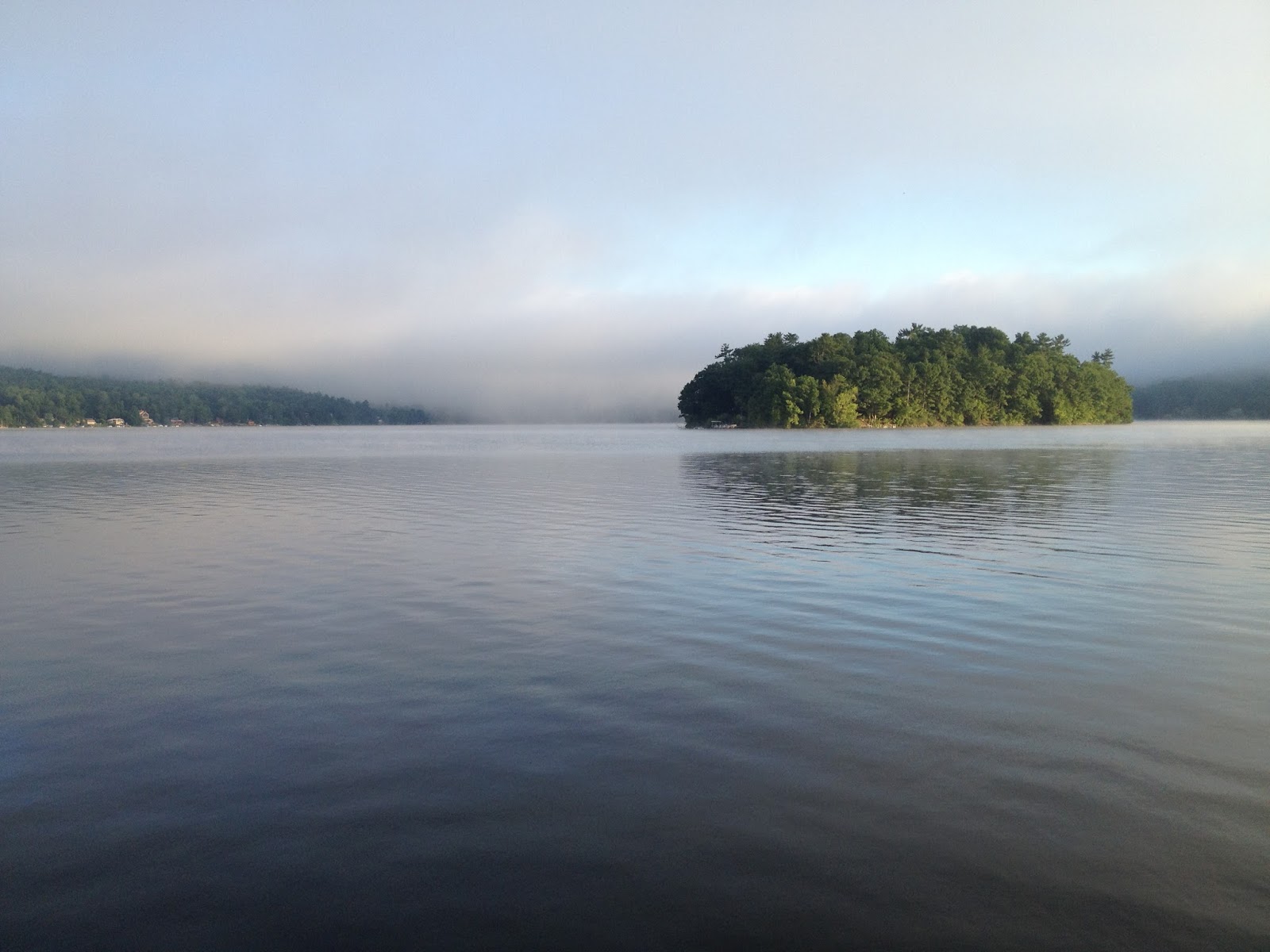
Before I rise I hear the song of birds from out the fog, like the bursting of its bubbles with music, the bead on liquids just uncorked. 

Oh, might I always wake to thought and poetry – regenerated! 

I came near awaking this morning. 

I am older than last year; the mornings are further between; the days are fewer.  

When the yellow lily flowers in the meadows, and the red in dry lands and by wood-paths, then, methinks, the flowering season has reached its height. They surprise me as perhaps no more can. 

Now I am prepared for anything.

H. D. Thoreau, Journal, July 7, 1852


4 a.m. — The first really foggy morning. Yet before I rise I hear the song of birds from out it, like the bursting of its bubbles with music, the bead on liquids just uncorked. Their song gilds thus the frostwork of the morning. As if the fog were a great sweet froth on the surface of land and water, whose fixed air escaped, whose bubbles burst with music. The sound of its evaporation, the fixed air of the morning just brought from the cellars of the night escaping. The morning twittering of birds in perfect harmony with it. 

I came near awaking this morning. I am older than last year; the mornings are further between ; the days are fewer. 

Any excess — to have drunk too much water, even, the day before — is fatal to the morning's clarity, but in health the sound of a cow-bell is celestial music. 

Oh, might I always wake to thought and poetry — regenerated ! Can [it] be called a morning, if our senses are not clarified so that we perceive more clearly, if we do not rise with elastic vigor? 

How wholesome these fogs which some fear ! They are cool, medicated vapor baths, mingled by Nature, which bring to our senses all the medical properties of the meadows. The touchstones of health. Sleep with all your windows open, and let the mist embrace you. 

To the Cliffs. 

The fog condenses into fountains and streams of music, as into the strain of the bobolink which I hear, and runs off so. The music of the birds is the tinkling of the rills that flow from it. 

I cannot see twenty rods. The trees look darker through it, and their outlines more distinct, apparently because of the whiteness of the fog and the less light that comes through the trees. There is everywhere dew on the cobwebs, little gossamer veils or scarfs as big as your hand, dropped from fairy shoulders that danced on the grass the past night. Even where the grass was cut yesterday and is now cocked up, these dewy webs are as thick as anywhere, promising a fair day.

There is no sunrise.

***
The very handsome "pink purple" flowers of the Calopogon (!) pulchellus enrich the grass all around the edge of Hubbard's blueberry swamp, and are now in their prime. 
  • The Arethusa bulbosa, "crystalline purple;" 
  • Pogonia ophioglossoides, snake-mouthed arethusa, "pale purple;" and the 
  • Calopogon pulchellus, grass pink, "pink purple," 
make one family in my mind, — next to the purple orchis, or with it, — being flowers par excellence, all flower, all color, with inconspicuous leaves, naked flowers, and difficult — at least the calopogon — to preserve. 

But they are flowers, excepting the first, at least, without a name. Pogonia! Calopogon ! ! They would blush still deeper if they knew what names man had given them. 

The first and the last interest me most, for the pogonia has a strong snaky odor. 


The mornings are further between; the days are fewer.
See July 20, 1852 ("The stars are few and distant; the fireflies fewer still.")

Methinks the flowering season has reached its height. See July 7, 1851 ("And now that there is an interregnum in the blossoming of flowers, so is there in the singing of the birds.”)

The pogonia has a strong snaky odor.
 See note to July 7, 1856 ("The snake-head arethusa is now abundant ") and June 21, 1852 ("The adder's-tongue arethusa smells exactly like a snake.")


I am older now
mornings are further between –
the days are fewer.


Friday, July 6, 2012

A pickerel lies in wait.


July 6.
July 6, 2012

In selecting a site in the country, let a lane near your house, grass-grown, cross a sizable brook where is a watering-place. 

I see a pickerel in the brook showing his whitish greedy upper lips projecting over the lower. How well concealed he is! He is generally of the color of the muddy bottom or the decayed leaves and wood that compose it, and the longitudinal white stripe on his back and the transverse ones on his sides are the color of the yellowish sand here and there exposed. He heads upstream and keeps his body perfectly motionless, however rapid the current, chiefly by the motion of his narrow pectoral fins, though also by the waving of his other fins and tail as much as necessary, which a frog might mistake for that of weeds. Thus, concealed by his color and stillness, like a stake, he lies in wait for frogs or minnows. Now a frog leaps in, and he darts forward three or four feet.

H. D. Thoreau, Journal, July 6, 1852


See July 12, 1854 ("There is a constant motion of the pectoral fins and also a waving motion of the ventrals, apparently to resist the stream, and a slight waving of the anal, apparently to preserve its direction. It darts off at last by a strong sculling motion of its tail.")See also A Book of the Seasons, by Henry Thoreau, Pickerel

Thursday, July 5, 2012

Eternal summer arrrives


July 5.


I know a man who never speaks of the sexual relation but jestingly, though it is a subject to be approached only with reverence and affection. What can be the character of that man's love? It is ever the subject of a stale jest, though his health or his dinner can be seriously considered. The glory of the world is seen only by a chaste mind. To whomsoever this fact is not an awful but beautiful mystery, there are no flowers in nature.

The progress of the season is indescribable. 

It is growing warm again, but the warmth is different from that we have had. We lie in the shade of locust trees. Haymakers go by in a hay-rigging. I am reminded of berrying. I scent the sweet-fern and the dead or dry pine leaves. Cherry-birds alight on a neighboring tree. The warmth is something more normal and steady, ripening fruits. It begins to be such weather as when people go a-huckle-berrying.

Nature offers fruits now as well as flowers. We have become accustomed to the summer. It has acquired a certain eternity.

H. D. Thoreau, Journal, July 5, 1852

Cherry-birds alight on a neighboring tree. SeeA Book of the Seasons, by Henry Thoreau, The Cherry-bird (cedar waxwing)


Nature offers fruits now as well as flowers. We have become accustomed to the summer. It has acquired a certain eternity..
See January 9, 1853 (" I thought of those summery hours when time is tinged with eternity . . .”); July 16, 1851 ("It is an air this afternoon that makes you indifferent to all things, - perfect summer. . . You know not heat nor cold. What season of the year is this?") See also August 6, 1852 (" Summer gets to be an old story. Birds leave off singing, as flowers blossoming.")

The calopogon, or grass-pink, now fully open, . . — its four or five open purple flowers — . . . makes a much greater show than the pogonia. It is of the same character with that and the arethusa.  See July 7, 1852 ("The Arethusa bulbosa, " crystalline purple;" Pogonia ophioglossoides, snake-mouthed arethusa, "pale purple;" and the Calopogon pulchellus, grass pink, "pink purple," make one family in my mind, — next to the purple orchis, or with it, — being flowers par excellence, all flower, all color, with inconspicuous leaves, naked flowers,")

 July 5. I know a man who never speaks of the sexual relation but jestingly, though it is a subject to be approached only with reverence and affection. What can be the character of that man's love ? It is ever the subject of a stale jest, though his health or his dinner can be seriously considered. The glory of the world is seen only by a chaste mind. To whomsoever this fact is not an awful but beautiful mystery, there are no flowers in nature. White lilies continue to open in the house in the morning and shut in the night for five or six days, un til their stamens have shed their pollen and they turn rusty and begin to decay, and the beauty of the flower is gone, and its vitality, so that it no longer expands with the light.

How perfect an invention is glass ! There is a fitness in glass windows which reflect the sun morning and evening, windows, the doorways of light, thus reflecting the rays of that luminary with a splendor only second to itself. This invention one would say was anticipated in the arrangement of things. The sun rises with a salute and leaves the world with a farewell to our windows. To have, instead of opaque shutters or dull horn or paper, a material like solidified air, which reflects the sun thus brightly! It is inseparable from our civilization and enlightenment. It is encouraging that this intelligence and brilliancy or splendor should be long to the dwellings of men, and not to the cliffs and micaceous rocks and lakes exclusively.

P. M. — To Second Division Brook. The Typha latifolia, or reed-mace, sheds an abundance of sulphur-like pollen into the hand now. Its tall and handsome swords are seen waving above the bushes in low grounds now. What I suppose the Vaccinium fuscatum, or black blueberry, is now ripe here and there, quite small. Heard the Mating or lowing of a calf. Sat in the shade of the locusts in front of J. Hosmer's cottage and heard a locust z-ing on them, but could not find him. This cottage and the landscape, seen through the frame made by the " Railroad Crossing " sign, as you approach it along the winding bushy road, is a pleasing sight. It is picturesque.

There is a meadow on the Assabet just above Derby's Bridge, — it may contain an acre, — bounded on one side by the river, on the other by alders and a hill, completely covered with small hummocks which have lodged on it in the winter, covering it like the mounds in a graveyard at pretty regular intervals. Their edges are rounded like [the] latter, and they and the paths between are covered with a firm , short greensward , with here and there hardhacks springing out of them , so that they make excellent seats , especially in the shade of an elm that grows there . They are completely united with the meadow , forming little oblong hillocks from one to ten feet long , flat as a mole to the sward . I am inclined to call it the elfin burial - ground , or per- chance it might be called the Indian burial - ground . It is a remarkably firm - swarded meadow , and convenient to walk on . And these hummocks have an important effect in elevating it . It suggests at once a burial - ground of the aborigines , where perchance lie the earthly re- mains of the rude forefathers of the race . I love to ponder the natural history thus written on the banks of the stream , for every higher freshet and intenser frost is recorded by it . The stream keeps a faithful and a true journal of every event in its experience , what- ever race may settle on its banks ; and it purls past this natural graveyard with a storied murmur , and no doubt it could find endless employment for an old mortality in renewing its epitaphs . 

The progress of the season is indescribable. It is growing warm again, but the warmth is different from that we have had. We lie in the shade of locust trees. Haymakers go by in a hay-rigging. I am reminded of berrying. I scent the sweet-fern and the dead or dry pine leaves. Cherry-birds alight on a neighboring tree. The warmth is something more normal and steady, ripening fruits. Campanula aparinoides, slender bell- flower. The Cicuta maculata, American hemlock. It begins to be such weather as when people go a-huckle berrying.

 Nature offers fruits now as well as flowers. We have become accustomed to the summer. It has acquired a certain eternity. The earth is dry. Perhaps the sound of the locust expresses the season as well as anything. The farmers say the abundance of the grass depends on wet in June. I might make a separate season of those days when the locust is heard. That is our torrid zone. This dryness and heat are necessary for the maturing of fruits.

How cheering it is to behold a full spring bursting forth directly from the earth, like this of Tarbell's, from clean gravel, copiously, in a thin sheet; for it descends at once, where you see no opening, cool from the caverns of the earth, and making a consider able stream. Such springs, in the sale of lands, are not valued for as much as they are worth. I lie almost flat, resting my hands on what offers, to drink at this water where it bubbles, at the very udders of Nature, for man is never weaned from her breast while this life lasts. How many times in a single walk does he stoop for a draught!

We are favored in having two rivers, flowing into one, whose banks afford different kinds of scenery, the streams being of different characters; one a dark, muddy, dead stream, full of animal and vegetable life, with broad meadows and black dwarf willows and weeds, the other comparatively pebbly and swift, with more abrupt banks and narrower meadows. To the latter I go to see the ripple, and the varied bottom with its stones and sands and shadows; to the former for the influence of its dark water resting on invisible mud, and for its reflections. It is a factory of soil, depositing sediment.

How many virtues have cattle in the fields! They do not make a noise at your approach, like dogs ; they rarely low, but are quiet as nature, — merely look up at you. In the Ministerial Swamp there is a great deal of the naked viburnum rising above the dwarf andromeda. The calopogon, or grass-pink, now fully open, is remarkably handsome in the grass in low grounds, by contrast — its four or five open purple flowers — with the surrounding green. It makes a much greater show than the pogonia. It is of the same character with that and the arethusa, with a slight fragrance, methinks. It is very much indebted to its situation, no doubt, in low ground, where it contrasts with the dark- green grass. All color, with only a grass-like leaf be low; flowers eminently. If it grew on dry and barren hilltops, or in woods above the dead leaves, it would lose half its attractions. Buttercups have now almost disappeared, as well as clover. Some of the earliest roses are ceasing, but others remain. I see many devil's-needles zigzagging along the Second Division Brook, some green, some blue, both with black and perhaps velvety wings. They are confined to the brook. How lavishly they are painted ! How cheap was the paint! How free the fancy of their creator! I caught a handful of small water-bugs, fifteen or twenty, about as large as apple seeds. Some country people call them apple seeds, it is said, from their scent. I perceived a strong scent, but I am not sure it was like apples. I should rather think they were so called from their shape.

Some birds are poets and sing all summer. They are the true singers. Any man can write verses during the love season. 

I am reminded of this while we rest in the shade on the Major Heywood road and listen to a wood thrush, now just before sunset. We are most interested in those birds who sing for the love of the music and not of their mates; who meditate their strains, and amuse themselves with singing; the birds, the strains, of deeper sentiment; not bobolinks, that lose their plumage, their bright colors, and their song so early.

The robin, the red-eye, the veery, the wood thrush, etc., etc.

The wood thrush's is no opera music; it is not so much the composition as the strain, the tone, — cool bars of melody from the atmosphere of everlasting morning or evening. It is the quality of the song, not the sequence. In the peawai's note there is some sultriness, but in the thrush's, though heard at noon, there is the liquid coolness of things that are just drawn from the bottom of springs. 

The thrush alone declares the immortal wealth and vigor that is in the forest. Here is a bird in whose strain the story is told, though Nature waited for the science of aesthetics to discover it to man. Whenever a man hears it, he is young, and Nature is in her spring. Wherever he hears it, it is a new world and a free country, and the gates of heaven are not shut against him.

Most other birds sing from the level of my ordinary cheerful hours — a carol; but this bird never fails to speak to me out of an ether purer than that I breathe, of immortal beauty and vigor. He deepens the significance of all things seen in the light of his strain. He sings to make men take higher and truer views of things. He sings to amend their institutions; to relieve the slave on the plantation and the prisoner in his dungeon, the slave in the house of luxury and the prisoner of his own low thoughts.

How fitting to have every day in a vase of water on your table the wild-flowers of the season which are just blossoming! Can any house [be] said to be furnished without them ? Shall we be so forward to pluck the fruits of Nature and neglect her flowers ? These are surely her finest influences. So may the season suggest the fine thoughts it is fitted to suggest. Shall we say, " A penny for your thoughts," before we have looked into the face of Nature ? Let me know what picture she is painting, what poetry she is writing, what ode composing, now.

I hear my hooting owl now just before sunset. You can fancy it the most melancholy sound in Nature, as if Nature meant by this to stereotype and make permanent in her quire the dying moans of a human being, made more awful by a certain gurgling melodiousness. It reminds of ghouls and idiots and insane howlings. One answers from far woods in a strain made really sweet by distance. Some poor weak relic of mortality who has left hope behind, and howls like an animal, yet with human sobs, on entering the dark valley. I find myself beginning with the letters gl when I try to imitate it. Yet for the most part it is a sweet and melodious strain to me.1

Some fields are quite yellow with johnswort now, — a pleasing motley hue, which looks autumnal. What is that small chickweed-like plant on Clamshell Hill, now out of bloom ?

The sun has set. We are in Dennis's field. The dew is falling fast. Some fine clouds, which have just escaped being condensed in dew, hang on the skirts of day and make the attraction in our western sky, — that part of day's gross atmosphere which has escaped the clutches of the night and is not enough condensed to fall to earth, — soon to be gilded by his parting rays. They are remarkably finely divided clouds, a very fine mackerel sky, or, rather, as if one had sprinkled that part of the sky with a brush, the outline of the whole being that of several large sprigs of fan coral. C, as usual, calls it a Mediterranean sky. They grow darker and darker, and now are reddened, while dark-blue bars of clouds of wholly different character lie along the northwest horizon.

The Asclepias Cornuti (Syriaca) and the A. incarnata (pulchra) (this hardly out). Considerable fog to night.


The thrush alone declares the immortal wealth and vigor that is in the forest. See 
A Book of the Seasons, by Henry Thoreau, The Wood Thrush

Tuesday, July 3, 2012

Wintergreen and blueberries.


July 3.The Chimaphila umbellata, wintergreen, must have been in blossom some time. The back side of its petals, "cream colored tinged with purple," which is turned toward the beholder, while the face is toward the earth, is the handsomest. It is a very pretty little chandelier of a flower, fit to adorn the forest floor.

The pickers have quite thinned the crop of early blueberries where Stow cut off winter before last. When the woods on some hillside are cut off, the Vaccinium Pennsylvanicum springs up, or grows more luxuriantly, being exposed to light and air, and by the second year its stems are weighed to the ground with clusters of blueberries covered with bloom, and much larger than they commonly grow, also with a livelier taste than usual, as if remembering some primitive mountain-side given up to them anciently. 


I am surprised to see how suddenly, when the sun and air and rain are let in, these bushes, which, in the shade of the forest, scarcely yielded the walker a berry, will suddenly be weighed down with fruit. Such places supply the villagers with the earliest berries for two or three years, or until the rising wood overgrows them and they withdraw into the bosom of Nature again. They flourish during the few years between one forest's fall and another's rise.

H.D. Thoreau, Journal, July 3, 1852 

Chimaphila umbellata, a/k/a pipsissewa is not American wintergreen (Gaultheria procumbent)--which HDT calls “checkerberry.". See  November 16, 1858 (“Methinks the wintergreen, pipsissewa, is our handsomest evergreen, so liquid glossy green and dispersed almost all over the woods.”)

Sunday, July 1, 2012

A Book of Seasons: The Pines

~ A book, each page written in its own season, out-of-doors, in its own locality.

by Henry Thoreau, collected, edited, assembled and rewritten by zphx ©  2009-2014.


In the crucible of my celibate life
purified of all desire,
I enter truth from behind
and call her name.

Simplify! Simplify!


The shade of pines on the snow is in some lights quite blue. 
Journal, February 2, 1854


Now the white pine are a misty blue; anon a lively, silvery light plays on them, and they seem to erect themselves unusually; while the pitch pines are a brighter yellowish-green than usual. The sun loves to nestle in the boughs of the pine and pass rays through them.
Journal, February 4, 1852

The boughs, feathery boughs, of the white pines, tier above tier, reflect a silvery light against the darkness of the grove, as if both the silvery-lighted and greenish bough and the shadowy intervals of the shade behind belong to one tree.
Journal, February, 5, 1852

To-day I am agreeably surprised to find that hard closed cone, which defied all violent attempts to open it, has dried and opened with perfect regularity, filling the drawer, and from a solid, narrow, and sharp cone, has become a broad, rounded, open one, -- has, in fact, expanded with the regularity of a flower's petals into a conical flower of rigid scales, and has shed a remarkable quantity of delicate-winged seeds. The expanding of the pine cones, that, too, is a season.
Journal, February 27, 1853

The hemlock cones have shed their seeds, but there are some closed yet on the ground. Part of the pitch pine cones are yet closed.
Journal, March 6, 1853


I can see far into the pine woods to tree behind tree, and one tower behind another of silvery needles, stage above stage, relieved with shade. The edge of the wood is not a plane surface, but has depth.
Journal, April 2, 1853


The pine on Lee's shore of the pond, seen against the light water this cloudy weather from part way down the Cliff, is an agreeable object to me. When the outline and texture of white pine is thus seen against the water or the sky, it is an affecting sight.
Journal, April 22, 1852

The pines have an appearance they have not worn before, yet not easy to describe. The mottled sunlight and shade, seen looking into the woods, is more like summer. Coming home over the Corner road, the sun, now getting low, is reflected very bright and silvery from the water on the meadows, seen through the pines of Hubbard's Grove.
Journal, April 29, 1852

The white pine is beautiful in the morning light--the early sun light and the dew on it -- before the water is rippled and the morning song of the birds is quenched.
Journal, May 3, 1852

I see dark pines in the distance in the sunshine, contrasting with the light fresh green of the deciduous trees.
Journal, May 17, 1852

The forest, the dark-green pines, wonderfully distinct, near and erect, with their distinct dark stems, spiring tops, regularly disposed branches, and silvery light on their needles.
Journal, May 18, 1852


Having noticed the pine pollen washed up on the shore of three or four ponds in the woods lately and at Ripple Lake, a dozen rods from the nearest pine, it suggested to me that the air must be full of this fine dust at this season, that it must be carried to great distances, and its presence might be detected remote from pines by examining the edges of bodies of water, where it would be collected to one side by the wind and waves from a large area.
Journal, June 21, 1860

I am too late for the white pine flowers. The cones are half an inch long and greenish, and the male flowers effete.
Journal, June 25, 1852


The path by the wood-side is red with the effete staminiferous flowers of the white pine.
Journal, July 1, 1852


There is a handsome wood-path on the east side of White Pond. The shadows of the pine stems and branches fall across the path, which is perfectly red with pine-needles.
Journal, July 5, 1851

Some pigeons here are resting in the thickest of the white pines during the heat of the day, migrating, no doubt.
Journal, July 21, 1851

You see every feature of the white pine grove with distinctness, -- the stems of the trees, then the dark shade, then their fresh sunlit outsides -- and an inky darkness as of night under the edge of the woods, now at noonday heralding the evening of the year.
Journal, August 15, 1853

There is an abundant crop of cones on the white pines this year, and they are now for the most part brown and open. They make a great show even sixty rods off. The tops of the high trees for six or ten feet downward are quite browned with them, hanging straight downward. It is worth the while to observe this evidence of fertility, even in the white pine, which commonly we do not regard as a fruit-bearing tree. It is worth a long walk to look from some favorable point over a pine forest whose tops are thus covered with the brown cones just opened, — from which the winged seeds have fallen or are ready to fall. It is really a rich and interesting sight. How little observed are the fruits which we do not use! How few attend to the ripening and dispersion of the pine seed!
Journal, September 18, 1859

The pine fall, i.e. the change is commenced, and the trees are mottled green and yellowish.
Journal, October 3, 1852

A new carpet of pine leaves is forming in the woods. The forest is laying down her carpet for the winter.
Journal, October 12, 1852

The pines, both white and pitch, have now shed their leaves, and the ground in the pine woods is strewn with the newly fallen needles.
Journal, October 22, 1851

The ground is strewn with pine-needles as sunlight.
Journal, October 25, 1853

Measure some pine stumps on Tommy Wheeler's land, about that now frosty hollow, cut as I judge from sprouts four years ago. One, having 164 rings, sprang up at least one hundred and sixty-eight years ago, or about the year 1692, or fifty-seven years after the settlement, 1635.
Journal, November 1, 1860


I notice along the Corner road, beyond Abiel Wheeler's, quite a number of little white pines springing up against the south wall, whose seed must have been blown from Hubbard's Grove some fifty rods east.
Journal, November 8, 1860

Measured a stick of round timber, probably white pine, on the cars this afternoon, -- ninety-five feet long, nine and ten-twelfths in circumference at butt, and six and two-twelfths in circumference at small end, quite straight. From Vermont.
Journal, November 18, 1852


The pines standing in the ocean of mist, seen from the Cliffs, are trees in every stage of transition from the actual to the imaginary. As you advance, the trees gradually come out of the mist and take form before your eyes.
Journal, November 29, 1850

The evergreens are greener than ever. There is a peculiar bright light on the pines and on their stems. The lichens on their bark reflect it.
Journal, December 5, 1850

Now that the ground is covered with snow, the pine woods seen from the hilltops are not green but a dark brown, greenish-brown perhaps. You see dark patches of wood.
Journal, December 26, 1850

The white pines look greener than usual in this gentle rain, and every needle has a drop at the end of it. There is a mist in the air which partially conceals them, and they seem of a piece with it. Journal, December 28, 1851

The round greenish-yellow lichens on the white pines loom through the mist. The trees appear all at once covered with their crop of lichens and mosses of all kinds, the livid green of some, the fruit of others. Your eyes run swiftly through the mist to these things only. They eclipse the trees they cover.
Journal, December 31, 1851

I see where the squirrels have torn the pine cones in pieces to come at their seeds. And in some cases the mice have nibbled the buds of the pitch pines, where the plumes have been bent down by the snow.
Journal, January 23, 1852

The path by the wood-side is red with the effete staminiferous flowers of the white pine.


July 1

A cloudy and slightly showery morning. 

One object to see the white lilies in blossom. I wish to breathe the atmosphere of lilies, and get the full impression which lilies are fitted to make.

From the bridge I see a bream's nest in soft sand on the edge of deeper water, scooped out quite deep, with very sharp edges sloping both ways. 

Some peetweets, which probably have eggs in Conant's corn-field, make a great ado twittering and circling about the dog.
July 1, 2012


The path by the wood-side is red with the effete staminiferous flowers of the white pine. 


Roses are in their prime now, growing amid huckle-berry bushes, ferns, and sweet-ferns, especially about some dry pond-hole; some paler, some more red.

It is more agreeable walking this cloudy day, with a few harmless sun-showers, than it would be in a glaring sunny day. It is pleasant to behold so much of the landscape in the shadow of the clouds, especially to look off from the top of Conantum, under shady walnut boughs, to larger shades in valleys,- all Nine-Acre Corner in the cool shade of a cloud.

Borrow Brigham the wheelwright's boat at the Corner Bridge. 


The white lilies are in all their splendor, fully open, sometimes their lower petals lying flat on the surface. The largest appeared to grow in the shallower water, where some stand five or six inches out of water, and are five inches in diameter. Two which I examine have twenty-nine petals each. We push our boat into the midst of some shallow bays covered with pads and spotted white with many hundreds of lilies just expanded. The freshly opened lilies are a pearly white, and though the water amid the pads is quite unrippled, the passing air gives a slight oscillating, boat-like motion to and fro to the flowers, like boats held fast by their cables.

After eating our luncheon at Rice's landing, I can not find one open anywhere for the rest of the day.

H. D. Thoreau, Journal, July 1, 1852


The path by the wood-side is red with the effete staminiferous flowers of the white pine. See note to  June 25, 1858 ("The ground under the white pines is now strewn with the effete flowers, like an excrement.”)

Roses are in their prime now . . .The white lilies are in all their splendor. See June 30, 1852 ("Is not this period more than any distinguished for flowers, when roses, swamp-pinks, morning-glories, arethusas, pogonias, orchises, blue flags, epilobiums, mountain laurel, and white lilies are all in blossom at once?"); See also A Book of the Seasons,  by Henry Thoreau, The Wild Rose

It is pleasant to behold so much of the landscape in the shadow of the clouds
See July 1,1854 ("I see from this hill their great shadows pass slowly here and there over the top of the green forest."); See also June 3, 1858 ("It was interesting to watch from that height the shadows of fair-weather clouds passing over the landscape."); July 27, 1852 ("It is pleasing to behold at this season contrasted shade and sunshine on the side of neighboring hills.")

 After eating our luncheon . . . I can not find one open anywhere for the rest of the day. See July 17, 1854 (“I watch them for an hour and a half. By about 1.30 they are all shut up, and no petal is to be seen up and down the river . . .I think that I could tell when it was 12 o'clock within half an hour by the lilies.”)

Popular Posts Last 30 Days.

The week ahead in Henry’s journal

The week ahead in Henry’s journal
A journal, a book that shall contain a record of all your joy.
"A stone fruit. Each one yields me a thought." ~ H. D. Thoreau, March 28, 1859


I sit on this rock
wrestling with the melody
that possesses me.