The year is but a succession of days,
and I see that I could assign some office to each day
which, summed up, would be the history of the year.
Henry Thoreau, August 24, 1852
Seeds of the Bidens –
beggar-ticks, with four-barbed awns
adhere to your clothes.
Leaves fallen last night
now lie thick on the water,
concealing the shore.
Pine leaves in the woods –
the forest is laying down
her winter carpet.
Now for club mosses –
how vivid a green above
the moist fallen leaves.
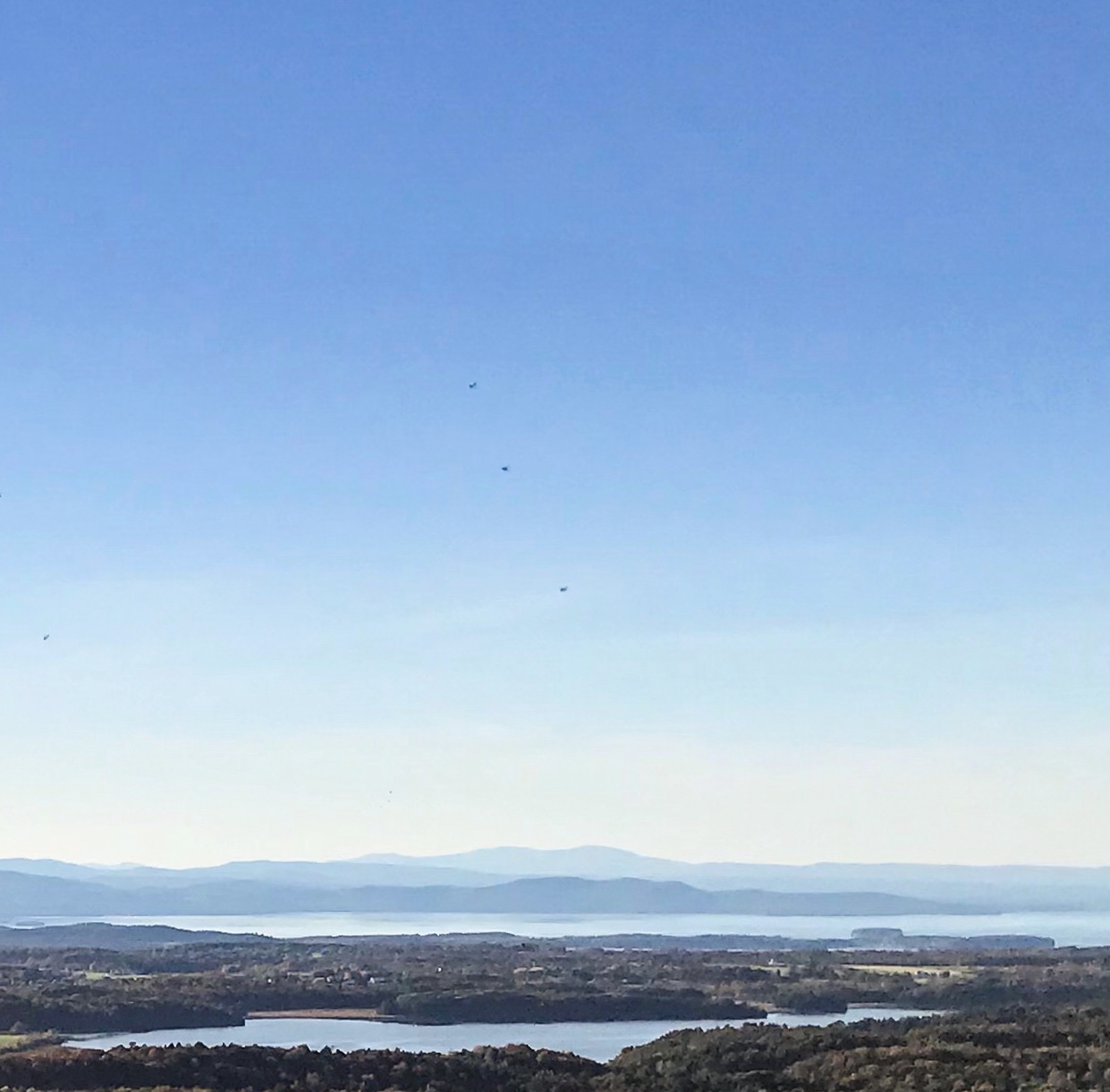 |
| October 12, 2017 No part of heaven is so clear and bright today as Fair Haven Pond |
The C. florida at Island shows some scarlet tints, but it is not much exposed. October 12, 1858
The Cornus sericea begins to fall, though some of it is green. October 12, 1858
The elms in the village, losing their leaves, reveal the birds' nests. October 12, 1852
The elms in the village, losing their leaves, reveal the birds' nests. October 12, 1852
Hickories are for the most part being rapidly browned and crisp. October 12, 1858
Many maples around the edges of the meadows are now quite bare, like smoke. October 12, 1851
Many maples around the edges of the meadows are now quite bare, like smoke. October 12, 1851
Some bass trees are quite bare. October 12, 1858
The leaves fallen last night now lie thick on the water next the shore, concealing it, —fleets of dry boats. October 12, 1855
There are many maple, birch, etc., leaves on the Assabet, in stiller places along the shore, but not yet a leaf harvest. October 12, 1858
The coarse grass of the riverside (Phalaris?) is bleached as white as corn. October 12, 1858
The seeds of the bidens, or beggar-ticks, with four-barbed awns like hay-hooks, now adhere to your clothes, so that you are all bristling with them. October 12, 1851
I see scattered flocks of bay-wings amid the weeds and on the fences. October 12, 1859
There are now apparently very few ferns left . . . This morning's frost will nearly finish them. October 12, 1859
There are now apparently very few ferns left . . . This morning's frost will nearly finish them. October 12, 1859
We have now fairly begun to be surrounded with the brown of withered foliage. . . This phenomenon begins with the very earliest frost (as this year August 17th), which kills some ferns and other most sensitive plants. October 12, 1859
So gradually the plants, or their leaves, are killed and withered that we scarcely notice it till we are surrounded with the scenery of November. October 12, 1859
Now for lycopodiums . . . the dendroideum and lucidulum, etc., — how vivid a green ! — lifting their heads above the moist fallen leaves. October 12, 1859
Now for lycopodiums . . . the dendroideum and lucidulum, etc., — how vivid a green ! — lifting their heads above the moist fallen leaves. October 12, 1859
I hear Lincoln bell tolling for church . . . The sound of a bell acquires a certain vibratory hum, as it were from the air through which it passes, like a harp . . . It is not the mere sound of the bell, but the humming in the air, that enchants me . . . a melody which the air has strained, which has conversed with every leaf and needle of the woods. It is by no means the sound of the bell as heard near at hand . . . but its vibrating echoes . . . a sound which is very much modified, sifted, and refined before it reaches my ear. . . .an independent sound, and therein is the magic and charm of it . . . It is is in some measure the voice of the wood. October 12, 1851
I see a painted tortoise still out on shore. Three of his back scales are partly turned up and show fresh black ones ready beneath. October 12, 1855
Yesterday afternoon, saw by the brook-side above Emerson's the dwarf primrose in blossom, the Norway cinquefoil and fall dandelions which are now drying up, the houstonia, buttercups, small goldenrods, and various asters, more or less purplish. October 12, 1851
To Annursnack . . . The fringed gentian by the brook opposite is in its prime, and also along the north edge of the Painted-Cup Meadows. October 12, 1857
The Anemone nemorosa in bloom and the Potentilla sarmentosa, or running cinquefoil, which springs in April, now again springing. October 12, 1851
The stems of the blue vervain, whose flowers and leaves are withered and brown, are nearly as handsome and clear a purple as those of the poke have been, from top to bottom. October 12, 1857
Going through Clintonia Swamp, I see many of those buff-brown puffballs. October 12, 1859
The willows on the Turnpike resound with the hum of bees, almost as in spring! I see apparently yellow wasps, hornets, and small bees attracted by something on their twigs. October 12, 1859
The stems of the blue vervain, whose flowers and leaves are withered and brown, are nearly as handsome and clear a purple as those of the poke have been, from top to bottom. October 12, 1857
It is interesting to see how some of the few flowers which still linger are frequented by bees and other insects . . . In the garden, I see half a dozen honey bees, many more flies, some wasps, a grasshopper, and a large handsome butterfly . . . I did not suspect such a congregation in the desolate garden. October 12, 1856
The willows on the Turnpike resound with the hum of bees, almost as in spring! I see apparently yellow wasps, hornets, and small bees attracted by something on their twigs. October 12, 1859
Wasps for some time looking about for winter quarters. October 12, 1856
I can discern no skaters nor water-bugs on the surface of the pond, which is now rippled. Do they, then, glide forth to the middle in calm days only? October 12, 1852
Acorns, red and white (especially the first), appear to be fallen or falling. October 12, 1858
The leaves of the azaleas are falling, mostly fallen, and revealing the large blossom-buds, so prepared are they for another year. October 12, 1858
A new carpet of pine leaves is forming in the woods. The forest is laying down her carpet for the winter. October 12, 1852
To-day no part of the heavens is so clear and bright as Fair Haven Pond and the river. October 12, 1851

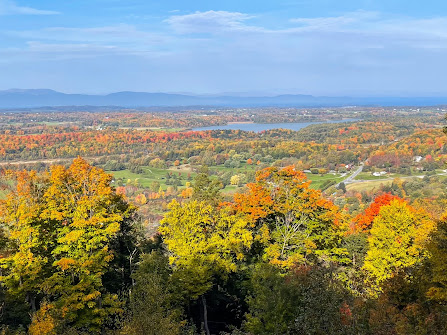
October 2, 1857 ("The fringed gentian at Hubbard's Close has been out some time, and most of it already withered.")
October 2, 1851 ("At the Cliffs, I find the wasps prolonging their short lives on the sunny rocks, just as they endeavored to do at my house in the woods.")
Acorns, red and white (especially the first), appear to be fallen or falling. October 12, 1858
They are so fair and plump and glossy that I love to handle them, and am loath to throw away what I have in my hand. October 12, 1858
The swamp-pink buds begin to show. October 12, 1851
The swamp-pink buds begin to show. October 12, 1851
The leaves of the azaleas are falling, mostly fallen, and revealing the large blossom-buds, so prepared are they for another year. October 12, 1858
The pines on Fair Haven have shed nearly all their leaves. October 12, 1851
A new carpet of pine leaves is forming in the woods. The forest is laying down her carpet for the winter. October 12, 1852
To-day no part of the heavens is so clear and bright as Fair Haven Pond and the river. October 12, 1851

October 12, 2018
A Book of the Seasons, by Henry Thoreau,
A Book of the Seasons, by Henry Thoreau, Fair Haven Pond
A Book of the Seasons, by Henry Thoreau, Bells and Whistles
A Book of the Seasons, by Henry Thoreau, The October Pine Fall
A Book of the Seasons, by Henry Thoreau. The Hickory
A Book of the Seasons, by Henry Thoreau. Wasps
A Book of the Seasons, by Henry Thoreau, Bees
A Book of the Seasons, by Henry Thoreau, the Bay-Wing Sparrow
A Book of the Seasons, by Henry Thoreau, the Painted Turtle (Emys picta)
A Book of the Seasons, by Henry Thoreau, the Water-bug (Gyrinus)
A Book of the Seasons, by Henry Thoreau, the Blue Vervain
A Book of the Seasons, by Henry Thoreau, Swamp-pink

October 12, 2022
January 10, 1856 ("The great yellow and red forward-looking buds of the azalea")
August 21, 1852 ("The bees, wasps, etc. are on the goldenrods, improving their time before the sun of the year sets")
August 29, 1851 ("I find a wasp in my window, which already appears to be taking refuge from winter"); )
August 30, 1854 (“Dogwood leaves have fairly begun to turn”)
September 10, 1859 ("See wasps, collected in the sun on a wall, at 9 A. M.")
September 12, 1854 ("White oak acorns have many of them fallen . . . Some black scrub oak acorns have fallen, and a few black oak acorns also have fallen. The red oak began to fall first.")
September 24, 1857 ("I find the Lycopodium dendroideum, not quite out, just northwest of this pine grove, in the grass. It is not the variety obscurum, which grows at Trillium Wood, is more upright-branched and branches round.")
September 26, 1857 ("The season is waning. A wasp just looked in upon me.")
September 29,1854 ("The elm leaves have in some places more than half fallen")
September 30, 1854 ("Acorns are generally now turned brown and fallen or falling; the ground is strewn with them and in paths they are crushed by feet and wheels.")
September 30, 1854 ("The conventional acorn of art is of course of no particular species, but the artist might find it worth his while to study Nature’s varieties again.”)
October 1, 1859 ("The shrub oaks on this hill are now at their height, both with respect to their tints and their fruit . . . Now is the time for shrub oak acorns if not for others.")
October 1, 1852 ("A severer frost last night")
October 1, 1860 (“Remarkable frost and ice this morning; quite a wintry prospect. The leaves of trees stiff and white..”)
October 1, 1858 ("The harvest of elm leaves is come, or at hand. ")
October 1, 1858 ("The fringed gentians are now in prime")
October 2, 1853 ("The gentian in Hubbard's Close is frost-bitten extensively")
October 1, 1858 ("The harvest of elm leaves is come, or at hand. ")
October 1, 1858 ("The fringed gentians are now in prime")
October 2, 1853 ("The gentian in Hubbard's Close is frost-bitten extensively")
October 2, 1851 ("At the Cliffs, I find the wasps prolonging their short lives on the sunny rocks, just as they endeavored to do at my house in the woods.")
October 3, 1860 ("Bay-wings about.")
October 3, 1852 ("The pine fall, i.e. change, is commenced, and the trees are mottled green and yellowish.")
October 4, 1858 ("The bass is in the prime of its change, a mass of yellow.")
October 5, 1856 ("In the huckleberry pasture, by the fence of old barn boards, I notice many little pale-brown dome-shaped (puckered to a centre beneath) puff-balls, which emit their dust. When you pinch them, a smoke-like brown dust (snuff-colored) issues from the orifice at their top, just like smoke from a chimney. It is so fine and light that it rises into the air and is wafted away like smoke.")October 5, 1857 ("A warm and bright October afternoon.[Begins now ten days of perfect Indian summer without rain; and the eleventh and twelfth days equally warm, though rainy.]")
October 6, 1857 ("A beautiful bright afternoon, still warmer than yesterday.")
October 6, 1857 ("A beautiful bright afternoon, still warmer than yesterday.")
October 6, 1858 ("Most S. nemoralis, and most other goldenrods, now look hoary, killed by frost. The corn stands bleached and faded — quite white in the twilight")
October 6 & 7, 1853 ("Windy. Elms bare.")
October 7, 1852 ("In the village, the warm brownish-yellow elms")
October 9, 1853 ("The birch is yellow; the black willow brown; the elms sere, brown, and thin; the bass bare.")
October 9, 1858 (“Some Cornus sericea looks quite greenish yet.”)
October 9, 1858 (“Bay-wings flit along road.”)
October 9, 1857 ("The elms are now at the height of their change. As I look down our street, which is lined with them, now clothed in their very rich brownish-yellow dress, they remind me of yellowing sheaves of grain, as if the harvest had come to the village itself")
October 10, 1857 ("Certainly these are .the most brilliant days in the year, ushered in, perhaps, by a frosty morning, as this.")
October 10, 1857 ("The sixth day of glorious weather, which I am tempted to call the finest in the year , so bright and serene the air and such a sheen from the earth, so brilliant the foliage, so pleasantly warm.")
October 11, 1852 ("I observed the other day (October 8) that those insects whose ripple I could see from the Peak were water-bugs . . . In this clear air and with this glassy surface the motion of every water-bug, ceaselessly progressing over the pond, was perceptible. ")
October 10, 1853 ("Cooler and windy at sunset, and the elm leaves come down again.”)
October 10, 1858 ("To Annursnack . . . I find the fringed gentian abundantly open . . . Such a dark blue! surpassing that of the male bluebird’s back, who must be encouraged by its presence.")
October 11, 1856 ("Bay-wing sparrows numerous")
October 11, 1856 ("The white goldenrod is still common here, and covered with bees.")
October 11, 1856 ("A pasture thistle with many fresh flowers and bees on it.")
October 11, 1857 ("This is the seventh day of glorious weather. Perhaps, these might be called Harvest Days.")October 11, 1857 ("Another frost last night, although with fog, and this afternoon the maple and other leaves strew the water, and it is almost a leaf harvest.")
October 11, 1858 ("White pines are apparently ready to fall. Some are much paler brown than others.")
October 11, 1859 ("There was a very severe frost this morning (ground stiffened)")
October 11, 1860 ("There is a remarkably abundant crop of white oak acorns this fall, also a fair crop of red oak acorns; but not of scarlet and black, very few of them. The acorns are now in the very midst of their fall.")
October 13, 1855 ("The bass is bare.")
October 13, 1855 ("A thick carpet of white pine needles lies now lightly, half an inch or more in thickness, above the dark-reddish ones of last year.")
October 13, 1855 ("The maples now stand like smoke along the meadows. The bass is bare")
October 13, 1857 ("This has been the ninth of those wonderful days, and one of the warmest.")
October 13, 1858 (''The elms are at least half bare.")
October 13, 1859 ("I see no acorns on the trees. They appear to have all fallen before this.");
October 13, 1860 ("This is a white oak year . . . I should think that there might be a bushel or two of acorns on and under some single trees.")
October 13, 1860 ("This is a white oak year . . . I should think that there might be a bushel or two of acorns on and under some single trees.")
October 13, 1860 ("Now, as soon as the frost strips the maples, and their leaves strew the swamp floor and conceal the pools, the note of the chickadee sounds cheerfully winteryish.")
October 14, 1852 ("The pines are now two-colored, green and yellow, - the latter just below the ends of the boughs")
October 14, 1856 ("Pine-needles, just fallen, now make a thick carpet.")
October 14, 1856 ("Leaves are fast falling . . . perhaps earlier than usual on account of wet.")
October 14, 1859 ("The ground is strewn also with red oak acorns now, and, as far as I can discover, acorns of all kinds have fallen.")
October 14, 1859 ("The ground is strewn also with red oak acorns now, and, as far as I can discover, acorns of all kinds have fallen.")
October 14, 1860 ("This year, on account of the very severe frosts, the trees change and fall early, or fall before fairly changing.")
October 15, 1853 ("Last night the first smart frost that I have witnessed. Ice formed under the pump, and the ground was white long after sunrise.")
October 15, 1856 ("Large fleets of maple and other leaves are floating on its surface as I go up the Assabet.")
October 15, 1856 (“A smart frost . . . . Ground stiffened in morning; ice seen.”)
October 15 1858 ("White pines are in the midst of their fall")
October 16, 1854 ("The pines, too, have fallen")
October 16, 1855 ("How evenly the freshly fallen pine-needles are spread on the ground! quite like a carpet.")
October 16, 1855 ("How evenly the freshly fallen pine-needles are spread on the ground! quite like a carpet.")
October 16, 1856 (“Ground all white with frost. ”)
October 17, 1856 ("Frost has now within three or four days turned almost all flowers to woolly heads, — their November aspect")
October 17, 1856 ("Countless leafy skiffs are floating on pools and lakes and rivers and in the swamps and meadows, often concealing the water quite from foot and eye.")
October 17, 1857 ("The Lycopodium lucidulum looks suddenly greener amid the withered leaves.")
October 17, 1857 (“A great many more ash trees, elms, etc., are bare now.”)
October 17, 1857("The swamp floor is covered with red maple leaves, many yellow with bright-scarlet spots or streaks. Small brooks are almost concealed by them”)
October 17, 1858 (“The Cornus sericea is a very dark crimson, though it has lost some leaves.”)
October 17, 1858 ("Up Assabet. There are many crisped but colored leaves resting on the smooth surface of the Assabet,”)
October 17, 1858 ("They remind me of ditches in swamps, whose surfaces are often quite concealed by leaves now. The waves made by my boat cause them to rustle, ")
October 18, 1857 ("The bass and the black ash are completely bare; how long?")
October 18, 1857 (“The fringed gentian closes every night and opens every morning in my pitcher.”)
October 18, 1857 (“The fringed gentian closes every night and opens every morning in my pitcher.”)
October 19, 1852 ("It is too remarkable a flower not to be sought out and admired each year, however rare. It is one of the errands of the walker, as well as of the bees, for it yields him a more celestial nectar still. It is a very singular and agreeable surprise to come upon this conspicuous and handsome and withal blue flower at this season, when flowers have passed out of our minds and memories; the latest of all to begin to bloom")
October 19, 1853 ("The leaves have fallen so plentifully that they quite conceal the water along the shore, and rustle pleasantly when the wave which the boat creates strikes them.");
October 19, 1856 ("The bass has lost, apparently, more than half its leaves.")
October 19, 1856 ("The hypericums — the whole plant — have now generally been killed by the frost")
October 19, 1856 ("The hypericums — the whole plant — have now generally been killed by the frost")
October 19, 1856 (“Both the white and black ash are quite bare, and some of the elms there.”)
October 19, 1859 ("Lycopodium dendroideum (not variety) is just shedding pollen near this cedar.")
October 20, 1858 ("Bidens or beggar’s-ticks adhere to your clothes shot into you by myriads of unnoticed foes")
October 20, 1858 ("Bidens or beggar’s-ticks adhere to your clothes shot into you by myriads of unnoticed foes")
October 21, 1852 ("Apparently some flowers yield to the frosts, others linger here and there till the snow buries them.")
October 21, 1855 ("The wind must be east, for I hear the church bell very plainly.")
October 21, 1857 (“First ice that I’ve seen or heard of, a tenth of an inch thick in yard, and the ground is slightly frozen.”)
October 21, 1858 ("Up Assabet. Most leaves now on the water. They cover the water thickly")
October 22, 1851 ("The pines, both white and pitch, have now shed their leaves, and the ground in the pine woods is strewn with the newly fallen needles. ")
October 22, 1853 ("this great fleet of scattered leaf boats, still tight and dry, each one curled up on every side by the sun's skill,")
October 22, 1854 ("Bass trees are bare.”)
October 23, 1853 ("I find my clothes all bristling as with a chevaux-de-frise of beggar-ticks, which hold on for many days. A storm of arrows these weeds have showered on me, as I went through their moats. How irksome the task to rid one's self of them! We are fain to let some adhere. Through thick and thin I wear some; hold on many days. In an instant a thousand seeds of the bidens fastened themselves firmly to my clothes, and I carried them for miles, planting one here and another there. “)
October 25, 1853 ("The ground is strewn with pine-needles as sunlight.")
October 26, 1853 ("Now leaves are off, or chiefly off, I begin to notice the buds of various form and color and more or less conspicuous, prepared for another season, — partly, too, perhaps, for food for birds.")
October 26, 1853 ("Now leaves are off, or chiefly off, I begin to notice the buds of various form and color and more or less conspicuous, prepared for another season, — partly, too, perhaps, for food for birds.")
October 26, 1854 ("Apple trees are generally bare, as well as bass, ash, elm, maple.”)
October 28, 1858 ("The dogwood on the island is perhaps in its prime, — a distinct scarlet, with half of the leaves green in this case.")
October 28, 1858 (" I see yet also some Cornus sericea bushes with leaves turned a clear dark but dull red, rather handsome")
October 28, 1858 ("How handsome the great red oak acorns now!")
October 30, 1853(" A white frost this morning, lasting late into the day. This has settled the accounts of many plants which lingered still. . . .What with the rains and frosts and winds, the leaves have fairly fallen now. You may say the fall has ended.")
October 30, 1853 ("Now, now is the time to look at the buds.”);
October 30, 1853 ("Now, now is the time to look at the buds.”);
November 1, 1852 ("On the river this afternoon, the leaves, now crisp and curled, when the wind blows them on to the water become rude boats which float and sail about awhile conspicuously before they go to the bottom.")
November 1, 1855 (" I see no painted tortoises out, and I think it is about a fortnight since I saw any. ")
November 7, 1858 ("I see Lycopodium dendroideum which has not yet shed pollen.");
November 11, 1859 ("The flat variety of Lycopodium dendroideum shed pollen on the 25th of October.");
November 15, 1858 ("The Lycopodium dendroideum var. obscurum appears to be just in bloom in the swamp about the Hemlocks (the regular one (not variety) is apparently earlier).")
November 17, 1858 ("Lycopodium dendroideum . . .was apparently in its prime yesterday). So it would seem that these lycopodiums, at least, which have their habitat on the forest floor and but lately attracted my attention there (since the withered leaves fell around them and revealed them by the contrast of their color and they emerged from obscurity), —it would seem that they at the same time attained to their prime, their flowering season. ")
December 1, 1852 ("At this season I observe the form of the buds which are prepared for spring.")
December 1, 1852 ("At this season I observe the form of the buds which are prepared for spring.")
December 7, 1853 ("In the latter part of November and now, before the snow, I am attracted by the numerous small evergreens on the forest floor, now most conspicuous, especially the very beautiful Lycopodium dendroideum, somewhat cylindrical")
 |
| October 12, 2019 |
If you make the least correct
observation of nature this year,
you will have occasion to repeat it
with illustrations the next,
and the season and life itself is prolonged.
October 11 <<<<<<<<< October 12 >>>>>>>> October 13
A Book of the Seasons, by Henry Thoreau, October 12
A Book of the Seasons, by Henry Thoreau"A book, each page written in its own season,out-of-doors, in its own locality.”
~edited, assembled and rewritten by zphx © 2009-2022
https://tinyurl.com/HDT12Oct


