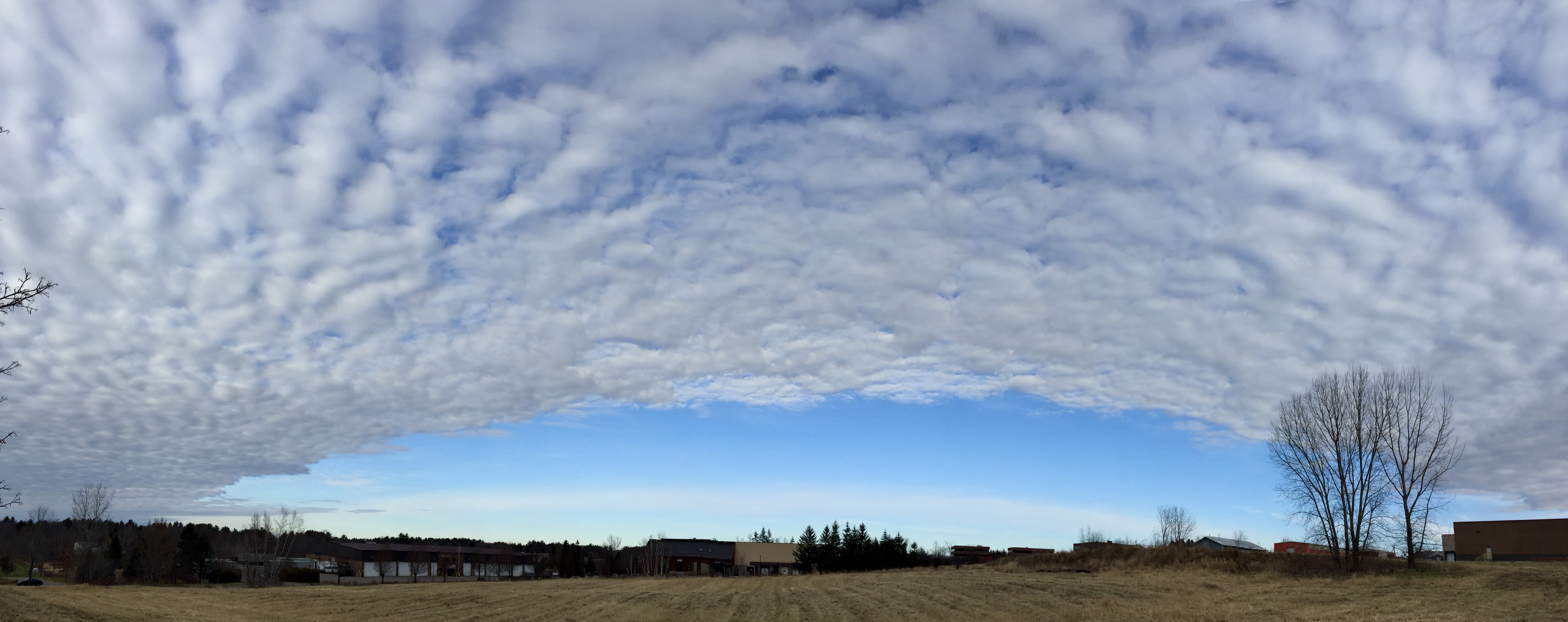
Wednesday, December 16, 2009

To Cambridge, where I read in Gerard's Herbal.


December 16.

His descriptions are greatly superior to the modern scientific ones. He describes according to his natural delight in the plants. It is a man's knowledge added to a child's keen joy who has just seen a flower for the first time and comes running in with it to its friends.

He brings them vividly before you. It is almost as good as to see the plants themselves. His leaves are leaves; his flowers, flowers; his fruit, fruit. They are green and colored and fragrant. He has really seen, and smelt, and tasted, and reports his sensations.

How much better to describe your object in fresh English words rather than in conventional Latinisms!

H.D. Thoreau, Journal, December 16, 1859


Dec. 16. A.M. — To Cambridge, where I read in Gerard's Herbal. His admirable though quaint de scriptions are, to my mind, greatly superior to the modern more scientific ones. He describes not accord ing to rule but to his natural delight in the plants. He brings them vividly before you, as one who has seen and delighted in them. It is almost as good as to see the plants themselves. It suggests that we can not too often get rid of the barren assumption that is in our science. His leaves are leaves; his flowers, flowers; his fruit, fruit. They are green and colored and fragrant. It is a man's knowledge added to a child's delight. Modern botanical descriptions approach ever nearer to the dryness of an algebraic formula, as if x + y were = to a love-letter. It is the keen joy and discrimination of the child who has just seen a flower for the first time and comes running in with it to its friends. How much better to describe your object in fresh English words rather than in these conventional Latinisms! He has really seen, and smelt, and tasted, and reports his sensations.

Bought a book at Little & Brown's, paying a nine- pence more on a volume than it was offered me for elsewhere. The customer thus pays for the more elegant style of the store.

His leaves are leaves; his flowers, flowers; his fruit, fruit. . . . He has really seen, and smelt, and tasted, and reports his sensations. See September 4-7, 1851 (I feel that the juices of the fruits which I have eaten, the melons and apples, have ascended to my brain and are stimulating it. They give me a heady force. Now I can write.”); September 2, 1851 ("A writer, a man writing, is the scribe of all nature; he is the corn and the grass and the atmosphere writing. It is always essential that we love to do what we are doing, do it with a heart.”); January 27, 1857 ("The most poetic and truest account of objects is generally by those who first observe them, or the discoverers of them, whether a sharper perception and curiosity in them led to the discovery or the greater novelty more inspired their report.")

It is the keen joy and discrimination of the child who has just seen a flower for the first time and comes running in with it to its friends.  See February 5, 1852 ("I suspect that the child plucks its first flower with an insight into its beauty and significance which the subsequent botanist never retains.")

Describe your object 
in fresh English words rather 
than Latinisms.

A Book of the Seasons,  by Henry Thoreau, I read in Gerard's Herbal
A Book of the Seasons,  by Henry Thoreau
 "A book, each page written in its own season, 
out-of-doors, in its own locality."
 ~edited, assembled and rewritten by zphx ©  2009-2024

Sunday, December 13, 2009

My first true winter walk


December 13

December 13, 2015

P. M. — On river to Fair Haven Pond.

My first true winter walk is perhaps that which I take on the river, or where I cannot go in the summer.

It is the walk peculiar to winter, and now first I take it.

I see that the fox too has already taken the same walk before me, just along the edge of the button-bushes, where not even he can go in the summer. We both turn our steps hither at the same time.

Going over black ice three or four inches thick, only reassured by seeing the thickness at the cracks, I see it richly marked internally with large whitish figures. The work of crystallization.

Now that the river is frozen we have a sky under our feet also.

I see, in the Pleasant Meadow field near the pond, some little masses of snow, such as I noticed yesterday in the open land by the railroad causeway at the Cut. I could not account for them then, for I did not go to them, but thought they might be the remainders of drifts which had been blown away, leaving little perpendicular masses six inches or a foot higher than the surrounding snow in the midst of the fields. Now I detect the cause. 

These (which I see to-day) are the remains of snowballs which the wind of yesterday rolled up in the moist snow. The morning was mild, and the snow accordingly soft and moist yet light, but in the middle of the day a strong northwest wind arose, and before night it became quite hard to bear. 

These masses which I examined in the Pleasant Meadow field were generally six or eight inches high — though they must have wasted and settled considerably — and a little longer than high, presenting a more or less fluted appearance externally. They were hollow cylinders about two inches in diameter within, like muffs. Here were a dozen within two rods square, and I saw them in three or four localities miles apart, in almost any place exposed to the sweep of the northwest wind. There was plainly to be seen the furrow in the snow produced when they were rolled up, in the form of a very narrow pyramid, commencing perhaps two inches wide, and in the course of ten feet (sometimes of four or five only) becoming six or eight inches wide, when the mass was too heavy to be moved further. 

The snow had been thus rolled up even, like a carpet. This occurred on perfectly level ground and also where the ground rose gently to the southeast. The ground was not laid bare. That wind must have rolled up masses thus till they were a foot in diameter. 

It is certain, then, that a sudden strong wind when the snow is moist but light (it had fallen the afternoon previous) will catch and roll it up as a boy rolls up his ball. These white balls are seen far off over the fields.

H. D. Thoreau, Journal, December 13, 1859

On river to Fair Haven Pond. See December 13, 1850 ("The river froze over last night, — skimmed over. "); December 13, 1852 ("River and ponds all open."); December 13, 1856 ("The river is generally open again.")  See also  December 5, 1853 ("The river frozen over thinly in most places . . . Fair Haven Pond is skimmed completely over."); December 5, 1856 ('The river is well skimmed over in most places, though it will not bear,"); December 7, 1856 (" Take my first skate to Fair Haven Pond”);  December 8, 1850 ("A week or two ago Fair Haven Pond was frozen and the ground was still bare. Now  the Pond is open and ground is covered with snow and ice."); December 9, 1859 ("The river and Fair Haven Pond froze over generally last night, though they were only frozen along the edges yesterday. This is unusually sudden"); December 14. 1851 ("The boys have been skating for a week, but I have had no time to skate for surveying. I have hardly realized that there was ice, though I have walked over it about this business. "); December 14, 1854 ("The river is open almost its whole length. It is a beautiful smooth mirror within an icy frame"); December 15, 1855 ("The boys have skated. a little within two or three days, but it has not been thick enough to fbear a man yet.")

My first true winter walk is . . . where I cannot go in the summer.
See February 10, 1860 ("No finer walking in any respect than on our broad meadow highway in the winter, when covered with bare ice"); February 13, 1859 ("Winter comes to make walking possible where there was no walking in summer. Not till winter do we take possession of the whole of our territory. I have three great highways raying out from one centre, which is near my door."); February 19, 1854 ("I incline to walk now in swamps and on the river and ponds, where I cannot walk in summer.")

Now that the river is frozen we have a sky under our feet. See February 12, 1860 ("Above me is a cloudless blue sky; beneath, the sky-blue, i. e. sky-reflecting, ice with patches of snow scattered over it like mackerel clouds . . .You have seen those purple fortunate isles in the sunset heavens, and that green and amber sky between them. Would you believe that you could ever walk amid those isles? You can on many a winter evening. I have done so a hundred times. The ice is a solid crystalline sky under our feet."); See also A Book of the Seasons,  by Henry Thoreau, the Inverted Head experiment.

I see that the fox too has already taken the same walk before me. See December 8, 1854 (" Go over the fields on the crust to Walden, over side of Bear Garden. Already foxes have left their tracks. How the crust shines afar, the sun now setting!");  December 12, 1855 ("The snow having come, we see where is the path of the partridge . . . and now first, as it were, we have the fox for our nightly neighbor, and countless tiny deer mice.  "); December 14, 1855 ("Then I came upon a fox-track made last night, leading toward a farmhouse . . . Thus by the snow I was made aware in this short walk of the recent presence there of squirrels, a fox, and countless mice, whose trail I had crossed, but none of which I saw, or probably should have seen before the snow fell."); December 20, 1855 ("I see . . . in now hard, dark ice, the tracks apparently of a fox, made when it was saturated snow."); December 24, 1856 ("It is very pleasant walking thus before the storm is over, in the soft, subdued light. . . .Do not see a track of any animal till returning near the Well Meadow Field, where many foxes, one of whom I have a glimpse of, had been coursing back and forth in the path and near it for three quarters of a mile. They had made quite a path"); December 25, 1858 (“I notice that a fox has taken pretty much my own course along the Andromeda Ponds.”); December 31, 1854 (" I see mice and rabbit and fox tracks on the meadow.") See also A Book of the Seasons,  by Henry Thoreau,  The Fox

December 13. See A Book of the Seasons,  by Henry Thoreau,  December 13

And now I first take
that peculiar winter walk –
sky under my feet.

(I see that the fox has already taken the same walk before me.)


A Book of the Seasons
,  by Henry Thoreau, 
"A book, each page written in its own season,
out-of-doors, in its own locality.”
~edited, assembled and rewritten by zphx © 2009-2024

tinyurl.com/HDT591213

Wednesday, December 9, 2009

Suddenly cold last night.


December 9.

The river and Fair Haven Pond froze over generally last night, though they were only frozen along the edges yesterday. This is unusually sudden.

The air being very quiet and serene, I observe at mid-afternoon that peculiarly softened western sky, which perhaps is seen commonly after the first snow has covered the earth. 

There is just enough invisible vapor, perhaps from the snow, to soften the blue, giving it a slight greenish tinge.

Methinks it often happens that as the weather is harder the sky seems softer.

H.D. Thoreau, Journal, December 9, 1859


The river and Fair Haven Pond froze over generally last night, . . .. This is unusually sudden. See November 21, 1852  ("I am surprised this afternoon to find the river skimmed over in some places, and Fair Haven Pond one-third frozen or skimmed over”); November 23, 1852("I am surprised to see Fair Haven entirely skimmed over”): November 30, 1855 (“Got in my boat. River remained iced over all day. ”); December 5, 1853("The river frozen over thinly in most places . . . Fair Haven Pond is skimmed completely over."); December 5, 1856 ('The river is well skimmed over in most places, though it will not bear, — wherever there is least current, as in broad places, or where there is least wind, . .  “);   December 7, 1856 ("The pond must have been frozen by the 4th at least. . . .The ice appears to be but three or four inches thick); December 11, 1854 ("C. says he found Fair Haven frozen over last Friday, i. e. the 8th.");  December 13, 1850 ("The river froze over last night, — skimmed over. “); December 13, 1859 (“Now that the river is frozen we have a sky under our feet also. ”); December 19, 1856 (“Last night was so cold that the river closed up almost everywhere, and made good skating where there had been no ice to catch the snow of the night before.”); December 20, 1854 (“All of the river that was not frozen before, and therefore not covered with snow on the 18th, is now frozen quite smoothly;”); December 21, 1855 ("I here take to the riverside. The broader places are frozen over, but I do not trust them yet. Fair Haven is entirely frozen over, probably some days"); December 21, 1857 (" Walden and Fair Haven,. . .have only frozen just enough to bear me, “)  See also A Book of Seasons,  by Henry Thoreau, First Ice

I observe at mid-afternoon that peculiarly softened western sky, . . .giving it a slight greenish tinge. See December 11, 1854 ("It is but mid-afternoon when I see the sun setting far through the woods, and there is that peculiar clear vitreous greenish sky in the west, as it were a molten gem."); December 20, 1854 ("The sky in the eastern horizon has that same greenish-vitreous, gem-like appearance which it has at sundown, . . ."). See also A Book of the Seasons,  by Henry Thoreau, the Western Sky

Dec. 9. Suddenly cold last night. The river and Fair Haven Pond froze over generally (I see no opening as I walk) last night, though they were only frozen along the edges yesterday. This is unusually sudden. 

How prominent the late or fall flowers are, now withered above the snow, — the goldenrods and asters, Roman wormwood, etc., etc.! These late ones have a sort of life extended into winter, hung with icy jewelry.

 I observe at mid-afternoon, the air being very quiet and serene, that peculiarly softened western sky, which perhaps is seen commonly after the first snow has covered the earth. There are many whitish filmy clouds a third of the way to the zenith, generally long and narrow, parallel with the horizon, with indistinct edges, alternating with the blue. And there is just enough invisible vapor, perhaps from the snow, to soften the blue, giving it a slight greenish tinge. Thus, methinks, it often happens that as the weather is harder the sky seems softer. It is not a cold, hard, glittering sky, but a warm, soft, filmy one.

Tuesday, December 8, 2009

The blue enamel of the present - the reality that surrounds us

December 8

It snowed and rained in the night. The wind has risen and the trees are stiffly waving with a brattling sound.

The birches, seen half a mile off toward the sun, are the purest dazzling white of any tree.

We believe in beauty, but not now and here. Let it be past or to come, and a thing is at once idealized. The imagination takes cognizance of it. It becomes a deed ripe and with the bloom on it.

But what is actually present and transpiring is commonly perceived without halo or the blue enamel of intervening air. 
The imagination requires a long range.


Only the poet has the faculty to see present things as if also past and future, as if universally significant.

H. D. Thoreau, Journal, December 8, 1859


We believe in beauty, but not now and here. Only the poet has the faculty to see present things as if also past and future, as if universally significant. See Walden Where I lived and what i lived for ("Men esteem truth remote, in the outskirts of the system, behind the farthest star, before Adam and after the last man. In eternity there is indeed something true and sublime. But all these times and places and occasions are now and here. God Himself culminates in the present moment, and will never be more divine in the lapse of all the ages. And we are enabled to apprehend at all what is sublime and noble only by the perpetual instilling and drenching of the reality that surrounds us. “); Seea lso May 12, 1851 ("f you have an inclination to travel, take the ether; you go beyond the furthest star.")


Only the poet has the faculty to see present things as if also past and future, as if universally significant.
See November 9, 1851 (“Observing me still scribbling, [Channing] will say that he confines himself to the ideal. . . he leaves the facts to me. Sometimes, too, he will say a little petulantly, "I am universal; I have nothing to do with the particular and definite.”)

***

Dec. 8. Here is a better glaze than we have yet had, for it snowed and rained in the night. I go to Pleasant Meadow, — or rather toward the sun, for the glaze shows best so. The wind has risen and the trees are stiffly waving with a brattling sound. The birches, seen half a mile off toward the sun, are the purest dazzling white of any tree, probably because their stems are not seen at all. It is only those seen at a particular angle between us and the sun that appear thus. Day before yesterday the ice which had fallen from the twigs covered the snow beneath in oblong pieces one or two inches long, which C. well called lemon-drops.
***
How is it that what is actually present and transpiring is commonly perceived by the common sense and understanding only, is bare and bald, without halo or the blue enamel of intervening air ? But let it be past or to come, and it is at once idealized. As the man dead is spiritualized, so the fact remembered is idealized. It is a deed ripe and with the bloom on it. It is not simply the understanding now, but the imagination, that takes cognizance of it.

The imagination requires a long range. It is the faculty of the poet to see present things as if, in this sense, also past and future, as if distant or universally significant. We do not know poets, heroes, and saints for our contemporaries, but we locate them in some far-off vale, and, the greater and better, the further off we [are] accustomed to consider them. We believe in spirits, we believe in beauty, but not now and here. They have their abode in the remote past or in the future.

The fact remembered is idealized . . . It is not simply the understanding now, but the imagination, that takes cognizance of it.    See November 20, 1851 ("How few things can a man measure with the tape of his understanding!")

Saturday, December 5, 2009

To Smith's Hill. P.M.

December 5.

There is a slight mist in the air and accordingly some glaze on the twigs and leaves.

Thus suddenly we have passed from Indian summer to winter. The perfect silence -- the stillness and motionless of the twigs and of the very weeds and withered grasses; it is as if the whispering and creaking earth were muffled on her axle.

Rather hard walking in the snow.

H. D. Thoreau, Journal, December 5, 1859


It is as if the whispering and creaking earth were muffled on her axle. See December 24, 1854 ("a slight glaze, the first of the winter. This gives the woods a hoary aspect and increases the stillness by making the leaves immovable even in considerable wind.")


Dec. 5. P. M. — Down Turnpike to Smith's Hill. Rather hard walking in the snow. There is a slight mist in the air and accordingly some glaze on the twigs and leaves, and thus suddenly we have passed from Indian summer to winter. The perfect silence, as if the whispering and creaking earth were muffled (her axle), and the stillness (motionlessness) of the twigs and of the very weeds and withered grasses, as if they were sculptured out of marble, are striking. It is as if you had stepped from a withered garden into the yard of a sculptor or worker in marble, crowded with delicate works, rich and rare. 
I remark, half a mile off, a tall and slender pitch pine against the dull-gray mist, peculiarly monumental. I noticed also several small white oak trees full of leaves by the roadside, strangely interesting and beautiful. Their stiffened leaves were very long and deeply cut, and the lighter and glazed under sides being almost uniformly turned vertically toward the northwest, as a traveller turns his back to the storm, though enough of the redder and warmer sides were seen to contrast with them, it looked like an artificial tree hung with many-fingered gauntlets. Such was the disposition of the leaves, often nearly in the same plane, that it looked like a brown arbor-vitae. 
See four quails running across the Turnpike. How they must be affected by this change from warm weather and bare ground to cold and universal snow!
 Returning from the post-office at early candle-light, I noticed for the first time this season the peculiar streets, suggesting how withdrawn and inward the life in the former, how exposed and outward in the latter. [and more on John Brown]

December 5, 2021. After dark I take the dogs for a short walk up the driveway. They all show up and I head into the woods to the west down over the little ledge and start walking out the thrush trail. Acorn and Buda are running ahead. Presently Loki comes rushing by me at full gallop; it was a thrill to see him exercising so vigorously. All dogs go right into the garage and into the house and I shut the garage door and go in. They are all wearing their red winter jackets

Love's season

Awakening with love for you
before first thought,
fresh snow on new-mown grass.

Zphx, 12/5/09

Monday, November 30, 2009

In E. Hubbard's gray oak wood

November 30

I see in E. Hubbard's gray oak wood, four rods from the old wall line and two or three rods over the brow of the hill, an apparent downy woodpecker's nest in a dead white oak stub some six feet high. It looks quite fresh, and I see by the very numerous fresh white chips of dead wood scattered over the recently fallen leaves beneath that it must have been made since the leaves fell.

This has been a very pleasant month, with quite a number of Indian-summer days, - a pleasanter month than October was. It is quite warm today, and as I go home at dusk on the railroad causeway, I hear a hylodes peeping.


H. D. Thoreau, Journal, November 30, 1859

This has been a very pleasant month, a pleasanter month than October was. See November 29, 1856 (“It has been a remarkably pleasant November, warmer and pleasanter than last year.”) See also A Book of the Seasons, by Henry Thoreau, Indian Summer

An apparent downy woodpecker's nest in a dead white oak, See January 5, 1860 (“I see where the downy woodpecker has worked lately by the chips of bark and rotten wood scattered over the snow, though I rarely see him in the winter. ”) See also A Book of the Seasons, by Henry Thoreau, The Downy Woodpecker

Popular Posts Last 30 Days.

The week ahead in Henry’s journal

The week ahead in Henry’s journal
A journal, a book that shall contain a record of all your joy.
"A stone fruit. Each one yields me a thought." ~ H. D. Thoreau, March 28, 1859


I sit on this rock
wrestling with the melody
that possesses me.