Showing posts with label february 25. Show all posts

Sunday, February 25, 2024

A Book of the Seasons, Signs of the Spring: First silvery sheen from needles of the white pine waving in the wind


No mortal is alert enough
to be present at the first dawn of the spring.
Henry Thoreau, March 17, 1857

First silvery sheen
from needles of the white pine
waving in the wind.
February 25, 1860


February 4Now the white pine are a misty blue; anon a lively, silvery light plays on them, and they seem to erect themselves unusually.  February 4, 1852 

February 5. The boughs, feathery boughs, of the white pines, tier above tier, reflect a silvery light against the darkness of the grove.  
February 5, 1852 

February 10.  I see that Wheildon's pines are rocking and showing their silvery under sides as last spring, — their first awakening, as it were. February 10, 1860 

February 23. I have seen signs of the spring. February 23, 1857

February 25. I noticed yesterday the first conspicuous silvery sheen from the needles of the white pine waving in the wind. A small one was conspicuous by the side of the road more than a quarter of a mile ahead. I suspect that those plumes which have been appressed or contracted by snow and ice are not only dried but opened and spread by the wind. February 25, 1860

March 2. I see a row of white pines, too, waving and reflecting their silvery light. March 2, 1860 

March 20. In this spring breeze, how full of life the silvery pines, probably the under sides of their leaves. March 20, 1853

March 21.  That fine silvery light reflected from its needles (perhaps their undersides) incessantly in motion. March 21, 1859

*****
So I came in and
shut the door and passed my first
spring night in the woods.
Walden, Spring


See also A Book of the Seasons,  by Henry Thoreau, 
I Have Seen Signs of the Spring:


<<<<< Signs of Spring                           Early Spring >>>>>


A Book of the Seasons,  by Henry Thoreau, Signs of the Spring:

A Book of the Seasons,  by Henry Thoreau
 "A book, each page written in its own season,
out-of-doors, in its own locality."
 ~edited, assembled and rewritten by zphx ©  2009-2024

Sunday, March 19, 2023

A Book of the Seasons, Signs of the Spring: ripples made by fishes


No mortal is alert enough 
to be present at the first dawn of the spring. 
Henry Thoreau, March 17, 1857

No wonder we feel the spring influences. 
There is a motion in the very ground under our feet. 
Each rill is peopled with new life rushing up it. 

Sandy-bottomed brook
flowing cold from ice and snow —
fins poised over sand!

March 19, 2015


February 1
 Nut Meadow Brook open for some distance in the meadow. I am affected by the sight of some green polygonum leaves there. Some kind of minnow darts off. February 1, 1856 

February 23.   I have seen signs of the spring.  February 23, 1857

February 25Am surprised to see some little minnows only an inch long in an open place in Well Meadow Brook. February 25, 1856

March 7. I see many tadpoles of medium or full size in deep warm ditches in Hubbard’s meadow. They may probably be seen as soon as the ditches are open, thus earlier than frogs. At his bridge over the brook it must have been a trout I saw glance,—rather dark, as big as my finger. March 7, 1855

March 8.  I walk these days along the brooks, looking for tortoises and trout, etc.  March 8, 1855

March 9. I detect the trout minnows not an inch long by their quick motions or quirks, soon concealing themselves. March 9, 1854

March 11Snow and ice together make a curtain twenty-eight inches thick now drawn over the pond. Such is the prospect of the fishes!   March 11, 1856

March 15.  The trout darts away in the puny brook there so swiftly in a zigzag course that commonly I only see the ripple that he makes, in proportion, in this brook only a foot wide, like that made by a steamer in a canal. Or if I catch a glimpse of him before he buries himself in the mud, it is only a dark film without distinct outline. By his zigzag course he bewilders the eye, and avoids capture perhaps. March 15, 1857

March 16Saw a flock of sheldrakes a hundred rods off, on the Great Meadows, mostly males with a few females, all intent on fishing . . . It is remarkable that they find their finny prey on the middle of the meadow now, and even on the very inmost side, as I afterward saw, though the water is quite low. Of course, as soon as they are seen on the meadows there are fishes there to be caught. I never see them fish thus in the channel. Perhaps the fishes lie up there for warmth already. March 16, 1860 

March 18.  Nut Meadow Brook is open for a dozen rods from its mouth, and for a rod into the river . . . I see the ripples made by some fishes, which were in the small opening at its mouth, making haste to hide themselves in the ice-covered river. This square rod and one or two others like it in the town are the only places where I could see this phenomenon now. Thus early they appear, ready to be the prey of the fish hawk. Within the brook I see quite a school of little minnows, an inch long, amid or over the bare dead stems of polygonums, and one or two little water-bugs (apple seeds). The last also in the broad ditch on the Corner road, in Wheeler’s meadow.  Notwithstanding the backwardness of the season, all the town still under deep snow and ice, here they are, in the first open and smooth water, governed by the altitude of the sun. March 18, 1856

March 19.  See in Mill Brook behind Shannon's three or four shiners (the first), poised over the sand with a distinct longitudinal light-colored line midway along their sides and a darker line below it. This is a noteworthy and characteristic lineament, or cipher, or hieroglyphic, or type, of spring.  You look into some clear, sandy-bottomed brook, where it spreads into a deeper bay, yet flowing cold from ice and snow not far off, and see, indistinctly poised over the sand on invisible fins, the outlines of a shiner, scarcely to be distinguished from the sands behind it as if it were transparent, as if the material of which it was builded had all been picked up from them. March 19, 1854

March 19.  No sooner is some opening made in the river, a square rod in area, where some brook or rill empties in, than the fishes apparently begin to seek it for light and warmth, and thus early, perchance, may become the prey of the fish hawk. They are seen to ripple the water, darting out as you approach. March 19, 1856

March 19.  I observed yesterday a dead shiner by the riverside, and to-day the first sucker.  March 19, 1857

March 19.  I see in the ditch by the Turnpike bridge a painted tortoise, and, I think, a small shiner or two, also several suckers which swiftly dart out of sight, rippling the water. We rejoice to see the waters inhabited again, for a fish has become almost incredible.  March 19, 1860

March 20The wind blows eastward over the opaque ice in vain till it slides on to the living water surface where it raises a myriad brilliant sparkles on the bare face of the pond, an expression of glee, of youth, of spring, as if it spoke the joy of the fishes within it and of the sands on its shore. March 20, 1853

March 20[The dead sucker phenomenon] is confined to the very earliest spring or winter. March 20, 1857 

March 20. In the sluiceway of Pole Brook, by the road just beyond, I found . . . a dozen (or more) willow sticks, as big one's finger or larger, being set small end down in a circle, in a thin round board which made the bottom, and then smaller osiers interwoven at right angles with them, close and firm. Another funnel-shaped basket was secured within this, extending about half-way down it. . . with an opening hardly two inches wide at the bottom, where only a dozen sharped sticks approached each other. There was a square door in the board bottom, by which the fishes could be taken out. This was set in that sluice way, with the mouth or broad end down-stream, all sunk beneath the surface, the fishes being now evidently running up the brooks from the river and ponds, the ice being mostly gone out of the meadows and brooks. We raised this and found eight or ten small pickerel in it, the biggest a foot long.  March 20, 1858

March 20The fishes are going up the brooks as they open. They are dispersing themselves through the fields and woods, imparting new life into them. They are taking their places under the shelving banks and in the dark swamps. The water running down meets the fishes running up. They hear the latest news. Spring-aroused fishes are running up our veins too. Little fishes are seeking the sources of the brooks, seeking to disseminate their principles. Talk about a revival of religion! and business men's prayer-meetings! with which all the country goes mad now! What if it were as true and wholesome a revival as the little fishes feel which come out of the sluggish waters and run up the brooks toward their sources? All Nature revives at this season. With her it is really a new life, but with these churchgoers it is only a revival of religion or hypocrisy. They go down stream to still muddier waters. It cheers me more to behold the swarms of gnats which have revived in the spring sun. The fish lurks by the mouth of its native brook, watching its opportunity to dart up the stream by the cakes of ic . . . No wonder we feel the spring influences. There is a motion in the very ground under our feet. Each rill is peopled with new life rushing up it.. March 20, 1858

March 22. The phenomena of an average March . . . As for fishes, etc., trout glance in the brooks , brook minnows are seen; see furrows on sandy bottoms, and small shell snails copulate; dead suckers, etc. , are seen floating on meadows; pickerel and perch are running up brooks, and suckers (24th) and pickerel begin to dart in shallows.  March 22, 1860

March 27. I saw on the 22d a sucker which apparently had been dead a week or two at least. Therefore they must begin to die late in the winter. March 27,1858

March 28.  I can remember now some thirty years — after a fashion — of life in Concord, and every spring there are many dead suckers floating belly upward on the meadows. This phenomenon of dead suckers is as constant as the phenomenon of living ones; nay, as a phenomenon it is far more apparent . . . When I realize that the mortality of suckers in the spring is as old a phenomenon, perchance, as the race of suckers itself, I contemplate it with serenity and joy even, as one of the signs of spring. Thus they have fallen on fate. And so, many a fisherman is not seen on the shore who the last spring did not fail here.   March 28, 1857 

March 29.  The trout glances like a film from side to side and under the bank. March 29, 1853

March 30.   It is a little warmer than of late, though still the shallows are skimmed over. The pickerel begin to dart from the shallowest parts not frozen.  March 30, 1855

*****
So I came in and
shut the door and passed my first
spring night in the woods.
Walden, Spring

See also

A Book of the Seasons, by Henry Thoreau, Pickerel
A Book of the Seasons, by Henry Thoreau, the Osprey (Fish Hawk)
A Book of the Seasons, by Henry Thoreau, The Sheldrake (Goosander, Merganser)

and Signs of the Spring:

A Book of the Seasons,  by Henry Thoreau, Signs of the Spring:
A Book of the Seasons,  by Henry Thoreau
 "A book, each page written in its own season, 
out-of-doors, in its own locality."
 ~edited, assembled and rewritten by zphx ©  2009-2024

https://tinyurl.com/HDTfishes

Saturday, February 25, 2023

A Book of the Seasons, Signs of the Spring: Buzzing Flies


I perceive this spring
 that the year is a circle.
I would make a chart of our life,
know why just this circle of creatures
 completes the world.
Henry Thoreau, April 18, 1852

I have seen signs of the spring. 
February 23, 1857
A cold and strong wind yet very warm in the sun – a fly on this rock. March 4, 1855

February 18.  Another remarkably warm and pleasant day. The nights of late nearly as warm as the day.  . . . thought at one time that I heard a bluebird.  Hear a fly buzz amid some willows. Thermometer at 1 p.m., 65.  February 18, 1857

February 23.   I have seen signs of the spring.  February 23, 1857

February 25I go through the woods behind the Kettle place. The leaves rustle and look all dry on the ground in the woods, as if quite ready to burn. The flies buzz out of doors. Though I left my outside coat at home, this single thick one is too much . . . The thermometer is at 65° at noon. February 25, 1857

March 4. Though a cold and strong wind, it is very warm in the sun, and we can sit in the sun where sheltered on these rocks with impunity. It is a genial warmth. The rustle of the dry leaves . . . reminds me of fires in the woods. They are almost ready to burn. I see a fly on the rock. March 4, 1855

March 6. Mr. Stacy tells me that the flies buzzed about him as he was splitting wood in his yard to-day. March 6, 1860

March 8.  Heard the first flies buzz in the sun on the south side of the house. March 8, 1853 

March 17. A remarkably warm and pleasant day with a south or southwest wind, but still very bad walking, the frost coming out and the snow that was left going off. The air is full of bluebirds. I hear them far and near on all sides of the hill, warbling in the tree-tops, though I do not distinctly see them  . . .  Even the shade is agreeable to-day. You hear the 
buzzing of a fly 
from time to time, and see the 
black speck zigzag by. 
March 17, 1858

March 22.  The phenomena of an average March . . . Many insects and worms come forth and are active,- and the perla insects still about ice and water, — as tipula, grubs, and fuzzy caterpillars, minute hoppers on grass at springs; gnats, large and small, dance in air; the common and the green fly buzz outdoors; the gyrinus, large and small, on brooks, etc., and skaters; spiders shoot their webs, and at last gossamer floats; the honey bee visits the skunk-cabbage; fishworms come up, sow-bugs, wireworms  etc.; various larvæ are seen in pools; small green and also brown grasshoppers begin to hop, small ants to stir (25th); Vanessa Antiopa out 29th; cicindelas run on sand; and small reddish butterflies are seen in wood-paths, etc., etc., etc.  March 22, 1860

So I came in and
shut the door and passed my first
spring night in the woods.
Walden, Spring


See also  Signs of the Spring:


A Book of the Seasons, by Henry Thoreau, the Osier in Winter and early Spring
A Book of the Seasons, by Henry Thoreau, A Sunny Nook in Spring
A Book of the Seasons, by Henry Thoreau:, I Have Seen Signs of the Spring:
A Book of the Seasons, by Henry Thoreau, February 25

A Book of the Seasons,  by Henry Thoreau
 "A book, each page written in its own season, 
out-of-doors, in its own locality."
 ~edited, assembled and rewritten by zphx ©  2009-2024

Thursday, February 25, 2021

A Book of the Seasons: February 25. (first silvery sheen from needles of the white pine waving in the wind)


The year is but a succession of days,
and I see that I could assign some office to each day
which, summed up, would be the history of the year.
Henry Thoreau, August 24, 1852


First silvery sheen
from needles of the white pine
waving in the wind.
February 25, 1860

February 25, 2024

Measure your health by your sympathy with morning and spring. 
February 25, 1859

Pretty good skating. February 25, 1855 

Thermometer at 7° at 7.30 A.M.  February 25, 1855 

The only bare ground is the railroad track . . . The crust still bears, and I leave the railroad at Andromeda Ponds and go through on crust to Fair Haven. February 25, 1856

The crust of the meadow afloat . . . another agent employed in the distribution of plants. February 25, 1851

A strong, gusty wind; the waves on the meadows make a fine show.  February 25, 1851

Am surprised to see some little minnows only an inch long in an open place in Well Meadow Brook. February 25, 1856

Felled my bee tree. February 25, 1856

The thermometer is at 65° at noon. 
February 25, 1857 

The flies buzz out of doors  February 25, 1857

That mildew, or gossamer-like scum, of the 18th is still visible . . . like very thin and frail isinglass. 
February 25, 1857 

Ice at Walden eleven inches thick.  
February 25, 1858

I heard this morning a nuthatch on the elms in the street. I think that they are heard oftener and again at the approach of spring, just as the phoebe note of the chickadee is; and so their gnah gnah is a herald of the spring. February 25, 1859

I hear that robins were seen a week or more ago. February 25, 1859

Goodwin says he saw a robin this morning. February 25, 1857 


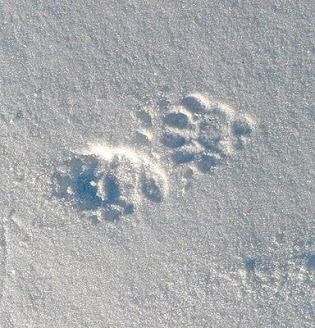
For a day or two past I have seen in various places the small tracks apparently of skunks. They appear to come out commonly in the warmer weather in the latter part of February.  February 25, 1860

The fields of open water amid the thin ice of the meadows are the spectacle to-day. They are especially dark blue when I look southwest. Has it anything to do with the direction of the wind.  February 25, 1860

It is pleasant to see high dark-blue waves half a mile off running incessantly along the edge of white ice." February 25, 1860 

I noticed yesterday the first conspicuous silvery sheen from the needles of the white pine waving in the wind. February 25, 1860

I suspect that those plumes which have been appressed or contracted by snow and ice are not only dried but opened and spread by the wind. February 25, 1860

*****
 A Book of the Seasons, by Henry Thoreau, Ice-out
A Book of the Seasons,  by Henry Thoreau, The Skunk
A Book of the Seasons,  by Henry Thoreau, The Nuthatch


*****
February 25, 2024
(avesong)
*****

September 30, 1852 ("Custom gives the first finder of the nest a right to the honey and to cut down the tree ")
February 3, 1855 ("This will deserve to be called the winter of skating.”)
February 4, 1852 ("Now the white pine are a misty blue; anon a lively, silvery light plays on them, and they seem to erect themselves unusually")
February 5, 1852 ("The boughs, feathery boughs, of the white pines, tier above tier, reflect a silvery light against the darkness of the grove.")
February 8, 1858 (“I am surprised to find that Walden ice is only six inches thick, or even a little less, and it has not been thicker.”)
February 10, 1852 ("I saw yesterday on the snow on the ice, on the south side of Fair Haven Pond, some hundreds of honey-bees, dead and sunk half an inch below the crust. They had evidently come forth from their hive (perhaps in a large hemlock on the bank close by), and had fallen on the snow chilled to death. Their bodies extended from the tree to about three rods from it toward the pond. Pratt says he would advise me to remove the dead bees, lest somebody else should be led to discover their retreat, and I may get five dollars for the swarm, and perhaps a good deal of honey.")
February 10, 1860 ("I see that Wheildon's pines are rocking and showing their silvery under sides as last spring, — their first awakening, as it were. ")
February 12, 1860 ("That dark-eyed water, especially when I see it at right angles with the direction of the sun, is it not the first sign of spring? ")
February 16, 1856 (“Near the shore in one place it was twenty-two inches.”)
February 16, 1856 (“Wild says it is the warmest day at 12 M. since the 22d of December, when the thermometer stood at 50°. To-day it is at 44.”)
February 16, 1857 (“A wonderfully warm day (the third one); about 2 p.m., thermometer in shade 58.”)
February 17. 1857 ('Thermometer at 1 p.m., 60°.“)
February 18, 1857 ("Hear a fly buzz amid some willows.")
February 18, 1857 (". . . as if the fairies had dropped their veils or handkerchiefs after a midnight revel, rejoicing at the melting of the snow. What can it be? Is it animal or vegetable? I suspect it is allied to mould; or is it a scum? . . .a thin and tender membrane that envelops the infant earth in earliest spring.”)
February 18, 1858 (“I find Walden ice to be nine and a half plus inches thick, having gained three and a half inches since the 8th”)
e spring”)
February 24, 1854 (“Nuthatches are faintly answering each other, — tit for tat, — on different keys, — a faint creak. Now and then one utters a loud distinct gnah.”) 
February 24, 1854 "The other day I thought that I smelled a fox very strongly, and went a little further and found that it was a skunk.”)
February 24, 1857 ("I have seen the probings of skunks for a week or more. “)
February 24, 1857 (“Walden is still covered with thick ice, though melted a foot from the shore.”)

Walden (“To him whose elastic and vigorous thought keeps pace with the sun, the day is a perpetual morning. It matters not what the clocks say . . . Morning is when I am awake and there is a dawn in me.”)

February 27, 1861 ("Mother hears a robin to-day.")
February 27, 1851("Blue-joint was introduced into the first meadow where it did not grow before.")
February 28, 1855 ("This is a powerful agent at work.”)
February 28, 1860 ("C. saw a dozen robins to-day on the ground on Ebby Hubbard's hill by the Yellow Birch Swamp.") 
March 2, 1860 ("I see a row of white pines, too, waving and reflecting their silvery light.")
March 4, 1852
 (" I cut my initials on the bee tree")
March 5, 1859 ("Going down-town this forenoon, I heard a white-bellied nuthatch on an elm within twenty feet, uttering peculiar notes and more like a song than I remember to have heard from it. . . . It was something like to-what what what what what, rapidly repeated, and not the usual gnah gnah; and this instant it occurs to me that this may be that earliest spring note which I hear, and have referred to a woodpecker! (This is before I have chanced to see a bluebird, blackbird, or robin in Concord this year.) It is the spring note of the nuthatch. . . . This herald of spring is commonly unseen, it sits so close to the bark.")
March 6, 1854 (“I see the skunk- cabbage started about the spring at head of Hubbard's Close, amid the green grass, and what looks like the first probing of the skunk.”)
March 10, 1854 ("See a skunk in the Corner road, which I follow sixty rods or more. . . . It is a slender black (and white) animal, with its back remarkably arched, standing high behind and carrying its head low; runs, even when undisturbed, with singular teeter or undulation, like the walking of a Chinese lady. Very slow; I hardly have to run to keep up with it. It has a long tail, which it regularly erects when I come too near and prepares to discharge its liquid. It is white at the end of the tail, and the hind head and a line on the front of the face, — the rest black, except the flesh-colored nose (and I think feet). . . . I have no doubt they have begun to probe already where the ground permits, — or as far as it does. But what have they eat all winter?")
March 17, 1857(“No mortal is alert enough to be present at the first dawn of the spring")
March 29, 1852 ("The water on the meadows looks very dark from the street. Their color depends on the position of the beholder in relation to the direction of the wind.") 
April 9, 1856 (“The thermometer at 5 P. M. is 66°+, and it has probably been 70° or more; and the last two days have been nearly as warm.”)
April 25, 1859 (" I hear still the what what what of a nuthatch, and, directly after, its ordinary winter note of gnah gnah, quite distinct. I think the former is its spring note or breeding-note.") 
June 22, 1859 ("One who is not almost daily on the river will not perceive the revolution constantly going on.”)
June 22, 1860 (“[T]he thermometer 60° only at 12.30 P.M. and 65 at 5 P.M. But it is remarkably cold in the wind, and you require a thick coat. 65° now, with wind, is uncomfortably cold.”)
August 23, 1853 ("Perhaps after middle age man ceases to be interested in the morning and in the spring.”)


February 25, 2024

If you make the least correct 
observation of nature this year,
 you will have occasion to repeat it
 with illustrations the next, 
and the season and life itself is prolonged.

 February 24   <<<<<  February 25   >>>>> February 26

A Book of the Seasons,  by Henry Thoreau,   February 25  
A Book of the Seasons,  by Henry Thoreau
 "A book, each page written in its own season,
out-of-doors, in its own locality."
 ~edited, assembled and rewritten by zphx ©  2009-2024

tinyurl.com/hdt25feb


Popular Posts Last 30 Days.

The week ahead in Henry’s journal

The week ahead in Henry’s journal
A journal, a book that shall contain a record of all your joy.
"A stone fruit. Each one yields me a thought." ~ H. D. Thoreau, March 28, 1859


I sit on this rock
wrestling with the melody
that possesses me.