Wednesday, January 11, 2012

The glory of these afternoons. What need to travel?


January 11

What need to travel? 

There are no sierras equal to the clouds in the sunset sky. And are not these substantial enough? In a low or level country, perchance, the forms of the clouds supply the place of mountains and precipices to the eye, the grosser atmosphere makes a mountainous country in the sky. 

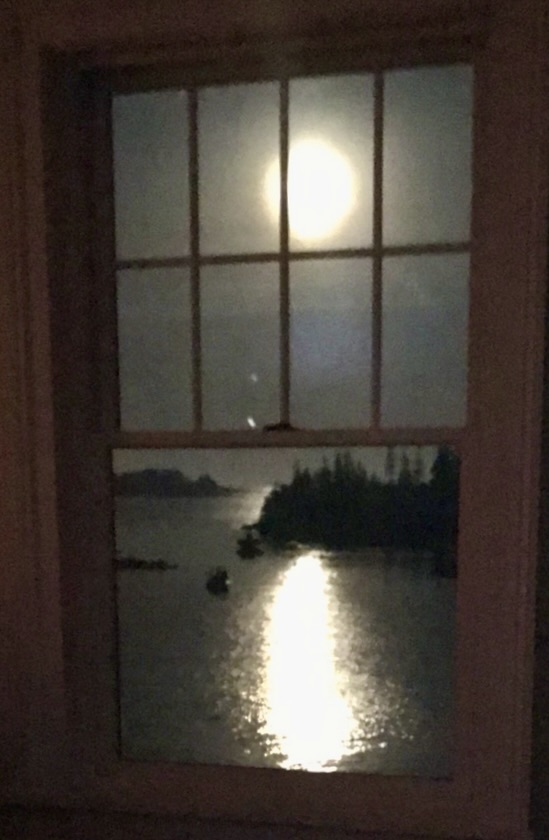
The glory of these afternoons, though the sky may be mostly overcast, is in the ineffably clear blue, or else pale greenish-yellow, patches of sky in the west just before sunset. The whole cope of heaven seen at once is never so elysian. Windows to heaven, the heavenward windows of the earth. 

The end of the day is truly Hesperian. . . .

We sometimes find ourselves living fast, — unprofitably and coarsely even, — as we catch ourselves eating our meals in unaccountable haste. But in one sense we cannot live too leisurely. 

Let me not live as if time was short. Catch the pace of the seasons; have leisure to attend to every phenomenon of nature, and to entertain every thought that comes to you. Let your life be a leisurely progress through the realms of nature, even in guest-quarters. . . .

The question is not where did the traveller go? what places did he see? — it would be difficult to choose between places — but who was the traveller? how did he travel? how genuine an experience did he get?  

For travelling is, in the main, like as if you stayed at home, and then the question is how do you live and conduct yourself at home? 

What I mean is that it might be hard to decide whether I would travel to Lake Superior, or Labrador, or Florida. Perhaps none would be worth the while, if I went by the usual mode. 

But if I travel in a simple, primitive, original manner, standing in a truer relation to men and nature, travel away from the old and commonplace, get some honest experience of life, if only out of my feet and homesickness, then it becomes less important whither I go or how far. I so see the world from a new and more commanding point of view.

Perhaps it is easier to live a true and natural life while travelling, — as one can move about less awkwardly than he can stand still.

H. D. Thoreau, Journal, January 11, 1852

What need to travel? . . .The question is not where did the traveller go? . . . but who was the traveller?See  August 6, 1851 ("It takes a man of genius to travel in his own country, in his native village; to make any progress between his door and his gate."); September 7, 1851 ("The discoveries which we make abroad are special and particular; those which we make at home are general and significant. The further off, the nearer the surface. The nearer home, the deeper."); May 6, 1854 ("It matters not where or how far you travel, — the farther commonly the worse, — but how much alive you are."); March 11, 1856 ("Only that travelling is good which reveals to me the value of home and enables me to enjoy it better"); November 20, 1857 ("We only need travel enough to give our intellects an airing."); 

The glory of these afternoons, though the sky may be mostly overcast, is in the ineffably clear blue, or else pale greenish-yellow, patches of sky in the  west just before sunset. Compare January 11, 1856 (The sunsets, I think, are now particularly interesting. The colors of the west seem more than usually warm, perhaps by contrast with this simple snow-clad earth over which we look and the clear cold sky.") See December 11, 1854 ("It is but mid-afternoon when I see the sun setting far through the woods, and there is that peculiar clear vitreous greenish sky in the west, as it were a molten gem."); December 14, 1851("There is a beautifully pure greenish-blue sky under the clouds now in the southwest just before sunset."); December 25, 1851 (“I go forth to see the sun set. Who knows how it will set, even half an hour beforehand ?”); ; December 27, 1853 ("It is a true winter sunset, almost cloudless, clear, cold indigo-y along the horizon.") See also  A Book of the Seasons, by Henry Thoreau, Winter Sunsets and A Book of the Seasons, by Henry Thoreau, the Western Sky

The whole cope of heaven seen at once is never so elysian. Windows to heaven, the heavenward windows of the earth. See January 17, 1852 (“”Those western vistas through clouds to the sky show the clearest heavens, clearer and more elysian than if the whole sky is comparatively free from clouds."); October 28, 1857 ("All at once a low-slanted glade of sunlight from one of heaven’s west windows behind me fell on the bare gray maples, lighting them up with an incredibly intense and pure white light;. . .It was but a transient ray, and there was no sunshine afterward, but the intensity of the light was surprising and impressive, like a halo, a glory in which only the just deserved to live. . . .It was a serene, elysian light, in which the deeds I have dreamed of but not realized might have been performed. At the eleventh hour, late in the year, we have visions of the life we might have lived. ")

We sometimes find ourselves living fast, — as we catch ourselves eating our meals in unaccountable haste. See December 12, 1851 ("I wish for leisure and quiet to let my life flow in its proper channels, with its proper currents; when I might not waste the days."); December 28, 1852 ("We live too fast and coarsely, just as we eat too fast, and do not know the true savor of our food.") 

January 11. See A Book of the Seasons, by Henry Thoreau, January 11

Pale greenish-yellow
patches of sky in the west 
just before sunset. 

What need to travel?
The question is not wither
 but how do you live.

A Book of the Seasons,  by Henry Thoreau
 "A book, each page written in its own season, 
out-of-doors, in its own locality."
 ~edited, assembled and rewritten by zphx ©  2009-2025

https://tinyurl.com/hdt-520111

Tuesday, January 10, 2012

Blue in the snow


January 9.

The sky shut out by snow-clouds. It spits a little snow and then holds up. Where a path has been shovelled through drifts in the road, and the cakes of snow piled up, I see little azures, little heavens, in the crannies and crevices.

The deeper they are, and the larger masses they are surrounded by, the darker-blue they are. Some are a very light blue with a tinge of green. Apparently the snow absorbs the other rays and reflects the blue. It has strained the air, and only the blue rays have passed through the sieve.

Is, then, the blue water of Walden snow-water?

I see the heaven hiding in nooks and crevices in the snow. Into every track which the teamster makes, this elysian, empyrean atmosphere rushes.

H. D. Thoreau, Journal, January 9, 1852


Apparently the snow absorbs the other rays and reflects the blue. . . .See January 14, 1852 ("There is no blueness in the ruts and crevices in the snow to-day. What kind of atmosphere does this require? . . . It is one of the most interesting phenomena of the winter."); January 18, 1852 ("Perhaps the snow in the air, as well as on the ground, takes up the white rays and reflects the blue."); January 26, 1852 ("To-day I see . . . a slight blueness in the chinks, it being cloudy and melting.")

Is, then, the blue water of Walden snow-water?
See January 24, 1852 (Walden and White Ponds are a vitreous greenish blue, like patches of the winter sky seen in the west before sundown.")

Sunday, January 8, 2012

Tracking


I notice that almost every track which I made yesterday in the snow- - perhaps ten inches deep has got a dead leaf in it, though none is to be seen on the snow around.


Even as early as 3 o'clock these winter afternoons the axes in the woods sound like nightfall , like the sound of a twilight labor.


H. D. Thoreau, Journal, January 8, 1852

See January 7, 1857 ("Though the rest of the broad path is else perfectly unspotted white, each track of the fox has proved a trap which has caught from three or four to eight or ten leaves each, snugly packed; and thus it is reprinted.")

A Book of the Seasons,  by Henry Thoreau, January 8
A Book of the Seasons,  by Henry Thoreau
 "A book, each page written in its own season, 
out-of-doors, in its own locality."
 ~edited, assembled and rewritten by zphx ©  2009-2023


Friday, January 6, 2012

The invisible moon


January 7.

It is a dark day, the heavens shut out with dense snow clouds and the trees wetting me with the melting snow, when going through Brown's wood on Fair Haven, which they are cutting off, and suddenly looking through the woods between the stems of the trees, I think I see an extensive fire in the western horizon. 

It is a bright coppery-yellow fair-weather cloud.


Later this evening, walking to Lincoln to lecture in a driving snow-storm, the invisible moon gives light
through the thickest of it.


How richly the snow lays on the cedar!


H. D. Thoreau, Journal, January 7, 1852

I think I see an extensive fire in the western horizon. It is a bright coppery-yellow fair-weather cloud.
See January 6, 1854 ("There was a low, narrow, clear segment of sky in the west at sunset . . . of the coppery yellow, perhaps, of some of Gilpin's pictures, all spotted coarsely with clouds like a leopard's skin.")


January 7. See A Book of the Seasons, by Henry Thoreau, January 7

A Book of the Seasons,  by Henry Thoreau
"A book, each page written in its own season,
out-of-doors, in its own locality.”
~edited, assembled and rewritten by zphx © 2009-2024

Thursday, January 5, 2012

A picture of winter.

January 5

To-day the trees are white with snow – I mean their stems and branches – and have the true wintry look, on the storm side. 

Not till this has the winter come to the forest.


They look like the small frostwork in the path and on the windows now, especially the oak woods at a distance, and you see better the form which their branches take. 


That is a picture of winter, and now you may put a cottage under them and roof it with snow-drifts, and let the smoke curl up amid the boughs in the morning.

It was a dark day, the heavens shut out with dense snow-clouds and the trees wetting me with the melting snow, when I went through Brown's wood on Fair Haven, which they are cutting off, and suddenly looking through the woods between the stems of the trees, I thought I saw an extensive fire in the western horizon. 

January 5, 2020

It was a bright coppery-yellow fair-weather cloud along the edge of the horizon, gold with some alloy of copper, in such contrast with the remaining clouds as to suggest nothing less than fire. On that side the clouds which covered our day, low in the horizon with a dun and smoke-like edge, were rolled up like a curtain with heavy folds, revealing this further bright curtain beyond. 

H. D. Thoreau, Journal, January 5, 1852


Trees . . .have the true wintry look, on the storm side. See December 23, 1851 (“There is a narrow ridge of snow, a white line, on the storm side of the stem of every exposed tree.”); December 26, 1855 (“The ice is chiefly on the upper and on the storm side of twigs”); January 14, 1856 ("You can best tell from what side the storm came by observing on which side of the trees the snow is plastered.")

Trees stems and branches
white with snow on the storm side –
the true wintry look.

Put a cottage there
roof it with snow-drifts and
let the smoke curl up.

A Book of the Seasons,  by Henry Thoreau, 
"A book, each page written in its own season,
out-of-doors, in its own locality.”
~edited, assembled and rewritten by zphx © 2009-2025

https://tinyurl.com/hdt-520105

Sunday, January 1, 2012

The stars are dazzlingly bright.


January 1


Moon little more than half full. Not a cloud in the sky.

It is a remarkably warm night for the season, the ground almost entirely bare. The stars are dazzlingly bright. 

The fault may be in my own barrenness, but methinks there is a certain poverty about the winter night's sky. 

The stars of higher magnitude are more bright and dazzling, and therefore appear more near and numerable, while those that appear indistinct and infinitely remote in the summer, imparting the impression of unfathomability to the sky, are scarcely seen at all. The front halls of heaven are so brilliantly lighted that they quite eclipse the more remote. 

The sky has fallen many degrees. The river has risen and flooded the meadows again. 

The white pines, now seen against the moon, with their single foliage, look thin. 

These are some of the differences between this and the autumn or summer nights: 
  • the stiffened glebe under my feet, 
  • the dazzle and seeming nearness of the stars, 
  • the duller gleam from ice on rivers and ponds,
  •  the white spots in the fields and streaks by the wall-sides where are the remains of drifts, yet unmelted. 

Perhaps the only thing that spoke to me on this walk was the bare, lichen-covered gray rock at the Cliff, in the moonlight, naked and almost warm as in summer.


H. D. Thoreau, Journal, January 1, 1852

Moon little more than half full. Not a cloud in the sky.
See October 1, 1851("The moon not quite half full. The twilight is much shorter now than a month ago, probably as the atmosphere is clearer and there is less to reflect the light."); December 5, 1856 ("It is a perfectly cloudless and simple winter sky. A white moon, half full, in the pale or dull blue heaven and a whiteness like the reflection of the snow, extending up from the horizon. ") See also A Book of the Seasons, by Henry Thoreau, January Moonlight

The stars dazzlingly bright.
See December 31, 1851 (“I have not enough valued and attended to the pure clarity and brilliancy of the winter skies . . . in which the stars shine and twinkle so brightly in this latitude.”); January 29, 1854 ("Tonight I feel it stinging cold . . . it bites my ears and face, but the stars shine all the brighter.”)

The fault may be in my own barrenness, but methinks there is a certain poverty about the winter night's sky. See December 27, 1851 ("The sky is always ready to answer to our moods."); January 17, 1852 ("As the skies appear to a man, so is his mind."); See also July 23, 1851 ("The mind is subject to moods, as the shadows of clouds pass over the earth.")

The differences between this and the autumn or summer nights . . .the dazzle and seeming nearness of the stars, See December 31, 1851 (I have not enough valued and attended to the pure clarity and brilliancy of the winter skies. Consider in what respects the winter sunsets differ from the summer ones. Shall I ever in summer evenings see so celestial a reach of blue sky contrasting with amber as I have seen a few days since. The day sky in winter corresponds for clarity to the night sky, in which the stars shine and twinkle so brightly in this latitude. "); February 3, 1852 ("The heavens appear less thickly starred than in summer, - rather a few bright stars, brought nearer by this splendid twinkling in the cold sky."); Compare December 27, 1851 ("There is no winter necessarily in the sky. . .The heavens present, perhaps, pretty much the same aspect summer and winter.")

The bare lichen-covered gray rock in the moonlight, naked and almost warm as in summer.
See May 16, 1851 ("A splendid full moon to-night. Walked from 6. 30 to 10 P M. Lay on a rock near a meadow, which had absorbed and retained much heat, so that I could warm my back on it"); August 2, 1854 (“I sit on rock on the hilltop, warm with the heat of the departed sun, in my thin summer clothes.”) 

I see a lichen
on a rock in a meadow –
a perfect circle.


January 1. See A Book of the Seasonsby Henry Thoreau, January 1

Lichen-covered rock
almost warm as in summer –
naked in moonlight.

A Book of the Seasons,  by Henry Thoreau
"A book, each page written in its own season,
out-of-doors, in its own locality.”
~edited, assembled and rewritten by zphx © 2009-2025

https://tinyurl.com/hdt-520101

Working on the Walden manuscript

January 1

One mood is the natural critic of another. When possessed with a strong feeling on any subject foreign to the one I may be writing on, I know very well what of good and what of bad I have written. It looks to me now as it will ten years hence.  In the light of a strong feeling, all things take their places, and truth of every kind is seen for such. My life is then earnest and will tolerate no makeshifts nor nonsense. What is tinsel or euphuism or irrelevant is revealed to such a touchstone.  Now let me read my verses, and I will tell you if the god has had a hand in them. 


I wish to survey my composition for a moment from the least favorable point of view. I wish to be translated to the future  to observe what portions of my work have crumbled.


H. D. Thoreau, Journal, January 1, 1852

Popular Posts Last 30 Days.

The week ahead in Henry’s journal

The week ahead in Henry’s journal
A journal, a book that shall contain a record of all your joy.
"A stone fruit. Each one yields me a thought." ~ H. D. Thoreau, March 28, 1859


I sit on this rock
wrestling with the melody
that possesses me.