Showing posts sorted by relevance for query december 20. Sort by date Show all posts

Monday, December 20, 2021

A Book of the Seasons: December 20 (winter day, winter colors, winter sky, skating, hawks, snow, ice)


The year is but a succession of days,
and I see that I could assign some office to each day
which, summed up, would be the history of the year.
Henry Thoreau, August 24, 1852


Red white green and dark
brown are the colors of
the winter landscape.

Sunset in winter 
from a clearing in the woods –
golden clouds like mountains.

Glorious winter,
its elements so simple –
clear air, white snow, ice.

The icy water
reflecting the warm colors
of the sunset sky.


 "It has been a glorious winter day,
 its elements so simple, —the sharp clear air,
 the white snow everywhere covering the earth, 
and the polished ice."

Go out before sunrise or stay out till sunset. December 20, 1851

Snow-squalls pass, obscuring the sun, as if blown off from a larger storm. December 20, 1851

Since last Monday the ground has been covered half a foot or more with snow; and the ice also, before I have had a skate December 20, 1851.

Hitherto we had had mostly bare, frozen ground. December 20, 1851

Snows very fast, large flakes, a very lodging snow, quite moist; turns to rain in afternoon. December 20, 1859

Most walkers are pretty effectually shut up by the snow. December 20, 1851

To omit the first mere whitening, —
  • There was the snow of the 4th December.
  • 11th was a lodging snow, it being mild and still, like to-day (only it was not so moist).
  • Was succeeded next day noon by a strong and cold northwest wind.
  • 14th, a fine, dry, cold, driving and drifting storm.
  • 20th (to-day's), a very lodging, moist, and large- flaked snow, turning to rain. To be classed with the 11th in the main. This wets the woodchopper about as much as rain.
December 20, 1859

If we leave the sleigh for a moment, it whitens the seat, which must be turned over. December 20, 1859

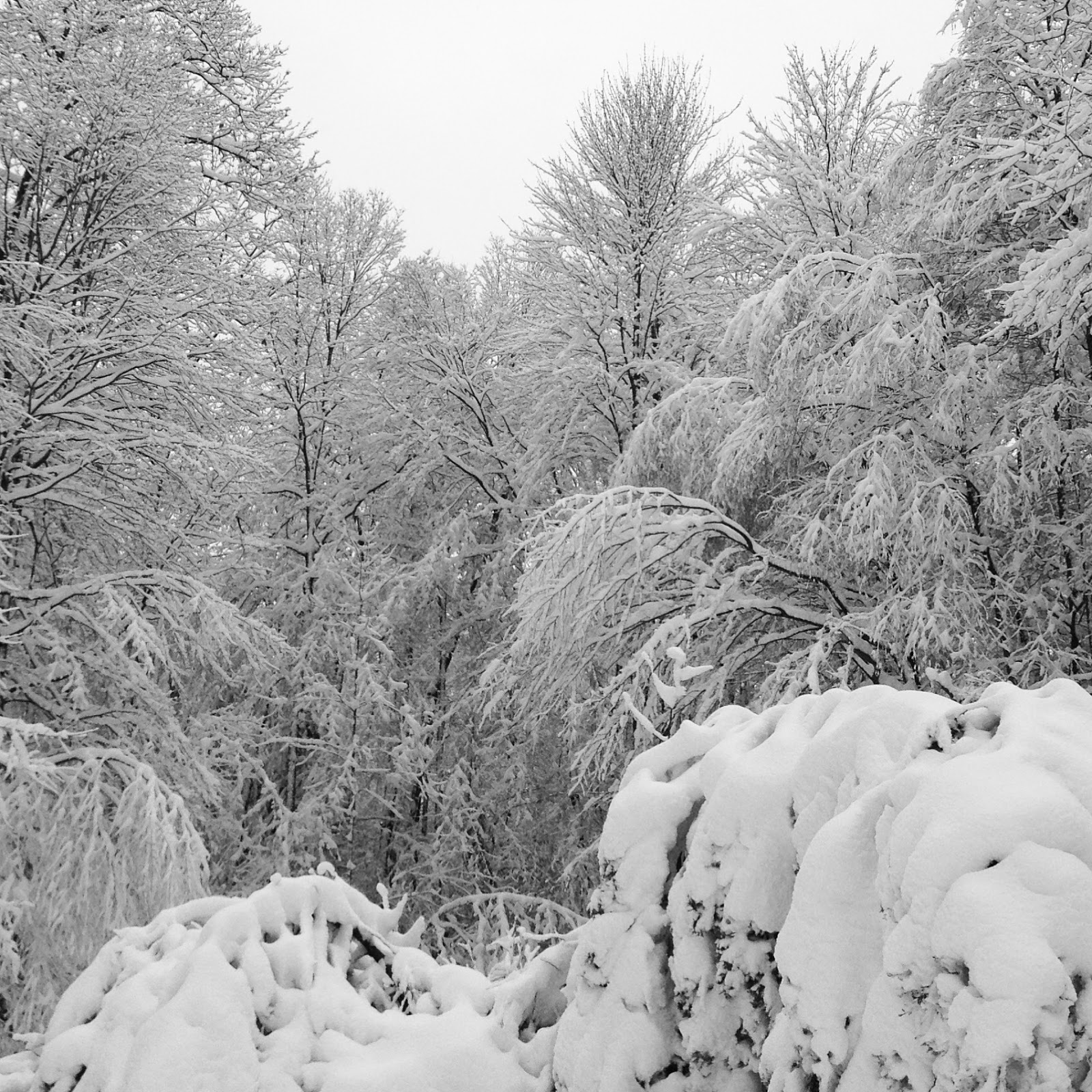
We are soon thickly covered, and it lodges on the twigs of the trees and bushes, — there being but little wind, — giving them a very white and soft, spiritual look. Gives them a still, soft, and light look. December 20, 1859

When the flakes fall thus large and fast and are so moist and melting, we think it will not last long, and this turned to rain in a few hours, after three or four inches had fallen. December 20, 1859

Rain more or less all day. December 20, 1856

7 A. M. —To Hill. December 20, 1854

A. M. – To Easterbrooks Country with Ricketson. December 20, 1857

A. M. — To T. Wheeler wood-lot. December 20, 1859

I see the mother-o’-pearl tints now, at sunrise, on the clouds high over the eastern horizon before the sun has risen above the low bank in the east. December 20, 1854

The sky in the eastern horizon has that same greenish-vitreous, gem-like appearance which it has at sundown, as if it were of perfectly clear glass, —with the green tint of a large mass of glass. December 20, 1854

The coldest morning as yet. December 20, 1854

The woodchoppers are making haste to their work far off, walking fast to keep warm, before the sun has risen, their ears and hands well covered, the dry, cold snow squeaking under their feet. December 20, 1854

Saw a large hawk circling over a pine wood below me, and screaming, apparently that he might discover his prey by their flight. December 20, 1851

A hen-hawk circling over that wild region. See its red tail. December 20, 1857

Travelling ever by wider circles. December 20, 1851

Before you were aware of it, he had mounted by his spiral path into the heavens. December 20, 1851

Circling and ever circling, you cannot divine which way it will incline, till perchance it dives down straight as an arrow to its mark. December 20, 1851

It rises higher above where I stand, and I see with beautiful distinctness its wings against the sky, December 20, 1851

Most gracefully so surveys new scenes and revisits the old. December 20, 1851

Here are some crows already seeking their breakfast in the orchard, and I hear a red squirrel’s reproof. December 20, 1854

A few chickadees busily inspecting the buds at the willow-row ivy tree, for insects, with a short, clear chink from time to time, as if to warn me of their neighborhood. December 20, 1855

The cellar stairs at the old Hunt house are made of square oak timbers; also the stairs to the chamber of the back part of apparently square maple (?) timber, much worn. December 20, 1857

The generous cellar stairs! December 20, 1857

The river appears to be frozen everywhere. December 20, 1854

The snow which has blown on to the ice has taken the form of regular star-shaped crystals, an inch in diameter. December 20, 1854

Where was water last night is a firm bridge of ice this morning. December 20, 1854

I walk along the side of the river, on the ice beyond the Bath Place. December 20, 1855

Already there is dust on this smooth ice, on its countless facets, revealed by the sun. December 20, 1855

I stamp and shake the ice to detect the holes and weak places where that little brook comes in there. December 20, 1855

They are plainly revealed, for the water beneath, being agitated, proclaims itself at every hole far and wide or for three or four rods. December 20, 1855

The edge of the ice toward the channel is either rubbed up or edged with a ridge of frozen foam. December 20, 1855

How warm the dull-red cranberry vine rises above the ice here and there! December 20, 1855

I see some gossamer on the weeds above the ice. December 20, 1855

I mark the many preparations for another year which the farmer has made, — his late plowings, his muck-heaps in fields, perhaps of grass, which he intends to plow and cultivate, his ditches to carry off the winter’s floods, etc. December 20, 1855

Saturday. 2 P. M. – To Fair Haven Hill and plain below. December 20, 1851

P. M. — To Hubbard’s skating meadow. December 20, 1855

P. M. — Skate to Fair Haven. December 20, 1854

Still no snow, and, as usual, I wear no gloves. December 20, 1855

It is very fine skating for the most part. December 20, 1854

All of the river that was not frozen before, and therefore not covered with snow on the 18th, is now frozen quite smoothly; but in some places for a quarter of a mile it is uneven like frozen suds, in rounded pan cakes, as when bread spews out in baking. December 20, 1854

C.’s skates are not the best, and beside he is far from an easy skater, so that, as he said, it was killing work for him. December 20, 1854

Time and again the perspiration actually dropped from his forehead on to the ice, and it froze in long icicles on his beard. December 20, 1854

If there is a grub out, you are sure to detect it on the snow or ice. December 20, 1854

The shadows of the Clamshell Hills are beautifully blue as I look back half a mile at them, and, in some places, where the sun falls on it, the snow has a pinkish tinge. December 20, 1854

Cold as it is, the sun seems warmer on my back even than in summer, as if its rays met with less obstruction. December 20, 1854

I am surprised to find how fast the dog can run in a straight line on the ice. I am not sure that I can beat him on skates, but I can turn much shorter. December 20, 1854

Also, in now hard, dark ice, the tracks apparently of a fox, made when it was saturated snow. December 20, 1855

So long his trail is revealed, but over the pastures no hound can now trace him. December 20, 1855

It is so cold that only in one place did I see a drop of water flowing out on the ice. December 20, 1854

There has been much overflow about every tussock in the meadow, making that rough, opaque ice, like yeast. December 20, 1855

It is pretty good on the meadows, which are somewhat overflown, and the sides of the river, but the greater part of it is open. December 20, 1855

The ice is that portion of the flood which is congealed and laid up in our fields for a season. December 20, 1855

Boys are now devoted to skating after school at night, far into evening, going without their suppers. December 20, 1855

And then the air is so beautifully still; there is not an insect in the air, and hardly a leaf to rustle. December 20, 1854

At sun down or before, it begins to belch. December 20, 1854

Walden is frozen over, except two small spots, less than half an acre in all, in middle. December 20, 1858


The red shrub oaks on the white ground of the plain beneath make a pretty scene. December 20, 1851

The red oak leaves are even more fresh and glossy than the white. December 20, 1851

A clump of white pines, seen far westward over the shrub oak plain, which is now lit up by the setting sun, a soft, feathery grove, with their gray stems indistinctly seen, like human beings come to their cabin door, standing expectant on the edge of the plain, impress me with a mild humanity. December 20, 1851

The trees indeed have hearts. December 20, 1851

With a certain affection the sun seems to send its farewell ray far and level over the copses to them, and they silently receive it with gratitude, like a group of settlers with their children.  December 20, 1851

Nothing stands up more free from blame in this world than a pine tree. December 20, 1851

The pines impress me as human. December 20, 1851

A slight vaporous cloud floats high over them, while in the west the sun goes down apace behind glowing pines, and golden clouds like mountains skirt the horizon. 
December 20, 1851

Our country is broad and rich, for here, within twenty miles of Boston, I can stand in a clearing in the woods and look a mile or more, over the shrub oaks, to the distant pine copses and horizon of uncut woods, without a house or road or cultivated field in sight. December 20, 1851

Red, white, green, and, in the distance, dark brown are the colors of the winter landscape. December 20, 1851

It has been a glorious winter day, its elements so simple, — the sharp clear air, the white snow everywhere covering the earth, and the polished ice. December 20, 1854

How placid, like silver or like steel in different lights, the surface of the still, living water between these borders of ice, reflecting the weeds and trees, and now the warm colors of the sunset sky! December 20, 1855

Sunset in winter from a clearing in the woods, about Well Meadow Head. December 20, 1851
December 20, 2019


*****
A Book of the Seasons,  by Henry Thoreau, The White Pines  
A Book of the Seasons,  by Henry Thoreau, the Shrub Oak
A Book of the Seasons,  by Henry Thoreau, First Ice

*****

March 15, 1856 ("These hawks, as usual, began to be common about the first of March, showing that they were returning from their winter quarters.")
June 5, 1854 ("I have come to this hill to see the sun go down, to recover sanity and put myself again in relation with Nature.”)
June 15, 1852 ("I hear the scream of a great hawk, sailing with a ragged wing against the high wood-side, apparently to scare his prey and so detect it ")
September 13, 1859 ("You must be outdoors long, early and late.")  
October 28, 1857 ("His scream . . . is a hoarse, tremulous breathing forth of his winged energy. But why is it so regularly repeated at that height? Is it to scare his prey, that he may see by its motion where it is, or to inform its mate or companion of its where about? 
November 4, 1852 ("I keep out-of-doors for the sake of the mineral, vegetable, and animal in me.");
December 4, 1859 ("Awake to winter, and snow two or three inches deep, the first of any consequence.")
November 13, 1857 ("See the sun rise or set if possible each day.")
December 6, 1852 ("A great slate-colored hawk sails away from the Cliffs. ")
December 9, 1859 (“I observe at mid-afternoon that peculiarly softened western sky, . . .giving it a slight greenish tinge.”)
December 11, 1854 ("That peculiar clear vitreous greenish sky in the west, as it were a molten gem.”); 
December 11, 1855 ("The winter, with its snow and ice, is as it was designed and made to be.”)
December 11, 1858 ("Walden is about one-third skimmed over.") 
December 11, 1859 (“Still, normal storm, large flakes, warm enough, lodging”)
December 14, 1859 ("This is a fine, dry snow, drifting nearly horizontally from the north, so that it is quite blinding to face")
December 14, 1859 ("Snow-storms might be classified. . . .That of the 11th was a still storm, of large flakes falling gently in the quiet air")
December 15, 1854 ("I see on the ice, half a dozen rods from shore, a small brown striped grub, and again a black one . . .. How came they there?”)
December 15, 1855 (". . .A steady but gentle, warm rain.")
December 19, 1851 ("Why should it be so pleasing to look into a thick pine wood where the sunlight streams in and gilds it? . . .Now the sun sets suddenly without a cloud– & with scarcely any redness following so pure is the atmosphere – only a faint rosy blush along the horizon.")
December 19, 1854 ("Skated a half-mile up Assabet and then to foot of Fair Haven Hill. This is the first tolerable skating.")


December 21 1851 (Long after the sun has set, and downy clouds have turned dark, and the shades of night have taken possession of the east, some rosy clouds will be seen in the upper sky over the portals of the darkening west.")
December 21, 1855 ("A few simple colors now prevail.")
December 21, 1854 ("Fair Haven Pond, for instance, a perfectly level plain of white snow, untrodden as yet by any fisherman, surrounded by snow-clad hills, dark evergreen woods, and reddish oak leaves, so pure and still.") 
December 21 1851("As I stand by the edge of the swamp (Ministerial), a heavy-winged hawk flies home to it at sundown, just over my head, in silence.")
December 21, 1854 ("We are tempted to call these the finest days of the year.") 
December 21, 1854 "Walden is frozen over, apparently about two inches thick. It must have frozen, the whole of it, since the snow of the 18th,-— probably the night of the 18th")
December 21, 1855 (“Walden is skimmed over, all but an acre, in my cove.”)
December 21, 1856 ("The pond is open again in the middle, owing to the rain of yesterday.")
December 22, 1853 ("Walden skimmed over in the widest part, but some acres still open; will probably freeze entirely to-night if this weather holds.”)
December 22, 1858 (“The pond is no more frozen than on the 20th.”)
December 22, 1855 ("Warm rain and frost coming out and muddy walking.")
December 23, 1845 ("The pond froze over last night entirely for the first time, yet so as not to be safe to walk upon”)
December 23, 1851 (“Now the sun has quite disappeared, but the afterglow, as I may call it, apparently the reflection from the cloud beyond which the sun went down on the thick atmosphere of the horizon, is unusually bright and lasting. Long, broken clouds in the horizon, in the dun atmosphere, — as if the fires of day were still smoking there, — hang with red and golden edging like the saddle cloths of the steeds of the sun.”)
December 24, 1851 (“When I had got home and chanced to look out the window from supper, I perceived that all the west horizon was glowing with a rosy border.”)
December 24, 1856 ("Am surprised to find Walden still open in the middle.”)
December 24, 1859 ("There is, in all, an acre or two in Walden not yet frozen, though half of it has been frozen more than a week")
December 24, 1858 ("Those two places in middle of Walden not frozen over yet, though it was quite cold last night! ")
December 25, 1851 (“I go forth to see the sun set. Who knows how it will set, even half an hour beforehand ?”)
December 25, 1858 ("Walden at length skimmed over last night, i. e. the two holes that remained open. One was very near the middle and deepest part, the other between that and the railroad.”)
December 26, 1850 ("Walden not yet more than half frozen over.")
December 26, 1853 ("Walden still open.. . . the only pond hereabouts that is open.")
December 26, 1860 ("Owls are common here in winter; hawks, scarce")
December 27, 1852 ("Not a particle of ice in Walden to-day. Paddled across it.)
December 27, 1856 "Walden is still open in one place of considerable extent, just off the east cape of long southern bay.");. 
December 27, 1857 ("Walden is almost entirely skimmed over. It will probably be completely frozen over to-night")
December 28, 1856 ("Walden completely frozen over again last night.")
December 29, 1855 ("Am surprised to find eight or ten acres of Walden still open,. . .It must be owing to the wind partly.")
December 29, 1856 (“We must go out and re-ally ourselves to Nature every day.")
December 30, 1853 ("The pond not yet frozen entirely over; about six acres open, the wind blew so hard last night. "); 
December 30, 1855 ("There was yesterday eight or ten acres of open water at the west end of Walden, where is depth and breadth combined"); 
December 31, 1850 ("Walden pond has frozen over since I was there last.")
December 31, 1853 ("Walden froze completely over last night. It is, however, all snow ice, as it froze while it was snowing hard, and it looks like frozen yeast somewhat.”)
December 31, 1859 ("(do I ever see a small hawk in winter ?)")
January 1, 1855 ("We see the pink light on the snow within a rod of us. The shadow of the bridges on the snow is a dark indigo blue.") 
January 20, 1852 ("To see the sun rise or go down every day would preserve us sane forever.”
January 22, 1852 ("I see, one mile to two miles distant on all sides from my window, the woods, which still encircle our New England towns. . . . How long will these last?")
January 31, 1859 ("Pink light reflected from the low, flat snowy surfaces amid the ice on the meadows, just before sunset, is a constant phenomenon these clear winter days")
February 9, 1858 ("The stairs of the old back part are white pine or spruce, each the half of a square log; those of the cellar in front, oak, of the same form.")
February 13, 1860 ("It is surprising what a variety of distinct colors the winter can show us."
February 16, 1854 ("See two large hawks circling over the woods by Walden, hunting, — the first I have seen since December 15th.")
February 17, 1857 ("To the old Hunt house. . . .The rear part has a wholly oak frame, while the front is pine.")

December 20, 2022

If you make the least correct
observation of nature this year,
 you will have occasion to repeat it
 with illustrations the next, 
and the season and life itself is prolonged.

 December 19 <<<<<<<<  December 20  >>>>>>>> December 21

A Book of the Seasons,  by Henry Thoreau, December 20
A Book of the Seasons,  by Henry Thoreau
 "A book, each page written in its own season, 
out-of-doors, in its own locality."
 ~edited, assembled and rewritten by zphx ©  2009-2022


Monday, December 13, 2021

A Book of the Seasons: December 13 (first walk on ice, tracks, weeds against the snow, oak leaves, surveying )


The year is but a succession of days,
and I see that I could assign some office to each day
which, summed up, would be the history of the year.
Henry Thoreau, August 24, 1852


Leather-colored leaves
seen against the misty sky
in this mizzling rain.

Fine dewdrops frozen
on grass bent over the path
like a string of beads.

And now I first take
that peculiar winter walk–
sky under my feet.


It was a clear cold morning. December 13, 1852

Winter weather may be said to have begun yesterday. December 13, 1852

Now it will be a cheerful sight to see the snows descend and hear the blast howl. December 13, 1855

This morning it is snowing, and the ground is whitened. December 13, 1855

It seems an age since I took walks and wrote in my journal. December 13, 1851

Walk early through the woods to Lincoln to survey. December 13, 1852

Why have I ever omitted early rising and a morning walk? December 13, 1852

When shall I revisit the glimpses of the moon? December 13, 1851

River and ponds all open. December 13, 1852

Goose Pond skimmed over. December 13, 1852

The river is generally open again. December 13, 1856

The snow is mostly gone. In many places it is washed away down to the channels made by the mice, branching galleries. December 13, 1856

There is not so much ice in Walden as on the 11th. December 13, 1858

Goose Pond . . .and the like ponds are just covered with virgin ice just thick enough to bear, though it cracks about the edges on the sunny sides. December 13, 1857

You may call it virgin ice as long as it is transparent. December 13, 1857

I see the water-target leaves frozen in under the ice in Little Goose Pond. December 13, 1857

I see those same two tortoises (of Dec. 2d), moving about in the same place under the ice, which I can not crack with my feet. December 13, 1857

The Emerson children see six under the ice of Goose Pond to-day. December 13, 1857

Apparently many winter in the mud of these ponds and pond-holes. December 13, 1857

I see some of those great andromeda puffs still hanging on the twigs behind Assabet Spring, black and shrivelled bags. December 13, 1856

I observed a mouse run down a bush by the pond-side. December 13, 1852

He appeared to be a reddish brown above and cream-colored beneath, and ran swiftly down the stems. December 13, 1852

I think it must be the Gerbillus Canadensis, or perhaps the Arvicola Emmonsii, or maybe the Arvicola hirsutus, meadow mouse. December 13, 1852

Began to snow at noon. This the third snow; the first lasted half an hour on ground; the second, two or three days. December 13, 1852

The countless flakes, seen against the dark evergreens like a web that is woven in the air, impart a cheerful and busy aspect to nature. December 13, 1855

It is like a grain that is sown, or like leaves that have come to clothe the bare trees. December 13, 1855


Now, by 9 o’clock, it comes down in larger flakes, and I apprehend that it will soon stop. December 13, 1855

It does. How pleasant a sense of preparedness for the winter, — plenty of wood in the shed and potatoes and apples, etc., in the cellar, and the house banked up! December 13, 1855

While surveying to-day, saw much mountain laurel for this neighborhood in Mason's pasture, just over the line in Carlisle. December 13, 1851

Its bright yellowish-green shoots are agreeable to my eye. December 13, 1851

We had one hour of almost Indian summer weather in the middle of the day. December 13, 1851

I felt the influence of the sun. It melted my stoniness a little. December 13, 1851

The pines looked like old friends again. December 13, 1851

Cutting a path through a swamp where was much brittle dogwood, etc., etc., I wanted to know the name of every shrub. December 13, 1851

There is a fine mizzling rain, which rests in small drops on your coat, but on most surfaces is turning to a glaze. December 13, 1858

Yet it is not cold enough for gloves even, and I think that the freezing may be owing to the fineness of the rain, and that, if it should rain much harder, even though it were colder, it would not freeze to what it fell on. December 13, 1858

It freezes on the railroad rails when it does not on the wooden sleepers. December 13, 1858

Already I begin to see, on the storm side of every twig and culm, a white glaze (reflecting the snow or sky), rhyming with the vegetable core. December 13, 1858

And on those fine grass heads which are bent over in the path the fine dew-like drops are frozen separately like a string of beads, being not yet run together. December 13, 1858

We stooped to examine, and I observed, about the base of the larger pin-weed, the frost formed into little flattened trumpets or bells, an inch or more long, with the mouth down about the base of the stem. December 13, 1852

They were very conspicuous, dotting the grass white.  December 13, 1852

Though there were plenty of other dead weeds and grasses about, no other species exhibited this phenomenon. December 13, 1852

There is little if any wind, and the fine rain is visible only against a dark ground. December 13, 1858

A damp day brings out the color of oak leaves, somewhat as of lichens. December 13, 1858

They are of a brighter and deeper leather-color, richer and more wholesome, hanging more straightly down than ever. December 13, 1858

They look peculiarly clean and wholesome, their tints brought out and their lobes more flattened out, and they show to great advantage, these trees hanging still with leather-colored leaves in this mizzling rain, seen against the misty sky. December 13, 1858

There is a fine healthy and handsome scarlet oak . . . about thirty- five feet high and . . . very full of leaves, excepting a crescent of bare twigs at the summit. December 13, 1856

The leaves have a little redness in them. December 13, 1856

There is a dense growth of young birches from the seed in the sprout-land lot just beyond on the riverside, now apparently two or three years old, December 13, 1856

I judge from his account of the rise and fall of Flint's Pond that, allowing for the disturbance occasioned by its inlets and outlet, it sympathizes with Walden. December 13, 1852

I go this afternoon thinking I may find the stakes set for auction lots on the Ministerial Lot in December, '51. December 13, 1857

I find one white birch standing and two fallen. December 13, 1857

Thus in six years two out of three stout (two-and-a-half-inch) birch stakes were flat. December 13, 1857

A surveyor should know what stakes last longest. December 13, 1857

In sickness and barrenness it is encouraging to believe that our life is dammed and is coming to a head, so that there seems to be no loss, for what is lost in time is gained in power. December 13, 1857

All at once, unaccountably, as we are walking in the woods or sitting in our chamber, after a worthless fortnight, we cease to feel mean and barren. December 13, 1857

By stepping aside from my chosen path so often, I see myself better and am enabled to criticise myself. Of this nature is the only true lapse of time.  December 13, 1851

We had one hour of almost Indian summer weather in the middle of the day. I felt the influence of the sun. It melted my stoniness a little. December 13, 1851

This varied employment, to which my necessities compel me, serves instead of foreign travel and the lapse of time. December 13, 1851


The river froze over last night, — skimmed over. December 13, 1850

My first true winter walk is perhaps that which I take on the river, or where I cannot go in the summer. December 13, 1859

It is the walk peculiar to winter, and now first I take it. 
December 13, 1859

Now that the river is frozen we have a sky under our feet also. December 13, 1859

If it makes me forget some things which I ought to remember, it no doubt enables me to forget many things which it is well to forget. December 13, 1851

I see that the fox too has already taken the same walk before me, just along the edge of the button-bushes, where not even he can go in the summer. We both turn our steps hither at the same time. 
December 13, 1859

A Book of the Seasons,  by Henry Thoreau, The Fox

A Book of the Seasons,  by Henry Thoreau, First Ice

*****

March 23, 1852 ("As I cannot go upon a Northwest Passage, then I will find a passage round the actual world where I am.")
April 8, 1854 ("A day or two surveying is equal to a journey")
May 6, 1854 ("It matters not where or how far you travel, — the farther commonly the worse, — but how much alive you are.")
August 6, 1851 ("It takes a man of genius to travel in his own country, in his native village")
August 19, 1854 ("Flint's Pond has fallen very much since I was here. The shore is so exposed that you can walk round, which I have not known possible for several years, and the outlet is dry.")
August 25, 1858 (“The short-tailed meadow mouse, or Arvicola hirsuta. . . . above, it is very dark brown, almost blackish, being browner forward. It is also dark beneath.”)
September 20, 1851 ("A fatal coarseness is the result of mixing in the trivial affairs of men.. . . I feel inexpressibly begrimed.")
September 26, 1851("Since I perambulated the bounds of the town, I find that I have in some degree confined myself, - - my vision and my walks.")
October 21, 1859 ("The clump of mountain laurel in Mason's pasture is of a triangular form, about six rods long by a base of two and a third rod")
November 1, 1858 ("Take the shortest way round and stay at home. A man dwells in his native valley like a corolla in its calyx, like an acorn in its cup. Here, of course, is all that you love, all that you expect, all that you are.")
November 14, 1851 ("Surveying the Ministerial Lot in the southwestern part of the town.")
November 18, 1851 ("Surveying these days the Ministerial Lot.")
November 18, 1855 ("Now first mark the stubble and numerous withered weeds rising above the snow. They have suddenly acquired a new character.");
November 20, 1851("Hard and steady and engrossing labor with the hands, especially out of doors, is invaluable to the literary man")
November 20, 1858 ("The cinnamon-brown of withered pinweeds (how long?) colors whole fields.")
November 21, 1852 ("I am surprised this afternoon to find the river skimmed over in some places, and Fair Haven Pond one-third frozen or skimmed over”)
November 23, 1852("I am surprised to see Fair Haven entirely skimmed over”)
November 24, 1851("Setting stakes in the swamp (Ministerial).")
November 25, 1850 ("Sometimes it happens that I cannot easily shake off the village; the thought of some work, some surveying, will run in my head, and I am not where my body is, I am out of my senses")
November 26, 1858 ("Walden is very low, compared with itself for some years.")
November 26, 1858 ("And what is remarkable, I find that not only Goose Pond also has fallen correspondingly within a month, but even the smaller pond-holes only four or five rods over, such as Little Goose Pond, shallow as they are.")
November 30, 1856 ("Several inches of snow,. . .. Now see . . .the rich brown-fruited pinweed above the crust.")
November 30, 1855 ("River skimmed over behind Dodd’s and elsewhere. Got in my boat. River remained iced over all day.")
November 30, 1858 ("The river may be said to have frozen generally last night.")
December 1, 1856 (“The dear wholesome color of shrub oak leaves, so clean and firm,. . .Well-tanned leather on the one side, sun-tanned, color of colors, color of the cow and the deer, silver-downy beneath.”)
December 2, 1857 ("Measuring Little Goose Pond, I observed two painted tortoises moving about under the thin transparent ice”)
December 3, 1856 ("Fewer weeds now rise above the snow. Pinweed (or sarothra) is quite concealed.")
December 4, 1853 ("Goose Pond apparently froze over last night, all but a few rods, but not thick enough to bear.”)
December 4, 1856 ("I have no doubt that it is an important relief to the eyes which have long rested on snow, to rest on brown oak leaves and the bark of trees. We want the greatest variety within the smallest compass, and yet without glaring diversity, and we have it in the colors of the withered oak leaves.")
December 5, 1856 ('The river is well skimmed over in most places, though it will not bear, — wherever there is least current, as in broad places, or where there is least wind, . . “);
December 5, 1852 ("Walden has no visible inlet nor outlet, but it is . . . distantly and indirectly related to Flint's Pond, which is more elevated, by a chain of small ponds coming from that quarter");
December 5, 1853 ("The river frozen over thinly in most places and whitened with snow")
December 5, 1853 ("Fair Haven Pond is skimmed completely over.")
December 5, 1856 ("The river is well skimmed over in most places,")
December 5 1856 ("The johnswort and the larger pinweed are conspicuous above the snow.")
December 6, 1856 ("The river is generally frozen over, though it will bear quite across in very few places. ")
December 6, 1856 ("Each pinweed, etc., has melted a little hollow or rough cave in the snow, in which the lower part at least snugly hides.")
December 6, 1856 ("What variety the pinweeds, clear brown seedy plants, give to the fields, which are yet but shallowly covered with snow!")
December 6, 1856("Not till the snow comes are the beauty and variety and richness of vegetation ever fully revealed.")
December 6, 1856("The pinweeds, . . .being seen against a pure white background, they are as distinct as if held up to the sky.")
December 6, 1856 ("Some plants seen, then, in their prime or perfection, when supporting an icy burden in their empty chalices.")
December 7, 1856 ("Take my first skate to Fair Haven Pond")
 December 7, 1856 ("The pond must have been frozen by the 4th at least. . . .The ice appears to be but three or four inches thick);
December 8, 1854 (" Go over the fields on the crust to Walden, over side of Bear Garden. Already foxes have left their tracks. How the crust shines afar, the sun now setting!")
December 8, 1853 (" Goose Pond now firmly frozen.”)
December 8, 1850 ("A week or two ago Fair Haven Pond was frozen and the ground was still bare. Now the Pond is open and ground is covered with snow and ice. This evening for the first time the new moon is reflected from the frozen snow-crust.")
December 9, 1859 ("The river and Fair Haven Pond froze over generally last night, though they were only frozen along the edges yesterday. This is unusually sudden.")
December 9, 1856 (" Fair Haven was so solidly frozen on the 6th that there was fishing on it,")
December 9, 1859 ("The river and Fair Haven Pond froze over generally last night, though they were only frozen along the edges yesterday. This is unusually sudden.")
December 11, 1858 ("Walden is about one-third skimmed over.")
December 11, 1854 ("C. says he found Fair Haven frozen over last Friday, i. e. the 8th.")
December 12, 1851 ("I have been surveying for twenty or thirty days, living coarsely, - indeed, leading a quite trivial life")
  December 12, 1855 ("The snow having come. . . and now first, as it were, we have the fox for our nightly neighbor, and countless tiny deer mice.")
December 12, 1859 ("Every man, and the woodchopper among the rest, should love his work as much as the poet does his.")

Prepared for winter --
cheerful to see snows descend
and hear the blast howl.

December 14, 1855 ("Thus by the snow I was made aware in this short walk of the recent presence there of squirrels, a fox, and countless mice, whose trail I had crossed, but none of which I saw, or probably should have seen before the snow fell.")
December 14, 1850 ("I walk on Loring's Pond to three or four islands there which I have never visited, not having a boat in the summer.")
December 14. 1851 ("The boys have been skating for a week, but I have had no time to skate for surveying. I have hardly realized that there was ice, though I have walked over it about this business.")
December 15, 1855 ("The boys have skated. a little within two or three days, but it has not been thick enough to bear a man yet.")
December 15, 1855 ("The low grass and weeds, bent down with a myriad little crystalline drops, ready to be frozen.”)
December 16, 1850 ("The river is probably open again.")
December 18, 1859 (“The withered oak leaves, being thoroughly saturated with moisture, are of a livelier color.”)
December 18, 1858 ("The pond is merely frozen a little about the edges. I see various little fishes lurking under this thin, transparent ice, close up to the edge or shore, especially where the shore is flat and water shoal.")
December 18, 1852 ("Loring's Pond beautifully frozen. So polished a surface, I mistook many parts of it for water.")
 December 19, 1856 (“Last night was so cold that the river closed up almost everywhere, and made good skating where there had been no ice to catch the snow of the night before.”);
December 20, 1858 ("Walden is frozen over, except two small spots, less than half an acre in all, in middle.")
December 20, 1854 (“All of the river that was not frozen before, and therefore not covered with snow on the 18th, is now frozen quite smoothly;”);
December 20, 1855 ("I see . . . in now hard, dark ice, the tracks apparently of a fox, made when it was saturated snow.")\
December 21, 1855 ("I here take to the riverside. The broader places are frozen over, but I do not trust them yet. Fair Haven is entirely frozen over, probably some days");
December 21, 1857 (" Walden and Fair Haven,. . .have only frozen just enough to bear me, “)
December 21, 1856 (“The red oak leaves are a little lighter brown than the black oak, less yellowish beneath.”)
December 23, 1859 ("The pinweed — the larger (say thymifolia) — pods open, showing their three pretty leather-brown inner divisions open like a little calyx, a third or half containing still the little hemispherical or else triangular red dish-brown seeds.")
December 24, 1858 ("Those two places in middle of Walden not frozen over yet, though it was quite cold last night!") 
December 24, 1856 (". It is very pleasant walking thus before the storm is over, in the soft, subdued light. . . .Do not see a track of any animal till returning near the Well Meadow Field, where many foxes, one of whom I have a glimpse of, had been coursing back and forth in the path and near it for three quarters of a mile. They had made quite a path");
December 25, 1858 (“I notice that a fox has taken pretty much my own course along the Andromeda Ponds.”)
December 25, 1858 (" Walden at length skimmed over last night, i. e. the two holes that remained open. One was very near the middle and deepest part, the other between that and the railroad.")
December 27, 1857 ("Goose Pond is not thickly frozen yet . . .in many places water has oozed out and spread over the ice, mixing with the snow and making dark places.”)
December 27, 1853 (“ I had not seen a meadow mouse all summer, but no sooner does the snow come and spread its mantle over the earth than it is printed with the tracks of countless mice");
December 27, 1857 ("Do not despair of life. You have no doubt force enough to overcome your obstacles. ")
December 27, 1857 ("Now you walk on the same pond frozen, amid the snow, with numbed fingers and feet, and see the water-target bleached and stiff in the ice")
December 31, 1854 ("The white oak leaves are a cinnamon-color, the black and red oak leaves a reddish brown or leather-color.’)
December 31, 1857 ("I have been surveying most of the time for a month past and have associated with various characters")
December 31, 1854 (" I see mice and rabbit and fox tracks on the meadow.")
January 2, 1859 (“The color of young oaks of different species is still distinct, but more faded and blended, becoming a more uniform brown”)
January 10, 1851 ("I have met with but one or two persons in the course of my life who understood the art of taking walks daily,")
February 13, 1859("Winter comes to make walking possible where there was no walking in summer. . .  I have three great highways raying out from one centre, which is near my door. I may walk down the main river or up either of its two branches")
February 19, 1854 ("I incline to walk now in swamps and on the river and ponds, where I cannot walk in summer.")

December 13, 2019

If you make the least correct
observation of nature this year,
 you will have occasion to repeat it
 with illustrations the next, 
and the season and life itself is prolonged.

 December 12 <<<<<<<<  December 13  >>>>>>>> December 14


A Book of the Seasons,  by Henry Thoreau
"A book, each page written in its own season,
out-of-doors, in its own locality.”
~edited, assembled and rewritten by zphx © 2009-2023

tinyurl.com/HDT13DEC


Tuesday, December 21, 2021

A Book of the Seasons: December 21 (Solstice) ( First ice, winter colors, oak leaves, winter sky)

The year is but a succession of days,
and I see that I could assign some office to each day
which, summed up, would be the history of the year.
Henry Thoreau, August 24, 1852


 December 21

Dark evergreen woods
these finest days of the year –
days so pure and still.

Last rays of the sun
falling on the Baker Farm
reflect a clear pink.

Long after the sun has set
and downy clouds have turned dark
and the shades of night
have taken possession of the east
some rosy clouds will be seen
in the upper sky 
over the portals of the darkening west.
December 21, 1851

solstice 2019


It snowed slightly this morning, so as to cover the ground half an inch deep. December 21, 1854

I cross some mink or muskrat's devious path in the snow, with mincing feet and trailing body. December 21, 1851

Going to the post-office at 9 A. M. this very pleasant morning, I hear and see tree sparrows on Wheildon’s pines. December 21, 1855

Just beyond scare a downy woodpecker and a brown creeper in company, from near the base of a small elm within three feet of me. December 21, 1855

The former dashes off with a loud rippling of the wing, and the creeper flits across the street to the base of another small elm, whither I follow. December 21, 1855

At first he hides behind the base, but ere long works his way upward and comes in sight. December 21, 1855

He is a gray-brown, a low curve from point of beak to end of tail, resting flat against the tree. December 21, 1855

Walden is frozen over, apparently about two inches thick. December 21, 1854

It must have frozen, the whole of it, since the snow of the 18th,-- probably the night of the 18th. December 21, 1854

It is very thickly covered with what C. calls ice-rosettes, i.e. those small pinches of crystallized snow, -- as thickly as if it had snowed in that form. December 21, 1854

I think it is a sort of hoar frost on the ice. December 21, 1854

It was all done last night, for we see them thickly clustered about our skate-tracks on the river, where it was quite bare yesterday.
December 21, 1854

Walden is skimmed over, all but an acre, in my cove. December 21, 1855

To Walden . . . 
The pond is open again in the middle, owing to the rain of yesterday. December 21, 1856

Via Hubbard’s Grove and river to Fair Haven Pond. Return by Andromeda Ponds. December 21, 1855

Some dense sedge or rushes in tufts in the Andromeda Ponds have a decided greenish tinge, somewhat like well-cured hay. December 21, 1855

The Andromeda Ponds. How interesting and wholesome their color now! December 21, 1856

Walking over the Andromeda Ponds between Walden and Fair Haven. which have only frozen just enough to bear me December 21, 1857

I go across to the cliffs by way of the Andromeda Ponds. December 21, 1856

I here take to the riverside. The broader places are frozen over, but I do not trust them yet. December 21, 1855


Fair Haven is entirely frozen over, probably some days. December 21, 1855

Already some eager fisherman has been here, this morning or yesterday, and I hear that a great pickerel was carried through the street. December 21, 1855

Sunlight on pine-needles is the phenomenon of a winter day. December 21, 1851

We are tempted to call these the finest days of the year. December 21, 1854

A few simple colors now prevail. December 21, 1855

Fair Haven Pond, for instance, a perfectly level plain of white snow, untrodden as yet by any fisherman, surrounded by snow-clad hills, dark evergreen woods, and reddish oak leaves, so pure and still. December 21, 1854

Apparently the red oak retains much fewer leaves than the white, scarlet, and black. I notice the petioles of both the black and red twisted in that peculiar way. December 21, 1856

The red oak leaves look thinner and flatter, and therefore perhaps show the lobes more, than those of the black. December 21, 1856

The white oak leaves are the palest and most shrivelled, the lightest, perhaps a shade of buff, but they are of various shades, some pretty dark with a salmon tinge. December 21, 1856

The swamp white oak leaves (which I am surprised to find Gray makes a variety (discolor) of the Quercus Prinus) are very much like the shrub oak, but more curled. These two are the best preserved, though they do not hang on so well as the white and scarlet. Both remarkable for their thick, leathery, sound leaves, uninjured by insects, and their very light downy under sides. December 21, 1856

The black oak leaves are the darkest brown, with clear or deep yellowish-brown under sides, obovate in outline. December 21, 1856

The scarlet oak leaves, which are very numerous still, are of a ruddy color, having much blood in their cheeks. They are all winter the reddest on the hillsides. They still spread their ruddy fingers to the breeze. After the shrub and swamp white, they are perhaps the best preserved of any I describe. December 21, 1856

The red oak leaves are a little lighter brown than the black oak, less yellowish beneath. Their lobes, methinks, are narrower and straighter-sided. They are the color of their own acorns. December 21, 1856

Hubbard’s barren pasture under Fair Haven Hill, whose surface now tinged with the pale leather or cinnamon color of the second-sized pinweed, which thickly covers it. December 21, 1855

I remark the different pale colors to which the grasses have faded and bleached. December 21, 1855

Those coarse sedges amid the button- bushes are bleached particularly light. December 21, 1855

Some, more slender, in the Pleasant Meadow, is quite light with singular reddish or pinkish radical blades making a mat at the base. December 21, 1855

A broad level thick stuff, without a crevice in it, composed of the dull brown-red andromeda. December 21, 1856

Is it not the most uniform and deepest red that covers a large surface now? December 21, 1856

No withered oak leaves are nearly as red at present. In a broad hollow amid the hills, you have this perfectly level red stuff, marked here and there only with gray streaks or patches of bare high blueberry bushes, etc., and all surrounded by a light border of straw-colored sedge, etc. December 21, 1856

Even the little red buds of the Vaccinium Pennsylvanicum and vacillans on the now bare and dry-looking stems attract me as I go through the open glades between the first Andromeda Pond and the Well Meadow Field. December 21, 1856

Many twigs of the Vaccinium vacillans appear to have been nibbled off, and some of its buds have unfolded, apparently in the fall. December 21, 1856

I observe sage willows with many leaves on them still. December 21, 1856

See a red squirrel out in two places. Do they not come out chiefly in the forenoon? December 21, 1859

Also a large flock of snow buntings, fair and pleasant as it is. Their whiteness, like the snow, is their most remarkable peculiarity. December 21, 1859

As I stand by the edge of the swamp (Ministerial), a heavy-winged hawk flies home to it at sundown, just over my head, in silence. December 21, 1851

Who ever saw a partridge soar over the fields? To every creature its own nature. They are very wild; but are they scarce? or can you exterminate them for that? December 21, 1851

I see the feathers of a partridge strewn along on the snow a long distance, the work of some hawk perhaps, for there is no track.
December 21, 1854

The last rays of the sun falling on the Baker Farm reflect a clear pink color. December 21, 1854

I see, close under the high bank on the east side [of Fair Haven Pond], a distinct tinge of that red in the ice for a rod. December 21, 1855

Crystals, though they be of ice, are not too cold to melt, but it was in melting that they were formed. December 21, 1851

To-night, as so many nights within the year, the clouds arrange themselves in the east at sunset in long converging bars, according to the simple tactics of the sky. It is the melon-rind jig. It would serve for a permanent description of the sunset. December 21, 1851

Such is the morning and such the evening, converging bars inclose the day at each end as within a melon rind, and the morning and evening are one day. December 21, 1851

Long after the sun has set, and downy clouds have turned dark, and the shades of night have taken possession of the east, some rosy clouds will be seen in the upper sky over the portals of the darkening west. December 21, 1851

A few simple colors now prevail. December 21, 1855

How swiftly the earth appears to revolve at sunset, which at midday appears to rest on its axle! December 21, 1851


December 21, 2022

*****


*****

December 21, 2022

May 21, 1854 (“the finest days of the year, days long enough and fair enough for the worthiest deeds.")
October 10, 1856 ("These are the finest days in the year, Indian summer.")
October 25, 1853 ("The ground is strewn with pine-needles as sunlight.”)
November 26, 1859 (" I see here to-day one brown creeper busily inspecting the pitch pines. It begins at the base, and creeps rapidly upward by starts, adhering close to the bark and shifting a little from side to side often till near the top, then suddenly darts off downward to the base of another tree, where it repeats the same course")
November 29, 1857 ("Again I am struck by the singularly wholesome colors of the withered oak leaves, especially the shrub oak")
December 1, 1856 (“The dear wholesome color of shrub oak leaves, so clean and firm,. . .Well-tanned leather on the one side, sun-tanned, color of colors, color of the cow and the deer, silver-downy beneath.”)
December 10, 1853 (”These are among the finest days in the year.")
December 10, 1854 ("See a large flock of snow buntings (quite white against woods, at any rate), though it is quite warm.")
December 13, 1856 (“A fine healthy and handsome scarlet oak . . .The leaves have a little redness in them.”)
December 11, 1858 ("While the oak leaves look redder and warmer, the pines look much darker since the snow has fallen (the hemlocks darker still)")
December 13, 1858 ("A damp day brings out the color of oak leaves, somewhat as of lichens. They are of a brighter and deeper leather-color, richer and more wholesome")
December 18, 1859 (“The withered oak leaves, being thoroughly saturated with moisture, are of a livelier color.”) 
December 19,1856 ("Walden froze completely over last night.")
December 20, 1851 ("The red shrub oaks on the white ground of the plain beneath make a pretty scene. . . .The red oak leaves are even more fresh and glossy than the white.")
December 20, 1851 ("Red, white, green, and, in the distance, dark brown are the colors of the winter landscape.")
December 20, 1851 ("A clump of white pines, seen far westward over the shrub oak plain, which is now lit up by the setting sun, a soft, feathery grove, with their gray stems indistinctly seen, like human beings come to their cabin door, standing expectant on the edge of the plain, impress me with a mild humanity. The trees indeed have hearts.")
December 20, 1854 ("It has been a glorious winter day, its elements so simple, —the sharp clear air, the white snow everywhere covering the earth, and the polished ice.")
December 20, 1858 (“Walden is frozen over, except two small spots, less than half an acre in all, in middle.”)


December 22, 1852 ("It is pleasant, cutting a path through the bushes in a swamp, to see the color of the different woods, – the yellowish dogwood, the green prinos (?), and, on the upland, the splendid yellow barberry")
December 23, 1851 (“Now the sun has quite disappeared, but the afterglow, as I may call it, apparently the reflection from the cloud beyond which the sun went down on the thick atmosphere of the horizon, is unusually bright and lasting. Long, broken clouds in the horizon, in the dun atmosphere, — as if the fires of day were still smoking there, — hang with red and golden edging like the saddle cloths of the steeds of the sun. ”)
December 23, 1855 ("These are the colors of the earth now.")
December 24, 1851 (“The few clouds were dark, and I had given up all to night, but when I had got home and chanced to look out the window from supper, I perceived that all the west horizon was glowing with a rosy border.”)
December 24, 1850 (“It is never so cold but it melts somewhere. It is always melting and freezing at the same time when icicles form.”)
December 24, 1850 (“I observe that there are many dead pine-needles sprinkled over the snow, which had not fallen before.”)
December 24, 1851 ("Saw a flock of snowbirds on the Walden road. I see them so commonly when it is beginning to snow that I am inclined to regard them as a sign of a snow-storm. The snow bunting (Emberiza nivalis) methinks it is, so white and arctic, not the slate-colored") 
December 25, 1851 (“I go forth to see the sun set. Who knows how it will set, even half an hour beforehand ?”)
December 31, 1854 ("The shadows on the snow are indigo-blue. The pines look very dark. The white oak leaves are a cinnamon-color, the black and red oak leaves a reddish brown or leather-color.’)
January 2, 1859 (“The color of young oaks of different species is still distinct, but more faded and blended, becoming a more uniform brown”)
February 14, 1854 ("All at once an active little brown creeper makes its appearance, a small, rather slender bird, with a long tail and sparrow-colored back, and white beneath. It commences at the bottom of a tree and glides up very rapidly, then suddenly darts to the bottom of a new tree and repeats the same movement, not resting long in one place or on one tree")

December, 21, 2015

If you make the least correct
observation of nature this year,
 you will have occasion to repeat it
 with illustrations the next, 
and the season and life itself is prolonged.

December 20  <<<<<<<<  December 21  >>>>>>>> December 22

A Book of the Seasons,  by Henry Thoreau, December 21
A Book of the Seasons,  by Henry Thoreau
 "A book, each page written in its own season, 
out-of-doors, in its own locality."
 ~edited, assembled and rewritten by zphx ©  2009-2023

tinyurl.com/hdt21dec

Popular Posts Last 30 Days.

The week ahead in Henry’s journal

The week ahead in Henry’s journal
A journal, a book that shall contain a record of all your joy.
"A stone fruit. Each one yields me a thought." ~ H. D. Thoreau, March 28, 1859


I sit on this rock
wrestling with the melody
that possesses me.