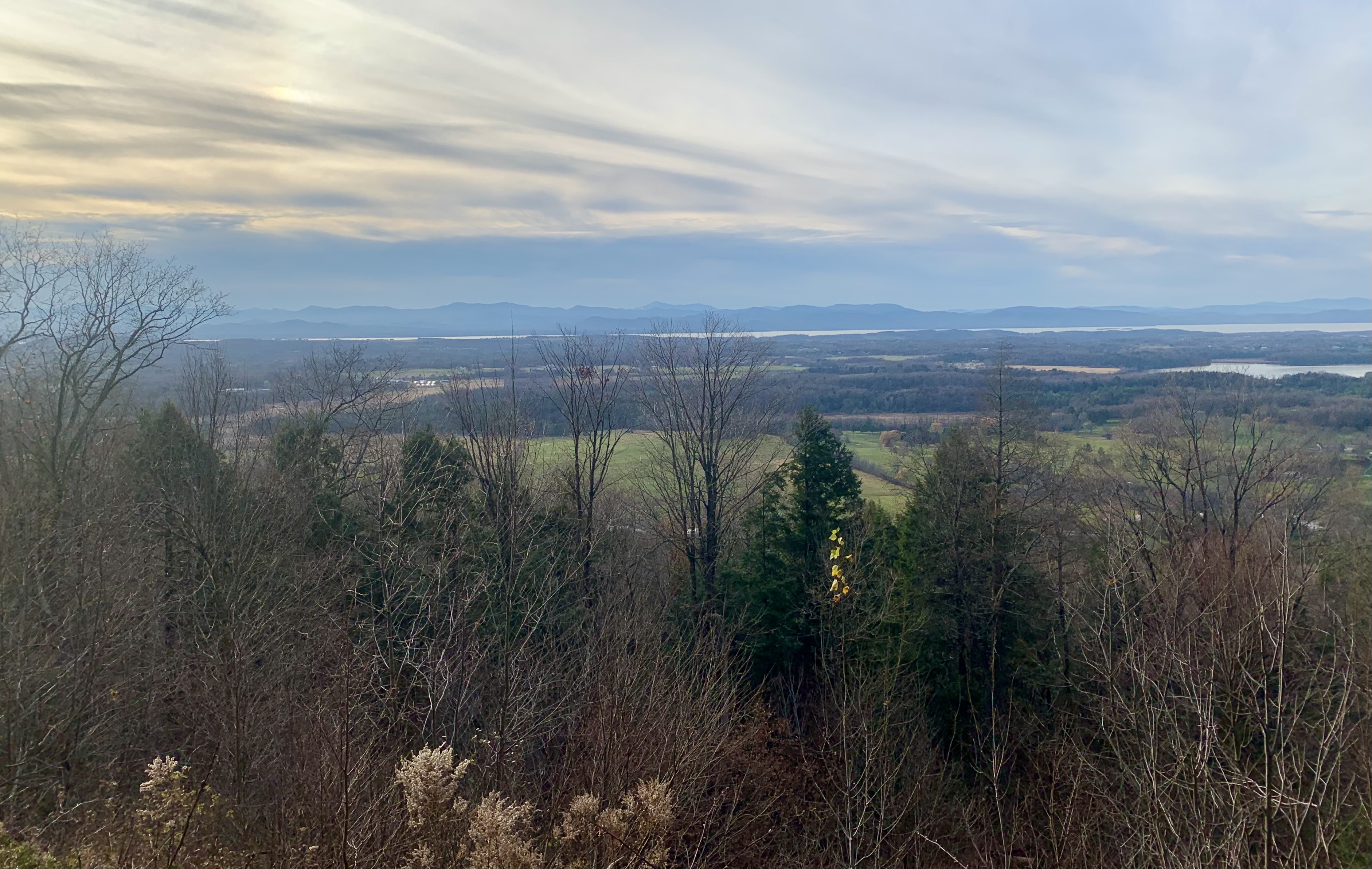
Showing posts with label Heywood's meadow. Show all posts

Thursday, November 14, 2024

The willow twigs on the right of the Red Bridge causeway are bright greenish-yellow and reddish as in the spring

November 14.

November 14, 2024

The river is slightly over the meadows. 

The willow twigs on the right of the Red Bridge causeway are bright greenish-yellow and reddish as in the spring. Also on the right railroad sand-bank at Heywood's meadow. Is it because they are preparing their catkins now against another spring? 

The first wreck line -- of pontederia, sparganium, etc. -- is observable. 

H. D. Thoreau, Journal, November 14, 1854

The river is slightly over the meadows . . . The first wreck line . . . is observable. See November 14, 1855 ("The rain has raised the river an additional foot or more, and it is creeping over the meadows. The old weedy margin is covered and a new grassy one acquired.") See also November 8, 1853 ("To riverside as far down as near Peter’s, to look at the water-line before the snow covers it.")

The willow twigs on the right of the Red Bridge causeway are bright greenish-yellow and reddish as in the spring. See November 18, 1858 ("Notice the short bright-yellow willow twigs on Hubbard’s Causeway. They are prominent now, first, because they are bare; second, because high-colored always and this rarity of bright colors at present; third, because of the clear air and November light."); March 17, 1859 ("The blushing twigs retain their color throughout the winter and appear more brilliant than ever the succeeding spring. They are winter fruit. It adds greatly to the pleasure of late November, of winter or of early spring walks to look into these mazes of twigs of different colors"); March 18, 1861 ("When I pass by a twig of willow, though of the slenderest kind, rising above the sedge in some dry hollow early in December, or in midwinter above the snow, my spirits rise as if it were an oasis in the desert."); See also December 2, 1852 (" It is an anticipation, a looking through winter to spring.") and A Book of the Seasons, by Henry Thoreau, the Osier in Winter and early Spring

Pontederia, sparganium, etc.  See September 28, 1851 ("The pontederia, which apparently makes the mass of the weeds by the side of the river, is all dead and brown and has been for some time; the year is over for it."); October 16, 1859 ("So surely as the sun appears to be in Libra or Scorpio, I see the conical winter lodges of the musquash rising above the withered pontederia and flags.")

November 14. See A Book of the Seasons,  by Henry Thoreau,  November 14

A Book of the Seasons,  by Henry Thoreau
"A book, each page written in its own season,
out-of-doors, in its own locality.”
~edited, assembled and rewritten by zphx © 2009-2024

Wednesday, June 19, 2019

A flying squirrel's nest and young.


June 19. 


Sunday. P. M. — To Heywood Meadow and Well Meadow. 

June 19, 2020

In Stow's meadow by railroad, Scirpus Eriophorum, with blackish bracts, not long out. 

A flying squirrel's nest and young on Emerson's hatchet path, south of Walden, on hilltop, in a covered hollow in a small old stump at base of a young oak, covered with fallen leaves and a portion of the stump; nest apparently of dry grass. Saw three young run out after the mother and up a slender oak. The young half-grown, very tender-looking and weak-tailed, yet one climbed quite to the top of an oak twenty-five feet high, though feebly. Claws must be very sharp and early developed. The mother rested quite near, on a small projecting stub big as a pipe-stem, curled cross wise on it. Have a more rounded head and snout than our other squirrels. The young in danger of being picked off by hawks. 

Find by Baker Rock the (apparently) Carex Muhlenbergii gone to seed, dark-green, as Torrey says. Resembles the stipata. 

Blackbirds nest in the small pond there, and generally in similar weedy and bushy pond-holes in woods. 

The prevailing sedge of Heywood Meadow by Bartlett Hill-side, that which showed yellow tops in the spring, is the Carex stricta. On this the musquash there commonly makes its stools. A tall slender sedge with conspicuous brown staminate spikes. Also some C. lanuginosa with it. C. canescens, too, grows there, less conspicuous, like the others gone to seed. 

Scare up young partridges; size of chickens just hatched, yet they fly. The old one in the woods near makes a chuckling sound just like a red squirrel's bark, also mewing. 

Flies rain about my head. 

Notice green berries, — blueberries and huckleberries. 

Is that red-top, nearly out on railroad bank? 

Eriophorum polystachyon of Torrey, Bigelow, and Gray, the apparently broadish-leaved, but Gray makes the wool too long. In Pleasant and Well Meadow; at height. 

Carex polytrichoides in fruit and a little in flower, Heywood Meadow in woods and Spanish Meadow Swamp. 

Trisetum palustre (?), Well Meadow Head, in wet; apparently at height.

H. D. Thoreau, Journal, June 19, 1859


The young half-grown climbed quite to the top of an oak twenty-five feet high, though feebly. See June 23, 1855 ("Hear of flying squirrels now grown."); March 23, 1855 ("It sprang off from the maple at the height of twenty-eight and a half feet, and struck the ground at the foot of a tree fifty and a half feet distant, measured horizontally.")

The prevailing sedge of Heywood Meadow by Bartlett Hill-side, that which showed yellow tops in the spring, is the Carex stricta.  See April 22, 1859 ("Within a few days I pricked my fingers smartly against the sharp, stiff points of some sedge coming up. At Heywood's meadow, by the railroad, this sedge, rising green and dense with yellow tips above the withered clumps, is very striking, suggesting heat, even a blaze, there.")

Scare up young partridges; size of chickens just hatched, yet they fly. See June 23, 1854 (" Disturb three different broods of partridges in my walk this afternoon in different places. One in Deep Cut Woods, big as chickens ten days old, went flying in various directions a rod or two into the hillside. Another by Heywood's meadow, the young two and a half inches long only, not long hatched, making a fine peep. Held one in my hand, where it squatted without winking. A third near Well Meadow Field. We are now, then, in the very midst of them. Now leading forth their young broods. ") See also A Book of Seasons, by Henry Thoreau, the Partridge.

Notice green berries, — blueberries and huckleberries. See June 6, 1852 ("The earliest blueberries are now forming as greenberries.”)

Is that red-top, nearly out on railroad bank? See July 13, 1860 ("First we had the June grass reddish-brown, and the sorrel red, of June; now the red-top red of July.")

Saturday, January 2, 2016

They have come with this deeper snow and colder weather.


January 2

Probably the coldest morning yet, our thermometer 6° below zero at 8 A.M.; yet there is quite a mist in the air. The neighbors say it was 10° below zero at 7 A.M. 

P.M. — To Walden. 

As for the fox and rabbit race described yesterday, I find that the rabbit was going the other way, and possibly the fox was a rabbit, for, tracing back the rabbit, I found that it had first been walking with alternate steps, fox-like. 

There were many white rabbits’ tracks in those woods, and many more of the gray rabbit, but the former broke through and made a deep track, except where there was a little crust on the south slope, while the latter made but a faint impression on the surface. The latter run very much in the same path, which is well trodden, and you would think you were in the midst of quite a settlement of them. 


Crossing the railroad at the Heywood meadow, I see some snow buntings rise from the side of the embankment, and with surging, rolling flight wing their way up through the cut. 

I walk through the western most Heywood swamp. There are the tracks of many rabbits, both gray and white, which have run about the edges of these swamps since this snow came, amid the alders and shrub oaks, and one white one has crossed it. 

January 2, 2016

The cat-tails rise high above the snow in the swamp, their brown heads bursting on one side into creamy (?) billows and wreaths, or partly bare. Also the rattlesnake grass is still gracefully drooping on every side, with the weight of its seeds, — a rich, wild grain. And other wild grasses and rushes rise above the snow. 

There is the wild-looking remnant of a white pine, quite dead, rising fifteen or twenty feet, which the woodpeckers have bored; and it is still clad with sulphur lichens and many dark-colored tufts of cetraria in the forks of its branches. 

Returning, I see, near the back road and railroad, a small flock of eight snow buntings feeding on the the seeds of the pigweed, picking them from the snow, – apparently flat on the snow, their legs so short, – and, when I approach, alighting on the rail fence. They are pretty black, with white wings and a brown crescent on their breasts. They have come with this deeper snow and colder weather.

H. D. Thoreau, Journal, January 2, 1856


Probably the coldest morning yet, our thermometer 6° below zero at 8 A.M.
See January 2, 1860 ("8 a.m. -15° below . . . the coldest thus far.")

The wild-looking remnant of a white pine, quite dead, still clad with sulphur lichens and many dark-colored tufts of cetraria. See December 31, 1851 ("The round greenish-yellow lichens on the white pines loom through the mist . . . The trees appear all at once covered with their crop of lichens and mosses of all kinds . . . the livid green of some, the fruit of others. They eclipse the trees they cover.") See also 
A Book of the Seasons,  by Henry Thoreau, the Lichens 

Snow buntings. See January 2, 1854 ("A flock of snow buntings flew over the fields with a rippling whistle, accompanied sometimes by a tender peep and a ricochet motion.") See also December 29, 1853 ("I see the first flock of arctic snowbirds (Emberiza nivalis) near the depot, white and black, with a sharp, whistle-like note."); January 3, 1859 ("Four snow buntings . . . arose and alighted on the rail fence as we went by. Very stout for their length. Look very pretty when they fly and reveal the clear white space on their wings next the body, — white between the blacks.")

Pigweed.  See  January 20, 1853 ("I see where snowbirds in troops have visited each withered chenopodium that rises above the snow in the yard — and some are large and bushlike — for its seeds, their well-filled granary now."); February 13, 1855 ("One of these pigweeds in the yard lasts the snow-birds all winter, and after every new storm they re-visit it. How inexhaustible their granary! ") See also A Book of the Seasons, by Henry Thoreau, Pigweed

They have come with this deeper snow and colder weather. See December 24, 1851 ("I see them so commonly when it is beginning to snow that I am inclined to regard them as a sign of a snow-storm.”) See also A Book of Seasons, by Henry Thoreau, the Snow Bunting

January 2. See  A Book of the Seasons,  by Henry Thoreau,  January 2

A small flock of eight
snow buntings feeding on the
seeds of the pigweed.

A Book of the Seasons,  by Henry Thoreau
 "A book, each page written in its own season, 
out-of-doors, in its own locality."
 ~edited, assembled and rewritten by zphx ©  2009-2026

https://tinyurl.com/hdt-560102

Monday, June 23, 2014

Partridge season – the glossy light-reflecting greenness of the woods.


June 23.

There has been a foggy haze, dog-day-like, for perhaps ten days, more or less. To-day it is so cold that we sit by a fire. 

Disturb three different broods of partridges in my walk this afternoon in different places. One in Deep Cut Woods, big as chickens ten days old, went flying in various directions a rod or two into the hillside. Another by Heywood's meadow, the young two and a half inches long only, not long hatched, making a fine peep. Held one in my hand, where it squatted without winking. A third near Well Meadow Field. We are now, then, in the very midst of them. Now leading forth their young broods.

June 23, 2014


From the Cliffs the air is beautifully clear, showing the glossy and light-reflecting greenness of the woods. 


It is a great relief to look into the horizon. There is more room under the heavens. 

H. D. Thoreau, Journal, June 23, 1854

To-day it is so cold that we sit by a fire
. See July 4, 1857 (“[F]or nearly a week many people have sat by a fire.”); July 8, 1860 ("The thermometer is at 66°, and some sit by fires.")

We are now, then, in the very midst of them. Now leading forth their young broods. See June 27,1852 ("I meet the partridge with her brood in the woods."); June 27, 1860 (" just this side the Hemlocks, a partridge with her little brood.") See also A Book of the Seasons,by Henry Thoreau, the Partridge.

It is a great relief to look into the horizon. There is more room under the heavens.
See June 23 1852 ("You can see far into the horizon.") See also June 26, 1853 ("We see infinitely further into the horizon on every side, and the boundaries of the world are enlarged.") and A Book of the Seasons, by Henry Thoreau, Mountains in the Horizon

June 23. See A Book of the Seasons, by Henry Thoreau, June 23

Beautiful clear air –
the glossy light-reflecting
greenness of the woods.

A Book of the Seasons, by Henry Thoreau, 

A Book of the Seasons, by Henry Thoreau
"A book, each page written in its own season,
out-of-doors, in its own locality."

~edited, assembled and rewritten by zphx © 2009-2024
https://tinyurl.com/hdt-540623

Wednesday, March 21, 2012

The Yellow Lily

March 21

Railroad causeway at Heywood's meadow. 

The ice no sooner melts than you see the now red and yellow pads of the yellow lily beginning to shoot up from the bottom of the pools and ditches – for there they yield to the first impulses of the heat and feel not the chilling blasts of March. 

March 22, 2022

This evening a little snow falls. The weather about these days is cold and wintry again.


H. D. Thoreau, Journal, March 21, 1852

Yellow pads of the yellow lily beginning to shoot up from the bottom of the pools and ditches. See March 21, 1859 ("I see, on a yellow lily root washed up, leaf-buds grown five or six inches, or even seven or eight, with the stems")


March 21.  See A Book of the Seasons, by Henry Thoreau, March 21

This evening snow falls.
The weather these days is cold
and wintry again.

A Book of the Seasons, by Henry Thoreau
"A book, each page written in its own season,
out-of-doors, in its own locality."
~edited, assembled and rewritten by zphx © 2009-2024
https://tinyurl.com/hdt-520321

Friday, April 24, 2009

Sitting on Lightning Hillside


April 24.

Sitting on Lightning Hillside and looking over Heywood's meadow, I am struck by the vivid greenness of the tips of the sedge just pushing up out of its dry tussocks in the water. All the lower part of the tussock is brown, sere, prostrate blades of last year, while from the amid the withered blades spring up ranks of green life like a fire.

The fallen dead and decaying last year's grass is dead past all resurrection, perfectly brown and lifeless, while this vivid green that has shot up from its midst -- close upon the heels of winter, even through snow -- is the renewal of life. The contrast of life with death, spring with winter, is nowhere more striking. I observed it here on the 22d.

H.D. Thoreau, Journal, April 24, 1859


The contrast . . . is nowhere more striking.
See March 20, 1853 ("It is the contrast between life and death. There is the difference between winter and spring. The bared face of the pond sparkles with joy.”)

Popular Posts Last 30 Days.

The week ahead in Henry’s journal

The week ahead in Henry’s journal
A journal, a book that shall contain a record of all your joy.
"A stone fruit. Each one yields me a thought." ~ H. D. Thoreau, March 28, 1859


I sit on this rock
wrestling with the melody
that possesses me.