The year is but a succession of days,
and I see that I could assign some office to each day
which, summed up, would be the history of the year.
New life and motion
the season of waving boughs.
This first half of June.
June 9, 1852
For a week past we have had washing days. June 9, 1852
The weather is very clear, and the sky bright. June 9, 1852
The river shines like silver. June 9, 1852
The grass waving, and trees having leaved out, their boughs wave and feel the effect of the breeze. June 9, 1852
New life and motion is imparted to the trees. June 9, 1852
The season of waving boughs; and the lighter under sides of the new leaves are exposed. June 9, 1852
The waving, undulating rye. June 9, 1852
The deciduous trees have filled up the intervals between the evergreens, and the woods are bosky now. June 9, 1852
The general leafiness, shadiness, and waving of grass and boughs in the breeze characterize the season. June 9, 1852
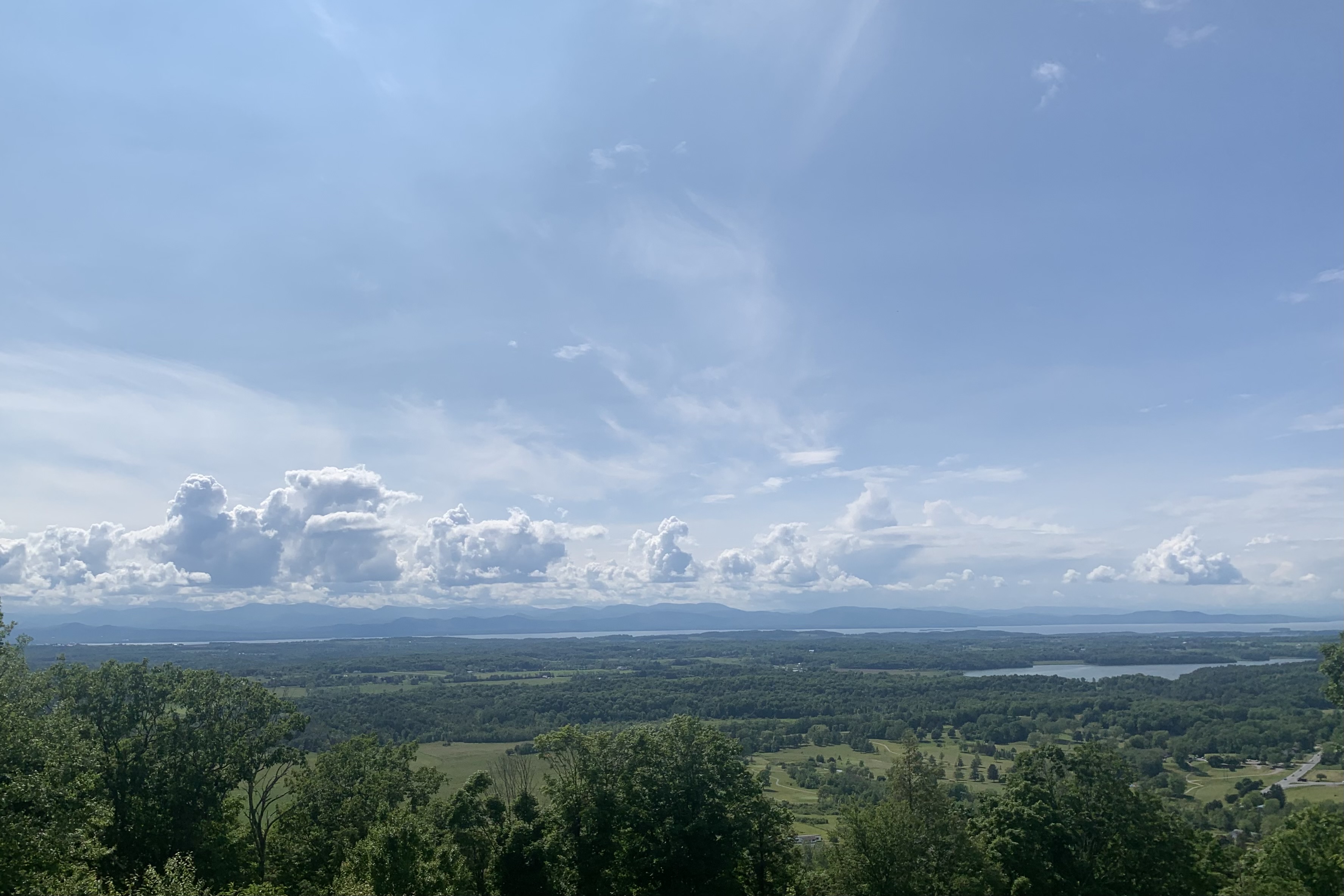
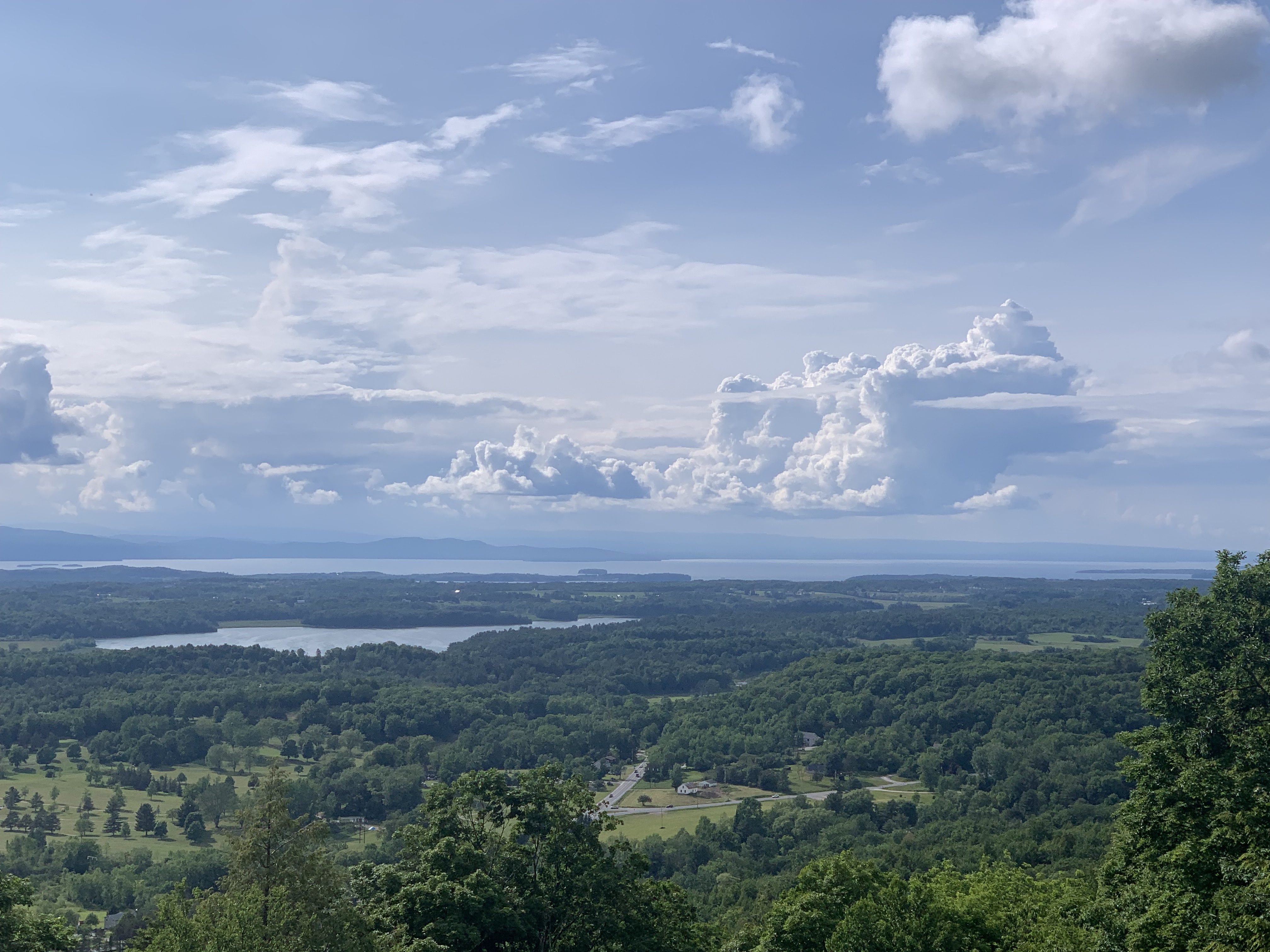
There are some large cumuli with glowing downy cheeks floating about. June 9, 1856
Now I notice where an elm is in the shadow of a cloud,—the black elm-tops and shadows of June. June 9, 1856
It is a dark eyelash which suggests a flashing eye beneath. June 9, 1856
It suggests houses that lie under the shade, the repose and siesta of summer noons, the thunder-cloud, bathing, and all that belongs to summer. June 9, 1856
It suggests also the creak of crickets, a June sound now fairly begun, inducing contemplation and philosophic thoughts, — the sultry hum of insects. June 9, 1856
This is the first half of June. June 9, 1852
Meanwhile the crickets are strengthening their quire. June 9, 1852
Without an umbrella, thinking the weather settled at last. June 9, 1856
Compelled to squat under a bank and stand under a wood-pile through a shower. June 9, 1856
We have half a dozen showers to-day, distinct summer showers from black clouds suddenly wafted up from the west and northeast; also some thunder and hail, - large white stones. June 9, 1860
The reddish seeds or glumes of grasses cover my boots now in the dewy or foggy morning. June 9, 1853
A large fog. June 9, 1857
A prevalent fog, though . . . a little more local. June 9, 1853
What is peculiar about it is that it is the tops of the trees which you see first and most distinctly, before you see their trunks or where they stand on earth. June 9, 1853
The meadows are now yellow with the golden senecio, a more orange yellow, mingled with the light glossy yellow of the buttercup. June 9, 1853
The diervilla out apparently yesterday. June 9, 1853
The first white lily bud. June 9, 1853
White clover is abundant and very sweet on the common, filling the air. June 9, 1853
Whiteweed now whitens the fields. June 9, 1853
There are many star flowers. June 9, 1853
I remember the anemone, especially the rue anemone, which is not yet all gone, lasting longer than the true one above all the trientalis, and of late the yellow Bethlehem-star, and perhaps others. June 9, 1853
Prunella out. June 9, 1853
A strawberry half turned on the sand of the causeway side, — the first fruit or berry of the year that I have tasted. June 9, 1854
Got two or three handfuls of strawberries on Fair Haven. . . . Little natural beds or patches on the sides of dry hills, where the fruit sometimes reddens the ground. June 9, 1853
High blackberry, not long. June 9, 1858
The green fruit of the sweet-fern now. June 9, 1853
The Juniperus repens appears, though now dry and effete, to have blossomed recently. June 9, 1853
The tall white Erigeron annuus (?), for this is the only one described as white tinged with purple, just out. June 9, 1853
I notice by the roadside at Moore's Swamp the very common Juncus effusus, not quite out, one to two and a half feet high. June 9, 1858
Celastrus scandens, maybe a day. June 9, 1857
Triosteum, apparently several days (not at all June 1st). June 9, 1857
The calla is generally past prime and going to seed. J une 9, 1857
This afternoon, I had not taken three steps into the swamp barelegged before I found the strawberry and clover thyrsiflora in sphagnum and water, which I had not seen growing before.
The water in this Calla Swamp feels cold to my feet, June 9, 1857
Veronica scutellata, apparently several days. June 9, 1854
Veronica scutellata (how long?) at Corner Spring. June 9, 1856
Early primrose done, say-two days. June 9, 1855
Rhus Toxicodendron on Island Rock. June 9, 1855
Lambkill out. June 9, 1855
Fever-root, perhaps several days. June 9, 1855
I see some white oak pincushions, nearly two inches through. June 9, 1854
Is that galium, out apparently some days in the woods by Deep Cut,?
The tupelo stamens are loose and will perhaps shed pollen to- morrow or next day. June 9, 1854
Ladies’-slippers are going to seed. June 9, 1854
Sidesaddle, apparently a day or two; petals hang down. June 9, 1855
An orchis, probably yellowish, will be common in Wheeler’s meadow. June 9, 1855
Find the great fringed orchis out apparently two or three days. Two are almost fully out, two or three only budded. June 9, 1854
A large spike of peculiarly delicate pale-purple flowers growing in the luxuriant and shady swamp is remarkable that this, one of the fairest of all our flowers, should also be one of the rarest, — for the most part not seen at all. . .I am inclined to think of it as a relic of the past as much as the arrowhead, or the tomahawk I found on the 7th. June 9, 1854
Gathered the Linnæa borealis. June 9, 1851
I see the thick, flower-like huckleberry apples. June 9, 1854
The locust in bloom. June 9, 1852
I should like to know the birds of the woods better, what birds inhabit our woods? . . . What musicians compose our woodland quire? They must be forever strange and interesting to me. June 9, 1854
In the sprout-land beyond the red huckleberry, an indigo-bird, which chips about me as if it had a nest there. This is a splendid and marked bird, high-colored as is the tanager, looking strange in this latitude. Glowing indigo. It flits from top of one bush to another, chirping as if anxious. . . .. It probably had its nest in one of those bushes. June 9, 1857
See very few hawks for several weeks. June 9, 1855
A boy shows me one of three (apparent) hen-hawk's eggs, fresh, obtained on the 6th from a pine near Breed's house site. June 9, 1859
I have come with a spy-glass to look at the hawks. They have detected me and are already screaming over my head more than half a mile from the nest. June 9, 1853
I find no difficulty in looking at the young hawk . . . I can see every wink and the color of its iris. It watches me more steadily than I it, now looking straight down at me with both eyes and outstretched neck, now turning its head and looking with one eye. June 9, 1853
Hear a goldfinch; this the second or third only that I have heard. June 9, 1853
How prominent a place the vireos hold! It is probably the yellow-throated vireo I hear now . . . invisible in the tops of the trees. June 9, 1854
A lark flashing his white tail, and showing his handsome yellow breast, with its black crescent like an Indian locket.June 9, 1854
Chimney and bank swallows are still hovering over the river, and cherry-birds fly past. June 9, 1854
For a day or two I have heard the fine seringo note of the cherry-birds, and seen them flying past, the only (?) birds, methinks, that I see in small flocks now, except swallows. June 9, 1854
I think I have hardly heard a bobolink for a week or ten days. June 9, 1855
Catbird’s nest, one egg, on a blueberry bush, three feet from ground, of (as usual) sticks, leaves, bark, roots. Another near same (also in V. Muhlenbergii Swamp) on a bent white birch and andromeda, eighteen inches from ground; three eggs; stubble of weeds mainly instead of twigs, otherwise as usual. June 9, 1855
A catbird’s nest, three eggs, in a high blueberry, four feet from ground, with rather more dry leaves than usual, above Assabet Spring. June 9, 1855
A chewink’s nest sunk in ground under a bank covered with ferns, dead and green, and huckleberry bushes; composed of dry leaves, then grass stubble, and lined with a very few slender, reddish moss stems; four eggs, rather fresh; merely enough moss stems to indicate its choice. June 9, 1855
A peetweet's nest near wall by Shattuck's barn, Merrick's pasture, at base of a dock; four eggs just on the point of being hatched. A regular nest of weak stubble set in ground. June 9, 1857
eight feet from ground in crotch of
a slender maple.
A yellowbird’s nest in a poplar on Hubbard’s Bridge causeway; four fresh eggs; ten feet high, three rods beyond fence. June 9, 1856
When I was at the yellow-throat's nest (as above) I heard that very loud sharp pheet pheet of a wood-chuck (?) or rabbit which I have often heard before. June 9, 1857
A chip-bird’s in a white thorn on the Hill; one egg. June 9, 1855
A song sparrow’s nest low in Wheeler’s meadow, with five eggs, made of grass lined with hair. June 9, 1855
The nest probably of the small pewee — looking from the ground like a yellowbird’s, showing reddish wool of ferns —against a white birch, on a small twig, eighteen feet from ground. Four little eggs, all pale cream-color before blowing, white after - fresh. June 9, 1855
Found to-day, of nests, one song sparrow, one small pewee, one yellowbird, one chip-bird, three catbirds, one chewink, one robin (the last on a black willow, two feet from ground, one egg). June 9, 1855
A young robin abroad. June 9, 1856
The veery rings, and the tree toad. June 9, 1854
See a yellow spotted turtle digging her hole at 5 P.M., in a pasture near Beck Stow's, some dozen rods off. It is made under one side like the picta’s. June 9, 1858
I saw a striped snake which the fire in the woods had killed. . .No creature can exhibit more venom than a snake, even when it is not venomous, strictly speaking. June 9, 1850
I see the pollen of the pitch pine now beginning to cover the surface of the pond. June 9, 1850
Walden is still rising, though the rains have ceased and the river has fallen very much. June 9, 1850
The willow down and seeds are blowing over the causeway. June 9, 1854
White maple keys are abundantly floating. June 9, 1858
It is twilight, and the river is covered with that dusty lint, as was the water next the shore at Walden this afternoon. June 9, 1854
The summer aspect of the river begins perhaps when the Utricularia vulgaris is first seen on the surface, as yesterday. June 9, 1854
Potamogetons begin to prevail in the river and to catch my oar. The river is weedy. June 9, 1858
The air is now pretty full of shad-flies, and there is an incessant sound made by the fishes leaping for such as are struggling on the surface ; it sounds like the lapsing of a swift stream, sucking amid rocks. June 9, 1854
The fishes make a business of thus getting their evening meal, dimpling the river like large drops as far as I can see, sometimes making a loud plashing. June 9, 1854
Again, about seven, the ephemera came out, in numbers as many as last night, now many of them coupled, even tripled; and the fishes leap as before. June 9, 1856
Meanwhile the kingfishers are on the lookout for the fishes as they rise, and I saw one dive in the twilight and go off uttering his cr-r-ack, cr-r-rack. June 9, 1854
The mosquitoes encircle my head and torment me, and I see a great moth go fluttering over the tree-tops and the water, black against the sky, like a bat. June 9, 1854
The fishes continue to leap by moonlight. A full moon. June 9, 1854
I do not hear a toad from my window; only the crickets beside. June 9, 1853
The bullfrogs are in full blast to-night. June 9, 1853
The toads I have but rarely heard of late. June 9, 1853
So there is an evening for the toads and another for the bullfrogs. June 9, 1853
*****
See A Book of the Seasons, by Henry Thoreau:
Waving grasses, Buttercups, and Shade
Summer
The Golden Senecio
The Maple Keys
The Purple Fringed Orchids
The Purple Pitcher Plant
Umbrella Adventures
The Cricket in Spring
Insect Hatches in Spring (millers, perla, shad-flies or ephemera)
Young Birds
the Goldfinch
The Hen Hawk
the “Small Pewee"
the Summer Yellowbird
The Yellow-throated Vireo
The Ring of Toads
The Tree-toad
The Bullfrog in Spring
The Yellow-Spotted Turtle
Reminiscence and Prompting
June Moonlight
*****


foggy morningJune 9, 2023
It suggests houses that lie under the shade, the repose and siesta of summer noons, the thunder-cloud, bathing, and all that belongs to summer. See June 8, 1850 (" When the frogs dream, and the grass waves, and the buttercups toss their heads, and the heat disposes to bathe in the ponds and streams then is summer begun"); June 8, 1859 ("Within a day or two has begun that season of summer when you see afternoon showers, maybe with thunder, or the threat of them, dark in the horizon"); June 11, 1856 ("It is very hot this afternoon, and that peculiar stillness of summer noons now reigns in the woods. "); June 16, 1860 ("It appears to me that these phenomena occur simultaneously, say June 12th :• Heat about. 85° at 2 P.M.• Hylodes cease to peep.• Purring frogs (Rana palustris) cease.• Lightning-bugs first seen.• Bullfrogs trump generally.• Mosquitoes begin to be really troublesome.• Afternoon thunder-showers almost regular.• Sleep with open window.• Turtles fairly and generally begun to lay.")
Without an umbrella, thinking the weather settled at last. See June 8, 1860 ("Within a day or two has begun that season of summer when you see afternoon showers, maybe with thunder, or the threat of them, dark in the horizon, and are uncertain whether to venture far away or without an umbrella.")
The meadows are now yellow with the golden senecio, a more orange yellow, mingled with the light glossy yellow of the buttercup. See May 23, 1853 ("I am surprised by the dark orange-yellow of the senecio. At first we had the lighter, paler spring yellows of willows, dandelion, cinquefoil, then the darker and deeper yellow of the buttercup; and then this broad distinction between the buttercup and the senecio, as the seasons revolve toward July."); June 6, 1858 ("Golden senecio is not uncommon now")
See a yellow spotted turtle digging her hole. See June 6, 1855(“I see a yellow-spotted tortoise twenty rods from river”); June 11, 1854 (“I saw a yellow-spotted tortoise come out, — undoubtedly to lay its eggs, — which had climbed to the top of a hill as much as a hundred and thirty feet above any water.”); June 15, 1857 (“From time to time passed a yellow-spot or a painted turtle in the path, for now is their laying-season.”); June 16, 1858 (“I see a yellow-spotted turtle digging its hole at mid afternoon, but, like the last of this species I saw, it changed its place after I saw it, and I did not get an egg; it is so wary.”)
White maple keys are abundantly floating. See May 21, 1853 ("The white maple keys are nearly two inches long by a half-inch wide, in pairs, with waved inner edges like green moths ready to bear off their seeds."); May 29, 1854 ("The white maple keys have begun to fall and float down the stream.”); May 30, 1853 ("The white maple keys falling and covering the river."); June 2, 1856 ("White maple keys conspicuous.”) May 30, 1853 ("The white maple keys falling and covering the river."); June 6, 1855 ("The white maple keys are about half fallen. It is remarkable that this happens at the time the emperor moth (cecropia) comes out.”)
Again, about seven, the ephemera came out, in numbers as many as last night, ...; and the fishes leap as before. . . . See June 8, 1856 (“my boat being by chance at the same place where it was in ’54, I noticed a great flight of ephemera”). See also June 9, 1854 (7 p. m. — Up Assabet. . . .[T]here is an incessant sound made by the fishes leaping for their evening meal, dimpling the river like large drops as far as I can see . ..”); June 2, 1854 ("It was a great flight of ephemera").
So there is an evening for the toads and another for the bullfrogs. See June 13, 1851 ("The different frogs mark the seasons pretty well,- the peeping hyla, the dreaming frog, and the bullfrog."); See also June 1, 1853 ("The birds have now all come and no longer fly in flocks. The hylodes are no longer heard. The bullfrogs begin to trump.”); June 11, 1853 ("Another fog this morning. The mosquitoes first troubled me a little last night. On the river at dusk I hear the toads still, with the bullfrogs."); June 15, 1860 ("A new season begun. The bullfrogs now commonly trump at night, and the mosquitoes are now really troublesome. For some time I have not heard toads by day, and the hylodes appear to have done.")
the dark eye and shade of June
June 9, 2017
If you make the least correct
observation of nature this year,
you will have occasion to repeat it
with illustrations the next,
and the season and life itself is prolonged.
"A book, each page written in its own season,
out-of-doors, in its own locality."
~edited, assembled and rewritten by zphx © 2009-2023
https://tinyurl.com/HDT06June