Showing posts with label climate. Show all posts

Monday, December 14, 2020

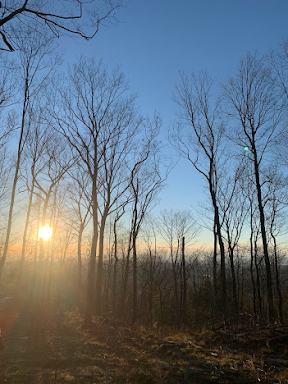
Pure greenish-blue sky under the clouds now in the southwest just before sunset.


December 14

December 14, 2021

The boys have been skating for a week, but I have had no time to skate for surveying. I have hardly realized that there was ice, though I have walked over it about this business.

As for the weather, all seasons are pretty much alike to one who is actively at work in the woods. I should say that there were two or three remarkably warm days and as many cold ones in the course of a year, but the rest are all alike in respect to temperature. This is my answer to my acquaintances who ask me if I have not found it very cold being out all day.

McKean tells me of hardy horses left to multiply on the Isle of Sable. His father had one (for the shipwrecked to eat). Can they be descendants of those beasts Champlain or Lescarbot refers to? 

I hear the small woodpecker whistle as he flies toward the leafless wood on Fair Haven, doomed to be cut this winter.

The chickadees remind me of Hudson's Bay for some reason. I look on them as natives of a more northern latitude.

The now dry and empty but clean-washed cups of the blue-curls spot the half snow-covered grain-fields. Where lately was a delicate blue flower, now all the winter are held up these dry chalices. What mementos to stand above the snow! 

The fresh young spruces in the swamp are free from moss, but it adheres especially to the bare and dead masts of spruce trees oftentimes half destitute of bark. They look like slanting may-poles with drooping or withered garlands and festoons hanging to them. For an emblem of stillness, a spruce swamp with hanging moss now or at any season.

I notice that hornets' nests are hardly deserted by the insects than they look as if a truant boy had fired a charge of shot through them, -- all ragged and full of holes. It is the work either of the insects themselves or else of other insects or birds.

It is the andromeda (panicled?) that has the fine barked stem and the green wood, in the swamps.

Why not live out more yet, and have my friends and relations altogether in nature, only my acquaintances among the villagers? That way diverges from this I follow, not at a sharp but a very wide angle.

Ah, nature is serene and immortal! Am I not one of the Zincali? 


December 14, 2024

There is a beautifully pure greenish-blue sky under the clouds now in the southwest just before sunset.

I hear the ice along the edge of the river cracking as the water settles. It has settled about two feet, leaving ice for the most part without water on the meadows, all uneven and cracked over the hummocks, so that you cannot run straight for sliding.

The ice takes the least hint of a core to eke out a perfect plant; the wrecks of bulrushes and meadow grass are expanded into palm leaves and other luxuriant foliage. I see delicate-looking green pads frozen into the ice, and, here and there, where some tender and still green weeds from the warm bottom of the river have lately been cast up on to the ice.

There are certain places where the river will always be open, where perchance warmer springs come in. There are such places in every character, genial and open in the coldest seasons.

I come from contact with certain acquaintances, whom even I am disposed to look toward as possible friends. It oftenest happens that I come from them wounded. Only they can wound me seriously, and that perhaps without their knowing it.

 H. D. Thoreau, Journal, December 14, 1851

The boys have been skating for a week, but I have had no time to skate for surveying. I have hardly realized that there was ice. See December 6, 1854 ("I see thick ice and boys skating . . . but know not when it froze, I have been so busy writing my lecture.")

I hear the small woodpecker whistle as he flies toward the leafless wood. See December 5, 1853 ("Saw and heard a downy woodpecker on an apple tree. Have not many winter birds, like this and the chickadee, a sharp note like tinkling glass or icicles?"); December 10, 1854 ("Hear the small woodpecker’s whistle; not much else. ") See also December 14, 1855 ("A little further I heard the sound of a downy woodpecker tapping a pitch pine in a little grove, and saw him inclining to dodge behind the stem.") ;August 28, 1858 ("The sharp whistling note of a downy woodpecker, which sounds rare; perhaps not heard since spring."); September 17, 1852 ("I hear the downy woodpecker whistle, and see him looking about the apple trees as if to bore him a hole.") See also A Book of the Seasons,  by Henry Thoreau, The Downy Woodpecker

The now dry and empty but clean-washed cups of the blue-curls spot the half snow-covered grain-fields. See December 14, 1852 ("The dried chalices of the Rhexia Virginica stand above the snow, and the cups of the blue-curls."):  See also November 18, 1855 ("Now first mark the stubble and numerous withered weeds rising above the snow. They have suddenly acquired a new character. “); November 30, 1856 (“Now see the empty chalices of the blue-curls and the rich brown-fruited pinweed above the crust.”); December 1, 1856 (“The blue-curls' chalices stand empty, and waiting evidently to be filled with ice.”); December 4, 1856 ("How many thousand acres are there now of pitchered blue-curls and ragged wormwood rising above the shallow snow?. . .They were not observed against the dark ground, but the first snow comes and reveals them"). See also A Book of the Seasons, by Henry Thoreau, Blue-Curls

Deserted hornets' nests. See  October 15, 1855 ("The hornets’ nests are exposed, the maples being bare, but the hornets are gone”); October 25, 1854 ("The maples being bare, the great hornet nests are exposed.”); December 29, 1856 (“I see a hornets' nest about seven inches in diameter on a thorn bush, only eighteen inches from the ground.”); December 29, 1858 ("A large hornets’ nest thirty feet high on a maple over the river.”) ; December 31, 1857 ("Under and attached to one of the lowermost branches of a white pine sapling in my old potato-field, I see a large hornet's nest, close to the ground.")

It is the andromeda (panicled?) that has the fine barked stem and the green wood, in the swamps. See note to November 24, 1857 ("Looking toward the sun, the andromeda in front of me is a very warm red brown and on either side of me, a pale silvery brown; looking from the sun, a uniform pale brown. . . .These andromeda swamps charmed me more than twenty years ago, — I knew not why") See also A Book of Seasons,  by Henry Thoreau, The andromeda phenomenon

Ah, nature is serene and immortal! See November 10, 1854 ("Nature is prepared for an infinity of springs yet.");March 23, 1856 (""The eternity which I detect in Nature I predicate of myself also.") See also A Book of the Seasons,  by Henry Thoreau, Nature

There is a beautifully pure greenish-blue sky under the clouds now in the southwest just before sunset. See   December 14, 1852 ("Ah, who can tell the serenity and clarity of a New England winter sunset? This could not be till the cold and the snow came."); December 25, 1851 (“I go forth to see the sun set. Who knows how it will set, even half an hour beforehand ?”) See also  December 9, 1859 (" I observe at mid-afternoon, the air being very quiet and serene, that peculiarly softened western sky, which perhaps is seen commonly after the first snow has covered the earth. . . .[T]here is just enough invisible vapor, perhaps from the snow, to soften the blue, giving it a slight greenish tinge.");  December 11, 1854 ("It is but mid-afternoon when I see the sun setting far through the woods, and there is that peculiar clear vitreous greenish sky in the west, as it were a molten gem."); December 20, 1854 ("The sky in the eastern horizon has that same greenish-vitreous, gem-like appearance which it has at sundown, as if it were of perfectly clear glass, —with the green tint of a large mass of glass."); January 11, 1852 ("The glory of these afternoons, . . . is in the ineffably clear blue, or else pale greenish-yellow, patches of sky in the west just before sunset."); and A Book of the Seasons, by Henry Thoreau, the Western Sky; A Book of the Seasons, by Henry Thoreau, Winter Sunsets

There are certain places where the river will always be open, where perchance warmer springs come in.  See December 30, 1855 ("The places which are slowest to freeze in our river are, first, on account of warmth as well as motion, where a brook comes in, and also probably where are springs in banks and under bridges.")

It oftenest happens that I come from them wounded. See November 24, 1850 ("I have certain friends whom I visit occasionally, but I commonly part from them early with a certain bitter-sweet sentiment"); November 16, 1851 ("I love my friends very much, but I find that it is of no use to go to see them.")

December 14. See A Book of the Seasons,  by Henry Thoreau , December 14

Pure greenish-blue sky 
under clouds in the southwest
just before sunset.

That pure greenish-blue 
sky southwest under the clouds
just before sunset.


A Book of the Seasons
,  by Henry Thoreau 
"A book, each page written in its own season,
out-of-doors, in its own locality.”
~edited, assembled and rewritten by zphx © 2009-2024

https://tinyurl.com/hdt-511214


Wednesday, April 26, 2017

A sermon on economy of fuel

April 26


April 26, 2015

Riordan's cock follows close after me while spading in the garden, and hens commonly follow the gardener and plowman, just as cowbirds the cattle in a pasture. 

I turn up now in the garden those large leather- colored nymphs. 

P. M. — Up Assabet to White Cedar Swamp. 

See on the water over the meadow, north of the boat's place, twenty rods from the nearest shore and twice as much from the opposite shore, a very large striped snake swimming. It swims with great ease, and lifts its head a foot above the water, darting its tongue at us. 

A snake thus met with on the water appears far more monstrous, not to say awful and venomous, than on the land. It is always something startling and memorable to meet with a serpent in the midst of a broad water, careering over it. But why had this one taken to the water? Is it possible that snakes ever hibernate in meadows which are subject to be overflown?

This one when we approached swam toward the boat, apparently to rest on it, and when I put out my paddle, at once coiled itself partly around it and allowed itself to be taken on board. It did not hang down from the paddle like a dead snake, but stiffened and curved its body in a loose coil about it.

This snake was two feet and eleven inches long; the tail alone, seven and a quarter. There [were] one hundred and forty-five large abdominal plates, besides the three smaller under the head, and sixty-five pairs of caudal scales. The central stripe on the back was not bright-yellow, as Storer describes, but a pale brown or clay-color; only the more indistinct lateral stripes were a greenish yellow, the broad dark-brown stripes being between; beneath greenish. Beneath the tail in centre, a dark, somewhat greenish line. 

This snake was killed about 2 p. m.; i. e., the head was perfectly killed then; yet the posterior half of the body was apparently quite alive and would curl strongly around the hand at 7 p. m. It had been hanging on a tree in the meanwhile.

I have the same objection to killing a snake that I have to the killing of any other animal, yet the most humane man that I know never omits to kill one.

I see a great many beetles, etc., floating and struggling on the flood.

We sit on the shore at Wheeler's fence, opposite Merriam's. At this season still we go seeking the sunniest, most sheltered, and warmest place. C. says this is the warmest place he has been in this year.

We are in this like snakes that lie out on banks. In sunny and sheltered nooks we are in our best estate. There our thoughts flow and we flourish most. 

By and by we shall seek the shadiest and coolest place. How well adapted we are to our climate! In the winter we sit by fires in the house; in spring and fall, in sunny and sheltered nooks; in the summer, in shady and cool groves, or over water where the breeze circulates. Thus the average temperature of the year just suits us. Generally, whether in summer or winter, we are not sensible either of heat or cold. 

A great part of our troubles are literally domestic or originate in the house and from living indoors. I could write an essay to be entitled "Out of Doors," — undertake a crusade against houses. What a different thing Christianity preached to the house-bred and to a party who lived out of doors! 

Also a sermon is needed on economy of fuel. 

What right has my neighbor to burn ten cords of wood, when I burn only one? Thus robbing our half-naked town of this precious covering. Is he so much colder than I? It is expensive to maintain him in our midst. If some earn the salt of their porridge, are we certain that they earn the fuel of their kitchen and parlor? One man makes a little of the driftwood of the river or of the dead and refuse (unmarketable!) [wood] of the forest suffice, and Nature rejoices in him.
Another, Herod-like, requires ten cords of the best of young white oak or hickory, and he is commonly esteemed a virtuous man. He who burns the most wood on his hearth is the least warmed by the sight of it growing. Leave the trim wood-lots to widows and orphan girls. Let men tread gently through nature. Let us religiously burn stumps and worship in groves, while Christian vandals lay waste the forest temples to build miles of meeting-houses and horse-sheds and feed their box stoves. 

The white cedar is apparently just out. The higher up the tree, the earlier. 

Towed home an oak log some eighteen feet long and more than a foot through, with a birch withe around it and another birch fastened to that.

Father says he saw a boy with a snapping turtle yesterday.

H. D. Thoreau, Journal,  April 26, 1857

I have the same objection to killing a snake that I have to the killing of any other animal, yet the most humane man that I know never omits to kill one. Compare May 28, 1854 ("The inhumanity of science concerns me, as when I am tempted to kill a rare snake that I may ascertain its species.”) and April 22, 1857 (“Near Tall's Island, rescue a little pale or yellowish brown snake that was coiled round a willow half a dozen rods from the shore . . . ”)

At this season still we go seeking the sunniest, most sheltered, and warmest place . . .Compare October 26, 1852 ("At this season we seek warm sunny lees and hillsides . . .where we cuddle and warm ourselves in the sun as by a fire, where we may get some of its reflected as well as direct heat.")

One man makes a little of the driftwood of the river . . . Another . . .requires ten cords of the best of young white oak or hickory . . .See March 18, 1857 ("While Emerson sits writing [in] his study this still, overcast, moist day, Goodwin is paddling up the still, dark river. Emerson burns twenty-five cords of wood and fourteen tons of coal; Goodwin perhaps a cord and a half, much of which he picks out of the river.")

Up Assabet to White Cedar Swamp. . . .The white cedar is apparently just out. See April 26, 1856 ("The white cedar gathered the 23d does not shed pollen in house till to-day, and I doubt if it will in swamp before to-morrow."); April 23, 1856 ("The white cedar swamp consists of hummocks, now surrounded by water, where you go jumping from one to another.”); April 24, 1855 ("The sprigs of red cedar, now full of the buff-colored staminate flowers, like fruit, are very rich . . . [Its pollen] is a clear buff color, while that of the white cedar is very different, being a faint salmon.”); April 23, 1855 ("The anthers of the larch are conspicuous, but I see no pollen. White cedar to-morrow."); April 24, 1854 ("Up Assabet, and thence to Cedar Swamp. . . The white cedar female blossoms are open.")  See also 
 A Book of the Seasons, by Henry Thoreau, The Cedar Swamps


Father says he saw a boy with a snapping turtle yesterday. See April 26, 1859 ("Rice says that he saw a large mud turtle in the river . . . Thinks they come out about the first of April. ") See also April 1, 1858   ("At Hemlock Brook  . . . I see on the wet mud a little snapping turtle evidently hatched last year. "):  April 24, 1856 ("Warren Miles at his new mill tells me that he found a mud turtle of middling size in his brook there last Monday, or the 21st ."); April 25, 1856 ("Warren Miles had caught three more snapping turtles since yesterday, at his mill ")

Saturday, February 11, 2012

Climate change


February 11

February 11, 2019

It now rains, - a drizzling rain mixed with mist, which ever and anon fills the air to the height of fifteen or twenty feet.

Perhaps the best evidence of an amelioration of the climate - at least that the snows are less deep than formerly - is the snow-shoes which still lie about in so many garrets, now useless. No man ever uses them now, yet the old men used them in their youth.

H. D. Thoreau, Journal, February 11, 1852

It now rains. See February 7, 1856 ("During the rain the air is thick, the distant woods bluish, and the single trees on the hill, under the dull mist-covered sky, remarkably distinct and black."); February 8, 1852 ("Night before last, our first rain for a long time; this afternoon, the first crust to walk on"); February 8, 1853 ("The warm rains have melted off the surface snow or white ice on Walden, down to the dark ice, the color of the water, only three or four inches thick"); February 8, 1854 ("Rain, rain, rain, carrying off the snow and leaving a foundation of ice."); February 8, 1856 ("But yesterday’s snow turning to rain, which froze as it fell, there is now a glaze on the trees, giving them a hoary look, icicles like rakes’ teeth on the rails, and a thin crust over all the snow."); February 12, 1856 ("Thawed all day yesterday and rained some what last night"); February 8, 1857 ("The last two days have been misty or rainy without sun.")

The snows are less deep than formerly. Compare February 11, 1856 ("Israel Rice says that he does not know that he can remember a winter when we had as much snow as we have had this winter.”)

February 11. See A Book of the Seasons, by Henry Thoreau, February 11

A Book of the Seasons,  by Henry Thoreau
 "A book, each page written in its own season, 
out-of-doors, in its own locality."
 ~edited, assembled and rewritten by zphx ©  2009-2023

tinyurl.com/hdt520211

Thursday, February 2, 2012

New World Destiny


February 2

Sir Francis Head says that in America "the moon looks larger" than in Europe. The same writer says, "the heavens of America appear infinitely higher," "the stars are brighter."

These are encouraging facts, symbolical of the height to which the philosophy and poetry and religion of her inhabitants may one day
soar. For I believe that climate does thus react on man, and that there is something in the mountain air that feeds the spirit and inspires. Are not these advantages of the New World?

February 2, 2022
our sky bluer

We shall be more imaginative; we shall be clearer, as our sky, bluer, fresher; broader and more comprehensive in our understanding, like our plains; our intellect on a grander scale, like our thunder and lightning, our rivers and our lakes, and mountains and forests.

Will not man grow to greater perfection intellectually as well as physically under these influences? Or is it unimportant how many foggy days there are in his life?


H. D. Thoreau, Journal, February 2, 1852

Popular Posts Last 30 Days.

The week ahead in Henry’s journal

The week ahead in Henry’s journal
A journal, a book that shall contain a record of all your joy.
"A stone fruit. Each one yields me a thought." ~ H. D. Thoreau, March 28, 1859


I sit on this rock
wrestling with the melody
that possesses me.