Showing posts with label pail factory. Show all posts

Thursday, December 29, 2016

I open my mouth to the wind.

December 29

The snow is softened yet more, and it thaws somewhat. The cockerels crow, and we are reminded of spring. 

P. M. — To Warren Miles's mill. 

We must go out and re-ally ourselves to Nature every day. We must make root, send out some little fibre at least, even every winter day. I am sensible that I am imbibing health when I open my mouth to the wind. 

Staying in the house breeds a sort of insanity always. Every house is in this sense a hospital. A night and a forenoon is as much confinement to those wards as I can stand. I am aware that I recover some sanity which I had lost almost the instant that I come abroad. 

Do not the F. hyemalis, lingering yet, and the numerous tree sparrows foretell an open winter? 

The fields behind Dennis's have but little snow on them; the weeds rising above it imbrown them. It is collected in deep banks on the southeast slopes of the hills, — the wind having been northwest, — and there no weeds rise above it. 

By Nut Meadow Brook, just beyond Brown's fence crossing, I see a hornets' nest about seven inches in diameter on a thorn bush, only eighteen inches from the ground. Do they ever return to the same nests?

White oaks standing in open ground will commonly have more leaves now than black or red oaks of the same size, also standing exposed. 

Miles is sawing pail-stuff. Thus the full streams and ponds supply the farmer with winter work. 

I see two trout four or five inches long in his brook a few rods below the mill. The water is quite low, he having shut it off. Rich copper-brown fish darting up and down the fast-shoaling stream. 

When I return by Clamshell Hill, the sun has set, and the cloudy sky is reflected in a short and narrow open reach at the bend there. The water and reflected sky are a dull, dark green, but not the real sky.

H. D. Thoreau, Journal, December 29, 1856

We must go out and re-ally ourselves to Nature every day. . . . I open my mouth to the wind. See July 23, 1851 ("The wind has fairly blown me outdoors; the elements were so lively and active, and I so sympathized with them, that I could not sit while the wind went by."); December 20, 1851 ("Go out before sunrise or stay out till sunset "); January 20, 1852 ("To see the sun rise or go down every day would preserve us sane forever.”);; November 4, 1852 ("I keep out-of-doors for the sake of the mineral, vegetable, and animal in me.") June 5, 1854 ("I have come to this hill to see the sun go down, to recover sanity and put myself again in relation with Nature.”); July 14, 1854 ("Health is a sound relation to nature.”); November 13, 1857 ("See the sun rise or set if possible each day.") September 13, 1859 ("You must be outdoors long, early and late.")
 
It thaws somewhat. The cockerels crow, and we are reminded of spring. See December 29, 1851 ("It is warm as an April morning. There is a sound as of bluebirds in the air, and the cocks crow as in the spring.")

I see two trout four or five inches long in his brook a few rods below the mill. The water is quite low, he having shut it off. See May 7, 1856 ("Miles began last night to let the water run off. . . . The brook below is full of fishes, -—suckers, pouts, eels, trouts, -— endeavoring to get up, but his dam prevents.”)

The water and reflected sky are a dull, dark green, but not the real sky. See  December 30, 1855 (“Recrossing the river behind Dodd’s, now at 4 P. M., the sun quite low, the open reach just below is quite green”); January 18, 1860 ("The sky in the reflection at the open reach at Hubbard's Bath is more green than in reality.”).

Go out every day –
 even every winter day,
Ally with Nature


Friday, June 3, 2016

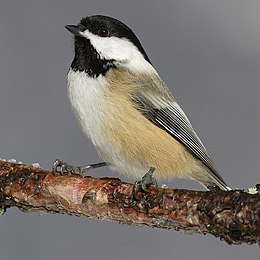
A chickadee nest with seven eggs, each a perfect oval, five eighths inch long,

June 3.  

Surveying for John Hosmer beyond pail-factory.

Hosmer says that seedling white birches do not grow larger than your arm, but cut them down and they spring up again and grow larger. 

R. Hoar, I believe, bought that (formerly) pine lot of Loring’s which is now coming up shrub oak. Hosmer says that he will not see any decent wood there as long as he lives. H. says he had a lot of pine in Sudbury, which being cut, shrub oak came up. He cut and burned and raised rye, and the next year (it being surrounded by pine woods on three sides) a dense growth of pine sprang up. 

As I have said before, it seems to me that the squirrels, etc., disperse the acorns, etc., amid the pines, they being a covert for them to lurk in, and when the pines are cut the fuzzy shrub oaks, etc., have the start. If you cut the shrub oak soon, probably pines or birches, maples, or other trees which have light seeds will spring next, because squirrels, etc., will not be likely to carry acorns into open land. 

If the pine wood had been surrounded by white oak, probably that would have come up after the pine. 


While running a line in the woods, close to the water, on the southwest side of Loring’s Pond, I observe a chickadee sitting quietly within a few feet. Suspecting a nest, I look and find it in a small hollow maple stump about five inches in diameter and two feet high. I look down about a foot and can just discern the eggs. 

Breaking off a little, I manage to get my hand in and take out some eggs. There are seven, making by their number an unusual figure as they lay in the nest, a sort of egg rosette, a circle around with one (or more) in the middle. 

The eggs are a perfect oval, five eighths inch long, white with small reddish-brown or rusty spots, especially about larger end, partly developed. 

In the meanwhile the bird sits silent, though rather restless, within three feet. The nest is very thick and warm, of average depth, and made of the bluish-slate rabbit’s (?) fur.

The bird sat on the remaining eggs next day. I called off the boy in another direction that he might not find it. 

Plucked a white lily pad with rounded sinus and lobes in Loring’s Pond, a variety.

Picked up a young wood tortoise, about an inch and a half long, but very orbicular. Its scales very distinct, and as usual very finely and distinctly sculptured, but there was no orange on it, only buff or leather-color on the sides beneath. So the one of similar rounded form and size and with distinct scales but faint yellow spots on back must have been a young spotted turtle, I think, after all.

H. D. Thoreau, Journal, June 3, 1856

A chickadee nest in a small hollow maple stump made of the bluish-slate rabbit’s fur.. See January 21, 1855 ("Saw in an old white pine stump, about fifteen inches from the ground, a hole peeked about an inch and a half in diameter. It was about six inches deep downward in the rotten stump and was bottomed with hypnum, rabbit’s fur, and hair, and a little dry grass. Was it a mouse-nest? or a nuthatch’s, creeper’s, or chickadee’s nest?") Compare December 12, 1859 ("The roosting-place of a chickadee")

That (formerly) pine lot of Loring’s which is now coming up shrub oak. . . .See April 28, 1856 ("George Hubbard remarked that if they were cut down oaks would spring up, and sure enough, looking across the road to where Loring’s white pines recently stood so densely, the ground was all covered with young oaks.”); May 13, 1856 ("I suspect that I can throw a little light on the fact that when a dense pine wood is cut down oaks, etc., may take its place. . . .There is a good example at Loring’s lot.”)

Saturday, January 30, 2016

The snow of the 28th is driving like steam over the fields, drifting into the roads.


January 30

8 A. M. -- It has just begun to snow, — those little round dry pellets like shot.  Stops snowing before noon, not having amounted to anything.

As I walked above the old stone bridge on the 27th, I saw where the river had recently been open under the wooded bank on the west side; and recent sawdust and shavings from the pail-factory, and also the ends of saplings and limbs of trees which had been bent down by the ice, were frozen in. In some places some water stood above the ice, and as I stood there, I saw and heard it gurgle up through a crevice and spread over the ice. This was the influence of Loring’s Brook, far above.

P. M. -- Measure to see what difference there is in the depth of the snow . . .

. . .  The Andromeda calyculata is now quite covered, and I walk on the crust over an almost uninterrupted plain there; only a few blueberries and last, I break through. It is so light beneath that the crust breaks there in great cakes under my feet, and immediately falls about a foot, making a great hole, so that once pushing my way through — for regularly stepping is out of the question in the weak places —makes a pretty good path. 

By the railroad against Walden I hear the lisping of a chickadee, and see it on a sumach. It repeatedly hops to a bunch of berries, takes one, and, hopping to a more horizontal twig, places it under one foot and hammers at it with its bill. The snow is strewn with the berries under its foot, but I can see no shells of the fruit. Perhaps it clears off the crimson only. Some of the bunches are very large and quite upright there still. 

Again, I suspect that on meadows the snow is not so deep and has a firmer crust. In an ordinary storm the depth of the snow will be affected by a wood twenty or more rods distant, or as far as the wood is a fence.

There is a strong wind this afternoon from northwest, and the snow of the 28th is driving like steam over the fields, drifting into the roads. On the railroad causeway it lies in perfectly straight and regular ridges a few feet apart, northwest and southeast. It is dry and scaly, like coarse bran. Now that there is so much snow, it slopes up to the tops of the walls on both sides. 

What a difference between life in the city and in the country at present, — between walking in Washington Street, threading your way between countless sledges and travellers, over the discolored snow, and crossing Walden Pond, a spotless field of snow surrounded by woods, whose intensely blue shadows and your own are the only objects. What a solemn silence reigns here!

H. D. Thoreau, Journal, January 30, 1856

It has just begun to snow, — those little round dry pellets like shot. Stops snowing before noon, not having amounted to anything. See December 14, 1859 (" . . . Also there is the pellet or shot snow, which consists of little dry spherical pellets the size of robin-shot. This, I think, belongs to cold weather. Probably never have much of it.")
 
sawdust and shavings from the pail-factory. . . .   See “Pail-stuff"

By the railroad against Walden I hear the lisping of a chickadee, and see it on a sumach. See Janaury 30, 1854("As we walk up the river, a little flock of chickadees flies to us from a wood-side fifteen rods off, and utters their lively day day day,.) See also A Book of the Seasons,  by Henry Thoreau, the Chickadee in Winter 

What a solemn silence reigns here! See January 21, 1853 ("The silence rings; it is musical and thrills me. A night in which the silence was audible."); August 11, 1853 ("What shall we name this season? — this very late afternoon, or very early evening, this season of the day most favorable for reflection  . . . The few sounds now heard, far or near, are delicious. Each sound has a broad and deep relief of silence."); August 2, 1854 ("As I go up the hill, surrounded by its shadow, while the sun is setting, I am soothed by the delicious stillness of the evening . . . It is the first silence I have heard for a month")

Wednesday, November 11, 2015

The brittle light-brown twigs of the black willow

November 11

P.M. — Up Assabet. 

As long as the sun is out, it is warm and pleasant.

The water is smooth. I see the reflections, not only of the wool-grass, but the bare button-bush, with its brown balls beginning to crumble and show the lighter inside, and the brittle light-brown twigs of the black willow, and the coarse rustling sedge, now completely withered (and hear it pleasantly whispering), and the brown and yellowish sparganium blades curving over like well-tempered steel, and the gray cottony mikania. 

The bricks of which the muskrat builds his house are little masses or wads of the dead weedy rubbish on the muddy bottom, which it probably takes up with its mouth. It consists of various kinds of weeds, now agglutinated together by the slime and dried confervae threads, utricularia, hornwort, etc., — a streaming, tuft-like wad. 

The building of these cabins appears to be coincident with the commencement of their clam diet, for now their vegetable food, excepting roots, is cut off. I see many small collections of shells already left along the river’s brink. Thither they resort with their clam to open and eat it. 

But if it is the edge of a meadow which is being overflowed, they must raise it and make a permanent dry stool there, for they cannot afford to swim far with each clam. I see where one has left half a peek of shells on perhaps the foundation of an old stool or a harder clod, which the water is just about to cover, and he has begun his stool by laying two or three fresh wads upon the shells, the foundation of his house. 

Thus their cabin is first apparently intended merely for a stool, and afterward, when it is large, is perforated as if it were the bank! 

There is no cabin for a long way above the Hemlocks, where there is no low meadow bordering the stream. The clamshells freshly opened are handsomest this month (or rather are most observable, before the ice and snow conceal them) and in the spring. 

November 11, 2025

I am surprised to see quite a number of painted tortoises out on logs and stones and to hear the wood tortoise rustling down the bank. 

Frogs are rare and sluggish, as if going into winter quarters. A cricket also sounds rather rare and distinct. 

At the Hemlocks I see a narrow reddish line of hemlock leaves and, half an inch below, a white line of saw dust, eight inches above the present surface, on the upright side of a rock, both mathematically level. This chronicles the hemlock fall, which I had not noticed, we have so few trees, and also the river’s rise. 

The North Branch must have risen suddenly before the South, for I see much pail-stuff from the Fort Pond Brook, which has been carried eighteen rods up the latter stream above the Rock, or as far as it extends immediately due west there. 

By “pail-stuff ” I mean the curved and grooved pieces which form the sides and the flat ones for the bottom and their trimmings. 

High blueberry leaves still conspicuous bright scarlet; also duller and darker green-briar leaves hold on on the Island. 

I hear gray squirrels coursing about on the dry leaves, pursuing one another, and now they come in sight, coursing from pine to pine on their winding way, on their unweariable legs, on their undulating and winding course. It is a motion intermediate between running and flying. 

I hear but a tree sparrow and a chickadee this voyage.

H. D. Thoreau, Journal, November 11, 1855

The brittle light-brown twigs of the black willow. See June 8, 1856 ("Some species are so brittle at the base of the twigs that they break on the least touch, and these twigs are only thus shed like seeds which float away and plant themselves in the first bank on which they lodge.")

The building of these cabins appears to be coincident with the commencement of their clam diet.
See note to November 5, 1853 ("What exactly are they for? . . . so that they may not have to swim so far as the flood would require in order to eat their clams[?]")

At the Hemlocks I see a narrow reddish line of hemlock leaves and, half an inch below, a white line of saw dust, on the upright side of a rock, both mathematically level. See April 1, 1859 ("The river being so low, we see lines of sawdust perfectly level and parallel to one another on the side of the steep dark bank at the Hemlocks. . .”) See also November 23, 1853 ("What an engineer this water is! It comes with its unerring level . . . an obvious piece of geometry in nature.")

This chronicles the hemlock fall, which I had not noticed. See October 8, 1857 (“Hemlock leaves are copiously falling. They cover the hillside like some wild grain.”); October 13, 1859 ("The hemlock seed is now in the midst of its fall, some of it, with the leaves, floating on the river."); October 15, 1856 ("A great part of the hemlock seeds fallen."); October 16, 1857 (“Hemlock leaves are falling now faster than ever, and the trees are more parti-colored. The falling leaves look pale-yellow on the trees, but become reddish on the ground.”);  October 28, 1858 (The hemlock is in the midst of its fall, and the leaves strew the ground like grain."); October 31, 1853 ("The hemlock seeds are apparently ready to drop from their cones.”)

And the coarse rustling 
sedge now completely withered 
pleasantly whispers.
A Book of the Seasons, by Henry Thoreau
"A book, each page written in its own season, 
out-of-doors, in its own locality."
~edited, assembled and rewritten by zphx © 2009-2025

https://tinyurl.com/hdt-551111
 

Saturday, November 7, 2015

The world and my life are simplified .

November 7. 

Another drizzling day, — as fine a mist as can fall. 

November 7, 2021

I find it good to be out this still, dark, mizzling afternoon; my walk or voyage is more suggestive and profitable than in bright weather. 
The view is contracted by the misty rain, the water is perfectly smooth, and the stillness is favorable to reflection. 

I am more open to impressions, more sensitive (not calloused or indurated by sun and wind), as if in a chamber still. 
My thoughts are concentrated; I am all compact. 

The solitude is real, too, for the weather keeps other men at home. 

This mist is like a roof and walls over and around, and I walk with a domestic feeling. 

The sound of a wagon going over an unseen bridge is louder than ever, and so of other sounds. 

I am compelled to look at near objects. 
All things have a soothing effect; the very clouds and mists brood over me. 

My power of observation and contemplation is much increased.
My attention does not wander. 
The world and my life are simplified. 

I see a painted tortoise swimming under water, and to my surprise another afterward out on a willow trunk this dark day. It is long since I have seen one of any species except the insculpta. They must have begun to keep below and go into winter quarters about three weeks ago. 

Looking west over Wheeler’s meadow, I see that there has been much gossamer on the grass, and it is now revealed by the dewy mist which has collected on it. 

Some green-briar leaves still left, a dull red or scarlet, others yellowish; also the silky cornel is conspicuously dull-red, and others yellowish-red. 

And the sallow on river’s brink (not cordata), with a narrow leaf pointed at both ends, shows some clear chrome yellow leaves atop. 

The white birches lose their lower leaves first, and now their tops show crescents or cones of bright-yellow (spring flames) leaves, some of the topmost even green still. 

The black willows almost everywhere entirely bare, yet the color of their twigs gives them the aspect of the crisp brown weeds of the river’s brink. 

How completely crisp and shrivelled the leaves and stems of the Polygonum amphibium var. terrestre, still standing above the water and grass! 

The river has risen a little more, the North Branch especially, and the pail-stuff which has drifted down it has been carried a few rods up the main stream above the junction. It rises and falls very suddenly, and I was surprised to see the other day a line of sawdust more than a foot above the water’s edge, showing that it had risen to that height and suddenly fallen without my knowledge. 

Opened a muskrat-house nearly two feet high, but there was no hollow to it. Apparently they do not form that part yet. 

Birds are pretty rare now. I hear a few tree sparrows in one place on the trees and bushes near the river, — a clear, chinking chirp and a half-strain,— a jay at a distance; and see a nuthatch flit with a ricochet flight across the river, and hear his gnah half uttered when he alights. 

A gray squirrel —as day before yesterday—runs down a limb of an oak and hides behind the trunk and I lose him. A red one runs along the trees to scold at me, boldly or carelessly, with a chuckling, bird like note and that other peculiar sound at intervals, between a purr and a grunt. He is more familiar than the gray and more noisy. What sound does the gray make? 

H. D. Thoreau, Journal, November 7, 1855

More open to impressions. See June 14, 1853 ("open to great impressions . . .you see those rare sights with the unconscious side of the eye.")

The view is contracted by the misty rain . . . I am compelled to look at near objects. See August 4, 1854 ("Rain and mist contract our horizon and we notice near and small objects”).  Also  December 16, 1855 ("The mist makes the near trees dark and noticeable"); February 6, 1852 (A mistiness makes the woods look denser, darker and more primitive.); November 29, 1850("The trees and shrubs look larger than usual when seen through the mist")

The world and my life are simplified. See January 7, 1857 ("I come out to these solitudes, where the problem of existence is simplified.

I see a painted tortoise swimming. See November 1, 1855 ("I see no painted tortoises out, and I think it is about a fortnight since I saw any."):  November 14, 1855 ("A clear, bright, warm afternoon. A painted tortoise swimming under water and a wood tortoise out on the bank."); See also A Book of the Seasons, by Henry Thoreau, the Painted Turtle (Emys picta)

Opened a muskrat-house nearly two feet high, but there was no hollow to it. 
See    November 7, 1853 ("A muskrat-house on the top of a rock, too thin round the sides for a passage beneath, yet a small cavity at top, which makes me think that they use them merely as a sheltered perch above water."); November 7, 1858 ("I pass a musquash-house, apparently begun last night. ") See also September 20, 1855 ("Open a new and pretty sizable muskrat-house with no hollow yet made in it.") and A Book of the Seasons, by Henry Thoreau, the Musquash

Birds are pretty rare now. 
See November 4, 1855 ("The winter is approaching. The birds are almost all gone. The note of the dee de de sounds now more distinct, prophetic of winter,"):November 5, 1858 ("It is quite still; no wind, no insect hum, and no note of birds, but one hairy woodpecker."); November 24, 1857 ("Nowadays birds are so rare I am wont to mistake them at first for a leaf or mote blown off from the trees or bushes")

See a nuthatch flit with a ricochet flight across the river, and hear his gnah half uttered when he alights. 
See November 7, 1858 ("The nuthatch is another bird of the fall which I hear these days and for a long time, — apparently ever since the young birds grew up. ") See also  October 20, 1856 ("Think I hear the very faint gnah of a nuthatch. Thus, of late, when the season is declining, many birds have departed, and our thoughts are turned towards winter (began to have a fire, more or less, say ten days or a fortnight ago), we hear the jay again more frequently, and the chickadees are more numerous and lively and familiar and utter their phebe note, and the nuthatch is heard again, and the small woodpecker seen amid the bare twigs");  November 26, 1860 ("I hear the faint note of a nuthatch . . .a phenomenon of the late fall or early winter; for we do not hear them in summer that I remember.”); December 1, 1857 ("I thus always begin to hear this bird on the approach of winter, as if it did not breed here, but wintered here.”) and A Book of the Seasons, by Henry Thoreau, The Nuthatch

A gray squirrel. . . runs down a limb of an oak and hides behind the trunk See November 13, 1857 (“ I see, on a white oak on Egg Rock, where the squirrels have lately made a nest for the winter of the dry oak leaves . . . I suspect it is a gray squirrel's nest.”); November 20, 1858 ("I have seen more gray squirrels of late . . . not merely because the trees are bare but because they are stirring about more, — nutting, etc.");  November 30, 1851 ("While the squirrels hid themselves in the tree-tops, I sat on an oak stump by an old cellar-hole and mused. This squirrel is always an unexpectedly large animal to see frisking about. ") 

A red one runs along the trees to scold at me,
See December 1, 1857 ("I hear a red squirrel barking at me amid the pine and oak tops, and now I see him coursing from tree to tree.") See also A Book of the Seasons, by Henry Thoreau, The Red Squirrel

The world and my life
are simplified this still, dark
mizzling afternoon.


A Book of the Seasons, by Henry Thoreau
"A book, each page written in its own season,
out-of-doors, in its own locality."
~edited, assembled and rewritten by zphx © 2009-2024

https://tinyurl.com/hdt-551107

Wednesday, November 4, 2015

It is a dark, almost rainy day; the winter is approaching.

November 4

November 4, 2015
To Hill by Assabet. 

This forenoon the boys found a little black kitten about a third grown on the Island or Rock, but could not catch it. We supposed that some one had cast it in to drown it. 

This afternoon, as I was paddle by the Island, I see what I think a duck swimming down the river diagonally, to the south shore just below the grassy island, opposite the rock; then I think it two ducks, then a muskrat. It passes out of sight round a bend. 

I land and walk alongshore, and find that it is a kitten, which had just got ashore. It is quite wet excepting its back. It swam quite rapidly, the whole length of its back out, but was carried down about as fast by the stream. 

It had probably first crossed from the rock to the grassy island, and then from the lower end of this to the town side of the stream, on which side it may have been attracted by the noise of the town. 

It is rather weak and staggers as it runs, from starvation or cold, being wet, or both. A very pretty little black kitten. 

It is a dark, almost rainy day. Though the river appears to have risen considerably, it is not more than nine or ten inches above the lowest summer level, as I see by the bridge. Yet it brings along a little drift wood. 

Whatever rails or boards have been left by the water’s edge the river silently takes up and carries away. Much small stuff from the pail-factory. 

The winter is approaching. The birds are almost all gone. The note of the dee de de sounds now more distinct, prophetic of winter, as I go amid the wild apples on Nawshawtuct. 

The autumnal dandelion sheltered by this apple-tree trunk is drooping and half closed and shows but half its yellow, this dark, late wet day in the fall.

Gather a bag of wild apples. A great part are decayed now on the ground. The snail slug is still eating them. Some have very fiery crimson spots or eyes on a very white ground. 

From my experience with wild apples I can understand that there may be a reason for a savage preferring many kinds of food which the civilized man rejects. The former has the palate of an outdoor man. It takes a savage or wild taste to appreciate a wild apple.

I remember two old maids to whose house I enjoyed carrying a purchaser to talk about buying their farm in the winter, because they offered us wild apples, though with an unnecessary apology for their wildness.

Return, and go up the main stream.

Larches are now quite yellow, — in the midst of their fall. The river-brink — at a little distance at least — is now all sere and rustling, except a few yellowed sallow leaves, - though beyond in the meadows there is some fresh greenness. 

Cattle seem to stray wider for food than they did. They are turned into the meadows now, where is all the greenness. New fences are erected to take advantage of all the fall feed. 

But the rank herbage of the river’s brink is more tender and has fallen before the frosts. Many new muskrat-houses have been erected this wet weather, and much gnawed root is floating. 

When I look away to the woods, the oaks have a dull, dark red now, without brightness. The willow-tops on causeways have a pale, bleached, silvery, or wool-grass-like look.   

See some large flocks of F. hyemalis, which fly with a clear but faint chinking chirp, and from time to time you hear quite a strain, half warbled, from them. They rise in a body from the ground and fly to the trees as you approach. There are a few tree sparrows with them. These and one small soaring hawk are all the birds I see. 

I have failed to find white pine seed this year, though I began to look for it a month ago. The cones were fallen and open. Look the first of September. 

H. D. Thoreau, Journal, November 4, 1855

The winter is approaching. The birds are almost all gone. The note of the dee de de sounds now more distinct, prophetic of winter . See   November 4, 1851(“[These little cheerful hemlocks] remind me of winter, the snows which are to come . . .and the chickadees that are to flit and lisp amid them.”) See also  October 6, 1856 ("The common notes of the chickadee, so rarely heard for a long time, and also one phebe strain from it, amid the Leaning Hemlocks, remind me of pleasant winter days, when they are more commonly seen. “);October 11, 1851( The chickadee, sounding all alone, now that birds are getting scarce, reminds me of the winter, in which it almost alone is heard.”); October 13, 1860 ("Now, as soon as the frost strips the maples, and their leaves strew the swamp floor and conceal the pools, the note of the chickadee sounds cheerfully winterish.”); October 15, 1856  (“The chickadees . . .resume their winter ways before the winter comes.”);; November 26, 1859 (“The chickadee is the bird of the wood the most unfailing. When, in a windy, or in any, day, you have penetrated some thick wood like this, you are pretty sure to hear its cheery note therein. At this season it is almost their sole inhabitant.”); March 1, 1856 ("I hear several times the fine-drawn phe-be note of the chickadee, which I heard only once during the winter. Singular that I should hear this on the first spring day.”)

It takes a savage or wild taste to appreciate a wild apple. See October 27, 1855 ("It is remarkable that the wild apples which I praise as so spirited and racy when eaten in the fields and woods, when brought into the house have a harsh and crabbed taste. To appreciate their wild and sharp flavors, it seems necessary that you be breathing the sharp October or November air ")

Larches are now quite yellow, — in the midst of their fall. See November 1, 1858 (" These trees now cannot easily be mistaken for any other, because they are the only conspicuously yellow trees now left in the woods"); . November 9, 1850 ("The leaves of the larch are now yellow and falling off") See also A Book of the Seasons, by Henry Thoreau, The Larch

Cattle . . . are turned into the meadows now, where is all the greenness. See November 3, 1858 ("I notice that the cows lately admitted to the meadows and orchards have browsed the grass, etc., closely, on that strip between the dry hillside and the wet meadow, where it is undoubtedly sweetest and freshest yet, and where it chances that this late flower the gentian grows. There, too, grows the herbage which is now the most grateful to the cattle.") See also A Book of the Seasons,  by Henry Thoreau, Cows in their Pasture

Many new muskrat-houses have been erected this wet weather, and much gnawed root is floating.  See October 16, 1859 ("I see the new musquash-houses erected, conspicuous on the now nearly leafless shores. To me this is an important and suggestive sight  . . . For thirty years I have annually observed, about this time or earlier, the freshly erected winter lodges of the musquash along the riverside ");  November 11, 1855 ("The building of these cabins appears to be coincident with the commencement of their clam diet, for now their vegetable food, excepting roots, is cut off") See also A Book of the Seasons, by Henry Thoreau, the Musquash

See some large flocks of F. hyemalis . . . They rise in a body from the ground and fly to the trees as you approach.  See  October 25, 1858 ("The F. hyemalis, which has been here for a month, flits away with its sharp twitter amid the falling leaves. This is a fall sound."); October 26, 1857 ("You wonder if they know whither they are bound, and how their leader is appointed. "); November 6, 1853 ("These little sparrows with white in tail, perhaps the prevailing bird of late, have flitted before me so many falls and springs, yet they have been strangers to me. I have not inquired whence they came or whither they were going, ") See also A Book of the Seasons by Henry Thoreau, the Dark-eyed Junco (Fringilla hyemalis)

I have failed to find white pine seed this year. . . Look the first of September. See October 15, 1855 ("Go to look for white pine cones, but see none."); October 19, 1855 ("I see at last a few white pine cones open on the trees, but almost all appear to have fallen."); See also October 8, 1856 ("At length I discover some white pine cones, a few . . . are all open, and the seeds, all the sound ones but one, gone. So September is the time to gather them.")

Amid wild apples
the note of the dee de de
sounds now more distinct.

Sunday, May 17, 2015

Fire at the pail-factory

May 17

May 17, 2025

Waked up at 2.30 by the peep of robins, which were aroused by a fire at the pail-factory about two miles west. I hear that the air was full of birds singing thereabouts. It rained gently at the same time, though not steadily.

H. D. Thoreau, Journal, May 17, 1855

Popular Posts Last 30 Days.

The week ahead in Henry’s journal

The week ahead in Henry’s journal
A journal, a book that shall contain a record of all your joy.
"A stone fruit. Each one yields me a thought." ~ H. D. Thoreau, March 28, 1859


I sit on this rock
wrestling with the melody
that possesses me.