Showing posts with label march 2. Show all posts

Monday, March 20, 2023

A Book of the Seasons, Signs of the Spring: The gobbling of turkeys


No mortal is alert enough to be present at the first dawn of the spring. 
Henry Thoreau, March 17, 1857

Certain sounds heard in
warm and thawing days, sometimes
gobbling of turkeys.

For two or three days 
I have heard the first spring sound –
 gobbling of turkeys.
March 20, 1856

March 20, 2016

January 30. There are certain sounds invariably heard in warm and thawing days in winter, such as the crowing of cocks, the cawing of crows,  and sometimes the gobbling of turkeys. January 30, 1860

February 23. I have seen signs of the spring. February 23, 1857

March 2. We listen to the February cock-crowing and turkey-gobbling as to a first course, or prelude. March 2, 1859

March 19. I hear turkeys gobble. This too, I suppose, is a spring sound. March 19, 1858

March 20. For two or three days I have heard the gobbling of turkeys, the first spring sound, after the chickadees and hens, that I think of. March 20, 1856

March 22.  The phenomena of an average March . . . About twenty-nine migratory birds arrive (including hawks and crows), and two or three more utter their spring notes and sounds, as nuthatch and chickadee, turkeys, and woodpecker tapping. March 22, 1860


March 23. I spend a considerable portion of my time observing the habits of the wild animals, my brute neighbors. By their various movements and migrations they fetch the year about to me . . . But when I consider that the nobler animals have been exterminated here, — the cougar, panther, lynx, wolverene, wolf, bear, moose, deer, the beaver, the turkey, etc., etc., — I cannot but feel as if I lived in a tamed, and, as it were, emasculated country. March 23, 1856 

*****

So I came in and
shut the door and passed my first
spring night in the woods.
Walden, Spring

See also A Book of the Seasons, by Henry Thoreau:I Have Seen Signs of the Spring


A Book of the Seasons,  by Henry Thoreau, Signs of the Spring: 
A Book of the Seasons,  by Henry Thoreau
 "A book, each page written in its own season, 
out-of-doors, in its own locality."
 ~edited, assembled and rewritten by zphx ©  2009-2023

https://tinyurl.com/HDTurkey

Friday, March 17, 2023

A Book of the Seasons, Signs of the Spring: Greening Grasses and Sedges


No mortal is alert enough 
to be present at the first dawn of the spring. 
Henry Thoreau, March 17, 1857

How imperceptibly 
the first springing takes place!  
Very few indeed, 
even of botanists, are
 aware of this growth.
March 3, 1859


February 23.   I have seen signs of the spring.  February 23, 1857

March 2. Two or three tufts of carex have shot up in Hosmer’s cold spring ditch and been frost-bitten . . . The caltha leaves have grown decidedly. They make nearly a handful in one place, above the surface of the springy water, the leaves not yet quite flatted out, but curled up into a narrow ellipse. They barely peep above the water. March 2, 1860

March 3. I see in that ditch (call it Grassy Ditch) near John Hosmer's second spring south of Nut Meadow Brook much grass which has lately grown an inch or more and lies flat on the water. Is it the Glyceria fluitans? It is somewhat frost-bitten too. It fills the ditch like moss, as seen at a little distance. It must be a very springy ditch to be thus open entirely.  
Also, pretty near the spring, I see a tuft of carex (?) whose stiff glaucous points have risen several inches above the surface. See two small water-bugs at the spring; none elsewhere. I see apparently some callitriche, fresh, in the spring. 
All the lower part of steep southern slopes of hills is now commonly bare, — though the snow may be pretty deep on the brow, — especially the springy bases where the skunk-cabbage, etc., grow. 
How imperceptibly the first springing takes place! 
In some still, muddy springs whose temperature is more equable than that of the brooks, while brooks and ditches are generally thickly frozen and concealed and the earth is covered with snow, and it is even cold, hard, and nipping winter weather, some fine grass which fills the water like a moss begins to lift its tiny spears or blades above the surface, which directly fall flat for half an inch or an inch along the surface, and on these (though many are frost-bitten) you may measure the length to which the spring has advanced, — has sprung. 
    Very few indeed, even of botanists, are aware of this growth. . . 
You may see (as March 2d) a little green crescent of caltha leaves, raised an inch or so above the water.  March 3, 1859

March 5.  The day before went to the Corner Spring to look at the tufts of green grass. 
 March 5, 1853  

March 5. I see some tame ducks in the river, six of them. It is amusing to see how exactly perpendicular they will stand, with their heads on the bottom and their tails up, plucking some food there, three or four at once. Perhaps the grass, etc., is a little further advanced there for them.  March 5, 1860


March 6. I see the skunk-cabbage started about the spring at head of Hubbard's Close, amid the green grass, and what looks like the first probing of the skunk. The snow is now all off on meadow ground, in thick evergreen woods, and on the south sides of hills.  March 6, 1854

March 8. You cannot say that vegetation absolutely ceases at any season in this latitude; for there is grass in some warm exposures and in springy places, always growing more or less, and willow catkins expanding and peeping out a little further every warm day from the very beginning of winter, and the skunk cabbage buds being developed and actually flowering sometimes in the winter, and the sap flowing [in] the maples in midwinter in some days, perhaps some cress growing a little (?), certainly some pads, and various naturalized garden weeds steadily growing if not blooming, and apple buds sometimes expanding. Thus much of vegetable life or motion or growth is to be detected every winter. There is something of spring in all seasons. March 8, 1860

March 15.  I see in the ditches in Hubbard’s Close the fine green tips of spires of grass just rising above the surface of the water in one place, as if unwilling to trust itself to the frosty air. Favored by the warmth of the water and sheltered by the banks of the ditch, it has advanced thus far.  But generally I see only the flaccid and floating frost-bitten tops of grass which apparently started that warm spell in February.. .  It was the first green blush, as it were, — nay, it is purple or lake often, and a true blush, —of spring, of that Indian spring we had in February. An early dawn and premature blush of spring, at which I was not present.  To be present at the instant when the springing grass at the bottoms of ditches lifts its spear above the surface and bathes in the spring air! Many a first faint crop mantling the pools thus early is mown down by the frost before the village suspects that vegetation has reawakened . . .  As usual at this date and earlier, there are a few square rods of green grass tufts at Brister’s springs, like a green fire under the pines and alders, and in one place an apparent growth of golden saxifrage.   March 15, 1857

March 17.  A remarkably warm day for the season; too warm while surveying without my great coat; almost like May heats. The grass is slightly greened on south bank-sides — on the south side of the house.  The first tinge of green appears to be due to moisture more than to direct heat.   March 17, 1854

March 17.  No mortal is alert enough to be present at the first dawn of the spring, but he will presently discover some evidence that vegetation had awaked some days at least before. 
Early as I have looked this year, perhaps the first unquestionable growth of an indigenous plant detected was the fine tips of grass blades which the frost had killed, floating pale and flaccid, though still attached to their stems, spotting the pools like a slight fall or flurry of dull-colored snowflakes After a few mild and sunny days, even in February, the grass in still muddy pools or ditches sheltered by the surrounding banks which reflect the heat upon it , ventures to lift the points of its green phalanx into the mild and flattering atmosphere, advances rapidly from the saffron even to the rosy tints of morning . But the following night comes the frost which with rude and ruthless hand ,sweeps the surface of the pool,  and the advancing morning pales into the dim light of earliest dawn. 
I thus detect the first approach of spring by finding here and there its scouts and vanguard which have been slain by the rear guard of retreating winter. March 17, 1857

March 19. The plants which have grown the most there — and they are very conspicuous now — are the forget-me-not , the Ranunculus repens (much more than any bulbosus), and a common sedge which already begins to yellow the top of some tussocks.  The lower part of the hill at Minott's is decidedly green now.  March 19, 1860

March 20. This is a slight, dripping, truly April-like rain. You hardly know whether to open your umbrella or not. More mist than rain; no wind, and the water perfectly smooth and dark, but ever and anon the cloud or mist thickens and darkens on one side, and there is a sudden rush of warm rain, which will start the grass . . . A. Buttrick said to-day that the black ducks come when the grass begins to grow in the meadows, i.e. in the water.  March 20, 1860

March 22.  The phenomena of an average March are increasing warmth, melting the snow and ice and. .. some greenness appearing on south bank . . .Vegetation fairly begins, – conferva and mosses, grass and carex, etc., — and gradually many early herbaceous plants start . . . First perceptible greenness on south banks, 22d. The skunk-cabbage begins to bloom (23d). . . and lake grass; and perchance the gooseberry and lilac begin to show a little green. That is, one indigenous native flower blooms. (Vide if the early sedge does.) March 22, 1860

March 24.  It is too cold to think of those signs of spring which I find recorded under this date last year. The earliest signs of spring in vegetation noticed thus far are the maple sap, the willow catkins, grass on south banks, and perhaps cowslip in sheltered places. March 24, 1855

March 25. The grass is dense and green as ever, and the caltha blooms in sheltered springy places, being protected from frosts in the night, probably, by a vapor arising from the warm water. March 25, 1860 

March 30.  There is a very perceptible greenness on our south bank now, but I cannot detect the slightest greenness on the south side of Lee’s Hill as I sail by it. It is a perfectly dead russet March 30, 1855

March 30.   In this warm recess at the head of the meadow, though the rest of the meadow is covered with snow a foot or more in depth, I am surprised to see . . . the Caltha palustris bud, which shows yellowish; and the golden saxifrage, green and abundant . . .I can just see a little greening on our bare and dry south bank. In warm recesses and clefts in meadows and rocks in the midst of ice and snow, nay, even under the snow, vegetation commences and steadily advances.March 30, 1856

So I came in and
shut the door and passed my first
spring night in the woods.
Walden, Spring


See also A Book of Seasons,  by Henry Thoreau, Signs of the Spring: 
A Book of the Seasons,  by Henry Thoreau,
Signs of the Spring, greening grasses and sedges
A Book of the Seasons,  by Henry Thoreau 
 "A book, each page written in its own season, 
out-of-doors, in its own locality."
 ~edited, assembled and rewritten by zphx ©  2009-2024

tinyurl.com/hdt-sos-greening

Monday, March 6, 2023

A Book of the Seasons, Signs of the Spring: the Hawks of March


No mortal is alert enough to be present at the first dawn of the spring. 

Henry Thoreau, March 17, 1857

March 6, 2022

I see the first hen-hawk,
or hawk of any kind, methinks,
since the beginning of winter.
Its scream, even, is inspiring
as the voice of a spring bird.
March 6, 1858

February 16. See two large hawks circling over the woods by Walden, hunting, — the first I have seen since December 15th. February 16, 1854

February 23.   I have seen signs of the spring.  February 23, 1857

March 1. As for the birds of the past winter: I have seen but three hawks, — one early in the winter and two lately. March 1, 1854

March 2. Hear two hawks scream. There is something truly March-like in it, like a prolonged blast or whistling of the wind through a crevice in the sky. which, like a cracked blue saucer, overlaps the woods. Such are the first rude notes which prelude the summer’s quire, learned of the whistling March wind. March 2, 1855

March 2. I can hardly believe that hen-hawks may be beginning to build their nests now, yet their young were a fortnight old the last of April last year. March 2, 1856

March 2. See a hen-hawk. March 2, 1860

March 4. A hen-hawk rises and sails away over the Holden Wood as in summer. Saw and heard one scream the 2d. March 4, 1860

March 5. See a large light-colored hawk circling a long time over Fair Haven Hill, and another, probably its mate, starts away from Holden Wood and circles toward it. The last being nearest, I distinguished that its wings were black tipped. (I have no glass ) What can they be? I think that I have seen the same in previous springs. They are too light-colored for hen-hawks, and for a pair of marsh hawks, — being apparently alike. Then the fish hawk is said by the books not to get here nearly so early, and, beside, they would not circle about so much over the hill. The goshawk, which I next think of, has no black tip to wings that I can learn. May it not be the winter hawk of Wilson? for he says its primaries are black at the tips, and that [it] is lighter than the red-shouldered, of same species. March 5, 1859

March 6. I see the first hen-hawk, or hawk of any kind, methinks, since the beginning of winter. Its scream, even, is inspiring as the voice of a spring bird. March 6, 1858

March 8. Saw two or three hawks sailing. March 8, 1853

March 8. Get a glimpse of a hawk, the first of the season. March 8, 1857

March 15 A hen-hawk sails away from the wood southward. I get a very fair sight of it sailing overhead. What a perfectly regular and neat outline it presents! an easily recognized figure anywhere. Yet I never see it represented in any books. The exact correspondence of the marks on one side to those on the other, as the black or dark tip of one wing to the other, and the dark line mid way the wing.
I have no idea that one can get as correct an idea of the form and color of the undersides of a hen-hawk's wings by spreading those of a dead specimen in his study as by looking up at a free and living hawk soaring above him in the fields. The penalty for obtaining a petty knowledge thus dishonestly is that it is less interesting to men generally, as it is less significant.
Some, seeing and admiring the neat figure of the hawk sailing two or three hundred feet above their heads, wish to get nearer and hold it in their hands, not realizing that they can see it best at this distance, better now, perhaps, than ever they will again. What is an eagle in captivity! — screaming in a courtyard! I am not the wiser respecting eagles for having seen one there. I do not wish to know the length of its entrails.
How neat and all compact this hawk! Its wings and body are all one piece, the wings apparently the greater part, while its body is a mere fullness or protuberance between its wings, an inconspicuous pouch hung there. It suggests no insatiable maw, no corpulence, but looks like a larger moth, with little body in proportion to its wings, its body naturally more etherealized as it soars higher.
These hawks, as usual, began to be common about the first of March, showing that they were returning from their winter quarters. March 15, 1860

March 17. Was not that a marsh hawk, a slate-colored one which I saw flying over Walden Wood with long , slender, curving wings, with a diving, zigzag flight? [No doubt it was, for I see another, a brown one, the 19th.] March 17, 1860

March 18. I see the ripples made by some fishes . . . making haste to hide themselves in the ice-covered river. This square rod and one or two others like it in the town are the only places where I could see this phenomenon now. Thus early they appear, ready to be the prey of the fish hawk . . . Notwithstanding the backwardness of the season, all the town still under deep snow and ice, here they are, in the first open and smooth water, governed by the altitude of the sun. March 18, 1856

March 18. When I get two thirds up the hill, I look round and am for the hundredth time surprised by the landscape of the river valley and the horizon with its distant blue scalloped rim. It is a spring landscape, and as impossible a fortnight ago as the song of birds. It is a deeper and warmer blue than in winter, methinks. . . Is it not the higher sun, and cleansed air, and greater animation of nature? There is a warmer red to the leaves of the shrub oak, and to the tail of the hawk circling over them. March 18, 1858

March 19. I see a hawk circling over a small maple grove through this calm air, ready to pounce on the first migrating sparrow that may have arrived. March 19, 1855

March 19. Melvin says . . . that he last year found a hen-hawk's egg in March and thinks that woodcocks are now laying. March 19, 1858

March 21.I see a female marsh hawk sailing and hunting over Potter's Swamp. I not only see the white rump but the very peculiar crescent-shaped curve of its wings. March 21, 1859

March 22. The phenomena of an average March . . . About twenty-nine migratory birds arrive (including hawks and crows), and two or three more utter their spring notes and sounds, as nuthatch and chickadee, turkeys, and woodpecker tapping, while apparently the snow bunting, lesser redpoll, shrike, and doubtless several more — as owls, crossbills (?) — leave us, and woodcocks and hawks begin to lay. March 22, 1860

March 23. As we entered Well Meadow, we saw a hen-hawk perch on the topmost plume of one of the tall pines at the head of the meadow. Soon another appeared, probably its mate, but we looked in vain for a nest there. It was a fine sight, their soaring above our heads, presenting a perfect outline and, as they came round, showing their rust-colored tails with a whitish rump, or, as they sailed away from us, that slight teetering or quivering motion of their dark-tipped wings seen edgewise, now on this side, now that, by which they balanced and directed themselves. These are the most eagle-like of our common hawks. They very commonly perch upon the very topmost plume of a pine, and, if motionless, are rather hard to distinguish there. March 23, 1859

March 24. Humphrey Buttrick says he saw two or three fish hawks down the river by Carlisle Bridge yesterday. March 24, 1857

March 24. There sits also on the bank of the ditch a Rana fontinalis, and it is altogether likely they were this species that leaped into a ditch on the 10th. This one is mainly a bronze brown, with a very dark greenish snout, etc., with the raised line down the side of the back. This, methinks, is about the only frog which the marsh hawk could have found hitherto. March 24, 1859

March 24. I see a male frog hawk beating a hedge, scarcely rising more than two feet from the ground for half a mile, quite below the level of the wall within it. How unlike the hen-hawk in this! March 24, 1860

March 25 See no ducks on Fair Haven Pond, but, sailing over it and at length hovering very long in one place with head stretched downward, a fish hawk. March 25, 1860

March 27. Saw a hawk -- probably marsh hawk -- by meadow. March 27, 1854

March 27. See my frog hawk. (C. saw it about a week ago.) It is the hen-barrier, i.e. marsh hawk, male. Slate-colored; beating the bush; black tips to wings and white rump. March 27, 1855

March 28. As near as I can make out, the hawks or falcons I am likely to see here are
  • the American sparrow hawk,
  • the fish hawk,
  • the goshawk,
  • the short-winged buzzard (if this is the same with Brown's stuffed sharp-shinned or slate-colored hawk, — not slate in his specimen; is not this the common small hawk that soars ?),
  • the red- tailed hawk
  • (have we the red-shouldered hawk, about the same size and aspect with the last ?),
  • the hen-harrier. (I suppose it is the adult of this with the slate-color over meadows.)
March 28, 1853

March 28. See a small slate-colored hawk, with wings transversely mottled beneath, — probably the sharp-shinned hawk. Got first proof of "Walden." March 28, 1854

March 28. I run about these cold and blustering days, on the whole perhaps the worst to bear in the year, — partly because they disappoint expectation, — looking almost in vain for some animal or vegetable life stirring. The warmest springs hardly allow me the glimpse of a frog’s heel as he settles himself in the mud, and I think I am lucky if I see one winter-defying hawk or a hardy duck or two at a distance on the water. March 28, 1855

March 29 See two marsh hawks, white on rump. . . A hen-hawk, --two -- circling over Cliffs. March 29, 1854

March 29 As I sit two thirds the way up the sunny side of the pine hill, looking over the meadows, which are now almost completely bare, the crows, by their swift flight and scolding, reveal to me some large bird of prey hovering over the river. I perceive by its markings and size that it cannot be a hen-hawk, and now it settles on the topmost branch of a white maple, bending it down. Its great armed and feathered legs dangle helplessly in the air for a moment, as if feeling for the perch, while its body is tipping this way and that. It sits there facing me some forty or fifty rods off, pluming itself but keeping a good lookout. At this distance and in this light, it appears to have a rusty-brown head and breast and is white beneath, with rusty leg feathers and a tail black beneath. When it flies again it is principally black varied with white, regular light spots on its tail and wings beneath, but chiefly a conspicuous white space on the forward part of the back; also some of the upper side of the tail or tail coverts is white. It has broad, ragged, buzzard-like wings, and from the white of its back, as well as the shape and shortness of its wings and its not having a gull-like body, I think it must be an eagle. It lets itself down with its legs somewhat helplessly dangling, as if feeling for something on the bare meadow, and then gradually flies away, soaring and circling higher and higher until lost in the downy clouds. This lofty soaring is at least a grand recreation, as if it were nourishing sublime ideas. I should like to know why it soars higher and higher so. . .
Hearing a quivering note of alarm from some bird, I look up and see a male hen-harrier, the neatly built hawk, sweeping over the hill. March 29, 1858

March 30. The motions of a hawk correcting the flaws in the wind by raising his shoulder from time to time, are much like those of a leaf yielding to them. For the little hawks are hunting now. You have not to sit long on the Cliffs before you see one . . . Ah, those youthful days! are they never to return? when the walker does not too curiously observe particulars, but sees, hears, scents, tastes, and feels only himself, -- the phenomena that show themselves in him, -- his expanding body, his intellect and heart . . . the unbounded universe was his. March 30, 1853

March 30. See probably a hen-hawk (?) (black tips to wings), sailing low over the low cliff next the river, looking probably for birds. [May have been a marsh hawk or harrier.] The south hillsides no sooner begin to be bare, and the striped squirrels and birds resort there, than the hawks come from southward to prey on them. I think that even the hen-hawk is here in winter only as the robin is. March 30, 1856


*****
So I came in and
shut the door and passed my first
spring night in the woods.
Walden, Spring

Ice goes to the sea.
The fish hawk sails overhead
looking for his prey.

*****
See also Signs of the Spring:

A Book of the Seasons,  by Henry Thoreau, Signs of the Spring: the Hawks of March
A Book of the Seasons,  by Henry Thoreau
 "A book, each page written in its own season,
out-of-doors, in its own locality."
 ~edited, assembled and rewritten by zphx ©  2009-2023

tinyurl.com/HDTredtail

Thursday, March 2, 2023

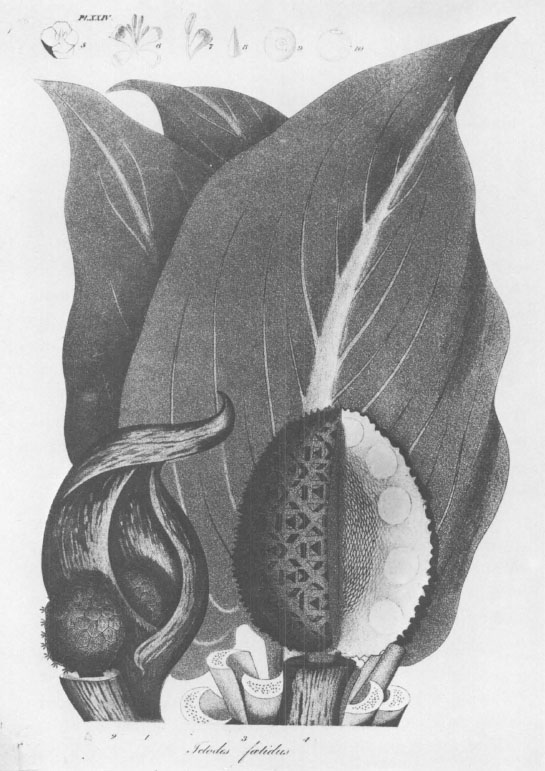
A Book of the Seasons, Signs of the Spring: the Skunk Cabbage Blooms


I would make a chart of our life, 
know why just this circle of creatures completes the world.
Henry Thoreau, April 18, 1852. 

The honeybee stretches
and goes forth in search of the
earliest flower.

The spring flower too
expects a winged visitor 
knocking at its door.
March 18, 1860

Botanic Remedies in Colonial Massachusetts, 1620–1820

January 28. The skunk-cabbage in the water is already pushed up, and I find the pinkish head of flowers within its spathe bigger than a pea.  January 28, 1852

February 13
.
 Saw in a warm, muddy brook in Sudbury, quite open and exposed, the skunk-cabbage spathes above water. The tops of the spathes were frost- bitten, but the fruit sound. There was one partly expanded. The first flower of the season; for it is a flower. I doubt if there is [a] month without its flower. Examined by the botany all its parts, the first flower I have seen. The Ictodes fætidus. February 13, 1851

February 18. See the skunk-cabbage in flower. February 18, 1851

February 23.   I have seen signs of the spring.  February 23, 1857

February 27. I noticed yesterday that the skunk-cabbage had not started yet at Well Meadow, and had been considerably frost-bitten. February 27, 1860

March 2.  Under the alders at Well Meadow I see a few skunk- cabbage spathes fairly open on the side, and these may bloom after a day or two of pleasant weather. But for the most part, here and generally elsewhere, the spathes are quite small, slender, and closed as yet, or frost bitten. March 2, 1859

March 2.  Thinking to look at the cabbage as I pass under Clamshell, I find it very inconspicuous. Most would have said that there was none there. The few tallest and slenderest but tender ones were frost-bitten and far from blooming, but I found three or four more, broad and stout, – a hardy mahogany-colored one, but very low, half covered with the withered sedge, which it lifted up with it, and not apparently open. Putting my finger into one, the broadest and lowest, which opened about half an inch and stood with its back to the west (while they are all sheltered by the hill on the north), I was surprised when I drew it forth to see it covered with pollen. It was fairly in bloom, and probably yesterday too. Evidently some buds are further advanced than others even when the winter comes, and then these are further expanded and matured in advance of the others in the very warm days in the winter. No doubt it may have bloomed in some places in this neighborhood in the last day or two of February this year. Unusually warm weather in February, with bare ground where they grow, may cause them to bloom before February is over. Most would not have detected any change in it since the fall. March 2, 1860

March 3. All the lower part of steep southern slopes of hills is now commonly bare, — though the snow may be pretty deep on the brow, — especially the springy bases where the skunk-cabbage, etc., grow. How imperceptibly the first springing takes place! March 3, 1859

March 5.  Those skunk-cabbage buds which are most advanced have cast off their outmost and often frost-bitten sheaths, and the spathe is broader and slightly opened (some three quarters of an inch or more already) and has acquired brighter and more variegated colors. The out side of the spathe shows some ripeness in its colors and markings, like a melon-rind, before the spadix begins to bloom. I find that many of the most forward spathes, etc., have been destroyed since I was here three days ago. Some animal has nibbled away a part of the spathes (or sometimes only a hole in it) — and I see the fragments scattered about — and then eaten out the whole of the spadix. Indeed, but few forward ones are left. March 5, 1859

March 6. To Goose Pond. I see the skunk-cabbage started about the spring at head of Hubbard's Close, amid the green grass, and what looks like the first probing of the skunk. March 6, 1854

March 8. As the ice melts in the swamps I see the horn-shaped buds of the skunk-cabbage, green with a bluish bloom, standing uninjured, ready to feel the influence of the sun, - the most prepared for spring—to look at— of any plant. March 8, 1855

March 8. You cannot say that vegetation absolutely ceases at any season in this latitude; for there is grass in some warm exposures and in springy places, always growing more or less, and willow catkins expanding and peeping out a little further every warm day from the very beginning of winter, and the skunk cabbage buds being developed and actually flowering sometimes in the winter, and the sap flowing [in] the maples in midwinter in some days,. . .There is something of spring in all seasons. March 8, 1860

March 10. By John Hosmer's ditch by the riverside I see the skunk-cabbage springing freshly, the points of the spathes just peeping out of the ground, in some other places three inches high even. The radical leaves of innumerable plants (as here a dock in and near the water) are evidently affected by the spring influences. Many plants are to some extent evergreen, like the buttercup now beginning to start. Methinks the first obvious evidence of spring is the pushing out of the swamp willow catkins, then the relaxing of the earlier alder catkins, then the pushing up of skunk-cabbage spathes (and pads at the bottom of water). This is the order I am inclined to, though perhaps any of these may take precedence of all the rest in any particular case. March 10, 1853

March 10.  At present I should say that the vegetable kingdom showed the influence of the spring as much in the air as in the water, that is, in the flowing of the sap, the skunk-cabbage buds, and the swelling of the willow catkins. March 10, 1854

March 18. Examining the skunk-cabbage, now generally and abundantly in bloom all along under Clamshell, I hear the hum of honeybees in the air, attracted by this flower. They circle about the bud at first hesitatingly, then alight and enter at the open door and crawl over the spadix, and reappear laden with the yellow pollen.What a remarkable instinct it is that leads them to this flower! The first sunny and warmer day in March the honeybee leaves its home, probably a mile off, and wings its way to this warm bank. There is but one flower in bloom in the town, and this insect knows where to find it. You little think that it knows the locality of early flowers better than you. You have not dreamed of them yet. Yet it knows a spot a mile off under a warm bank-side where the skunk-cabbage is in bloom. No doubt this flower, too, has learned to expect its winged visitor knocking at its door in the spring. March 18, 1860

March 21.   The skunk-cabbage at Clamshell is well out, shedding pollen. It is evident that the date of its flowering is very fluctuating, according to the condition in which the winter leaves the crust of the meadow. March 21, 1858

March 22.  The spearheads of the skunk cabbage are now quite conspicuous.  I see that many flowers have been destroyed by the cold. In no case is the spathe unrolled, and I think it is not yet in blossom. March 22, 1853

March 22.   The phenomena of an average March . . . The skunk-cabbage begins to bloom (23d) . . . Many insects and worms come forth and are active,-- and the perla insects still about ice and water, — as tipula, grubs, and fuzzy caterpillars, minute hoppers on grass at springs; gnats, large and small, dance in air; the common and the green fly buzz outdoors; the gyrinus, large and small, on brooks, etc., and skaters; spiders shoot their webs, and at last gossamer floats; the honey bee visits the skunk-cabbage; fishworms come up, sow-bugs, wireworms  etc.; various larvæ are seen in pools; small green and also brown grasshoppers begin to hop, small ants to stir (25th); Vanessa Antiopa out 29th; cicindelas run on sand; and small reddish butterflies are seen in wood-paths, etc., etc., etc.  March 22, 1860

*****
So I came in and
shut the door and passed my first
spring night in the woods.
Walden, Spring

It will take you half a lifetime
to find out where to look for the earliest flower.
April 2, 1856


See also 
A Book of the Seasons,  by Henry Thoreau, the Skunk Cabbage;
and Signs of the Spring:


A Book of the Seasons,  by Henry Thoreau, Signs of Spring: the Skunk Cabbage
A Book of the Seasons,  by Henry Thoreau
 "A book, each page written in its own season, 
out-of-doors, in its own locality."
 ~edited, assembled and rewritten by zphx ©  2009-2023

Popular Posts Last 30 Days.

The week ahead in Henry’s journal

The week ahead in Henry’s journal
A journal, a book that shall contain a record of all your joy.
"A stone fruit. Each one yields me a thought." ~ H. D. Thoreau, March 28, 1859


I sit on this rock
wrestling with the melody
that possesses me.