Showing posts with label blue-curls. Show all posts

Tuesday, December 14, 2021

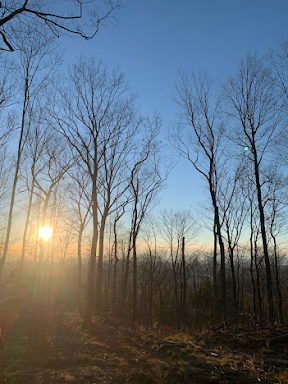
Who can tell the serenity and clarity of a New England winter sunset?


December 14. Tuesday.

P. M. – To Assabet Stone Bridge.

We have now the scenery of winter, though the snow is but an inch or two deep. 
December 14. 2021

The dried chalices of the Rhexia Virginica stand above the snow, and the cups of the blue-curls and the long sharp red capsules of the small ( ? ) hypericum, etc., etc., johnswort; and a new era commences with the dried herbs.

Ah, who can tell the serenity and clarity of a New England winter sunset? This could not be till the cold and the snow came. Ah, what isles those western clouds! in what a sea! 

Just after sunset there is a broad pillar of light for many minutes in the west.

H. D. Thoreau, Journal, December 14, 1852

The dried chalices of the Rhexia Virginica stand above the snow, and the cups of the blue-curls. See December 14, 1851 ("The now dry and empty but clean-washed cups of the blue-curls spot the half snow-covered grain-fields. Where lately was a delicate blue flower, now all the winter are held up these dry chalices.") See also November 18, 1855 ("Now first mark the stubble and numerous withered weeds rising above the snow. They have suddenly acquired a new character. “); November 30, 1856 (“Now see the empty chalices of the blue-curls and the rich brown-fruited pinweed above the crust.”); December 1, 1856 (“The blue-curls' chalices stand empty, and waiting evidently to be filled with ice.”); December 4, 1856 ("How many thousand acres are there now of pitchered blue-curls and ragged wormwood rising above the shallow snow?. . .They were not observed against the dark ground, but the first snow comes and reveals them")

The long sharp red capsules of the small hypericum, etc., etc., johnswort; and a new era commences with the dried herbs. See September 19, 1852 ("The red capsules of the sarothra."); December 3, 1856 ("Pinweed (or sarothra) is quite concealed." ); December 5 1856 ("The johnswort and the larger pinweed are conspicuous above the snow. "); December 6, 1856 ("Each pinweed, etc., has melted a little hollow or rough cave in the snow, in which the lower part at least snugly hides. . . . What variety the pinweeds, clear brown seedy plants, give to the fields, which are yet but shallowly covered with snow! . . .Not till the snow comes are the beauty and variety and richness of vegetation ever fully revealed."); December 13, 1852 ("About the base of the larger pin-weed, the frost formed into little flattened trumpets or bells, an inch or more long, with the mouth down about the base of the stem")

Who can tell the serenity and clarity of a New England winter sunset? See December 14, 1851 ("There is a beautifully pure greenish-blue sky under the clouds now in the southwest just before sunset.") See also  December 25, 1851 (“I go forth to see the sun set. Who knows how it will set, even half an hour beforehand ?”); December 8, 1854 (“There is a glorious clear sunset sky, soft and delicate and warm”); December 9, 1856 ("A slight blush begins to suffuse the eastern horizon, and so the picture of the day is done and set in a gilded frame. Such is a winter eve."); December 9, 1859 (" I observe at mid-afternoon, the air being very quiet and serene, that peculiarly softened western sky, which perhaps is seen commonly after the first snow has covered the earth. . . .[T]here is just enough invisible vapor, perhaps from the snow, to soften the blue, giving it a slight greenish tinge. Thus, methinks, it often happens that as the weather is harder the sky seems softer"); December 11, 1854 ("I see the sun setting far through the woods, and there is that peculiar clear vitreous greenish sky in the west, as it were a molten gem.The day is short; it seems to be composed of two twilights merely"); December 12, 1859 ("The night comes on early these days, and I soon see the pine tree tops distinctly outlined against the dun (or amber) but cold western sky.")
 Night comes on early.
Pine tree tops outlined against
the cold western sky,

December 18, 1853 ("The western hills, these bordering it, seen through the clear, cold air, have a hard, distinct edge against the sunset sky. "); December 19, 1851 (".Now the sun sets suddenly without a cloud– & with scarcely any redness following so pure is the atmosphere – only a faint rosy blush along the horizon."); December 20, 1851 ("The sun goes down apace behind glowing pines, and golden clouds like mountains skirt the horizon."); December 20, 1854 ("The sky in the eastern horizon has that same greenish-vitreous, gem-like appearance which it has at sundown, as if it were of perfectly clear glass, —with the green tint of a large mass of glass.")

The icy water
reflecting the warm colors
of the sunset sky.

December 21 1851 (Long after the sun has set, and downy clouds have turned dark, and the shades of night have taken possession of the east, some rosy clouds will be seen in the upper sky over the portals of the darkening west."); December 21, 1851 ("How swiftly the earth appears to revolve at sunset, which at midday appears to rest on its axle!"); December 23, 1851 ("I see that there is to be a fine, clear sunset, and make myself a seat in the snow on the Cliff to witness it."); December 23, 1851 (“Now the sun has quite disappeared, but the afterglow, as I may call it, apparently the reflection from the cloud beyond which the sun went down on the thick atmosphere of the horizon, is unusually bright and lasting. Long, broken clouds in the horizon, in the dun atmosphere, — as if the fires of day were still smoking there, — hang with red and golden edging like the saddle cloths of the steeds of the sun.”); December 23, 1851 ("The evening star is shining brightly, and, beneath all, the west horizon is glowing red, . . . and I detect, just above the horizon, the narrowest imaginable white sickle of the new moon."); December 24, 1851 (“When I had got home and chanced to look out the window from supper, I perceived that all the west horizon was glowing with a rosy border.”); December 25, 1858 ("How full of soft, pure light the western sky now, after sunset! . . . In a pensive mood I enjoy the complexion of the winter sky at this hour.")
 Western sky full of
soft pure light after sunset,
the outlines of pines.
December 25, 1858

December 27, 1851("Venus - I suppose it is - is now the evening star, and very bright she is immediately after sunset in the early twilight."); December 27, 1853 (" It is a true winter sunset, almost cloudless, clear, cold indigo-y along the horizon. The evening star is seen shining brightly, before the twilight has begun. A rosy tint suffuses the eastern horizon")

The evening star seen
shining brightly before the
twilight has begun.

January 5, 1853 ("A fine rosy sky in the west after sunset; and later an amber-colored horizon."); January 9, 1859 ("It is worth the while to stand here at this hour and look into the soft western sky, over the pines whose outlines are so rich and distinct against the clear sky")

To look over pines
so rich and distinct, into
the soft western sky.
January 9, 1859

January 10, 1859 ("This is one of the phenomena of the winter sunset, this distinct pink light reflected from the brows of snow-clad hills on one side of you as you are facing the sun."); January 11, 1852 ("The glory of these afternoons, though the sky may be mostly overcast, is in the ineffably clear blue, or else pale greenish-yellow, patches of sky in the west just before sunset."); January 14, 1852 ("I notice to-night, about sundown, that the clouds in the eastern horizon are the deepest indigo-blue of any I ever saw. Commencing with a pale blue or slate in the west, the color deepens toward the east."); January 17, 1852 (“In proportion as I have celestial thoughts, is the necessity for me to be out and behold the western sky sunset these winter days. That is the symbol of the unclouded mind that knows neither winter nor summer. . . .As the skies appear to a man, so is his mind.")

The unclouded mind,
serene, pure, ineffable
like the western sky.

 January 24, 1852 ("A single elm by Hayden's stands in relief against the amber and golden, deepening into dusky but soon to be red horizon."); January 17, 1860 ("When I reached the open railroad causeway returning, there was a splendid sunset.)"); January 26, 1852. ("Would you see your mind, look at the sky.")

See also July 23, 1852  ("As the light in the west fades, the sky there, seen between the clouds, has a singular clarity and serenity.")


A Book of the Seasons, by Henry Thoreau
"A book, each page written in its own season,
out-of-doors, in its own locality.”
~edited, assembled and rewritten by zphx © 2009-2023

tinyurl.com/hdt521214

Monday, December 14, 2020

Pure greenish-blue sky under the clouds now in the southwest just before sunset.


December 14

December 14, 2021

The boys have been skating for a week, but I have had no time to skate for surveying. I have hardly realized that there was ice, though I have walked over it about this business.

As for the weather, all seasons are pretty much alike to one who is actively at work in the woods. I should say that there were two or three remarkably warm days and as many cold ones in the course of a year, but the rest are all alike in respect to temperature. This is my answer to my acquaintances who ask me if I have not found it very cold being out all day.

McKean tells me of hardy horses left to multiply on the Isle of Sable. His father had one (for the shipwrecked to eat). Can they be descendants of those beasts Champlain or Lescarbot refers to? 

I hear the small woodpecker whistle as he flies toward the leafless wood on Fair Haven, doomed to be cut this winter.

The chickadees remind me of Hudson's Bay for some reason. I look on them as natives of a more northern latitude.

The now dry and empty but clean-washed cups of the blue-curls spot the half snow-covered grain-fields. Where lately was a delicate blue flower, now all the winter are held up these dry chalices. What mementos to stand above the snow! 

The fresh young spruces in the swamp are free from moss, but it adheres especially to the bare and dead masts of spruce trees oftentimes half destitute of bark. They look like slanting may-poles with drooping or withered garlands and festoons hanging to them. For an emblem of stillness, a spruce swamp with hanging moss now or at any season.

I notice that hornets' nests are hardly deserted by the insects than they look as if a truant boy had fired a charge of shot through them, -- all ragged and full of holes. It is the work either of the insects themselves or else of other insects or birds.

It is the andromeda (panicled?) that has the fine barked stem and the green wood, in the swamps.

Why not live out more yet, and have my friends and relations altogether in nature, only my acquaintances among the villagers? That way diverges from this I follow, not at a sharp but a very wide angle.

Ah, nature is serene and immortal! Am I not one of the Zincali? 


December 14, 2024

There is a beautifully pure greenish-blue sky under the clouds now in the southwest just before sunset.

I hear the ice along the edge of the river cracking as the water settles. It has settled about two feet, leaving ice for the most part without water on the meadows, all uneven and cracked over the hummocks, so that you cannot run straight for sliding.

The ice takes the least hint of a core to eke out a perfect plant; the wrecks of bulrushes and meadow grass are expanded into palm leaves and other luxuriant foliage. I see delicate-looking green pads frozen into the ice, and, here and there, where some tender and still green weeds from the warm bottom of the river have lately been cast up on to the ice.

There are certain places where the river will always be open, where perchance warmer springs come in. There are such places in every character, genial and open in the coldest seasons.

I come from contact with certain acquaintances, whom even I am disposed to look toward as possible friends. It oftenest happens that I come from them wounded. Only they can wound me seriously, and that perhaps without their knowing it.

 H. D. Thoreau, Journal, December 14, 1851

The boys have been skating for a week, but I have had no time to skate for surveying. I have hardly realized that there was ice. See December 6, 1854 ("I see thick ice and boys skating . . . but know not when it froze, I have been so busy writing my lecture.")

I hear the small woodpecker whistle as he flies toward the leafless wood. See December 5, 1853 ("Saw and heard a downy woodpecker on an apple tree. Have not many winter birds, like this and the chickadee, a sharp note like tinkling glass or icicles?"); December 10, 1854 ("Hear the small woodpecker’s whistle; not much else. ") See also December 14, 1855 ("A little further I heard the sound of a downy woodpecker tapping a pitch pine in a little grove, and saw him inclining to dodge behind the stem.") ;August 28, 1858 ("The sharp whistling note of a downy woodpecker, which sounds rare; perhaps not heard since spring."); September 17, 1852 ("I hear the downy woodpecker whistle, and see him looking about the apple trees as if to bore him a hole.") See also A Book of the Seasons,  by Henry Thoreau, The Downy Woodpecker

The now dry and empty but clean-washed cups of the blue-curls spot the half snow-covered grain-fields. See December 14, 1852 ("The dried chalices of the Rhexia Virginica stand above the snow, and the cups of the blue-curls."):  See also November 18, 1855 ("Now first mark the stubble and numerous withered weeds rising above the snow. They have suddenly acquired a new character. “); November 30, 1856 (“Now see the empty chalices of the blue-curls and the rich brown-fruited pinweed above the crust.”); December 1, 1856 (“The blue-curls' chalices stand empty, and waiting evidently to be filled with ice.”); December 4, 1856 ("How many thousand acres are there now of pitchered blue-curls and ragged wormwood rising above the shallow snow?. . .They were not observed against the dark ground, but the first snow comes and reveals them"). See also A Book of the Seasons, by Henry Thoreau, Blue-Curls

Deserted hornets' nests. See  October 15, 1855 ("The hornets’ nests are exposed, the maples being bare, but the hornets are gone”); October 25, 1854 ("The maples being bare, the great hornet nests are exposed.”); December 29, 1856 (“I see a hornets' nest about seven inches in diameter on a thorn bush, only eighteen inches from the ground.”); December 29, 1858 ("A large hornets’ nest thirty feet high on a maple over the river.”) ; December 31, 1857 ("Under and attached to one of the lowermost branches of a white pine sapling in my old potato-field, I see a large hornet's nest, close to the ground.")

It is the andromeda (panicled?) that has the fine barked stem and the green wood, in the swamps. See note to November 24, 1857 ("Looking toward the sun, the andromeda in front of me is a very warm red brown and on either side of me, a pale silvery brown; looking from the sun, a uniform pale brown. . . .These andromeda swamps charmed me more than twenty years ago, — I knew not why") See also A Book of Seasons,  by Henry Thoreau, The andromeda phenomenon

Ah, nature is serene and immortal! See November 10, 1854 ("Nature is prepared for an infinity of springs yet.");March 23, 1856 (""The eternity which I detect in Nature I predicate of myself also.") See also A Book of the Seasons,  by Henry Thoreau, Nature

There is a beautifully pure greenish-blue sky under the clouds now in the southwest just before sunset. See   December 14, 1852 ("Ah, who can tell the serenity and clarity of a New England winter sunset? This could not be till the cold and the snow came."); December 25, 1851 (“I go forth to see the sun set. Who knows how it will set, even half an hour beforehand ?”) See also  December 9, 1859 (" I observe at mid-afternoon, the air being very quiet and serene, that peculiarly softened western sky, which perhaps is seen commonly after the first snow has covered the earth. . . .[T]here is just enough invisible vapor, perhaps from the snow, to soften the blue, giving it a slight greenish tinge.");  December 11, 1854 ("It is but mid-afternoon when I see the sun setting far through the woods, and there is that peculiar clear vitreous greenish sky in the west, as it were a molten gem."); December 20, 1854 ("The sky in the eastern horizon has that same greenish-vitreous, gem-like appearance which it has at sundown, as if it were of perfectly clear glass, —with the green tint of a large mass of glass."); January 11, 1852 ("The glory of these afternoons, . . . is in the ineffably clear blue, or else pale greenish-yellow, patches of sky in the west just before sunset."); and A Book of the Seasons, by Henry Thoreau, the Western Sky; A Book of the Seasons, by Henry Thoreau, Winter Sunsets

There are certain places where the river will always be open, where perchance warmer springs come in.  See December 30, 1855 ("The places which are slowest to freeze in our river are, first, on account of warmth as well as motion, where a brook comes in, and also probably where are springs in banks and under bridges.")

It oftenest happens that I come from them wounded. See November 24, 1850 ("I have certain friends whom I visit occasionally, but I commonly part from them early with a certain bitter-sweet sentiment"); November 16, 1851 ("I love my friends very much, but I find that it is of no use to go to see them.")

December 14. See A Book of the Seasons,  by Henry Thoreau , December 14

Pure greenish-blue sky 
under clouds in the southwest
just before sunset.

That pure greenish-blue 
sky southwest under the clouds
just before sunset.


A Book of the Seasons
,  by Henry Thoreau 
"A book, each page written in its own season,
out-of-doors, in its own locality.”
~edited, assembled and rewritten by zphx © 2009-2024

https://tinyurl.com/hdt-511214


Saturday, September 26, 2020

The increasing scarlet and yellow tints around the meadows and river .


September 26


Dreamed of purity last night. The thoughts seemed not to originate with me, but I was invested, my thought was tinged, by another's thought. It was not I that originated, but I that entertained the thought.

The river is getting to be too cold for bathing. There are comparatively few weeds left in it.

It is not in vain, perhaps, that every winter the forest is brought to our doors, shaggy with lichens. Even in so humble a shape as a wood-pile, it contains sermons for us.

P. M. — To Ministerial Swamp.

The small cottony leaves of the fragrant everlasting in the fields for some time, protected, as it were, by a little web of cotton against frost and snow, — a little dense web of cotton spun over it, — entangled in it, — as if to restrain it from rising higher.

The increasing scarlet and yellow tints around the meadows and river remind me of the opening of a vast flower-bud; they are the petals of its corolla, which is of the width of the valleys. It is the flower of autumn, whose expanding bud just begins to blush. As yet, however, in the forest there are very few changes of foliage.


September 26, 2017

The Polygonum articulatum, giving a rosy tinge to Jenny's Desert and elsewhere, is very interesting now, with its slender dense racemes of rose-tinted flowers, apparently without leaves, rising cleanly out of the sand. It looks warm and brave; a foot or more high, and mingled with deciduous blue-curls. It is much divided, into many spreading slender-racemed branches, with inconspicuous linear leaves, reminding me, both by its form and its color, of a peach orchard in blossom, especially when the sunlight falls on it.

Minute rose-tinted flowers that brave the frosts and advance the summer into fall, warming with their color sandy hill sides and deserts, like the glow of evening reflected on the sand. Apparently all flower and no leaf.

A warm blush on the sands, after frosty nights have come. Perhaps it may be called the "evening red." Rising, apparently, with clean bare stems from the sand, it spreads out into this graceful head of slender rosy racemes, wisp-like. This little desert of less than [an] acre blushes with it.

I see now ripe, large (three-inch), very dark chocolate(?)-colored puffballs. Are then my five-fingers puffballs?
The tree fern is in fruit now, with its delicate, tendril-like fruit climbing three or four feet over the asters, goldenrods, etc., on the edge of the swamp. The large ferns are yellow or brown now.

Larks, like robins, fly in flocks.
Dogsbane leaves a clear yellow.

Succory in bloom at the Tommy Wheeler house. It bears the frost well, though we have not had much. Set out for use.

The Gnaphalium plantaginifolium leaves, green above, downy beneath.

H. D. Thoreau, Journal, September 26, 1852

The river is getting to be too cold for bathing. See September 26 1854 ("Took my last bath the 24th . Probably shall not bathe again this year. It was chilling cold."); September 27, 1856 ("Bathed at Hubbard's Bath, but found the water very cold. Bathing about over”)  See also  A Book of the Seasons, by Henry Thoreau, The Luxury of Bathing

The small cottony leaves of the fragrant everlasting in the fields for some time, protected, as it were, by a little web of cotton against frost and snow. See August 29, 1856 ("Fragrant everlasting in prime and very abundant, whitening Carter's pasture.”); February 25, 1857 (“The fragrant everlasting has retained its fragrance all winter.”)

The increasing scarlet and yellow tints remind me of the opening of a vast flower-bud; they are the petals of its corolla, the flower of autumn. See August 6, 1852 ("We live, as it were, within the calyx of a flower."); June 5, 1853 (“The heavens and the earth are one flower. The earth is the calyx, the heavens the corolla.”); November 1, 1858 ("A man dwells in his native valley like a corolla in its calyx.")

I see now ripe, large (three-inch), very dark chocolate-colored puffballs. See October 2, 1858 ("A large chocolate-colored puffball “smokes.”")

Larks, like robins, fly in flocks. See August 27, 1858 ("Robins fly in flocks."); September 18, 1852 ("The robins of late fly in flocks, and I hear them oftener."); September 19, 1854 ("I see large flocks of robins keeping up their familiar peeping and chirping."); September 20, 1855 ("See larks in flocks on meadow."); October 1, 1858 ("See larks in small flocks."); October 13, 1855 ("Larks in flocks in the meadows, showing the white in their tails as they fly, sing sweetly as in spring.")

Dogsbane leaves a clear yellow See August 21, 1852 (“The leaves of the dogsbane are turning yellow”); See August 16, 1856 ("I find the dog's-bane (Apocynum androsoemifolium) bark not the nearly so strong as that of the A. cannabinum”). Note "Apocynum" means "poisonous to dogs".

See July 9, 1851 ("The handsome blue flowers of the succory or endive (Cichorium Intybus)."); October 2, 1856 ("Succory still, with its cool blue, here and there"); October 14, 1856 ("Any flowers seen now may be called late ones. I see perfectly fresh succory, not to speak of yarrow, a Viola ovata, . . .etc., etc.")

September 26. See A Book of the Seasons, by Henry Thoreau, September 26

Increasing scarlet 
and yellow tints around the 
meadows and river.


A Book of the Seasons, by Henry Thoreau
"A book, each page written in its own season,
out-of-doors, in its own locality.”
~edited, assembled and rewritten by zphx © 2009-2024

Friday, September 11, 2020

These fall rains are a peculiarity of the season.


September 11

September 11, 2022


Genius is like the snapping-turtle born with a great developed head. 

They say our brain at birth is one sixth the weight of the body. 

Cranberries are being raked for fear of frosts. 

These fall rains are a peculiarity of the season. 

How much fresher some flowers look in rainy weather!
When I thought they were about done, they appear to revive, and moreover their beauty is enhanced, as if by the contrast of the louring atmosphere with their bright colors.

Such are the purple gerardia and the Bidens cernua.

The purple gerardia and blue-curls are interesting for their petals strewn about, beaten down by the rain.

Many a brook I look into is strewn with the purple petals of the gerardia, whose stalk is not obvious in the bank. 

Again the Potentilla Canadensis var. pumila, and dandelions occasionally.

H. D. Thoreau, Journal, September 11, 1852

Genius is like the snapping-turtle born with a great developed head.
See September 11, 1854 ("It does not so much impress me as an infantile beginning of life as an epitome of all the past of turtledom and of the earth. I think of it as the result of all the turtles that have been. ")
These fall rains are a peculiarity of the season. See August 25, 1852 ("One of those serious and normal storms ~ not a shower which you can see through, not a transient cloud that drops rain ~ something regular, a fall rain, coincident with a different mood or season of the mind."); August 26, 1859 ("The first fall rain is a memorable occasion, when the river is raised and cooled, and the first crop of sere and yellow leaves falls. The air is cleared; the dog-days are over; sun-sparkles are seen on water; crickets sound more distinctt"); September 20, 1856 ("Rain in afternoon. Rain again in the night, hard."); September 20, 1857 ("This is our first fall rain, and makes a dividing line between the summer and fall."); September 20, 1860 ("Rainy in forenoon.");

The Bidens cernua. See September 11, 1851 ("Bidens cernua, or nodding burr marigold, like a small sunflower (with rays) in Heywood Brook, i. e. beggar- tick."); September 12, 1851 ("the Bidens cernua, nodding burr-marigold, with five petals"); September 12, 1859 ("The four kinds of bidens (frondosa, connata, cernua, and chrysanthemoides) abound now, . . . the third and fourth are conspicuous and interesting, expressing by their brilliant yellow the ripeness of the low grounds"); September 13, 1852 ("The great bidens in the sun in brooks affects me as the rose of the fall. They are low suns in the brook."); September 14, 1854 ("The great bidens, the flower and ornament of the riversides at present, and now in its glory,. . . Full of the sun. It needs a name."); September 15, 1856 ("What I must call Bidens cernua, like a small chrysanthemoides, is bristly hairy, somewhat connate and apparently regularly toothed"); September 19, 1851 ("Large-flowered bidens,or beggar-ticks,or bur-marigold, now abundant by riverside.") See also A Book of the Seasons, by Henry Thoreau, The Bidens Beckii and A Book of the Seasons, by Henry Thoreau, the Great Bidens


Saturday, July 25, 2020

I have for years had a great deal of trouble with my shoe-strings


July 25.

Dodder, probably the 21st.

Blue-curls.

Burdock, probably yesterday.

P. M. – To Le Grosse’s.

Cerasus Virginiana
— choke-cherry, — just ripe.

White and red huckleberries said to be in Le Grosse’s or Wetherbee’s pasture. Could not find them.

Cynoglossum Morisoni, beggar’s-lice, roadside between Sam Barrett’s mill and the next house east, in flower and fruiting probably ten days. Probably the same with plant found beyond the stone bridge, gone to seed, last year. 


I have for years had a great deal of trouble with my shoe-strings, because they get untied continually. They are leather, rolled and tied in a hard knot. But some days I could hardly go twenty rods before I was obliged to stop and stoop to tie my shoes.

My companion and I speculated on the distance to which one tying would carry you, — the length of a shoe-tie, 
— and we thought it nearly as appreciable and certainly a more simple and natural measure of distance than a stadium, or league, or mile.

Ever and anon we raised our feet on whatever fence or wall or rock or stump we chanced to be passing, and drew the strings once more, pulling as hard as we could. It was very vexatious, when passing through low scrubby bushes, to become conscious that the strings were already getting loose again before we had fairly started.

What should we have done if pursued by a tribe of Indians? My companion sometimes went without strings altogether, but that loose way of proceeding was not ſto] be thought of by me.

One shoemaker sold us shoe strings made of the hide of a South American jack ass, which he recommended; or rather he gave them to us and added their price to that of the shoes we bought of him. But I could not see that these were any better than the old.

I wondered if anybody had exhibited a better article at the World’s Fair, and whether England did not bear the palm from America in this respect. I thought of strings with recurved prickles and various other remedies myself.

At last the other day it occurred to me that I would try an experiment, and, instead of tying two simple knots one over the other the same way, putting the end which fell to the right over each time, that I would reverse the process, and put it under the other.

Greatly to my satisfaction, the experiment was perfectly successful, and from that time my shoe-strings have given me no trouble, except sometimes in untying them at night.

On telling this to others I learned that I had been all the while tying what is called a granny’s knot, for I had never been taught to tie any other, as sailors’ children are; but now I had blundered into a square knot, I think they called it, or two running slip-nooses. Should not all children be taught this accomplishment, and an hour, perchance, of their childhood be devoted to instruction in tying knots? 


Those New Hampshire-like pastures near Asa Melvin’s are covered or dotted with bunches of indigo, still in bloom, more numerously than anywhere that I remember.

H. D. Thoreau, Journal, July 25, 1853


Blue-curls
. See note to July 11, 1853 ("The aromatic trichostema now springing up."); July 31, 1856 ("Trichostema has now for some time been springing up in the fields, giving out its aromatic scent when bruised") See also A Book of the Seasons, by Henry Thoreau, Blue-Curls

Burdock, probably yesterday. See August 1, 1856 ("Burdock, several days at least")

Cerasus Virginiana, — choke-cherry, — just ripe. See July 18, 1852 ("The Cerasus Virginiana, or choke-cherry, is turning, nearly ripe."); July  19, 1854 ("Black choke-berry, several days."); July 30, 1860 ("Am glad to press my way through Miles's Swamp. Thickets of choke-berry bushes higher than my head, with many of their lower leaves already red");August 5, 1856 ("Choke-cherries near . . . begin to be ripe, though still red. They are scarcely edible, but their beauty atones for it. See those handsome racemes of ten or twelve cherries each, dark glossy red, semi- transparent. You love them not the less because they are not quite palatable."); August 5, 1858 (" Choke-berries, fair to the eye but scarcely palatable, hang far above your head, weighing down the bushes."); August 12, 1858 ("I eat the blueberry, but I am also interested in the rich-looking glossy black choke-berries which nobody eats, but which bend down the bushes on every side,—sweetish berries with a dry, and so choking, taste. Some of the bushes are more than a dozen feet high."); August 21, 1854 ("Red choke-berries are dried black; ripe some time ago. ");  August 15, 1852 ("The red choke-berry is small and green still. I plainly distinguish it, also, by its woolly under side."); August 25, 1854 ("Also the choke-berries are very abundant [at Shadbush Meadow], but mostly dried black."); August 26, 1860 ("I thread my way through the blueberry swamp in front of Martial Miles's. . . . And now a far greater show of choke-berries is here, rich to see."); August 28, 1856 ("The bushes are weighed down with choke-berries, which no creature appears to gather. This crop is as abundant as the huckleberries have been. They have a sweet and pleasant taste enough, but leave a mass of dry pulp in the mouth."); August 31, 1858 ("Red choke-berry, apparently not long. ");September 1,1856 ("Red choke-berries, which last further up in this swamp, with their peculiar glossy red and squarish form, are really very handsome.");  September 1, 1859 ("Red choke-berry ripe.")September 6, 1857 ("I see in the swamp black choke berries twelve feet high at least and in fruit.")

Cynoglossum Morisoni, beggar’s-lice, in flower and fruiting probably ten days.See August 6, 1856 ("Cynoglossum Morisoni mostly gone to seed, roadside, at grape-vine just beyond my bean-field. Some is five feet high")

I have for years had a great deal of trouble with my shoe-strings.See August 5, 1855 ("It seems that I used to tie a regular granny’s knot in my shoe-strings, and I learned of myself —rediscovered—to tie a true square knot, or what sailors sometimes call a reef-knot. It needed to be as secure as a reef-knot in any gale, to withstand the wringing and twisting I gave it in my walks")

Bunches of indigo, still in bloom, more numerously than anywhere that I remember. See June 3, 1851 ("I noticed the indigo-weed a week or two ago pushing up like asparagus."); July 10, 1855 ("Indigo out. "); July 17, 1852 ("Some fields are covered now with tufts or clumps of indigo- weed, yellow with blossoms, with a few dead leaves turned black here and there."); August 6, 1858 ("indigo, ' ' 'is still abundantly in bloom. "); August 17, 1851 ("Indigo-weed still in bloom by the dry wood-path-side,"); October 10, 1858 ("The indigo-weed, now partly turned black and broken off, blows about the pastures like the fiyaway grass."); October 22, 1859 ("In my blustering walk over the Mason and Hunt pastures yesterday, I saw much of the withered indigo-weed which was broken off and blowing about, and the seeds in its numerous black pods rattling like the rattlepod though not nearly so loud");February 28, 1860 ("As I stood by Eagle Field wall, I heard a fine rattling sound, produced by the wind on some dry weeds at my elbow. It was occasioned by the wind rattling the fine seeds in those pods of the indigo-weed which were still closed, — a distinct rattling din which drew my attention to it, — like a small Indian's calabash. Not a mere rustling of dry weeds, but the shaking of a rattle, or a hundred rattles, beside.")

July 25. See A Book of the Seasons, by Henry Thoreau,  July 25 

Sunday, March 18, 2018

Each new year is a surprise to us.

 
March 18

 7 A.M. – By river. 

Almost every bush has its song sparrow this morning, and their tinkling strains are heard on all sides. You see them just hopping under the bush or into some other covert, as you go by, turning with a jerk this way and that, or they flit away just above the ground, which they resemble. It is the prettiest strain I have heard yet. 

Melvin is already out in his boat for all day, with his white hound in the prow, bound up the river for musquash, etc., but the river is hardly high enough to drive them out. 

March 18, 2018

P. M. – To Fair Haven Hill via Hubbard’s Bath. 

How much more habitable a few birds make the fields! At the end of winter, when the fields are bare and there is nothing to relieve the monotony of the withered vegetation, our life seems reduced to its lowest terms. But let a bluebird come and warble over them, and what a change! 
  • The note of the first bluebird in the air answers to the purling rill of melted snow beneath. It is eminently soft and soothing, and, as surely as the thermometer, indicates a higher temperature. It is the accent of the south wind, its vernacular. It is modulated by the south wind. 
  • The song sparrow is more sprightly, mingling its notes with the rustling of the brash along the watersides, but it is at the same time more terrene than the bluebird. 
  • The first woodpecker comes screaming into the empty house and throws open doors and windows wide, calling out each of them to let the neighbors know of its return. But heard further off it is very suggestive of ineffable associations which cannot be distinctly recalled, – of long-drawn summer hours, – and thus it, also, has the effect of music. I was not aware that the capacity to hear the woodpecker had slumbered within me so long.
  • When the blackbird gets to a conqueree he seems to be dreaming of the sprays that are to be and on which he is to perch. 
  • The robin does not come singing, but utters a somewhat anxious or inquisitive peep at first. The song sparrow is immediately most at home of any that I have named. 

I see this afternoon as many as a dozen bluebirds on the warm side of a wood. 

At Hubbard's shore, where a strong but warm westerly wind is blowing, the shore is lined for half a rod in width with pulverized ice, or “brash,” driven against it. 

At Potter's sand-hill (Bear Garden), I see, on the southeast side of the blue-curls, very distinct and regular arcs of circles (about a third of a circle), scored deep in the sand by the tops of these weeds, which have been blown about by the wind, and these marks show very surely and plainly how the wind has been blowing and with what force and flakiness. 

The rather warm but strong wind now roars in the wood — as in the maple swamp — with a novel sound. I doubt if the same is ever heard in the winter. It apparently comes at this season, not only to dry the earth but to wake up the trees, as it were, as one would awake a sleeping man with a smart shake. Perchance they need to be thus wrung and twisted, and their sap flows the sooner for it. 

Perfectly dry sand even is something attractive now, and I am tempted to tread on and to touch it, as a curiosity. Skunks’ tracks are everywhere now, on the sand, and the little snow that is left. 

The river is still closed with ice at Cardinal Shore, so Melvin must have stopped here at least; but there is a crescent of “brash ” there, which the waves blown up-stream have made, half a dozen rods wide. It is even blown a rod on to the solid ice. The noise made by this brash undulating and grating upon itself, at a little distance, is very much like the rustling of a winrow of leaves disturbed by the winds. A little farther off it is not to be distinguished from the roar of the wind in the woods. 

Each new year is a surprise to us. We find that we had virtually forgotten the note of each bird, and when we hear it again it is remembered like a dream, reminding us of a previous state of existence. How happens it that the associations it awakens are always pleasing, never saddening; reminiscences of our sanest hours? The voice of nature is always encouraging. 

The blackbird — probably grackle this time —wings his way direct above the swamp northward, with a regular tchuck, carrier haste, calling the summer months along, like a hen her chickens. 

When I get two thirds up the hill, I look round and am for the hundredth time surprised by the landscape of the river valley and the horizon with its distant blue scalloped rim. 

It is a spring landscape, and as impossible a fortnight ago as the song of birds. It is a deeper and warmer blue than in winter, methinks. The snow is off the mountains, which seem even to have come again like the birds. 

The undulating river is a bright-blue channel between sharp-edged shores of ice retained by the willows. The wind blows strong but warm from west by north, so that I have to hold my paper tight when I write this, making the copses creak and roar; but the sharp tinkle of a song sparrow is heard through it all. 

But ah! the needles of the pine, how they shine, as I look down over the Holden wood and westward! Every third tree is lit with the most subdued but clear ethereal light, as if it were the most delicate frostwork in a winter morning, reflecting no heat, but only light. And as they rock and wave in the strong wind, even a mile off, the light courses up and down there as over a field of grain; i. e., they are alternately light and dark, like looms above the forest, when the shuttle is thrown between the light woof and the dark web, weaving a light article, – spring goods for Nature to wear. 

At sight of this my spirit is like a lit tree. It runs or flashes over their parallel boughs as when you play with the teeth of a comb. The pine tops wave like squirrels' tails flashing in the air. Not only osiers but pine-needles, methinks, shine in the spring, and arrowheads and railroad rails, etc., etc. Anacreon noticed the same. 

Is it not the higher sun, and cleansed air, and greater animation of nature? There is a warmer red to the leaves of the shrub oak, and to the tail of the hawk circling over them. 

I sit on the Cliff, and look toward Sudbury. I see its meeting-houses and its common, and its fields lie but little beyond my ordinary walk, but I never played on its common nor read the epitaphs in its graveyard, and many strangers to me dwell there. How distant in all important senses may be the town which yet is within sight! We see beyond our ordinary walks and thoughts. With a glass I might perchance read the time on its clock. How circumscribed are our walks, after all! With the utmost industry we cannot expect to know well an area more than six miles square, and yet we pretend to be travellers, to be acquainted with Siberia and Africa! 

Going by the epigaea on Fair Haven Hill, I thought I would follow down the shallow gully through the woods from it, that I might find more or something else. There was an abundance of checkerberry, as if it were a peculiar locality for shrubby evergreens. At first the checkerberry was green, but low down the hill it suddenly became dark-red, like a different plant, as if it had been more subject to frost there, it being more frosty lower down. Where it was most turned, that part of the leaf which was protected by another overlapping it was still pure bright-green, making a pretty contrast when you lifted it. 

Eight or ten rods off I noticed an evergreen shrub with the aspect or habit of growth of the juniper, but, as it was in the woods, I already suspected it to be what it proved, the American yew, already strongly budded to bloom. This is a capital discovery. 

I have thus found the ledum and the taxus this winter and a new locality of the epigaea.

H. D. Thoreau, Journal, March 18, 1858

The note of the first bluebird in the air answers to the purling rill of melted snow beneath . . . It is modulated by the south wind. See March 9, 1852 ("I hear and see bluebirds, come with the warm wind."); March 17, 1858 ("Hear the first bluebird. A remarkably warm and pleasant day with a south or southwest wind . . .  The air is full of bluebirds. I hear them far and near on all sides of the hill, warbling in the tree-tops, though I do not distinctly see them . . . four species of birds have all come in one day, no doubt to almost all parts of the town. ") See also A Book of the Seasons, by Henry Thoreau, Signs of the Spring: Listening for the Bluebird

The rather warm but strong wind now roars in the wood to wake up the trees,  and their sap flows the sooner for it. See March 9, 1852 (“These March winds, which make the woods roar and fill the world with life and bustle, appear to wake up the trees out of their winter sleep and excite the sap to flow.”)

When I get two thirds up the hill, I look round and am for the hundredth time surprised by the landscape of the river valley and the horizon with its distant blue scalloped rim. See May 17, 1853 ("I was surprised, on turning round, to behold the serene and everlasting beauty of the world.”); May 22, 1854 ("How many times I have been surprised  thus, on turning about on this very spot, at the fairness of the earth!”) ; October 7, 1857 ("When I turn round half-way up Fair Haven Hill, by the orchard wall, and look northwest, I am surprised for the thousandth time at the beauty of the landscape.”). See also note to June 3, 1850 ("The landscape is a vast amphitheatre rising to its rim in the horizon.")

The robin does not come singing, but utters a somewhat anxious or inquisitive peep at first. See March 18, 1853 ("He does not sing as yet . . . the robin and blackbird only peep and chuck at first."); March 18, 1859 ("Three days ago, the 15th, we had steady rain with a southerly wind. . . and the peep of the robin was heard through the drizzle and the rain.") See also  February 27, 1857 (" Before I opened the window this cold morning, I heard the peep of a robin, that sound so often heard in cheerless or else rainy weather, so often heard first borne on the cutting March wind or through sleet or rain, as if its coming were premature. "); March 8, 1855 ("I hear the hasty, shuffling, as if frightened, note of a robin from a dense birch wood . . . This sound reminds me of rainy, misty April days in past years."); March 12, 1854 ("I hear my first robin peep distinctly at a distance. No singing yet."); March 17, 1858 ("I hear a faint note far in the wood which reminds me of the robin. Again I hear it; it is he, — an occasional peep.") and A Book of the Seasons, by Henry Thoreau, Signs of the Spring, the anxious peep of the early robin

Each new year is a surprise to us. See December 29, 1851 (" What a fine and measureless joy the gods grant us thus, letting us know nothing about the day that is to dawn! This day, yesterday, was as incredible as any other miracle.")

The sharp tinkle of a song sparrow is heard through it all
. See March 18, 1857 ("I now again hear the song sparrow’s tinkle along the riverside, probably to be heard for a day or two.”)March 18, 1852 ("I hear the song sparrow's simple strain, most genuine herald of the spring.”)

I have thus found the ledum this winter. See February 4, 1858 (“As usual with the finding of new plants, I had a presentiment that I should find the ledum in Concord.”)

Going by the epigaea on Fair Haven Hill, I thought I would follow down the shallow gully through the woods from it, that I might find more or something else. See September 8, 1858 ("It is good policy to be stirring about your affairs, for the reward of activity and energy is that if you do not accomplish the object you had professed to yourself, you do accomplish something else. So, in my botanizing or natural history walks, it commonly turns out that, going for one thing, I get another thing.")

A new locality of the epigaea. See February 7, 1858 (“I am surprised to find the epigaea on this hill, at the northwest corner of C. Hubbard’s (?) lot.”)

March 18. See A Book of the Seasons,  by Henry Thoreau, March 18

The snow is off the
mountains, which seem to have come
again like the birds,

their blue scalloped rim
a deeper and warmer blue
than winter, methinks.

A spring landscape as
impossible a fortnight
ago as birdsong.

The note of each bird
remembered like a dream when
we hear it again.

How happens it that
each new year is always
a pleasing surprise?


A Book of the Seasons,  by Henry Thoreau 
"A book, each page written in its own season,
out-of-doors, in its own locality.”
~edited, assembled and rewritten by zphx © 2009-2025

https://tinyurl.com/hdt-580318


Popular Posts Last 30 Days.

The week ahead in Henry’s journal

The week ahead in Henry’s journal
A journal, a book that shall contain a record of all your joy.
"A stone fruit. Each one yields me a thought." ~ H. D. Thoreau, March 28, 1859


I sit on this rock
wrestling with the melody
that possesses me.