Showing posts with label clintonia. Show all posts

Saturday, June 13, 2020

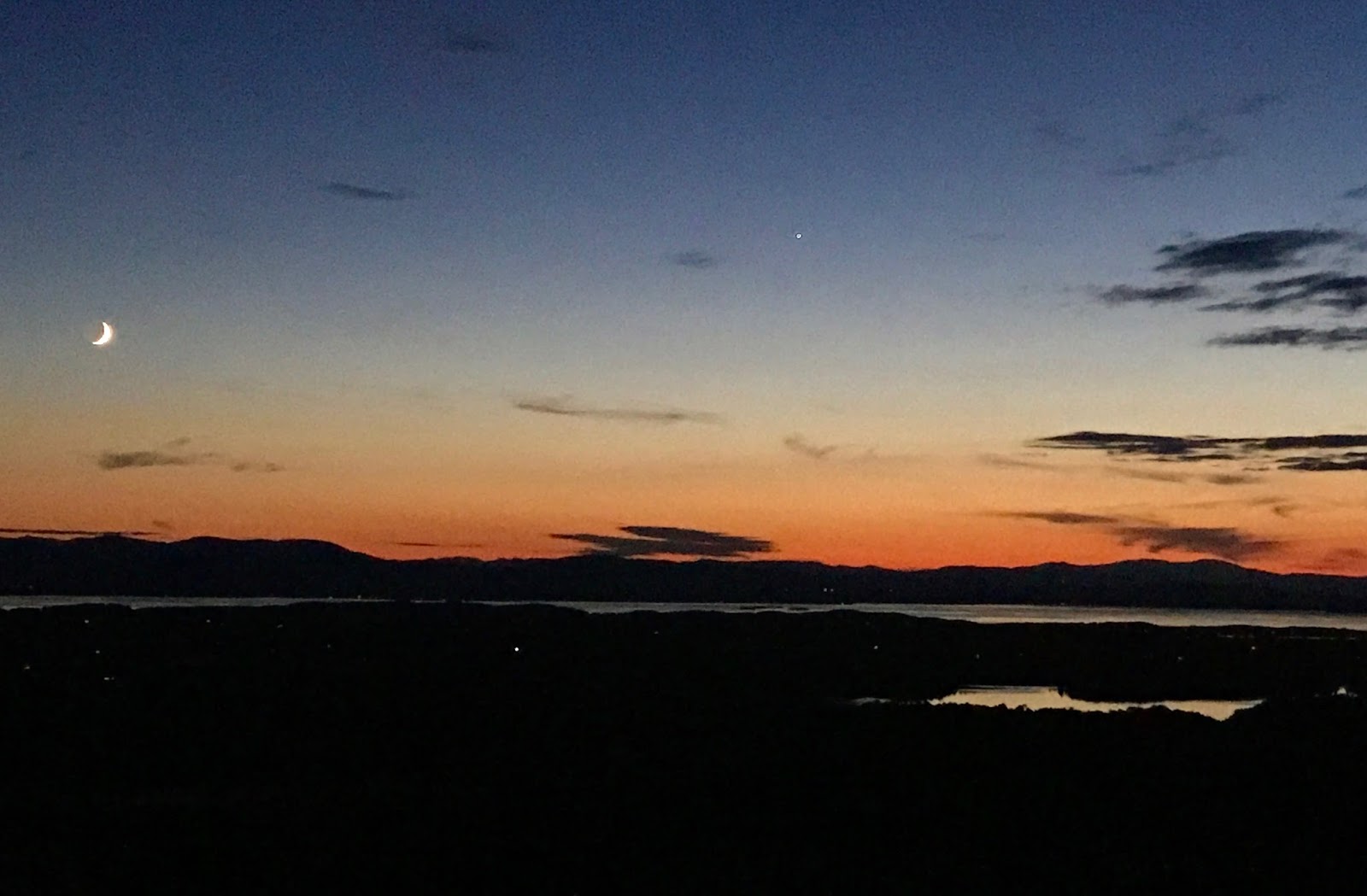
All things in this world must be seen with the morning dew on them.


Sunday.

3 p. m. — To Conantum.

A warm day.

It has been cold, and we have had fires the past week sometimes.

Clover begins to show red in the fields, and the wild cherry is not out of blossom.

The river has a summer midday look, smooth to a cobweb, with green shores, and shade from the trees on its banks.

The Viburnum nudum.

The oblong- leaved sundew, but not its flower.

Do the bulbous arethusas last long? 

What a sweetness fills the air now in low grounds or meadows, reminding me of times when I went strawberrying years ago! It is as if all meadows were filled with some sweet mint.


The Dracama borealis (Bigelow) (Clintonia borealis (Gray)) amid the Solomon's-seals in Hubbard's Grove Swamp, a very neat and handsome liliaceous flower with three large, regular, spotless, green convallaria leaves, making a triangle from the root, and sometimes a fourth from the scape, linear, with four drooping, greenish-yellow, bell-shaped (?) flowers. Not in sun. In low shady woods. It is a handsome and perfect flower, though not high-colored. I prefer it to some more famous.

But Gray should not name it from the Governor of New York. What is he to the lovers of flowers in Massachusetts? If named after a man, it must be a man of flowers. Rhode Island botanists may as well name the flowers after their governors as New York. Name your canals and railroads after Clinton, if you please, but his name is not associated with flowers.

Mosquitoes now trouble the walker in low shady woods.

No doubt woodchucks in their burrows hear the steps of walkers through the earth and come not forth.

Yellow wood sorrel (Oxalis stricta), which, according to Gray, closes its leaves and droops at nightfall.

The woolly aphides on alders whiten one's clothes now.

What is that palmate(?)-leaved water-plant by the Corner causeway? 

The buck-bean grows in Conant's meadow.

Lambkill is out. I remember with what delight I used to discover this flower in dewy mornings – All things in this world must be seen with the morning dew on them, must be seen with youthful, early-opened, hopeful eyes.

Saw four cunning little woodchucks nibbling the short grass, about one third grown, that live under Conant's old house. Mistook one for a piece of rusty iron.

The Viburnum Lentago is about out of bloom; shows young berries.

The Smilax herbaeea, carrion-flower, a rank green vine with long-peduncled umbels, with small greenish or yellowish flowers just opening, and tendrils, at the Miles swamp. It smells exactly like a dead rat in the wall, and apparently attracts flies (I find small gnats on it) like carrion. A very remarkable odor; a single minute flower in an umbel open will scent a whole room.

Nature imitates all things in flowers. They are at once the most beautiful and the ugliest objects, the most fragrant and the most offensive to the nostrils, etc., etc.

The compound-racemed convallaria, being fully out, is white. I put it down too early, perhaps by a week.

The great leaves of the bass attract you now, six inches in diameter.

The delicate maidenhair fern forms a cup or dish, very delicate and graceful. Beautiful, too, its glossy black stem and its wave-edged fruited leafets.

I hear the feeble plaintive note of young bluebirds, just trying their wings or getting used to them.

Young robins peep.

I think I know four kinds of cornel beside the dog wood and bunchberry: 
  • one now in bloom, with rather small leaves with a smooth, silky feeling beneath, a greenish-gray spotted stem, in older stocks all gray (Cornus alternifolia? or sericea?); 
  • the broad-leaved cornel in Laurel Glen, yet green in the bud (C. circinata?);
  • the small-leaved cornel with a small cyme or corymb, as late to be [sic] as the last, in Potter's hedge and on high hills (C. paniculata);
  • and the red osier by the river (C. stolonifera), which I have not seen this year.

Mosquitoes are first troublesome in the house with sultry nights.

Orobanche uniflora, single-flowered broom-rape (Bigelow), [or] Aphyllon uniflorum, one-flowered cancer-root (Gray). C. found it June 12 at Clematis Brook.

Also the common fumitory (?), methinks; it is a fine-leaved small plant.

Captain Jonathan Carver commences his Travels with these words: 

"In June, 1766, I set out from Boston, and proceeded by way of Albany and Niagara, to Michillimackinac; a Fort situated between the Lakes Huron and Michigan, and distant from Boston 1300 miles. This being the uttermost of our factories towards the northwest, I considered it as the most convenient place from whence I could begin my intended progress, and enter at once into the Regions I designed to explore."

So he gives us no information respecting the intermediate country, nor much, I fear, about the country beyond.

Holbrook says the Emys picta is the first to be seen in the spring.
  

H. D. Thoreau, Journal, June 13, 1852

Gray should not name it from the Governor of New York . . . If named after a man, it must be a man of flowers. See August 31, 1851 (" I have no objection to giving the names of some naturalists, men of flowers, to plants, if by their lives they have identified themselves with them . . . But it must be done very sparingly, or, rather, discriminatingly, and no man's name be used who has not been such a lover of flowers that the flowers themselves may be supposed thus to reciprocate his love ")

Lambkill is out. I remember with what delight I used to discover this flower in dewy mornings. See June 13, 1854 ("How beautiful the solid cylinders of the lamb-kill now just before sunset, — small ten-sided, rosy-crimson basins, about two inches above the recurved, drooping dry capsules of last year"); June 25, 1852 ("Sometimes the lambkill flowers form a very even rounded, close cylinder, six inches long and two and a half in diameter, of rich red saucer-like flowers, the counterpart of the latifolia in flowers and flower- buds, but higher colored. I regard it as a beautiful flower neglected. It has a slight but not remarkable scent.") See also A Book of the Seasons, by Henry Thoreau, Lambkill (Kalmia augustifolia)

All things in this world must be seen with the morning dew on them, must be seen with youthful, early-opened, hopeful eyes. See July 18, 1851 ("It is a test question affecting the youth of a person , — Have you knowledge of the morning? . . .  Are you abroad early, brushing the dews aside?"); March 17, 1852 ("There is a moment . . .before the exhalations of the day commence to rise, when we see things more truly than at any other time.");  July 31, 1859 (""It is worth the while to get at least a dozen miles on your journey before the dew is off. );   A Week (Tuesday):
"In each dew-drop of the morning 
Lies the promise of a day"
Walden (“Morning is when I am awake and there is a dawn in me.”); and note to March 17, 1857 (“No mortal is alert enough to be present at the first dawn of the spring”) See also September 10, 1860:
Dew on a fine grass
white and silvery as frost –
the newly risen sun.

The Viburnum nudum. . . .The Viburnum Lentago is about out of bloom; shows young berries
. See June 10, 1854 ("The Viburnum lentago is just out of bloom now that the V. nudum is fairly begun.") See also A Book of the Seasons, by Henry Thoreau, Viburnum lentago (nannyberry)

Yellow wood sorrel (Oxalis stricta), which closes its leaves and droops at nightfall. See August 15, 1851 ("Oxalis stricta, upright wood-sorrel, the little yellow ternate-leaved flower in pastures and corn-fields.")

The great leaves of the bass attract you now, six inches in diameter. See The bass suddenly expanding its little round leaves. May 13, 1854 ("The bass suddenly expanding its little round leaves. May 13, 1854"); See also A Book of Seasons, by Henry Thoreau, The Basswood

June 13. See A Book of the Seasons, by Henry Thoreau, June 13

Sweetness fills the air
reminding me – years ago,
strawberrying times.

A Book of the Seasons,  by Henry Thoreau
"A book, each page written in its own season,
out-of-doors, in its own locality.”
~edited, assembled and rewritten by zphx © 2009-2024

Thursday, June 4, 2020

These evergreen wilderness names.


Saturday.

The date of the introduction of the Rhododendron maximum into Concord is worth preserving, May 16th, ’53. They were small plants, one to four feet high, some with large flower-buds, twenty-five cents apiece; and I noticed next day one or more in every front yard on each side of the street, and the inhabitants out watering them. Said to be the most splendid native flower in Massachusetts; in a swamp in Medfield. I hear to-day that one in town has blossomed.

George Minott says he saw many lightning-bugs a warm evening the forepart of this week, after the rains. Probably it was the 29th.

P. M. – To Hubbard’s Close Swamp.

The vetch just out by Turnpike, — dark violet purple.

Horse-radish fully out (some time).

The great ferns are already two or three feet high in Hubbard’s shady swamp.

The clintonia is abundant there along by the foot of the hill, and in its prime. Look there for its berries. Commonly four leaves there, with an obtuse point, — the lady’s-slipper leaf not so rich, dark green and smooth, having several channels.

June 4, 2020

The bullfrog now begins to be heard at night regularly; has taken the place of the hylodes.

Looked over the oldest town records at the clerk’s office this evening, the old book containing grants of land. Am surprised to find such names as “Walden Pond” and “Fair Haven” as early as 1653, and apparently 1652; also, under the first date at least, “Second Division,” the rivers as North and South Rivers (no Assabet at that date), “Swamp bridge,” apparently on back road, “Goose Pond,” “Mr. Flints Pond,” “Nutt Meadow,” “Willow Swamp,” “Spruce Swamp,” etc., etc. “Dongy,” “Dung Hole,” or what-not, appears to be between Walden and Fair Haven.

Is Rocky Hill Mr. Emerson’s or the Cliffs? Where are South Brook, Frog Ponds, etc., etc., etc.? 

It is pleasing to read these evergreen wilderness names, i. e. of particular swamps and woods, then applied to now perchance cleared fields and meadows said to be redeemed. The Second Division appears to have been a very large tract between the two rivers.

H. D. Thoreau, Journal, June 4, 1853

Hubbard's shady swamp. Thoreau’s first reference to this swamp (Clintonia Swamp, Clintonia Maple Swamp, E. Hubbard’s Clintonia Swamp, E. Hubbard’s Swamp, Hubbard’s Close Swamp) – a large swamp just to the northeast of Hubbard Close. ~ Ray Angelo, Thoreau's Place Names, Clintonia Swamp

The clintonia is abundant there along by the foot of the hill, and in its prime. See June 2, 1853 ("Clintonia borealis, a day or two. This is perhaps the most interesting and neatest of what I may call the liliaceous (?) plants we have. Its beauty at present consists chiefly in its commonly three very handsome, rich, clear dark-green leaves . . . arching over from a centre at the ground, sometimes very symmetrically disposed in a triangular fashion; and from their midst rises the scape [ a ] foot high, with one or more umbels of“green bell - shaped flowers,” yellowish-green, nodding or bent downward"); June 10, 1855 ("Clintonia, apparently four or five days (not out at Hubbard’s Close the 4th).")

The bullfrog now begins to be heard at night regularly; has taken the place of the hylodes.
See May 10, 1858 ("At length, near Ball's Hill, I hear the first regular bullfrog's trump. . . . This sound, heard low and far off over meadows when the warmer hours have come, grandly inaugurates the summer. "); June 13, 1851 ("The different frogs mark the seasons pretty well,- the peeping hyla, the dreaming frog, and the bullfrog."); June 15, 1860 ("The bullfrogs now commonly trump at night, and the mosquitoes are now really troublesome. For some time I have not heard toads by day, and the hylodes appear to have done. . . . A new season begun");See also June 16, 1860 ("It appears to me that these phenomena occur simultaneously, say June 12th . . .")

Monday, June 4, 2018

The railroad runs very straight for long distances here through a primitive forest.

June 4 

Friday. 

At 6 A. M. we began to descend. 

Near the upper edge of the wood, I heard, as I had done in ascending, a very peculiar lively and interesting strain from some bird, which note was new to me. At the same time I caught sight of a bird with a very conspicuous deep-orange throat and otherwise dark, with some streaks along the head. This may have been the Blackburnian warbler, if it was not too large for that, and may have been the singer. 

We descended or continued along the base of the mountain southward, taking the road to the State Line Station and Winchendon, through the west part of Rindge. 

It is remarkable how, as you are leaving a mountain and looking back at it from time to time, it gradually gathers up its slopes and spurs to itself into a regular whole, and makes a new and total impression. The lofty beaked promontory which, when you were on the summit, appeared so far off and almost equal to it, seen now against the latter, scarcely deepens the tinge of bluish, misty gray on its side. 

The mountain has several spurs or ridges, bare and rocky, running from it, with a considerable depression between the central peak and them; i.e., they attain their greatest height half a mile or more from the central apex. There is such a spur, for instance, running off southward about a mile. When we looked back from four or five miles distant on the south, this, which had appeared like an independent summit, was almost totally lost to our view against the general misty gray of the side of the principal summit.

We should not have suspected its existence if we had not just come from it, and though the mountain ranges northeasterly and southwesterly, or not far from north and south, and is much the longest in that direction, it now presented a pretty regular pyramidal outline with a broad base, as if it were broadest east and west. 

That is, when you are on the mountain, the different peaks and ridges appear more independent; indeed, there is a bewildering variety of ridge and valley and peak, but when you have with drawn a few miles, you are surprised at the more or less pyramidal outline of the mountain and that the lower spurs and peaks are all subordinated to the central and principal one. 

The summit appears to rise and the surrounding peaks to subside, though some new prominences appear. Even at this short distance the mountain has lost most of its rough and jagged outline, considerable ravines are smoothed over, and large boulders which you must go a long way round make no impression on the eye, being swallowed up in the air. 

We had at first thought of returning to the railroad at Fitzwilliam, passing over Gap Mountain, which is in Troy and Fitzwilliam quite near Monadnock, but concluded to go to Winchendon, passing through the western part of Rindge to the State Line Station, the latter part of the road being roundabout. We crossed the line between Jaffrey and Rindge three or four miles from the mountain. 

Got a very good view of the mountain from a high hill over which the road ran in the western part of Rindge. 

But the most interesting part of this walk was the three miles along the railroad between State Line and Winchendon Station. It was the best timbered region we saw, though its trees are rapidly falling. The railroad runs very straight for long distances here through a primitive forest. 

To my surprise I heard the tea-lea of the myrtle-bird here, as in Maine, and suppose that it breeds in this primitive wood. There was no house near the railroad but at one point, and then a quarter of a mile off. The red elder was in full bloom and filled the air with its fragrance. 

I saw some of the handsomest white pines here that I ever saw, – even in Maine, — close by the railroad. One by which I stood was at least three and a half feet in diameter at two feet from the ground, and, like several others about it, rose perfectly straight without any kind of limb to the height of sixty feet at least. 

What struck me most in these trees, as I was passing by, was not merely their great size, for they appeared less than they were, but their perfect perpendicularity, roundness, and apparent smoothness, tapering very little, like artificial columns of a new style. Their trunks were so very round that for that reason they appeared smoother than they were, marked with interrupted bands of light-colored lichens. 

Their regular beauty made such an impression that I was forced to turn aside and contemplate them. They were so round and perpendicular that my eyes slid off, and they made such an impression of finish and even polish as if they had had an enamelled surface. Indeed they were less rough than I might have expected. 

Beneath them grew the Trillium pictum and clintonia, both in bloom. 

For last expedition to Monadnock, vide September, 1852. 

I find the Cornus florida out in my pitcher when I get home June 4th, though it was not out on Island May 31st, and it is well out on Island when I look June 6th. I will say, therefore, that it opened June 3d.

H. D. Thoreau, Journal, June 4, 1858

It is remarkable how, as you are leaving a mountain and looking back at it from time to time, it gradually gathers up its slopes and spurs to itself into a regular whole, and makes a new and total impression.  See May 23, 1841 ("When I have travelled a few miles I do not recognize the profile of the hills of my native village.")

Leaving a mountain
looking back makes a new and
total impression.

Monday, October 30, 2017

Circle round the moon.


October 30

Another, the eighth, day of cloudy weather, though no rain to-day.

P. M. — Near the island, in my boat, I scare up a bittern (Ardea minor), and afterward half a dozen ducks, probably summer ducks.

Saw a large flock of blackbirds yesterday. 

There’s a very large and complete circle round the moon this evening, which part way round is a faint rainbow. It is a clear circular space, sharply and mathematically cut out of a thin mackerel sky. You see no mist within it, large as it is, nor even a star. 

I find thousands of ants now apparently gone into winter quarters in my stumps, large black ones, red in the middle, partly dormant even this warm weather, yet with white grubs or young. Some are winged. . . . 

The clintonia was perfectly at home there [in the Maine woods]. Its leaves were just as handsomely formed and green and disposed commonly in triangles about its stem, and its berries were just as blue and glossy as if they grew by some botanist's favorite walk in Concord. 

H. D. Thoreau, Journal, October 30, 1857

There’s a very large and complete circle round the moon this evening. . . See February 27, 1852 ("To-night a circle round the moon.”)


Tuesday, July 25, 2017

It suggested woodpeckers on a larger scale than ours, as were the trees and the forest

July 25. 

Saturday. 
July 25, 2017

Very early this morning we heard the note of the wood thrush, on awaking, though this was a poor singer. I was glad to find that this prince of singers was so common in the wilderness. . . . 

The shores of this lake are rocky, rarely sandy, and we saw no good places for moose to come out on, i. e. no meadows. What P. called Caucomgomoc Mountain, with a double top, was seen north over the lake in mid-forenoon. Approaching the shore, we scared up some young dippers with the old bird. Like the shecorways, they ran over the water very fast. 

Landing on the east side, four or five miles north of Kineo, I noticed roses (R. nitida) in bloom, and, as usual, an abundance of rue (Thalictrum Cornuti) along the shore. The wood there was arbor-vitae, spruce, fir, white pine, etc. The ground and rotting trunks, as usual, covered with mosses, some strange kinds, — various wild feather and leaf-like mosses, of rank growth, that were new or rare to me, — and an abundance of Clintonia borealis. . . . 

The Indian started off first with the canoe and was soon out of sight, going much faster than an ordinary walk. We could see him a mile or more ahead, when his canoe against the sky on the height of land between Moosehead and the Penobscot was all that was to be seen about him. . . . 

Here, among others, were the Aster Radula, just in bloom ; large-flowered bellwort (Uvularia grandiflora), in fruit. The great purple orchis (Platanthera fimbriata), very splendid and perfect ones close to the rails. I was surprised to see it in bloom so late. Vaccinium Canadense; Dalibarda repens, still in bloom; Pyrola secunda, out of bloom; Oxalis Acetosella, still occasionally in flower; Labrador tea (Ledum latifolium), out of bloom; Kalmia glauca, etc., etc., close to the track. 

A cousin of mine and his son met with a large male moose on this carry two years ago, standing within a few rods of them, and at first mistook him for an ox. They both fired at him, but to no purpose. 

As we were returning over the track where I had passed but a few moments before, we started a partridge with her young partly from beneath the wooden rails. While the young hastened away, she sat within seven feet of us and plumed herself, perfectly fearless, without making a noise or ruffling her feathers as they do in our neighborhood, and I thought it would be a good opportunity to observe whether she flew as quietly as other birds when not alarmed. We observed her till we were tired, and when we compelled her to get out of our way, though she took to wing as easily as if we had not been there and went only two or three rods, into a tree, she flew with a considerable whir, as if this were unavoidable in a rapid motion of the wings. . . . 

Here was a canoe on the stocks, in an earlier stage of its manufacture than I had seen before, and I noticed it particularly. The St. Francis Indian was paring down the long cedar strips, or lining, with his crooked knife. As near as I could see, and understand him and Polis, they first lay the bark flat on the ground, outside up, and two of the top rails, the inside and thickest ones, already connected with cross-bars, upon it, in order to get the form; and, with logs and rocks to keep the bark in place, they bend up the birch, cutting down slits in the edges from within three feet of the ends and perpendicularly on all sides about the rails, making a square corner at the ground; and a row of stakes three feet high is then driven into the ground all around, to hold the bark up in its place. 

They next lift the frame, i. e. two rails connected by cross-bars, to the proper height, and sew the bark strongly to the rails with spruce roots every six inches, the thread passing around the rail and also through the ends of the cross bars, and sew on strips of bark to protect the sides in the middle. The canoe is as yet carried out square down at the ends . . . and is perfectly flat on the bottom. (This canoe had advanced thus far.) 

Then, as near as I could learn, they shape the ends (?), put in all the lining of long thin strips, so shaped and shaved as just to fit, and fill up the bark, pressing it out and shaping the canoe. Then they put in the ribs and put on the outer or thinnest rail over the edge of the bark. . . . 

Our path up the bank here led by a large dead white pine, in whose trunk near the ground were great square-cornered holes made by the woodpeckers, probably the red-headed. They were seven or eight inches long by four wide and reached to the heart of the tree through an inch or more of sound wood, and looked like great mortise-holes whose corners had been somewhat worn and rounded by a loose tenon. The tree for some distance was quite honeycombed by them. It suggested woodpeckers on a larger scale than ours, as were the trees and the forest. . . . 

Returning, we found the tree cranberry in one place still in bloom. The stream here ran very swiftly and was hard to paddle against.

H. D. Thoreau, Journal, July 25, 1857

See The Maine Woods ("The weather seemed to be more settled this morning, and we set out early in order to finish our voyage up the lake before the wind arose. . . .We crossed a deep and wide bay which makes east ward north of Kineo, leaving an island on our left, and keeping up the eastern side of the lake. . . .We then crossed another broad bay, which, as we could no longer observe the shore particularly, afforded ample time for conversation. . . .The course we took over this lake, and others afterward, was rarely direct, but a succession of curves from point to point, digressing considerably into each of the bays . . .We were obliged to go over this carry twice, our load was so great. But the carries were an agreeable variety, and we improved the opportunity to gather the rare plants which we had seen, when we returned empty handed.. We reached the Penobscot about four o'clock, and found there some St. Francis Indians encamped on the bank, in the same place where I camped with four Indians four years before. They were making a canoe, and, as then, drying moose-meat. . . ..Having reloaded, we paddled down the Penobscot, which, as the Indian remarked, and even I detected, remembering how it looked before, was uncommonly full. . . . When we had gone about three miles down the Penobscot, we saw through the tree-tops a thunder shower coming up in the west, and we looked out a camping-place in good season, about five o'clock, on the west side,. . .The Indian made a little smothered fire of damp leaves close to the back of the camp, that the smoke might drive through and keep out the mosquitoes; but just before we fell asleep this suddenly blazed up, and came near setting fire to the tent. We were considerably molested by mosquitoes at this camp.")

Very early this morning we heard the note of the wood thrush, on awaking . . .As we were returning . . . we started a partridge with her young . . . See July 25, 1854 ("Hear a wood thrush. I now start some packs of partridges, old and young, going off together without mewing."); July 25, 1852 ("In the meanwhile the wood thrush and the jay and the robin sing around me here, and birds are heard singing from the midst of the fog. ")

Tuesday, May 31, 2016

The Telegraph says it Snowed in Bangor To-day.

May 31

P. M. — To Clintonia Swamp (Hubbard’s) Grove. 

A ground-bird’s nest (melodia or graminea), with six of those oblong narrow gray eggs speckled with much brown at end. When I looked again half an hour after, one egg was hatched. The bird would steal out through the grass when I came within a rod, and then, after running a rod or two, take to wing. 

May 31, 2016

Tied a string about a low pyrus a rod or so to right of entrance to Hubbard’s Pyrus Swamp and two feet west of a pitch pine stump, and pressed a twig of it.

Clintonia. 

Nuphar advena first noticed; may have been out some time in some places, but just out in river. 

Pink, common wild, maybe two or three days.

Sundown—To Hill and Island. 

Have noticed within a week, from time to time, the water-line on the bushes along the shore — the water going down — unusually distinct, for while the exposed parts have leaved out, the lower are quite bare and black. 

Hemlock and creeping juniper, where had not bloomed the 22d, are now entirely out of bloom on the hill. How short their flower lasts! 

Ranunculus Purshii, probably earlier in some places, but water high. 


That little cerastium on the rock at the Island, noticed the 22d, which probably opened about  that time, is now out of bloom. It is about three inches high and has long pods, more than twice the length of the calyx, which turn upward. I have seen no petals. It seems to be the C. nutans (?), from size, erectness, and form of pods and leaves. It has viscid hairs or with glands at end. 

The red oak is so forward, compared with the rest, that it is more difficult to get a sprig in flower small enough (its leaves) to press. 

As I return in the dusk, many nighthawks, with their great spotted wings, are circling low over the river, as the swallows were when I went out. They skim within a rod of me. After dusk these greater swallows come forth, and circle and play about over the water like those lesser ones, or perhaps making a larger circuit, also uttering a louder note. It would not be safe for such great birds to fly so near and familiarly by day. 

It has been very cold for two or three days, and to-night a frost is feared. The telegraph says it snowed in Bangor to-day. 

The hickory leaves are blackened by blowing in the cold wind.

H. D. Thoreau, Journal, May 31, 1856


A ground-bird’s nest (melodia or graminea.), with six of those oblong narrow gray eggs speckled with much brown at end. See May 18, 1855 ("A bay-wing sparrow’s nest, four eggs (young half hatched) -- some black-spotted, others not”); 
May 27, 1856 ("Fringilla melodia’s nest in midst of swamp, with four eggs . . . with very dark blotches."); June 4, 1857 (“I scare up a bay-wing. She runs several rods close to the ground through the thin grass, and then lurks behind tussocks, etc. The nest has four eggs, dull pinkish-white with brown spots; nest low in ground, of stubble lined with white horse hair. ”). See also  A Book of the Seasons,  by Henry Thoreau, the Song Sparrow (Fringilla melodia) and A Book of the Seasons, by Henry Thoreau, the Bay-Wing [Vesper] Sparrow (Fringilla graminea)

Clintonia. See June 2, 1853 ("Clintonia borealis, a day or two. This is perhaps the most interesting and neatest of what I may call the liliaceous (?) plants we have. Its beauty at present consists chiefly in its commonly three very handsome, rich, clear dark-green leaves . . . arching over from a centre at the ground, sometimes very symmetrically disposed in a triangular fashion; and from their midst rises the scape [ a ] foot high, with one or more umbels of “green bell-shaped flowers,” yellowish- green, nodding or bent downward")

Nuphar advena first noticed . . . just out in river. See May 30, 1858 ("I saw the Nuphar advena above water and yellow in Shrewsbury the 23d.")

Pink, common wild, maybe two or three days. See May 29, 1852 (" Barberry in bloom, wild pinks, and blue-eyed grass."); June 5, 1850 ("The first of June, when the lady’s-slipper and the wild pink have come out in sunny places on the hillsides, then the summer is begun according to the clock of the seasons.”);  June 19, 1852 ("Is not this the carnival of the year, when the swamp rose and wild pink are in bloom,  the last stage before blueberries come?")

Ranunculus Purshii, probably earlier in some places, but water high. See May 26, 1855 ("The Ranunculus Purshii in that large pool in the Holden Swamp Woods makes quite a show at a little distance now."); May 28, 1858 ("The Ranunculus Purshii is now abundant and conspicuous in river."): June 6, 1857 ('The Ranunculus Purshii is in some places abundantly out now and quite showy. It must be our largest ranunculus (flower).”)

That little cerastium on the rock at the Island, noticed the 22d . . . seems to be the C. nutans [nodding chickweed]. See  May 6, 1856 ("Cerastium out there under the bank"); May 22, 1856 ("A little clammy hairy cerastium (?) (like a Cerastium viscosum, slender and erect), about three inches high, will open in a day or two on the rock near the bass."); June 5, 1856 ("I must call that cerastium of May 22d C. nutans (?), at least for the present, though . . .Thompson’s “History of Vermont,” says it is not found in New England out of that State.") See also  May 31, 1853 (" The fact that a rare and beautiful flower which we never saw, perhaps never heard of, for which therefore there was no place in our thoughts, may at length be found in our immediate neighborhood, is very suggestive.  The boundaries of the actual are no more fixed and rigid than the elasticity of our imaginations.")

[Thoreau's herbarium includes a physical specimen from "Island Rock” with the label “Cerastium nutans'’ in his own handwriting. See Richard J. Eaton,  A Flora of Concord, 114  ("Very rare. The only known specimen to have been collected in New England east of the Connecticut River except in Connecticut.")]

The red oak is so forward . . .it is more difficult to get a sprig in flower small enough (its leaves) to press. See May 18, 1851 ("The oak leaves of all colors are just expanding, and are more beautiful than most flowers");  May 20, 1852 ("The red oak leaves are very pretty and finely cut, about an inch and three quarters long. Like most young leaves, they are turned  back around the twig, parasol-like."); May 23, 1860 ("The quarter-grown red oak leaves between you and the sun, how yellow-green!")

As I return in the dusk, many nighthawks, with their great spotted wings, are circling low over the river, as the swallows were when I went out. See   June 5, 1854 ("Now, just before sundown, a nighthawk is circling, imp-like, with undulating, irregular flight over the sprout-land on the Cliff Hill, with an occasional squeak and showing the spots on his wings. He does not circle away from this place, and I associate him with two gray eggs somewhere on the ground beneath and a mate there sitting.") June 21, 1856 ("Nighthawks numerously squeak at 5 P. M. and boom  Saw them fly low and touch the water like swallows over Walden. ")

The telegraph says it snowed in Bangor to-day. See August 26, 1854 ("Hear by telegraph that it rains in Portland and New York."); See also November 13, 1851 ("The cattle-train came down last night from Vermont with snow nearly a foot thick upon it. It is as if, in the fall of the year, a swift traveller should come out of the north with snow upon his coat.")  

The hickory leaves are blackened by blowing in the cold wind.
See May 31, 1858 ("There were severe frosts on the nights of the 28th and 29th, and now I see the hickories turned quite black")


May 31. See A Book of the Seasons,  by Henry Thoreau, May 31

Six narrow gray eggs speckled with brown at the end in a ground-bird’s nest.

That cerastium
on the rock at the Island . . .
another rare plant.

A Book of the Seasons, by Henry Thoreau
"A book, each page written in its own season,
out-of-doors, in its own locality.”
~edited, assembled and rewritten by zphx © 2009-2026

https://tinyurl.com/hdt-560531


Sunday, June 2, 2013

Awake in a morning fog

June 2.

3.30 A.M.- When I awake I hear the low universal chirping or twittering of the chip-birds, like the bursting bead on the surface of the uncorked day. First come first served.

4 A.M. - To Nawshawtuct. I go to the river in a fog through which I cannot see more than a dozen rods, -three or four times as deep as the houses. As I row down the stream, the dark, dim outlines of the trees on the banks appear, coming to meet me out of the mist on the one hand, while they retreat and are soon concealed in it on the other. My strokes soon bury them behind me. 

The birds are wide awake, as if knowing that this fog presages a fair day. I ascend Nawshawtuct from the north side.  My feet are soon wet with fog. It is, indeed, a vast dew.

Now I have reached the hill top above the fog at a quarter to five, about sunrise, and all around me is a sea of fog, level and white, reaching nearly to the top of this hill, only the tops of a few high hills appearing as distant islands in the main. It resembles nothing so much as the ocean.

An early freight-train of cars is heard, not seen, rushing through the town beneath it. Meanwhile my hands are numb with cold and my wet feet ache with it. 

Now, at 5.15, before this southwest wind, the fog is already grown thin as gossamer in that direction, and woods and houses are seen through it, while it is heaped up toward the sun, and finally becomes so thick there that for a short time it appears in one place a dark, low cloud; and now long, dark ridges of wood appear through it, and now the sun reflected from the river makes a bright glow in the fog, and now, at 5.30, I see the green surface of the meadows and the water through the trees, sparkling with bright reflections. 

Men will go further and pay more to see a tawdry picture on canvas, a poor painted scene, than to behold the fairest or grandest scene that nature ever displays in their immediate vicinity, though they may have never seen it in their lives. You must taste the first glass of the day's nectar, if you would get all the spirit of it.

***

Clintonia borealis, a day or two. 

clintonia borealis June 1, 2017
(avesong)

This is perhaps the most interesting and neatest of what I may call the liliaceous (?) plants we have  

Its beauty at present consists chiefly in its commonly three very handsome, rich, clear dark-green leaves, which Bigelow describes truly as "more than half a foot long, oblanceolate, smooth and shining.” They are perfect in form and color, broadly oblanceolate with a deep channel down the middle, uninjured by insects, arching over from a centre at the ground, sometimes very symmetrically disposed in a triangular fashion; and from their midst rises the scape [a] foot high, with one or more umbels of “green bell-shaped flowers,  yellowish-green, nodding or bent downward, but without fragrance. 

In fact, the flower is all green, both leaves and corolla. The leaves alone -- and many have no scape --  would detain the walker. Its berries are its flower. 

A single plant is a great ornament in a vase, from the beauty of its form and the rich, unspotted green of its leaves.

H. D. Thoreau, Journal, June 2, 1853

As I row down the stream, the dark, dim outlines of the trees on the banks appear, coming to meet me out of the mist. See September 20, 1857 ("The outlines of trees are more conspicuous and interesting such a day as this, being seen distinctly against the near misty background, – distinct and dark.") November 29, 1850 ("As you advance, the trees gradually come out of the mist and take form before your eyes. "); December 15, 1841 ("The trees have come down to the bank to see the river go by.")  See also A Book of the Seasons,  by Henry Thoreau,, The Tallest Aspen ("the most distinct tree/in all the landscape coming/half-way to meet me.") and

quiet morning~
one by one
trees arrive
out of the fog


The birds are wide awake, as if knowing that this fog presages a fair day.
See July 22, 1851 (“These are our fairest days, which are born in a fog.”); July 25, 1852 (“his is one of those ambosial, white, ever-memorable fogs presaging fair weather”)

Clintonia berries. See August 27, 1856 ("the peculiar large dark blue indigo clintonia berries of irregular form and dark-spotted, in umbels of four or five on very brittle stems ")

June 2. See A Book of the Seasons,  by Henry Thoreau,, June 2

The dark dim outlines
of the trees coming to meet
me out of the mist.

A Book of the Seasons,  by Henry Thoreau
"A book, each page written in its own season,
out-of-doors, in its own locality.”
~edited, assembled and rewritten by zphx © 2009-2025

https://tinyurl.com/hdt-530602

Popular Posts Last 30 Days.

The week ahead in Henry’s journal

The week ahead in Henry’s journal
A journal, a book that shall contain a record of all your joy.
"A stone fruit. Each one yields me a thought." ~ H. D. Thoreau, March 28, 1859


I sit on this rock
wrestling with the melody
that possesses me.