Showing posts with label elodea. Show all posts

Thursday, July 23, 2020

The rhexia is seen afar on the islets.


July 23.

P. M. – To P. Hutchinson's.

I cannot find a single crotalaria pod there this year.

Stone-crop is abundant and has now for some time been out at R. Brown's watering-place; also the water plantain, which is abundant there.

About the water further north the elodea is very common, and there, too, 
the rhexia is seen afar on the islets, — its brilliant red like a rose. It is fitly called meadow-beauty. Is it not the handsomest and most striking and brilliant flower since roses and lilies began? 
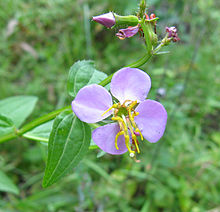
rhexia virginica

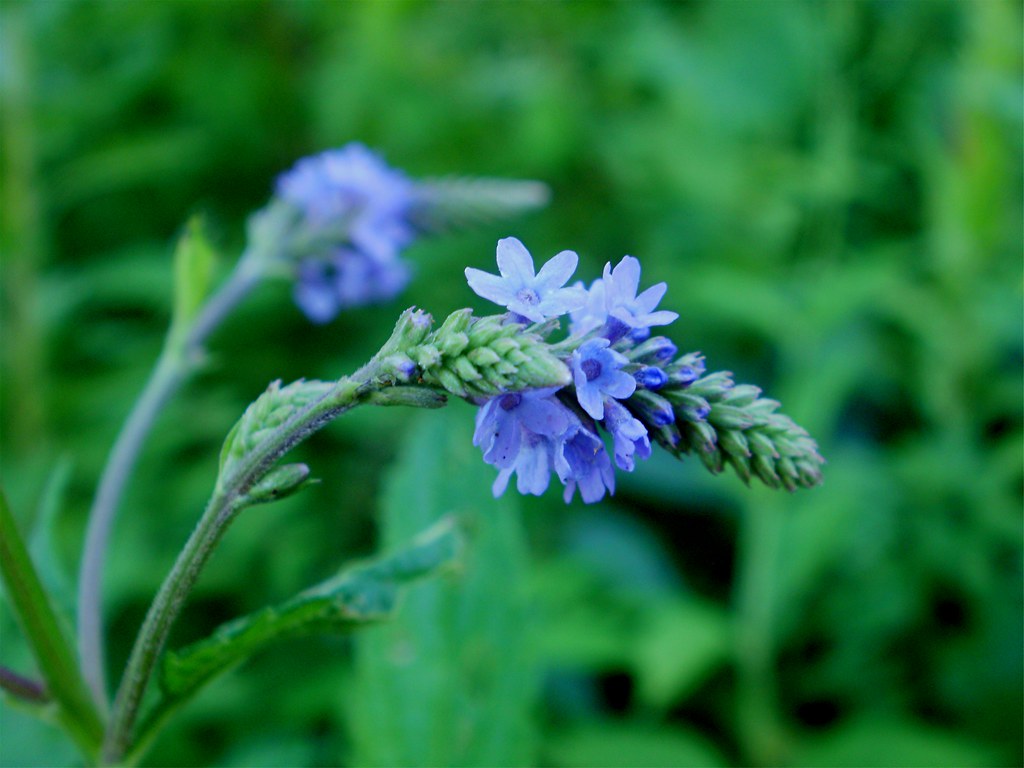
Blue vervain out some days. 

blue vervain

Bathing yesterday in the Assabet, I saw that many breams, apparently an old one with her young of various sizes, followed my steps and found their food in the water which I had muddied. The old one pulled lustily at a Potamogeton hybridus, drawing it off one side horizontally with her mouth full, and then swallowed what she tore off.

The young pouts were two and a half inches long in Flint's Pond the 17th.

H. D. Thoreau, Journal, July 23, 1853


I cannot find a single crotalaria pod there this year. See October 3, 1858 ("It is interesting to consider how that crotalaria spreads itself, sure to find out the suitable soil. One year I find it on the Great Fields and think it rare; the next I find it in a new and unexpected place. It flits about like a flock of sparrows, from field to field.")

Water plantain, abundant. See July 19, 1853 ("The alisma will open to-morrow or next day")

About the water further north the elodea is very common.  See July 22, 1853 ("The elodea out."): see also June 13, 1858 ("One of the prevailing front-rank plants [in Ledump Swmp], standing in the sphagnum and water, is the elodea. "); July 31, 1856 ("Elodea two and a half feet high, how long? The flowers at 3 p. m. nearly shut, cloudy as it is. Yet the next day, later, I saw some open, I think"); August 11, 1858 ("Saw the elodea (not long) . . . at Beck Stow’s")


The rhexia is seen afar on the islets.
See July 18, 1852 ("The petals of the rhexia have a beautiful clear purple with a violet tinge."); August 1, 1856 (" They make a splendid show, these brilliant rose-colored patches . .  Yet few ever see them in this perfection, unless the haymaker who levels them, or the birds that fly over the meadow. Far in the broad wet meadows, on the hummocks and ridges, these bright beds of rhexia turn their faces to the heavens, seen only by the bitterns and other meadow birds that fly over. We, dwelling and walking on the dry upland, do not suspect their existence..") See also   A Book of the Seasons, by Henry Thoreau, Rhexia Virginica (meadow-beauty)

Blue vervain. See August 6, 1852 ("Blue vervain is now very attractive to me, and then there is that interesting progressive history in its rising ring of blossoms. It has a story.")

An old bream with her young of various sizes, followed my steps and found their food in the water. See November 30, 1858 ("The bream, appreciated, floats in the pond as the centre of the system, another image of God. Its life no man can explain more than he can his own.")

The young pouts were two and a half inches long. 
See July 15, 1856 ("wading into the shallow entrance of the meadow, I saw a school of a thousand little pouts about three quarters of an inch long")

July 23. See A Book of the Seasons, by Henry Thoreau, July 23

A Book of the Seasons, by Henry Thoreau
"A book, each page written in its own season,
out-of-doors, in its own locality.” 
~edited, assembled and rewritten by zphx © 2009-2021

Wednesday, July 22, 2020

So many men in the fields haying now. Yellow butterflies in the road.


July 22.

P. M. – To Annursnack.

The Chenopodium hybridum (?); at least its leaves are dark-green, rhomboidal, and heart-shaped.

The orchis and spikenard at Azalea Brook are not yet open.

The early roses are now about done, — the sweet briar quite, I think.

I see sometimes houstonias still.

The elodea out.

Boehmeria not yet.

On one account, at least, I enjoy walking in the fields less at this season than at any other; there are so many men in the fields haying now.

Observed, on the wild basil on Annursnack, small reddish butterflies which looked like a part of the plant. It has a singularly soft, velvety leaf.

Smooth sumach berries crimson there.

There is a kind of low blackberry which does not bear large fruit but very dense clusters, by wall-sides, shaded by the vine or other plants often, of clammy and strong-tasted berries.

Yellow butterflies in the road.

I find the Campanula Americana of the West naturalized in our garden.

Also a silene (?) without visibly viscid stem and with swollen joints; apparently the snapdragon catchfly otherwise. Leaves opposite, sessile, lanceolate.

H. D. Thoreau, Journal, July 22, 1853


There are so many men in the fields haying now.
Compare July 22, 1854 ("The hottest night, — the last. It was almost impossible to pursue any work out-of- doors yesterday. There were but few men to be seen out.") 

On the wild basil . . . small reddish butterflies which looked like a part of the plant. See July 22, 1852 ("Tansy is now conspicuous by the roadsides, covered with small red butterflies"): See also A Book of the Seasons, by Henry Thoreau, The Small Red Butterfly

The orchis and spikenard at Azalea Brook are not yet open. 
See July 12, 1853 ("Spikenard, not quite yet.The green-flowered lanceolate-leafed orchis at Azalea Brook will soon flower.") The locally rare Spikenard (Aralia racemosa) that Thoreau saw near Azalea brook still persisted in 2007.~ Place Names of Henry David Thoreau in Concord, Massachusetts(and in Lincoln, Massachusetts) & Other Botanical Sites in Concord compiled by Ray Angelo./ See also May 31, 1853 ("I am going in search of the Azalea nudiflora")

Yellow butterflies in the road. See July 14, 1852 ("See to-day for the first time this season fleets of yellow butterflies in compact assembly in the road”); July 16, 1851 ("I see the yellow butterflies now gathered in fleets in the road, and on the flowers of the milkweed");   July 19, 1856 ("Fleets of yellow butterflies on road."); July 26, 1854 ("Today I see in various parts of the town the yellow butterflies in fleets in the road, on bare damp sand, twenty or more collected within a diameter of five or six inches in many places."); September 3, 1854 ("Even at this season I see some fleets of yellow butterflies in the damp road after the rain, as earlier."). See also A Book of the Seasons, by Henry Thoreau, Yellow Butterflies

July 22. See A Book of the Seasons, by Henry Thoreau, July 22


A Book of the Seasons, by Henry Thoreau
"A book, each page written in its own season,
out-of-doors, in its own locality."
~edited, assembled and rewritten by zphx © 2009-2024

Friday, July 26, 2019

Apple trees, square and round, in the northwest landscape.

July 26. 

P. M. — To Great Meadows.

July 26, 2019

I see in Clark's (?) land, behind Garfield's, a thick growth of white birches, apparently three years old, blown from the wood on the west and southwest.

Looking from Peter's, the meadows are somewhat glaucous, with a reddish border, or bank, by the river, where the red-top and Agrostis scabra grow, and a greener stream where the pipes are, in the lowest part, by the Holt, and in some places yellowish-green ferns and now brown-topped wool-grass. 

There is much of what I call Juncus scirpoides now in its prime in the wetter parts, as also the Eleocharis palustris, long done, and Rhyncospora alba lately begun. Also buck-bean by itself in very wet places which have lost their crust. 

Elodea, how long? 

Now observe the darker shades, and especially the apple trees, square and round, in the northwest landscape. 

Dogdayish. 

Methinks the hardhack leaves always stand up, for now they do, and have as soon as they blossomed at least.

July 26, 2019

H. D. Thoreau, Journal, July 26, 1859

I see in Clark's land, behind Garfield's, a thick growth of white birches, apparently three years old, blown from the wood on the west and southwest. See January 7, 1854 ("The bird-shaped scales of the white birch are blown more than twenty rods from the trees"); January 7, 1856 ("I see birch scales (bird-like) on the snow on the river more than twenty rods south of the nearest and only birch, and trace them north to it”);  March 25, 1858 ("Going across A. Clark's field behind Garfield’s, I see many fox-colored sparrows flitting past in a straggling manner into the birch and pitch pine woods on the left"); November 8, 1860 ("Also a wet and brushy meadow some forty rods in front of Garfield's is being rapidly filled with white pines whose seeds must have been blown  [fifty rods].").

July 26. See A Book of the Seasons, by Henry Thoreau, July 26

A Book of the Seasons, by Henry Thoreau
"A book, each page written in its own season,
out-of-doors, in its own locality."
~edited, assembled and rewritten by zphx © 2009-2021

Wednesday, June 13, 2018

A song sparrow's nest in a little spruce

June 13. 

Louring all day. 

P. M. – To Ledum Swamp. 

Lambkill, maybe one day. 

Strawberries. 

In the great apple tree front of the Miles house I hear young pigeon woodpeckers. 

The ledum is apparently past prime. 

The Kalmia glauca and the Andromeda Polifolia are done, the kalmia just done. 

The ledum has grown three or four inches (as well as the andromeda). It has a rather agreeable fragrance, between turpentine and strawberries. It is rather strong and penetrating, and some times reminds me of the peculiar scent of a bee. The young leaves, bruised and touched to the nose, even make it smart.

It is the young and expanding ledum leaves which are so fragrant. There is a yellow fungus common on its leaves, and a black one on the andromeda. 

The Vaccinium Oxycoccus grows here and is abundantly out; some days certainly. 

I hear and see the parti-colored warbler, blue yellow-backed, here on the spruce trees. It probably breeds here. 

Also, within three feet of the edge of the pond-hole, where I can hardly stand in india-rubber shoes without the water flowing over them, a large ant-hill swarming with ants, – though not on the surface because of the mizzling rain. 

One of the prevailing front-rank plants here, standing in the sphagnum and water, is the elodea. 

I see a song sparrow's nest here in a little spruce just by the mouth of the ditch. It rests on the thick branches fifteen inches from the ground, firmly made of coarse sedge without, lined with finer, and then a little hair, small within, — a very thick, firm, and portable nest, an inverted cone; — four eggs. They build them in a peculiar manner in these sphagnous swamps, elevated apparently on account of water and of different materials. Some of the eggs have quite a blue ground. 

Go to Conantum end. 

The Rubus frondosus will not bloom apparently for a day or two, though the villosus is apparently in prime there. 

I hear the peculiar notes of young bluebirds that have flown. 

Arenaria lateriflora, how long? 

The Scheuchzeria palustris, now in flower and going to seed, grows at Ledum Pool, as at Gowing's Swamp. 

See now in meadows, for the most part going to seed, Carex scoparia, with its string of oval beads; and C. lupulina, with its inflated perigynia; also what I take to be C. stipata, with a dense, coarse, somewhat sharp triangular mass of spikelets; also C. stellulata, with a string of little star-like burs. The delicate, pendulous, slender-peduncled C. debilis.

Catbirds hatched.

H. D. Thoreau, Journal, June 13, 1858

Lambkill, maybe one day. See June 9, 1855 ("Lambkill out."); June 10, 1855 ("The Kalmia glauca is done before the lambkill is begun here"); June 13, 1854 ("How beautiful the solid cylinders of the lamb-kill now just before sunset, — small ten-sided, rosy-crimson basins, about two inches above the recurved, drooping dry capsules of last year");


In the great apple tree front of the Miles house I hear young pigeon woodpeckers. See May 17, 1858 ("Measured the large apple tree in front of the Charles Miles house. It is nine feet and ten inches in circumference ");  June 13, 1855 ("C. finds a pigeon woodpecker’s nest in an apple tree, five of those pearly eggs, about six feet from the ground."); June 10, 1856 ("In a hollow apple tree, hole eighteen inches deep, young pigeon woodpeckers, large and well feathered. . . .")

A song sparrow's nest here in a little spruce just by the mouth of the ditch. See  April 30, 1858 ("I find a Fringilla melodia nest with five eggs. Part, at least, must have been laid before the snow of the 27th, but it is perfectly sheltered under the shelving turf and grass on the brink of a ditch."); June 14, 1855 ("A song sparrow’s nest in ditch bank under Clamshell, of coarse grass lined with fine, and five eggs nearly hatched and a peculiar dark end to them."); July 12, 1857 ("A song sparrow's nest in a small clump of alder, two feet from ground! Three or four eggs.")

See Carex now in meadows. See June 11, 1855 ("Carex cephalophora (?) on Heywood’s Peak. That fine, dry, wiry wild grass in hollows in woods and sprout-lands, never mown, is apparently the C. Pennsylvanica, or early sedge. ")

I hear the peculiar notes of young bluebirds that have flown. See. June 13, 1852 (" I hear the feeble plaintive note of young bluebirds, just trying their wings or getting used to them")

June 13. See A Book of the Seasons,  by Henry Thoreau, June 13

A Book of the Seasons,  by Henry Thoreau
"A book, each page written in its own season,
out-of-doors, in its own locality.”
~edited, assembled and rewritten by zphx © 2009-2021

Popular Posts Last 30 Days.

The week ahead in Henry’s journal

The week ahead in Henry’s journal
A journal, a book that shall contain a record of all your joy.
"A stone fruit. Each one yields me a thought." ~ H. D. Thoreau, March 28, 1859


I sit on this rock
wrestling with the melody
that possesses me.