Showing posts with label Ministerial Swamp. Show all posts

Saturday, January 27, 2024

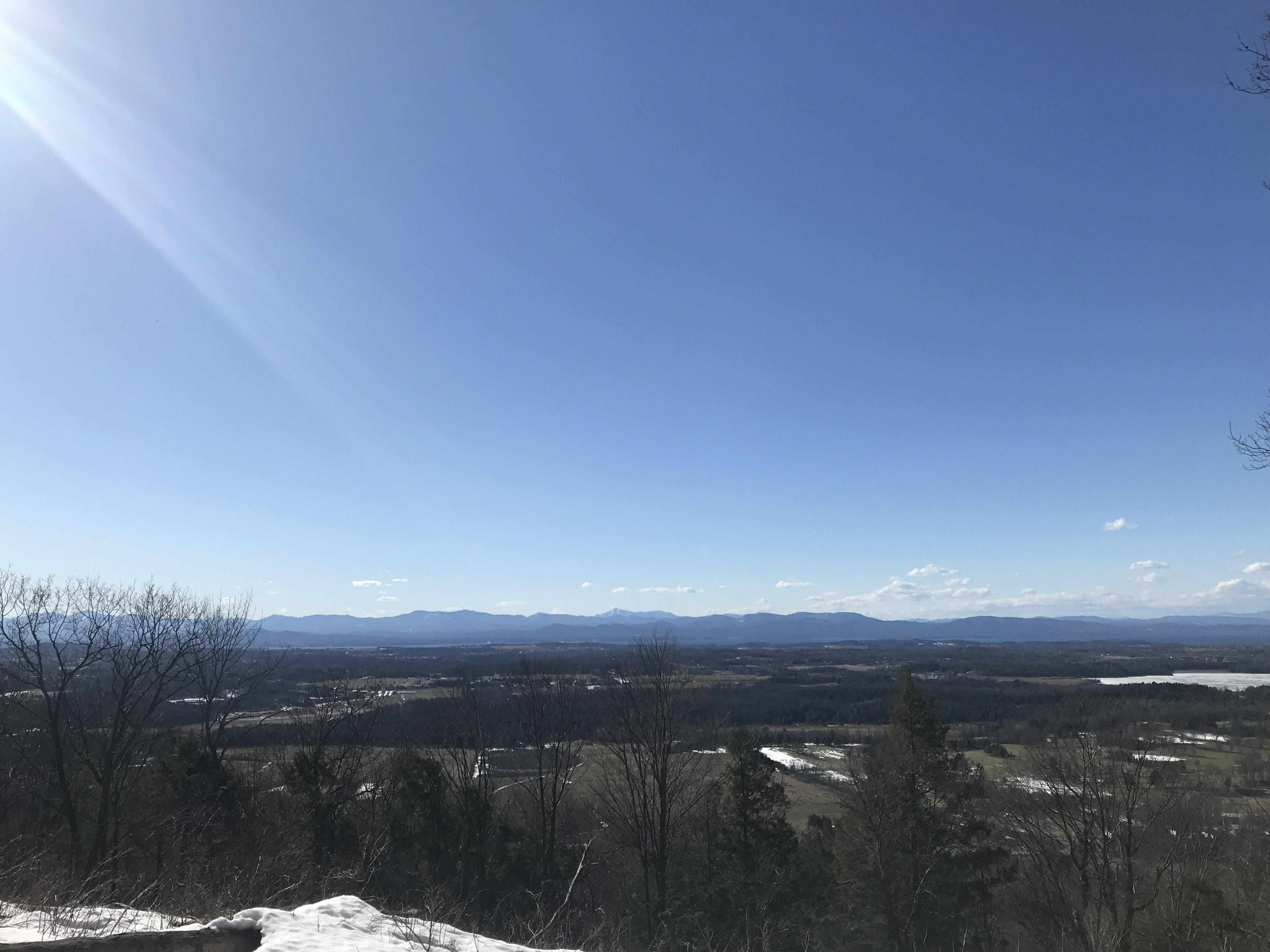
Mill road south of Ministerial Swamp, 3 P. M. the cellar-holes are more numerous than the houses

January 27.

As I stand under the hill beyond J. Hosmer's and look over the plains westward toward Acton and see the farmhouses nearly half a mile apart, few and solitary, in these great fields between these stretching woods, out of the world, where the children have to go far to school;

  •  the still, stagnant, heart-eating, life-everlasting, and gone-to-seed country, so far from the postoffice where the weekly paper comes, wherein the newmarried wife cannot live for loneliness, and the young man has to depend upon his horse for society; 
  • see young J. Hosmer's house, whither he returns with his wife in despair after living in the city, –– I  standing in Tarbell's road, which he alone cannot break out, –– 
  • the world in winter for most walkers reduced to a sled track winding far through the drifts, all springs sealed up and no digressions; 
  • where the old man thinks he may possibly afford to rust it out, not having long to live, but the young man pines to get nearer the post-office and the Lyceum, is restless and resolves to go to California, because the depot is a mile off (he hears the rattle of the cars at a distance and thinks the world is going by and leaving him); 
  • where rabbits and partridges multiply, and muskrats are more numerous than ever, and none of the farmer's sons are willing to be farmers, and the apple trees are decayed, and the cellar-holes are more numerous than the houses, and the rails are covered with lichens, and the old maids wish to sell out and move into the village, and have waited twenty years in vain for this purpose and never finished but one room in the house, never plastered nor painted, inside or out, lands which the Indian was long since dispossessed [of], and now the farms are run out, and what were forests are grain-fields, what were grain-fields, pastures;
  •  dwellings which only those Arnolds of the wilderness, those coureurs de bois, the baker and the butcher visit, to which at least the latter penetrates for the annual calf, –– and as lie returns the cow lows after; –– whither the villager never penetrates, but in huckleberry time, perchance, and if he does not, who does?
  •  where some men's breaths smell of rum, having smuggled in a jugful to alleviate their misery and solitude; 
  • where the owls give a regular serenade; –– 

I say, standing there and seeing these things, I cannot realize that this is that hopeful young America which is famous throughout the world for its activity and enterprise, and this is the most thickly settled and Yankee part of it. What must be the condition of the old world! The sphagnum must by this time have concealed it from the eye. 

In new countries men are scattered broadcast; they do not wait for roads to place their houses on, but roads seek out the houses, and each man is a prince in his principality and depends on himself.  Perchance when the virgin soil is exhausted, a reaction takes place, and men concentrate in villages again, become social and commercial, and leave the steady and moderate few to work the country's mines.

H. D. Thoreau, Journal, January 27, 1852

The cellar-holes are more numerous than the houses.
See November 30, 1851 ("My eye rested with pleasure on the white pines."); May 18, 1857 ("There is a very grand and picturesque old yellow birch in the old cellar northwest the yellow birch swamp. . . . In woods close behind Easterbrook's place. . . a wild apple tree in the old cellar there . . .Call it Malus cellaris, that grows in an old cellar-hole."); November 6, 1857 ("As for the yellow birch cellar-hole, Ephraim Brown told him that old Henry Flint (an ancestor of Clark's wife) dug it, and erected the frame of a house there, but never finished it, selling out, going to live by the river. It was never finished.")


January 27. 
 See 
A Book of the Seasons, by Henry Thoreau,  January 27

\

A Book of the Seasons, by Henry Thoreau, The cellar-holes are more numerous than the houses

A Book of the Seasons
,  by Henry Thoreau 
"A book, each page written in its own season,
out-of-doors, in its own locality.”
~edited, assembled and rewritten by zphx © 2009-2025

Wednesday, November 24, 2021

The fauna and flora of Ministerial Swamp.


November 24. 

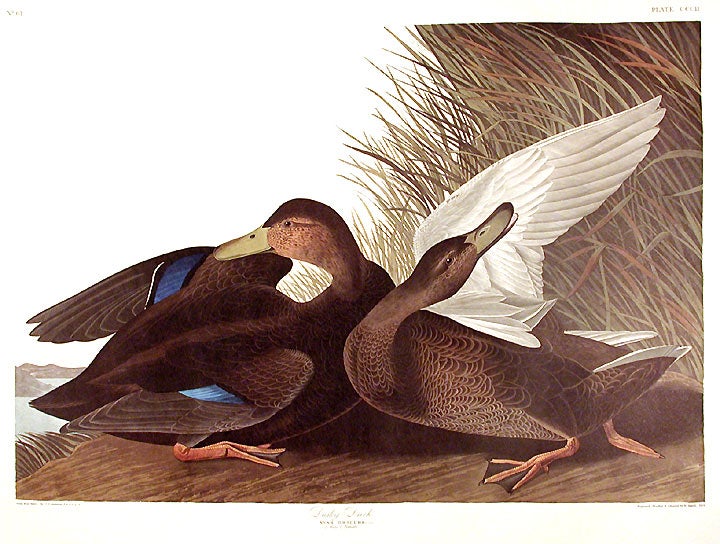
Setting stakes in the swamp (Ministerial). Saw seven black ducks fly out of the peat-hole.

J.J. Audubon (The flight of this Duck, which, in as far as I know, is peculiar to America, is powerful, rapid, and as sustained as that of the Mallard. While travelling by day they may be distinguished from that species by the whiteness of their lower wing-coverts, which form a strong contrast to the deep tints of the rest of their plumage )

Saw there also a tortoise still stirring, the painted tortoise, I believe.

Found on the south side of the swamp the Lygodium palmatum, which Bigelow calls the only climbing fern in our latitude, an evergreen, called (with others) snake tongue, as I find in Loudon.

The Irishman who helped me says, when I ask why his countrymen do not learn trades, — do something but the plainest and hardest work, — they are too old to learn trades when they come here.

H. D. Thoreau, Journal, November 24, 1851


Setting stakes in the swamp (Ministerial). See November 14, 1851 ("Surveying the Ministerial Lot in the southwestern part of the town."); November 18,1851 ("Surveying these days the Ministerial Lot . . .I hear the hooting of an owl . . . Here hawks also circle by day, and chickadees are heard, and rabbits and partridges abound.");  December 21, 1851 (“As I stand by the edge of the swamp (Ministerial), a heavy-winged hawk flies home to it at sundown, just over my head, in silence.”); December 13, 1857 ("I go this afternoon thinking I may find the stakes set for auction lots on the Ministerial Lot in December, '51") See also  July 7, 1854 ("See a pretty large hawk. . . circling over the Ministerial Swamp.") 

Saw seven black ducks fly out of the peat-hole. See September 24, 1855 ("See coming from the south in loose array some twenty apparently black ducks, . . .At first they were in form like a flock of blackbirds, then for a moment assumed the outline of a fluctuating harrow. ); September 29, 1851 ("Scared up three black ducks, which rose with a great noise of their wings, striking the water. "); September 30, 1853 ("Saw a large flock of black ducks flying northwest in the form of a harrow."); November 3, 1852 ("At Andromeda Pond, started nine black (?) ducks just at sunset, as usual they circling far round to look at me."); November 11, 1851 ("In the withered grass at Nut Meadow Brook, two black ducks, . . .rise black between me and the sun, but, when they have circled round to the east, show some silvery sheen on the under side of their wings. "); March 12, 1859 ("See two ducks flying over Ministerial Swamp.") See also  A Book of the Seasons, by Henry Thoreau, the American Black Duck)

Saw a tortoise still stirring, the painted tortoise, I believe. See November 14, 1855 ("A painted tortoise swimming under water and a wood tortoise out on the bank."); November 27, 1856 ("Take a turn down the river. A painted tortoise sinking to the bottom, and apparently tree sparrows along the shore"); December 2, 1857 ("Measuring Little Goose Pond, I observed two painted tortoises moving about under the thin transparent ice"); December 3, 1852 (" In a ditch near by, under ice half an inch thick, I saw a painted tortoise moving about.") See also A Book of the Seasons, by Henry Thoreau, the Painted Turtle (Emys picta)

Found on the south side of the swamp the Lygodium palmatum See November 30, 1851 ("The Lygodium palmatum is quite abundant on that side of the swamp, twining round the goldenrods, etc., etc"); October 2, 1859 (“The climbing fern is perfectly fresh, — and apparently therefore an evergreen, — the more easily found amid the withered cinnamon and flowering ferns.”); May 1, 1859 ("The climbing fern is persistent, i.e. retains its greenness still, though now partly brown and withered.") See also November 24, 1852 ("At this time last year the andromeda in the Ministerial Swamp was red . Now it has not turned from brown."): November 20, 1857 ("I enter the Ministerial Swamp at the road below Tarbell’s. The water andromeda leaves are brown now, except where protected by trees. In some places where many of the bright-crimson shoots of high blueberry are seen together, they have a very pretty effect");  April 29, 1857 ("Sweet-fern at entrance of Ministerial Swamp.");  May 19, 1860 (“At the Ministerial Swamp I see a white lady's-slipper almost out, fully grown, with red ones.”); August 28, 1860 ("The Lycopodium inundatum common by Harrington's mud-hole, Ministerial Swamp.")  

Tuesday, March 12, 2019

This kind of light, the air being full of rain and all vegetation dripping with it, brings out the browns wonderfully.

March 12

 Saturday. P. M. — Walk in rain to Ministerial Swamp. 

Going up the railroad in this rain, with a south wind, I see a pretty thick low fog extending across the rail road only against Dennis's Swamp. There being much more ice and snow within the swamp, the vapor is condensed and is blown northward over the railroad. I see these local fogs with always the same origin, i. e., large masses of snow or ice, in swamps or woods, perhaps the north sides of hills, in several places afterward. The air is warm. 

As often as we came to a particularly icy or snowy place, as Harrington's road in woods, we found ourselves in a fog. It is a regular spring rain, such as I remember walking in, — windy but warm. It alternately rains hard and then holds up a little. A similar alternation we see in the waves of water and all undulating surfaces, — in snow and sand and the clouds (the mackerel sky). Now you walk in a comparative lull, anticipating fair weather, with but a slight drizzling, and anon the wind blows and the rain drives down harder than ever. In one of these lulls, as I passed the Joe Hosmer (rough-cast) house, I thought I never saw any bank so handsome as the russet hillside behind it. 

Brown Season
March 12, 2021

It is a very barren, exhausted soil, where the cladonia lichens abound, and the lower side is a flowing sand, but this russet grass with its weeds, being saturated with moisture, was in this light the richest brown, methought, that I ever saw. 

There was the pale brown of the grass, red browns of some weeds (sarothra and pinweed probably), dark browns of huckleberry and sweet-fern stems, and the very visible green of the cladonias thirty rods off, and the rich brown fringes where the broken sod hung over the edge of the sand-bank. 

I did not see the browns of withered vegetation so rich last fall, and methinks these terrestrial lichens were never more fair and prominent. On some knolls these vivid and rampant lichens as it were dwarf the oaks. 

A peculiar and unaccountable light seemed to fall on that bank or hillside, though it was thick storm all around. A sort of Newfoundland sun seemed to be shining on it. It was such a light that you looked around for the sun that might be shining on it. 

Both the common largest and the very smallest hypericums (Sarothra) and the pinweeds were very rich browns at a little distance, coloring whole fields, and also withered and fallen ferns, reeking wet. 

It was a prospect to excite a reindeer.

These tints of brown were as softly and richly fair and sufficing as the most brilliant autumnal tints. In fair and dry weather these spots may be common place, but now they are worthy to tempt the painter's brush. The picture should be the side of a barren lichen-clad hill with a flowing sand-bank beneath, a few blackish huckleberry bushes here and there, and bright white patches of snow here and there in the ravines, the hill running east and west and seen through the storm from a point twenty or thirty rods south. 

March 12, 2016

This kind of light, the air being full of rain and all vegetation dripping with it, brings out the browns wonderfully. 

I notice now particularly the sallows by the railroad, full of dark cones, as a fruit. The broad radical leaves of (apparently) water dock are very fresh and conspicuous. 

See two ducks flying over Ministerial Swamp. 

In one place in the meadow southeast of Tarbell's, I find on the ice, about a couple of holes an inch across where a little stubble shows itself, a great many small ants dead, — say a thousand. They are strewn about the holes for six or eight inches, and are collected in a dense heap about the base of the stubble. I take up a mass of them on my knife, each one entire, but now, of course, all wet and adhering together. It looks as if they had been tempted out by the warmth of the sun and had been frozen or drowned; or is it possible that they were killed by the frost last fall and now washed up through the ice? I think, from their position around the base of the stubble in that little hole in the ice, that they came out of the earth and clustered there since the ice melted to that extent. 

There are many other insects and worms and caterpillars (and especially spiders, dead) on the ice, there as well as else where. 

I perceive that a freshet which washes the earth bare in the winter and causes a great flow of water over it in that state — when it is not soaked up — must destroy a great many insects and worms. I find a great many that appear to have been drowned rather than frozen. May not this have tempted the bluebirds on early this year ?

H. D. Thoreau, Journal, March 12, 1859

See two ducks flying over Ministerial Swamp. See  March 12, 1855 ("Two ducks in river, good size, white beneath with black heads, as they go over."); March 16, 1855 (“[S]care up two large ducks just above the bridge. . . . I think it the goosander or sheldrake.”). See also A Book of the Seasons, by Henry Thoreau, Signs of the Spring, Ducks Afar, Sailing on the Meadow

This kind of light, the air being full of rain and all vegetation dripping with it, brings out the browns wonderfully. See March 12, 1854 ("Memorable is the warm light of the spring sun on russet fields in the morning.") See also March 5, 1855 ("This blue haze, and the russet earth seen through it, remind me that a new season has come"); March 26, 1860 ("The brown season extends from about the 6th of March ordinarily into April. ") See also A Book of the Seasons, by Henry Thoreau, the Colors of March-- Brown Season

Sunday, November 25, 2018

The sunny south side of this swamp.


November 25. 


P. M. —To Ministerial Swamp. 

I go through the Dennis Swamp by railroad. See a few high blueberry buds which have fairly started, expanded into small red leaves, apparently within a few weeks. 

The Rubus hispidus is now very common and conspicuous amid the withered grass and leaves of the swamp, with its green or reddened leaves; also the gold-thread.

The prinos berries on their light-brown twigs are quite abundant and handsome. 

While most keep close to their parlor fires this cold and blustering Thanksgiving afternoon, and think with compassion of those who are abroad, I find the sunny south side of this swamp as warm as their parlors, and warmer to my spirit. Aye, there is a serenity and warmth here which the parlor does not suggest, enhanced by the sound of the wind roaring on the northwest side of the swamp a dozen or so rods off. What a wholesome and inspiring warmth is this! 

Bigtooth aspen, November 25, 2018

I see aspen (tremuliformis) leaves, which have long since fallen, turned black, which also shows the relation of this tree to the willow, many species of which also turn black. 

Pass Tarbell’s behind. The farmer, now on the downhill of life, at length gets his new barn and barn cellar built, far away in some unfrequented vale. This for twoscore years he has struggled for. This is his poem done at last, — to get the means to dig that cavity and rear those timbers aloft. How many millions have done just like him!—or failed to do it! There is so little originality, and just so little, and just as much, fate, so to call it, in literature. With steady struggle, with alternate failure and success, he at length gets a barn cellar completed, and then a tomb. You would say that there was a tariff on thinking and originality.

I pass through the Ministerial Swamp and ascend the steep hill on the south cut off last winter. In the barren poplar hollow just north of the old mountain cranberry is another, the largest, patch of it (i. e. bear-berry) that I remember in Concord. 

How often I see these aspens standing dead in barren, perhaps frosty, valleys in the woods! Most shrub oaks there have lost their leaves (Quercus ilicifolia), which, very fair and perfect, cover the ground. 

You are surprised, late these afternoons, a half an hour perhaps before sunset, after walking in the shade or on looking round from a height, to see the singularly bright yellow light of the sun reflected from pines, especially pitch pines, or the withered oak leaves, through the clear, cold air, the wind, it may be, blowing strong from the northwest. Sunlight in summer falling on green woods is not, methinks, such a noticeable phenomenon. I stand on that high hill south of the swamp cut off by C. (?) Wheeler last winter, and when I look round northeast I am greatly surprised by the very brilliant sunlight of which I speak, surpassing the glare of any noontide, it seems to me.

November 25, 2018


H.. D. Thoreau, Journal, November 25, 1858

See a few high blueberry buds which have fairly started, expanded into small red leaves. See November 6, 1853 (“The remarkable roundish, plump red buds of the high blueberry.”); November 23, 1857 (“You distinguish it by its gray spreading mass; its light-gray bark, rather roughened; its thickish shoots, often crimson; and its plump, roundish red buds.”)


The Rubus hispidus is now very common and conspicuous amid the withered grass and leaves of the swamp, with its green or reddened leaves. See February 18, 1858 (“The Rubus hispidus (sempervirens of Bigelow) is truly evergreen.”);  August 4, 1854 (“The swamp blackberry on high land, ripe a day or two.”); August 6, 1856 (“Rubus hispidus ripe.”); August 15, 1852 ("The swamp blackberry begins.”); August 23, 1856 (“ At the Lincoln bound hollow, Walden, there is a dense bed of the Rubus hispidus, matting the ground seven or eight inches deep, and full of the small black fruit, now in its prime. It is especially abundant where the vines lie over a stump. Has a peculiar, hardly agreeable acid.”); November 16, 1858 (“Rubus hispidus leaves last through the winter, turning reddish”); November 20, 1858 (“the Rubus hispidus leaves last all winter like an evergreen”)

 Rubus hispidus is a small, herb-like shrub up to 8 inches tall. with the common names swamp dewberry, bristly dewberry, bristly groundberry, groundberry, hispid swamp blackberry or running swamp blackberry. It is a species of dewberry in the rose family, closely related to the blackberries.The twigs are red and have bristles. Flowers in small clumps, each with five white rounded petals. The berries, dark purple, almost black, are rather bitter for culinary use, and so this plant is generally not cultivated. ~wkipedia

I find the sunny south side of this swamp as warm as their parlors, and warmer to my spirit. See November 25, 1850 ("Tthere was a finer and purer warmth than in summer; a wholesome, intellectual warmth, in which the body was warmed by the mind's contentment. The warmth was hardly sensuous, but rather the satisfaction of existence."); see also January 7, 1857 (“I come out to these solitudes, where the problem of existence is simplified. ”)

Tuesday, November 20, 2018

The glory of November is in its silvery, sparkling lights.

November 20

P. M. - To Ministerial Swamp. 

I have seen more gray squirrels of late (as well as musquash); I think not merely because the trees are bare but because they are stirring about more, — nutting, etc. 

Martial Miles tells me of a snapping turtle caught in the river at Waltham, about October 1st, he thinks, which weighed fifty-five pounds (?). He saw it. There were two fighting. 

He says that a marsh hawk had his nest in his meadow several years, and though he shot the female three times, the male with but little delay returned with a new mate. He often watched these birds, and saw that the female could tell when the male was coming a long way off. He thought that he fed her and the young all together (?). She would utter a scream when she perceived him, and, rising into the_air (before or after the scream ?), she turned over with her talons uppermost, while he passed some three rods above, and caught without fail the prey which he let drop, and then carried it to her young. He had seen her do this many times, and always without failing. 

The common milkweed (Asclepias Cornuti) and some thistles still discounting. 

I go across the great Tony Wheeler pasture. It is a cool but pleasant November afternoon. 

The glory of November is in its silvery, sparkling lights. I think it is peculiar among the months for the amount [of] sparkling white light reflected from a myriad of surfaces. The air is so clear, and there are so many bare, polished, bleached or hoary surfaces to reflect the light. Few things are more exhilarating, if it is only moderately cold, than to walk over bare pastures and see the abundant sheeny light like a universal halo, reflected from the russet and bleached earth. The earth shines perhaps more than in spring, for the reflecting surfaces are less dimmed now. It is not a red but a white light. 

In the woods and about swamps, as Ministerial, also, there are several kinds of twigs, this year’s shoots of shrubs, which have a slight down or hairiness, hardly perceptible in ordinary lights though held in the hand, but which, seen toward the sun, reflect a cheering silvery light. Such are not only the sweet-fern, but the hazel in a less degree, alder twigs, and even the short huckleberry twigs, also lespedeza stems. It is as if they were covered with a myriad fine spiculae which reflect a dazzling white light, exceedingly warming to the spirits and imagination. This gives a character of snug warmth and cheerfulness to the swamp, as if it were a place where the sun consorted with rabbits and partridges. Each individual hair on every such shoot above the swamp is bathed in glowing sunlight and is directly conversant with the day god. 

The cinnamon-brown of withered pinweeds (how long?) colors whole fields. It may be put with the now paler brown'of hardhack heads and the now darker brown of the dicksonia fern by walls.

I notice this afternoon that the pasture white oaks have commonly a few leaves left on the lower limbs and also next the trunk. 

Winter rye is another conspicuous green amid the withered grass fields. 

The rubuses are particularly hardy to retain their leaves. Not only low blackberry and high blackberry leaves linger still fresh, but the Rubus hispidus leaves last all winter like an evergreen. The great round-leaved pyrola, dwarf cornel, checkerberry, and lambkill have a lake or purplish tinge on the under side at present, and these last two are red or purplish above. It is singular that a blush should suffuse the under side of the thick leaved pyrola while it is still quite green above. 

When walnut husks have fairly opened, showing the white shells within, — the trees being either quite bare or with a few withered leaves at present, — a slight jar with the foot on the limbs causes them to rattle down in a perfect shower, and on bare, grass-grown pasture ground it is very easy picking them up. 

As I returned over Conantum summit yesterday, just before sunset, and was admiring the various rich browns of the shrub oak plain across the river, which seemed to me more wholesome and remarkable, as more permanent, than their late brilliant colors, I was surprised to see a broad halo travelling with me and always opposite the sun to me, at least a quarter of a mile off and some three rods wide, on the shrub oaks. 

 
Quaker colors

The rare wholesome and permanent beauty of withered oak leaves of various hues of brown mottling a hillside, especially seen when the sun is low, — Quaker colors, sober ornaments, beauty that quite satisfies the eye. The richness and variety are the same as before, the colors different, more incorruptible and lasting. 

Sprague Of Cohasset states to the Natural History Society, September 1st, ’58, that the light under the tail of the common glow-worm “remained for 15 minutes after death.” 

Who are bad neighbors? They who suffer their neighbors’ cattle to go at large because they don’t want their ill will, -- are afraid to anger them. They are abettors of the ill-doers. 

Who are the religious? They who do not differ much from mankind generally, except that they are more conservative and timid and useless, but who in their conversation and correspondence talk about kindness of Heavenly Father. Instead of going bravely about their business, trusting God ever, they do like him who says “Good sir” to the one he fears, or whistles to the dog that is rushing at him. And because they take His name in vain so often they presume that they are better than you. Oh, their religion is a rotten squash.

H. D. Thoreau, Journal, November 20, 1858

The glory of November is in its silvery, sparkling lights reflected from a myriad of surfaces. See October 25, 1858 ("The light reflected from the parallel twigs of birches recently bare, etc., like the gleam from gossamer lines. This is another Novemberish phenomenon. Call these November Lights. Hers is a cool, silvery light.");  November 2, 1853( "We come home in the autumn twilight . . . — clear white light, which penetrates the woods”);  November 10, 1858 (""This a November phenomenon, — the silvery light reflected from a myriad of downy surfaces . . . A cool and silvery light is the prevailing one;); November 17, 1858 (“We are interested at this season by the manifold ways in which the light is reflected to us . . . “November Lights" would be a theme for me.”)November 18, 1857 ("The sunlight is a peculiarly thin and clear yellow, falling on the pale-brown bleaching herbage of the fields at this season. There is no redness in it. This is November sunlight."); November 28, 1856 ("The sunlight reflected from the many ascending twigs . . . It is a true November phenomenon.")

The common milkweed (Asclepias Cornuti) and some thistles still discounting. See  October 23, 1852 ("The milkweed (Syriaca) now rapidly discounting. The lanceolate pods having opened, the seeds spring out on the least jar, or when dried by the sun, and form a little fluctuating white silky mass or tuft, each held by the extremities of the fine threads, until a stronger puff of wind sets them free"); see also September 21, 1856 ("Asclepias Cornuti discounting."); October 19, 1856 ("The Asclepias Cornuti pods are now apparently in the midst of discounting.");  October 25, 1858 ("Near the end of the causeway, milkweed is copiously discounting.");

The rare wholesome and permanent beauty of withered oak leaves of various hues of brown mottling a hillside. . . Quaker colors.  See October 25, 1858 ("Now, too, for the different shades of brown, especially in sprout-lands. I see [three] kinds of oaks now, — the whitish brown of the white oak, the yellowish brown of the black oak, and the red or purplish brown [of the scarlet oak] (if it can be called brown at all . . . but perhaps that may be called a lighter, yellowish brown, and so distinguished from the black in color. It has more life in it now than the white and black, not withered so much. These browns are very pure and wholesome colors");   November 29, 1857 ("I am struck by the singularly wholesome colors of the withered oak leaves, especially the shrub oak,. . . clear reddish-brown (sometimes paler or yellowish brown), its whitish under sides contrasting with it in a very cheerful manner . . .Then there is the now rich, dark brown of the black oak’s large and somewhat curled leaf on sprouts, with its lighter, almost yellowish, brown under side. Then the salmonish hue of white oak leaves, with the under sides less distinctly lighter."); December 21, 1856 ("The red oak leaves look thinner and flatter, and therefore perhaps show the lobes more, than those of the black. The white oak leaves are the palest and most shrivelled, the lightest, perhaps a shade of buff, but they are of various shades, some pretty dark with a salmon tinge. The swamp white oak leaves . . .are very much like the shrub oak . . . Both remarkable for their thick, leathery, sound leaves, uninjured by insects, and their very light downy under sides. The black oak leaves are the darkest brown, with clear or deep yellowish-brown undersides . . .The scarlet oak leaves, which are very numerous still, are of a ruddy color, having much blood in their cheeks. They are all winter the reddest on the hillsides . . .The red oak leaves are a little lighter brown than the black oak, less yellowish beneath.") See also  A Book of the Seasons, by Henry Thoreau, the Colors of March-- Brown Season

Who are bad neighbors? They who suffer their neighbors’ cattle to go at large are abettors of the ill-doers. See October 12, 1858 ("This town has made a law recently against cattle going at large, and assigned a penalty of five dollars. I am troubled by an Irish neighbor’s cow and horse, and have threatened to have them put in the pound. But a lawyer tells me that these town laws are hard to put through, there are so many quibbles. He never knew the complainant to get his case if the defendant were a-mind to contend. However, the cattle were kept out several days, till a Sunday came, and then they were all in my grounds again, as I heard, but all my neighbors tell me that I cannot have them impounded on that day. Indeed, I observe that very many of my neighbors do for this reason regularly turn their cattle loose on Sundays.")

November 20. See  A Book of the Seasons,  by Henry Thoreau, November 20

The withered oak leaves 
of various hues of brown
 mottling a hillside.

A Book of the Seasons,  by Henry Thoreau
 "A book, each page written in its own season, 
out-of-doors, in its own locality."
 ~edited, assembled and rewritten by zphx ©  2009-2024

https://tinyurl.com/hdt-581120

Wednesday, March 21, 2018

The wet scent of the umbrella.

March 21. 

Warm rain, April-like, the first of the season, holding up from time to time, though always completely overcast. 

P. M. – To Ministerial Swamp via Little River. 

Standing by the mud-hole in the swamp, I hear the pleasant phebe note of the chickadee. It is, methinks, the most of a wilderness note of any yet. It is peculiarly interesting that this, which is one of our winter birds also, should have a note with which to welcome the spring. 

Standing by that pool, it is pleasant to see the dimples made on its smooth surface by the big drops, after the rain has held up a quarter of an hour. 

The skunk-cabbage at Clamshell is well out, shedding pollen. It is evident that the date of its flowering is very fluctuating, according to the condition in which the winter leaves the crust of the meadow. 

This first spring rain is very agreeable. I love to hear the pattering of the drops on my umbrella, and I love also the wet scent of the umbrella. It helps take the remaining frost out and settles the ways, but there is yet frost and ice in meadows and swamps.

H. D. Thoreau, Journal, March 21, 1858

It is peculiarly interesting that this, which is one of our winter birds also, should have a note with which to welcome the spring. See January 9, 1858 ("Some chickadees come flitting close to me, and one utters its spring note, phe-be, for which I feel under obligations to him."); See February 9, 1856 ("I hear a phoebe note from a chickadee"); February 24, 1857 ("A chickadee with its winter lisp flits over, and I think it is time to hear its phebe note, and that instant it pipes it forth. ");  March 1, 1854 ("I hear the phoebe or spring note of the chickadee"); March 1, 1856 ("I hear several times the fine-drawn phe-be note of the chickadee, which I heard only once during the winter. Singular that I should hear this on the first spring day."); March 10, 1852 ("Hear the phoebe note of the chickadee to-day for the first time. I had at first heard their day-day-day ungratefully,- ah! you but carry my thoughts back to winter, - but anon I find that they too have become spring birds; they have changed their note. Even they feel the influence of spring."):   March 11, 1854 (" Air full of birds, — bluebirds, song sparrows, chickadee (phoebe notes), and blackbirds. Bluebirds' warbling curls in elms.”); March 14, 1852 (" I see a flock of blackbirds and hear their conqueree. The ground is mostly bare now. Again I hear the chickadee's spring note.”); March 19, 1858 ("Hear the phebe note of a chickadee."); March 22, 1855 ("The jays scream. I hear the downy woodpecker’s rapid tapping and my first distinct spring note (phe-be) of the chickadee.”). See also A Book of the Seasons, by Henry Thoreau, Signs of the Spring: the spring note of the chickadee

The skunk-cabbage at Clamshell is well out, shedding pollen. The date of its flowering is very fluctuating. See February 18, 1851 (" See the skunk-cabbage in flower.”); March 2, 1859 (“Under the alders at Well Meadow I see a few skunk- cabbage spathes fairly open on the side, and these may bloom after a day or two of pleasant weather.”): March 6, 1854 ("I see the skunk- cabbage started about the spring at head of Hubbard's Close'") March 8, 1855 ("As the ice melts in the swamps I see the horn-shaped buds of the skunk-cabbage, green with a bluish bloom, standing uninjured, ready to feel the influence of the sun, - the most prepared for spring—to look at— of any plant."); March 18, 1860 (The skunk-cabbage, now generally and abundantly in bloom all along under Clamshell"); March 30, 1856 ("I am surprised to see the skunk cabbage, with its great spear-heads open and ready to blossom (i. e. shed pollen in a day or two)"); April 7, 1855 ("The skunk-cabbage open yesterday, — the earliest flower this season."). See also A Book of the Seasons, by Henry Thoreau, Signs of Spring: the Skunk Cabbage

This first spring rain is very agreeable. I love to hear the pattering of the drops on my umbrella, and I love also the wet scent of the umbrella. See April 4, 1853 ("A warm, dripping rain, heard on one's umbrella as on a snug roof, and on the leaves without, suggests comfort.")

March 21.  See A Book of the Seasons, by Henry Thoreau, March 21


This first spring rain I 
love to hear the pattering 
on my umbrella.

A Book of the Seasons, by Henry Thoreau, The wet scent of the umbrella
A Book of the Seasons, by Henry Thoreau
"A book, each page written in its own season,
out-of-doors, in its own locality."
~edited, assembled and rewritten by zphx © 2009-2024

Monday, November 20, 2017

The poet has made the best roots in his native soil of any man, and is the hardest to transplant.

November 20


November 20, 1857

High wind in the night, shaking the house, apparently from the northwest.

About 9.30 A. M., though there is very little cloud, I see a few flakes of snow, two or three only, like flocks of gossamer, straggling in a slanting direction to the ground, unnoticed by most, in a rather raw air. 

At ten there is a little more. The children in the next yard have seen it and are excited. They are searching to see if any rests on the ground. 

In books, that which is most generally interesting is what comes home to the most cherished private experience of the greatest number. It is not the book of him who has travelled the farthest over the surface of the globe, but of him who has lived the deepest and been the most at home. If an equal emotion is excited by a familiar homely phenomenon as by the Pyramids, there is no advantage in seeing the Pyramids. It is on the whole better, as it is simpler, to use the common language. We require that the reporter be very permanently planted before the facts which he observes, not a mere passer-by; hence the facts cannot be too homely. 

A man is worth most to himself and to others, whether as an observer, or poet, or neighbor, or friend, where he is most himself, most contented and at home.

There his life is the most intense and he loses the fewest moments. Familiar and surrounding objects are the best symbols and illustrations of his life. If a man who has had deep experiences should endeavor to describe them in a book of travels, it would be to use the language of a wandering tribe instead of a universal language. 

The poet has made the best roots in his native soil of any man, and is the hardest to transplant. 

The man who is often thinking that it is better to be somewhere else than where he is excommunicates himself. If a man is rich and strong anywhere, it must be on his native soil. Here I have been these forty years learning the language of these fields that I may the better express myself. If I should travel to the prairies, I should much less understand them, and my past life would serve me but ill to describe them. Many a weed here stands for more of life to me than the big trees of California would if I should go there. We only need travel enough to give our intellects an airing. 

In spite of Malthus and the rest, there will be plenty of room in this world, if every man will mind his own business. I have not heard of any planet running against another yet.

P. M. — To Ministerial Swamp. 

Some bank swallows’ nests are exposed by the caving of the bank at Clamshell. The very smallest hole is about two and a half inches wide horizontally, by barely one high. All are much wider than high (vertically). One nest, with an egg in it still, is completely exposed. The cavity at the end is shaped like a thick hoe-cake or lens, about six inches wide and two plus thick, vertically. The nest is a regular but shallow one made simply of stubble, about five inches in diameter, and three quarters of an inch deep. 

I see many pollywogs in cold pools now. 

I enter the Ministerial Swamp at the road below Tarbell’s. The water andromeda leaves are brown now, except where protected by trees. In some places where many of the bright-crimson shoots of high blueberry are seen together, they have a very pretty effect, a crimson vigor to stand above the snow. 

Where the larches stand thick with their dark boles and stems, the ground is thickly strewn with their fine and peculiarly dark brown leaves, chaff-like, i. e. darker than those of other pines, perhaps like black walnut or cherry shavings. As where other evergreens stand thick, little or nothing grows beneath. 

I see where squirrels (apparently) have eaten and stripped the spruce cones. 

I distinguished where the earth was cast out in cutting ditches through this swamp long ago, and this earth is covered and concealed with a thick growth of cup and cockscomb lichens. 

In this light-lying earth, in one place, I see where some creature some time ago has pawed out much comb of some kind of bee (probably for the honey?), making a hole as big as my head, and this torn comb lies about. 

Returning through Harrington's land, I see, me thinks, two gentlemen plowing a field, as if to try an agricultural experiment, — for, it being cold and windy, both plowman and driver have their coats on, — but when I get closer, I hear the driver speak in a peculiarly sharp and petulant manner to the plow man as they are turning the land furrow, and I know at once that they belong to those two races which are so slow to amalgamate. Thus my little idyl is disturbed. 

I see a partridge on the ground under a white oak by Tarbell's black birches, looking just like a snag.This is the second time I have seen them in such a place. Are they not after acorns? 

In the large Tommy Wheeler field, Ranunculus bulbosus in full bloom! 

I hear again the soft rippling of the Assabet under those black birches, which Tappan once remarked on. It is not so steep a fall as to be hoarse. 

The hardy tree sparrow has taken the place of the chipping and song sparrow, so much like the former that most do not know it is another. His faint lisping chip will keep our spirits up till another spring. 

I observed this afternoon how some bullocks had a little sportiveness forced upon them. They were running down a steep declivity to water, when, feeling themselves unusually impelled by gravity downward, they took the hint even as boys do, flourished round gratuitously, tossing their hind quarters into the air and shaking their heads at each other, but what increases the ludicrousness of it to me is the fact that such capers are never accompanied by a smile. Who does not believe that their step is less elastic, their movement more awkward, for their long domesticity?

H. D. Thoreau, Journal, November 20, 1857

High wind in the night, shaking the house. . . See October 17, 1857 ("Very high wind in the night, shaking the house. I feel it taking hold under the eaves, which project at the end of the house, each time with a jerk.") October 24, 1853 ("Just after dark, high southerly winds arise. . . blowing the rain against the windows and roof and shaking the house."); November 25, 1860 (“The house was shaken by wind last night, and there was a general deficiency of bedclothes.”); February 10, 1860 ("A very strong and a cold northwest wind to-day, shaking the house,. . . — consumes wood and yet we are cold, and drives the smoke down the chimney"); February 29, 1852 (“High winds last night and this morning. The house shakes, and the beds and tables rock.”); March 18, 1854 (“Never felt it shake the house so much”);  April 2, 1855 ("High winds all night, rocking the house, opening doors."); June 2, 1855 (“The wind shakes the house night and day.”)

About 9.30 A. M., I see a few flakes of snow. At ten there is a little more. The children in the next yard are searching to see if any rests on the ground. See November 8, 1853 (“Our first snow,. . . The children greet it with a shout when they come out at recess.”)

We only need travel enough to give our intellects an airing. See September 7, 1851 ("The discoveries which we make abroad are special and particular; those which we make at home are general and significant. The further off, the nearer the surface. The nearer home, the deeper."); May 6, 1854 ("It matters not where or how far you travel, — the farther commonly the worse, — but how much alive you are.");  March 11, 1856 ("Only that travelling is good which reveals to me the value of home and enables me to enjoy it better");September 21, 1856 ("I have within a week found in Concord two of the new plants I found up-country. Such is the advantage of going abroad, — to enable to detect your own plants. I detected them first abroad, because there I was looking for the strange.")

I see a partridge on the ground under a white oak by Tarbell's black birches, looking just like a snag.See January 31, 1855 ("As I skate near the shore under Lee’s Cliff, I see what I take to be some scrags or knotty stubs of a dead limb lying on the bank beneath a white oak, close by me. Yet while I look directly at them I can not but admire their close resemblance to partridges. . . .")

I hear again the soft rippling of the Assabet under those black birches . . . It is not so steep a fall as to be hoarse. April 11, 1856 ("The current of the Assabet is so much swifter, and its channel so much steeper than that of the main stream, that, while a stranger frequently cannot tell which way the latter flows by his eye, you can perceive the declination of the channel of the former within a very short distance, even between one side of a tree and another. You perceive the waters heaped on the upper side of rocks and trees, and even twigs that trail in the stream.")

Bullocks had a little sportiveness forced upon them. . flourished round gratuitously, tossing their hind quarters into the air and shaking their heads at each other. See November 21, 1850 ("I saw a herd of a dozen cows and young steers and oxen on Conantum this afternoon, running about and frisking in unwieldy sport . . . shook their heads, raised their tails, and rushed up and down the hill.")

A Book of the Seasons,  by Henry Thoreau
 "A book, each page written in its own season, 
out-of-doors, in its own locality."
 ~edited, assembled and rewritten by zphx ©  2009-2022

Monday, October 9, 2017

It has come to this, – that the lover of art is one, and the lover of nature another.

October 9

P. M. – To Dugan Desert and Ministerial Swamp.

The elms are now at the height of their change. As I look down our street, which is lined with them, now clothed in their very rich brownish-yellow dress, they remind me of yellowing sheaves of grain, as if the harvest had come to the village itself, and we might expect to find some maturity and flavor in the thoughts of the villagers at last. 

Under those light-rustling yellow piles, just ready to fall on the heads of the walker, how can any crudity or greenness of thought or act prevail? The street is a great harvest-home. It would be worth the while to set out these trees, if only for their autumnal value. 

Think of these great yellow canopies or parasols held over our heads and houses by the mile together, making the village all one and compact, an ulmarium. And then how gently and unobserved they drop their burdens and let in the sun when it is wanted, their leaves not heard when they fall on our roofs and in our streets.

I see the traveller driving into the village under its canopy of elm-tops, with his crop, as into a great granary or barn-yard. I am tempted to go thither as to a husking of thoughts, now dry and ripe and ready to be separated from their integuments, but I foresee that it will be chiefly husks and little thought, blasted pig-corn, fit only for cob-meal. 

Is there, then, indeed, no thought under this ample husk of conversation and manners? There is the sermon husk, the lecture husk, and the book husk, and are they all only good to make mats of and tread under foot? 

Looking from railroad bridge, birches are perhaps at the height of their change now; hickories are about the color of elms or a little browner; balm-of-Gileads, about as birches; many ash trees are a mere finely divided dull-reddish color; swamp white oaks are green, yellow, and brown, much less ripe than elms, not much yellowed yet. 

Under the pines by the Clamshell, that fine purple grass is now withered and faded to a very light brown which reflects the autumnal light. Patches of rabbit's clover amid the blackberry vines are now quite hoary if not silvery. I thought it a mass of Aster Tradescanti at first, but they are not so common. Many plants, like them, remind you by their color of the frosts. 

Sprout-lands, with their oaks, chestnuts, etc., etc., are now at their height of color. 

From Lupine Hill, not only the maples, etc., have acquired brighter tints at this season, but the pines, by contrast, appear to have acquired a new and more liquid green, and to some extent this is true, — where their old leaves have chiefly fallen, which is not yet generally the case, however. 

I see now that, near the river and low on the meadows, the maple stands with paled fires, burned out, thin-leaved, a salmon or faint cherry tint, ready to surrender to the first smart frost. 

It has come to this, – that the lover of art is one, and the lover of nature another, though true art is but the expression of our love of nature. It is monstrous when one cares but little about trees but much about Corinthian columns, and yet this is exceedingly common. 

Scarlet oaks have fairly begun to blaze, — especially their lower limbs, – in low places which have from green through dull crimson to dull scarlet. 

Going along the mill road, the common shrub oaks make a dull-red or salmon impression in the mass at a little distance, from which brighter scarlet oaks stand out. 

On F. Wheeler's clearing, over the swamp, many shrub oak leaves fallen, laying bare the acorns, which are browned. Many leaves already thickly strew the dry, sandy ground. 

In the swamp, some twenty-foot maples are already bare, and some white pines are as yellow as birches. The spruces appear unchanged, even close at hand, though many leaves have fallen and are falling. The Viburnum nudum in the swamp is a clear handsome crimson. The young cherry yellow, with a faint cherry tinge. The mulberry is browned and falling, though it is but slightly tinged with yellow. 

I see an Irishman digging mud at Harrington's mud-hole. He digs it out rapidly, — a hole four feet wide by eight long, — leaving a water-tight partition, eighteen or twenty inches wide, on two sides next the water. At three feet it is clear white sand, whiter than common sand-hills. Why? Why is there no stain of vegetation in it? It requires some skill to save much of the partition at last. This man first pares off the top nearly to the level of the water, then, standing on it, digs it away as the water rushes in, - though it fills it before he has got a foot, — and he thus saves about half its depth. No doubt his work is the more amusing for requiring this exercise of thought. 

Saw a jay stealing corn from a stack in a field.

H. D. Thoreau, Journal, October 9, 1857

Is there, then, indeed, no thought under this ample husk of conversation and manners? See August 7, 1854 ("How can we expect a harvest of thought who have not had a seed-time of character?”); January 30, 1854 ("It is for man the seasons and all their fruits exist. The winter was made to concentrate and harden and mature the kernel of his brain, to give tone and firmness and consistency to his thought. Then is the great harvest of the year, the harvest of thought. Now we burn with a purer flame like the stars…")

Popular Posts Last 30 Days.

The week ahead in Henry’s journal

The week ahead in Henry’s journal
A journal, a book that shall contain a record of all your joy.
"A stone fruit. Each one yields me a thought." ~ H. D. Thoreau, March 28, 1859


I sit on this rock
wrestling with the melody
that possesses me.