Showing posts with label november 14. Show all posts

Thursday, November 14, 2024

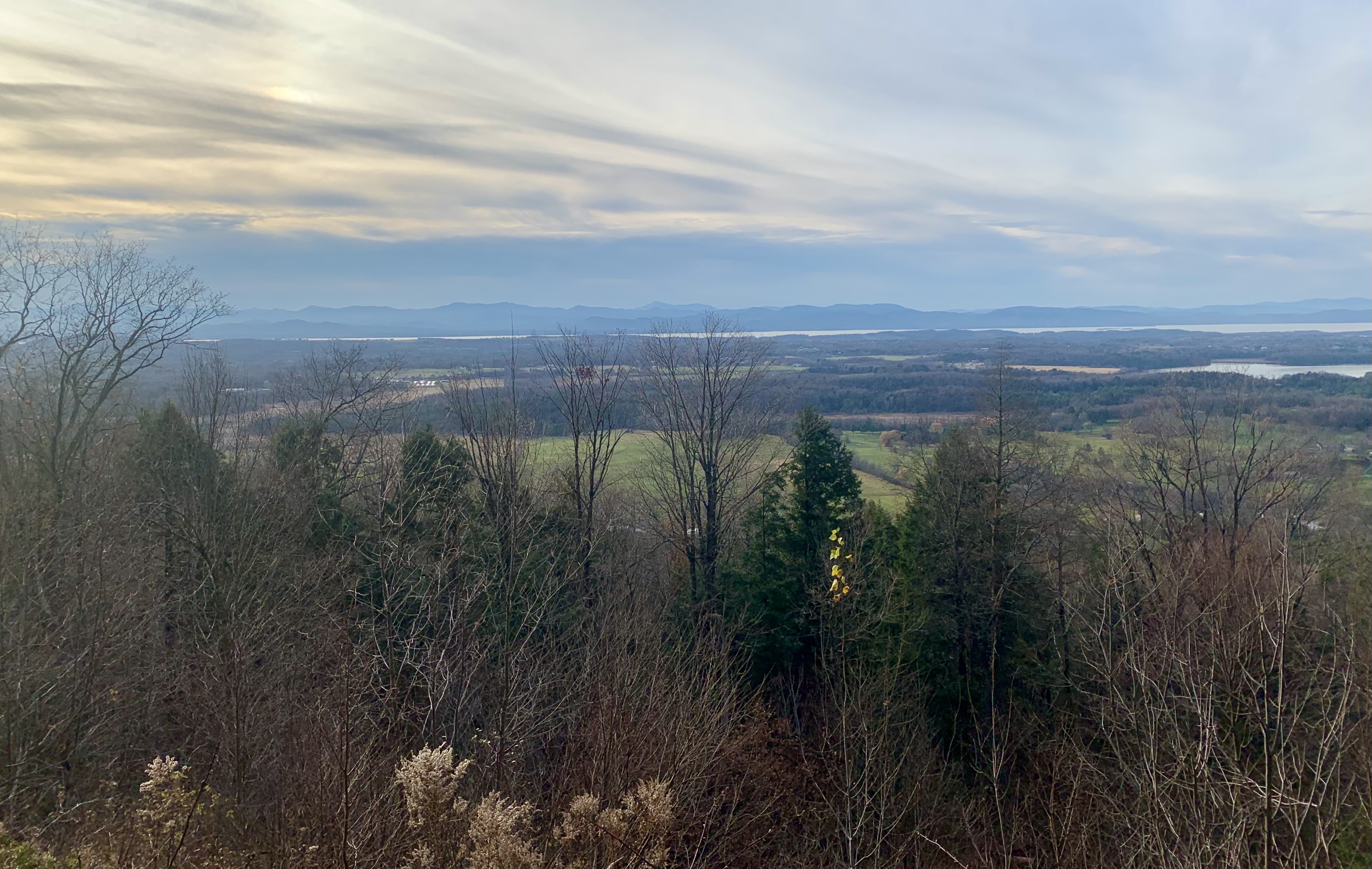
The willow twigs on the right of the Red Bridge causeway are bright greenish-yellow and reddish as in the spring

November 14.

November 14, 2024

The river is slightly over the meadows. 

The willow twigs on the right of the Red Bridge causeway are bright greenish-yellow and reddish as in the spring. Also on the right railroad sand-bank at Heywood's meadow. Is it because they are preparing their catkins now against another spring? 

The first wreck line -- of pontederia, sparganium, etc. -- is observable. 

H. D. Thoreau, Journal, November 14, 1854

The river is slightly over the meadows . . . The first wreck line . . . is observable. See November 14, 1855 ("The rain has raised the river an additional foot or more, and it is creeping over the meadows. The old weedy margin is covered and a new grassy one acquired.") See also November 8, 1853 ("To riverside as far down as near Peter’s, to look at the water-line before the snow covers it.")

The willow twigs on the right of the Red Bridge causeway are bright greenish-yellow and reddish as in the spring. See November 18, 1858 ("Notice the short bright-yellow willow twigs on Hubbard’s Causeway. They are prominent now, first, because they are bare; second, because high-colored always and this rarity of bright colors at present; third, because of the clear air and November light."); March 17, 1859 ("The blushing twigs retain their color throughout the winter and appear more brilliant than ever the succeeding spring. They are winter fruit. It adds greatly to the pleasure of late November, of winter or of early spring walks to look into these mazes of twigs of different colors"); March 18, 1861 ("When I pass by a twig of willow, though of the slenderest kind, rising above the sedge in some dry hollow early in December, or in midwinter above the snow, my spirits rise as if it were an oasis in the desert."); See also December 2, 1852 (" It is an anticipation, a looking through winter to spring.") and A Book of the Seasons, by Henry Thoreau, the Osier in Winter and early Spring

Pontederia, sparganium, etc.  See September 28, 1851 ("The pontederia, which apparently makes the mass of the weeds by the side of the river, is all dead and brown and has been for some time; the year is over for it."); October 16, 1859 ("So surely as the sun appears to be in Libra or Scorpio, I see the conical winter lodges of the musquash rising above the withered pontederia and flags.")

November 14. See A Book of the Seasons,  by Henry Thoreau,  November 14

A Book of the Seasons,  by Henry Thoreau
"A book, each page written in its own season,
out-of-doors, in its own locality.”
~edited, assembled and rewritten by zphx © 2009-2024

Monday, November 14, 2022

A Book of the Seasons: November 14 (bare branches of the oak woods, cold north wind, advancing winter, the clear white leafless twilight of November)


The year is but a succession of days,
and I see that I could assign some office to each day
which, summed up, would be the history of the year.
Henry Thoreau, August 24, 1852


Now the bare branches
of the oak woods await the
onset of the wind. 
 November 14, 1853

October light fades
into the clear white leafless
November twilight.

My boat's motion sends 
an undulation ashore, 
rustling the dry sedge.
November 14, 1855

This crunching sound  
frost-crystals in the heaving  
mud under my feet,
 November 14, 1857

In this cutting wind
the dry rustle of oak leaves
sets your heart on edge.


November 14, 2020


Now for the bare branches of the oak woods, where hawks have nested and owls perched, the sinews of the trees, and the brattling of the wind in their midst. For, now their leaves are off, they've bared their arms, thrown off their coats, and, in the attitude of fencers, await the onset of the wind.  November 14, 1853

This morning it was considerably colder than for a long time, and by noon very much colder than heretofore, with a pretty strong northerly wind. November 14, 1857

Unexpectedly find Heywood's Pond frozen over thinly, it being shallow and coldly placed. November 14, 1851

Minott hears geese to-day.  November 14, 1855

The principal flight of geese was November 8th, so that the bulk of them preceded this cold turn five days. November 14, 1858

Now all that moves migrates, or has migrated. Ducks are gone by. The citizen has sought the town. November 14, 1858

This cold weather makes us step more briskly. November 14, 1857

I feel the crunching sound  of frost-crystals in the heaving mud under my feet, November 14, 1857

Such are the first advances of winter. Ice-crystals shoot in the mud, the sphagnum becomes a stiffened mass, and dropping water in these cold places, a rigid icicle.   November 14, 1857 

It is all at once perfect winter. I walk on frozen ground two thirds covered with a sugaring of dry snow.   November 14, 1858

This strong and cutting northwest wind makes the oak leaves rustle dryly enough to set your heart on edge. November 14, 1858

The rustling leaves sound like the fierce breathing of wolves, — an endless pack, half famished, from the north, impelled by hunger to seize him. November 14, 1858

If he looks into the water, he gets no comfort there, for that is cold and empty, expecting ice. November 14, 1858

I climb Annursnack. Under this strong wind more dry oak leaves are rattling down. 
All winter is their fall.  November 14, 1853.

A distinction is to be made between those trees whose leaves fall as soon as the bright autumnal tints are gone and they are withered and those whose leaves are rustling and falling all winter even into spring. November 14, 1853

The willow twigs on the right of the Red Bridge causeway are bright greenish-yellow and reddish as in the spring. Also on the right railroad sand-bank at Heywood's meadow. Is it because they are preparing their catkins now against another spring? November 14, 1854

A clear, bright, warm afternoon. November 14, 1855

All waters — the rivers and ponds and swollen brooks — and many new ones are now seen through the leafless trees — are blue reservoirs of dark indigo amid the general russet and reddish-brown and gray. November 14, 1853

Now I begin to notice the silver downy twigs of the sweet-fern in the sun (lately bare), the red or crimson twigs and buds of the high blueberry. The different colors of the water andromeda in different lights. November 14, 1858

The river is slightly over the meadows. November 14, 1854

The rain has raised the river an additional foot or more, and it is creeping over the meadows. November 14, 1855

The motion of my boat sends an undulation to the shore, which rustles the dry sedge half immersed there. November 14, 1855

Still yarrow, tall buttercup, and tansy. November 14, 1852

A painted tortoise swimming under water and a wood tortoise out on the bank. November 14, 1855

Two red-wing blackbirds alight on a black willow. November 14, 1855

The thermometer is 27° at 6 P. M. The mud in the street is stiffened under my feet this evening.  November 14, 1857

[October] light fades into the clear, white, leafless twilight of November, and what ever more glowing sunset or Indian summer we have then is the afterglow of the year. November 14, 1853


November 14, 2020

*****
A Book of Seasons, by Henry Thoreau, First Ice.
A Book of the Seasons,  by Henry Thoreau, November

*****
November 14, 2022
 
October 24, 1858 ("October is the red sunset sky, November the later twilight.")
November 9, 1855  ("See a painted tortoise and a wood tortoise in different places out on the bank still!  ")
November 11, 1858 ("The waters look cold and empty . . .  waiting for ice. Indeed, ice that formed last night must have recently melted in it.") 
November 12, 1853 ("Tansy is very fresh still in some places")
November 12, 1858 ("All people move the brisker for the cold, yet are braced and a little elated by it.")
November 12, 1859 ("The first sprinkling of snow, which for a short time whitens the ground in spots.”)
November 13, 1851 ("The cattle-train came down last night from Vermont with snow nearly a foot thick upon it. . . .So it snows. Such, some years, may be our first snow.”)
November 13, 1855 ("In mid-forenoon, seventy or eighty geese, in three harrows successively ")
November 13, 1855 ("A fine clear afternoon after the misty morning and heavy rain of the night.")
November 13, 1858 ("Last night was quite cold, and the ground is white with frost. Thus gradually, but steadily, winter approaches")
November 13, 1858 ("A large flock of geese go over just before night. ")
November 13, 1858 (“We looked out the window at 9 P. M. and saw the ground for the most part white with the first sugaring . . . Thus it comes stealthily in the night and changes the whole aspect of the earth.”)


November 17, 1858 ("We are interested at this season by the manifold ways in which the light is reflected to us. Ascending a little knoll covered with sweet-fern, shortly after, the sun appearing but a point above the sweet-fern, its light was reflected from a dense mass of the bare downy twigs of this plant in a surprising manner. . . A myriad of surfaces are now prepared to reflect the light. This is one of the hundred silvery lights of November.")
November 18, 1852 ("Yarrow and tansy still. These are cold, gray days.");
November 27, 1853 ("Now a man will eat his heart, if ever, now while the earth is bare, barren and cheerless, and we have the coldness of winter without the variety of ice and snow")
December 11, 1853 ("We find Heywood's Pond frozen five inches thick.")   


November 14, 2020

If you make the least correct
observation of nature this year,
 you will have occasion to repeat it
 with illustrations the next, 
and the season and life itself is prolonged.

November 13 <<<<<<<<<  November 14 >>>>>>>> November 15

A Book of the Seasons,  by Henry Thoreau,  November 14
A Book of the Seasons,  by Henry Thoreau
"A book, each page written in its own season,
out-of-doors, in its own locality.”
~edited, assembled and rewritten by zphx © 2009-2022

Sunday, November 14, 2021

Was introduced to two young women.


November 14.

Friday.

Surveying the Ministerial Lot in the southwestern part of the town.

Unexpectedly find Heywood's Pond frozen over thinly, it being shallow and coldly placed. 

In the evening went to a party. It is a bad place to go to, — thirty or forty persons, mostly young women, in a small room, warm and noisy.

Was introduced to two young women.

The first one was as lively and loquacious as a chickadee; had been accustomed to the society of watering-places, and therefore could get no refreshment out of such a dry fellow as I. 

The other was said to be pretty-looking, but I rarely look people in their faces, and, moreover, I could not hear what she said, there was such a clacking, — could only see the motion of her lips when I looked that way.

I could imagine better places for conversation, where there should be a certain degree of silence surrounding you, and less than forty talking at once. Why, this afternoon, even, I did better.

There was old Mr. Joseph Hosmer and I ate our luncheon of cracker and cheese together in the woods. I heard all he said, though it was not much, to be sure, and he could hear me. And then he talked out of such a glorious repose, taking a leisurely bite at the cracker and cheese between his words; and so some of him was communicated to me, and some of me to him, I trust.

These parties, I think, are a part of the machinery of modern society, that young people may be brought together to form marriage connections. What is the use of going to see people whom yet you never see, and who never see you? I begin to suspect that it is not necessary that we should see one another.

Some of my friends make singular blunders. They go out of their way to talk with certain young women of whom they think, or have heard, that they are pretty, and take pains to introduce me to them. That may be a reason why they should look at them, but it is not a reason why they should talk with them.

I confess that I am lacking a sense, perchance, in this respect, and I derive no pleasure from talking with a young woman half an hour simply because she has regular features. The society of young women is the most unprofitable I have ever tried. They are so light and flighty that you can never be sure whether they are there or not there.

I prefer to talk with the more staid and settled, settled for life, in every sense.

I met a man yesterday afternoon in the road who behaved as if he was deaf, and I talked with him in the cold in a loud tone for fifteen minutes, but that uncertainty about his ears, and the necessity I felt to talk loudly, took off the fine edge of what I had to say and prevented my saying anything satisfactory. It is bad enough when your neighbor does not understand you, but if there is any uncertainty as to whether he hears you, so that you are obliged to become your own auditor, you are so much the poorer speaker, and so there is a double failure.

H. D. Thoreau, Journal, November 14, 1851

Unexpectedly find Heywood's Pond frozen over thinly, it being shallow and coldly placed. See November 23, 1850 (" If I am surprised to find ice on the sides of the brooks, I am much more surprised to find a pond in the woods, containing an acre or more, quite frozen over so that I walk across it. It is in a cold corner, where a pine wood excludes the sun. In the larger ponds and the river, of course, there is no ice yet. I lay down on the ice and look through at the bottom.") ; December 11, 1853 ("We find Heywood's Pond frozen five inches thick.. . . This ice being whitened and made partially opaque by heat, while the surface is quite smooth, perhaps from new freezings, reflects the surrounding trees, their forms and colors, distinctly like water. The white air-bubbles are the quicksilver on the back of the mirror.")   See also A Book of Seasons, by Henry Thoreau, First Ice.

I derive no pleasure from talking with a young woman. Compare  November 13, 1851 ("Just spent a couple of hours (eight to ten) with Miss Mary Emerson at Holbrook's. The wittiest and most vivacious woman that I know,"); April 23, 1857 ("I saw at Ricketson's a young woman, Miss Kate Brady, twenty years old. . .I  never heard a girl or woman express so strong a love for nature.")


Where mosses and lichens abound.


November 14. 

Saw to-day, while surveying in the Second Division woods, a singular round mound in a valley, made perhaps sixty or seventy years ago.

Cyrus Stow thought it was a pigeon-bed, but I soon discovered the coal and that it was an old coal-pit. I once mistook one in the Maine woods for an Indian mound.

The indestructible charcoal told the tale.

I had noticed singular holes and trenches in the former wood, as if a fox had been dug out. The sun has probably been let in here many times, and this has been a cultivated field; and now it is clothed in a savage dress again.

The wild, rank, luxuriant place is where mosses and lichens abound.

We find no heroes' cairns except those of heroic colliers, who once sweated here begrimed and dingy, who lodged here, tending their fires, who lay on a beetle here, perchance, to keep awake.

H. D. Thoreau, Journal, November 14, 1850

Colliers tending their fires who lay on a beetle here, perchance, to keep awake See March 15, 1857 ("Who was it, what satyr, that invented this rustic beetle? It was shaped:     
An indispensable piece of woodcraft.")

Saturday, November 14, 2020

November flowers

November 14. 


Still yarrow, tall buttercup, and tansy.

H. D. Thoreau, Journal, November 14, 1852

See October 20, 1852 ("Canada snapdragon, tansy, white goldenrod, blue-stemmed goldenrod. Aster undulatus, autumnal dandelion, tall buttercup, yarrow, mayweed. "); November 3, 1853 ("To-day I see yarrow, very bright "); November 9, 1852 ("Ranunculus repens, Bidens connata (flat in a brook), yarrow, dandelion, autumnal dandelion, tansy, Aster undulatus, etc. A late three ribbed goldenrod, with large serratures in middle of the narrow leaves, ten or twelve rays. Potentilla argentea."); November 12, 1853 ("Tansy is very fresh still in some places"); November 18, 1852 ("Yarrow and tansy still. These are cold, gray days.");  November 18, 1855 ("Tansy still shows its yellow disks, but yarrow is particularly fresh and perfect, cold and chaste, with its pretty little dry-looking rounded white petals and green leaves."); November 22, 1853 ("yarrow is particularly fresh and innocent"); November 23, 1852 ("Among the flowers which may be put down as lasting thus far, as I remember, in the order of their hardiness: yarrow, tansy (these very fresh and common) . . . and perhaps tall buttercup, etc."); December 6, 1852 ("Tansy still fresh."); December 12, 1852 ("Tansy still fresh yellow by the Corner Bridge."); December 19, 1859 ("Yarrow too is full of seed now")

Wednesday, November 14, 2018

If he looks into the water, he gets no comfort there, for that is cold and empty, expecting ice.


November 14. 

It is very cold and windy; thermometer 26. I walk to Walden and Andromeda Ponds. 

It is all at once perfect winter. I walk on frozen ground two thirds covered with a sugaring of dry snow, and this strong and cutting northwest wind makes the oak leaves rustle dryly enough to set your heart on edge. A great many have fallen, even since the snow last evening. 

Take a citizen out into an oak sprout-land when there is a sugaring of dry snow and a cold, cutting northwest wind rustles the leaves. A sympathetic shiver will seize him. He will know of no fire to warm his wits by. He has no pleasing pursuit to follow through these difficulties, no traps to inspect, no chopping to do. Every resounding step on the frozen earth is a vain knocking at the door of what was lately genial Nature, his bountiful mother, now turned a stepmother. He is left outside to starve. The rustling leaves sound like the fierce breathing of wolves, — an endless pack, half famished, from the north, impelled by hunger to seize him. 

Of birds only the chickadees seem really at home. Where they are is a hearth and a bright fire constantly burning. The tree sparrows must be very lively to keep warm. The rest keep close to-day. 

You will see where a mouse (or mole?) has run under the thinnest snow, like this. Such humble paths they prefer, perhaps to escape nocturnal foes. 

Now I begin to notice the silver downy twigs of the sweet-fern in the sun (lately bare), the red or crimson twigs and buds of the high blueberry. The different colors of the water andromeda in different lights.

If he looks into the water, he gets no comfort there, for that is cold and empty, expecting ice. 

Now, while the frosty air begins to nip your fingers and your nose, the frozen ground rapidly wears away the soles of your shoes, as sandpaper might; the old she wolf is nibbling at your very extremities. The frozen ground eating away the soles of your shoes is only typical of the vulture that gnaws your heart this month. 

Now all that moves migrates, or has migrated. Ducks are gone by. The citizen has sought the town. 

Probably the witch-hazel and many other flowers lingered till the 11th, when it was colder. The last leaves and flowers (?) may be said to fall about the middle of November.

Snow and cold drive the doves to your door, and so your thoughts make new alliances.

H. D. Thoreau, Journal, November 14, 1858

It is all at once perfect winter. I walk on frozen ground two thirds covered with a sugaring of dry snow. See November 14, 1857 ("I feel the crunching sound of frost-crystals in the heaving mud under my feet,. . .Such is the first freezing day.")

This strong and cutting northwest wind makes the oak leaves rustle dryly enough to set your heart on edge. See November 27, 1853 ("Now a man will eat his heart, if ever, now while the earth is bare, barren and cheerless, and we have the coldness of winter without the variety of ice and snow"); November 25, 1857 (“November Eatheart, — is that the name of it? ")

Now I begin to notice the silver downy twigs of the sweet-fern in the sun (lately bare). See November 17, 1858 ("Ascending a little knoll covered with sweet-fern, shortly after, the sun appearing but a point above the sweet-fern, its light was reflected from a dense mass of the bare downy twigs of this plant in a surprising manner"); December 7, 1857 ("I would rather sit at this table with the sweet-fern twigs between me and the sun than at the king’s."); January 14, 1860 ("Those little groves of sweet-fern still thickly leaved, whose tops now rise above the snow, are an interesting warm brown-red now, like the reddest oak leaves.")

If he looks into the water, he gets no comfort there, for that is cold and empty, expecting ice. See November 11, 1858 ("The waters look cold and empty of fish and most other inhabitants now. Here, in the sun in the shelter of the wood, the smooth shallow water, with the stubble standing in it, is waiting for ice. Indeed, ice that formed last night must have recently melted in it. The sight of such water now reminds me of ice as much as of winter quarters.”)

Probably the witch-hazel and many other flowers lingered till the 11th. See November 15, 1853 ("Take up a witch-hazel with still some fresh blossoms. "); November 24, 1859 ("At Spanish Brook Path, the witch-hazel (one flower) lingers")

Tuesday, November 14, 2017

The first freezing day-- the crunching sound of frost-crystals in the heaving mud under my feet


November 14. 

P. M. – Ride to limestone quarries on old Carlisle road with E. Hoar. 

This morning it was considerably colder than for a long time, and by noon very much colder than heretofore, with a pretty strong northerly wind. The principal flight of geese was November 8th, so that the bulk of them preceded this cold turn five days. 

You need greatcoat and buffalo and gloves now, if you ride. I find my hands stiffened and involuntarily finding their way to my pockets. No wonder that the weather is a standing subject of conversation, since we are so sensitive. 

If we had not gone through several winters, we might well be alarmed at the approach of cold weather. With this keener blast from the north, my hands suddenly fail to fulfill their office, as it were begin to die. We must put on armor against the new foe. I am almost world-ridden suddenly. I can hardly tie and untie my shoe-strings. 

What a story to tell an inhabitant of the tropics, – perchance that you went to walk, after many months of warmth, when suddenly the air became so cold and hostile to your nature, that it benumbed you so that you lost the use of some of your limbs, could not untie your shoe-strings or unbutton your clothes! 

This cold weather makes us step more briskly.

I hear that the Indians say we are to have a hard winter, because of the abundance of acorns, also because of the unusual thickening of corn-husks in the summer! 

The stone at those quarries strikes northeasterly and southwesterly, or apparently with the rocks of Curly-pate, a third of a mile off. The strata appear to be nearly vertical. In the most southwesterly quarry, I noticed in the side of an upright sliver of rock, where the limestone had formerly been blasted off, the bottom of the nearly perpendicular hole which had been drilled for that purpose, two or three inches deep and about two and a half feet from the ground.

 In this I found two fresh chestnuts, a dozen or more amphicarpaea seeds, as many apparently either prinos (?) or rose (?) seeds (single seeds and fresh), and several fresh barberry seeds mixed with a little earth and rubbish. 

What placed them there? Squirrel, mouse, jay, or crow? At first I thought that a quadruped could hardly have reached this hole, but probably it could easily, and it was a very cunning place for such a deposit.  I brought them all home in order to ascertain what the seeds were and how they came there. 

Examining the chestnuts carefully in the evening and wondering if so small a bird as a chickadee could transport one, I observed near the larger end of one some very fine scratches, which it seemed to me might have been made by the teeth of a very small animal when carrying it, but certainly not by the bill of a bird, since they had pricked sharply into the shell, rucking it up one way. I then looked to see where the teeth of the other jaw had scratched it, but could discover no marks and was therefore still somewhat in doubt. 

Coming up-stairs an hour afterward, I examined those scratches with a microscope, and saw plainly that they had been made by some fine and sharp cutting instrument like a fine chisel, a little concave, and had plowed under the surface of the shell a little, toward the big end of the nut, raising it up; and, looking farther, I now discovered, on the larger end of the nut, at least two corresponding marks made by the lower incisors, plowing toward the first and about a quarter of an inch distant. These were a little less obvious to the unarmed eye, but no less plain through the glass. 

I now had no doubt that they were made by the incisors of a mouse, and, comparing them with the incisors of a deer mouse (Mus leucopus) whose skull I have, I found that one or two of the marks were just the width of its two incisors combined (a twentieth of an inch), and the others, though finer, might have been made by them. On one side, at least, it had taken fresh hold once or twice. I have but little doubt that these seeds were placed there by a Mus leucopus, our most common wood mouse. 

The other nut, which had no marks on it, I suppose was carried by the star end, which was gone from both. There was no chestnut tree within twenty rods. These seeds thus placed in this recess will account for chestnut trees, barberry bushes, etc., etc., growing in chinks and clefts where we do not see how the seeds could have fallen. There was earth enough even in this little hole to keep some very small plant alive. 

I hear that Gardiner Heywood caught a trout in Walden Pond the other day and that it weighed five pounds. [And a little over. Speared it about a week ago, and saw another not quite so large. Henry and John Bigelow put a couple into the pond some ten years ago. Were these the ones?]

It seems that the Abel Davis who caught the pickerel in Temple Brook, which would make such a meal for his “Lavinia” and himself, was addicted to talking to himself, thinking aloud. He was once talked of for captain of the company, and about that time, they say, was overheard saying to himself, “Captain Abel Davis! What a fine-looking man!”  

Can those straight ridges running north by west and south by east over the most level part of Curly-pate have anything to do with diluvial furrows? 

Returning along the edge of Calla Swamp, under the fern-clad hill, I feel the crunching sound  of frost-crystals in the heaving mud under my feet, and see and feel the sphagnum already stiffened into a crust, and what probably in the forenoon was water trickling from a fern-clad rock is now half a dozen icicles, six or eight inches long. 

Such is the first freezing day. Such phenomena are first observed under the north side of a hill in a cold swamp like this. Such are the first advances of winter. Ice-crystals shoot in the mud, the sphagnum becomes a stiffened mass, and dropping water in these cold places, a rigid icicle. 

E. Hoar tells me that his partner, having a new adobe house, or perhaps roof to it, built in Santa Barbara, on the California coast, corrected the bad levelling of his carpenters by taking such a position as to make the ridge-pole coincide with the horizon line where the Pacific appeared to meet the sky. 

The thermometer is 27° at 6 P. M. The mud in the street is stiffened under my feet this evening. 

Where there is a wall near a pitch pine wood, I see the scales of the cones which the squirrels have carried to the wall and stripped, strewn all along the wall on the ground.

H. D. Thoreau, Journal, November 14, 1857

I have but little doubt that these seeds were placed there by a Mus leucopus, our most common wood mouse. See November 19, 1857 (" What pretty fruit for the mice, these bright prinos berries! They run up the twigs in the night and gather this shining fruit, take out the small seeds, and eat their kernels at the entrance to their burrows. The ground is strewn with them there.") See also A Book of the Seasons, by Henry Thoreau, The Wild Mouse

The crunching sound of frost-crystals under my feet, such is the first freezing day.
See November 14, 1858 ("It is all at once perfect winter. I walk on frozen ground two thirds covered with a sugaring of dry snow.")

This cold weather makes us step more briskly. See November 12, 1858 ("All people move the brisker for the cold, yet are braced and a little elated by it. They love to say, “Cold day, sir.” Though the days are shorter, you get more work out of a hired man than before, for he must work to keep warm. ")

Saturday, November 14, 2015

A Book of the Seasons: November 14.


November 14.

October light fades
into the clear white leafless
November twilight.

Now the bare branches
of the oak woods await the
onset of the wind. 
 November 14, 1853

The oak leaves rustling 
in this cutting northwest wind 
set your heart on edge. 

Now for bare branches
of the oaks and the brattling
of wind in their midst.
November 14, 1853

Under this strong wind
more dry oak leaves rattling down.
All winter their fall.
November 14, 1853

My boat's motion sends
an undulation ashore
rustling the dry sedge.


the oak leaves rustling 
in this cutting northwest wind 
set your heart on edge. 

In this cutting wind
the dry rustle of oak leaves
sets your heart on edge.

This strong and cutting
northwest wind makes the oak leaves
set your heart on edge.
November 14, 1858

This northwest wind makes
oak leaves rustle enough to
set your heart on edge.
November 14, 1858

November 14, 2020


The clear, white, leafless twilight of November. November 14, 1853

This morning it was considerably colder than for a long time, and by noon very much colder than heretofore, with a pretty strong northerly wind. November 14, 1857

This cold weather makes us step more briskly. November 14, 1857

 Such are the first advances of winter. Ice-crystals shoot in the mud, the sphagnum becomes a stiffened mass, and dropping water in these cold places, a rigid icicle.   November 14, 1857 

The rain has raised the river an additional foot or more, and it is creeping over the meadows. November 14, 1855 

The principal flight of geese was November 8th, so that the bulk of them preceded this cold turn five days. November 14, 1858

 I feel the crunching sound  of frost-crystals in the heaving mud under my feet, November 14, 1857

It is all at once perfect winter. I walk on frozen ground two thirds covered with a sugaring of dry snow.   November 14, 1858

This strong and cutting northwest wind makes the oak leaves rustle dryly enough to set your heart on edge. November 14, 1858

I climb Annursnack. Under this strong wind more dry oak leaves are rattling down. 
All winter is their fall November 14, 1853.

 A distinction is to be made between those trees whose leaves fall as soon as the bright autumnal tints are gone and they are withered and those whose leaves are rustling and falling all winter even into spring. November 14, 1853

A clear, bright, warm afternoon. November 14, 1855

A painted tortoise swimming under water and a wood tortoise out on the bank. November 14, 1855

The rain has raised the river an additional foot or more, and it is creeping over the meadows. November 14, 1855

The motion of my boat sends an undulation to the shore, which rustles the dry sedge half immersed there. November 14, 1855

Two red-wing blackbirds alight on a black willow. November 14, 1855

Minott hears geese to-day.  
November 14, 1855

The thermometer is 27° at 6 P. M. The mud in the street is stiffened under my feet this evening. , November 14, 1857

[October] light fades into the clear, white, leafless twilight of November, and what ever more glowing sunset or Indian summer we have then is the afterglow of the year. November 14, 1853


Now for the bare branches of the oak woods, where hawks have nested and owls perched, the sinews of the trees, and the brattling of the wind in their midst. For, now their leaves are off, they've bared their arms, thrown off their coats, and, in the attitude of fencers, await the onset of the wind.  November 14, 1853

A Book of the Seasons, by Henry Thoreau
"A book, each page written in its own season,
out-of-doors, in its own locality.”
~edited, assembled and rewritten by zphx © 2009-2020

Popular Posts Last 30 Days.

The week ahead in Henry’s journal

The week ahead in Henry’s journal
A journal, a book that shall contain a record of all your joy.
"A stone fruit. Each one yields me a thought." ~ H. D. Thoreau, March 28, 1859


I sit on this rock
wrestling with the melody
that possesses me.