Showing posts with label white pines. Show all posts

Sunday, February 25, 2024

A Book of the Seasons, Signs of the Spring: First silvery sheen from needles of the white pine waving in the wind


No mortal is alert enough
to be present at the first dawn of the spring.
Henry Thoreau, March 17, 1857

First silvery sheen
from needles of the white pine
waving in the wind.
February 25, 1860


February 4. Now the white pine are a misty blue; anon a lively, silvery light plays on them, and they seem to erect themselves unusually.  February 4, 1852 

February 5. The boughs, feathery boughs, of the white pines, tier above tier, reflect a silvery light against the darkness of the grove.  
February 5, 1852 

February 10.  I see that Wheildon's pines are rocking and showing their silvery under sides as last spring, — their first awakening, as it were. February 10, 1860 

February 23. I have seen signs of the spring. February 23, 1857

February 25. I noticed yesterday the first conspicuous silvery sheen from the needles of the white pine waving in the wind. A small one was conspicuous by the side of the road more than a quarter of a mile ahead. I suspect that those plumes which have been appressed or contracted by snow and ice are not only dried but opened and spread by the wind. February 25, 1860

March 2. I see a row of white pines, too, waving and reflecting their silvery light. March 2, 1860 

March 20. In this spring breeze, how full of life the silvery pines, probably the under sides of their leaves. March 20, 1853

March 21.  That fine silvery light reflected from its needles (perhaps their undersides) incessantly in motion. March 21, 1859

*****
So I came in and
shut the door and passed my first
spring night in the woods.
Walden, Spring


See also A Book of the Seasons,  by Henry Thoreau, 
I Have Seen Signs of the Spring:


<<<<< Signs of Spring                           Early Spring >>>>>


A Book of the Seasons,  by Henry Thoreau, Signs of the Spring:

A Book of the Seasons,  by Henry Thoreau
 "A book, each page written in its own season,
out-of-doors, in its own locality."
 ~edited, assembled and rewritten by zphx ©  2009-2024

Sunday, September 10, 2023

As I go through the woods, I see that the ferns have turned brown and give the woods an autumnal look..


September 10

As I watch the groves on the meadow opposite our house, I see how differently they look at different hours of the day, i. e. in different lights, when the sun shines on them variously. In the morning, perchance, they seem one blended mass of light green. In the afternoon, distinct trees appear, separated by heavy shadows, and in some places I can see quite through the grove.

3 P M. - To the Cliffs and the Grape Cliff beyond.

Hardhack and meadow-sweet are now all dry.

I see the smoke of burning brush in the west horizon this dry and sultry afternoon, and wish to look off from some hill. It is a kind of work the farmer cannot do without discovery. Sometimes I smell these smokes several miles off, and by the odor know it is not a burning building, but withered leaves and the rubbish of the woods and swamp.

As I go through the woods, I see that the ferns have turned brown and give the woods an autumnal look.


The boiling spring is almost completely dry. Nothing flows (I mean without the shed), but there are many hornets and yellow wasps apparently buzzing and circling about in jealousy of one another, either drinking the stagnant water, which is the most accessible this dry parching day, or it may be collecting something from the slime, - I think the former.

As I go up Fair Haven Hill, I see some signs of the approaching fall of the white pine. On some trees the old leaves are already somewhat reddish, though not enough to give the trees a parti-colored look, and they come off easily on being touched, - the old leaves on the lower part of the twigs.

Some farmers are sowing their winter rye? I see the fields smoothly rolled. (I hear the locust still.) I see others plowing steep rocky and bushy fields, apparently for the same purpose.

How beautiful the sproutland (burnt plain) seen from the Cliff! No more cheering and inspiring sight than a young wood springing up thus over a large tract, when you look down on it, the light green of the maples shaded off into the darker oaks, and here and there a maple blushes quite red, enlivening the scene yet more.

Surely this earth is fit to be inhabited, and many enterprises may be undertaken with hope where so many young plants are pushing up.

In the spring I burned over a hundred acres till the earth was sere and black, and by midsummer this space was clad in a fresher and more luxuriant green than the surrounding even.

Shall man then despair? Is he not a sprout-land too, after never so many searings and witherings? If you witness growth and luxuriance, it is all the same as if you grew luxuriantly.

I see three smokes in Stow. One sends up dark volumes of wreathed smoke, as if from the mouth of Erebus. It is remarkable what effects so thin and subtile a substance as smoke produces, even at a distance, -- dark and heavy and powerful as rocks at a distance.

The woodbine is red on the rocks.

The poke is a very rich and striking plant. Some which stand under the Cliffs quite dazzled me with their now purple stems gracefully drooping each way, their rich, somewhat yellowish, purple-veined leaves, their bright purple racemes, -- peduncles, and pedicels, and calyx-like petals from which the birds have picked the berries (these racemes, with their petals now turned to purple, are more brilliant than anything of the kind), -- flower-buds, flowers, ripe berries and dark purple ones, and calyx-like petals which have lost their fruit, all on the same plant.

I love to see any redness in the vegetation of the temperate zone. It is the richest color. I love to press these berries between my fingers and see their rich purple wine staining my hand. It asks a bright sun on it to make it show to best advantage, and it must be seen at this season of the year. It speaks to my blood.

Every part of it is flower, such is its superfluity of color, -- a feast of color. That is the richest flower which most abounds in color. What need to taste the fruit, to drink the wine, to him who can thus taste and drink with his eyes? Its boughs, gracefully drooping, offering repasts to the birds. It is cardinal in its rank, as in its color.

Nature here is full of blood and heat and luxuriance. What a triumph it appears in Nature to have produced and perfected such a plant, -- as if this were enough for a summer.

The downy seeds of the groundsel are taking their flight here. The calyx has dismissed them and quite curled back, having done its part.

Lespedeza sessiliflora, or reticulated lespedeza on the Cliffs now out of bloom.

At the Grape Cliff, the few bright-red leaves of the tupelo contrast with the polished green ones. The tupelos with drooping branches.

The grape-vines overrunning and bending down the maples form little arching bowers over the meadow, five or six feet in diameter, like parasols held over the ladies of the harem, in the East.

Cuscuta Americana, or dodder, in blossom still.

The Desmodium paniculatum of De Candolle and Gray (Hedysarum paniculatum of Linnaeus and Bigelow), tick-trefoil, with still one blossom, by the path-side up from the meadow.  The rhomboidal joints of its loments adhere to my clothes. One of an interesting family that thus disperse themselves.

The oak-ball of dirty drab now.


H. D. Thoreau, Journal, September 10, 1851

How differently they look at different hours of the day. See February 5, 1852 ("The trunks and branches of the trees are of different colors at different times and in different lights and weathers, - in sun, rain, and in the night.”); February 9, 1852 ("Objects do not twice present exactly the same appearance. The air changes from hour to hour of every day. It paints and glasses everything. It is a new glass placed over the picture every hour")

As I go up Fair Haven Hill, I see some signs of the approaching fall of the white pine. See A Book of the Seasons, by Henry Thoreau, The October Pine Fall

As I go through the woods, I see that the ferns have turned brown and give the woods an autumnal look. September 6, 1854 ("The cinnamon ferns along the edge of woods next the meadow are many yellow or cinnamon, or quite brown and withered);   September 12, 1858("Coming to some shady meadow’s edge, you find that the cinnamon fern has suddenly turned this rich yellow. Thus each plant surely acts its part, and lends its effect to the general impression.") See also A Book of the Seasons, by Henry Thoreau, The Cinnamon Fern

The grape-vines overrunning and bending down the maples form little arching bowers over the meadow. See September 8, 1854 (" Sometimes I crawl under low and thick bowers, where they have run over the alders only four or five feet high, and see the grapes hanging from a hollow hemisphere of leaves over my head. At other times I see them dark-purple or black against the silvery undersides of the leaves, high overhead where they have run over birches or maples, and either climb or pull them down to pluck them.") See also A Book of the Seasons, by Henry Thoreau, The Grape

The Desmodium paniculatum . . . tick-trefoil, with still one blossom, by the path-side up from the meadow. See August 7, 1856 ("At Blackberry Steep, apparently an early broad-leafed variety of Desmodium paniculatum, two or three days. This and similar plants are common there and may almost name the place . . . All these plants seem to love a dry open hillside, a steep one. Are rarely upright, but spreading, wand-like."); September 29, 1856 ("I can hardly clamber along the grape cliff now with out getting my clothes covered with desmodium ticks, — there especially the rotundifolium and paniculatum. Though you were running for your life, they would have time to catch and cling to your clothes . . .How surely the desmodium, growing on some rough cliff-side, or the bidens, on the edge of a pool, prophesy the coming of the traveller, brute or human, that will transport their seeds on his coat! ")
'

Saturday, October 2, 2021

The white pine fall on Fair Haven Hill.


P. M.

October 2, 2014

Some of the white pines on Fair Haven Hill have just reached the acme of their fall; others have almost entirely shed their leaves, and they are scattered over the ground and the walls. The same is the state of the pitch pines.

At the Cliffs, I find the wasps prolonging their short lives on the sunny rocks, just as they endeavored to do at my house in the woods.

It is a little hazy as I look into the west to-day.

The shrub oaks on the terraced plain are now almost uniformly of a deep red.

H. D. Thoreau, Journal, October 2, 1851


Some of the white pines on Fair Haven Hill have just reached the acme of their fall
. See October 2, 1853 ("The white pines have scarcely begun at all to change here.") See also October 1, 1857 ("The pines now half turned yellow, the needles of this year are so much the greener by contrast"); October 3, 1852 ("The pine fall, i.e. change, is commenced, and the trees are mottled green and yellowish"); October 3, 1856 (" The white pines are now getting to be pretty generally parti-colored, the lower yellowing needles ready to fall ."); October 3, 1858 ("White pines fairly begin to change.") A Book of the Seasons, by Henry Thoreau, The October Pine Fall

I find the wasps prolonging their short lives on the sunny rocks. See note to September 10, 1859 ("See wasps, collected in the sun on a wall, at 9 A. M.")

It is a little hazy as I look into the west to-day.
See October 4, 1859 ("The birds seem to delight in these first fine days of the fall, in the warm, hazy light")

The shrub oaks on the terraced plain are now almost uniformly of a deep red. See October 2, 1852 ("From Cliffs the shrub oak plain has now a bright-red ground, perhaps of maples."); see also October 1, 1859 ("The shrub oaks on this hill are now at their height, both with respect to their tints and their fruit."); October 13, 1852 ("The shrub oak plain is now a deep red,"); October 22, 1858 ("I see, from the Cliffs, that color has run through the shrub oak plain like a fire or a wave, not omitting a single tree")

Tuesday, September 28, 2021

The white pines in Hubbard's Grove have now a pretty distinct parti-colored look.


September 28.

September 28, 2014

A considerable part of the last two nights and yesterday, a steady and rather warm rain, such as we have not had for a long time. This morning it is still completely overcast and drizzling a little.

Flocks of small birds — apparently sparrows, bobolinks (or some bird of equal size with a pencilled breast which makes a musical clucking), and piping goldfinches 


— are flitting about like leaves and hopping up on to the bent grass stems in the garden, letting themselves down to the heavy heads, either shaking or picking out a seed or two, then alighting to pick it up.

I am amused to see them hop up on to the slender, drooping grass stems; then slide down, or let themselves down, as it were foot over foot, with great fluttering, till they can pick at the head and release a few seeds; then alight to pick them up. They seem to prefer a coarse grass which grows like a weed in the garden between the potato-hills, also the amaranth.

It is an ill wind that blows nobody any good. They say that this has been a good year to raise turkeys, it has been so dry. So that we shall have something to be thankful for.


Hugh Miller, in his “Old Red Sandstone,” speaking of  “the consistency of style which obtains among the ichthyolites of this formation” and the “microscopic beauty of these ancient fishes,” says: 
“The artist who sculptured the cherry stone consigned it to a cabinet, and placed a microscope beside it; the microscopic beauty of these ancient fish was consigned to the twilight depths of a primeval ocean.

There is a feeling which at times grows upon the painter and the statuary, as if the perception and love of the beautiful had been sublimed into a kind of moral sense.

Art comes to be pursued for its own sake; the exquisite conception in the mind, or the elegant and elaborate model, becomes all in all to the worker, and the dread of criticism or the appetite of praise almost nothing.

And thus, through the influence of a power somewhat akin to conscience, but whose province is not the just and the good, but the fair, the refined, the exquisite, have works prosecuted in solitude, and never intended for the world, been found fraught with loveliness."

The hesitation with which this is said — to say nothing of its simplicity betrays a latent infidelity more fatal far than that of the “Vestiges of Creation,” which in another work this author endeavors to correct.

He describes that as an exception which is in fact the rule.

The supposed want of harmony between “the perception and love of the beautiful” and a delicate moral sense betrays what kind of beauty the writer has been conversant with. He speaks of his work becoming all in all to the worker, his rising above the dread of criticism and the appetite of praise, as if these were the very rare exceptions in a great artist's life, and not the very definition of it.


2 P. M. – To Conantum.

A warm, damp, mistling day, without much wind.

The white pines in Hubbard's Grove have now a pretty distinct parti-colored look, — green and yellow mottled, — reminding me of some plants like the milkweed, expanding with maturity and pushing off their downy seeds. They have a singularly soft look.

For a week or ten days I have ceased to look for new flowers or carry my botany in my pocket.

The fall dandelion is now very fresh and abundant in its prime.

I see where the squirrels have carried off the ears of corn more than twenty rods from the corn-field into the woods. A little further on, beyond Hubbard's Brook, I saw a gray squirrel with an ear of yellow corn a foot long sitting on the fence, fifteen rods from the field. He dropped the corn, but continued to sit on the rail, where I could hardly see him, it being of the same color with himself, which I have no doubt he was well aware of.

He next took to a red maple, where his policy was to conceal himself behind the stem, hanging perfectly still there till I passed, his fur being exactly the color of the bark. When I struck the tree and tried to frighten him, he knew better than to run to the next tree, there being no continuous row by which he might escape; but he merely fled higher up and put so many leaves between us that it was difficult to discover him.

When I threw up a stick to frighten him, he disappeared entirely, though I kept the best watch I could, and stood close to the foot of the tree.

They are wonderfully cunning.

The Eupatorium purpureum is early killed by frost and stands now all dry and brown by the sides of other herbs like the goldenrod and tansy, which are quite green and in blossom.
The railroads as much as anything appear to have unsettled the farmers. Our young Concord farmers and their young wives, hearing this bustle about them, seeing the world all going by as it were, — some daily to the cities about their business, some to California, — plainly cannot make up their minds to live the quiet, retired, old-fashioned, country-farmer's life. They are impatient if they live more than a mile from a railroad.

While all their neighbors are rushing to the road, there are few who have character or bravery enough to live off the road. He is too well aware what is going on in the world not to wish to take some part in it. I was reminded of this by meeting S. Tuttle in his wagon.


The pontederia, which apparently makes the mass of the weeds by the side of the river, is all dead and brown and has been for some time; the year is over for it.

The mist is so thin that it is like haze or smoke in the air, imparting a softness to the landscape.


Sitting by the spruce swamp in Conant's Grove, I am reminded that this is a perfect day to visit the swamps, with its damp, mistling, mildewy air, so solemnly still.  There are the spectre-like black spruces hanging with usnea moss, and in the rear rise the dark green pines and oaks on the hillside, touched here and there with livelier tints where a maple or birch may stand, this so luxuriant vegetation standing heavy, dark, sombre, like mould in a cellar. The peculiar tops of the spruce are seen against this.

I hear the barking of a red squirrel, who is alarmed at something, and a great scolding or ado among the jays, who make a great cry about nothing.

The swamp is bordered with the red-berried alder, or prinos, and the button-bush. The balls of the last appear not half grown this season,-probably on account of the drought, and now they are killed by frost.


This swamp contains beautiful specimens of the sidesaddle-flower (Sarracenia purpurea), better called pitcher-plant.  They ray out around the dry scape and flower, which still remain, resting on rich uneven beds of a coarse reddish moss, through which the small flowered andromeda puts up, presenting altogether a most rich and luxuriant appearance to the eye. 

Though the moss is comparatively dry, I cannot walk without upsetting the numerous pitchers, which are now full of water, and so wetting my feet. I once accidentally sat down on such a bed of pitcher-plants, and found an uncommonly wet seat where I expected a dry one. 

These leaves are of various colors from plain green to a rich striped yellow or deep red. No plants are more richly painted and streaked than the inside of the broad lips of these.  Old Josselyn called this "Hollow-leaved Lavender." No other plant, methinks, that we have is so remarkable and singular.


Here was a large hornets' nest, which when I went to take and first knocked on it to see if anybody was at home, out came the whole swarm upon me lively enough. I do not know why they should linger longer than their fellows whom I saw the other day, unless because the swamp is warmer. They were all within and not working, however.

I picked up two arrowheads in the field beyond.


What honest, homely, earth-loving, unaspiring houses they used to live in! Take that on Conantum for instance, so low you can put your hand on the eaves behind. There are few whose pride could stoop to enter such a house to-day. And then the broad chimney, built for comfort, not for beauty, with no coping of bricks to catch the eye, no alto or basso relievo.

The mist has now thickened into a fine rain, and I retreat.


H. D. Thoreau, Journal, September 28, 1851

The white pines in Hubbard's Grove have now a pretty distinct parti-colored look, — green and yellow mottled.  See September 28, 1854 ("R. W. E.’s pines are parti-colored, preparing to fall, some of them. ,")  See also September 29, 1857 ("Pines have begun to be parti-colored with yellow leaves."); October 1, 1857 ("The pines now half turned yellow, the needles of this year are so much the greener by contrast."); October 3, 1852 ("The pine fall, i.e. change, is commenced, and the trees are mottled green and yellowish."); October 3, 1856 ("The white pines are now getting to be pretty generally parti-colored, the lower yellowing needles ready to fall.") and also A Book of the Seasons, by Henry Thoreau, The October Pine Fall

The fall dandelion is now very fresh and abundant in its prime. See A Book of the Seasons, by Henry Thoreau, the Autumnal Dandelion

The pontederia is all dead and brown and has been for some time; the year is over for it. See August 22, 1860 ("Now, when the mikania is conspicuous, the bank is past prime, - for lilies are far gone the pontederia is past prime, willows and button-bushes begin to look the worse for the wear thus early"); September 2, 1859 ("The pontederia leaves are now decidedly brown or brownish"); September 5, 1860 ("The pontederia is extensively crisped and blackened"); September 13, 1859 ("The pontederia spike is now generally turned downward beneath the water"); September 17, 1852 ("The pontederia leaves are sere and brown along the river."); September 18, 1858 ("I see one pontederia spike rising blue above the surface. Elsewhere the dark withered pontederia leaves show themselves, and at a distance look like ducks,  and so help conceal them."); September 26, 1859 ("The pontederia is fast shedding its seeds of late. . . . Many are long since bare. "); October 16, 1859 ("This may not be an annual phenomenon to you.. . ., but it has an important place in my Kalendar. So surely as the sun appears to be in Libra or Scorpio, I see the conical winter lodges of the musquash rising above the withered pontederia")

I hear the barking of a red squirrel, who is alarmed at something, and a great scolding or ado among the jays.                                                 
The red squirrels scold
and the jays scream while you are
clubbing and shaking trees.
October 11, 1852

See also September 21, 1854 ("I hear many jays since the frosts began.”); September 24, 1857 ("A red squirrel chiding you from his concealment in some pine-top. It is the sound most native to the locality."); September 25, 1851 ("In these cooler, windier, crystal days the note of the jay sounds a little more native."); September 25, 1855 ("The scream of the jay is heard from the wood-side."); September 25, 1857 ("Stopping in my boat under the Hemlocks, I hear singular bird-like chirruping from two red squirrels."); October 5, 1857 ("I hear the alarum of a small red squirrel."); December 1, 1857 (" I hear a red squirrel barking at me amid the pine and oak tops, and now I see him coursing from tree to tree. ") and A Book of the Seasons, by Henry Thoreau, The Red Squirrel; A Book of the Seasons, by Henry Thoreau, The Blue Jay

The swamp is bordered with the red-berried alder, or prinos, See September 28, 1856 ("How many fruits are scarlet now! — barberries, prinos, etc."); See also August 20, 1854 ("Prinos berries have begun to redden."); August 23, 1853 ("Barberries have begun to redden, and the prinos, — some of the last quite red."); September 2, 1852 ("The red prinos berries ripe in sunny places.");September 5, 1858 ("To Walden. Prinos verticillatus berries reddening."); September 11, 1859 ("The prinos berries are now seen, red (or scarlet), clustered along the stems, amid the as yet green leaves. A cool red."); September 12, 1851 ("The prinos berries are pretty red."); September 21, 1856 ("Prinos berries."); September 23, 1854 ("Very brilliant and remarkable now are the prinos berries, so brilliant and fresh when most things -- flowers and berries -- have withered. "); September 25, 1859 ("Prinos berries are fairly ripe for a few days"); October 10, 1857 ("To Walden over Fair Haven Hill. Some Prinos verticillatus yellowing and browning at once, and in low ground just falling and leaving the bright berries bare");  October 23, 1853 ("The prinos is bare, leaving red berries."); November 2, 1853 ("The prinos berries are almost gone."); November 25, 1858 ("The prinos berries on their light-brown twigs are quite abundant and handsome.") and note to October 2, 1856 (“The prinos berries are in their prime.”):

The fresh bright scarlet
prinos berries seen in prime
amid fresh green leaves.
October 2, 1856

This swamp contains beautiful specimens of the sidesaddle-flower. See note to June 12, 1856 ("Sidesaddle flower numerously out now.")  See also e.g.  June 12, 1852 ("The petals of the sidesaddle-flower, fully expanded, hang down. How complex it is, what with flowers and leaves! It is a wholesome and interesting plant to me, the leaf especially."); September 11, 1851("We have had no rain for a week, and yet the pitcher-plants have water in them. Are they ever quite dry? Are they not replenished by the dews always, and, being shaded by the grass, saved from evaporation?"); November 11, 1858 (“In the meadows the pitcher-plants are bright-red. ); November 16, 1852 ("At Holden's Spruce Swamp. The water is frozen in the pitcher-plant leaf."). See also A Book of the Seasons,  by Henry Thoreau, The Purple Pitcher Plant

I do not know why they should linger longer than their fellows whom I saw the other day. See September 25, 1851 ("The hornets' nest not brown but gray, two shades, whitish and dark, alternating on the outer layers or the covering, giving it a waved appearance."); . October 4, 1858 ("Hornets are still at work in their nests") See also A Book of the Seasons, by Henry Thoreau. Wasps and Hornets

September 28.  See A Book of the Seasons, by Henry Thoreau, September 28


A Book of the Seasons, by Henry Thoreau, Scarlet berry season.
A Book of the Seasons, by Henry Thoreau
"A book, each page written in its own season,
out-of-doors, in its own locality.”
~edited, assembled and rewritten by zphx © 2009-2024


https://tinyurl.com/HDT510928

Saturday, September 25, 2021

The untouched white pine timber which comes down the Penobscot.


September 25. 

Sunday.

Dined with Lowell.

Said the largest pine Goddard's men cut last winter scaled in the woods forty-five hundred feet board measure, and was worth ninety dollars at the Bangor boom, Oldtown.

They cut a road three miles and a half for this alone. They do not make much of a path, however.

From L. I learned that the untouched white pine timber which comes down the Penobscot waters is to be found at the head of the East Branch and the head waters of the Allegash, about Eagle Lake and Chamberlain, etc., and Webster Stream.

But Goddard had bought the stumpage in eight townships in New Brunswick. They are also buying up townships across the Canada line.

H. D. Thoreau, Journal, September 25, 1853


The untouched white pine timber which comes down the Penobscot waters is to be found at the head of the East Branch and the head waters of the Allegash
, See The Maine Woods, July 29, 1857 ("I passed one white pine log, which had lodged, in the forest near the edge of the stream, which was quite five feet in diameter at the butt") See also November 18, 1852 ("Measured a stick of round timber, probably white pine, on the cars this afternoon, -- ninety-five feet long, nine and ten-twelfths in circumference at butt, and six and two-twelfths in circumference at small end, quite straight. From Vermont."); July 8, 1857 ("Counted the rings of a white pine stump, sawed off last winter at Laurel Glen. It was three and a half feet diameter and has one hundred and twenty-six rings")

Tuesday, June 8, 2021

The different colors of the various parts of this bark, at various times.


June 8.

Sunday. 

June 8, 2024

In F. A. Michaux's, i. e. the younger Michaux's “Voyage à l'ouest des Monts Alléghanys, 1802,” printed at Paris, 1808: 

. . . A Vermonter told him that the expense of clearing land in his State was always defrayed by the potash obtained from the ashes of the trees which were burnt, and sometimes people took land to clear on condition that they should have what potash they could make. 
June 8, 2017

***
Gathered the first strawberries to-day. 

Observed on Fair Haven a tall pitch pine, such as some call yellow pine, very smooth, yellowish, and destitute of branches to a great height. The outer and darker-colored bark appeared to have scaled off, leaving a fresh and smooth surface. At the ground, all round the tree, I saw what appeared to be the edges of the old surface scales, extending to two inches more in thickness. The bark was divided into large, smooth plates, one to two feet long and four to six inches wide.

I noticed that the cellular portion of the bark of the canoe birch log from which I stripped the epidermis a week or two ago was turned a complete brick-red color very striking to behold and reminding me of the red man and all strong, natural things, — the color of our blood somewhat. Under the epidermis it was still a sort of buff. The different colors of the various parts of this bark, at various times, fresh or stale, are extremely agreeable to my eye.

I found the white-pine-top full of staminate blossom buds not yet fully grown or expanded, with a rich red tint like a tree full of fruit, but I could find no pistillate blossom. 

The fugacious-petalled cistus, and the pink, and the lupines of various tints are seen together.

***

H. D. Thoreau, Journal, June 8, 1851


The different colors of the various parts of this bark, at various times, fresh or stale, are extremely agreeable to my eye.
See  May 18, 1851 ("The log of a canoe birch on Fair Haven, cut down the last winter . . . all parts of the epidermis exposed to the air and light were white, but the inner surfaces freshly exposed, were a buff or salmon-color."); January 24, 1858 ("The sprouts of the canoe birch are not reddish like the white, but a yellowish brown.); January 9, 1860 ("There is an interesting variety in the colors of their bark, passing from bronze at the earth, through ruddy and copper colors to white higher up, with shreds of different color from that beneath peeling off.")

I found the white-pine-top full of staminate blossom buds not yet fully grown or expanded, with a rich red tint like a tree full of fruit, but I could find no pistillate blossom. See June 21, 1860 ("In the white pine it is a dense cluster of twenty or thirty little flowers about the base of this year's shoot."); June 25, 1852 ("I am too late for the white pine flowers. The cones are half an inch long and greenish, and the male flowers effete."); July 1, 1852 ("The path by the wood-side is red with the effete staminiferous flowers of the white pine. ") See also A Book of Seasons,  by Henry Thoreau, The White Pines


June 8. See A Book of the Seasons, by Henry Thoreau, June 8

This white-pine-top full
of staminate blossom buds
with a rich red tint .

A Book of the Seasons,  by Henry Thoreau
"A book, each page written in its own season,
out-of-doors, in its own locality."
 ~edited, assembled and rewritten by zphx ©  2009-2021

Sunday, January 3, 2021

A river, with its waterfalls and meadows, a lake, a hill, a cliff or individual rocks, a forest, and ancient trees standing singly.


January 3

The third considerable snow-storm.

The berries which I celebrate appear to have a range -- most of them — very nearly coterminous with what has been called the Algonquin Family of Indians, whose territories are now occupied by the Eastern, Middle, and Northwestern States and the Canadas, and completely surrounded those of the Iroquois, who occupied what is now the State of New York. These were the small fruits of the Algonquin and Iroquois families. The Algonquins appear to have described this kind of fruits generally by words ending in the syllables meenar.

It is true we have in the Northern States a few wild plums and inedible crab-apples, a few palatable grapes and nuts, but I think that our various species of berries are our wild fruits to be compared with the more celebrated ones of the tropics, and that, taking all things into consideration, New England will bear comparison with the West India Islands. I have not heard of any similar amusement there superior to huckleberrying here, the object not being merely to get a shipload of something which you can eat or sell.

Why should the Ornamental Tree Society confine its labors to the highway only? An Englishman laying out his ground does not regard simply the avenues and walks.

Does not the landscape deserve attention? What are the natural features which make a township handsome? A river, with its waterfalls and meadows, a lake, a hill, a cliff or individual rocks, a forest, and ancient trees standing singly. Such things are beautiful; they have a high use which dollars and cents never represent.

If the inhabitants of a town were wise, they would seek to preserve these things, though at a considerable expense; for such things educate far more than any hired teachers or preachers, or any at present recognized system of school education.

I do not think him fit to be the founder of a state or even of a town who does not foresee the use of these things, but legislates chiefly for oxen, as it were.

Far the handsomest thing I saw in Boxboro was its noble oak wood. I doubt if there is a finer one in Massachusetts. Let her keep it a century longer, and men will make pilgrimages to it from all parts of the country; and yet it would be very like the rest of New England if Boxboro were ashamed of that woodland. I have since heard, however, that she is contented to have that forest stand instead of the houses and farms that might supplant [i ], because the land pays a much larger tax to the town now than it would then. I said to myself, if the history of this town is written, the chief stress is probably laid on its parish and there is not a word about this forest in it.

It would be worth the while if in each town there were a committee appointed to see that the beauty of the town received no detriment.

If we have the largest boulder in the county, then it should not belong to an individual, nor be made into door-steps. As in many countries precious metals belong to the crown, so here more precious natural objects of rare beauty should belong to the public. Not only the channel but one or both banks of every river should be a public highway. The only use of a river is not to float on it. 

Think of a mountain-top in the township -- even to the minds of the Indians a sacred place — only accessible through private grounds! a temple, as it were, which you cannot enter except by trespassing and at the risk of letting out or letting in somebody's cattle! in fact the temple itself in this case private property and standing in a man's cow-yard,-for such is commonly the case! 

New Hampshire courts have lately been deciding-as if it was for them to decide whether the top of Mt. Washington belonged to A or to B; and, it being decided in favor of B, as I hear, he went up one winter with the proper officer and took formal possession of it.

But I think that the top of Mt. Washington should not be private property; it should be left unappropriated for modesty and reverence's sake, or if only to suggest that earth has higher uses than we put her to.

I know it is a mere figure of speech to talk about temples nowadays, when men recognize none, and, indeed, associate the word with heathenism.

It is true we as yet take liberties and go across lots, and steal, or "hook," a good many things, but we naturally take fewer and fewer liberties every year, as we meet with more resistance.

In old countries, as England, going across lots is out of the question. You must walk in some beaten path or other, though it may [ be ] a narrow one.

We are tending to the same state of things here, when practically a few will have grounds of their own, but most will have none to walk over but what the few allow them. Thus we behave like oxen in a flower-garden.

The true fruit of Nature can only be plucked with a delicate hand not bribed by any earthly reward, and a fluttering heart. No hired man can help us to gather this crop.

How few ever get beyond feeding, clothing, sheltering, and warming themselves in this world, and begin to treat themselves as human beings, as intellectual and moral beings! Most seem not to see any further, not to see over the ridge-pole of their barns, - - or to be exhausted and accomplish nothing more than a full barn, though it may be accompanied by an empty head.

They venture a little, run some risks, when it is a question of a larger crop of corn or potatoes; but they are commonly timid and count their coppers, when the question is whether their children shall be educated.

He who has the reputation of being the thriftiest farmer and making the best bargains is really the most thrift less and makes the worst.

It is safest to invest in knowledge, for the probability is that you can carry that with you wherever you go.

But most men, it seems to me, do not care for Nature and would sell their share in all her beauty, as long as they may live, for a stated sum — many for a glass of rum.

Thank God, men cannot as yet fly, and lay waste the sky as well as the earth ! We are safe on that side for the present. 

It is for the very reason that some do not care for those things that we need to continue to protect all from the vandalism of a few.

We cut down the few old oaks which witnessed the transfer of the township from the Indian to the white man, and commence our museum with a cartridge-box taken from a British soldier in 1775! 

He pauses at the end of his four or five thousand dollars, and then only fears that he has not got enough to carry him through, -- that is, merely to pay for what he will eat and wear and burn and for his lodging for the rest of his life. But, pray, what does he stay here for?

Suicide would be cheaper. Indeed, it would be nobler to found some good institution with the money and then cut your throat.

If such is the whole upshot of their living, I think that it would be most profitable for all such to be carried or put through by being discharged from the mouth of a cannon as fast as they attained to years of such discretion.

As boys are sometimes required to show an excuse for being absent from school, so it seems to me that men should show some excuse for being here. Move along; you may come upon the town, sir.

I noticed a week or two ago that one of my white pines, some six feet high with a thick top, was bent under a great burden of very moist snow, almost to the point of breaking, so that an ounce more of weight would surely have broken it. As I was confined to the house by sickness, and the tree had already been four or five days in that position, I despaired of its ever recovering itself; but, greatly to my surprise, when, a few days after, the snow had melted off, I saw the tree almost perfectly upright again.

It is evident that trees will bear to be bent by this cause and at this season much more than by the hand of man. Probably the less harm is done in the first place by the weight being so gradually applied, and perhaps the tree is better able to bear it at this season of the year.

H. D. Thoreau, Journal, January 3, 1861

The berries which I celebrate. See The Whortleberry Family

Thank God, men cannot as yet fly, and lay waste the sky as well as the earth ! See January 21, 1852 ("This winter they are cutting down our woods more seriously than ever. . . Thank God, they cannot cut down the clouds!"

Far the handsomest thing I saw in Boxboro was its noble oak wood. See October 23, 1860 ("[Anthony Wright] tells me of a noted large and so-called primitive wood, Inches Wood, between the Harvard turnpike and Stow, sometimes called Stow Woods"); November 9, 1860 ("There may be a thousand? acres of old oak wood.); November 10, 1860 ("I have lived so long in this neighborhood and but just heard of this noble forest, - - probably as fine an oak wood as there is in New England, only eight miles west of me. Seeing this, I can realize how this country appeared when it was discovered - - a full-grown oak forest stretching uninterrupted for miles, consisting of sturdy trees from one to three and even four feet in diameter, whose interlacing branches form a complete and uninterrupted canopy"); November 16, 1860 ("There being hills, dells, moraines, meadows, swamps, and a fine brook in the midst of all. . . .Nowhere any monotony. It is very pleasant, as you walk in the shade below, to see the cheerful sunlight reflected from the maze of oak boughs above.")

If the inhabitants of a town were wise, they would seek to preserve these things. See January 22, 1852 ("Methinks the town should have more supervision and control over its parks than it has. It concerns us all whether these proprietors choose to cut down all the woods this winter or not."); Walking ("A town is saved by the woods and swamps that surround it.”); October 15, 1859 ("Each town should have a park, or rather a primitive forest, of five hundred or a thousand acres, where a stick should never be cut for fuel, a common possession forever, for instruction and recreation.")

But I think that the top of Mt. Washington should not be private property. See Ownership History of the Mount Washington Summit (2018) ("The State [is now] the fee owner of almost all of the Mount Washington Summit.")

A Book of the Seasons,  by Henry Thoreau, January 3
A Book of the Seasons,  by Henry Thoreau
 "A book, each page written in its own season, 
out-of-doors, in its own locality."
 ~edited, assembled and rewritten by zphx ©  2009-2023

Sunday, December 20, 2020

Sunset in winter from a clearing in the woods.


December 20

Saturday. 2 P. M. – To Fair Haven Hill and plain below.

Saw a large hawk circling over a pine wood below me, and screaming, apparently that he might discover his prey by their flight.

Travelling ever by wider circles.

What a symbol of the thoughts, now soaring, now descending, taking larger and larger circles, or smaller and smaller. It flies not directly whither it is bound, but advances by circles, like a courtier of the skies. No such noble progress! How it comes round, as with a wider sweep of thought! But the majesty is in the imagination of the beholder, for the bird is intent on its prey.

Circling and ever circling, you cannot divine which way it will incline, till perchance it dives down straight as an arrow to its mark.

It rises higher above where I stand, and I see with beautiful distinctness its wings against the sky, primaries and secondaries, and the rich tracery of the outline of the latter (?), its inner wings, or wing-linings, within the outer, - like a great moth seen against the sky.

A will-o'-the-wind. Following its path, as it were through the vortices of the air. The poetry of motion.

Not as preferring one place to another, but enjoying each as long as possible. Most gracefully so surveys new scenes and revisits the old.

As if that hawk were made to be the symbol of my thought, how bravely he came round over those parts of the wood which he had not surveyed, taking in a new segment, annexing new territories! Without ”heave-yo!” it trims its sail. It goes about without the creaking of a block.

That America yacht of the air that never makes a tack, though it rounds the globe itself, takes in and shakes out its reefs without a flutter, -- its sky - scrapers all under its control.

Holds up one wing, as if to admire, and sweeps off this way, then holds up the other and sweeps that. If there are two concentrically circling, it is such a regatta as Southampton waters never witnessed.

Flights of imagination, Coleridgean thoughts.

So a man is said to soar in his thought, ever to fresh woods and pastures new. Rises as in thought. 


Snow-squalls pass, obscuring the sun, as if blown off from a larger storm. 

Since last Monday the ground has been covered half a foot or more with snow; and the ice also, before I have had a skate. Hitherto we had had mostly bare, frozen ground.

Red, white, green, and, in the distance, dark brown are the colors of the winter landscape. I view it now from the cliffs. The red shrub oaks on the white ground of the plain beneath make a pretty scene.

Most walkers are pretty effectually shut up by the snow.

I observe that they who saw down trees in the woods with a cross-cut saw carry a mat to kneel on. It is no doubt a good lesson for the woodchopper, the long day alone in the woods, and he gets more than his half dollar a cord. 


Say the thing with which you labor. It is a waste of time for the writer to use his talents merely. Be faithful to your genius. Write in the strain that interests you most. Consult not the popular taste. 


The red oak leaves are even more fresh and glossy than the white.

A clump of white pines, seen far westward over the shrub oak plain, which is now lit up by the setting sun, a soft, feathery grove, with their gray stems indistinctly seen, like human beings come to their cabin door, standing expectant on the edge of the plain, impress me with a mild humanity.

The trees indeed have hearts.

With a certain affection the sun seems to send its farewell ray far and level over the copses to them, and they silently receive it with gratitude, like a group of settlers with their children.

The pines impress me as human.

A slight vaporous cloud floats high over them, while in the west the sun goes down apace behind glowing pines, and golden clouds like mountains skirt the horizon.

Nothing stands up more free from blame in this world than a pine tree.


The dull and blundering behavior of clowns will as surely polish the writer at last as the criticism of men of thought. It is wonderful, wonderful, the unceasing demand that Christendom makes on you, that you speak from a moral point of view. Though you be a babe, the cry is, Repent, repent. The Christian world will not admit that a man has a just perception of any truth, unless at the same time he cries, "Lord be merciful to me a sinner."


What made the hawk mount? Did you perceive the manæuvre? Did he fill himself with air? Before you were aware of it, he had mounted by his spiral path into the heavens. 

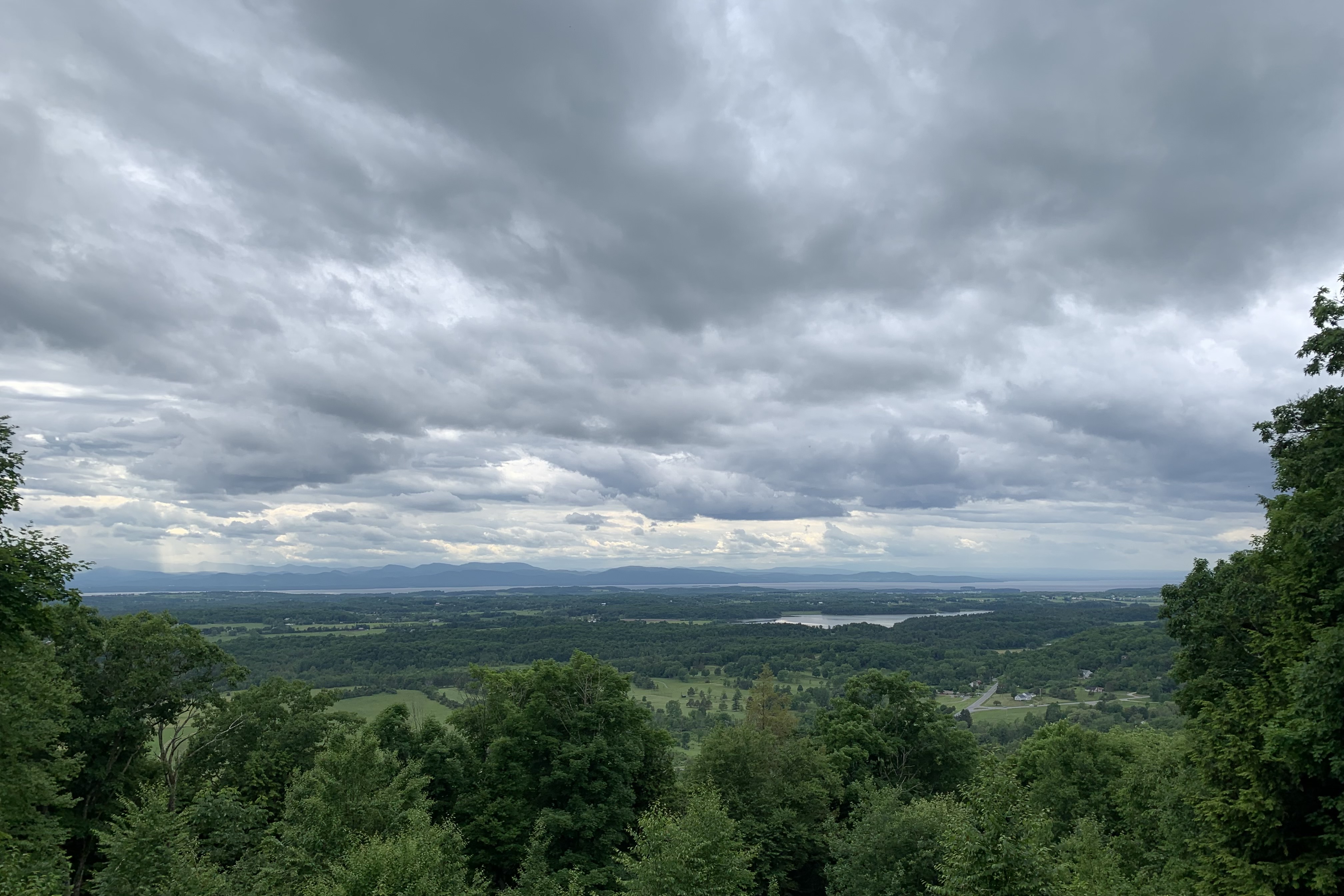
Our country is broad and rich, for here, within twenty miles of Boston, I can stand in a clearing in the woods and look a mile or more, over the shrub oaks, to the distant pine copses and horizon of uncut woods, without a house or road or cultivated field in sight. 

Sunset in winter from a clearing in the woods, about Well Meadow Head. 
December 20, 2019

They say that the Indians of the Great Basin live on the almonds of the pine. Have not I been fed by the pine for many a year? 

Go out before sunrise or stay out till sunset. 

H. D. Thoreau, Journal, December 20, 1851

<<<<< December 19, 1851                                                December 21, 1851 >>>>>

The Christian world will not admit that a man has a just perception of any truth, unless at the same time he cries, "Lord be merciful to me a sinner." See 1850? (“Repentance is not a free and fair highway to God. A wise man will dispense with repentance It is shocking and passionate. God prefers that you approach him thoughtful, not penitent, though you are the chief of sinners. It is only by forgetting yourself that you draw near to him.”)

A large hawk circling over a pine wood below me, and screaming, apparently that he might discover his prey by their flight. See December 20, 1857 ("A hen-hawk circling over that wild region. See its red tail.");See also June 15, 1852 ("I hear the scream of a great hawk, sailing with a ragged wing against the high wood-side, apparently to scare his prey and so detect it "); June 8, 1853 ("As I stand by this pond, I hear a hawk scream, and, looking up, see, a pretty large one circling not far off and incessantly screaming, as I at first suppose to scare and so discover its prey, but its screaming is so incessant and it circles from time to time so near me, as I move southward, that I begin to think it has a nest near by and is angry at my intrusion into its domains."); October 28, 1857 ,("His scream . . . is a hoarse, tremulous breathing forth of his winged energy. But why is it so regularly repeated at that height? Is it to scare his prey, that he may see by its motion where it is, or to inform its mate or companion of its where about? ") and A Book of the Seasons, by Henry Thoreau, The hen-hawk

Red, white, green, and, in the distance, dark brown are the colors of the winter landscape. See  December 21, 1855 ("A few simple colors now prevail."); December 21, 1854 ("Fair Haven Pond, for instance, a perfectly level plain of white snow, untrodden as yet by any fisherman, surrounded by snow-clad hills, dark evergreen woods, and reddish oak leaves, so pure and still.") See also December 20, 1854 ("It has been a glorious winter day, its elements so simple, —the sharp clear air, the white snow everywhere covering the earth, and the polished ice."); February 13, 1860 ("It is surprising what a variety of distinct colors the winter can show us,")

The trees indeed have hearts . . . like a group of settlers with their children.The pines impress me as human.
See February 15, 1841 ("The trees have come down to the bank to see the river go by.")

And he looked up, and said,
I see men as trees, walking.
— Mark 8:22-25.

The sun goes down apace behind glowing pines, and golden clouds like mountains skirt the horizon. Compare December 19, 1851 ("Why should it be so pleasing to look into a thick pine wood where the sunlight streams in and gilds it? . . .Now the sun sets suddenly without a cloud– & with scarcely any redness following so pure is the atmosphere – only a faint rosy blush along the horizon."); December 21 1851 (Long after the sun has set, and downy clouds have turned dark, and the shades of night have taken possession of the east, some rosy clouds will be seen in the upper sky over the portals of the darkening west.");  December 23, 1851 (“Now the sun has quite disappeared, but the afterglow, as I may call it, apparently the reflection from the cloud beyond which the sun went down on the thick atmosphere of the horizon, is unusually bright and lasting. Long, broken clouds in the horizon, in the dun atmosphere, — as if the fires of day were still smoking there, — hang with red and golden edging like the saddle cloths of the steeds of the sun. ”); December 24, 1851 (“When I had got home and chanced to look out the window from supper, I perceived that all the west horizon was glowing with a rosy border.”); December 25, 1851 (“I go forth to see the sun set. Who knows how it will set, even half an hour beforehand?”)

Go out before sunrise or stay out till sunset. See January 20, 1852 ("To see the sun rise or go down every day would preserve us sane forever.”); November 4, 1852 ("I keep out-of-doors for the sake of the mineral, vegetable, and animal in me."); June 5, 1854 ("I have come to this hill to see the sun go down, to recover sanity and put myself again in relation with Nature.”); December 29, 1856 (“We must go out and re-ally ourselves to Nature every day."); September 13, 1859 ("You must be outdoors long, early and late."); November 13, 1857 ("See the sun rise or set if possible each day.")

I can stand in a clearing in the woods and look a mile or more, over the shrub oaks, to the distant pine copses and horizon of uncut woods, without a house or road or cultivated field in sight. See January 22, 1852 ("I see, one mile to two miles distant on all sides from my window, the woods, which still encircle our New England towns.  . . . How long will these last?")

Go out before sunrise or stay out till sunset. See 
December 27, 1851 ("The man is blessed who every day is permitted to behold anything so pure and serene as the western sky at sunset, while revolutions vex the world.");  January 17, 1852 (“In proportion as I have celestial thoughts, is the necessity for me to be out and behold the western sky sunset these winter days. That is the symbol of the unclouded mind that knows neither winter nor summer.");  January 20, 1852  ("To see the sun rise or go down every day would preserve us sane forever.");  June 5, 1854 ("I have come to this hill to see the sun go down, to recover sanity and put myself again in relation with Nature.”); December 29, 1856 (“We must go out and re-ally ourselves to Nature every day."); January 7, 1857 ("I have told many that I walk every day about half the daylight . . . I come out to these solitudes, where the problem of existence is simplified."); November 13, 1857 ("See the sun rise or set if possible each day."); September 13, 1859 ("You must be outdoors long, early and late.")

December 20.  See A Book of the Seasons,  by Henry Thoreau,  December 20

Sunset in winter 
from a clearing in the woods –
gold clouds like mountains.


A Book of the Seasons
,  by Henry Thoreau, 
"A book, each page written in its own season,
out-of-doors, in its own locality.”
~edited, assembled and rewritten by zphx © 2009-2024

https://tinyurl.com/hdt-511220

Popular Posts Last 30 Days.

The week ahead in Henry’s journal

The week ahead in Henry’s journal
A journal, a book that shall contain a record of all your joy.
"A stone fruit. Each one yields me a thought." ~ H. D. Thoreau, March 28, 1859


I sit on this rock
wrestling with the melody
that possesses me.