Showing posts with label Hosmer Spring. Show all posts

Monday, March 4, 2019

What a perfectly New England sound is this voice of the crow!

March 4. 

Began to snow last evening, and it is now (early in the morning) about a foot deep, and raining. 

P. M. — To E. Hosmer Spring. 

Down Turnpike and back by E. Hubbard's Close. We stood still a few moments on the Turnpike below Wright's (the Turnpike, which had no wheel-track beyond Turtle's and no track at all beyond Wright's), and listened to hear a spring bird. 

We heard only the jay screaming in the distance and the cawing of a crow. What a perfectly New England sound is this voice of the crow! If you stand perfectly still anywhere in the outskirts of the town and listen, stilling the almost incessant hum of your own personal factory, this is perhaps the sound which you will be most sure to hear rising above all sounds of human industry and leading your thoughts to some far bay in the woods where the crow is venting his disgust. This bird sees the white man come and the Indian withdraw, but it withdraws not. Its untamed voice is still heard above the tinkling of the forge. It sees a race pass away, but it passes not away. It remains to remind us of aboriginal nature. 

I find near Hosmer Spring in the wettest ground, which has melted the snow as it fell, little flat beds of light-green moss, soft as velvet, which have recently pushed up, and lie just above the surface of the water. They are scattered about in the old decayed trough. (And there are still more and larger at Brister's Spring.) They are like little rugs or mats and are very obviously of fresh growth, such a green as has not been dulled by winter, a very fresh and living, perhaps slightly glaucous, green. 

The myosotis and bitter cress are hardly clean and fresh enough for a new growth. 

The radical leaves of the Ranunculus repens are conspicuous, but the worse for the wear; but the golden saxifrage has in one or two places decidedly and conspicuously grown, like the cowslip at Well Meadow and still more, rising in dense beds a half to three quarters of an inch above the water, the leaves, like those of the cowslip, only partly concealed and flatted out. This distinguishes the fresh-springing leaves of these two. 

Probably there is more of the chrysosplenium thus advanced in Concord than of the caltha. I see none of the last here. 

The surface of the snow thus rapidly melting and sinking (there are commonly some inches of water under it, the rain having soaked through), though still very fresh and pure white, is all cracked, as it were, like that of some old toadstools. It has sunk so much that every inequality in the surface of the ground be neath is more distinctly shown than when bare. 

The ruts of old wood-paths are represented in the surface a foot above, and the track of the man and of the dog that ran by the side of the team (in the old snow), — the thread, in short, of every valley. 

The surface of the snow, though so recent, is therefore, on account of the rain, very diversified. On steep slopes it is regularly furrowed, apparently by water that has flowed down it. 

In the brook in Hubbard's Close I see the grass pushing up from the bottom four or five inches long and waving in the current, which has not yet reached the surface. 

C. thinks this is called a sap snow, because it comes after the sap begins to flow. 

The story goes that at the Social Club the other night Cyrus Stow, hearing that the lecture before the Lyceum by Alger was to be on "The Sophistry of Ennui " and not knowing what that was, asked in good faith if it went by wind or water.

H. D. Thoreau, Journal, March 4, 1859

We listened to hear a spring bird. We heard only the jay screaming in the distance and the cawing of a crow. See February 18, 1855 ("I listen ever for something springlike in the notes of birds, some peculiar tinkling notes."); February 18, 1857 ("The snow is nearly all gone, and it is so warm and springlike that I walk over to the hill, listening for spring birds.");  March 1, 1855 ( "We go listening for bluebirds, but only hear crows and chickadees."); December 11, 1854 ("I hear rarely a bird except the chickadee, or perchance a jay or crow.") . See also  A Book of the Seasons,  by Henry Thoreau,  by Henry Thoreau, Signs of the Spring:  The crowing of cocks, the cawing of crows

The golden saxifrage has in one or two places decidedly and conspicuously grown. See March 4, 1852 ("The snow is melting on the rocks; the water trickles down in shining streams; the mosses look bright; the first awakening of vegetation at the root of the saxifrage.”); March 15. 1857 ("As usual at this date and earlier, there are a few square rods of green grass tufts at Brister’s springs, like a green fire under the pines and alders, and in one place an apparent growth of golden saxifrage"); March 18, 1853 ("At Conantum Cliff the columbines have started and the saxifrage even,. . .These plants waste not a day, not a moment, suitable to their development.")
.
I find near Hosmer Spring in the wettest ground, which has melted the snow as it fell, little flat beds of light-green moss, soft as velvet, which have recently pushed up. See  February 18, 1852 ("The mosses on the rocks look green where the snow has melted. This must be one of the spring signs, when spring comes.");  March 3, 1859 ("The mossy bank along the south side of Hosmer's second spring ditch is very interesting. There are many coarse, hair-like masses of that green and brown moss on its edge, hanging over the ditch, alternating with withered-looking cream-colored sphagnum tinged with rose-color, in protuberances, or mammae, a foot across on the perpendicular side of the ditch"); March 7 , 1855 ("At Brister’s Spring there are beautiful dense green beds of moss, which apparently has just risen above the surface of the water, tender and compact."); April 2, 1853 (" See the fine moss in the pastures with beautiful red stems even crimsoning the ground. This is its season."); April 2, 1856 (" There are beds of fresh green moss in the midst of the shallow water."):; April 18, 1856 ("That pretty, now brown-stemmed moss with green oval fruit"); April 25, 1857 ("The dense, green, rounded beds of mosses in springs and old water-troughs are very handsome now, — intensely cold green cushions.") See also 
A Book of the Seasons, by Henry Thoreau, Signs of the Spring: Mosses Bright Green and  A Book of the Seasons, by Henry Thoreau, At Brister's Spring

March 4. See A Book of the Seasons, by Henry Thoreau, March 4

The distant cawing –
aboriginal nature
this voice of the crow.

A Book of the Seasons, by Henry Thoreau, a perfectly New England sound 

A Book of the Seasons
, by Henry Thoreau
"A book, each page written in its own season,
out-of-doors, in its own locality.”
~edited, assembled and rewritten by zphx © 2009-2025


Thursday, May 3, 2018

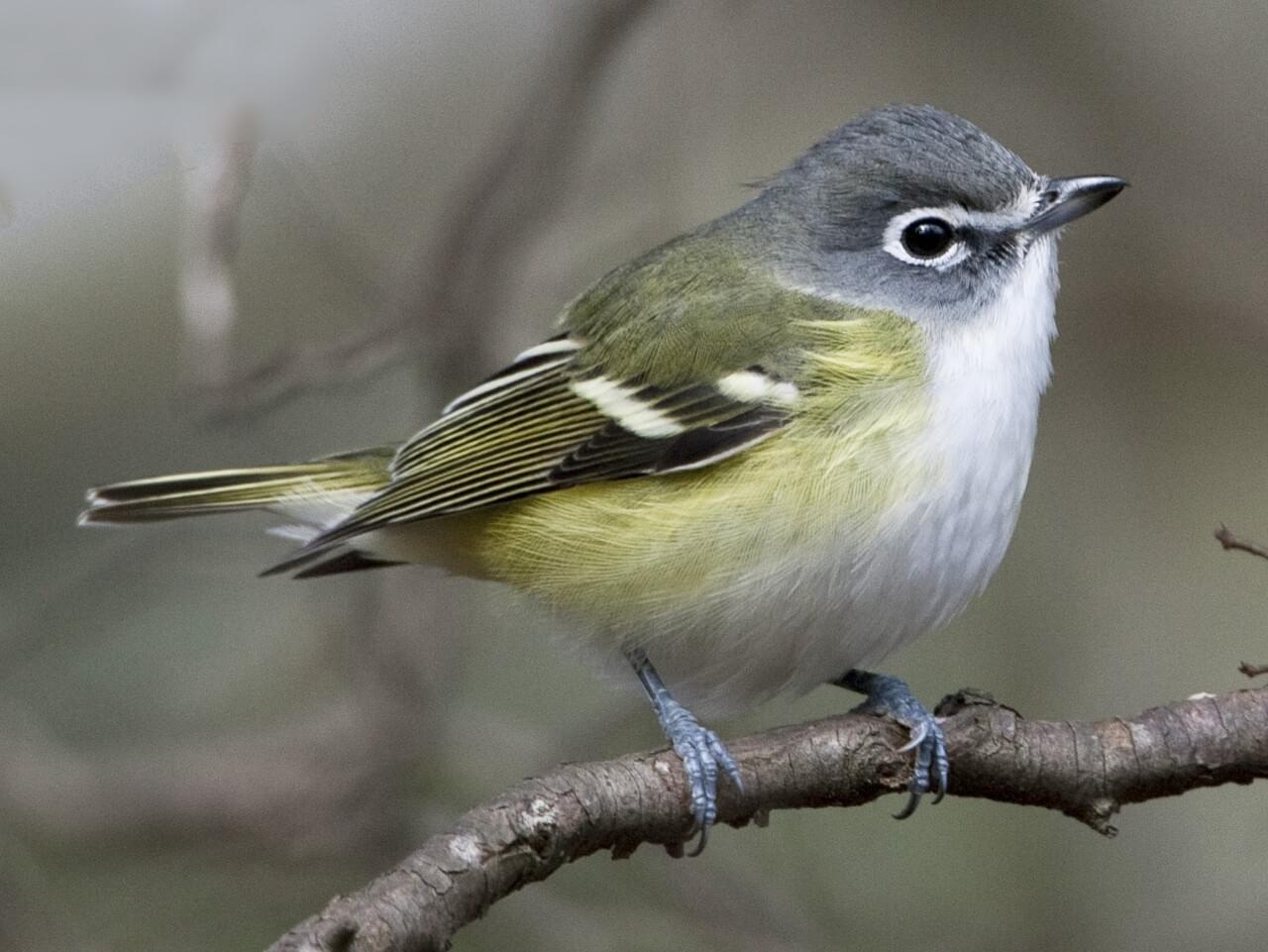
See and hear a new bird to me..

May 3


Vireo solitarius
(all about birds)

P. M. – Ride to Flint's Pond to look for Uvularia perfoliata. 

Salix purpurea in Monroe's garden effete. Apparently blooms with our early willows; say 10th of April? 

At Hosmer's medicinal (?) spring, Everett's farm, Ranunculus repens, abundantly out, apparently several days.

Hear of a peach out in Lincoln. 

Probably I heard the black and white creeper April 25th. I hear it and see it well to-day. 

Comptonia well out, how long? 

Viola cucullata, how long? 

Hear of robins' nests with four eggs. 

See no signs of the Uvularia perfoliata yet; apparently will not bloom within ten days. 

E. Hoar brings me a twig of a willow plucked in Newton, which was killed some weeks ago, when it had just begun to bloom. The catkins look peculiarly woolly, and the scales peculiarly rounded or blunt. Is it the eriocephala? 

Our earliest gooseberry not yet, perhaps because there will be but few blossoms on it this year. 

Partridges have been heard drumming. 

In the woods near the Uvularia perfoliata, see and hear a new bird to me. At first it was silent, and I took it for the common pewee, but, bringing my glass to bear on it, found it to be 
  • pure white throat and beneath, 
  • yellow on sides of body or wings, 
  • greenish-yellow back and shoulders, a white or whitish ring about eyes, 
  • and a light mark along side of head, 
  • two white bars on wings, 
  • apparently black bill and 
  • dark or perhaps slate-colored (?) wings and above tail. 
It surprised me by singing in a novel and powerful and rich strain. Yet it may be the white-eyed vireo (which I do not know), if it comes so early. Nuttall says it comes to Cambridge about the middle of April.

H. D. Thoreau, Journal, May 3, 1858

Ride to Flint's Pond to look for Uvularia perfoliata. ...  It apparently will not bloom within ten days
. See May 30, 1857 ("By the path near the northeast shore of Flint's Pond, just before reaching the wall by the brook, I . . .am surprised to find ... the Uvularia perfoliata, which I have not found hereabouts before. . . .. It is considerably past its prime “).  See also note to August 22, 1857 ("He says he found the Uvularia perfoliata on the Stow road, he thinks within Concord bounds.”) and A Book of the Seasons,  by Henry Thoreau, the Bellworts

Partridges have been heard drumming. See April 19, 1860 ("You will hear at first a single beat or two far apart and have time to say, "There is a partridge," so distinct and deliberate is it often, before it becomes a rapid roll."); April 25, 1854 ("The first partridge drums in one or two places, as if the earth's pulse now beat audibly with the increased flow of life. It slightly flutters all Nature and makes her heart palpitate."); April 29, 1857 ("C. says it makes his heart beat with it, or he feels it in his breast.")  See also A Book of Seasons,  by Henry Thoreau, the Partridge

Heard the black and white creeper April 25th. I hear it and see it well to-day. See April 28, 1856 ("I hear to-day frequently the seezer seezer seezer of the black and white creeper”);  May 3, 1852 ("That oven-birdish note which I heard here on May 1st I now find to have been uttered by the black and white warbler or creeper. He has a habit of looking under the branches."); May 4, 1858 ("I hear the weese wese wese of the creeper continually from the swamp. It is the prevailing note there.") See also A Book of the Seasons,   by Henry Thoreau, The Black and White Creeper

Comptonia well out, how long? See May 3, 1855 ("Sweet-fern opened apparently yesterday. "); See also A Book of the Seasons, by Henry Thoreau, The Sweet-Fern

It may be the white-eyed vireo. See May 9, 1858 ("I am now inclined to think it the solitary vireo. . .it had a blue-slate head, and, I note, a distinct yellowish vent, which none of the vireos are allowed to have!! The sides of the body are distinctly yellow, but there is none at all on the throat or breast.")

Wednesday, July 12, 2017

I drink at every cooler spring in my walk these afternoons / the earliest bobolinks of the season.

July 12.

P. M. — To Equiseium hyemale.

Those little minnows, a third or half inch long or more, which I catch when bathing, hovering over open sandy spaces, as here at Clamshell, appear to be little shiners. When left dry on my hand, they can toss themselves three or four inches with a spring of their tails, and so often get into the water again. Small as they are, it is rather difficult to catch them, they dodge your hands so fast.

I drink at every cooler spring in my walk these afternoons and love to eye the bottom there, with its pebbly caddis-cases, or its white worms, or perchance a luxurious frog cooling himself next my nose. 


Sometimes the farmer, foreseeing haying, has been prudent enough to sink a tub in one, which secures a clear deep space. 

It would be worth the while, methinks, to make a map of the town with all the good springs on it, indicating whether they were cool, perennial, copious, pleasantly located, etc. The farmer is wont to celebrate the virtues of some one on his own farm above all others. Some cool rills in the meadows should be remembered also, for some such in deep, cold, grassy meadows are as cold as springs. I have sometimes drank warm or foul water, not knowing such cold streams were at hand. By many a spring I know where to look for the dipper or glass which some mower has left.

When a spring has been allowed to fill up, to be muddied by cattle, or, being exposed to the sun by cutting down the trees and bushes, to dry up, it affects me sadly, like an institution going to decay. Sometimes I see, on one side the tub, — the tub overhung with various wild plants and flowers, its edge almost completely concealed even from the searching eye, — the white sand freshly cast up where the spring is bubbling in. 

Often I sit patiently by the spring I have cleaned out and deepened with my hands, and see the foul water rapidly dissipated like a curling vapor and giving place to the cool and clear. 

Sometimes I can look a yard or more into a crevice under a rock, toward the sources of a spring in a hillside, and see it come cool and copious with incessant murmuring down to the light. There are few more refreshing sights in hot weather. 

I find many strawberries deep in the grass of the meadow near this Hosmer Spring; then proceed on my way with reddened and fragrant fingers, till it gets washed off at new springs. 

It is always pleasant to go over the bare brow of Lupine Hill and see the river and meadows thence. 

It is exceedingly sultry this afternoon, and few men are abroad. The cows stand up to their bellies in the river, lashing their sides with their tails from time to time. 

A strong and wholesome fragrance now from the vegetation as I go by overgrown paths through the swamp west of Nut Meadow. 

Equisetum hyemale has been out a good while; is mostly effete, but some open yet. Some have several flower-spikes on the sides near the top, but most one at top, of the last year's plant. This year's shoots a foot high, more or less. 

All the Pyrola secunda I can find is out of bloom. 

The Chimaphila umbellata flower-buds make a very pretty umbel, of half a dozen small purple balls surmounted by a green calyx. They contrast prettily with the glossy green leaves. 

A song sparrow's nest in a small clump of alder, two feet from ground! Three or four eggs. 

I hear the occasional link note from the earliest bobolinks of the season, — a day or two.

H. D. Thoreau, Journal, July 12, 1857

Those little minnows, a third or half inch long or more, which I catch when bathing at Clamshell.   See June 27, 1853 ("Saw a little pickerel with a minnow in his mouth. It was a beautiful little silver-colored minnow, two inches long, with a broad stripe down the middle."); June 28, 1855 ("Shoals of minnows a half-inch long."); July 16, 1856 ("I See many young shiners (?) (they have the longitudinal bar), one to two and a half inches long"); July 17, 1856 ("Bathed at Clamshell. See great schools of minnows, apparently shiners, hovering in the clear shallow next the shore . . . a broad, distinct black band along sides (which methinks marks the shiner) and note to May 3, 1860 ("little fishes one and a half to two inches long, with a very distinct black line along the sides, which I should have called brook minnows")  See also A Book of the Seasons, by Henry Thoreau, The Luxury of Bathing

I drink at every cooler spring . . . and love to eye the bottom there, with its pebbly caddis-cases . . . See July 17, 1856 "Stooping to drink at the Hosmer Spring, I saw a hundred caddis-cases, of light-colored pebbles, at the bottom, and a dozen or twenty crawled half-way up the side of the tub, apparently on their way out to become perfect insects.")

Some cool rills in the meadows should be remembered also, for some such in deep, cold, grassy meadows are as cold as springs. See August 19, 1852 ("Here [at the Corner Spring] is a little brook of very cold spring-water, rising a few rods distant, sometimes running underground, meandering exceedingly, with a gray sandy and pebbly bottom, flowing through this dense swampy thicket.. . . The water has the coldness it acquired in the bowels of the earth."); October 10, 1860("In August, '55, I levelled for the artificial pond at Sleepy Hollow. They dug gradually for three or four years and completed the pond last year, '59. It is now about a dozen rods long by five or six wide and two or three deep, and is supplied by copious springs in the meadow.")

The Chimaphila umbellata flower-buds make a very pretty umbel, of half a dozen small purple balls surmounted by a green calyx. They contrast prettily with the glossy green leaves. See February 16, 1854 ("It must be the leaves of the Chimaphila umbellate, spotted wintergreen, which Channing left here day before yesterday.Snows again this morning."); February 16, 1855 (“I see where probably rabbits have nibbled of the leaves of the Wintergreen.”); May 21, 1860 ("Wintergreen had started the 18th at least");  July 3, 1852 ("The Chimaphila umbellata, wintergreen, must have been in blossom some time. The back side of its petals, "cream colored tinged with purple," which is turned toward the beholder, while the face is toward the earth, is the handsomest. It is a very pretty little chandelier of a flower, fit to adorn the forest floor.”); July 8, 1857 ("Chimaphila umbellata, apparently a day or two."); July 17, 1857 ("An abundance of chimaphila in bloom. It is a beautiful flower, with its naked umbel of crystalline purplish-white flowers, their disks at an angle with the horizon. On its lower side a ring of purple (or crimson) scales at the base of its concave petals, around the large, green, sticky ovary."); July 24, 1856 ("Chimaphila maculata, three flowers, apparently but few days, while the umbellata is quite done.");  November 16, 1858 (“Methinks the wintergreen, pipsissewa, is our handsomest evergreen, so liquid glossy green and dispersed almost all over the woods.”); December 7, 1853 ("The liquid wet glossy leaves of the Chimaphila (winter or snow-loving) umbellata, with its dry fruit.")

Often I sit patiently by the spring I have cleaned out . . . See July 11, 1857("Am surprised to find the water of Corner Spring spoiled for the present, however much I clear it out, by the numbers of dead and dying frogs in it (Rana palustris). ")

I hear the occasional link note from the earliest bobolinks of the season . . . See July 11, 1856 ('Hear now the link of bobolinks, and see quite a flock of red-wing blackbirds and young. "); July 15, 1854 ("I hear the link link of the bobolink,. . . . Many birds begin to fly in small flocks like grown-up broods."); July 19, 1855 ("Young bobolinks; one of the first autumnalish notes.") July 15, 1856 ("Bobolinks are heard — their link, link — above and amid the tall rue which now whitens the meadows.") See also A Book of the Seasons,  by Henry Thoreau, the Bobolink


July 12. See A Book of the Seasons,  by Henry Thoreau, July 12

A Book of the Seasons,  by Henry Thoreau
"A book, each page written in its own season,
out-of-doors, in its own locality.”
~edited, assembled and rewritten by zphx © 2009-2021

Sunday, July 17, 2016

Hear at distance the hum of bees like the rumbling of a distant train of cars.

July 17

Found a great many insects in white lilies which opened in pan this forenoon, which had never opened before. What regular and handsome petals! regularly concave toward the inside, and calyx hooked at tip. 

P. M. — To Water Dock Meadow and Linnaea Hill side. 

Hear a new note from bank swallows when going over the Hosmer pastures, a sort of screep screep, shrill and like what I have referred to the barn swallow. They are probably out with young. 

Ludwigia palustris and ilysanthes have been out apparently some time on the flat Hosmer shore or meadow, where the surface has been laid bare by the ice. 

There, too, the Hypericum Sarothra has pushed up abundantly. 

I see many young toads hopping about on that bared ground amid the thin weeds, not more than five eighths to three quarters of an inch long; also young frogs a little larger. 

Horse-mint out at Clamshell, apparently two or three days.

Bathed at Clamshell. See great schools of minnows, apparently shiners, hovering in the clear shallow next the shore. They seem to choose such places for security. They take pretty good care of themselves and are harder to catch with the hands than you expect, darting out of the way at last quite swiftly. Caught three, however, between my hands.

They have brighter golden irides, all the abdomen conspicuously pale-golden, the back and half down the sides pale-brown, a broad, distinct black band along sides (which methinks marks the shiner), and comparatively transparent beneath behind vent. 

When the water is gone I am surprised to see how they can skip or spring from side to side in my cup-shaped two hands for a long time. This to enable them to get off floating planks or pads on the shore when in fright they may have leaped on to them. But they are very tender, and the sun and air soon kill them. If there is any water in your hand they will pass out through the smallest crack between your fingers. They are about three quarters of an inch long generally, though of various sizes. 

Half a dozen big bream come quite up to me, as I stand in the water. They are not easily scared in such a case. 

The large skunk-cabbage fruit looks quite black now where the haymakers have passed. 

Stooping to drink at the Hosmer Spring, I saw a hundred caddis-cases, of light-colored pebbles, at the bottom, and a dozen or twenty crawled half-way up the side of the tub, apparently on their way out to become perfect insects. 

Cows in their pasture, going to water or elsewhere, make a track four or five inches deep and frequently not more than ten inches wide. 

The great water dock has been out some days at least. Its valves are quite small at first, but lower leaves pointed. 

I hear in the meadow there a faint incessant z-ing sound, as of small locusts in the meadow-grass. 

Under the oak in Brown's moraine pasture, by Water Dock Meadow, a great arum more than three feet high, like a tropical plant, in open land, with leafets more than a foot long. There is rich-weed there, apparently not quite out. 

Going up the hillside, between J. P. Brown's and rough-cast house, am surprised to see great plump ripe low blackberries. How important their acid (as well as currants) this warm weather! 

It is 5 p. m. The wood thrush begins to sing. A very warm afternoon. Thermometer at 97° at the Hosmer Desert. I hear the early locust. 

I have come to collect birds' nests. The thrasher's is apparently made partly beneath the surface, some dirt making its sides. I find the nests by withered twigs and leaves broken off in the spring, but commonly nearly concealed by the recent growth. 

The jay's nest had been filled with white oak leaves. Not one could have been blown into it. 

On Linnaea Hill many thimble-berries and some raspberries.


July 17, 2016
. 
Evening by river to Ed. Homer’s

Hear at distance the hum of bees from the bass with its drooping flowers at the Island, a few minutes only before sunset. It sounds like the rumbling of a distant train of cars. 

Returning after ten, by moonlight, see the bullfrogs lying at full length on the pads where they trump.

July 17, 2016

H. D. Thoreau, Journal, July 17, 1856

White lilies which opened in pan this forenoon, which had never opened before. What regular and handsome petals! See July 1, 1852 ("Tto see the white lilies in blossom...to breathe the atmosphere of lilies, and get the full impression which lilies are fitted to make. ... After eating our luncheon I can not find one open anywhere for the rest of the day."); July 17, 1854 ("I could tell when it was 12 o'clock within half an hour by the lilies.");July 20, 1853 ("Coming home at twelve, I see that the white lilies are nearly shut");  July 26, 1856 ("At five [A.M.] the lilies had not opened, but began about 5.15 and were abundantly out at six")

Hear a new note from bank swallows . . . They are probably out with young. See  May 20, 1858 ("The principal note is the low grating sound of the bank swallow,"); July 10, 1854 ("Barn swallow, bank swallow, etc., numerous with their young for a week or two")

On the flat Hosmer shore or meadow, where the surface has been laid bare by the ice . . .the Hypericum Sarothra has pushed up abundantly. See July 13, 1853 ("On the hard, muddy shore opposite Dennis’s, in the meadow, Hypericum Sarothra in dense fields,"); See also A Book of the Seasons,  by Henry Thoreau, St. Johns-wort (Hypericum)

 I see many young toads hopping about on that bared ground amid the thin weeds, not more than five eighths to three quarters of an inch long. See July 17, 1853 ("Young toads not half an inch long at Walden shore"); July 25, 1855  ("Many little toads about.") See also A Book of the Seasons,  by Henry Thoreau, Midsummer Toads

They have . . . a broad, distinct black band along sides (which methinks marks the shiner), and comparatively transparent beneath behind vent. See March 29, 1854 ("Poised over the sand on invisible fins, the outlines of a shiner". . . "distinct longitudinal light-colored line midway along their sides and a darker line below it”)

Cows in their pasture, going to water or elsewhere, make a track four or five inches deep and frequently not more than ten inches wide. See August 1850 ("I notice that cows never walk abreast, but in single file commonly, making a narrow cow-path.") See also A Book of the Seasons,  by Henry Thoreau, Cows in their Pasture

Surprised to see great plump ripe low blackberries. See  July 17, 1852 ("Notwithstanding the rain, some children still pursue their blackberrying on the Great Fields.") See also  A Book of the Seasons, by Henry Thoreau, Blackberries

It is 5 p. m. The wood thrush begins to sing.
See July 19, 1854 ("A wood thrush to-night."); July 20, 1852 ("It is starlight. . . .And now, when we had thought the day birds gone to roost, the wood thrush takes up the strain.") See also A Book of the Seasons, by Henry Thoreau, The Wood Thrush

A very warm afternoon. Thermometer at 97° at the Hosmer Desert. I hear the early locust. See. July 18, 1851 ("I first heard the locust sing, so dry and piercing, by the side of the pine woods in the heat of the day"); July 19, 1854 ("The more smothering, furnace-like heats are beginning, and the locust days. ") See also A Book of the Seasons,  by Henry Thoreau, Locust Days, Dogdayish Days

On Linnaea Hill many thimble-berries and some raspberries. See July 13, 1856 ("Thimble-berries are now fairly ripe and abundant");  July 18, 1854 ("As I go along the Joe Smith road, every bush and bramble bears its fruit; the sides of the road are a fruit garden; blackberries, huckleberries, thimble-berries, fresh and abundant, no signs of drought; all fruits in abundance; the earth teems. ")

Hear at distance the hum of bees from the bass . . . like the rumbling of a distant train of cars.
See  July 17, 1854 ("I was surprised by the loud humming of bees, etc., etc., in the bass tree; thought it was a wind rising at first. Methinks none of our trees attract so many.") See also July 14, 1856 ("Bass out about two days at Island."); July 16, 1852 ("
The bass on Conantum is a very rich sight now, a solid mass of verdure and of flowers with its massed and rounded outline.  Its twigs are drooping, weighed down with pendulous flowers . . .The tree resounds with the hum of bees . . . a sound unlike any other in nature.”) July 18, 1854 ("At a little distance it is like the sound of a waterfall or of the cars; close at hand like a factory full of looms.”);  and A Book of the Seasons, by Henry Thoreau, The Basswood

See the bullfrogs lying at full length on the pads where they trump. See July 16, 1856 ("See several bullfrogs lying fully out on pads at 5 p. m. They trump well these nights. ");  July 17, 1860 ("Clean and handsome bullfrogs. . .sit imperturbable out on the stones all around the pond.”) See also
 June 13, 1851 ("The different frogs mark the seasons pretty well . . . The bullfrog belongs to summer.")

Distant hum of bees
at sunset from the bass with
its drooping flowers.

A Book of the Seasons, by Henry Thoreau
"A book, each page written in its own season,
out-of-doors, in its own locality."
~edited, assembled and rewritten by zphx ©  2009-2026

https://tinyurl.com/hdt-560717

Saturday, May 21, 2016

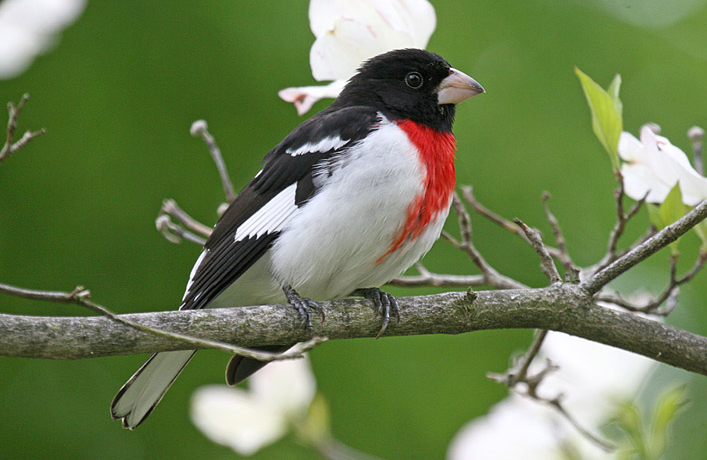
Two splendid rose-breasted grosbeaks.

May 21. 
Wednesday. P. M. — To Saw Mill Brook. 

Chelidonium.

Rubus triflorus abundantly out at the Saw Mill Brook; how long? 

A robin’s nest without mud, on a young white oak in woods, with three eggs. 

Saw two splendid rose-breasted grosbeaks with females in the young wood in Emerson’s lot. What strong colored fellows, black, white, and fiery rose-red breasts! Strong-natured, too, with their stout bills. A clear, sweet singer, like a tanager but hoarse somewhat, and not shy. 

The redstarts are inquisitive and hop near. 


Solomon’s seal
May 21, 2016
The Polygonatum pubescens there, in shade, almost out; perhaps elsewhere already. 

At the trough near Turnpike, near Hosmer’s Spring, the (perhaps) Stellaria borealis of the 15th. I am still in doubt whether it is a stellaria or cerastium. This is quite smooth, four to five inches high, spreading and forking, with a single flower each fork, on a long peduncle; square-stemmed, oblong—lanceolate leaves, slightly ciliate and connate: ten stamens, five long, five short. Aspect of a smooth cerastium, but this has four to seven styles, oftenest perhaps five, all apetalous, except one petal shorter than the calyx; leaves one-nerved, sepals three-nerved! The bare and small plants are reddish stemmed. Can it be Stellaria longipes? 

The buck-bean in Everett’s Pool abundantly out, say four or five days. It is earlier than at B. Stow’s.

Myosotis laxa by Turnpike, near Hosmer Spring, may have been out several days; two or three at least.

H. D. Thoreau, Journal, May 21, 1856

Rubus triflorus abundantly out at the Saw Mill Brook; how long? See May 18, 1857 ("The Rubus triflorus is well out there on the hummocks."); May 28, 1855 (" Rubus triflorus at Miles Swamp will apparently open to-morrow."); June 30, 1854 ("Rubus triflorus berries, some time, — the earliest fruit of a rubus. The berries are very scarce, light red, semitransparent, showing the seed") See also A Book of the Seasons,  by Henry Thoreau, the Raspberry

A robin’s nest without mud, on a young white oak in woods, with three eggs. See May 21, 1852 ("Also a robin's nest and eggs in the crotch of a maple.");See also  May 6. 1855 (''A robin’s nest with two eggs, betrayed by peeping."); May 13, 1853 ("A robin's nest, with young, on the causeway"); May 19, 1854 ("The robin's nest and eggs are the earliest I see.") and A Book of the Seasons,  by Henry Thoreau,  Robins in Spring

Two splendid rose-breasted grosbeaks. See May 18, 1856 ("A large bird on a tree top, a sort of flaxen olive. Made me think of a female rose-breasted grosbeak");  May 24, 185 5("Hear a rose-breasted grosbeak. At first think it a tanager, but soon I perceive its more clear and instrumental . . . Black all above except white on wing, with a triangular red mark on breast but, as I saw, all white beneath this. Female quite different, yellowish olivaceous above"); May 25, 1854 ("The rose-breasted grosbeak, a handsome bird with a loud and very rich song, in character between that of a robin and a red-eye. It sings steadily like a robin. Rose breast, white beneath, black head and above, white on shoulder and wings ") See also A Book of the Seasons,  by Henry Thoreau, the Rose-breasted Grosbeak

The redstarts are inquisitive and hop near. See May 10, 1853 ("Is it the redstart? I now see one of these. The first I have distinguished . . . As I sit, it inquisitively hops nearer and nearer.");  May 26, 1855 ("I lay on my back again in Conant's thick wood. Saw a redstart over my head there; black with a sort of brick red on sides [of] breast, spot on wing  and under root of tail. Note heard once next day, at Kalmia Swamp, somewhat like aveet aveet aveet aveet.") See also  A Book of the Seasons, by Henry Thoreau,  The American Redstart

The Polygonatum pubescens there, in shade, almost out; perhaps elsewhere already . See May 12, 1855 ("One flower of the Polygonatum pubescent open there [under Lee’s Cliff]; probably may shed pollen to-morrow.”);  May 20, 1858 ("The Polygonatum pubescens, not quite."); May 22, 1856 ("Polygonatum pubescens at rock."); May 25, 1852 ("Polygonatum pubescens ready to bloom."); See also A Book of the Seasons,  by Henry Thoreau, Solomon's Seal

The (perhaps) Stellaria borealis of the 15th. I am still in doubt whether it is a stellaria or cerastium. See May 15, 1856 ("I find what may be the Stellaria borealis [boreal starwort/stitchwort](if it is not the longifolia [long-leaved stitchwort], but it is not in cymes like that; only a single flower to each axil, now at  least);); May 23, 1856 ("The stellaria at Heywood Spring must be the same with that near the E. Hosmer Spring, though the former has commonly fewer styles and rather slenderer leaves.  It appears to be the S. borealis, though the leaves are narrowly lanceolate; has three to seven styles; a few petals (cleft almost to the bottom) or none; pods, some larger than the calyx  and apparently ten-ribbed; petals, now about the length of the sepals.");  June 8, 1856 ("Stellaria longrfolia opposite Barbarea Shore not yet out. It is obviously different from what I call S. borealis."); See also June 6, 1854 ("The Stellaria longifolia has been out, apparently, a day or two.");  May 19, 1858  ("Stellaria borealis well out, apparently several days."); June 6, 1859 ("Stellaria longifolia, at Well Meadow Head, how long?"); May 29, 1860 ("Saw, in a shaded swamp beyond, the Stellaria borealis, still out, — large, broadish leaves.")

The buck-bean in Everett’s Pool abundantly out. See May 11, 1853 ("The buck-bean is budded, but hard to find now."); May 17, 1853 ("The buck-bean is out, apparently to-day, the singularly fuzzy- looking blossom. How inconspicuous its leaves now!");  May 19, 1858 ("Looking with my glass into the Gourgas pond-hole, I see three or four buck-bean blossoms."); May 24, 1855 ("Buck-bean just fairly begun, though probably first the 18th; a handsome flower.")

Myosotis laxa . . . may have been out several days See June 12, 1852 ("The mouse-ear forget me-not (Myosotis laxa) . . .is one of the most interesting minute flowers. It is the more beautiful for being small and unpretending, for even flowers must be modest..") See also See also A Book of the Seasons, by Henry Thoreau, the Mouse-ear forget-me-not 

May 21.  See A Book of the Seasons,  by Henry Thoreau, May 21

Strong colored fellows
black, white, and fiery red -
rose-breasted grosbeaks.

A Book of the Seasons, by Henry Thoreau
"A book, each page written in its own season,
out-of-doors, in its own locality.”
~edited, assembled and rewritten by zphx © 2009-2026

https://tinyurl.com/hdt-560521

Popular Posts Last 30 Days.

The week ahead in Henry’s journal

The week ahead in Henry’s journal
A journal, a book that shall contain a record of all your joy.
"A stone fruit. Each one yields me a thought." ~ H. D. Thoreau, March 28, 1859


I sit on this rock
wrestling with the melody
that possesses me.