Showing posts with label skunk cabbage. Show all posts

Thursday, March 2, 2023

A Book of the Seasons, Signs of the Spring: the Skunk Cabbage Blooms


I would make a chart of our life, 
know why just this circle of creatures completes the world.
Henry Thoreau, April 18, 1852. 

The honeybee stretches
and goes forth in search of the
earliest flower.

The spring flower too
expects a winged visitor 
knocking at its door.
March 18, 1860
Botanic Remedies in Colonial Massachusetts, 1620–1820

January 28. The skunk-cabbage in the water is already pushed up, and I find the pinkish head of flowers within its spathe bigger than a pea.  January 28, 1852

February 13
.
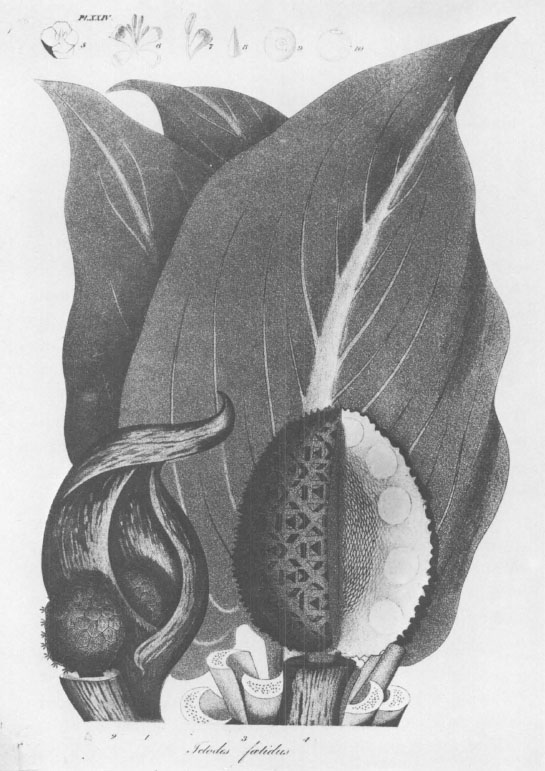
 Saw in a warm, muddy brook in Sudbury, quite open and exposed, the skunk-cabbage spathes above water. The tops of the spathes were frost- bitten, but the fruit sound. There was one partly expanded. The first flower of the season; for it is a flower. I doubt if there is [a] month without its flower. Examined by the botany all its parts, the first flower I have seen. The Ictodes fætidus. February 13, 1851

February 18. See the skunk-cabbage in flower. February 18, 1851

February 23.   I have seen signs of the spring.  February 23, 1857

February 27. I noticed yesterday that the skunk-cabbage had not started yet at Well Meadow, and had been considerably frost-bitten. February 27, 1860

March 2.  Under the alders at Well Meadow I see a few skunk- cabbage spathes fairly open on the side, and these may bloom after a day or two of pleasant weather. But for the most part, here and generally elsewhere, the spathes are quite small, slender, and closed as yet, or frost bitten. March 2, 1859

March 2.  Thinking to look at the cabbage as I pass under Clamshell, I find it very inconspicuous. Most would have said that there was none there. The few tallest and slenderest but tender ones were frost-bitten and far from blooming, but I found three or four more, broad and stout, – a hardy mahogany-colored one, but very low, half covered with the withered sedge, which it lifted up with it, and not apparently open. Putting my finger into one, the broadest and lowest, which opened about half an inch and stood with its back to the west (while they are all sheltered by the hill on the north), I was surprised when I drew it forth to see it covered with pollen. It was fairly in bloom, and probably yesterday too. Evidently some buds are further advanced than others even when the winter comes, and then these are further expanded and matured in advance of the others in the very warm days in the winter. No doubt it may have bloomed in some places in this neighborhood in the last day or two of February this year. Unusually warm weather in February, with bare ground where they grow, may cause them to bloom before February is over. Most would not have detected any change in it since the fall. March 2, 1860

March 3. All the lower part of steep southern slopes of hills is now commonly bare, — though the snow may be pretty deep on the brow, — especially the springy bases where the skunk-cabbage, etc., grow. How imperceptibly the first springing takes place! March 3, 1859

March 5.  Those skunk-cabbage buds which are most advanced have cast off their outmost and often frost-bitten sheaths, and the spathe is broader and slightly opened (some three quarters of an inch or more already) and has acquired brighter and more variegated colors. The out side of the spathe shows some ripeness in its colors and markings, like a melon-rind, before the spadix begins to bloom. I find that many of the most forward spathes, etc., have been destroyed since I was here three days ago. Some animal has nibbled away a part of the spathes (or sometimes only a hole in it) — and I see the fragments scattered about — and then eaten out the whole of the spadix. Indeed, but few forward ones are left. March 5, 1859

March 6. To Goose Pond. I see the skunk-cabbage started about the spring at head of Hubbard's Close, amid the green grass, and what looks like the first probing of the skunk. March 6, 1854

March 8As the ice melts in the swamps I see the horn-shaped buds of the skunk-cabbage, green with a bluish bloom, standing uninjured, ready to feel the influence of the sun, - the most prepared for spring—to look at— of any plant. March 8, 1855

March 8You cannot say that vegetation absolutely ceases at any season in this latitude; for there is grass in some warm exposures and in springy places, always growing more or less, and willow catkins expanding and peeping out a little further every warm day from the very beginning of winter, and the skunk cabbage buds being developed and actually flowering sometimes in the winter, and the sap flowing [in] the maples in midwinter in some days,. . .There is something of spring in all seasons. March 8, 1860

March 10By John Hosmer's ditch by the riverside I see the skunk-cabbage springing freshly, the points of the spathes just peeping out of the ground, in some other places three inches high even. The radical leaves of innumerable plants (as here a dock in and near the water) are evidently affected by the spring influences. Many plants are to some extent evergreen, like the buttercup now beginning to start. Methinks the first obvious evidence of spring is the pushing out of the swamp willow catkins, then the relaxing of the earlier alder catkins, then the pushing up of skunk-cabbage spathes (and pads at the bottom of water). This is the order I am inclined to, though perhaps any of these may take precedence of all the rest in any particular case. March 10, 1853

March 10.  At present I should say that the vegetable kingdom showed the influence of the spring as much in the air as in the water, that is, in the flowing of the sap, the skunk-cabbage buds, and the swelling of the willow catkins. March 10, 1854

March 18Examining the skunk-cabbage, now generally and abundantly in bloom all along under Clamshell, I hear the hum of honeybees in the air, attracted by this flower. They circle about the bud at first hesitatingly, then alight and enter at the open door and crawl over the spadix, and reappear laden with the yellow pollen.What a remarkable instinct it is that leads them to this flower! The first sunny and warmer day in March the honeybee leaves its home, probably a mile off, and wings its way to this warm bank. There is but one flower in bloom in the town, and this insect knows where to find it. You little think that it knows the locality of early flowers better than you. You have not dreamed of them yet. Yet it knows a spot a mile off under a warm bank-side where the skunk-cabbage is in bloom. No doubt this flower, too, has learned to expect its winged visitor knocking at its door in the spring. March 18, 1860

March 21.   The skunk-cabbage at Clamshell is well out, shedding pollen. It is evident that the date of its flowering is very fluctuating, according to the condition in which the winter leaves the crust of the meadow. March 21, 1858

March 22.  The spearheads of the skunk cabbage are now quite conspicuous.  I see that many flowers have been destroyed by the cold. In no case is the spathe unrolled, and I think it is not yet in blossom. March 22, 1853

March 22.   The phenomena of an average March . . . The skunk-cabbage begins to bloom (23d) . . . Many insects and worms come forth and are active,-- and the perla insects still about ice and water, — as tipula, grubs, and fuzzy caterpillars, minute hoppers on grass at springs; gnats, large and small, dance in air; the common and the green fly buzz outdoors; the gyrinus, large and small, on brooks, etc., and skaters; spiders shoot their webs, and at last gossamer floats; the honey bee visits the skunk-cabbage; fishworms come up, sow-bugs, wireworms  etc.; various larvæ are seen in pools; small green and also brown grasshoppers begin to hop, small ants to stir (25th); Vanessa Antiopa out 29th; cicindelas run on sand; and small reddish butterflies are seen in wood-paths, etc., etc., etc.  March 22, 1860

*****
So I came in and
shut the door and passed my first
spring night in the woods.
Walden, Spring

It will take you half a lifetime
to find out where to look for the earliest flower.
April 2, 1856


See also Signs of the Spring:


A Book of the Seasons,  by Henry Thoreau, Signs of Spring: the Skunk Cabbage
A Book of the Seasons,  by Henry Thoreau
 "A book, each page written in its own season, 
out-of-doors, in its own locality."
 ~edited, assembled and rewritten by zphx ©  2009-2023

Wednesday, April 6, 2022

Flowers advance as steadily as a clock. Nature loses not a moment, takes no vacation.


April 6.


6 A. M. – To Cliffs.

April 6, 2021

The robin is the singer at present, such is its power and universality, being found both in garden and wood. Morning and evening it does not fail, perched on some elm or the like, and in rainy days it is one long morning or evening.

The song sparrow is still more universal but not so powerful.

The lark, too, is equally constant, morning and evening, but confined to certain localities, as is the blackbird to some extent.

The bluebird, with feebler but not less sweet warbling, helps fill the air, and the pheobe does her part.

The tree sparrow, F. hyemalis, and fox-colored sparrows make the meadow-sides or gardens where they are flitting vocal, the first with its canary-like twittering, the second with its lively ringing trills or jingle. The third is a very sweet and more powerful singer, which would be memorable if we heard him long enough.

The woodpecker's tapping, though not musical, suggests pleasant associations in the cool morning,-is inspiriting, enlivening.

I hear no hylas nor croakers in the morning. Is it too cool for them?

The gray branches of the oaks, which have lost still more of their leaves, seen against the pines when the sun is rising and falling on them, how rich and interesting! 

From Cliffs see on the still water under the hill, at the outlet of the pond, two ducks sailing, partly white.

Hear the faint, swelling, far-off beat of a partridge.

Saw probably female red-wings (?), grayish or dark ashy-brown, on an oak in the woods, with a male (?) whose red shoulder did not appear.

How many walks along the brooks I take in the spring! What shall I call them? Lesser riparial excursions? Prairial? rivular?

When I came out there was not a speck of mist in the sky, but the morning without a cloud is not the fairest.

Now, 8.30 A. M., it rains. Such is April.

A male willow, apparently same with that at H.'s Bridge, or No. 2, near end of second track on west. Another male by ring-post on east side, long cylindrical catkins, now dark with scales, which are generally more rounded than usual and reddish at base and not lanceolate, turning backwards in blossom and exposing their sides or breasts to the sun, from which side burst forth fifty or seventy-five long white stamens like rays, tipped with yellow anthers which at first were reddish above, spears to be embraced by invisible Arnold Winkelrieds; — reddish twigs and clear gray beneath.

These last colors, especially, distinguish it from Nos. 1 and 2. Also a female, four or five rods north of last, just coming into bloom, with very narrow tapering catkins, lengthening already, some to an inch and a half, ovaries conspicuously stalked; very downy twigs, more reddish and rough than last below.

If we consider the eagle as a large hawk, how he falls in our estimation! 

Our new citizen Sam Wheeler has a brave new weathercock all gilt on his new barn. This morning at sunrise it reflected the sun so brightly that I thought it was a house on fire in Acton, though I saw no smoke, but that might well be omitted.

The flower-buds of the red maple have very red inner scales, now being more and more exposed, which color the tree-tops a great distance off.


P. M.-To Second Division Brook.

Near Clamshell Hill, I scare up in succession four pairs of good-sized brown or grayish-brown ducks. They go off with a loud squeaking quack. Each pair is by itself. One pair on shore some rods from the water.  Is not the object of the quacking to give notice of danger to the rest who cannot see it? 


All along under the south side of this hill on the edge of the meadow, the air resounds with the hum of honey-bees, attracted by the flower of the skunk cabbage. I first heard the fine, peculiarly sharp hum of the honey-bee before I thought of them. Some hummed hollowly within the spathes, perchance to give notice to their fellows that plant was occupied, for they repeatedly looked in, and backed out on finding another.

It was surprising to see them, directed by their instincts to these localities, while the earth has still but a wintry aspect so far as vegetation is concerned, buzz around some obscure spathe close to the ground, well knowing what they were about, then alight and enter. As the cabbages were very numerous for thirty or forty rods, there must have been some hundreds of bees there at once, at least.

I watched many when they entered and came out, and they all had little yellow pellets of pollen at their thighs.

As the skunk-cabbage comes out before the willow, it is probable that the former is the first flower they visit. It is the more surprising, as the flower is for the most part invisible within the spathe.

Some of these spathes are now quite large and twisted up like cows ' horns, not curved over as usual. Commonly they make a pretty little crypt or shrine for the flower, like the overlapping door of a tent.

It must be bee-bread (?), then, they are after. Lucky that this flower does not flavor their honey.

I have noticed for a month or more the bare ground sprinkled here and there with several kinds of fungi, now conspicuous, — the starred kind, puffballs, etc. 

Now it is fair, and the sun shines, though it shines and rains with short intervals to-day.

I do not see so much greenness in the grass as I expected, though a considerable change. No doubt the rain exaggerates a little by showing all the greenness there is ! The thistle is now ready to wear the rain-drops.

I see, in J. P. Brown's field, by Nut Meadow Brook, where a hen has been devoured by a hawk probably. The feathers whiten the ground. They cannot carry a large fowl very far from the farmyard, and when driven off are frequently baited and caught in a trap by the remainder of their quarry.

The gooseberry has not yet started.

I cannot describe the lark's song.

I used these syllables in the morning to remember it by, -- heetar-su-e-00.

The willow in Miles's Swamp which resembles No. 2 not fairly in blossom yet.

Heard unusual notes from, I think, a chickadee in the swamp, elicited, probably, by the love season, -- che che vet, accent on last syllable, and vissa viss a viss, the last sharp and fine.

Yet the bird looked more slender than the common titmouse, with a longer tail, which jerked a little, but it seemed to be the same bird that sang phebe and he-phebe so sweetly. The woods rang with this.

Nuttall says it is the young that phebe in winter.

I noticed some aspens (tremuliformis) of good size there, which have no flowers! 

The first lightning I remember this year was in the rain last evening, quite bright; and the thunder followed very long after. A thunder-shower in Boston yesterday.

One cowslip, though it shows the yellow, is not fairly out, but will be by to-morrow. How they improve their time ! Not a moment of sunshine lost.

One thing I may depend on : there has been no idling with the flowers. They advance as steadily as a clock. Nature loses not a moment, takes no vacation.

These plants, now protected by the water, just peeping forth. I should not be surprised to find that they drew in their heads in a frosty night.

Returning by Harrington's, saw a pigeon woodpecker flash away, showing the rich golden under side of its glancing wings and the large whitish spot on its back, and presently I heard its familiar long-repeated loud note, almost familiar as that of a barn-door fowl, which it somewhat resembles.

The robins, too, now toward sunset, perched on the old apple trees in Tarbell's orchard, twirl forth their evening lays unweariedly.

Is that a willow, the low bush from the fireplace ravine which from the lichen oak, fifty or sixty rods distant, shows so red in the westering sun light? More red, I find, by far than close at hand.

To-night for the first time I hear the hylas in full blast.

Is that pretty little reddish-leaved star-shaped plant by the edge of water a different species of hypericum from the perforatum?

H. D. Thoreau, Journal, April 6, 1853

The robin is the singer at present, such is its power and universality, . . .The song sparrow is still more universal but not so powerful . . .and the pheobe does her part. See April 6, 1856 ("the note of the first pewee! If there is one within half a mile, it will be here, and I shall be sure to hear its simple notes from those trees, borne over the water") see also April 1, 1854 (" The robin now begins to sing sweet powerfully"); April 2, 1852 ("The air is full of the notes of birds, - song sparrows, red-wings, robins (singing a strain), bluebirds, - and I hear also a lark, - as if all the earth had burst forth into song."); April 9, 1855 ("At sunset after the rain, the robins and song sparrows fill the air along the river with their song.") and A Book of the Seasons, by Henry Thoreau, the Song Sparrow (Fringilla melodia); A Book of the Seasons, by Henry Thoreau, Robins in Spring
 
The air resounds with the hum of honey-bees, attracted by the flower of the skunk cabbage. See April 6, 1854 ("I am surprised to find so much of the white maples already out. The light-colored stamens show to some rods. They resound with the hum of honey-bees, ")See also   March 18, 1860 ("The first sunny and warmer day in March the honeybee leaves its home. . .There is but one flower in bloom in the town, and this insect knows where to find it. . . . it knows a spot a mile off under a warm bank-side where the skunk-cabbage is in bloom. No doubt this flower, too, has learned to expect its winged visitor knocking at its door in the spring. ");  April 7, 1855  ("At six this morn to Clamshell. The skunk-cabbage open yesterday, — the earliest flower this season") See also A Book of the Seasons, by Henry Thoreau , the Skunk CabbageA Book of the Seasons, by Henry Thoreau, the Earliest Flower

To-night for the first time I hear the hylas in full blast. See April 6, 1858 ("I hear hylas in full blast 2.30 P. M.") See also  March 26, 1857 ("The notes of the croaking frog and the hylodes are not only contemporary with, but analogous to, the blossoms of the skunk-cabbage and white maple."); March 31, 1855 ("I go listening for the croak of the first frog, or peep of a hylodes."); March 31, 1857 ("The shrill peeping of the hylodes locates itself nowhere in particular.");  April 1, 1860 ("I hear the first hylodes by chance, but no doubt they have been heard some time"); April 2, 1852 ("I hear a solitary hyla for the first time."). April 5, 1854("Hark! while I write down this field note, the shrill peep of the hylodes is borne to me from afar through the woods") and  A Book of the Seasons, by Henry Thoreau, The first frogs to begin calling

Flowers advance as steadily as a clock.
 See April 6, 1860 ("Vegetation thus comes forward rather by fits and starts than by a steady progress. . . .The spring thus advances and recedes repeatedly, — its pendulum oscillates, — while it is carried steadily forward.") See also A Book of the Seasons, by Henry Thoreau, Nature

April 6. See A Book of the Seasons, by Henry Thoreau, April 6

Flowers advance as
steadily as a clock. Nature
loses no moment.

A Book of the Seasons, by Henry Thoreau
"A book, each page written in its own season,
out-of-doors, in its own locality.”
~edited, assembled and rewritten by zphx © 2009-2024

Saturday, September 11, 2021

The white-red-purple-berried bush in Hubbard's Meadow.


September 11, 2021

2 P. M. - To Hubbard's Meadow Grove.

The skunk-cabbage's checkered fruit (spadix), one three inches long; all parts of the flower but the anthers left and enlarged.

Bidens cernua, or nodding burr marigold, like a small sunflower (with rays) in Heywood Brook, i. e. beggar- tick.

Bidens connata (?), without rays, in Hubbard's Meadow.

Blue-eyed grass still.

Drooping neottia very common.

I see some yellow butterflies and others occasionally and singly only.

The smilax berries are mostly turned dark.

I started a great bittern from the weeds at the swimming-place.

It is very hot and dry weather.

We have had no rain for a week, and yet the pitcher-plants have water in them. Are they ever quite dry? Are they not replenished by the dews always, and, being shaded by the grass, saved from evaporation? What wells for the birds!

The white-red-purple-berried bush in Hubbard's Meadow, whose berries were fairest a fortnight ago, appears to be the Viburnum nudum, or withe-rod.

Our cornel (the common) with berries blue one side, whitish the other, appears to be either the Cornus sericea or C. stolonifera of Gray, i. e. the silky, or the red-osier cornel (osier rouge), though its leaves are neither silky nor downy nor rough.

This and the last four or five nights have been perhaps the most sultry in the year thus far.

H. D. Thoreau, Journal, September 11, 1851

Bidens cernua and Bidens connata. See September 11, 1852 ("How much fresher some flowers look in rainy weather!. . .their beauty is enhanced, as if by the contrast of the louring atmosphere with their bright colors.Such are the purple gerardia and the Bidens cernua."); September 12, 1851 ("the Bidens cernua, nodding burr-marigold, with five petals"); September 12, 1859 ("The four kinds of bidens (frondosa, connata, cernua, and chrysanthemoides) abound now, . . . the third and fourth are conspicuous and interesting, expressing by their brilliant yellow the ripeness of the low grounds"); September 13, 1852("The great bidens in the sun in brooks affects me as the rose of the fall. They are low suns in the brook."); September 14, 1854 ("The great bidens, the flower and ornament of the riversides at present, and now in its glory,. . . Full of the sun. It needs a name."); September 15, 1856 ("What I must call Bidens cernua, like a small chrysanthemoides, is bristly hairy, somewhat connate and apparently regularly toothed"); September 19, 1851 ("Large-flowered bidens,or beggar-ticks,or bur-marigold, now abundant by riverside.") See also A Book of the Seasons, by Henry Thoreau, The Bidens Beckii and A Book of the Seasons, by Henry Thoreau, the Great Bidens

Blue-eyed grass still. See August 25, 1851 and August 30, 1854 ("Blue-eyed grass still"). See also June 17. 1853 ("The dense fields of blue-eyed grass now blue the meadows, as if, in this fair season of the year, the clouds that envelop the earth were dispersing, and blue patches began to appear, answering to the blue sky. The eyes pass from these blue patches into the surrounding green as from the patches of clear sky into the clouds. "); September 23, 1859 ("So live that only the most beautiful wild-flowers will spring up where you have dwelt,") and note to May 29, 1853 ("That exceedingly neat and interesting little flower blue-eyed grass now claims our attention.')

We have had no rain for a week, and yet the pitcher-plants have water in them. See August 18, 1854 ("We can walk across the Great Meadows now in any direction. They are quite dry. Even the pitcher-plant leaves are empty."); August 21, 1854 ("In Hubbard's meadow, between the two woods, I can not find a pitcher-plant with any water in it."); August 22, 1854 ("I find at length a pitcher-plant with a spoonful of water in it. It must be last night's dew."); November 16, 1852 ("At Holden's Spruce Swamp. The water is frozen in the pitcher-plant leaf."); February 11, 1858 ("The water in the pitcher-plant leaves is frozen, but I see none burst. They are very tightly filled and smooth, apparently stretched.")


The white-red-purple-berried bush in Hubbard's Meadow, whose berries were fairest a fortnight ago, appears to be the Viburnum nudum, or withe-rod.
See August 24, 1851 ("Is that the naked viburnum, so common, with its white, red, then purple berries, in Hubbard's meadow?"); August 24, 1852 ("The Viburnum nudum shows now rich, variegated clusters amid its handsome, firm leaves, bright rosy-cheeked ones mingled with dark-purple.  All do not appear to turn purple."); August 29, 1858 ("[J. Farmer] calls the Viburnum nudum 'withe-wood' and  makes a withe by treading on one end and twisting by the other till he cracks it and makes it flexible so that it will bend without breaking.") See also  August 28, 1852 ("The viburnums, dentatum and nudum, are in their prime. The sweet viburnum not yet purple, and the maple-leaved still yellowish."); August 28, 1856 ("The panicled cornel berries are whitening, but already mostly fallen."); August 28, 1852 ("The berries of the alternate leaved cornel have dropped off mostly."); August 31, 1856 ("The Viburnum nudum berries are now in prime, a handsome rose-purple."); September 3, 1856 ("Gather four or five quarts of Viburnum nudum berries, now in their prime, attracted more by the beauty of the cymes than the flavor of the fruit. The berries, which are of various sizes and forms, — elliptical, oblong, or globular, — are in different stages of maturity on the same cyme, and so of different colors, — green or white, rose-colored, and dark purple or black, — i. e. three or four very distinct and marked colors, side by side. If gathered when rose-colored, they soon turn dark purple and are soft and edible, though before bitter. They add a new and variegated wildness to the swampy sprout-lands. Remarkable for passing through so many stages of color before they arrive at maturity. A singular and pleasing contrast, also, do the different kinds of viburnum and cornel berries present when compared with each other.") 

Our cornel (the common) with berries blue one side, whitish the other, appears to be either the Cornus sericea or C. stolonifera of Gray, i. e. the silky, or the red-osier cornel. See June 13, 1852 ("I think I know four kinds of cornel beside the dogwood and bunchberry: . . . (Cornus alternifolia? or sericea?); . . . (C. circinata?); . . . (C. paniculata); and the red osier by the river (C. stolonifera), which I have not seen this year."); August 28, 1852 ("Now the red osier berries are very handsome along the river, overhanging the water, for the most part pale blue mixed with whitish, -- part of the pendant jewelry of the season. . . . The white-berried and red osier are in their prime. The other three kinds I have not seen.); August 28, 1856 ("The bright china-colored blue berries of the Cornus sericea begin to show themselves along the river."); August 31, 1856 (“The Cornus sericea, with its berries just turning,"); September 1, 1854 ("The Cornus sericea berries are now in prime, of different shades of blue, lighter or darker, and bluish white. . . .a great ornament to our causeways and riverside.”); September 3, 1856 (“The white berries of the panicled cornel, soon and apparently prematurely dropping from its pretty fingers, are very bitter. So also are those of the C. sericea. ”); September 4, 1857 ("Cornus sericea berries begin to ripen") September 4, 1859 ("The Cornus sericea and C. paniculata are rather peculiar for turning to a dull purple on the advent of cooler weather and frosts,"); September 7, 1856 ("Apparently Cornus stolonifera (?) by brook . . . with the sericea. ")   See also August 27, 1856 ("There are many wild-looking berries about now."); September 3, 1853 ("Now is the season for those comparatively rare but beautiful wild berries which are not food for man.. . .Berries which are as beautiful as flowers, but far less known, the fruit of the flower."); September 11, 1859 ("September is the month when various small, and commonly inedible, berries in cymes and clusters hang over the roadsides and along the walls and fences, or spot the forest floor. ")

Saturday, May 1, 2021

Early flowers, leaves and birds.


May 1

May 1, 2021

 Sunday.

A cold northwest wind.

Now, on my return to Concord, I am struck by the increased greenness of the country, or landscape.

I find that since I left Concord, April 11th, there have blossomed here, probably nearly in the following order, these plants, including those I saw in Haverhill: 

  • dandelion, 
  • field horse-tail, 
  • Antennaria plantaginifolia, 
  • sweet-gale, 
  • epigæa, 
  • Populus grandidentata, 
  • Salix tristis, 
  • Viola ovata (Ellen Emerson found it April 20th), 
  • Potentilla Canadensis, 
  • comptonia, 
  • Thalictrum anemonoides, 
  • Anemone nemorosa, 
  • V. blanda, 
  • P. balsamifera, 
  • Aquilegia Canadensis, 
  • Hedyotiscærulea, 
  • andromeda, 
  • Fragaria Virginiana (?) (distinguished from the other species in fruit),
  • Salix alba, 
  • benzoin, 
  • Amelanchier Canadensis var. Botryapium.

Peach, cultivated cherry, and the following apparently just begun: 

  • Viola pedata, 
  • Ostrya Virginica, 
  • V. cucullata (Ellen Emerson says she saw it the 30th ult.; it is to be looked for at Depot Field Brook).

And Rumex Acetosella shows red and is eight inches high on Columbine Cliff.

The expanding leaves of the sugar maples now make small crosses against the sky.

Other conspicuous green leaves are 

  • the gooseberry, 
  • currant, 
  • elder, 
  • the willows just beginning,
  •  and alder, 
  • and apple trees 
  • and high blackberry, 
  • amelanchier, 
  • meadow-sweet,
  •  beside many herbaceous plants.

Drosera (round leaved) leaves now.

Sedge-grass (early sedge) very abundant still.

The Vaccinium Pennsylvanicum is just ready to bloom and also the vacillans nearly.

These things observed on way To Cliffs.

The oak leaves on the plain are fallen.

The colors are now: 

  • light blue above (where is my cyanometer? Saussure invented one, and Humboldt used it in his travels); 
  • landscape russet and greenish,
  •  spotted with fawn-colored plowed lands, 
  • with green pine and gray or reddish oak woods intermixed, and 
  • dark-blue or slate-colored water here and there.

It is greenest in the meadows and where water has lately stood, and a strong, invigorating scent comes up from the fresh meadows.

It is like the greenness of an apple faintly or dimly appearing through the russet.

A phoebe's nest and one cream-colored white egg at the spring-house; nest of mud, lined with grass and edged with hypnum.

Channing has seen a robin's nest and eggs.

I hear a black and white creeper at the Cliffs, and a chewink.

The shrub oaks are well budded.

The young ivy leaves are red on Cliffs.

Oaks and hickory buds just ready to open.

How aromatic the balm-of-Gilead buds now! 

The large woolly ferns and others stand up a foot on banks.

The skunk-cabbage leaves green the warm, springy meads.

Was it not the black and yellow or spotted warbler I saw by the Corner Spring? [Vide May 10th.] Apparently black, brown striped, with a yellow rump and also yellow wing, shoulders, and sides of breast, with a large black spot on breast; size of phæbe nearly; note somewhat like yellowbird. Yet I think it much too dark for the myrtle-bird.

Columbine Cliff a place to look for early rue anemones and nemorosa and dandelions.

The columbines have been out some days.

How ornamental to these dark-colored perpendicular cliffs, nodding from the clefts and shelves! 

The barn swallow is about.

Have we the Viola lanceolata?  [Yes. Vide Hubbard's] 

Is not the Botryapium our earliest variety of amelanchier, and what difference in the fruit? 

Channing says he has heard the wood thrush, brown thrasher, and stake-driver (?), since I have been gone.

This and last page for birds which I find come in the interval.

Did I not see the oven-bird yesterday?

H. D. Thoreau, Journal, May 1, 1853

I find that since I left Concord, April 11th, there have blossomed here.  See April 8, 1859 ("The earliest peculiarly woodland herbaceous flowers are epigaea, anemone, thalictrum, and — by the first of May — Viola pedata.")

DandelionSee April 18, 1860 ("Melvin has seen a dandelion in bloom."); April 29, 1857 ("I commonly meet with the earliest dandelion set in the midst of some liquid green patch. It seems a sudden and decided progress in the season.") See also A Book of the Seasons, by Henry Thoreau, The Dandelion in Spring

Sweet-gale.  See  April 22, 1855 ("The blossoms of the sweet-gale are now on fire over the brooks, contorted like caterpillars.")

Epigæa. See April 9, 1853 ("The epigæa will not be out for some days."); see also A Book of the Seasons, by Henry Thoreau, The Epigaea

Populus grandidentata. See April 8, 1853 ("The male Populus grandidentata appears to open very gradually, beginning sooner than I supposed. It shows some of its red anthers long before it opens. ") See also A Book of the Seasons, by Henry Thoreau,the Big-toothed Aspen

Early violets: Viola ovata (Ellen Emerson found it April 20th), V. cucullata (Ellen Emerson says she saw it the 30th ult.; it is to be looked for at Depot Field Brook). See  April 19, 1858 ("Viola ovata on bank above Lee's Cliff. Edith Emerson found them there yesterday.");. April 23, 1858 (" Saw a Viola blanda in a girl's hand");   May 5, 1859  ("V. blanda and cucullata are. . .rather rare; V. pedata and lanceolata rarer yet, or not seen");  May 9, 1852 ("The first Viola pedata ");  May 20, 1852 ("The Viola ovata is of a deep purple blue, is darkest and has most of the red in it; the V. pedata is smooth and pale-blue, delicately tinged with purple reflections; the cucullata is more decidedly blue, slaty-blue, and darkly striated."); May 19, 1858 (“There appears to be quite a variety in the colors of the Viola cucullata. Some dark-blue, if not lilac (?), some with a very dark blue centre and whitish circumference, others dark-blue within and dark without, others all very pale blue.”); May 16, 1852 (“I observe some very pale blue Viola cuculata in the meadows. ”); May 31, 1858 (“I saw . . . to-day a white V. cucullata. ”) See also A Book of the Seasons, by Henry Thoreau, the Violets

Saussure invented one, and Humboldt used it in his travels. See May 4, 1853 ("He used Saussure's cyanometer even to measure the color of the sea.")

A phoebe's nest and one cream-colored white egg. See June 20, 1856 (" A phoebe nest, second time, with four cream-white eggs. . . . The second brood in the same nest.")

Was it not the black and yellow or spotted warbler I saw by the Corner Spring? . . . I think it much too dark for the myrtle-bird. See May 4, 1853 ("The myrtle-bird, which makes me think the more that I saw the black and yellow warbler on Sunday."); May 10, 1853 ("I hear , and have for a week , in the woods , the note of one or more small birds somewhat like a yellow bird's . What is it ? Is it the redstart ? I now see one of these . The first I have distinguished . And now I feel pretty certain that my black and yellow warbler of May 1st was this."); May 29, 1855 ("females of the redstart, described by Wilson, — very different from the full-plumaged black males. ")
American Redstart

Did I not see the oven-bird yesterday? See May 1, 1852 ("I think I heard an oven-bird just now, - wicher wicher whicher wich. ") See also A Book of the Seasons, by Henry Thoreau, The Oven-bird

Saturday, February 13, 2021

Nature is a great imitator and loves to repeat herself.


February 13

Skated to Sudbury. A beautiful, summer-like day.

The meadows were frozen just enough to bear.

Examined now the fleets of ice-flakes close at hand. They are a very singular and interesting phenomenon, which I do not remember to have seen.

I should say that when the water was frozen about as thick as paste board, a violent gust had here and there broken it up, and while the wind and waves held it up on its edge, the increasing cold froze it in firmly. So it seemed, for the flakes were for the most part turned one way; i. e. standing on one side, you saw only their edges, on another the northeast or southwest their sides.

They were for the most part of a triangular form, like a shoulder-of - mutton sail, slightly scalloped, like shells. They looked like a fleet of a thousand mackerel fishers under a press of sail careering before a smacking breeze. Sometimes the sun and wind had reduced them to the thinness of writing-paper, and they fluttered and rustled and tinkled merrily.

I skated through them and strewed their wrecks around.

They appear to have been elevated expressly to reflect the sun like mirrors, to adorn the river and attract the eye of the skater. Who will say that their principal end is not answered when they excite the admiration of the skater? Every half-mile or mile, as you skate up the river, you see these crystal fleets.

Nature is a great imitator and loves to repeat herself.

She wastes her wonders on the town. It impresses me as one superiority in her art, if art it may be called, that she does not require that man appreciate her, takes no steps to attract his attention.

The trouble is in getting on and off the ice; when you are once on you can go well enough. It melts round the edges.

Again I saw to-day, half a mile off in Sudbury, a sandy spot on the top of a hill, where I prophesied that I should find traces of the Indians. When within a dozen rods, I distinguished the foundation of a lodge, and merely passing over it, I saw many fragments of the arrowhead stone. I have frequently distinguished these localities half a mile, gone forward, and picked up arrowheads.

Saw in a warm, muddy brook in Sudbury, quite open and exposed, the skunk-cabbage spathes above water. The tops of the spathes were frost- bitten, but the fruit sound. There was one partly expanded.

The first flower of the season; for it is a flower. I doubt if there is [a] month without its flower. Examined by the botany all its parts, the first flower I have seen. The Ictodes fætidus.

Also mosses, mingled red and green. The red will pass for the blossom.

As for antiquities, one of our old deserted country roads, marked only by the parallel fences and cellar - hole 
with its bricks where the last inhabitant died, the victim of intemperance, fifty years ago, with its bare and exhausted fields stretching around, suggests to me an antiquity greater and more remote from the America of the newspapers than the tombs of Etruria. I insert the rise and fall of Rome in the interval. This is the decline and fall of the Roman Empire.

It is important to observe not only the subject of our pure and unalloyed joys, but also the secret of any dissatisfaction one may feel.

In society, in the best institutions of men, I remark a certain precocity. When we should be growing children, we are already little men. Infants as we are, we make haste to be weaned from our great mother's breast, and cultivate our parts by intercourse with one another.

I have not much faith in the method of restoring impoverished soils which relies on manuring mainly and does not add some virgin soil or muck.

Many a poor, sore-eyed student that I have heard of would grow faster, both intellectually and physically, if, instead of sitting up so very late to study, he honestly slumbered a fool's allowance.

I would not have every man cultivated, any more than I would have every acre of earth cultivated. Some must be preparing a mould by the annual decay of the forests which they sustain.

Saw half a dozen cows let out and standing about in a retired meadow as in a cow-yard.


H. D. Thoreau, Journal, February 13, 1851

Skated to Sudbury. See January 31, 1855 ("Skated up the river to explore further than I had been . . .  up as far as the boundary between Wayland and Sudbury just above Pelham’s Pond, about twelve miles,")

Examined now the fleets of ice-flakes close at hand . . .They looked like a fleet of a thousand mackerel fishers under a press of sail careering before a smacking breeze. See February 12, 1851 ("I saw to-day something new to me. . . thin cakes of ice forced up on their edges and reflecting the sun like so many mirrors, whole fleets of shining sails, giving a very lively appearance to the river, — where for a dozen rods the flakes of ice stood on their edges, like a fleet beating up-stream against the sun, a fleet of ice-boats")

Nature is a great imitator and loves to repeat herself. Compare October 14, 1857 ("I doubt if you can ever get Nature to repeat herself exactly") See also A Book of the Seasons,  by Henry Thoreau, Nature

I saw to-day, half a mile off in Sudbury, a sandy spot on the top of a hill, where I prophesied that I should find traces of the Indians. See August 22, 1860 ("I never find a remarkable Indian relic but I have first divined its existence, and planned the discovery of it. Frequently I have told myself distinctly what it was to be before I found it.”); see also note to February 4, 1858 (" It is a remarkable fact that, in the case of the most interesting plants which I have discovered in this vicinity, I have anticipated finding them perhaps a year before the discovery.") 

The first flower of the season. See February 18, 1851 ("See the skunk-cabbage in flower.”); April 2, 1856 ("This year, at least, the cabbage is the first flower; and perhaps it is always earlier than I have thought, if you seek it in a favorable place."); and note to March 21, 1858 ("The skunk-cabbage at Clamshell is well out, shedding pollen. It is evident that the date of its flowering is very fluctuating,") See also A Book of the Seasons, by Henry Thoreau, the Skunk Cabbage and A Book of the Seasons, by Henry Thoreau, the Earliest Flower

Mosses, mingled red and green See February 18, 1852 ("The mosses on the rocks look green where the snow has melted. This must be one of the spring signs, when spring comes.");  February 27, 1852 ("The mosses now are in fruit - or have sent up their filaments with calyptrae."); March 10, 1859 ("Fine red-stemmed mosses have begun to push and bud on Clamshell bank")

Mosses now in fruit
are warmly red in the sun
when seen from one side.
April 25, 1857

Wednesday, March 25, 2020

To speak of the general phenomena of March and its days.


Cold and blustering. 2 P . M . — 35º . 

To Well Meadow and Walden. See first cloud of dust in street. 

One early willow on railroad, near cowcatcher , just sheds pollen from one anther, but probably might find another more forward. 

I notice on hillside in Stow's wood-lot on the west of the Cut what looks like a rope or hollow semicylinder of sawdust around a large white pine stump, just over its instep. There are two or three mouse - holes between the prongs, and the mice have evidently had a gallery through this dust . Much of it is very coarse and fibry [sic], — fibres of wood an inch or more long mixed with finer. This is probably the work of the mice in the winter on the roots below, making rooms for themselves. Some of the fine dust is formed into a pellet a quarter of an inch wide and flat, of a regular form, half as thick as wide. If not so large you might think they had passed through the creature. The ring of this dust or chewings is not more than two inches wide, and yet it is a hollow semicylinder, more or less regular. 

I think that I can explain it thus: The mice — of course deer mice — had a gallery in the snow around the stump, from hole to hole. When they began to gnaw away the stump underground they brought up their gnawings, and, of course, had no place to cast them but in the gallery through which they ran . Can it be that they eat any of this wood? The gnawings and dust were abundant and fresh, while that made by worms under the bark was old and dirty and could not have been washed into this position, though some of it might have been made by worms beneath the ground. 

At Well Meadow I notice, as usual, that the common cress has been eaten down close, and the uncertain coarse sedge there, etc. 

The skunk-cabbage leaf-buds have just begun to appear, but not yet any hellebore. 

The senecio is considerably grown, and I see many little purplish rosettes of Viola pedata leaves in sandy paths well grown. 

One Caltha palustris flower, just on the surface of the water, is perfectly out. [None out at Second Division Brook the next day, or 26th.] 

See no ducks on Fair Haven Pond, but, sailing over it and at length hovering very long in one place with head stretched downward, a fish hawk. 

It is hard descending steep north hillsides as yet, because the ground is yet frozen there and you cannot get a hold by sinking your heels into it. 

The grass is dense and green as ever, and the caltha blooms in sheltered springy places, being protected from frosts in the night, probably, by a vapor arising from the warm water. 

Though the meadow flood is low, methinks they [the meadows] must be covered with a sweet grass which has lately grown under water (parts of them at least), so much the more accessible to such ducks as feed on shore. Probably many ducks as well as geese do feed on shore in the night. 

Windy as it is, you get along comfortably enough in the woods, and see the chill-lills and cinnamon sparrows flitting along from bush to bush. Methought on the 18th, a warm day, that the chill-lills and tree sparrows haunted rather the shaded and yet snowy hollows in the woods. 

The deep some thirty rods behind where I used to live is mostly covered with ice yet, but no doubt such are generally open now, - - Ripple Lake, for example. 


To speak of the general phenomena of March: 

When March arrives, a tolerably calm, clear, sunny, spring like day, the snow is so far gone that sleighing ends and our compassion is excited by the sight of horses laboriously dragging wheeled vehicles through mud and water and slosh. We shall no longer hear the jingling of sleigh bells. 

The sleigh is housed, or, perchance, converted into a wheeled vehicle by the travelling peddler caught far from home. The wood-sled is perhaps abandoned by the roadside, where the snow ended, with two sticks put under its runners, — there to rest, it may be, while  the grass springs up green around it, till another winter comes round. It may be near where the wagon of the careless farmer was left last December on account of the drifted snow. 

As March approaches, at least, peddlers will do well to travel with wheels slung under their sleighs, ready to convert their sleighs into wheeled vehicles at an hour's warning. 

Even the boy's sled gets put away by degrees, or when it is found to be in the way, and his thoughts are directed gradually to more earthy games. There are now water privileges for him by every roadside. 

The prudent farmer has teamed home, or to market, his last load of wood from the lot, nor left that which was corded a year ago to be consumed by the worms and the weather . He will not have to sell next winter oak wood rotted an inch deep all round, at a reduction in the price if he deals with knowing customers. He has hauled his last logs to mill. 

No more shall we see the sled-track shine or hear the sled squeak along it. The boy's sled gets put away in the barn or shed or garret, and there lies dormant all summer, like a wood chuck in the winter. It goes into its burrow just before woodchucks come out, so that you may say a wood chuck never sees a sled, nor a sled a woodchuck, — unless it were a prematurely risen woodchuck or a belated and unseasonable sled . Before the woodchuck comes out the sled goes in . They dwell at the antipodes of each other. Before sleds rise woodchucks have set. The ground squirrel too shares the privileges and misfortunes of the woodchuck. The sun now passes from the constellation of the sled into that of the woodchuck.

The snow-plow, too, has now nothing more to do but to dry-rot against another winter, like a thing whose use is forgotten, incredible to the beholder, its vocation gone. I often meet with the wood-sled by the path  care fully set up on two sticks and with a chip under the cop to prevent its getting set, as if the woodman had waited only for another snow-storm to start it again, little thinking that he had had his allowance for the year. And there it rests, like many a human enterprise postponed, sunk further than he thought into the earth after all, its runners, by which it was to slide along so glibly, rotting and its ironwork rusting. You question if it will ever start again. 

If we must stop, says the schemer, leave the enter prise so that we can start again under the best possible circumstances. But a scheme at rest begins at once to rust and rot  though there may be two sticks under the runner and a chip under the cop. The ineradicable [?] grass will bury it  and when you hitch your forces to it a year hence it is a chance if it has not lost its cohesion. Examine such a scheme, and see if it rests on two sticks and can be started again  Examine also its joints, and see if it will cohere when it is started . You can easily find sticks and chips, but who shall find snow to put under it? There it slumbers, sinking into the ground, willingly returning to the earth from which it came. Mortises and tenons and pins avail not to withhold it. 

The sleighing, the sledding, or sliding, is gone. We now begin to wheel or roll ourselves and commodities along  which requires more tractile power . The pon derous cart and the spruce buggy appear from out their latebræ like the dusty flies that have wintered in a crevice, and we hear the buzzing of their wheels . The high-set chaise, the lumbering coach like wasps and gnats and bees come humming forth. The runners have cut through to the earth; they go in search of the snow into the very gutters  or invade the territory of the foot-passenger. 

The traveller, when he returns the hired horse to his stable, concludes at last that it is worse sleighing than wheeling. To be sure , there was one reach where he slid along pretty well under the north side of a wood, but for the most part he cut through, as when the cook cuts edgings of dough for her pies, and the grating on the gravel set his teeth on edge. You see where the teamster threw off two thirds his load by the roadside, and wonder when he will come back for it. 

Last summer I walked behind a team which was ascending the Colburn Hill, which was all dripping with melting ice, used to cool the butter which it held. In January, perchance I walk up the same hill behind a sled-load of frozen deer between snow-drifts six feet high .


To proceed with March: 

Frost comes out of warm sand-banks exposed to the sun, and the sand flows down in the form of foliage. But I see still adhering to the bridges the great chandelier icicles formed in yesterday ' s cold and windy weather. 

By the 2d, ice suddenly softens and skating ends. This warmer and springlike day, the inexperienced eagerly revisit the pond where yesterday they found hard and glassy ice, and are surprised and disappointed to find it soft and rotten. Their aching legs are soon satisfied with such sport. Yet I have in such a case found a strip of good skating still under the north side of a hill or wood. I was the more pleased because I had foreseen it. Skates, then, have become useless tools and follow sleds to their winter quarters. They are ungratefully parted with, not like old friends surely. They and the thoughts of them are shuffled out of the way, and you will probably have to hunt long before you find them next December. 

It is too late to get ice for ice-houses, and now, if I am not mistaken, you cease to notice the green ice at sunset and the rosy snow, the air being warmer and softer. Yet the marks and creases and shadings and bubbles, etc., in the rotting ice are still very interesting. 

If you walk under cliffs you see where the melted snow which trickled down and dripped from their perpendicular walls has frozen into huge organ-pipe icicles. The water going down, you notice, perchance, where the meadow-crust has been raised and floated off by the superincumbent ice, i. e., if the water has been high in the winter, — often successive layers of ice and meadow-crust several feet in thickness. The most sudden and greatest revolution in the condition of the earth's surface, perhaps, that ever takes place in this town. 

The air is springlike. The milkman closes his ice house doors against the milder air. 

By the 3d, the snow-banks are softened through to earth. Perchance the frost is out beneath in some places, and so it melts from below upward and you hear it sink as it melts around you as you walk over it. It is soft, saturated with water, and glowing white. 

The 4th is very wet and dirty walking; melted snow fills the gutters, and as you ascend the hills, you see bright braided streams of it rippling down in the ruts. It glances and shines like burnished silver. If you walk to sandy cliffs you see where new ravines have formed and are forming. An east wind to-day, and maybe brings rain on — 

The 5th, a cold mizzling rain, and, the temperature falling below zero, it forms a thin glaze on your coat, the last glaze of the year. 

The 6th, it clears off cold and windy. The snow is chiefly gone ; the brown season begins. The tawny frozen earth looks drier than it is. The thin herd's or piper-grass that was not cut last summer is seen all slanting southeast, as the prevailing wind bent it before the snow came, and now it has partly sprung up again. The bleached grass white. 

The 7th is a day of misty rain and mistling , and of moist brown earth into which you slump as far as it is thawed at every step . Every now and then the mist thickens and the rain drives in upon you from one side .

Now you admire the various brown colors of the parded earth, the plump cladonias, etc., etc. Perchance you notice the bæomyces in fruit and the great chocolate colored puffball still losing its dust, and, on bare sandy places, the Lycoperdon stellatum, and then your thoughts are directed to arrowheads and you gather the first Indian relics for the season. The open spaces in the river are now long reaches, and the ice between is mackerelled, and you no longer think of crossing it except at the broadest bay. It is, perhaps, lifted up by the melted snow and the rain. 

The 8th, it is clear again, but a very cold and blustering day, yet the wind is worse than the cold. You calculate your walk beforehand so as to take advantage of the shelter of hills and woods; a very slight elevation is often a perfect fence. If you must go forth facing the wind, bending to the blast, and sometimes scarcely making any progress, you study how you may return with it on your back. Perchance it is suddenly cold, water frozen in your chamber, and plants even in the house; the strong draft consumes your fuel rapidly, though you have but little left. You have had no colder walk in the winter. So rapidly is the earth dried that this day or the next perhaps you see a cloud of dust blown over the fields in a sudden gust. 

The 9th, it is quite warm, with a southwest wind. The first lightning is seen in the horizon by one who is out in the evening. It is a dark night. 

The 10th, you first notice frost on the tawny grass. The river-channel is open, and you see great white cakes going down the stream between the still icy  meadows, and the wind blows strong from the north west, as usual. The earth begins to look drier and is whiter or paler-brown than ever, dried by the wind. The very russet oak leaves mixed with pines on distant hills look drier too. 

The 11th is a warmer day and fair, with the first considerable bluish haze in the air. It reminds you of the azure of the bluebird, which you hear, which per haps you had only heard of before . 

The morning of the 12th begins with a snow- storm, snowing as seriously and hard as if it were going to last a week and be as memorable as the Great Snow of 1760, and you forget the haze of yesterday and the bluebird. It tries hard but only succeeds to whiten the ground, and when I go forth at 2 P. M. the earth is bare again. It is much cooler and more windy than yesterday, but springlike and full of life. It is, however, warm in the sun, and the leaves already dry enough to sit on. Walden is melted on the edge on the northerly side. As I walk I am excited by the living dark-blue color of the open river and the meadow flood (?) seen at a distance over the fields, contrasting with the tawny earth and the patches of snow. In the high winds in February, at open reaches in the river it was positively angry and black; now it is a cold, dark blue, like an artery. The storm is not yet over. The night sets in dark and rainy, - the first considerable rain, taking out the frost. I am pleased to hear the sound of it against the windows, for that copious rain which made the winter of the Greeks and Romans is the herald of summer to us.

The 13th, the ways are getting settled in our sandy village. The river is rising fast. I sit under some sheltering promontory and watch the gusts ripple the meadow flood. 

14th. This morning it snows again, and this time it succeeds better, is a real snow-storm, — by 2 o'clock, three or four inches deep, — and winter is fairly back again. The early birds are driven back or many of them killed. The river flood is at its height, looking dark amid the snow. 

15th. The ice is all out of the river proper and the meadow, except ground ice or such as lies still at the bottom of the meadow, under water. 

16th. The ice of the night fills the river in the morning, and I hear it go grating downward at sunrise. As soon as I can get it painted and dried, I launch my boat and make my first voyage for the year up or down the stream  on that element from which I have been debarred for three months and a half. I taste a spring cranberry, save a floating rail, feel the element fluctuate beneath me, and am tossed bodily as I am in thought and sentiment  Than longen folk to gon on voyages. The water freezes on the oars. I wish to hear my mast crack and see my rapt [ ? ] boat run on her side , so low her deck drinks water and her keel plows air. My only competitors or fellow-voyagers are the musquash hunters. To see a dead sucker washing on the meadows! The ice has broken up and navigation commenced. We may set sail for foreign parts or expect the first arrival any day. To see the phenomena of the water and see the earth from the water side, to stand outside of it on another element, and so get a pry on it in thought at least, that is no small advantage. I make more boisterous and stormy voyages now than at any season. Every musquash-shooter has got his boat out ere this. Some improvident fellows have left them out , or let them freeze in , and now find them in a leaking condition . But the solid ice of Fair Haven as yet bars all progress in that direction. I vastly increase my sphere and experience by a boat . 

17th . The last night, perhaps, we experience the first wind of the spring that shakes the house. Some who sleep in attics expect no less than that the roof will be taken off. They calculate what chance there is for the wind to take hold of the overlapping roof or eaves. You hear that your neighbor's chimney is blown down. The street is strewn with rotten limbs, and you notice here and there a prostrate pine on the hills. The frozen sidewalks melt each morning  When you go to walk in the afternoon, though the wind is gone down very much, you watch from some hilltop the light flashing across some waving white pines. The whole forest is waving like a feather in the wind. Though the snow is gone again here, the mountains are seen to be still covered, and have been ever since the winter. With a spy-glass I can look into such a winter there as it seems to me I have only read of . No wonder the northwest wind is so cold that blows from them to us. 

18th. A warm day. I perceive, on some warm wooded hillsides half open to the sun, the dry scent of the withered leaves, gathered in piles here and there by the wind. They make dry beds to recline on, and remind me of fires in the woods that may be expected ere long.

The 19th, say 56 or 60 and calm, is yet warmer, a really warm day. Perhaps I wear but one coat in my walk, or sweat in two. The genial warmth is the universal topic. Gnats hum; the early birds warble. Especially the calmness of the day is admirable. The wind is taking a short respite ,locked up in its cave somewhere. We admire the smoothness of the water, the shimmering over the land. All vegetation feels the influence of the season. Many first go forth to walk and sit outdoors awhile. The river falling , I notice the coarse wrack left along the shore, dotted with the scarlet spring cranberries. Before night a sudden shower, and some hear thunder, a single low rumble. 

The 21st is warm too by the thermometer, but more windy. 

The 23d, a channel is worn through Fair Haven Pond . 24th. The winds are let out of their cave, and have fairly resumed their sway again, with occasional flurries of snow which scarcely reach the earth. Gusty electric clouds appear here and there in the sky, like charges of cavalry on a field of battle. It is icy cold, too, and you need all your winter coats at least. The fresh spray, dashed against the alders and willows, makes rake and horn icicles along the causeways. 

25th. Colder yet. Considerable ice forms. The river skims over along the side. The river is down again, lower than any time this month. 

26th. Warm again. The frost is at length quite out 229 of early gardens. A few begin to plow, and plant peas and rye, etc. In the afternoon a thick haze conceals the mountains and wreathes the woods, the wind going east. 

27th. Steady, pattering, April-like rain, dimpling the water, foretold by the thick haze of yesterday, and soaked up by the ground for the most part, the frost being so much out. 

28th. Some sit without a fire in afternoon, it is so warm. I study the honeycombed black ice of Fair Haven Pond. 

29th. See a pellet frost in the morning, – or snow. Fair Haven Pond is open. 

30th. You see smokes rising above the woods in the horizon this dry day, and know not if it be burning brush or an accidental fire. 

31st. The highways begin to be dusty, and even our minds; some of the dusty routine of summer even begins to invade them. A few heels of snow may yet be discovered, or even seen from the window.


H. D. Thoreau, Journal, March 25, 1860


By the 2d, ice suddenly softens and skating ends
. See March 3, 1855 ("Day before yesterday there was good skating, and it was a beautiful warm day for it. Yesterday the ice began to be perceptibly softened. To-day it is too soft for skating.")

The 4th is very wet and dirty walking; melted snow fills the gutters, and as you ascend the hills, you see bright braided streams of it rippling down in the ruts. See  February 21, 1860  ("It is a spring phenomenon. The water . . .producing countless regular and sparkling diamond-shaped ripples. . . .When you see the sparkling stream from melting snow in the ruts, know that then is to be seen this braid of the spring. ")

The 8th, it is clear again, but a very cold and blustering day, yet the wind is worse than the cold. You calculate your walk beforehand so as to take advantage of the shelter of hills and woods. See March 8, 1860 ("Nowadays we separate the warmth of the sun from the cold of the wind and observe that the cold does not pervade all places, but being due to strong northwest winds, if we get into some sunny and sheltered nook where they do not penetrate, we quite forget how cold it is elsewhere.")

Perchance it is suddenly cold, water frozen in your chamber, and plants even in the house; the strong draft consumes your fuel rapidly, though you have but little left. See March 5, 1857 ("This and the last four or five days very gusty. Most of the warmth of the fire is carried off by the draught, which consumes the wood very fast, faster than a much colder but still day in winter.")


14th. This morning it snows . . ., three or four inches deep, — and winter is fairly back again.
See note to March 24, 1852 ("The night of the 24th, quite a deep snow covered the ground.")

16th. As soon as I can get it painted and dried, I launch my boat and make my first voyage for the year up or down the stream. See February 26, 1857 ("Paint the bottom of my boat.");. March 8, 1855 ("This morning I got my boat out of the cellar and turned it up in the yard to let the seams open before I calk it.");. March 9, 1855 ("Painted the bottom of my boat"); March 15, 1854 (Paint my boat""); March 16, 1859 ("Launch my boat and sail to Ball's Hill. It is fine clear weather and a strong northwest wind"); March 17, 1857 ("Launch my boat");. March 19, 1855 (". Launch my boat"). March 19, 1858 ("Painted my boat afternoon"); March 22, 1854 ("Launch boat and paddle to Fair Haven. Still very cold. ");. March 22, 1858 ("Launch my boat and row down stream")

29th. See a pellet frost in the morning, – or snow. Fair Haven Pond is open. See March 22, 1860 ("Colder yet, and a whitening of snow, some of it in the form of pellets, — like my pellet frost! - but melts about as fast as it falls.");  March 26, 1860 ("Fair Haven Pond may be open by the 20th of March, as this year [1860], or not till April 13 as in '56, or twenty-three days later""); March 29, 1854 (" Fair Haven half open; channel wholly open. Thin cakes of ice at a distance now and then blown up on their edges glistening in the sun."); March 29, 1855 (" Fair Haven Pond only just open over the channel of the river.")

Popular Posts Last 30 Days.

The week ahead in Henry’s journal

The week ahead in Henry’s journal
A journal, a book that shall contain a record of all your joy.
"A stone fruit. Each one yields me a thought." ~ H. D. Thoreau, March 28, 1859


I sit on this rock
wrestling with the melody
that possesses me.