Showing posts with label august 11. Show all posts

Wednesday, August 11, 2021

A Book of the Seasons: August 11 (orchids, berries, asters ands sunflowers, fragrant herbs, young birds, the goldfinch sings, the pensive season)


The year is but a succession of days,
and I see that I could assign some office to each day
which, summed up, would be the history of the year.
Henry Thoreau, August 24, 1852


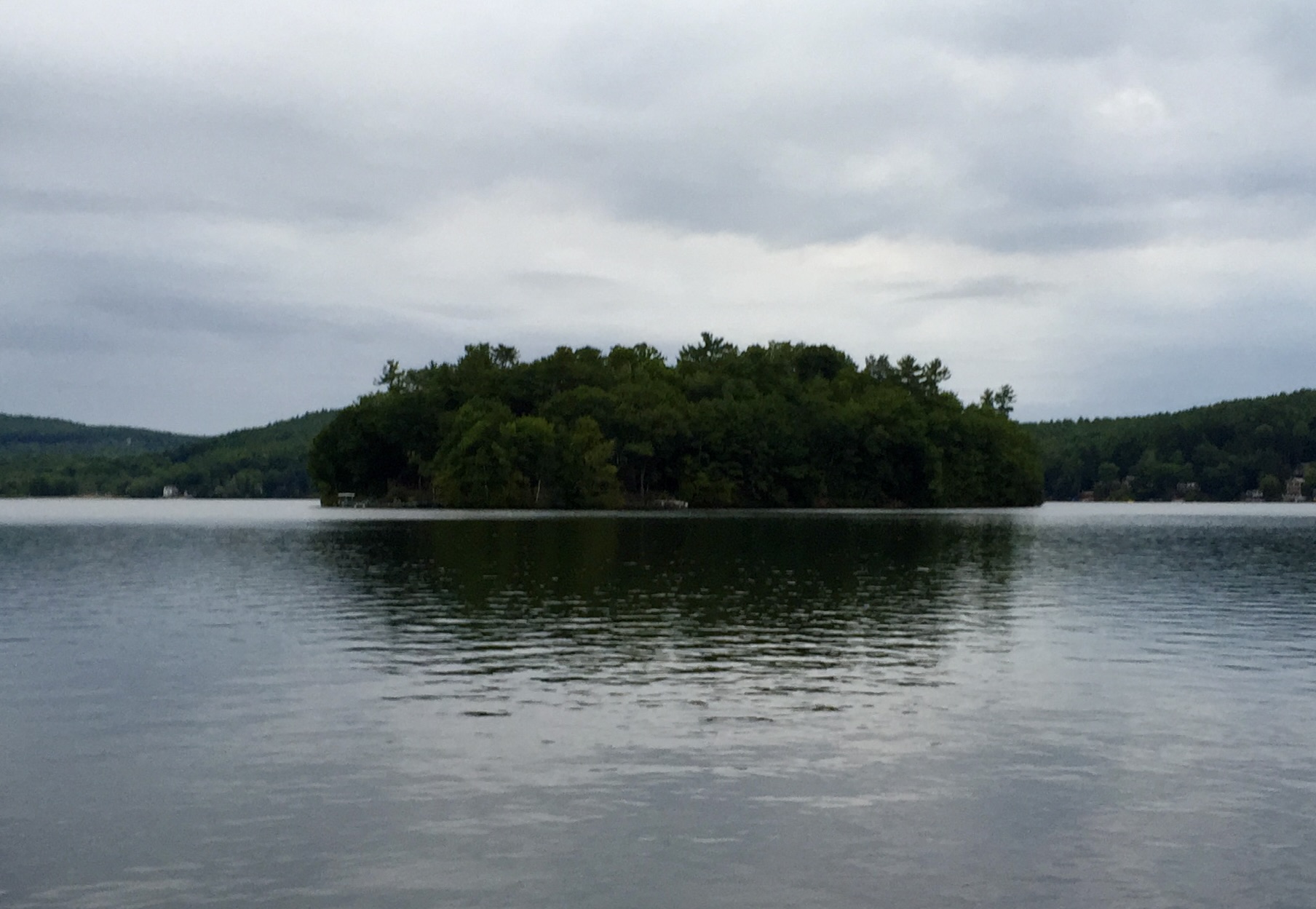
Evening draws on 
lengthening the shadows and
smoothing the waters . . .

This hour of the day
each sound has a broad and deep
relief of silence.

The pensive season –
At early evening the poet 
collects his thoughts.

August 15, 2015

August 11, 2016

I have heard since the 1st of this month the steady creaking cricket. August 11, 1854

Instead of dog-day clouds and mists, we have a rainy season. You must walk armed with an umbrella. August 11, 1858

Platanthera blephariglottis
, white fringed orchis. August 11, 1852

Cyperus strigosus; how long? August 11, 1860

Some naked viburnum berries are red. The sweet viburnum turning. August 11, 1852 

Red cohosh berries well ripe in front of Hunt's, perhaps a week or more, - a round, conical spike, two and a half inches long by one and three quarters, of about thirty cherry-red berries. August 11, 1857

This side of Hubbard's Meadow Bridge, Lespedeza hirta (hairy), Cannabis sativa, apparently out. 
August 11, 1852

Aster Tradescanti,
 two or three days in low ground; flowers smaller than A. dumosus, densely racemed. August 11, 1854

Aster corymbosus
, path beyond Corner Spring and in Miles Swamp. August 11, 1852 . 

Aster puniceus a day or more. August 11, 1856

I see some Hypericum angulosum turned a delicate clear purple. August 11, 1856 

A new sunflower at Wheeler's Bank, this side Corner Spring, which I will call the tall rough sunflower; opened say August 1st (?). (I saw it out the 7th.) It does not correspond exactly to any described. August 11, 1856

See a small variety of helianthus growing with the divaricatus, on the north side of Peter’s path, two rods east of bars southeast of his house. It is an imperfect flower, but apparently answers best to the H. tracheliifoliusAugust 11, 1858

Also the small rough sunflower (now abundant) August 11, 1858

There is evidently a great variety in respect to form, petiole, venation, roughness, thickness, and color of the leaves of helianthuses. August 11, 1858

The skunk-cabbage leaves are fallen and decaying, and their fruit is black. Their fall is earlier than that of other plants. August 11, 1852 

The birches have lately lost a great many of their lower leaves, which now cover and yellow the ground. August 11, 1858 

I notice a new growth of red maple sprouts, small reddish leaves surmounting light-green ones, the old being dark-green. August 11, 1854

I meet with many a clam which comes floating down in midstream, nicely poised on the water with its pearly concave side uppermost. These have been opened and left by the musquash during the night on the shore, or often on rocks in the stream, and now the water rising gently sets them afloat,. . . a pearly skiff set afloat by the industrious millers. August 11, 1859. 

The autumnal ring of the alder locust.August 11, 1852 

I see of late a good many young sparrows (and old) of different species flitting about. That blackberry-field of Gowing’s in the Great Fields, this side of his swamp, is a famous place for them. I see a dozen or more, old and young, perched on the wall. As I walk along, they fly up from the grass and alight on the wall, where they sit on the alert with outstretched necks. Nearest and unalarmed sit the huckleberry-birds; next, quite on the alert, the bay-wings. August 11, 1858 

Heard a fine, sprightly, richly warbled strain from a bird perched on the top of a bean-pole. It was at the same time novel yet familiar to me. I soon recognized it for the strain of the purple finch, which I have not heard lately. But though it appeared as large, it seemed a different-colored bird. With my glass, four rods off, I saw it to be a goldfinch. It kept repeating this warble of the purple finch for several minutes . . .  I conclude that the goldfinch is a very fine and powerful singer, and the most successful and remarkable mocking-bird that we have.  August 11, 1858

In the spring I heard it imitate the thrasher exactly, before that bird had arrived, and now it imitates the purple finch as perfectly, after the latter bird has ceased to sing! It is a surprising vocalist. It did not cease singing till I disturbed it by my nearer approach, and then it went off with its usual mew, succeeded by its watery twitter in its ricochet flight. Have they not been more common all summer than formerly? August 11, 1858 

I smell the fragrant everlasting concealed in the higher grass and weeds there, some distance off. It reminds me of the lateness of the season. August 11, 1858  

Evening draws on while I am gathering bundles of pennyroyal on the further Conantum height. I find it amid the stubble mixed with blue-curls and, as fast as I get my hand full, tie it into a fragrant bundle. August 11, 1853  

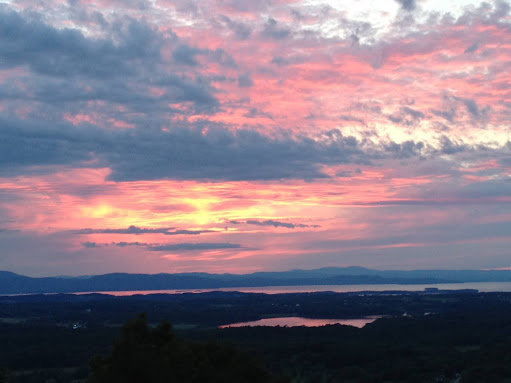
Evening draws on, smoothing the waters and lengthening the shadows 
. . . each sound and sight has acquired ineffable beauty. . . A thousand little cavities are filling with coolness. August 11, 1853

Hills and the least inequalities in the ground begin to cast an obvious shadow. The shadow of an elm stretches quite across the meadow. From far over the pond and woods I hear a farmer calling loudly to his cows, in the clear still air, "Ker, ker, ker, kerAugust 11, 1853

What shall we name this season? — this very late afternoon, or very early evening, this season of the day most favorable for reflection, after the insufferable heats and the bustle of the day are over and before the twilight? The serene hour, the season of reflection! The pensive season. August 11, 1853

The few sounds now heard, far or near, are delicious. Each sound has a broad and deep relief of silence. It is not more dusky and obscure, but clearer than before. The poet arouses himself and collects his thoughts.  
August 11, 1853
July 26, 1853 ("This the afternoon of the year. How apt we are to be reminded of lateness, even before the year is half spent!”)
July 26, 1856 ("Arranged the hypericums in bottles this morning and watched their opening. The H. angulosum has a pod one-celled (with three parietal placentae), conical, oblong, acute, at length longer than the sepals, purple.”)
July 31, 1857 ("I also saw here [the East Branch] the red cohosh berries, ripe, (for the first time in my life")
August 1, 1852 ("The small rough sunflower (Helianthus divaricatus) tells of August heats”);
August 4, 1854 ("Cannabis sativa")
August. 8, 1855 ("Blue-curls, how long? Not long. ")
August 8, 1858 ("I find at Ledum Swamp, near the pool, the white fringed orchis, quite abundant but past prime, only a few, yet quite fresh. It seems to belong to this sphagnous swamp and is some fifteen to twenty inches high, quite conspicuous, its white spike, amid the prevailing green. The leaves are narrow, half folded, and almost insignificant. It loves, then, these cold bogs.”)
August 9, 1851 (“The Trichostema dichotomum is quite beautiful now in the cool of the morning”)
August 9, 1856 ("What I have called Aster corymbosus out a day, above Hemlocks.")
August 10, 1853  ("Small rough sunflowers, six feet high, with many branches and flowers.")
August 10, 1856 ("Fragrant everlasting, maybe some days.”)
August 10, 1856 ("Aster dumosus and pennyroyal out; how long?")


Since first of August
the steady creaking cricket,
early potatoes.

August 12, 1851 ("Now the great sunflower’s golden disk is seen.")
August 12, 1854 ("Viburnum nudum berries generally green, but some, higher and more exposed, of a deep, fiery pink on one cheek and light green on the other, and a very few dark purple or without bloom, black already")
August 12, 1856 ("The Aster patens is very handsome by the side of Moore's Swamp on the bank.")
August 12, 1856 (“Am surprised to see still a third species or variety of helianthus (which may have opened near August 1st)”)
 August12, 1858 ("It is surprising how young birds, especially sparrows of all kinds, abound now.")
August 13, 1860 ("Hear the steady shrill of the alder locust. ")
August 13, 1852 ("Pennyroyal abundant in bloom. I . . .gather a little bundle, which scents my pocket for many days.")
August 13, 1858 ("The dullish-blue or lead-colored Viburnum dentatum berries are now seen, not long, overhanging the side of the river..")
August 13, 1858 ("It has rained more or less at least half the days. You have had to consider each afternoon whether you must not take an umbrella.")
August 13, 1856 (“Is there not now a prevalence of aromatic herbs in prime?. . . Does not the season require this tonic?“)
August 14, 1852 ("Viburnum dentatum berries blue.")
August 14, 1853 ("Locust days, — sultry and sweltering. I hear them even till sunset. The usually invisible but far-heard locust.")
August 14, 1856  ("Solidago odora abundantly out.")
August 14, 1856 ("Aster tradescanti, apparently a day or two.")
August 15, 1852 ("That clear ring like an alder locust (is it a cricket ?) for some time past is a sound which belongs to the season.")
August 15, 1852 ("An orchis by the brook under the Cliffs with only three white flowers , only smaller than the fringed white; spurs half an inch long. May it be another species? ")
August 17, 1851 ("The Trichostema dichotomum, — not only its bright blue flower above the sand, but its strong wormwood scent which belongs to the season, –– feed my spirit, endear the earth to me, make me value myself and rejoice.")
August 18, 1853 ("What means this sense of lateness that so comes over one now”)
August 25, 1858 ("Cyperus strigosus under Clamshell Hill, that yellowish fuzzy headed plant, five to twelve inches high, now apparently in prime.")
August 26, 1856  ("I gather a bundle of pennyroyal; it grows largest and rankest high and close under these rocks, amid the loose stones. I tie my bundle with the purple bark of the poke-weed.")
August 31, 1852 ("This is the most glorious part of this day, the serenest, warmest, brightest part, and the most suggestive. . . .Evening is pensive. The serenity is far more remarkable to those who are on the water.")


August 11, 2013
                                                              
If you make the least correct 
observation of nature this year,
 you will have occasion to repeat it
 with illustrations the next, 
and the season and life itself is prolonged.

  August 10     <<<<<     August 11   >>>>>  August 12.

A Book of the Seasons,  by Henry Thoreau
 "A book, each page written in its own season, 
out-of-doors, in its own locality."  
 ~edited, assembled and rewritten by zphx ©  2009-2022


tinyurl.com/HDT11AUGUST 

Tuesday, August 11, 2020

How long?


August 11. 

Panicum capillare; how long? 
Cyperus strigosus; how long?

H. D. Thoreau, Journal, August 11, 1860

See September 4, 1858 ("Panicum capillare . . . is now in prime in garden.")
See August 25, 1858 ("Cyperus strigosus under Clamshell Hill, that yellowish fuzzy headed plant, five to twelve inches high, now apparently in prime.")

August 11.  See A Book of the Seasons,  by Henry Thoreau, August 11


A Book of the Seasons,  by Henry Thoreau
"A book, each page written in its own season,
out-of-doors, in its own locality.”
~edited, assembled and rewritten by zphx © 2009-2021

Sunday, August 11, 2019

A pearly skiff set afloat by the industrious millers

August 11.

 A. M. — Up Assabet to stone bridge. 

This river is so shallow that you can easily push up it with a paddle, but the other is commonly too deep for this. 

As I paddle up this stream this forenoon, the river gently rising as usual in the forenoon (in consequence of raising the gates of the various mill-ponds on and near to it, which had been shut in the night), I meet with many a clam which comes floating down in midstream, nicely poised on the water with its pearly concave side uppermost. 

These have been opened and left by the musquash during the night on the shore, or often on rocks in the stream, and now the water rising gently sets them afloat, as with care you can float an iron pot. 

But soon a stronger wind or eddy will cause the water to break over them and they will at once sink to the bottom. Last night it lay half buried in mud and sand at the bottom. 

The musquash has devoured its tenant, and now it floats seaward, a pearly skiff set afloat by the industrious millers. I met with as many as a dozen of them coming down the stream this forenoon, the valves at an angle of 45°, sometimes a single valve, but the least touch of my oars would sink them. 

The musquash are eating clams quite fast there. Those lately opened are generally quite small. Is it be cause of the season or the stream? 

When I raked the river the other day, all the clams I caught had closed their shells on the teeth of the rake which entered them, just as they catch sea clams with a pointed stick.

Those singular eggs which I saw at the Falls of Concord River in July (vide August 8) are far more numerous at the Assabet stone bridge, and many are hatched. They are sprinkled all over the stones of the arch just within it on the sides, and overhead, but extending only few feet under the bridge on either side.

H. D. Thoreau, Journal, August 11, 1859

Those singular eggs which I saw at the Falls of Concord River in July (vide August 8) are far more numerous at the Assabet stone bridge, and many are hatched. See August 8, 1859 ("I find the same curious eggs (which I saw at the Fordway on the 22d) on the rocks and trees on the Assabet . . . They are not yet hatched."); July 22, 1859 ("distinct white spots, looking like white paint . . . three fourths to one inch in diameter of an oval or circular form")

August 11.  See A Book of the Seasons,  by Henry Thoreau, August 11


A Book of the Seasons,  by Henry Thoreau
"A book, each page written in its own season,
out-of-doors, in its own locality.”
~edited, assembled and rewritten by zphx © 2009-2021

Saturday, August 11, 2018

I smell the fragrant everlasting concealed in the higher grass and weeds, some distance off.

August 11

P. M. — To Beck Stow’s. 

I see of late a good many young sparrows (and old) of different species flitting about. That blackberry-field of Gowing’s in the Great Fields, this side of his swamp, is a famous place for them. I see a dozen or more, old and young, perched on the wall. As I walk along, they fly up from the grass and alight on the wall, where they sit on the alert with outstretched necks. 

Nearest and unalarmed sit the huckleberry-birds; next, quite on the alert, the bay-wings, with which and further off the yellow-browed sparrows, of whom one at least has a clear yellowish breast; add to which that I heard there abouts the seringo note. If made by this particular bird, I should infer it was Fringilla passerina. I still hear there at intervals the bay-wing, huckleberry-bird, and seringo. 

Now is our rainy season. It has rained half the days for ten days past. Instead of dog-day clouds and mists, we have a rainy season. You must walk armed with an umbrella. It is wettest in the woods, where the air has had no chance to dry the bushes at all. 

The Myriophyllum ambiguum, apparently variety natans, is now apparently in its prime. Some buds have gone to seed; others are not yet open. It is floating all over the surface of the pool, by the road, at the swamp, — long utricularia-like masses without the bladders. The emersed part, of linear or pectinate leaves, rises only about half an inch; the rest, eighteen inches more or less in length, consists of an abundance of capillary pinnate leaves, covered with slime or conserve (?) as a web. Evidently the same plant, next the shore and creeping over the mud, only two or three inches long, is without the capillary leaves, having roots instead, and apparently is the variety limosum (?), I suspect erroneously so called. 

Heard a fine, sprightly, richly warbled strain from a bird perched on the top of a bean-pole. It was at the same time novel yet familiar to me. I soon recognized it for the strain of the purple finch, which I have not heard lately. But though it appeared as large, it seemed a different-colored bird. With my glass, four rods off, I saw it to be a goldfinch. It kept repeating this warble of the purple finch for several minutes. A very surprising note to be heard now, when birds generally are so silent. Have not heard the purple finch of late. 

I conclude that the goldfinch is a very fine and powerful singer, and the most successful and remarkable mocking-bird that we have. In the spring I heard it imitate the thrasher exactly, before that bird had arrived, and now it imitates the purple finch as perfectly, after the latter bird has ceased to sing! It is a surprising vocalist. It did not cease singing till I disturbed it by my nearer approach, and then it went off with its usual mew, succeeded by its watery twitter in its ricochet flight. Have they not been more common all summer than formerly?

I go along plum path behind Adolphus Clark’s. This is a peculiar locality for plants. The Desmodium Canadense is now apparently in its prime there and very common, with its rather rich spikes of purple flowers, — the most (?) conspicuous of the desmodiums. It might be called Desmodium Path. 

Also the small rough sunflower (now abundant) and the common apocynum (also in bloom as well as going and gone to seed) are very common. 

I smell the fragrant everlasting concealed in the higher grass and weeds there, some distance off. It reminds me of the lateness of the season. 

Saw the elodea (not long) and a dangle-berry ripe (not long) at Beck Stow’s. 

See a small variety of helianthus growing with the divaricatus, on the north side of Peter’s path, two rods east of bars southeast of his house. It is an imperfect flower, but apparently answers best to the H. tracheliifolius. There is evidently a great variety in respect to form, petiole, venation, roughness, thickness, and color of the leaves of helianthuses. 

Saw yesterday the Utricularia vulgaris, apparently in its prime, yellowing those little pools in Lincoln at the town bound by Walden. Their stems and leaves seem to half fill them. Some pools, like that at bath-place by pond in R. W. E.’s wood, will have for all vegetation only the floating immersed stems and leaves, light brown, of this plant, without a flower, perhaps on account of shade. 

The great bullfrogs, of various colors from dark brown to greenish yellow, lie out on the surface of these slimy pools or in the shallow water by the shore, motionless and philosophic. Toss a chip to one, and he will instantly leap and seize and drop it as quick. Motionless and indifferent as they appear, they are ready to leap upon their prey at any instant.

H. D. Thoreau, Journal, August 11, 1858

Nearest sit the huckleberry-birds; next the bay-wings, with which and further off the yellow-browed sparrows, of whom one at least has a clear yellowish breast I infer was Fringilla passerina. See August 8, 1858 (“I see at Clamshell Hill a yellow-browed sparrow sitting quite near on a haycock, pluming itself.”); and note to July 26, 1858 (“ A broad egg, white with large reddish and purplish brown spots chiefly about large end. . .  Could not see the bird; only saw bay-wings and huckleberry-birds. I suspect it may be the Fringilla passerina? He says the bird had a clear yellowish-white breast!”); June 28, 1858 (“According to Audubon’s and Wilson’s plates, the Fringilla passerina has for the most part clear yellowish-white breast.... Audubon says that the eggs . . .of the yellow-winged sparrow are “of a dingy white, sprinkled with brown spots.”); May 28, 1856 (“A seringo or yellow-browed (?) sparrow’s nest . . .Egg, bluish-white ground, thickly blotched with brown, yet most like a small ground bird’s egg, rather broad at one end, pretty fresh.”)

The seringo note. See April 22, 1856 ("The seringo also sits on a post, with a very distinct yellow line over the eye,and the rhythm of its strain is ker chick | ker che | ker-char—r-r-r-r chick, the last two bars being the part chiefly heard."). See June 26, 1856 (" According to Audubon’s and Wilson’s plates, ... the Savannah sparrow no conspicuous yellow on shoulder, a yellow brow, and white crown line. Rode to Sconticut Neck or Point in Fairhaven, five or six miles, and saw, apparently, the F. Savanna near their nests (my seringo note), restlessly flitting about me from rock to rock within a rod. Distinctly yellow-browed and spotted breast, not like plate of passerina. Audubon says that the eggs of the Savannah sparrow “are of a pale bluish color, softly mottled with purplish brown,””)May 28, 1856 ("A seringo or yellow-browed (?) sparrow’s nest . . . Egg, bluish-white ground, thickly blotched with brown . . ..”); October 22, 1855 ("I sit on a bank at the brook crossing, beyond the grove, to watch a flock of seringos, perhaps Savannah sparrows, which, with some F. hyemalis and other sparrows, are actively flitting about amid the alders and dogwood. "); July 16, 1854 ("Is it the yellow-winged or Savannah sparrow with yellow alternating with dark streaks on throat, as well as yellow over eye, reddish flesh-colored legs, and two light bars on wings?“). See also Guide to Thoreau’s Birds "(Thoreau frequently called the Savannah Sparrow Passerculus sandwichensis the seringo or seringo-bird, but he also applied the name to other small birds.)”


Heard a fine, sprightly, richly warbled strain from a bird perched on the top of a bean-pole.I conclude that the goldfinch is a very fine and powerful singer, and the most successful and remarkable mocking-bird that we have. See April 19, 1858 ("This was the most varied and sprightly performer of any bird I have heard this year, and it is strange that I never heard the strain before. It may be this note which is taken for the thrasher’s before the latter comes.") See also June 25, 1853 ("I think it must be the purple finch . . . which I see and hear singing so sweetly and variedly in the gardens . .. on a bean-pole or fence-picket. It has a little of the martin warble and of the canary bird.")

I smell the fragrant everlasting concealed in the higher grass and weeds. See August 10, 1856 ("Fragrant everlasting, maybe some days.”);  August 13, 1856 (“Is there not now a prevalence of aromatic herbs in prime?. . . Does not the season require this tonic?“); August 29, 1856 ("Fragrant everlasting in prime and very abundant, whitening Carter's pasture.”); September 19, 1852 ("The small-flowering Bidens cernua (?) and the fall dandelion and the fragrant everlasting abound. "); September 26, 1852 ("The small cottony leaves of the fragrant everlasting in the fields for some time, protected, as it were, by a little web of cotton against frost and snow, — a little dense web of cotton spun over it, — entangled in it, — as if to restrain it from rising higher."); February 25, 1857 (“The fragrant everlasting has retained its fragrance all winter. ”)


The small rough sunflower (now abundant) and see a small variety of helianthus growing with the divaricatus, on the north side of Peter’s path. See August 1, 1852 ("The small rough sunflower (Helianthus divaricatus) tells of August heats”); August 11, 1856 ("A new sunflower at Wheeler's Bank, . . ., which I will call the tall rough sunflower; opened say August 1st”); August 12, 1856 (“Am surprised to see still a third species or variety of helianthus (which may have opened near August 1st)”); August 29, 1856 (The Helianthus decapetalus, apparently a variety, with eight petals, about three feet high, leaves petioled, but not wing-petioled, and broader-leaved than that of August 12th“)

It reminds me of the lateness of the season. See July 26, 1853 ("This the afternoon of the year. How apt we are to be reminded of lateness, even before the year is half spent!”); July 30 1852 (After midsummer we have a belated feeling . . .") ; August 18, 1853 ("What means this sense of lateness that so comes over one now”)

August 11 See A Book of the Seasons, by Henry Thoreau, August 11


A Book of the Seasons,  by Henry Thoreau
"A book, each page written in its own season,
out-of-doors, in its own locality.”
~edited, assembled and rewritten by zphx © 2009-2021

Friday, August 11, 2017

Red cohosh berries well ripe

August 11

Tuesday. 

Red cohosh berries well ripe in front of Hunt's, perhaps a week or more, - a round, conical spike, two and a half inches long by one and three quarters, of about thirty cherry-red berries. The berries oblong, seven sixteenths of an inch by six sixteenths, with a seam on one side, on slender pedicels about five eighths of an inch long.

H. D.  Thoreau, Journal, August 11, 1857


Red cohosh berries well ripe.
See July 31, 1857 ("I also saw here [the East Branch] the red cohosh berries, ripe, (for the first time in my life")


August 11 See A Book of the Seasons, by Henry Thoreau, August 11


A Book of the Seasons,  by Henry Thoreau
"A book, each page written in its own season,
out-of-doors, in its own locality.”
~edited, assembled and rewritten by zphx © 2009-2021

Wednesday, August 10, 2016

The convexity of the earth.

August 11

This morning the river is an inch and a half higher, or within eight inches of the top of Hoar's wall.

August 11, 2016

The other evening, returning down the river, I think I detected the convexity of the earth within a short distance. I saw the western landscape and horizon, reflected in the water fifty rods behind me, all lit up with the reflected sky, though it was a narrow picture. A stroke of my oar and the dark intervening water was interposed like a dark, opaque wall. Moving my head a few inches up or down produced the same effect; i.e., by raising my head three inches I could partially oversee the plane of the water at that point, which was otherwise concealed by the slightest convexity.

P. M. — Walk to Conantum with Mr. Bradford. 

He gives me a sprig of Cassia Marilandica, wild senna, found by Minot Pratt just below Leighton's by the road side. How long? P. thought it in prime August 10th.

Aster puniceus a day or more.

A new sunflower at Wheeler's Bank, this side Corner Spring, which I will call the tall rough sunflower; opened say August 1st (?). (I saw it out the 7th.) It does not correspond exactly to any described. Stem three to six feet high, branched at top, purple with a bloom, roughish, especially the peduncles. Leaves opposite, except a few small ones amid the branches, thick , ovate or ovate-lanceolate, taper-pointed, three-nerved, obscurely and remotely toothed, rough above, smooth and whitish below, abruptly contracted into margined petioles. Scales of the involucre lanceolate, taper-pointed, subequal, exceeding the disk, ciliate; rays eight or nine, one and a half or more inches long, chaff black. Edge of meadow.

Measured a mulgedium, eight feet three inches long and hollow all the way. 

Some boy had fixed an arch-angelica stem so as to conduct the water at the spring close by. 

Elder-berries in a day or two. 

I see some Hypericum angulosum turned a delicate clear purple. 

Polygonum dumetorum at Bittern Cliff, one flower gone to seed (!); say day or two.

7 p. m. — The river has risen about two inches to day, and is now within six inches of the top of Hoar's wall.

H. D. Thoreau, Journal, August 11, 1856

I think I detected the convexity of the earth. . . by raising my head three inches. 
See June 7, 1851 ("You may walk out in any direction over the earth's surface, lifting your horizon, and everywhere your path, climbing the convexity of the globe, leads you between heaven and earth.”);  August 23, 1851 ("We experience pleasure when an elevated field or even road in which we may be walking holds its level toward the horizon at a tangent to the earth, is not convex with the earth’s surface, but an absolute level."); March 28, 1858 ("On ascending the hill next his home, every man finds that he dwells in a shallow concavity whose sheltering walls are the convex surface of the earth, beyond which he cannot see.") See also Samuel Birley Rowbotham ("If the earth is a globe, and is 25,000 English statute miles in circumference, the surface of all standing water must have a certain degree of convexity—every part must be an arc of a circle. From the summit of any such arc there will exist a curvature or declination of 8 inches in the first statute mile. In the second mile the fall will be 32 inches; in the third mile, 72 inches, or 6 feet." ~ wikipedia)

Aster puniceus a day or more. See August 30, 1856 ("The Aster puniceus is hardly yet in prime; its great umbel-shaped tops not yet fully out.")

A new sunflower at Wheeler's Bank, this side Corner Spring, which I will call the tall rough sunflower; opened say August 1st (?). (I saw it out the 7th.) It does not correspond exactly to any described. 
See August 12, 1856 ("Am surprised to see still a third species or variety of helianthus (which may have opened near August 1st, say only a week). Only the first flowers out. At edge of the last clearing south of spring. I cannot identify it."); September 2, 1856 ("A short time ago, I was satisfied that there was but one kind of sunflower (divaricatus) indigenous here. Hearing that one had found another kind, it occurred to me that I had seen a taller one than usual lately, but not so distinctly did I remember this as to name it to him or even fully remember it myself. (I rather remembered it afterward.) But within that hour my genius conducted me to where I had seen the tall plants, and it was the other man's new kind. The next day I found a third kind, miles from there, and, a few days after, a fourth in another direction. It commonly chances that I make my most interesting botanical discoveries when I am in a thrilled and expectant mood, perhaps wading in some remote swamp where I have just found something novel and feel more than usually remote from the town. Or some rare plant which for some reason has occupied a strangely prominent place in my thoughts for some time will present itself. My expectation ripens to discovery. I am prepared for strange things.") See also A Book of the Seasons, by Henry Thoreau, Helianthus

Measured a mulgedium, eight feet three inches long and hollow all the way.
See August 7, 1856 ("One mulgedium at Corner Spring is at least ten feet high and hollow all the way. "); August 12, 1856 ("The mulgedium in that swamp is very abundant and a very stately plant, so erect and soldier-like, in large companies, rising above all else, with its very regular long, sharp, elliptic head and bluish-white flowers.")

Elder-berries in a day or two.
See August 9, 1854 ("'Walden' published. Elder-berries."); August 23, 1856 ("Elder-berries, now looking purple, are weighing down the bushes along fences by their abundance.") See also A Book of the Seasons, by Henry Thoreau, Elder-berries

Hypericum angulosum turned a delicate clear purple.  
See July 25, 1856 ("Up river to see hypericums out.”); July 26, 1856 ("Arranged the hypericums in bottles this morning and watched their opening. The H. angulosum has a pod one-celled (with three parietal placentae), conical, oblong, acute, at length longer than the sepals, purple.”) See also A Book of the Seasons, by Henry Thoreau, St. Johns-wort (Hypericum)

The river has risen about two inches to day, and is now within six inches of the top of Hoar's wall. See August 10, 1856 ("The river has been rising all day. It is between two and a half and three feet higher than ten days ago . . . It is within nine and a half inches of the top of Hoar's wall at 6 p. m. "); August 22, 1856 ("Owing to the rain of the 8th and before, two days and two nights, the river rose to within six inches of the top of Hoar's wall. It had fallen about one half, when the rain began again on the night of the 20th, and again continued about two nights and two days, though so much did not fall as before; but, the river being high, it is now rising fast . . . It is within three inches of the top of Hoar's wall at 7 p. m.") 

August 11. See A Book of the Seasons, by Henry Thoreau, August 11


A Book of the Seasons,  by Henry Thoreau
"A book, each page written in its own season,
out-of-doors, in its own locality.”
~edited, assembled and rewritten by zphx © 2009-2021

Monday, August 11, 2014

To Assabet Bath.

August 11

I have heard since the 1st of this month the steady creaking cricket. 

Some are digging early potatoes. 

I notice a new growth of red maple sprouts, small reddish leaves surmounting light-green ones, the old being dark-green. Green lice on birches.

Aster Tradescanti, two or three days in low ground; flowers smaller than A. dumosus, densely racemed, with short peduncles or branchlets, calyx-scales narrower and more pointed.


Ammannia humilis (?) (a new plant), perhaps three weeks at northeast end of Wheeler's brush fence meadow, with small wrinkled yellowish petals with a purplish vein.

H. D. Thoreau, Journal, August 11, 1854

I have heard since the 1st of this month the steady creaking cricket. See August 7, 1853 (" I think that within a week I have heard the alder cricket, . . .The year is in the grasp of the crickets, and they are hurling it round swiftly on its axle."); August 7, 1854 ("The cool nocturnal creak of the crickets is heard in the mid-afternoon."); See also A Book of the Seasons, by Henry Thoreau, the Cricket in August

Aster tradescanti and dumosus. See August 14, 1856 ("Aster tradescanti, apparently a day or two."); August 5, 1856 ("Aster dumosus, apparently a day or two, with its large conspicuous flower-buds at the end of the branchlets and linear-spatulate involucral scales.")

August 11.  See A Book of the Seasons, by Henry Thoreau, August 11


A Book of the Seasons,  by Henry Thoreau
"A book, each page written in its own season,
out-of-doors, in its own locality.”
~edited, assembled and rewritten by zphx © 2009-2021

Popular Posts Last 30 Days.

The week ahead in Henry’s journal

The week ahead in Henry’s journal
A journal, a book that shall contain a record of all your joy.
"A stone fruit. Each one yields me a thought." ~ H. D. Thoreau, March 28, 1859


I sit on this rock
wrestling with the melody
that possesses me.