Showing posts with label southwest wind. Show all posts

Tuesday, March 31, 2020

Prelude of the toad.


Surveying again for Ed. Hoar the wood land adjoining his farm. 

A yet warmer day. A very thick haze, concealing mountains and all distant objects like a smoke, with a strong but warm southwest wind. Your outside coat is soon left on the ground in the woods, where it first becomes quite intolerable. 

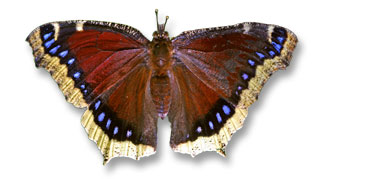
The small red butterfly in the wood-paths and sprout-lands, and I hear at midafternoon a very faint but positive ringing sound rising above the susurrus of the pines, — of the breeze, — which I think is the note of a distant and perhaps solitary toad; not loud and ringing, as it will be. 

Toward night I hear it more distinctly, and am more confident about it. I hear this faint first reptilian sound added to the sound of the winds thus each year a little in advance of the unquestionable note of the toad. Of constant sounds in the warmer parts of warm days there now begins to be added to the rustling or crashing, waterfall-like sound of the wind this faintest imaginable prelude of the toad. 

I often draw my companion's attention to it, and he fails to hear it at all, it is so slight a departure from the previous monotony of March. This morning you walked in the warm sprout-land, the strong but warm southwest wind blowing, and you heard no sound but the dry and mechanical susurrus of the wood; now there is mingled with or added to it, to be detected only by the sharpest ears, this first and faintest imaginable voice. 

I heard this under Mt. Misery. Probably they come forth earlier under the warm slopes of that hill. 

The pewee sings in earnest, the first I have heard; and at even I hear the first real robin's song. 

I hear that there has been a great fire in the woods this afternoon near the factory. Some say a thousand acres have been burned over. This is the dangerous time, —between the drying of the earth, or say when dust begins to fly, and the general leafing of the trees, when it is shaded again. These fires are a perfectly regular phenomenon of this season. 

Many refer to them this thick haze, but, though in the evening I smell the smoke (no doubt) of the Concord fire, I think that the haze generally is owing to the warm southwest wind having its vapor condensed by our cooler air. 

An engine sent from town and a crowd of boys; and I hear that one man had to swim across a pond to escape being burnt. 

One tells me he found the saxifrage out at Lee's Cliff this afternoon, and another, Ellen Emerson, saw a yellow or little brown snake, evidently either the Coluber ordinatus or else amænus, probably the first.

Sit without fire.

H. D. Thoreau, Journal, March 31, 1860

 
The small red butterfly in the wood-paths and sprout-lands. See  March 31, 1858 (“In the wood-paths now I see many small red butterflies”); April 8, 1855 (“Afterward I see a small red one over the shore.”); See also A Book of the Seasons,   by Henry Thoreau, The Small Red Butterfly


Your outside coat is soon left on the ground in the woods, where it first becomes quite intolerable. See  March 31, 1855 ("I am uncomfortably warm, gradually unbutton both my coats, and wish that I had left the outside one at home.") See also  March 15, 1852 ("This afternoon I throw off my outside coat. A mild spring day.. . .My life partakes of infinity."); April 5, 1854 ("Whatever year it may be, I am surveying, perhaps, in the woods; I have taken off my outside coat, perhaps for the first time, and hung it on a tree; . . .; when I hear a single, short, well- known stertorous croak from some pool half filled with dry leaves.")

I hear this faint first reptilian sound added to the sound of the winds thus each year a little in advance of the unquestionable note of the toad. See  April 5, 1860 (" I hear, or think that I hear, a very faint distant ring of toads, which, though I walk and walk all the afternoon, I never come nearer to. . . .It merely gives a slightly more ringing or sonorous sound to the general rustling of inanimate nature. "); April 13, 1853 ("First hear toads (and take off coat), a loud, ringing sound filling the air, which yet few notice."); April 13, 1858 ("Hear the first toad in the rather cool rain, 10 A. M."); April 15, 1856 (" I hear a clear, shrill, prolonged ringing note from a toad, the first toad of the year"); May 1, 1857 ("There is a cool and breezy south wind, and the ring of the first toad leaks into the general stream of sound, unnoticed by most.") See also A Book of the Seasons, by Henry Thoreau, The Ring of Toads.

The pewee sings in earnest, the first I have heard. See  March 16, 1854 ("The first phoebe near the water is heard. ");  March 29, 1858 ("Hear a phoebe early in the morning over the street.");  March 30, 1851 ("Spring is already upon us.  . . . The pewee is heard, and the lark. "); April  1, 1857. (" Up Assabet . . .Hear a phoebe"); April 1, 1859("At the Pokelogan up the Assabet, I see my first phoebe, the mild bird. It flirts its tail and sings pre vit, pre vit, pre vit, pre vit incessantly, as it sits over the water, and then at last, rising on the last syllable, says pre-VEE, as if insisting on that with peculiar emphasis.") See also A Book of the Seasons,  by Henry Thoreau, the Eastern Phoebe

At even I hear the first real robin's song. See  March 31, 1852 ("The robins sing at the very earliest dawn. I wake with their note ringing in my ear.");  See also March 12, 1854 ("I hear my first robin peep distinctly at a distance. No singing yet. "); April  1, 1857.  ("Already I hear a robin or two singing their evening song."); April 1, 1852 ("I hear a robin singing in the woods south of Hosmer's, just before sunset. It is a sound associated with New England village life. It brings to my thoughts summer evenings when the children are playing in the yards before the doors and their parents conversing at the open windows. It foretells all this now, before those summer hours are come.") and A Book of the Seasons, by Henry Thoreau, Robins in Spring

A yellow or little brown snake, evidently either the Coluber ordinatus or else amænus, probably the first. See October 18, 1858 (“Noticed a little snake, eight or nine inches long, in the rut in the road in the Lincoln woods. It was brown above with a paler-brown dorsal stripe, which was bounded on each side by a row of dark-brown or blackish dots one eighth inch apart, the opposite rows alternating; beneath, light cream-color or yellowish white. Evidently Storer’s Coluber ordinatus.”); October 29, 1857 (“I see evidently what Storer calls the little brown snake (Coluber ordinatus). . . . Above it is pale-brown, with a still lighter brown stripe running down the middle of the back”); October 11, 1856 (“It is apparently Coluber amaenus, the red snake. Brown above, light-red beneath, about eight inches long . . . It is a conspicuous light red beneath, then a bluish-gray line along the sides, and above this brown with a line of lighter or yellowish brown down the middle of the back.”); September 9, 1857 ("It was a dark ash-color above, with darker longitudinal lines, light brick-red beneath. There were three triangular buff spots just behind the head, one above and one each side. It is apparently Coluber amaenus”); April 29, 1858 (“A little brown snake with blackish marks along each side of back and a pink belly. Was it not the Coluber amaenus?”)  

Some say a thousand acres have been burned over. See April 2, 1860 ("Walked to the Mayflower Path and to see the great burning of the 31st. I smelled the burnt ground a quarter of a mile off. It was a very severe burn, the ground as black as a chimney-back. The fire is said to have begun by an Irishman burning brush near Wild' s house in the south part of Acton, and ran north and northeast some two miles before the southwest wind, crossing Fort Pond Brook. I walked more than a mile along it and could not see to either end, and crossed it in two places. A thousand acres must have been burned.")

These fires are a perfectly regular phenomenon of this season. See March 29, 1858 ("I saw, on the hillside far across the meadow by Holbrook's clearing, what I at first took for a red flag or handkerchief carried along on a pole, just above the woods. It was a fire in the woods, and I saw the top of the flashing flames above the tree-tops. The woods are in a state of tinder, and the smoker and sportsman and the burner must be careful now."); April 4, 1856 ("Already I hear of a small fire in the woods in Emerson’s lot, set by the engine, the leaves that are bare are so dry."); April 9, 1856 ("Now look out for fires in the woods, for the leaves are never so dry and ready to burn as now. The snow is no sooner gone, —nay, it may still cover the north and west sides of hills, — when a day or two’s sun and wind will prepare the leaves to catch at the least spark."); April 21, 1859 ("Put out a fire in the woods, the Brister lot.");April 5, 1860  ("We heard of fires in the woods in various towns, and more or less distant, on the same days that they occurred here, — the last of March and first of April. The newspapers reported many. The same cause everywhere produced the same effect.") See also February 8, 1858 ("Two or three-acres were burned over, set probably by the engine. Such a burning as commonly occurs in the spring.")

One tells me he found the saxifrage out at Lee's Cliff this afternoon. See April 3, 1853("To my great surprise the saxifrage is in bloom. It was, as it were, by mere accident that I found it.. . . under a projecting rock in a little nook on the south side of a stump, I spied one little plant which had opened three or four blossoms high up the Cliff. "); April 27, 1852 ("On Conantum Cliffs I find to-day for the first time the early saxifrage (Saxifraga vernalis) in blossom, growing high and dry in the narrow seams, where there is no soil for it but a little green moss. It is one of the first flowers, not only in the spring of the year, but in the spring of the world.") See also A Book of the Seasons, by Henry Thoreau, Saxifrage in Spring (Saxifraga vernalis)

Sit without fire. See April 30, 1859 (" The warmest afternoon yet. Sat in sun without fire this forenoon."); May 2, 1858 ("Sit without fire to-day and yesterday."); May 3, 1857 ("To-day we sit without fire.")

Tuesday, January 9, 2018

The spring note of the chickadee.


January 9

Snows again.  P. M. – To Deep Cut. 

January 9, 2018

The wind is southwest, and the snow is very moist, with large flakes.

Looking toward Trillium Wood, the nearer flakes appear to move quite swiftly, often making the impression of a continuous white line. They are also seen to move directly and nearly horizontally, but the more distant flakes appear to loiter in the air, as if uncertain how they will approach the earth, or even to cross the course of the former, and are always seen as simple and distinct flakes. I think that this difference is simply owing to the fact that the former pass quickly over the field of view, while the latter are much longer in it. 

This moist snow has affected the yellow sulphur parmelias and others. They have all got a green hue, and the fruit of the smallest lichen looks fresh and fair. 

And the wet willow bark is a brighter yellow. 

Some chickadees come flitting close to me, and one utters its spring note, phe-be, for which I feel under obligations to him.

H. D. Thoreau, Journal, January 9, 1858

The snow is very moist, with large flakes . . . the more distant flakes appear to loiter in the air, as if uncertain how they will approach the earth, or even to cross the course of the former.  See December 15. 1855 ("Some flakes come down from one side and some from another, crossing each other like woof and warp apparently, as they are falling in different eddies and currents of air."); December 14, 1859  ("Large flakes falling gently in the quiet air, like so many white feathers descending in different directions . . . A myriad falling flakes weaving a coarse garment by which the eye is amused.") See also A Book of the Seasons, by Henry Thoreau, Snow-storms might be classified.

This moist snow has affected the yellow sulphur parmelias. See January 26, 1852 ("The lichens look rather bright to-day . . .When they are bright and expanded, is it not a sign of a thaw or of rain? );  February 6, 1852 ("Near the C. Miles house there are some remarkably yellow lichens (parmelias?) on the rails, – ever as if the sun were about to shine forth clearly");  February 7, 1859 ("When I see the sulphur lichens on the rails brightening with the moisture I feel like studying them again as a relisher or tonic . . . They are a sort of winter greens which we gather and assimilate with our eyes"); March 6, 1852 ("Found three or four parmelias caperata in fruit on a white oak on the high river-bank between Tarbell's and Harrington’s") ; March 18, 1852 ("There is more rain than snow now falling, and the lichens, especially the Parmelia conspersa, appear to be full of fresh fruit, though they are nearly buried in snow.") See also A Book of the Seasons, by Henry Thoreau, the Lichens and the lichenst

And the wet willow bark is a brighter yellow. See December 5, 1858 (" The yellowish bark of the willows gleams warmly through the ice"); January 3, 1856 ("Now, when all the fields and meadows are covered deep with snow, the warm-colored shoots of osiers, red and yellow, rising above it, remind me of flames.") See also A Book of the Seasons, by Henry Thoreau, the Osier in Winter and early Spring

Some chickadees come flitting close to me, and one utters its spring note, phe-be. See  

The chickadee
Hops near to me.
November 8, 1857

The chickadee hops
nearer and nearer as the
winter advances.

Chickadees flit close
and naively peck at the
nearest twig to you,

January 7, 1851 ("January thaw. . . . and the chickadees are oftener heard."); January 7, 1855 ("Here comes a little flock of titmice, plainly to keep me company,. . . restlessly hopping along the alders, with a sharp, clear, lisping note."); January 18, 1860 ("Several chickadees, uttering their faint notes, come flitting near to me as usual."); February 9, 1856 ("I hear a phoebe note from a chickadee"); March 1, 1854 (" I hear the phoebe or spring note of the chickadee"); March 1, 1856 ("I hear several times the fine-drawn phe-be note of the chickadee, which I heard only once during the winter. Singular that I should hear this on the first spring day.")  See also A Book of the Seasons,   by Henry Thoreau, the Chickadee in Winter; A Book of the Seasons,  by Henry Thoreau,  Signs of the Spring, the spring note of the chickadee

January 9. See A Book of the Seasons,   by Henry Thoreau January 9

Some chickadees come 
flitting close to me and one 
utters its spring note. 

A Book of the Seasons,   by Henry Thoreau
"A book, each page written in its own season,
out-of-doors, in its own locality.”
~edited, assembled and rewritten by zphx © 2009-2024

https://tinyurl.com/hdt-580109


Thursday, November 23, 2017

A walk through Gowing’s Swamp.

November 23. 


Gowing’s Swamp
August 23, 1854

Monday. P. M. — To Gowing's Swamp. 

Garfield, who was working in what was Moore's Swamp, tells me that he sometimes digs up frogs in the winter, when ditching in springy places, one at a time. He is very much troubled by the short-tailed meadow mouse in that meadow. They live under the stumps, and gnaw his potatoes in the fall. He thought that his little dog, a terrier, had killed a bushel of them the past year. 

At the back of Gowing's hillside, just west of his swamp, in the midst of shrub oaks and other dry up land trees, the ground slopes regularly on all sides to a deep round hollow, perhaps fifteen feet lower than the lowest side and thirty feet in diameter at the bottom. The bottom is rather wet and covered with sphagnum, and many stiff and dead-looking button-bushes stand in it, while all around a dense high hedge of high blueberry curves over it. So sudden a change there will be in the vegetation with a change of soil. Many such a dimple with its peculiar vegetations have I seen in a dry wood-lot. The Vaccinium corymbosum and panicled andromeda in a dense hedge, in a circular or oval or other curved form, surrounding and slanting over it so as almost to conceal it; and in the same manner the blueberry, etc., will grow around and overhang the largest ponds. 

Walked through Gowing's Swamp from west to east. You may say it is divided into three parts, – first, the thin woody; second, the coarse bushy or gray; and third, the fine bushy or brown. 

First: The trees are larch, white birch, red maple, spruce, white pine, etc. 

Second: The coarse bushy part, or blueberry thicket, consists of high blueberry, panicled andromeda, Amelanchier Canadensis var. oblongifolia, swamp-pink, choke-berry, Viburnum nudum, rhodora, (and probably prinos, holly, etc., etc., not distinguishable easily now), but chiefly the first two. Much of the blueberry being dead gives it a very gray as well as scraggy as pect. It is a very bad thicket to break through, yet there are commonly thinner places, or often opens, by which you may wind your way about the denser clumps. Small specimens of the trees are mingled with these and also some water andromeda and lamb-kill. 

Third: There are the smooth brown and wetter spaces where the water andromeda chiefly prevails, together with purplish lamb-kill about the sides of them, and hairy huckleberry; but in the midst and wettest part the narrow revolute and glaucous (beneath) leaves of the Andromeda Polifolia and Kalmia glauca are seen, and in the sphagnum the Vaccinium Oxycoccus. In one of the latter portions occurs that open pool.

Sphagnum is found everywhere in the swamp. 

First, there is the dark wooded part; second, the scraggy gray blueberry thicket; third, the rich brown water andromeda spaces. 

The high blueberry delights singularly in these localities. You distinguish it by its gray spreading mass; its light-gray bark, rather roughened; its thickish shoots, often crimson; and its plump, roundish red buds. Think of its wreaths and canopies of cool blue fruit in August, thick as the stars in the Milky Way! The panicled andromeda is upright, light-gray, with a rather smoother bark, more slender twigs, and small, sharp red buds lying close to the twig. The blueberry is particularly hard to break through, it is so spreading and scraggy, but a hare can double swiftly enough beneath it. The ground of sphagnum is now thickly strewn with the leaves of these shrubs. 

The water andromeda makes a still more uniformly dense thicket, which must be nearly impervious to some animals; but as man lifts his head high above it, finds but little difficulty in making his way through it, though it sometimes comes up to his middle, and if his eye scans its surface it makes an impression of smoothness and denseness, – its rich brown, whole some surface, even as grass or moss. 

Ascending the high land on the south, I looked down over the large open space with its navel pool in the centre. This green stagnant pool, rayed with the tracks or trails of musquash and making but a feeble watery impression, reminded me of portions of the map of the moon. 

This swamp appears not to have had any natural outlet, though an artificial one has been dug. The same is perhaps the case with the C. Miles Swamp. And is it so with Beck Stow's These three are the only places where I have found the Andromeda Polifolia. The Kalmia glauca in Gowing's, C. Miles's, and Holden's swamps. The latter has no outlet of any kind. 

I am interested in those plants, like panicled andromeda, shrub oak, etc., for which no use that I know has been discovered. The panicled andromeda, instead of the date tree, might be my coat-of arms. 

Fresh slender shoots of the Viburnum nudum make very good withes, I find. 

Austin Bacon told me that the worst swamp he ever found was not in Vermont or up country where he had surveyed, but in Newton (?), where he surveyed for a road once. The water was about two feet deep, and you jumped from tussock to tussock; these generally tipped over with you into the water. 

There is a strong and warm southwest wind, which brings the frost out of the ground, — more than I thought was in it, — making the surface wet. 

Walking along the top of Gowing's hill wood-lot, I see from time to time large ant-hills amid the young oaks. Often their tops have been disturbed and flattened, by some creature apparently. Some may be deserted. The sedge-grass has sprung up long and thick about the sides of these mounds, though there may be none amid the oaks around. The working of the ants keeps clear a little space amid the bushes. 

In the evening heavy rain and some thunder and lightning, and rain in the night.

H. D. Thoreau, Journal, November 23, 1857

I looked down over the large open space with its navel pool in the centre. See May 31, 1857 (“That central meadow and pool in Gowing's Swamp is its very navel,”); August 23, 1854 ("There is in the middle an open pool, twenty or thirty feet in diameter,. . .an abrupt edge next the water, this on a dense bed of quaking sphagnum, in which I sink eighteen inches in water, upheld by its matted roots, where I fear to break through. On this the spatulate sundew abounds.”).

Water andromeda chiefly prevails, together with purplish lamb-kill about the sides of them, and hairy huckleberry; but in the midst and wettest part the narrow revolute and glaucous (beneath) leaves of the Andromeda Polifolia and Kalmia glauca are seen, and in the sphagnum the Vaccinium Oxycoccus. See February 17, 1854 (“In these swamps, then, you have three kinds of andromeda. The main swamp is crowded with high blueberry, panicled andromeda, prinos, swamp-pink, etc., etc., and then in the middle or deepest part will be an open space not yet quite given up to water, where the Andromeda calyculata and a few A. Polifolia reign almost alone.”); August 23, 1854 (“Next comes, half a dozen rods wide, a dense bed of Andromeda calyculata, — the A. Polifolia mingled with it, — the rusty cotton- grass, cranberries, — the common and also V. Oxycoccus, — pitcher-plants, sedges, and a few young spruce and larch here and there,”); August 30, 1856 ("Consider how remote and novel that swamp. Beneath it is a quaking bed of sphagnum, and in it grow Andromeda Polifolia, Kalmia glauca, menyanthes (or buck -bean), Gaylussacia dumosa, Vaccinium Oxycoccus, — plants which scarcely a citizen of Concord ever sees.”) See also Gowing's; Swamp historical survey and botanical inventory (2010) (Rare or unusual plants remaining today at Gowing’s Swamp include:
  • Black spruce (Picea marianna)
  • Bog rosemary (Andromeda polifolia)
  • Bog or pale laurel (Kalmia polifolia)
  • Purple pitcher-plant (Sarracenia purpurea)
  • Round-leaved sundew (Drosera rotundifolia)
  • Small-flowered cranberry (Vaccinium oxycoccus)
  • Tawny cotton sedge (Eriophorum virginicum)
  • 53 lichen species, including 3 not found elsewhere in the local area (Cladoniaincrassata, Parmeliopsis subambigua, and Pseudevernia consocians)
  • Mountain holly (Nemopanthus mucronatus))
Andromeda polifolia. See July14, 1853 (“Saw something blue, or glaucous, in Beck Stow's Swamp to-day; approached and discovered the Andromeda Polifolia, in the midst of the swamp at the north end, not long since out of bloom. This is another instance of a common experi ence. When I am shown from abroad, or hear of, or in any [way] become interested in, some plant or other thing, I am pretty sure to find it soon. Within a week R. W. E. showed me a slip of this in a botany, as a great rarity which George Bradford brought from Watertown. I had long been interested in it by Linnaeus's account. I now find it in abundance.”)

V. Oxycoccus.  See August 23, 1854 (“I find a new cranberry on the sphagnum amid the A. calyculata, — V. Oxycoccus . . .It has small, now purplish-dotted fruit, flat on the sphagnum, some turned scarlet partly, on terminal peduncles, with slender, thread-like stems and small leaves strongly revolute on the edges.”)

Kalmia glauca var. rosmarinifolia. See January 9, 1855 (“Make a splendid discovery this afternoon. Walking through Holden’s white spruce swamp,  I see peeping above the snow-crust some slender delicate evergreen shoots very much like the Andromeda Polifolia, amid sphagnum, lambkill, Andromeda calyculata, blueberry bushes, etc., though there is very little to be seen above the snow. It is, I have little doubt, the Kalmia glauca var. rosmarinifolia.”)


Thursday, March 5, 2015

Warm wind, blue haze and russet earth

March 5

To Beck Stow’s. 

A strong but warm southwesterly wind has produced a remarkable haze. As I go along by Sleepy Hollow, this strong, warm wind, rustling the leaves on the hillsides, this blue haze, and the russet earth seen through it, remind me that a new season has come. 

There was the less thick, more remotely blue, haze of the 11th February, succeeded by a thaw, beginning on the 14th. Will not rain follow this much thicker haze?

H. D. Thoreau, Journal, March 5, 1855

A strong but warm southwesterly wind has produced a remarkable haze. . . . a new season has come. See February 21, 1855 (“What is the peculiarity in the air that both the invalid in the chamber and the traveller on the highway say these are perfect March days? The wind is rapidly drying up earth . . . How much light there is in the sky and on the surface of the russet earth! ”); March 2, 1854 ("What produces the peculiar softness of the air yesterday and to-day, as if it were the air of the south suddenly pillowed amid our wintry hills? . . .”); March 12, 1854 (“ . . .that peculiar scenery of March . . . is like, yet unlike, November; you have the same barren russet, but now, instead of a dry, hard, cold wind, a peculiarly soft, moist air, or else a raw wind.”)

Warm wind rustling leaves
russet earth seen through blue haze –
a new season comes.

Sunday, August 24, 2014

The bright crimson-red undersides of the great white lily pads turned up by the wind.

August 24.

August 24, 2019

To Fair Haven Pond by boat. A strong wind from the south-southwest, which I expect will waft me back. So many pads are eaten up and have disappeared that it has the effect of a rise of the river drowning them. This strong wind against which we row is quite exhilarating after the stiller summer. Yet we have no rain, and I see the blue haze between me and the shore six rods off. 

The bright crimson-red under sides of the great white lily pads, turned up by the wind in broad fields on the sides of the stream, are a great ornament to the stream. It is not till August, methinks, that they are turned up conspicuously. Many are now turned over completely. After August opens, before these pads are decayed (for they last longer than the nuphars of both kinds), the stronger winds begin to blow and turn them up at various angles, turning many completely over and exposing their bright crimson-red under sides with their ribs. The surface being agitated, the wind catches under their edges and turns them up and holds them commonly at an angle of 45°. 

It is a very wholesome color, and, after the calm summer, an exhilarating sight, with a strong wind heard and felt, cooling and condensing your thoughts. This has the effect of a ripening of the leaf on the river. Not in vain was the under side thus colored, which at length the August winds turn up. 

The Soft pads eaten up mostly; the pontederias crisped and considerably blackened, only a few flowers left. 

It is surprising how the maples are affected by this drought. Though they stand along the edge of the river, they appear to suffer more than any trees except the white ash. Their leaves — and also those of the alders and hickories and grapes and even oaks more or less — are permanently curled and turned up on the upper three quarters of the trees; so that their foliage has a singularly glaucous hue in rows along the river. At a distance they have somewhat of the same effect with the silvered tops of the swamp white oak. The sight suggests a strong wind constantly blowing. I went ashore and felt of them. They were more or less crisped and curled permanently. It suggests what to a slight extent occurs every year. 

On the Cliffs so many young trees and bushes are withered that from the river it looks as if a fire had run over them. At Lee's Cliff larger ash trees are completely sere and brown, — burnt up. The white pines are parti-colored there.

Now, methinks, hawks are decidedly more common, beating the bush and soaring. I see two circling over the Cliffs. 

See a blue heron standing on the meadow at Fair Haven Pond. At a distance before you, only the two waving lines appear, and you would not suspect the long neck and legs. 

Looking across the pond, the haze at the water's edge under the opposite woods looks like a low fog. To-night, as for at least four or five nights past, and to some extent, I think, a great many times within a month, the sun goes down shorn of his beams, half an hour before sunset, round and red, high above the horizon. There are no variegated sunsets in this dog-day weather.

H. D. Thoreau, Journal, August 24, 1854


A strong wind from the south-southwest, which I expect will waft me back.
See August 12, 1854 ("To-day there is an uncommonly strong wind, against which I row, yet in shirt-sleeves, trusting to sail back. It is southwest.); May 28, 1855 ("Yesterday left my boat at the willow opposite this Cliff, the wind northwest. Now it is southeast, and I can sail back.")

The bright crimson-red under sides of the great white lily pads. See June 29, 1852 ("The wind exposes the red under sides of the white lily pads. This is one of the aspects of the river now"); June 30, 1859 ("The pads blown up by it already show crimson, it is so strong, but this not a fall phenomenon yet."); August 12, 1854 ("
As I look down-stream from southwest to northeast, I see the red under sides of the white lily pads about half exposed, turned up by the wind to [an] angle of 45 ° or more. These hemispherical red shields are so numerous as to produce a striking effect on the eye")

Now, methinks, hawks are decidedly more common, beating the bush and soaring. I see two circling over the Cliffs. See August 24, 1860 ("See a large hen-hawk . .. soaring very high and toward the north. At last it returns southward, at that height impelling itself steadily and swiftly forward, with its wings set without apparent motion, it thus moves half a mile directly.") See also September 16, 1852 ("What makes this such a day for hawks? ") and A Book of the Seasons, by Henry Thoreau ,The hen-hawk
  
See a blue heron standing on the meadow at Fair Haven Pond.  See  August 12, 1853 ("See the blue herons opposite Fair Haven Hill, as if they had bred here.”);  August 19, 1858  ("The blue heron has within a week reappeared in our meadows. "); August 22, 1854 ("Thus the drought serves the herons, etc., confining their prey within narrower limits.");  August 22, 1858 ("See one or two blue herons every day now, driving them far up or down the river before me.");  September 5, 1854 ("Now at sundown, a blue heron flaps away from his perch on an oak over the river before me, just above the rock. ") See also A Book of the Seasons, by Henry Thoreau, the Blue Heron

Looking across the pond, the haze at the water's edge under the opposite woods looks like a low fog. . . There are no variegated sunsets in this dog-day weather. See August 22, 1854 ("The haze is so thick that we can hardly see more than a mile."); August 25, 1854 ("The sun is shorn of his beams by the haze before 5 o'clock P.M., round and red, and is soon completely concealed, apparently by the haze alone.This blue haze is not dissipated much by the night, but is seen still with the earliest light."); see also August 24, 1861 ("This and yesterday very foggy, dogdayish days. Yesterday the fog lasted till nine or ten, and to-day, in the afternoon, it amounts to a considerable drizzling rain.") andA Book of the Seasons, by Henry Thoreau, Locust, Dogdayish Days

Crimson undersides
of the great white lily pads
turned up by the wind.


A Book of the Seasons
,  by Henry Thoreau
 "A book, each page written in its own season,
out-of-doors, in its own locality."
 ~edited, assembled and rewritten by zphx ©  2009-2024

https://tinyurl.com/hdt-540824


Saturday, May 10, 2014

Shad-bush in blossom

May 10

 To Tall's Island, taking boat at Cliffs. 

May 10, 2023

Rain about daylight makes the weather uncertain for the day. Damp, April-like mistiness in the air. I take an umbrella with me. 

The wind is southwest, and I have to row or paddle up. The shad-bush in blossom is the first to show like a fruit tree on the hill sides, seen afar amid gray twigs, before even its own leaves are much expanded.

I drag and push my boat over the road at Deacon Farrar's brook, carrying a roller with me. It is warm rowing with a thick coat. 

I make haste back with a fair wind and umbrella for sail.  

A sprinkling rain ceases when I reach Bittern Cliff, and the water smooths somewhat. I see many red maple  blossoms on the surface.  Their keys now droop gracefully about the stems.

A fresh, growing scent comes from the moistened earth and vegetation, and I perceive the sweetness of the willows on the causeway. 

Above the railroad bridge I see a kingfisher twice sustain himself in one place, about forty feet above the meadow, by a rapid motion of his wings, somewhat like a devil's-needle, not progressing an inch, apparently over a fish.

H. D. Thoreau, Journal, May 10, 1854

The shad-bush in blossom is the first to show like a fruit tree on the hillsides.  See May 9, 1852 ("The first shad-bush, Juneberry, or service-berry (Amclanchier canadensis), in blossom.");  May 12, 1855 ("I now begin to distinguish where at a distance the Amelanchier Botryapium, with its white against the russet, is waving in the wind."); May 13, 1852 ("The amelanchiers are now the prevailing flowers in the woods and swamps and sprout-lands, a very beautiful flower, with its purplish stipules and delicate drooping white blossoms. The shad-blossom days in the woods.");  May 19, 1854 ("With what unobserved secure dispatch nature advances! The amelanchiers have bloomed, and already both kinds have shed their blossoms and show minute green fruit. There is not an instant's pause!") See also A Book of the Seasons,  by Henry Thoreau, Shad-bush, Juneberry, or Service-berry 

I perceive the sweetness of the willows on the causeway.. See May 12, 1855 ("I perceive the fragrance of the Salix alba, now in bloom, more than an eighth of a mile distant. They now adorn the causeways with their yellow blossoms and resound with the hum of bumblebees, . . ."); May 14, 1852 ("Going over the Corner causeway, the willow blossoms fill the air with a sweet fragrance, and I am ready to sing,")

May 10. A Book of the Seasons, by Henry Thoreau, May 10

Shad-bush in blossom
seen afar amid gray twigs
before its own leaves.

A Book of the Seasons,  by Henry Thoreau
"A book, each page written in its own season,
out-of-doors, in its own locality."
 ~edited, assembled and rewritten by zphx ©  2009-2024
tinyurl.com/hdt-540510

Thursday, May 1, 2014

The water is strewn with myriads of wrecked shad-flies


May 1, 2014

A fine, clear morning after three days of rain, - our principal rain-storm this year, - raising the river higher than it has been yet. 

9 a. m. — To Cliffs and thence by boat to Fair Haven. Snakes are now common on warm banks. At Lee's Cliff find the early cinquefoil. I think that the columbine cannot be said to have blossomed there before to-day, —  the very earliest. A choke-cherry is very strongly flower-budded and considerably leaved out there.

I sail back with a fair southwest wind. The water is strewn with myriads of wrecked shad-flies, erect on the surface, with their wings up like so many schooners all headed one way. What an abundance of food they must afford to the fishes! Now and then they try to fly, and fall on the water again. They apparently reach from one end of the river to the other, one to a square yard or two.

H. D. Thoreau, Journal, May 1, 1854

Snakes are now common on warm banks
. See April 20, 1854 ("A striped snake on a warm, sunny bank.")

Saturday, April 5, 2014

Just so simple is every year.

April 5. 

These days, when a soft west or southwest wind blows and it is truly warm, and an outside coat is oppressive, — these bring out the butterflies and the frogs, and the marsh hawks which prey on the last. Just so simple is every year. 

Whatever year it may be, I am surveying, perhaps, in the woods; I have taken off my outside coat, perhaps for the first time, and hung it on a tree; the zephyr is positively agreeable on my cheek; I am thinking what an elysian day it is, and how I seem always to be keeping the flocks of Admetus such days — that is my luck; when I hear a single, short, well- known stertorous croak from some pool half filled with dry leaves. 

You may see anything now — the buff-edged butterfly and many hawks — along the meadow; and hark! while I write down this field note, the shrill peep of the hylodes is borne to me from afar through the woods.

H. D. Thoreau, Journal, April 5, 1854


These days bring out the butterflies and the frogs, and the marsh hawks which prey on the last. Just so simple is every year.
See April 8, 1854 ("Methinks I do not see such great and lively flocks of hyemalis and tree sparrows . . .Perchance after the warmer days, which bring out the frogs and butterflies, the alders and maples, the greater part of them leave for the north and give place to newcomers.")

I have taken off my outside coat, perhaps for the first time, and hung it on a tree when I hear a single, short, well- known stertorous croak from some pool half filled with dry leaves. See April 13, 1853 (" First hear toads (and take off coat), a loud, ringing sound filling the air, which yet few notice.")

Field note. See March 21, 1853 ("Might not my Journal be called 'Field Notes?'")

The shrill peep of the hylodes is borne to me from afar through the woods. See April 5, 1858 ("I hear the hylodes peeping now at evening, being at home, though I have not chanced to hear any during the day."). See also  March 23, 1859 ("We hear the peep of one hylodes somewhere in this sheltered recess in the woods."); March 31, 1857  ("The shrill peeping of the hylodes locates itself nowhere in particular.")  April 1, 1860 (" I hear the first hylodes by chance, but no doubt they have been heard some time.");  April 2, 1852 ("I hear a solitary hyla for the first time.");  April 3, 1853 ("At Hayden's I hear hylas on two keys or notes. Heard one after the other, it might be mistaken for the varied note of one.");  April 6, 1858 ("I hear hylas in full blast 2.30 P. M.")

These truly warm days
just so simple every year —
butterflies and frogs

Wednesday, May 19, 2010

Shadows of bright clouds sweep over the meadow-grass waving in the wind.

May 19

This has been the longest drought that I remember.  The last rain was April 16th.

A gentle intermittent warm rain at last begins, but to our disappointment it clears up at noon, and very little rain has fallen.

There is a stong southwest wind after the rain, rather novel and agreeable, blowing off some apple blossoms.

May 19, 2014

The grass, especially the meadow-grasses, are seen to wave distinctly, and the shadows of the bright fair-weather cumuli are sweeping over them like the shades of a watered or changeable stuff — June like.

The grass and the tender leaves, refreshed and expanded by the rain, are peculiarly bright and yellowish-green when seen in a favorable light. 

This occurrence of pretty strong southwest winds near the end of May, three weeks after the colder and stronger winds of March and April have died away, after the first heats and perhaps warm rain, when the apple trees and upland buttercups are in bloom, is an annual phenomenon. 

Not being too cold, they are an agreeable novelty and excitement now, and give life to the landscape.

Sorrel just begins to redden some fields. 

I have seen for a week a smaller and redder butterfly than the early red or reddish one. Its hind wings are chiefly dark or blackish. It is quite small. The forward wings, a pretty bright scarlet red with black spots.

See a green snake, a very vivid yellow green, of the same color with the tender foliage at present, and as if his colors had been heightened by the rain. 

This is the season when the meadow-grass is seen waving in the wind at the same time that the shadows of clouds are passing over it. 

At the Ministerial Swamp I see a white lady's-slipper almost out, fully grown, with red ones. 

By the path-side near there, what I should call a veery's nest with four light-blue eggs, but I have not heard the veery note this year, only the yorrick. It is under the projecting edge or bank of the path, — a large mass of fine grass-stubble, pine-needles, etc., but not leaves, and lined with pine-needles.

H.D. Thoreau, Journal, May 19, 1860

There is a stong southwest wind after the rain, rather novel and agreeable, blowing off some apple blossoms. See May 20, 1854 ("Methinks we always have at this time those washing winds as now, when the choke-berry is in bloom, — bright and breezy days blowing off some apple blossoms.”); May 27 1852 ("The road is white with the apple blossoms fallen off, as with snowflakes.”); June 1, 1855 ("A very windy day,  . . . scattering the remaining apple blossoms.”)

Shadows of the bright fair-weather cumuli.  See May 30, 1852 (“A breezy, washing day. A day for shadows, even of moving clouds, over fields in which the grass is beginning to wave.”)

May 19.
See A Book of the Seasons, by Henry Thoreau, May 19

After the warm rain 
a strong southwest wind blows off 
the apple blossoms.

Shadows of  bright clouds 
sweep over the meadow-grass
waving in the wind.

A Book of the Seasons, by Henry Thoreau,
A Book of the Seasons, by Henry Thoreau
"A book, each page written in its own season,
out-of-doors, in its own locality.”
~edited, assembled and rewritten by zphx © 2009-2024

Popular Posts Last 30 Days.

The week ahead in Henry’s journal

The week ahead in Henry’s journal
A journal, a book that shall contain a record of all your joy.
"A stone fruit. Each one yields me a thought." ~ H. D. Thoreau, March 28, 1859


I sit on this rock
wrestling with the melody
that possesses me.