Showing posts with label Hubbard's Close. Show all posts

Friday, January 17, 2020

A splendid sunset.


January 17. 

Another mild day. 


January 17, 2020

P. M. — To Goose Pond and Walden.  Sky overcast, but a crescent of clearer in the northwest. 

I see on the snow in Hubbard's Close one of those rather large flattish black bugs some five eighths of an inch long, with feelers and a sort of shield at the forward part with an orange mark on each side of it. 

In the spring-hole ditches of the Close I see many little water-bugs (Gyrinus) gyrating, and some under water. It must be a common phenomenon there in mild weather in the winter. 

I look again at that place of squirrels (of the 13th). As I approach, I have a glimpse of one or two red squirrels gliding off silently along the branches of the pines, etc. They are gone so quickly and noiselessly, perhaps keeping the trunk of the tree between you and them, that [you] would not commonly suspect their presence if you were not looking for them. 

But one that was on the snow ascended a pine and sat on a bough with its back to the trunk as if there was nothing to pay. Yet when I moved again he scud up the tree, and glided across on some very slender twigs into a neighboring tree, and so I lost him. 

Here is, apparently, a settlement of these red squirrels. 

There are many holes through the snow into the ground, and many more where they have probed and dug up a white pine cone, now pretty black and, for aught I can see, with abortive or empty seeds; yet they patiently strip them on the spot, or at the base of the trees, or at the entrance of their holes, and evidently find some good seed. The snow, however, is strewn with the empty and rejected seeds. 

They seem to select for their own abode a hillside where there are half a dozen rather large and thick white pines near enough together for their aerial travelling, and then they burrow numerous holes and depend on finding (apparently) the pine cones which they cast down in the summer, before they have opened. In the fall they construct a nest of grass and bark-fibres, moss, etc., in one of the trees for winter use, and so apparently have two resources. 

I walk about Ripple Lake and Goose Pond. I see the old tracks of some foxes and rabbits about the edge of these ponds (over the ice) within a few feet of the shore. I think that I have noticed that animals thus commonly go round by the shore of a pond, whether for fear of the ice, or for the shelter of the shore, i. e. not to be seen, or because their food and game is found there. But a dog will oftener bolt straight across.
 
January 16, 2018

When I reached the open railroad causeway returning, there was a splendid sunset. The northwest sky at first was what you may call a lattice sky, the fair weather establishing itself first on that side in the form of a long and narrow crescent, in which the clouds, which were uninterrupted overhead, were broken into long bars parallel to the horizon — 

Alcott said well the other day that this was his definition of heaven, "A place where you can have a little conversation."

H. D. Thoreau, Journal, January 17, 1860

In the spring-hole ditches of the Close I see many little water-bugs (Gyrinus) gyrating. See January 23, 1858 ("Standing on the bridge over the Mill Brook on the Turnpike, there being but little ice on the south side, I see several small water-bugs (Gyrinus) swimming about, as in the spring."); January 24, 1858 ("At Nut Meadow Brook the small-sized water-bugs are as abundant and active as in summer. I see forty or fifty circling together in the smooth and sunny bays all along the brook. This is something new to me. What must they think of this winter?"); January 30, 1860 ("The small water-bugs are gyrating abundantly in Nut Meadow Brook") See also A Book of the Seasons,  by Henry Thoreau, the Water-bug (Gyrinus) and  Skaters (Hydrometridae)

I look again at that place of squirrels (of the 13th). See January 13, 1860 ("I see under some sizable white pines in E. Hubbard's wood, where red squirrels have run about much since this snow.") See also 
 January 17, 1854 ("
Surveying for William O. Benjamin in east part of Lincoln. Saw a red squirrel on the wall, it being thawing weather. ") and A Book of the Seasons,  by Henry Thoreau, The Red Squirrel

I see the old tracks of some foxes and rabbits about the edge of these ponds (over the ice) within a few feet of the shore. See January 8, 1860 ("We see no fresh tracks. The old tracks of the rabbit, now after the thaw, are shaped exactly like a horse shoe, an unbroken curve. Those of the fox which has run along the side of the pond are now so many snowballs, raised . . . above the level of the water-darkened snow.") See also January 2, 1856 (“As for the fox and rabbit race described yesterday, I find that the rabbit was going the other way, and possibly the fox was a rabbit, for, tracing back the rabbit, I found that it had first been walking with alternate steps, fox-like.”)

When I reached the open railroad causeway returning, there was a splendid sunset. See January 17, 1852 ("In proportion as I have celestial thoughts, is the necessity for me to be out and behold the western sky sunset these winter days.")  See also A Book of the Seasons, by Henry Thoreau, Winter Sunsets and  A Book of the Seasons,  by Henry Thoreau, the Western Sky

Saturday, December 7, 2019

A season for small evergreens.


December 7

Wednesday. P. M. — To Trillium Woods and Hubbard's Close. 

Lycopodium dendroideum,  (now 

In the latter part of November and now, before the snow, I am attracted by the numerous small evergreens on the forest floor, now most conspicuous, especially the very beautiful Lycopodium dendroideum, somewhat cylindrical, and also, in this grove, the variety obscurum of various forms, surmounted by the effete spikes, some with a spiral or screw-like arrangement of the fan-like leaves, some spreading and drooping. It is like looking down on evergreen trees. 

And the L. lucidulum of the swamps, forming broad, thick patches of a clear liquid green, with its curving fingers; also the pretty little fingers of the cylindrical L. clavatum, or club-moss, zig zagging amid the dry leaves; not to mention the spreading openwork umbrellas of the L. complanatum, or flat club-moss, all with spikes still. 

Also the liquid wet glossy leaves of the Chimaphila (winter or snow-loving) umbellata, with its dry fruit. Not to mention the still green Mitchella repens and checkerberry in shelter, both with fruit; gold-thread; Pyrola secunda, with drooping curled-back leaves, and other pyrolas; and, by the brooks, brooklime (?) (I mean such as at Cliff Brook and at brook in E. Hubbard's Swamp).[Golden saxifrage]

There is the mountain laurel, too.

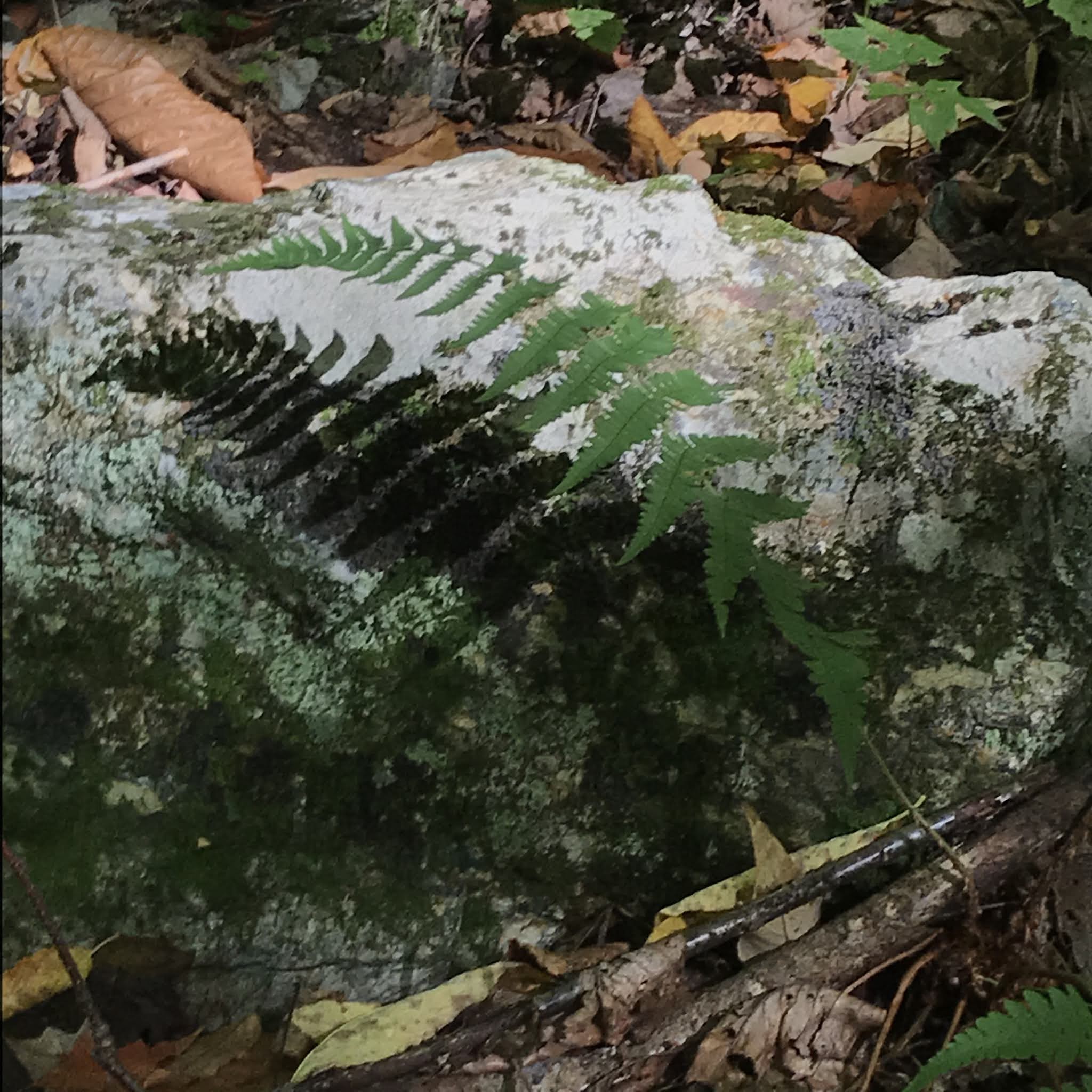
The terminal shield fern is quite fresh and green, and a common thin fern, though fallen. 

I observe the beds of greenish cladonia lichens. 

Saw a wood tortoise stirring in the now open brook in Hubbard's Swamp. 


H. D. Thoreau, Journal, December 7, 1853

In the latter part of November and now, before the snow, I am attracted by the numerous small evergreens on the forest floor. See October 29, 1858 (“With the fall of the white pine, etc., the Pyrola umbellata and the lycopodiums, and even evergreen ferns, suddenly emerge as from obscurity. If these plants are to be evergreen, how much they require this brown and withered carpet to be spread under them for effect. Now, too, the light is let in to show them.”); November 16, 1858 (“Methinks the wintergreen, pipsissewa, is our handsomest evergreen, so liquid glossy green and dispersed almost all over the woods.”);  November 17, 1858 ("It would seem that these lycopodiums, at least, which have their habitat on the forest floor and but lately attracted my attention there (since the withered leaves fell around them and revealed them by the contrast of their color and they emerged from obscurity), —it would seem that they at the same time attained to their prime, their flowering season.") ;  November 19, 1850 ("Now that the grass is withered and the leaves are withered or fallen, it begins to appear what is evergreen the partridge-berry and checkerberry, and winter-green leaves even, are more conspicuous.”); November 27, 1853 ("I observe the Lycopodium lucidulum still of .a fresh, shining green. Checkerberries and partridge-berries are both numerous and obvious now");

The still green Mitchella repens [partridge-berry] and checkerberry in shelter, both with fruit; gold-thread; Pyrola secunda, with drooping curled-back leaves, and other pyrolas. See March 4, 1854 ("In Hubbard's maple swamp I see the evergreen leaves of the gold-thread as well as the mitchella and large pyrola."); March 7, 1855 ("The Pyrola secunda is a perfect evergreen. It has lost none of its color or freshness, with its thin ovate finely serrate leaves, revealed now the snow is gone.”); April 24, 1852 (“Gold-thread, an evergreen, still bright in the swamps.”); May 17, 1857 (“Gold-thread is abundantly out at Trillium Woods.”); July 2, 1859 ("Mitchella repens is abundantly out."); July 3, 1859 ("The Mitchella repens, so abundant now in the north west part of Hubbard's Grove, emits a strong astringent cherry-like scent as I walk over it, now that it is so abundantly in bloom, which is agreeable to me, — spotting the ground with its downy-looking white flowers.”); October 15, 1859 (“The little leaves of the mitchella, with a whitish midrib and veins, lying generally flat on the mossy ground, perhaps about the base of a tree, with their bright-scarlet twin berries sprinkled over them, may properly be said to checker the ground. Now, particularly, they are noticed amid the fallen leaves. ”);  November 16, 1850 (“The partridge-berry leaves checker the ground on the side of moist hillsides in the woods. Are they not properly called checker-berries ?”); November 27, 1853 ("Checkerberries and partridge-berries are both numerous and obvious now.”); December 3, 1853 ("The still green Mitchella repens and checkerberry in shelter, both with fruit"); December 23, 1855 (“At Lee’s Cliff I notice these radical(?) leaves quite fresh: saxifrage, sorrel, polypody, . . . checkerberry, wintergreen.”)

Note “checkerberry" is another name for American wintergreen (Gaultheria procumbens). See Checkerberry cum Wintergreen. What HDT calls “wintergreen” is Chimaphila umbellata, a/k/a pipsissewa.

The terminal shield fern is quite fresh and green.  S
ee October 23, 1857 ("The ferns which I can see on the bank, apparently all evergreens, are polypody at rock, marginal shield fern, terminal shield fern, and (I think it is) Aspidium spinulosum.. . .The above-named evergreen ferns are so much the more conspicuous on that pale-brown ground. They stand out all at once and are seen to be evergreen; their character appears.”); November 2, 1857 (“The evergreen ferns and lycopodiums now have their day; now is the flower of their age, and their greenness is appreciated. They are much the clearest and most liquid green in the woods”); November 5, 1857 ("The terminal shield fern is the handsomest and glossiest green.”);   January 23, 1858 ("I  see the terminal shield fern very fresh, as an evergreen, at Saw Mill Brook, and (I think it is) the marginal fern and Lycopodium lucidulum.")See also A Book of the Seasons, by Henry Thoreau, The Evergreen Ferns, Part Three: Polypody, Marginal Shield Fern, Terminal Shield Fern

I observe the beds of greenish cladonia lichens. See November 30, 1853 ("Now, first since spring, I take notice of the cladonia lichens, which the cool fall rains appear to have started.")

Saw a wood tortoise stirring in the now open brook in Hubbard's Swamp.
See December 3, 1852(“ In a ditch near by, under ice half an inch thick, I saw a painted tortoise moving about.”) See also 
 A Book of the Seasons,  by Henry Thoreau The Wood Turtle (Emys insculpta) and A Year in the Life of a Wood Turtle ("In late November. . .you might expect Wood Turtles in Vermont to be hunkered down in their hibernacula. Instead, I spotted 15 Wood Turtles, most of which were active underwater, including two mating pairs.")

Tuesday, April 9, 2019

We played with the north winds here before ye were born.

April 9.

P. M. — To Goose Pond. 

The wind is as strong, and yet colder, being more from the north, than before. Through, I think, all this windy weather, or at least for about three weeks, the wind has regularly gone down with the sun, strong as it has been each day. 

As we go up the hill in the woods east of Hubbard's Close, I hear a singular sound through the roaring of the wind amid the trees, which I think at first some creature forty rods off, but it proves to be the creaking of one bough on another. When I knew what it was I was surprised to find it so near, even within a rod. 

It was occasioned by two little dead limbs, an inch or less in diameter, on two different white pines which stood four or five feet apart, — such limbs as are seen on every white pine below the living ones, some twelve feet from the ground. These with every motion of the trees in the wind were grating back and forth on each other, and had worn into one another, and this produced, not a mere coarse, grating sound, but a perfect viol sound, such as I never heard from trees before, — a jarring or vibratory creak, as if the bow leaped on the strings, for one limb was bow and the other string. 

It was on one key or note when the trees approached, and quite another and very fine and sharp when they receded. I raised one limb with a pole, and the music ceased. This was as musical as a viol, a forest viol, which might have suggested that instrument to some Orpheus wandering in the wood. He would only have to place a box of resonant wood beneath to complete a simple viol. 

We heard several others afterward which made a coarse, squeaking noise like a bird, but this would have suggested music to any one. It was mythologic, and an Indian might have referred it to a departed spirit. The fiddles made by the trees whose limbs cross one another, — played on by the wind! 

When we listened, in the wood, we heard all kinds of creaking and groaning sounds from the laboring trees. 

We go seeking the south sides of hills and woods, or deep hollows, to walk in this cold and blustering day. We sit by the side of Little Goose Pond, which C. calls Ripple Lake or Pool, to watch the ripples on it. Now it is nearly smooth, and then there drops down on to it, deep as it lies amid the hills, a sharp and narrow blast of the icy north wind careering above, striking it, perhaps, by a point or an edge, and swiftly spreading along it, making a dark-blue ripple. Now four or five windy bolts, sharp or blunt, strike it at once and spread different ways. The boisterous but playful north wind evidently stoops from a considerable height to dally with this fair pool which it discerns beneath. 

You could sit there and watch these blue shadows playing over the surface like the light and shade on changeable silk, for hours. 

It reminds me, too, of the swift Camilla on a field [of] grain. The wind often touches the water only by the finest points or edges. 

It is thus when you look in some measure from the sun, but if you move round so as to come more opposite to him, then all these dark-blue ripples are all sparkles too bright to look at, for you now see the sides of the wavelets which reflect the sun to you. 

A large fox-hole in Britton's hollow, lately dug; an ox-cartload of sand, or more, thrown up on the hill side. 

Watching the ripples fall and dash across the surface of low-lying and small woodland lakes is one of the amusements of these windy March and April days. 

It is only on small lakes deep sunk in hollows in the woods that you can see or study them these days, for the winds sweep over the whole breadth of larger lakes incessantly, but they only touch these sheltered lake lets by fine points and edges from time to time. 

And then there is such a fiddling in the woods, such a viol-creaking of bough on bough, that you would think music was being born again, as in the days of Orpheus. Orpheus and Apollo are certainly there taking lessons; aye, and the jay and the blackbird, too, learn now where they stole their "thunder." They are perforce silent, meditating new strains. 

When the playful breeze drops on the pool, it springs to right and left, quick as a kitten playing with dead leaves, clapping her paw on them. Sometimes it merely raises a single wave at one point, as if a fish darted near the surface. 

While to you looking down from a hillside partly from the sun, these points and dashes look thus dark-blue, almost black, they are seen by another, standing low and more opposite to the sun, as the most brilliant sheeny and sparkling surface, too bright to look at. 

Thus water agitated by the wind is both far brighter and far darker than smooth water, seen from this side or that, — that is, as you look at the inclined surface of the wave which reflects the sun, or at the shaded side. 

For three weeks past, when I have looked northward toward the flooded meadows they have looked dark-blue or blackish, in proportion as the day was clear and the wind high from the north west, making high waves and much shadow. 

We can sit in the deep hollows in the woods, like Frosty Hollow near Ripple Lake, for example, and find it quite still and warm in the sun, as if a different atmosphere lurked there; but from time to time a cold puff from the rude Boreas careering overhead drops on us, and reminds us of the general character of the day. 

While we lie at length on the dry sedge, nourishing spring thoughts, looking for insects, and counting the rings on old stumps. 

These old gray or whitish stumps, with their porous structure where the ducts are seen, are very much like bones, — the bones of trees. I break a little cube out of this old oak stump, which was sawed off some thirty years ago, and which has about one hundred rings, — a piece sharply square-cornered and exactly the form of a square bunch of matches; and, the sawed end being regularly channelled by time in the direction of the ducts and of the silver grain, it looks precisely like the loose ends, or dipped end of the bunch, and would be mistaken for such on any shelf. 

Those ripple lakes lie now in the midst of mostly bare brown or tawny dry woodlands, themselves the most living objects. 

They may say to the first woodland flowers, We played with the north winds here before ye were born.

H. D. Thoreau, Journal, April 9, 1859

Watching the ripples fall and dash across the surface of low-lying and small woodland lakes is one of the amusements of these windy March and April days. See March 2, 1860 ("The great phenomenon these days is the sparkling blue water, — a richer blue than the sky ever is. The flooded meadows are ripple lakes on a large scale. . . . These are ripple days begun, — not yet in woodland pools, where is ice yet. "); March 9, 1860 (“March began warm, and I admired the ripples made by the gusts on the dark-blue meadow flood, and the light-tawny color of the earth, and was on the alert to hear the first birds.”); March 14, 1860 ("I see some dark ripples already drop and sweep over the surface of [Walden], as they will ere long over Ripple Lake and other pools in the wood."); April 15, 1860 ("Ripples spread fan-like over Fair Haven Pond, from Lee's Cliff, as over Ripple Lake."); April 21, 1859 ("This Ripple Lake with the wind playing over it,. . . this play of ripples which reflect the sky,-- a darker blue than the real"); April 29, 1859 ("There is a time to watch the ripples on Ripple Lake.")


The flooded meadows they have looked dark-blue or blackish, in proportion as the day was clear and the wind high from the northwest. See April 9, 1856 ("The water on the meadows now, looking with the sun, is a far deeper and more exciting blue than the heavens."); see also March 29, 1852 ("The water on the meadows looks very dark from the street. Their color depends on the position of the beholder in relation to the direction of the wind.") Also seeA Book of the Seasons, by Henry Thoreau, Blue waters in Spring

Monday, March 4, 2019

What a perfectly New England sound is this voice of the crow!

March 4. 

Began to snow last evening, and it is now (early in the morning) about a foot deep, and raining. 

P. M. — To E. Hosmer Spring. 

Down Turnpike and back by E. Hubbard's Close. We stood still a few moments on the Turnpike below Wright's (the Turnpike, which had no wheel-track beyond Turtle's and no track at all beyond Wright's), and listened to hear a spring bird. 

We heard only the jay screaming in the distance and the cawing of a crow. What a perfectly New England sound is this voice of the crow! If you stand perfectly still anywhere in the outskirts of the town and listen, stilling the almost incessant hum of your own personal factory, this is perhaps the sound which you will be most sure to hear rising above all sounds of human industry and leading your thoughts to some far bay in the woods where the crow is venting his disgust. This bird sees the white man come and the Indian withdraw, but it withdraws not. Its untamed voice is still heard above the tinkling of the forge. It sees a race pass away, but it passes not away. It remains to remind us of aboriginal nature. 

I find near Hosmer Spring in the wettest ground, which has melted the snow as it fell, little flat beds of light-green moss, soft as velvet, which have recently pushed up, and lie just above the surface of the water. They are scattered about in the old decayed trough. (And there are still more and larger at Brister's Spring.) They are like little rugs or mats and are very obviously of fresh growth, such a green as has not been dulled by winter, a very fresh and living, perhaps slightly glaucous, green. 

The myosotis and bitter cress are hardly clean and fresh enough for a new growth. 

The radical leaves of the Ranunculus repens are conspicuous, but the worse for the wear; but the golden saxifrage has in one or two places decidedly and conspicuously grown, like the cowslip at Well Meadow and still more, rising in dense beds a half to three quarters of an inch above the water, the leaves, like those of the cowslip, only partly concealed and flatted out. This distinguishes the fresh-springing leaves of these two. 

Probably there is more of the chrysosplenium thus advanced in Concord than of the caltha. I see none of the last here. 

The surface of the snow thus rapidly melting and sinking (there are commonly some inches of water under it, the rain having soaked through), though still very fresh and pure white, is all cracked, as it were, like that of some old toadstools. It has sunk so much that every inequality in the surface of the ground be neath is more distinctly shown than when bare. 

The ruts of old wood-paths are represented in the surface a foot above, and the track of the man and of the dog that ran by the side of the team (in the old snow), — the thread, in short, of every valley. 

The surface of the snow, though so recent, is therefore, on account of the rain, very diversified. On steep slopes it is regularly furrowed, apparently by water that has flowed down it. 

In the brook in Hubbard's Close I see the grass pushing up from the bottom four or five inches long and waving in the current, which has not yet reached the surface. 

C. thinks this is called a sap snow, because it comes after the sap begins to flow. 

The story goes that at the Social Club the other night Cyrus Stow, hearing that the lecture before the Lyceum by Alger was to be on "The Sophistry of Ennui " and not knowing what that was, asked in good faith if it went by wind or water.

H. D. Thoreau, Journal, March 4, 1859

We listened to hear a spring bird. We heard only the jay screaming in the distance and the cawing of a crow. See February 18, 1855 ("I listen ever for something springlike in the notes of birds, some peculiar tinkling notes."); February 18, 1857 ("The snow is nearly all gone, and it is so warm and springlike that I walk over to the hill, listening for spring birds.");  March 1, 1855 ( "We go listening for bluebirds, but only hear crows and chickadees."); December 11, 1854 ("I hear rarely a bird except the chickadee, or perchance a jay or crow.") . See also  A Book of the Seasons,  by Henry Thoreau,  by Henry Thoreau, Signs of the Spring:  The crowing of cocks, the cawing of crows

The golden saxifrage has in one or two places decidedly and conspicuously grown. See March 4, 1852 ("The snow is melting on the rocks; the water trickles down in shining streams; the mosses look bright; the first awakening of vegetation at the root of the saxifrage.”); March 15. 1857 ("As usual at this date and earlier, there are a few square rods of green grass tufts at Brister’s springs, like a green fire under the pines and alders, and in one place an apparent growth of golden saxifrage"); March 18, 1853 ("At Conantum Cliff the columbines have started and the saxifrage even,. . .These plants waste not a day, not a moment, suitable to their development.")
.
I find near Hosmer Spring in the wettest ground, which has melted the snow as it fell, little flat beds of light-green moss, soft as velvet, which have recently pushed up. See  February 18, 1852 ("The mosses on the rocks look green where the snow has melted. This must be one of the spring signs, when spring comes.");  March 3, 1859 ("The mossy bank along the south side of Hosmer's second spring ditch is very interesting. There are many coarse, hair-like masses of that green and brown moss on its edge, hanging over the ditch, alternating with withered-looking cream-colored sphagnum tinged with rose-color, in protuberances, or mammae, a foot across on the perpendicular side of the ditch"); March 7 , 1855 ("At Brister’s Spring there are beautiful dense green beds of moss, which apparently has just risen above the surface of the water, tender and compact."); April 2, 1853 (" See the fine moss in the pastures with beautiful red stems even crimsoning the ground. This is its season."); April 2, 1856 (" There are beds of fresh green moss in the midst of the shallow water."):; April 18, 1856 ("That pretty, now brown-stemmed moss with green oval fruit"); April 25, 1857 ("The dense, green, rounded beds of mosses in springs and old water-troughs are very handsome now, — intensely cold green cushions.") See also 
A Book of the Seasons, by Henry Thoreau, Signs of the Spring: Mosses Bright Green and  A Book of the Seasons, by Henry Thoreau, At Brister's Spring

March 4. See A Book of the Seasons, by Henry Thoreau, March 4

The distant cawing –
aboriginal nature
this voice of the crow.

A Book of the Seasons, by Henry Thoreau, a perfectly New England sound 

A Book of the Seasons
, by Henry Thoreau
"A book, each page written in its own season,
out-of-doors, in its own locality.”
~edited, assembled and rewritten by zphx © 2009-2025


Friday, October 5, 2018

The comet makes a great show these nights.

October 5

Donati's Comet, Oxford, 7:30 p.m., 5 Oct. 1858

I still see large flocks, apparently of chip birds, on the weeds and ground in the yard; without very distinct chestnut crowns, and they are divided by a light line. They are eating seeds of the Amaranthus hybridus, etc. 

8 A. M. — I go to Hubbard’s Close to see when the fringed gentians open. They begin to open in the sun about 8.30 A. M., or say 9. 

Chewink note still. Grackles in flocks. Phebe note of Chickadee often these days. 

Much green is indispensable for maples, hickories, birches, etc., to contrast with, as of pines, oaks, alders, etc. The former are fairest when seen against these. The maples, being in their prime, say yesterday, before the pines, are conspicuously parti-colored. 

P. M. — To Easterbrooks Country. 

White pines in low ground and swamps are the first to change. Some of these have lost many needles. Some on dry ground have so far changed as to be quite handsome, but most only so far as to make the misty glaucous (green) leaves more soft and indefinite. 

The fever-bush is in the height of its change and is a showy clear lemon yellow, contrasting with its scarlet berries. The yellow birch is apparently at the height of its change, clear yellow like the black. I think I saw a white ash which was all turned clear yellowish, and no mulberry, in the Botrychium Swamp. 

Looking on the Great Meadows from beyond Nathan Barrett’s, the wool-grass, where uncut, is very rich brown, contrasting with the clear green of the portions which are mown; all rectangular. The staghorn sumach apparently in the prime of its change. 

In the evening I am glad to find that my phosphorescent wood of last night still glows somewhat, but I improve it much by putting it in water. The little chips which remain in the water or sink to the bottom are like so many stars in the sky. 

The comet makes a great show these nights. Its tail is at least as long as the whole of the Great Dipper, to whose handle, till within a night or two, it reached, in a great curve, and we plainly see stars through it. [It finally reaches between one fourth and one third from the horizon to the zenith.]

Huckleberry bushes generally red, but dull Indian red, not scarlet. 

The red maples are generally past their prime (of color). They are duller or faded. Their first fires, like those of genius, are brightest. In some places on the edges of swamps many of their tops are bare and smoky. 
October 5, 2019

The dicksonia fern is for the most part quite crisp and brown along the walls.

H. D. Thoreau, Journal, October 5, 1858

The comet makes a great show these nights. See September 23 , 1858 (Saw the comet very bright in the northwest. "); November 1, 1858 ("Here are all the friends I ever had or shall have . . .They see the comet from the northwest coast just as plainly as we do, and the same stars through its tail. ") see also Comet Donali (first observed it on June 2, 1858. After the Great Comet of 1811, it was the most brilliant comet that appeared in the 19th century. It was also the first comet to be photographed.)

I still see large flocks, apparently of chip birds, on the weeds and ground in the yard; without very distinct chestnut crowns.  See August 25, 1859 ("quite a flock of (apparently) Fringilla socialis in the garden"); September 1, 1854 ("Now I notice a few faint-chipping sparrows, busily picking the seeds of weeds in the garden"); September 16, 1854 (“I see little flocks of chip-birds along the roadside and on the apple trees, showing their light under sides when they rise.”); September 27, 1858 ("What are those little birds in flocks in the garden and on the peach trees these mornings, about size of chip-birds, without distinct chestnut crowns?”); October 7, 1860 (“Now and for a week the chip-birds in flocks; the withered grass and weeds, etc., alive with them.”) See also A Book of the Seasons, by Henry Thoreau, the Chipping Sparrow


8 A. M. — I go to Hubbard’s Close to see when the fringed gentians open. See September 12, 1854 (" I cannot find a trace of the fringed gentian."); September 14, 1855 ("To Hubbard's Close. I see no fringed gentian yet.");  September 14, 1856 (" To Hubbard's Close. Fringed gentian well out (and some withered or frost-bitten ?), say a week, though there was none to be seen here August 27th.");  September 28, 1853 ("The fringed gentian was out before Sunday; was (some of it) withered then, says Edith Emerson."); October 1, 1858 ("The fringed gentians are now in prime. . . .They who see them closed, or in the afternoon only, do not suspect their beauty.”); October 2, 1857 ("The fringed gentian at Hubbard's Close has been out some time, and most of it already withered"); .October 2, 1853 ("The gentian in Hubbard's Close is frost-bitten extensively"); October 18, 1857 ("The fringed gentian closes every night and opens every morning in my pitcher.");  October 19, 1852 ("It is too remarkable a flower not to be sought out and admired each year, however rare. It is one of the errands of the walker, as well as of the bees, for it yields him a more celestial nectar still. It is a very singular and agreeable surprise to come upon this conspicuous and handsome and withal blue flower at this season, when flowers have passed out of our minds and memories; the latest of all to begin to bloom"); November 4, 1853 (“To Hubbard's Close. I find no traces of the fringed gentian here, so that in low meadows I suspect it does not last very late”) See also A Book of the Seasons, by Henry Thoreau: The Fringed Gentian
 

Phebe note of Chickadee often these days. See  October 4, 1859 (" I hear. . . the sweet phe-be of the chickadee"); October 6, 1856 ("The common notes of the chickadee, so rarely heard for a long time, and also one phebe strain from it, amid the Leaning Hemlocks, remind me of pleasant winter days, when they are more commonly seen.”);  October 10, 1856 ("The phebe note of the chickadee is now often heard ");  October 20, 1856  ("The chickadees are more numerous and lively and familiar and utter their phebe note.") See also A Book of the Seasons,  by Henry Thoreau, the Chickadee in Winter

The fever-bush is in the height of its change and is a showy clear lemon yellow, contrasting with its scarlet berries. See September 24, 1859 ("Fever-bush berries are scarlet now, and also green. They have a more spicy taste than any of our berries, carrying us in thought to the spice islands. Taste like lemon-peel."); October 4, 1857 (“Fever-bush has begun to yellow.”); October 15, 1859 ("The fever-bush is for the most part bare, and I see no berries.")

The dicksonia fern is for the most part quite crisp and brown along the walls. See October 4, 1859 ("How interesting now, by wall-sides and on open springy hillsides, the large, straggling tufts of the dicksonia fern . . .. Long, handsome lanceolate green fronds, pointing in every direction, recurved and full of fruit, intermixed with yellowish and sere brown and shrivelled ones. . . .Their lingering greenness so much the more noticeable now that the leaves (generally) have changed. They affect us as if they were evergreen, such persistent life and greenness in the midst of their own decay") See also September 30, 1859 (" The evergreen ferns have been growing more and more distinct amid the fading and decaying and withering ones,")

https://tinyurl.com/HDT581005

Monday, October 1, 2018

The fringed gentians are now in prime.


October 1. 

P. M. — To Hubbard’s Close. 

Clintonia Maple Swamp is very fair now, especially a quarter of a mile off, where you get the effect of the light colors without detecting the imperfections of the leaves. Look now at such a swamp, of maples mixed with the evergreen pines, at the base of a pine-clad hill, and see their yellow and scarlet and crimson fires of all tints, mingled and contrasted with the green. Some maples are yet green, only yellow-tipped on the edges of their flakes, as the edges of a hazelnut bur. Some are wholly brilliant scarlet, raying out regularly and finely every way. Others, of more regular form, seem to rest heavily, flake on flake, like yellow or scarlet snow-drifts. 

The cinnamon ferns are crisp and sour in open grounds. 

The fringed gentians are now in prime. These are closed in the afternoon [No. Vide forward.], but I saw them open at 12 M. a day or two ago, and they were exceedingly beautiful, especially when there was a single one on a stem. They who see them closed, or in the afternoon only, do not suspect their beauty. 

Viola lanceolata again. 

See larks in small flocks. 

Was overtaken by a sudden gust and rain from the west. It broke off some limbs and brought down many leaves. Took refuge in Minott’s house at last. 

He told me his last duck-shooting exploit for the fifth or sixth time.

Says that Jake Potter, who died over eighty some dozen years since, told him that when he was a boy and used to drive his father Ephraim’s cows to pasture in the meadows near Fair Haven, after they were mown in the fall, returning with them at evening, he used to hear the wildcats yell in the Fair Haven woods. 

Minott tells of a great rise of the river once in August, when a great many “marsh-birds,” as peeps, killdees, yellow-legs, etc., came inland, and he saw a flock of them reaching from Flint’s Bridge a mile down-stream over the meadows, and making a great noise. 

Says the “killdees” used to be common here, and the yellow legs, called “humilities,” used commonly to breed here on the tussocks in the meadows. He has often found their nests. 

Let a full-grown but young cock stand near you. How full of life he is, from the tip of his bill through his trembling wattles and comb and his bright eye to the extremity of his clean toes! How alert and restless, listening to every sound and watching every motion! How various his notes, from the finest and shrillest alarum as a hawk sails over, surpassing the most accomplished violinist on the short strings, to a hoarse and terrene voice or cluck! He has a word for every occasion; for the dog that rushes past, and partlet cackling in the barn. And then how, elevating himself and flapping his wings, he gathers ear-piercing strain! not a vulgar note of defiance, but the mere effervescence of life, like the bursting of a bubble in a wine-cup. Is any gem so bright as his eye? 

The elms are now great brownish-yellow masses hanging over the street. Their leaves are perfectly ripe. I wonder if there is any answering ripeness in the lives of those who live beneath them. The harvest of elm leaves is come, or at hand. 

The cat sleeps on her head! What does this portend? It is more alarming than a dozen comets. 

How long prejudice survives! The big-bodied fisherman asks me doubtingly about the comet seen these nights in the northwest, — if there is any danger to be apprehended from that side! I would fain suggest that only he is dangerous to himself.

H. D. Thoreau, Journal, October 1, 1858

Maples mixed with the evergreen pines, at the base of a pine-clad hill, and see their yellow and scarlet and crimson fires of all tints, mingled and contrasted with the green. See October 1, 1854 ("The young black birches about Walden, next the south shore, are now commonly clear pale yellow, very distinct at distance, like bright-yellow white birches, so slender amid the dense growth of oaks and evergreens on the steep shores.")

The fringed gentians are now in prime. See October 2, 1853 ("The gentian in Hubbard's Close is frost-bitten extensively.”); ;October 2, 1857 ("The fringed gentian at Hubbard's Close has been out some time, and most of it already withered. “); October 12, 1857 ("To Annursnack. . . .The fringed gentian by the brook opposite is in its prime, and also along the north edge of the Painted-Cup Meadows”); October 18, 1857 (“The fringed gentian closes every night and opens every morning in my pitcher.”)
See larks in small flocks. See October 13, 1855 ("Larks in flocks in the meadows, showing the white in their tails as they fly, sing sweetly as in spring."); November 1, 1853 ("I see and hear a flock of larks in Wheeler's meadow on left of the Corner road, singing exactly as in spring and twittering also, but rather faintly ...")

I wonder if there is any answering ripeness in the lives of those who live beneath them. See October 9, 1857 ("The elms are now at the height of their change. As I look down our street, which is lined with them, now clothed in their very rich brownish-yellow dress, they remind me of yellowing sheaves of grain, as if the harvest had come to the village itself, and we might expect to find some maturity and flavor in the thoughts of the villagers at last.")

The comet seen these nights in the northwest. See September 23 , 1858 (Saw the comet very bright in the northwest. "); October 5, 1858 ("The comet makes a great show these nights.");  November 1, 1858 ("Here are all the friends I ever had or shall have . . .They see the comet from the northwest coast just as plainly as we do, and the same stars through its tail. ")

Friday, April 27, 2018

Snows hard in afternoon and evening. Quite wintry.

April 27 


April 27, 2018

It has been so cold since the 23d that I have not been able to catch a single frog, have hardly seen where one jumped, as I walked through the meadows looking for them, though in some warmer places I heard a low stertorous R. halecina-like note from a few. 

The tortoises are stirring much more. 

Frogs appear to love warm and moist weather, rainy or cloudy. They will sit thickly along the shore, apparently small bullfrogs, etc., R. palustris. 

My young fishes had the pectoral fins and tail very early developing, but not yet can I detect any other fins with my glass. They had mouths, which I saw them open as soon as hatched, and more and more a perch-like head. I think that with Hoar's microscope I detected two dorsal fins such as the perch have. When I put them suddenly in the sun they sink and rest on the bottom a moment. 

In the French work for schools of Edwards and Comte, it is said that the perch spawns not till the age of three years, and in the spring. “The ova are joined together by some glutinous matter in long strings (codons) intertwined with the reeds.” (Page 36.) 

I noticed yesterday that again the newly laid spawn at the cold pool on Hubbard's land was all gone, and that in the larger pool south of it was much diminished. What creature devours it? 

Snows hard in afternoon and evening. Quite wintry. About an inch on ground the next morning.

H. D. Thoreau, Journal, April 27, 1858

It has been so cold since the 23d that I have not been able to catch a single frog. See April 24, 1858 (“This shows how sensitive they are to changes of temperature. Hardly one puts its head out of the water, if ever he creeps out the grassy or muddy bottom this cold day. ”)

The newly laid spawn at the cold pool on Hubbard's land was all gone. See April 22, 1858 (“The spawn of April 18th is gone! It was fresh there and apparently some creature has eaten it.”)

Snows hard in afternoon and evening. Quite wintry. See note to April 2, 1861 ("A drifting snow-storm, perhaps a foot deep on an average.”)

Saturday, November 25, 2017

November Eatheart


November 25

P. M. — To Hubbard’s Close and thence through woods to Goose Pond and Pine Hill. 

A clear, cold, windy afternoon. The cat crackles with electricity when you stroke her, and the fur rises up to your touch. 

This is November of the hardest kind, — bare frozen ground covered with pale-brown or straw-colored herbage, a strong, cold, cutting northwest wind which makes me seek to cover my ears, a perfectly clear and cloudless sky. 

The cattle in the fields have a cold, shrunken, shaggy look, their hair standing out every way, as if with electricity, like the cat's. 

Ditches and pools are fast skimming over, and a few slate-colored snowbirds, with thick, shuffling twitter, and fine-chipping tree sparrows flit from bush to bush in the other wise deserted pastures. This month taxes a walker's resources more than any. 

For my part, I should sooner think of going into quarters in November than in the winter. If you do feel any fire at this season out of doors, you may depend upon it, it is your own. 

It is but a short time, these afternoons, before the night cometh, in which no man can walk. If you delay to start till three o'clock, there will be hardly time left for a long and rich adventure, — to get fairly out of town. 

November 25, 2017

November Eatheart, — is that the name of it? 

Not only the fingers cease to do their office, but there is often a benumbing of the faculties generally. You can hardly screw up your courage to take a walk when all is thus tightly locked or frozen up and so little is to be seen in field or wood. 

I am inclined to take to the swamps or woods as the warmest place, and the former are still the openest. Nature has herself become like the few fruits which she still affords, a very thick-shelled nut with a shrunken meat within. If I find anything to excite or warm my thoughts abroad, it is an agreeable disappointment, for I am obliged to go abroad willfully and against my inclinations at first. 

The prospect looks so barren, so many springs are frozen up, not a flower perchance and but few birds left, not a companion abroad in all these fields for me, I am slow to go forth. I seem to anticipate a fruitless walk. I think to myself hesitatingly, Shall I go there, or there, or there? and cannot make up my mind to any route, all seem so unpromising, mere surface walking and fronting the cold wind, so that I have to force myself to it often and at random. 

November 25, 2020

But then I am often unexpectedly compensated, and the thinnest yellow light of November is more warming and exhilarating than any wine they tell of; and then the mite which November contributes becomes equal in value to the bounty of July. I may meet with some thing which interests me, and immediately it is as warm as in July, as if it were the south instead of the north west wind that blowed.

I do not know if I am singular when I say that I believe there is no man with whom I can associate who will not, comparatively speaking, spoil my afternoon. That society or encounter may at last yield a fruit which I am not aware of, but I cannot help suspecting that I should have spent those hours more profitably alone. 

Pools under the north sides of hills are frozen pretty thick. That cold one of Stow's is nearly an inch and a half thick. It is already dusty, though the ice is but a day or two old. That of Jarvis's, opposite Breed's, is also skimmed over thinly, but Goose Pond very little way as yet. The main crystals of this new ice remind me where massed together sometimes of spiny cactus leaves. Meeting each other, they inclose figures of a more or less triangular form rather than squarish. Sometimes many are closely parallel, half an inch apart, and in favorable lights you see a resemblance to large feathers. Sometimes those large spiny crystals ray from a centre, star-like, somewhat like the folds of a garment taken up by a point. The plaited ice. Also you may say the waved ice, — still speaking of the first thin ice of the season. 

I notice a thimble-berry vine forming an arch four feet high, which has firmly rooted itself at the small end. 

The roar of the wind in the trees over my head sounds as cold as the wind feels. 

I come to what seems an old ditch a dozen feet long, in Hubbard's Close. It is skinned over, but I see where a spring wells up from its bottom under the ice. When I come to it, small black-looking fishes (?), four or five inches long, apparently trout, dart about it with incredible velocity, trying to escape or to bury themselves in the mud. It is some time before all have succeeded in burying themselves to their minds, but when I shake the bog they start again. 

Ascending the hill on the east of the Close, I find, in the pine wood on its top, some fragments of a frozen white fungus or toadstool, which apparently a squirrel has eaten, for he has also dropped some at the base of a pine. These look almost exactly like asbestos, so white and stringy to the eye. 

Methinks there has been more pine-sap than usual the past summer. I never saw a quarter part so much. It stands there withered in dense brown masses, six or eight inches high, partly covered with dead leaves. The tobacco-pipes are a darker brown. 

You see here and there, under pitch pines, bits of gray bark which have fallen, reminding you very strongly of the scaly armor, perhaps, of fossil fishes or other creatures. I see, under a large white pine, three quarts at least of scales in a heap, where a squirrel has sat on the instep of the tree and stripped the cones. Further in Ebby Hubbard’s wood, I see a great two-storied mass of black spunk which has fallen. 

I shiver about awhile on Pine Hill, waiting for the sun to set. Methinks the air is dusky soon after four these days. The landscape looks darker than at any season, — like arctic scenery. There is the sun a quarter of an hour high, shining on it through a perfectly clear sky, but to my eye it is singularly dark or dusky. And now the sun has disappeared, there is hardly less light for half a minute. I should not know when it was down, but by looking for it as I stand at this height. 

Returning, I see a fox run across the road in the twilight from Potter’s into Richardson’s woods. He is on a canter, but I see the whitish tip of his tail. I feel a certain respect for him, because, though so large, he still maintains himself free and wild in our midst, and is so original so far as any resemblance to our race is concerned. Perhaps I like him better than his tame cousin the dog for it. 

It is surprising how much, from the habit of regarding writing as an accomplishment, is wasted on form. A very little information or wit is mixed up with a great deal of conventionalism in the style of expressing it, as with a sort of preponderating paste or vehicle. Some life is not simply expressed, but a long-winded speech is made, with an occasional attempt to put a little life into it. 

H. D. Thoreau Journal, November 25, 1857

A clear, cold, windy afternoon. See November 25, 1853 ("A clear, cold, windy day.")

November Eatheart. See November 13, 1851 ("Now is there nothing, not even the cold beauty of ice crystals and snowy architecture, nothing but the echo of your steps over the frozen ground"); November 27, 1853 (“Now a man will eat his heart, if ever, now while the earth is bare, barren and cheerless, and we have the coldness of winter without the variety of ice and snow”) See also A Book of the Seasons, by Henry Thoreau This is glorious November weather.

I believe there is no man with whom I can associate who will not, comparatively speaking, spoil my afternoon. See August 31, 1856 (“Some are so inconsiderate as to ask to walk or sail with me regularly every day”); September 16, 1859 ("Ask me for a certain number of dollars if you will, but do not ask me for my afternoons.")

The thinnest yellow light of November is more warming and exhilarating than any wine. 
 See November 9, 1858  (“We had a true November sunset . . . a cold, yellow sunlight suddenly illumined the withered grass of the fields around, near and far, eastward. Such a phenomenon as, when it occurs later, I call the afterglow of the year.”); November 15, 1853 ("The clear yellow light of the western sky is handsomely reflected in the water,");  November 18, 1857 ("The sunlight is a peculiarly thin and clear yellow, falling on the pale-brown bleaching herbage of the fields at this season. There is no redness in it. This is November sunlight."); November 29, 1853 (""Suddenly a glorious yellow sunlight falls on all the eastern landscape.  . . I think that we have some such sunsets as this, and peculiar to the season, every year. I should call it the russet afterglow of the year.)

Methinks the air is dusky soon after four these days . . . There is the sun a quarter of an hour high, shining on it through a perfectly clear sky, but to my eye it is singularly dark or dusky. And now the sun has disappeared. See November 25, 1851 ("The sun had set . . .we were surprised at the darkness in the east, the crescent of night, almost as if the air were thick, a thick snow-storm were gathering, which, as we had faced the west, we were not prepared for;."); November 27, 1853 ("The days are short enough now. The sun is already setting before I have reached the ordinary limit of my walk."); November 28, 1859 ("We make a good deal of the early twilights of these November days, they make so large a part of the afternoon."). See also A Book of the Seasons, by Henry Thoreau, November Sunsets

November 25. See A Book of the Seasons, by Henry Thoreau,  November 25

The unexpected
exhilarating yellow 
light of November.


A Book of the Seasons
,  by Henry Thoreau, 
"A book, each page written in its own season,
out-of-doors, in its own locality.”
~edited, assembled and rewritten by zphx © 2009-2024

https://tinyurl.com/hdt-571125

Popular Posts Last 30 Days.

The week ahead in Henry’s journal

The week ahead in Henry’s journal
A journal, a book that shall contain a record of all your joy.
"A stone fruit. Each one yields me a thought." ~ H. D. Thoreau, March 28, 1859


I sit on this rock
wrestling with the melody
that possesses me.