Showing posts with label calamagrotis. Show all posts

Saturday, August 24, 2019

Corner road, by brook.

August 24.

P. M. — To Conantum.

The small sempervirens blackberry in prime in one place. 

Aster puniceus and Diplopappus umbellatus, how long? 

Calamagrostis coarctata not quite, end of Hubbard's meadow wood-path. 

Panicum virgatum, say two or three weeks. 

Leersia, or cut-grass, some time, roadside, Corner road, by brook.

H. D. Thoreau, Journal, August 24, 1859


The small sempervirens blackberry in prime in one place.
August 15, 1852 ("The swamp blackberry begins."); August 23, 1856 ("At the Lincoln bound hollow, Walden, there is a dense bed of the Rubus hispidus, matting the ground seven or eight inches deep, and full of the small black fruit, now in its prime. It is especially abundant where the vines lie over a stump. Has a peculiar, hardly agreeable acid."); September 7, 1858 ("J. Farmer calls those Rubus sempervirens berries, now abundant, 'snake blackberries.'") See also A Book of the Seasons,  by Henry Thoreau, Blackberries

Aster puniceus how long? See August 11, 1856 ("Aster puniceus a day or more."); August 30, 1856 (" The Aster puniceus is hardly yet in prime; its great umbel-shaped tops not yet fully out."); October 7, 1857 ("Crossing Depot Brook, I see many yellow butterflies fluttering about the Aster puniceus, still abundantly in bloom there.”); November 5. 1855 ("Crossing the Depot Field Brook, I observe the downy, fuzzy globular tops of the Aster puniceus. They are slightly tinged with yellow, compared with the hoary gray of the goldenrod.")

Calamagrostis coarctata not quite, end of Hubbard's meadow wood-path. See August 13, 1860 ("Calamagrostis coarctata, not quite.")

Panicum virgatum, say two or three weeks. See September 7, 1858 ("In Shad-bush Meadow the prevailing grasses (not sedges) now are the slender Panicum clandestinum, whose seeds are generally dropped now, Panicum virgatum, in large tufts, and blue-joint")

Leersia, or cut-grass, some time, roadside, Corner road, by brook. See September 1, 1858 ("At the pool by the oaks behind Pratt’s . . . Leersia oryzoides, false rice, or rice cut-grass, is abundant and in prime on the shore there. Also find it on the shore of Merrick’s pasture. It has very rough sheaths.")

Friday, June 15, 2018

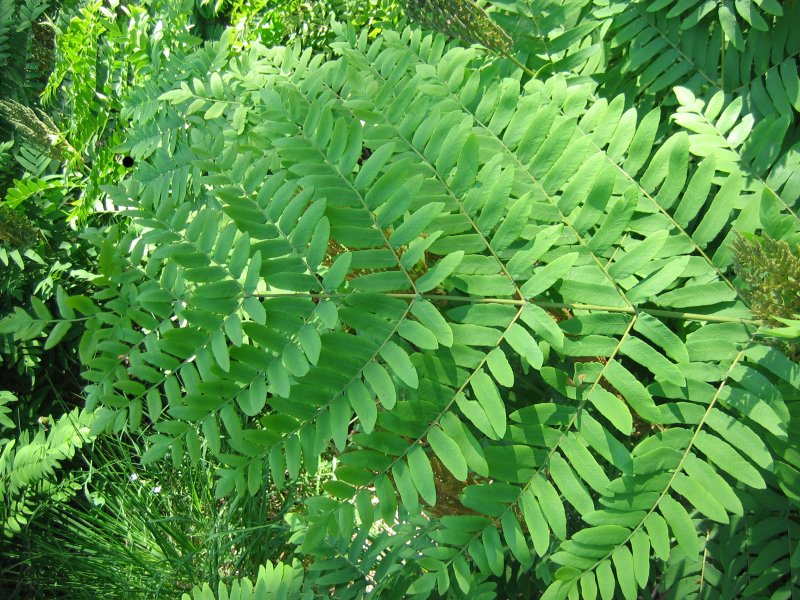
The Osmunda regalis, growing in very handsome hollow circles.

June 15. 
June 15, 2018

Rains steadily again, and we have had no clear weather since the 11th. 

The river is remarkably high, far higher than before, this year, and is rising. I can paddle into and all about the willowy meadow southwest of Island. I had, indeed, anticipated this on account of the remarkable lowness of the river in the spring. 

That coarse grass in the Island meadow which grows in full circles, as on the Great Meadows, is wool-grass, though but little blooms. Some is now fairly in bloom and it has the dark bracts of what I observed on the Great Meadows. The peculiarly circular form of the patches, sometimes their projecting edges being the arcs of circles, is very obvious now that the lower and different grass around is under water. Many plants have a similar habit of growth. 

The Osmunda regalis, growing in very handsome hollow circles, or sometimes only crescents or arcs of circles, is now generally a peculiarly tender green, — its delicate fronds, – but some has begun to go to seed and look brown. Hollow circles, one or two feet to a rod in diameter. 

These two are more obvious when, as now, all the rest of the meadow is covered with water. 

That large grass, five feet high, of the river brink is now just begun. Can it be blue-joint, or Calamagrostis Canadensis? [Probably phalaris.]

H. D. Thoreau, Journal, June 15, 1858

That coarse grass in the Island meadow which grows in full circles, as on the Great Meadows, is wool-grass, sometimes their projecting edges being the arcs of circles.  June 27, 1857 ("southwest of Egg Rock, the coarse sedge [wool-grass] — I think the same with that in the Great Meadows — evidently grows in patches with a rounded outline; i.e., its edge is a succession of blunt, rounded capes, with a very distinct outline amid the other kinds of grass and weeds.")

The Osmunda regalis, growing in very handsome hollow circles, or sometimes only crescents or arcs of circles, is now generally a peculiarly tender green. See July 5, 1860 ("I notice of late the Osmunda regalis fully grown, fresh and handsome.")

Popular Posts Last 30 Days.

The week ahead in Henry’s journal

The week ahead in Henry’s journal
A journal, a book that shall contain a record of all your joy.
"A stone fruit. Each one yields me a thought." ~ H. D. Thoreau, March 28, 1859


I sit on this rock
wrestling with the melody
that possesses me.