Showing posts with label july 1. Show all posts

Friday, July 4, 2025

A Book of the Seasons: July Days


A year is made up of 
a certain series and number 
of sensations and thoughts 
which have their language in nature.

Henry Thoreau, June 6, 1857


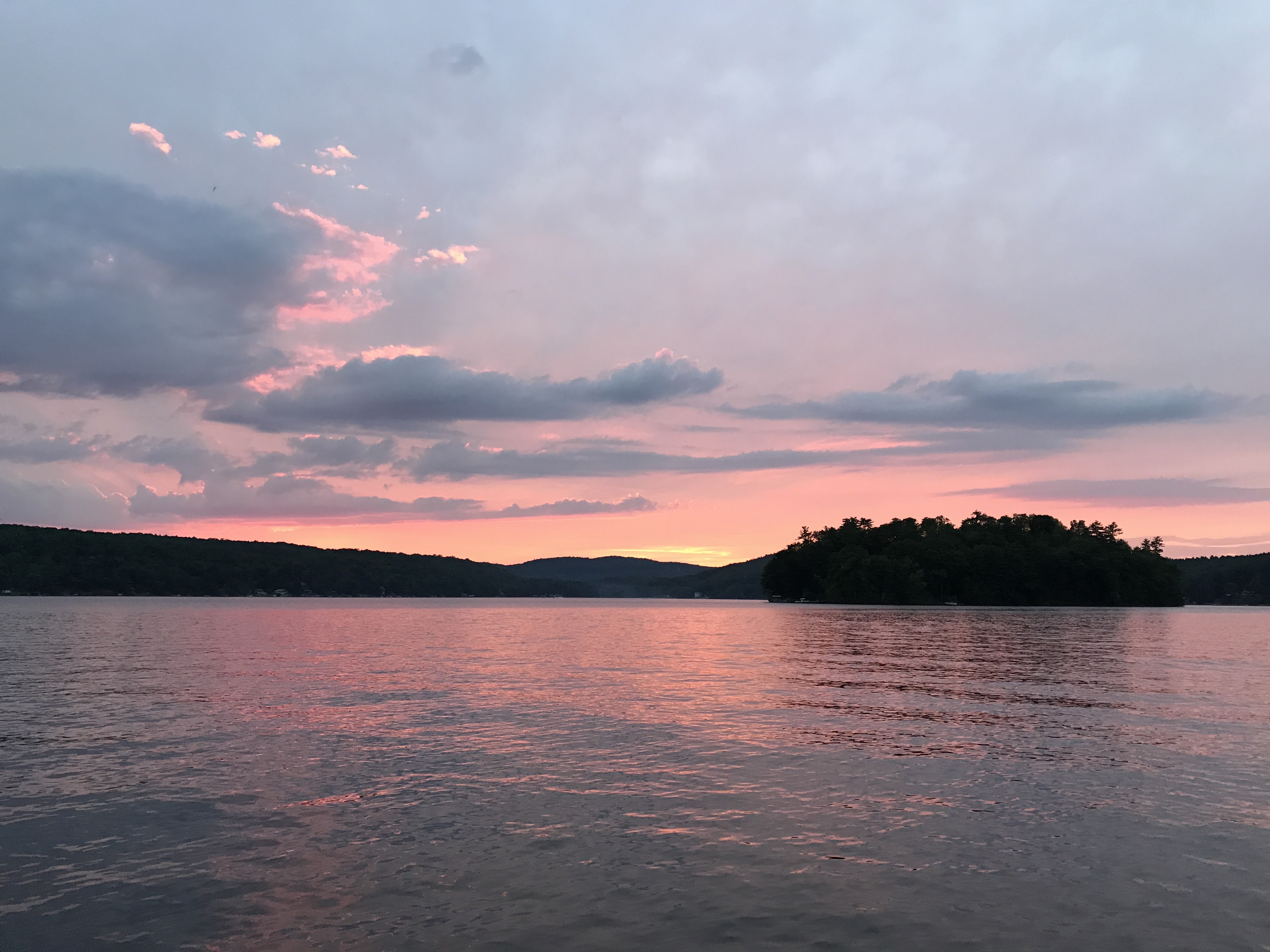
A late breeze rises
wood thrush and tanager sing
sparkling the river.  

Fine silvery light
reflecting from the blades of
miles of waving grass.

Wintergreen blossom,
pretty little chandelier,
adorns forest floor.

Waves of light and shade
over the breadth of the land
sweeping the landscape.

Shadows of pine stems
fall across the small wood path
red with pine-needles.

June grasses are past.
Now the grass turns to hay as
flowers turn to fruits.

Lilies surprise me.
Now the flowering season
has reached its height.

The moon reflected
from the rippled surface like
a stream of dollars.

Busy hummingbird
unmindful of the shower,
struck by a big drop.

Aboriginal
bream over its sandy nest
poised on waving fin.

Waving in the wind
this grass gives a purple sheen
over the meadow.

The upland plover
hovers on quivering wing –
 alights by steep dive.
July 12, 1855

Hayers rest at noon
and resume after sunset.
The Haymaker’s moon.

A fine misty rain
lies on reddish tops of grass
like morning cobwebs.

Thoughts driven inward –
clouds and trees reflected in 
the still, smooth water.


Dark-blue winding stripe,
green meadow, dark-green forest,
blue dark and white sky.

Flying shore to shore,
yellowish devil's-needles
cross their Atlantic.


I first hear the locust sing 
so dry and piercing
by the side of the pine woods 
in the heat of the day.  
July 18, 1851

With midsummer heats
asters and goldenrods come –
children of the sun.

The more smothering
furnace-like heats are begun –
and the locust days.

We see the first star 
and know not if we might have
seen it earlier.

Sun warm on my back
I turn round and shade my face -
a beautiful life.

Our fairest days born
in a fog, the season of
morning fogs arrived.

Along the river
the memory of roses -
late rose now in prime.

In low Flint's Pond Path 
goldenrod makes a thicket 
higher than my head. 

Fog rises highest
over the river and ponds
which are thus revealed.
July 25, 1852

Sun's disk round and red
seen well above horizon
through thick atmosphere.

The voice of the loon 
in the middle of the night
far over the lake.

Goldenrod, asters
grasshoppers now abundant -
cooler breezy air.

Kindred red color
of skies in the evening and
fruits in the harvest.

Grand sound of the rain
on the leaves of the forest
distant, approaching.

Thoughts of autumn and
the memory of past years
occupy my mind.
July 31, 1856


<<<<< Last Month                                                                                           Next Month  >>>>>                                                                                                                                                                                


A Book of the Seasons, by Henry Thoreau, July Days

 A Book of the Seasons, by Henry Thoreau
"A book, each page written in its own season,
out-of-doors, in its own locality."
~edited, assembled and rewritten by zphx ©  2009-2025

Monday, July 1, 2019

Oriole young.


July 1

P. M. — To Second Division Brook. 


July 1, 2019

Have heard the peculiar peep of young tailless golden robins for a day or more. 

White water ranunculus in full bloom at least a week, in Second Division Brook, near the dam, in the shade of the bank, a clear day. Its leaves and stems waving in the brook are interesting, — much cut and green. 

The Holcus lanatus, past prime, near J. P. Brown's little meadow beyond end of his moraine; also grows near southwest end of Hubbard's Grove. 

Agrostis, either vulgaris or alba (or both), now generally coming into bloom in fields both moist and dry, but I should say with considerable ligules and rather roughish sheaths.

H.. D. Thoreau, Journal,  July 1, 1859

The peculiar peep of young tailless golden robins for a day or more. See June 28, 1855 ("Hear and see young golden robins which have left the nest, now peeping with a peculiar tone."); June 28, 1857 ("I hear on all hands these days, from the elms and other trees, the twittering peep of young gold robins, which have recently left their nests, and apparently indicate their locality to their parents by thus incessantly peeping all day long."); July 2, 1860 ("Nowadays hear from my window the constant tittering of young golden robins, ")

White water ranunculus in full bloom at least a week, in Second Division Brook. See August 4, 1854 ("Ranunculus aquatilis var. fluviatilis, white petals with a yellow claw, small flowers on surface of Hosmer's ditch, west end, by Turnpike. A new plant.")

Sunday, July 1, 2018

A great pea-green emperor moth.

July 1.

I am surveying the Bedford road these days, and have no time for my Journal. 

July 1, 2013
Saw one of those great pea-green emperor moths, like a bird, fluttering over the top of the woods this forenoon, 10 a. m., near Beck Stow's. 

Gathered the early red blackberry in the swamp or meadow this side of Pedrick's, where I ran a pole down nine feet. It is quite distinct from the evergreen one and is without prickles. Fruit red, middle-sized, with a few, perhaps ten or twelve, large globules.

May be the Rubus triflorus, but not growing on hills.

H. D. Thoreau, Journal, July 1, 1853


One of those great pea-green emperor moths.
See June 27, 1858 (“See an Attacus luna in the shady path”)  See also A Book of the Seasons,  by Henry Thoreau, the Luna Moth (Attacus luna)

May be the Rubus triflorus. See June 30, 1854 ("Rubus triflorus berries, some time, — the earliest fruit of a rubus. The berries are very scarce, light red, semitransparent, showing the seed . . ."); July 2, 1851("Some of the raspberries are ripe, the most innocent and simple of fruits")

Friday, July 1, 2016

A Book of the Seasons : July 1 (white lilies and pads, shadows of clouds, clear air, roses in prime)


The year is but a succession of days,
and I see that I could assign some office to each day
which, summed up, would be the history of the year.
Henry Thoreau, August 24, 1852

 July 1 

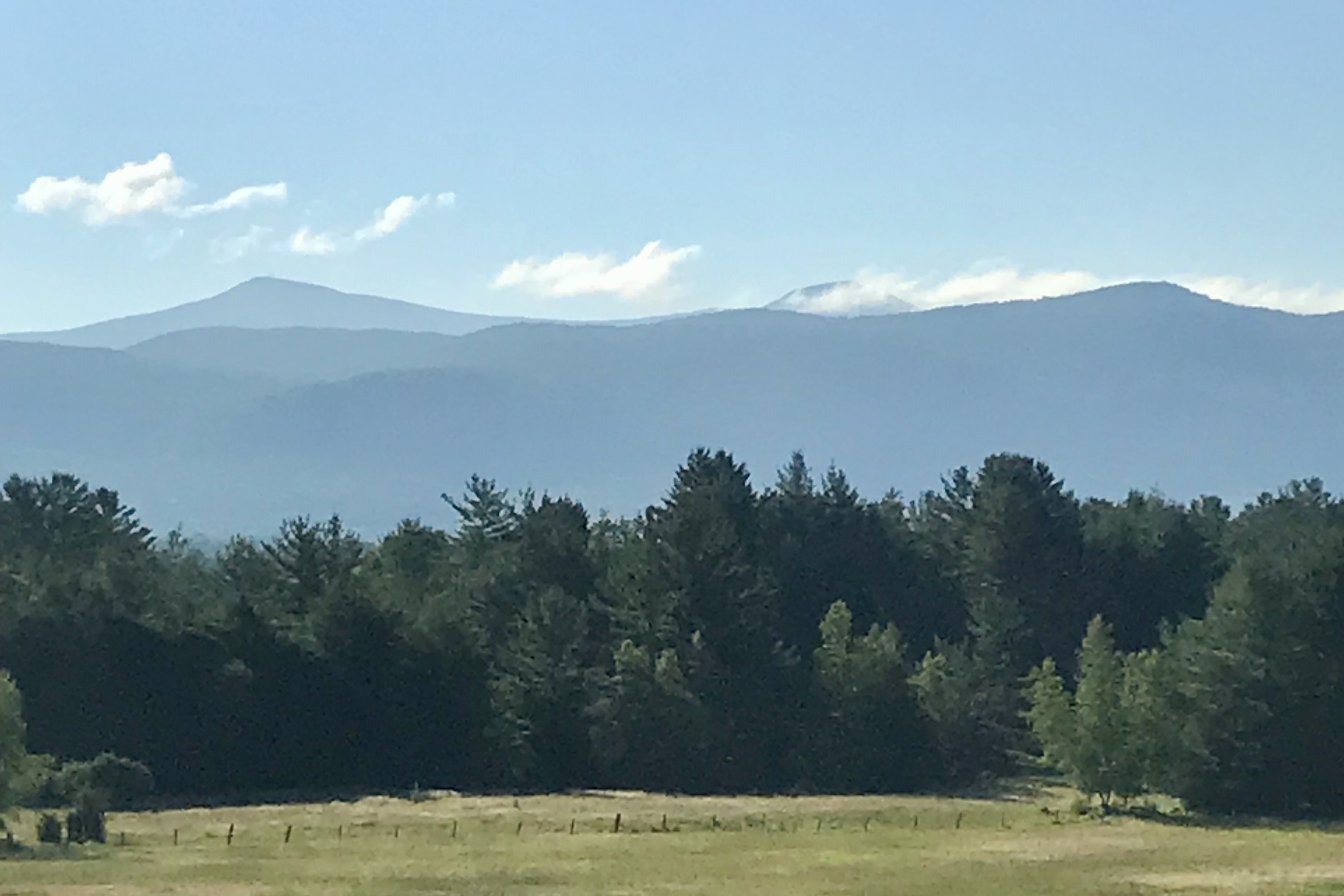
I see from this hill
the horizon-edge distinct –
clear air after rain.

Shadows pass slowly
over the green forest top –
clouds floating in sky.

A late breeze rises
wood thrush and tanager sing –
sparkling the river. 

July 1, 2019

A cloudy and slightly showery morning. July 1, 1852

It is more agreeable walking this cloudy day, with a few harmless sun-showers, than it would be in a glaring sunny day.  July 1, 1852

Saw one of those great pea-green emperor moths, like a bird, fluttering over the top of the woods this forenoon, 10 a. m., near Beck Stow's. July 1, 1853

The path by the wood-side is red with the effete staminiferous flowers of the white pine.  July 1, 1852

Roses are in their prime now, growing amid huckle-berry bushes, ferns, and sweet-ferns, especially about some dry pond-hole; some paler, some more red. July 1, 1852

Have heard the peculiar peep of young tailless golden robins for a day or more. July 1, 1859

I see young partridges not bigger than robins fly three or four rods, not squatting fast, now.  July 1, 1860 

From the hill I perceive that the air is beautifully clear after the rain of yesterday, and not hot; fine grained. The landscape is fine as behind a glass, the horizon-edge distinct. July 1, 1854

July 1, 2019

The distant vales toward the northwest mountains lie up open and clear.  The shadows of trees are dark and distinct. July 1, 1854

The clouds are separate glowing masses or blocks floating in the sky, not threatening rain. I see from this hill their great shadows pass slowly here and there over the top of the green forest. July 1, 1854

It is pleasant to behold so much of the landscape in the shadow of the clouds. July 1, 1852

July 1, 2016
On the river I see the two broad borders of pads reflecting the light, the dividing line between them and the water, their irregular edge, perfectly distinct. July 1, 1854

The freshly opened lilies are a pearly white, and though the water amid the pads is quite unrippled, the passing air gives a slight oscillating, boat-like motion to and fro to the flowers, like boats held fast by their cables.   July 1, 1852

I wish to breathe the atmosphere of lilies, and get the full impression which lilies are fitted to make. July 1, 1852

The white lilies are in all their splendor, fully open, sometimes their lower petals lying flat on the surface  . . . Two which I examine have twenty-nine petals each. We push our boat into the midst of some shallow bays covered with pads and spotted white with many hundreds of lilies just expanded. July 1, 1852

The freshly opened lilies are a pearly white, and though the water amid the pads is quite unrippled, the passing air gives a slight oscillating, boat-like motion to and fro to the flowers, like boats held fast by their cables. July 1, 1852

After eating our luncheon at Rice's landing, I can not find one open anywhere for the rest of the day. July 1, 1852

Gathered the early red blackberry in the swamp or meadow. . . Fruit red, middle-sized, with a few, perhaps ten or twelve, large globules.May be the Rubus triflorus, but not growing on hills.July 1, 1853

Later a breeze rises and there is a sparkle on the river. The wood thrush and tanager sing at 4 P.M. at Cliffs. July 1, 1854

July 1, 2024

*****
A Book of the Seasons,  by Henry Thoreau :
July
 
Summer
 
Seen from a Hillside
 The Horizon


July 1, 2016

*****

It is pleasant to behold so much of the landscape in the shadow of the clouds See July 1,1854 ("I see from this hill their great shadows pass slowly here and there over the top of the green forest."); See also June 3, 1858 ("It was interesting to watch from that height the shadows of fair-weather clouds passing over the landscape."); July 27, 1852 ("It is pleasing to behold at this season contrasted shade and sunshine on the side of neighboring hills.")

The peculiar peep of young tailless golden robins for a day or more. See June 28, 1855 ("Hear and see young golden robins which have left the nest, now peeping with a peculiar tone."); June 28, 1857("I hear on all hands these days, from the elms and other trees, the twittering peep of young gold robins, which have recently left their nests, and apparently indicate their locality to their parents by thus incessantly peeping all day long."); July 2, 1860 ("Nowadays hear from my window the constant tittering of young golden robins, ")

May be the Rubus triflorus. See June 30, 1854 ("Rubus triflorus berries, some time, — the earliest fruit of a rubus. The berries are very scarce, light red, semitransparent, showing the seed . . .");  July 2, 1851("Some of the raspberries are ripe, the most innocent and simple of fruits")

I see young partridges not bigger than robins .See June 26, 1857 ("See a pack of partridges as big as robins at least.”);July 5, 1856 ("Young partridges (with the old bird), as big as robins, make haste into the woods from off the railroad.") 

The landscape is fine as behind a glass. See February 9, 1852 ("It is a new glass placed over the picture every hour.")

The distant vales toward the northwest mountains lie up open and clear. Compare  July 11, 1857 (“Looking off into the vales from Fair Haven Hill, where a thin blue haze now rests almost universally, I see that the earth itself is invested with a glaucous bloom at this season.”); May 24, 1860 (“Looking into the northwest horizon, I see that Wachusett is partially concealed by a haze. This is one of the values of mountains in the horizon, that they indicate the state of the atmosphere.”);  see also  August 2, 1852 (“To look across hence to that blue rim of the earth, and be reminded of the invisible towns and communities, . . . which lie in the further and deeper hollows between me and those hills. . . ., and be reminded how many brave and contented lives are lived between me and the horizon.); March 28, 1858 (. On ascending the hill next his home, every man finds that he dwells in a shallow concavity whose sheltering walls are the convex surface of the earth, beyond which he cannot see. .”)

The shadows of trees are dark and distinct.  See June 30, 1860 (" The shadows under the edge of woods are less noticed now because the woods themselves are darker.”); June 11, 1856 ("I think that this peculiar darkness of the shade, or of the foliage as seen between you and the sky, is not accounted for merely by saying that we have not yet got accustomed to clothed trees, but the leaves are rapidly acquiring a darker green, are more and more opaque, and, besides, the sky is lit with the intensest light.”)

The path by the wood-side is red with the effete staminiferous flowers of the white pine. See note to  June 25, 1858 ("The ground under the white pines is now strewn with the effete flowers, like an excrement.”)

Roses are in their prime now . . .The white lilies are in all their splendor. See June 30, 1852 ("Is not this period more than any distinguished for flowers, when roses, swamp-pinks, morning-glories, arethusas, pogonias, orchises, blue flags, epilobiums, mountain laurel, and white lilies are all in blossom at once?")

 After eating our luncheon . . . I can not find one open anywhere for the rest of the day. See July 17, 1854 (“I watch them for an hour and a half. By about 1.30 they are all shut up, and no petal is to be seen up and down the river . . .I think that I could tell when it was 12 o'clock within half an hour by the lilies.”)

July 1, 2020
If you make the least correct 
observation of nature this year,
 you will have occasion to repeat it
 with illustrations the next, 
and the season and life itself is prolonged.

  June 30 <<<<< July 1 >>>>>  July 2

A Book of the Seasons,  by Henry Thoreau, July 1 
A Book of the Seasons,  by Henry Thoreau
 "A book, each page written in its own season,
out-of-doors, in its own locality." 
~edited, assembled and rewritten by zphx ©  2009-2022 

The back fins, very long and sharp, projected two or three inches above water.


July 1


P. M. — Paddled on the Acushnet. 

Passed through some schools of fishes which were rippling the surface about us in midstream. 
The back fins, very long and sharp, projected two or three inches above water. Walton said afterward that they were menhaden.

H. D. Thoreau, Journal, July 1, 1856

Schools of fishes rippling the surface about us in midstream. See July 9, 1855 (“The surface of the ocean is rippled by fishes, mostly menhaden, far and wide, in countless myriads, such the populousness of the sea.”)


July 1. See A Book of the Seasons,  by Henry Thoreau, July 1 

Menhaden back fins, 
very long and sharp, project
above the water.  

A Book of the Seasons,  by Henry Thoreau, Menhaden back fins
A Book of the Seasons,  by Henry Thoreau
 "A book, each page written in its own season,
out-of-doors, in its own locality."
 ~edited, assembled and rewritten by zphx ©  2009-2026

Popular Posts Last 30 Days.

The week ahead in Henry’s journal

The week ahead in Henry’s journal
A journal, a book that shall contain a record of all your joy.
"A stone fruit. Each one yields me a thought." ~ H. D. Thoreau, March 28, 1859


I sit on this rock
wrestling with the melody
that possesses me.