Showing posts with label Brown Season. Show all posts

Saturday, March 26, 2022

A Book of the Seasons: the Brown Season

No one, to my knowledge, 
has observed the minute differences in the seasons. 
Henry Thoreau, June 11, 1851

 The brown season 
extends from about the 6th of March 
ordinarily into April. 
March 26, 1860
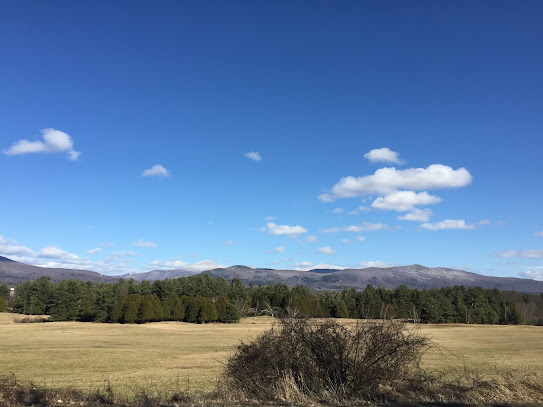
March 29, 2016


March 2.  I love to look now at the fine grained russet hillsides in the sun, ready to relieve and contrast with the azure of the bluebirds.  March 2, 1855

March 5. As I go along by Sleepy Hollow, this strong, warm wind, rustling the leaves on the hillsides, this blue haze, and the russet earth seen through it, remind me that a new season has come. March 5, 1855

March 10Those reddening leaves, as the checkerberry, lambkill, etc., etc., which at the beginning of winter were greenish, are now a deeper red, when the snow goes off. . . .There are some other plants with bright-green leaves which have either started somewhat or have never suffered from the cold under the snow. March 10, 1852

March 10.These earliest spring days are peculiarly pleasant. We shall have no more of them for a year. I am apt to forget that we may have raw and blustering days a month hence. The combination of this delicious air, which you do not want to be warmer or softer, with the presence of ice and snow, you sitting on the bare russet portions, the south hillsides, of the earth, this is the charm of these days. It is the summer beginning to show itself like an old friend in the midst of winter. You ramble from one drier russet patch to another.  March 10, 1859

March 11. From the hill the river and meadow is about equally water and ice, — rich blue water and islands or continents of white ice — no longer ice in place — blown from this side or that . . . The distant mountains are all white with snow while our landscape is nearly bare. March 11, 1854

March 12. Memorable is the warm light of the spring sun on russet fields in the morning. A new feature is being added to the landscape, and that is expanses and reaches of blue water. . . .I look across the meadows to Bedford, and see that peculiar scenery of March, in which I have taken so many rambles, the earth just bare and beginning to be dry, the snow lying on the north sides of hills, the gray deciduous trees and the green pines soughing in the March wind — they look now as if deserted by a companion, the snow. When you walk over bare lichen-clad hills, just beginning to be dry, and look afar over the blue water on the meadows, you are beginning to break up your winter quarters and plan adventures for the new year. The scenery is like, yet unlike, November; you have the same barren russet, but now, instead of a dry, hard, cold wind, a peculiarly soft, moist air, or else a raw wind. March 12, 1854

March 12. Now you walk in a comparative lull, anticipating fair weather, with but a slight drizzling,. . . In one of these lulls, as I passed the Joe Hosmer (rough-cast) house, I thought I never saw any bank so handsome as the russet hillside behind it. . . .this russet grass with its weeds, being saturated with moisture, was in this light the richest brown, methought, that I ever saw. There was the pale brown of the grass, red browns of some weeds (sarothra and pinweed probably), dark browns of huckleberry and sweet-fern stems, and the very visible green of the cladonias thirty rods off, and the rich brown fringes where the broken sod hung over the edge of the sand-bank. I did not see the browns of withered vegetation so rich last fall, . . .A peculiar and unaccountable light seemed to fall on that bank or hillside, though it was thick storm all around. A sort of Newfoundland sun seemed to be shining on it. It was such a light that you looked around for the sun that might be shining on it . . .These tints of brown were as softly and richly fair and sufficing as the most brilliant autumnal tints. In fair and dry weather these spots may be commonplace, but now they are worthy to tempt the painter's brush. . . .This kind of light, the air being full of rain and all vegetation dripping with it, brings out the browns wonderfully. March 12, 1859

March 13. I cannot easily forget the beauty of those terrestrial browns in the rain yesterday. The withered grass was not of that very pale hoary brown that it is to-day, now that it is dry and lifeless, but, being perfectly saturated and dripping with the rain, the whole hillside seemed to reflect a certain yellowish light, so that you looked around for the sun in the midst of the storm. All the yellow and red and leather-color in the fawn-colored weeds was more intense than at any other season. The withered ferns which fell last fall — pin weeds, sarothra, etc. — were actually a glowing brown for the same reason, being all dripping wet. The cladonias crowning the knolls had visibly expanded and erected themselves, though seen twenty rods off, and the knolls appeared swelling and bursting as with yeast. All these hues of brown were most beautifully blended, so that the earth appeared covered with the softest and most harmoniously spotted and tinted tawny fur coat of any animal. The very bare sand slopes, with only here and there a thin crusting of mosses, was [sic] a richer color than ever it is. In short, in these early spring rains, the withered herbage, thus saturated, and reflecting its brightest withered tint, seems in a certain degree to have revived, and sympathizes with the fresh greenish or yellowish or brownish lichens in its midst, which also seem to have withered. It seemed to me — and I think it may be the truth — that the abundant moisture, bringing out the highest color in the brown surface of the earth, generated a certain degree of light, which, when the rain held up a little, reminded you of the sun shining through a thick mist. March 13, 1859

March 16. 
The earth has cast off her white coat and come forth in her clean-washed sober russet early spring dress. As we look over the lively, tossing blue waves for a mile or more eastward and northward, our eyes fall on these shining russet hills, and Ball's Hill appears in this strong light at the verge of this undulating blue plain, like some glorious newly created island of the spring, just sprung up from the bottom in the midst of the blue waters. The fawn-colored oak leaves, with a few pines intermixed, thickly covering the hill, look not like a withered vegetation, but an ethereal kind, just expanded and peculiarly adapted to the season and the sky. Look toward the sun, the water is yellow, as water in which the earth has just washed itself clean of its winter impurities; look from the sun and it is a beautiful dark blue; but in each direction the crests of the waves are white, and you cannot sail or row over this watery wilderness without sharing the excitement of this element. Our sail draws so strongly that we cut through the great waves without feeling them. And all around, half a mile or a mile distant, looking over this blue foreground, I see the bare and peculiarly neat, clean- washed, and bright russet hills reflecting the bright light (after the storm of yesterday) from an infinite number of dry blades of withered grass. The russet surfaces have now, as it were, a combed look, — combed by the rain. And the leather-color of withered oak leaves covering Ball's Hill, seen a mile or two off in the strong light, with a few pines intermixed, as if it were an island rising out of this blue sea in the horizon. This sight affects me as if it were visible at this season only. What with the clear air and the blue water and the sight of the pure dry withered leaves, that distant hill affects me as something altogether ethereal . . . This first sight of the bare tawny and russet earth, seen afar, perhaps, over the meadow flood in the spring, affects me as the first glimpse of land, his native land, does the voyager who has not seen it a long time. March 16, 1859

March 18. When I get two thirds up the hill, I look round and am for the hundredth time surprised by the landscape of the river valley and the horizon with its distant blue scalloped rim. It is a spring landscape, and as impossible a fortnight ago as the song of birds. It is a deeper and warmer blue than in winter, methinks. . . Is it not the higher sun, and cleansed air, and greater animation of nature? There is a warmer red to the leaves of the shrub oak, and to the tail of the hawk circling over them. March 18, 1858

March 18Three days ago, the 15th, we had steady rain with a southerly wind, with a clear interval and a brilliant double rainbow at sunset, — a day when all the russet banks were dripping, saturated with wet, and the peep of the robin was heard through the drizzle and the rain. March 18, 1859

March 19. The snow of March 14th is about gone, and the landscape is once more russet. The thick ice of the meadows lies rotting on each side of the stream, white and almost soft as snow. March 19, 1855

March 19. That first general exposure of the russet earth, March 16th, after the soaking rain of the day before, which washed off most of the snow and ice, is a remarkable era in an ordinary spring. The earth casting off her white mantle and appearing in her homely russet garb. This russet — including the leather-color of oak leaves — is peculiar and not like the russet of the fall and winter, for it reflects the spring light or sun, as if there were a sort of sap in it. When the strong northwest winds first blow, drying up the superabundant moisture, the withered grass and leaves do not present a merely weather-beaten appearance, but a washed and combed springlike face. The knolls forming islands in our meadowy flood are never more interesting than then. This is when the earth is, as it were, re-created, raised up to the sun, which was buried under snow and ice. March 19, 1858


March 23. At this season and under these circumstances, the sun just come out and the flood high around it, russet, so reflecting the light of the sun, appears to me the most agreeable of colors, and I begin to dream of a russet fairyland and elysium. How dark and terrene must be green! but this smooth russet surface reflects almost all the light. . . . How well, too, this smooth, firm, light-reflecting, tawny earth contrasts with the darker water which surrounds it, — or perchance lighter sometimes! At this season, when the russet colors prevail, the contrast of water and land is more agreeable to behold. . . .Thus we sit on that rock, hear the first wood frog's croak, and dream of a russet elysium. Enough for the season is the beauty thereof. Spring has a beauty of its own which we would not exchange for that of summer, and at this moment, if I imagine the fairest earth I can, it is still russet, such is the color of its blessed isles, and they are surrounded with the phenomena of spring. . . .These tongues of russet land tapering and sloping into the flood do almost speak to one. They are alternately in sun and shade. When the cloud is passed, and they reflect their pale-brown light to me, I am tempted to go to them. I think I have already noticed within a week how very agreeably and strongly the green of small pines contrasts with the russet of a hillside pasture now. Perhaps there is no color with which green contrasts more strongly. I see the shadow of a cloud — and it chances to be a hollow ring with sunlight in its midst — passing over the hilly sprout-land toward the Baker house, a sprout-land of oaks and birches; and, owing to the color of the birch twigs, perhaps, this shadow turns all from russet to a decided dark-purplish color as it moves along. And then, as I look further along eastward in the horizon, I am surprised to see strong purple and violet tinges in the sun, from a hillside a mile off densely covered with full-grown birches. It is the steep old corn-field hillside of Jacob Baker's. I would not have believed that under the spring sun so many colors were brought out. March 23, 1859

March 25.  I walk in the rain and see the rich yellowish browns of the moist banks.. . .Surely russet is not the name which describes the fields and hillsides now, whether wet or dry. There is not red enough in it. I do not know a better name for this (when wet) yellowish brown than "tawny." On the south side of these warm hills, it may perhaps be called one of the fawn-colors, i. e. brown inclining to green . . .Much of this peculiar yellowish color on the surface of the Clamshell plain is due to a little curled sedge or grass growing at short intervals. . .Day before yesterday, in clear, dry weather, we had pale-brown or fawn-colored earth, i. e., a dry, withered grass blade [color]; to-day, a more yellow brown or tawny, the same being wet. The wet brings out an agreeable yellow light, as if the sun were shining through a mist on it. The earth is more truly russet in November, when there is more redness left in the withered and withering vegetation . . . The color of spring hitherto, — I should say that in dry weather it was fawn-colored, in wet more yellowish or tawny. March 25, 1859

March 25.  As I walk I am excited by the living dark-blue color of the open river and the meadow flood seen at a distance over the fields, contrasting with the tawny earth and the patches of snow. March 25, 1860

March 25. To speak of the general phenomenon of March . . .The 6th, it clears off cold and windy. The snow is chiefly gone; the brown season begins. The tawny frozen earth looks drier than it is . . .The 7th is a day of misty rain and mistling , and of moist brown earth into which you slump as far as it is thawed at every step.  . . Now you admire the various brown colors of the parded earth . . . The 10th, you first notice frost on the tawny grass. The river-channel is open, and you see great white cakes going down the stream between the still icy  meadows, and the wind blows strong from the northwest, as usual. The earth begins to look drier and is whiter or paler-brown than ever, dried by the wind. The very russet oak leaves mixed with pines on distant hills look drier too. March 25, 1860

March 26, 2023
When the sun comes out 
of a cold slate-colored cloud –
fore-glow of the year. 
 March 26, 1860

March 26When the sun comes out of a cold slate-colored cloud, these windy days, the bleached and withered pastures reflect its light so brightly that they are almost white. They are a pale tawny, or say fawn-color, without any redness. The brown season extends from about the 6th of March ordinarily into April. The first part of it, when the frost is rapidly coming out and transient snows are melting, the surface of the earth is saturated with moisture. The latter part is dry, the whitish-tawny pastures being parded with brown and green mosses (that commonest one) and pale-brown lecheas, which mottle it very pleasingly. This dry whitish-tawny or drab color of the fields — withered grass lit by the sun — is the color of a teamster’s coat.  It is one of the most interesting effects of light now, when the sun, coming out of clouds, shines brightly on it. It is the fore-glow of the year.  March 26, 1860

March 27. The flowers of the alder, now partly in bloom, maybe half, make the impression at a little distance of a collection of the brown twigs of winter — also are of the same color with many withered leaves. . . Of our seven indigenous flowers which begin to bloom in March, four, i. e. the two alders, the aspen, and the hazel, are not generally noticed so early, if at all, and most do not observe the flower of a fifth, the maple. The first four are yellowish or reddish brown at a little distance, like the banks and sward moistened by the spring rain. The browns are the prevailing shades as yet, as in the withered grass and sedge and the surface of the earth, the withered leaves, and these brown flowers. March 27, 1859

March 28.  The Emys picta, now pretty numerous, when young and fresh, with smooth black scales without moss or other imperfection, unworn, and with claws perfectly sharp, is very handsome. When the scales are of this clear, though dull, black, the six middle ones, counting from side to side, are edged forward with broad dull greenish-yellow borders, the others with a narrow whitish border, and the singular vermilion and yellow marks of the marginal scales extend often on to the lateral scales. The concentric lines of growth are in distinguishable. The fore and hind legs and tail are slashed or streaked horizontally with broad clear vermilion and also a fine yellow line or two, answering to those on the hinge scales continued, showing the tenant to be one with the house he occupies. Beneath it is a clear buff.He who painted the tortoise thus, what were his designs?  At Lee’s Cliff and this side, I see half a dozen buff edged butterflies (Vanessa Antiopa) and pick up three dead or dying, two together, the edges of their wings gone. Several are fluttering over the dry rock débris under the cliff, in whose crevices probably they have -wintered. Two of the three I pick up are not dead, though they will not fly. Verily their day is a short one. What has checked their frail life? Within, the buff edge is black with bright sky-blue spots, and the main part within is a purplish brown. Those little oblong spots on the black ground are light as you look directly down on them, but from one side they vary through violet to a crystalline rose-purple. . .The broad buff edge of the Vanessa Antiopa’s wings harmonizes with the russet ground it flutters over, and as it stands concealed in the winter, with its wings folded above its back, in a cleft in the rocks, the gray brown under side of its wings prevents its being distinguished from the rocks themselves. March 28, 1857

March 28. As we sweep past the north end of Poplar Hill, with a sand-hole in it, its now dryish, pale-brown mottled sward clothing its rounded slope, which was lately saturated with moisture, presents very agreeable hues. In this light, in fair weather, the patches of now dull-greenish mosses contrast just regularly enough with the pale-brown grass. It is like some rich but modest- colored Kidderminster carpet, or rather the skin of a monster python tacked to the hillside and stuffed with earth. These earth colors, methinks, are never so fair as in the spring.. Now the green mosses and lichens contrast with the brown grass, but ere long the surface will be uniformly green. I suspect that we are more amused by the effects of color in the skin of the earth now than in summer. Like the skin of a python, greenish and brown, a fit coat for it to creep over the earth and be concealed in. Or like the skin of a pard, the great leopard mother that Nature is, where she lies at length, exposing her flanks to the sun. I feel as if I could land to stroke and kiss the very sward, it is so fair. It is homely and domestic to my eyes like the rug that lies before my hearth-side. Such ottomans and divans are spread for us to recline on. Nor are these colors mere thin superficial figures, vehicles for paint, but wonderful living growths, — these lichens, to the study of which learned men have devoted their lives, — and libraries have been written about them. The earth lies out now like a leopard, drying her lichen and moss spotted skin in the sun, her sleek and variegated hide. I know that the few raw spots will heal over. Brown is the color for me, the color of our coats and our daily lives, the color of the poor man's loaf.  The bright tints are pies and cakes, good only for October feasts, which would make us sick if eaten every day. One side of each wave and ripple is dark and the other light blue, reflecting the sky, — as I look down on them from my boat, — and these colors (?) combined produce a dark blue at a distance. These blue spaces ever remind me of the blue in the iridescence produced by oily matter on the surface, for you are slow to regard it as a reflection of the sky. The rippling undulating surface over which you glide is like a changeable blue silk garment. March 28, 1859

March 30. As I look through the window, I actually see a warmer atmosphere with its fine shimmer against the russet hills and the dry leaves . . . There is a very perceptible greenness on our south bank now, but I cannot detect the slightest greenness on the south side of Lee’s Hill as I sail by it. It is a perfectly dead russet. March 30, 1855

March 31. When the air is a little hazy, the mountains are particularly dark blue. It is affecting to see a distant mountain-top, like the summits of Uncanoonuc, well seen from this hill, whereon you camped for a night in your youth, which you have never revisited, still as blue and ethereal to your eyes as is your memory of it. March 31, 1853

April 1.  The prevailing color of the woods at present, excepting the evergreens, is russet, a little more red or grayish, as the case may be, than the earth, for those are the colors of the withered leaves and the branches; the earth has the lighter hue of withered grass. Let me see how soon the woods will have acquired a new color. April 1, 1852

April 1.   When I look out the window I see that the grass on the bank on the south side of the house is already much greener than it was yesterday.  April 1, 1855 

April 3. It is surprising how the earth on bare south banks begins to show some greenness in its russet cheeks in this rain and fog, -- a precious emerald-green tinge, almost like a green mildew, the growth of the night, -- a green blush suffusing her cheek, heralded by twittering birds. How encouraging to perceive again that faint tinge of green, spreading amid the russet on earth’s cheeks! I revive with Nature; her victory is mine. This is my jewelry. April 3, 1856

April 4.  How the thirsty grass rejoices! It has pushed up so visibly since morning, and fields that were completely russet yesterday are already tinged with green. We rejoice with the grass. April 4, 1853

April 4. The earth is clad with a warm russet, more pleasing perhaps than green; and far beyond all, in the northwestern horizon, my eye rests on a range of snow-covered mountains, glistening in the sun. April 4, 1855

April 4  Methinks the peculiar and interesting Brown Season of the spring lasts from the time the snow generally begins to go off — as this year the fore part of March — till the frost is generally (or entirely ?) out. Perhaps it will be through the first week of April this year. Ordinary years it must be somewhat later.  April 4, 1859 

April 9. As yet the landscape generally wears its November russet. April 9, 1854

April 13. One or two crowfoots Lee's Cliff, fully out, surprise me like a flame bursting from the russet ground . . .The winter-rye fields quite green, contrasting with the russet. April 13, 1854

April 14. There is a general tinge of green now discernible through the russet on the bared meadows and the hills, the green blades just peeping forth amid the withered ones. April 14, 1854

April 23How thickly the green blades are starting up amid the russet! The tinge of green is gradually increasing in the face of the russet earth. April 23, 1854

April 24. The pitch pine is a cheerful tree at this season, with its lively yellow-green in the sunshine, while the landscape is still russet and dead-grass colored . . .all around the undulating earth a very light tawny color, from the dead grass, with the reddish and gray of forests mingled with evergreen; April 24, 1852

April 24. Now the sun comes out and shines on the pine hill west of Ball's Hill, lighting up the light-green pitch pines and the sand and russet-brown lichen-clad hill. That is a very New England landscape. April 24, 1857

April 24. Looking over Heywood's meadow, I am struck by the vivid greenness of the tips of the sedge just pushing up out of its dry tussocks in the water. All the lower part of the tussock is brown, sere, prostrate blades of last year, while from the amid the withered blades spring up ranks of green life like a fire . . . the renewal of life. April 24, 1859 

April 25.  I got to-day and yesterday the first decided impression of greenness beginning to prevail, summer-like. It struck me as I was going past some opening and by chance looked up some valley or glade, — greenness just beginning to prevail over the brown or tawny. It is a sudden impression of greater genialness in the air, when this greenness first makes an impression on you at some turn,. . .It reminds you of the time, not far off, when you will see the dark shadows of the trees there and buttercups spotting the grass. Even the grass begins to wave. . . I glance up some warm southern slope, sunny and still, where the thinly scattered blades of green grass, lately sprung, already perchance begin to wave, and I am suddenly advertised that a new season has arrived. April 25, 1859


April 28. Perhaps the greenness of the landscape may be said to begin fairly now . . . during the last half of April the earth acquires a distinct tinge of green, which finally prevails over the russet. April 28, 1854 

April 28, 2019
If you make the least correct 
observation of nature this year,
 you will have occasion to repeat it
 with illustrations the next, 
and the season and life itself is prolonged.

*****

See also:
A Book of the Seasons, by Henry Thoreau, February 13 (midwinter colors)
A Book of the Seasons, by Henry Thoreau, the Western Sky
May 5, 1854 ("The peculiarly beautiful clean and tender green of the grass there! Green herbs of all kinds, — tansy, buttercups, etc., etc., etc., now make more or less show. Put this with the grassy season's beginning.")


A Book of the Seasons,  by Henry Thoreau
"A book, each page written in its own season,
out-of-doors, in its own locality.”
~edited, assembled and rewritten by zphx © 2009-2022


https://tinyurl.com/HDTBrown

Thursday, April 4, 2019

I see the cold and sheeny snow still glazing the mountains.

April 4

Clear, cold, and very windy; wind north west. 

For a fortnight past, or since the frost began to come out, I have noticed the funnel-shaped holes of the skunk in a great many places and their little mincing tracks in the sand. Many a grub and beetle meets its fate in their stomachs. 

Methinks the peculiar and interesting Brown Season of the spring lasts from the time the snow generally begins to go off — as this year the fore part of March — till the frost is generally (or entirely ?) out. Perhaps it will be through the first week of April this year. Ordinary years it must be somewhat later. 

The surface of the earth is never so completely saturated with wet as during this period, for the frost a few inches beneath holds all the ice and snow that are melted and the rain, and an unusual amount of rain falls. All plants, therefore, that love moisture and coolness, like mosses and lichens, are in their glory, but also [?] I think that the very withered grass and weeds, being wet, are blooming at this season. 
The conspicuous reddish brown of the fallen brakes is very rich, contrasting with the paler brown of oak leaves.

 Such an appetite have we for new life that we begin by nibbling the very crust of the earth. We betray our vegetable and animal nature and sympathies by our delight in water. We rejoice in the full rills, the melting snow, the copious spring rains and the freshets, as if we were frozen earth to be thawed, or lichens and mosses, expanding and reviving under this influence. The osier bark now, as usual, looks very yellow when wet, and the wild poplar very green. 

P. M. — To Cliffs. 

Those striped snakes of the 30th were found (several in all) on west side the railroad causeway, on the sand, which is very warm. It would seem, then, that they come out in such places soon after the frost is out. The railroad men who were cutting willows there to set on the sides of the Deep Cut, to prevent the gullying there, came across them. 

The epigaea looks as if it would open in two or three days at least, — showing much color and this form: The flower-buds are protected by the withered leaves, oak leaves, which partly cover them, so that you must look pretty sharp to detect the first flower. These plants blossom by main strength, as it were, or the virtue that is in them, — not growing by water, as most early flowers, — in dry copses. 

I see several earthworms to-day under the shoe of the pump, on the platform. They may have come up through the cracks from the well where the warm air has kept them stirring. 

On the barren railroad causeway, of pure sand, grow chiefly sallows, a few poplars, and sweet-fern and blackberry vines. 

When I look with my glass, I see the cold and sheeny snow still glazing the mountains. This it is which makes the wind so piercing cold. 

There are dark and windy clouds on that side, of that peculiar brushy or wispy character — or rather like sheafs — which denotes wind. They only spit a little snow at last, thin and scarcely perceived, like falling gossamer.

H. D. Thoreau, Journal, April 4, 1859

 I have noticed the funnel-shaped holes of the skunk in a great many places and their little mincing tracks in the sand. See March 28, 1855 ("The skunk’s nose has made small round holes such as a stick or cane would make."); April 2, 1856 ("There are many holes in the surface of the bare, springy ground amid the rills, made by the skunks or mice, and now their edges are bristling with feather like frostwork, as if they were the breathing-holes or nostrils of the earth."). See also  note to February 25, 1860 ("They appear to come out commonly in the warmer weather in the latter part of February.")

Brown Season of the spring lasts from the time the snow generally begins to go off — as this year the fore part of March. Compare March 26, 1860 ("The brown season extends from about the 6th of March ordinarily into April. . . . Tried by various tests, this season fluctuates more or less.")

Those striped snakes of the 30th were found (several in all) on west side the railroad causeway, on the sand, which is very warm. See April 3, 1859 ("C. says he saw a striped snake on the 30th") See also April 2, 1858 ("At the spring on the west side of Fair Haven Hill, I startle a striped snake.. . . No doubt on almost every such warm bank now you will find a snake lying out"); April 9, 1856 ("Saw a striped snake, which probably I had scared into the water from the warm railroad bank”); April 16, 1855 (A striped snake rustles down a dry open hillside where the withered grass is long. "); April 20, 1854 ("A striped snake on a warm, sunny bank.")  See also A Book of the Seasons, by Henry Thoreau, The Striped Snake

The cold and sheeny snow still glazing the mountains. This it is which makes the wind so piercing cold. See April 4, 1852 (" I see the snow lying thick on the south side of the Peterboro Hills, and though the ground is bare from the seashore to their base, I presume it is covered with snow from their base to the Icy Sea. I feel the northwest air cooled by the snow on my cheek."); April 4, 1855 ("far beyond all, in the north western horizon, my eye rests on a range of snow-covered mountains, glistening in the sun.”). See also April 12, 1855 ("the mountains are again thickly clad with snow, and, the wind being northwest, this coldness is accounted for.”); April 30, 1860 ("It snowed there a little, but not here. This is connected with the cold weather of yesterday; the chilling wind came from a snow-clad country.")

Friday, March 26, 2010

The Brown Season – When we came out of the woods I was the best dressed of any of them.


A pleasant day. 

I think I heard the last lesser redpolls near the beginning of this month; say about 7th. 

The top of a white maple swamp had a reddish tinge at a distance day before yesterday. Was it owing to any expansion of the buds?

2 P. M. — Thermometer 4 [sic]. To Second Division Brook. 

Though there is very considerable greenness on the warmest southerly banks, there is no change perceptible in the aspect of the earth's surface generally, or at a little distance. It is as bare and dead a brown as ever. 


When the sun comes out of a cold slate-colored cloud, these windy days, the bleached and withered pastures reflect its light so brightly that they are almost white. They are a pale tawny, or say fawn-color, without any redness.


The brown season extends from about the 6th of March ordinarily into April. 

The first part of it, when the frost is rapidly coming out and transient snows are melting, the surface of the earth is saturated with moisture. The latter part is dry, the whitish-tawny pastures being parded with brown and green mosses (that commonest one) and pale-brown lecheas, which mottle it very pleasingly. This dry whitish-tawny or drab color of the fields — withered grass lit by the sun — is the color of a teamster’s coat. 


It is one of the most interesting effects of light now, when the sun, coming out of clouds, shines brightly on it. It is the fore-glow of the year. 


There is certainly a singular propriety in that color for the coat of a farmer or teamster or shepherd or hunter, who is required to be much abroad in our landscape at this season. It is in harmony with nature, and you are less conspicuous in the fields and can get nearer to wild animals for it. For this reason I am the better satisfied with the color of my hat, a drab, than with that of my companion, which is black, though his coat is of the exact tint and better than mine; but again my dusty boots harmonize better with the landscape than his black and glossy india-rubbers. 


I had a suit once in which, methinks, I could glide across the fields unperceived half a mile in front of a farmer's windows. It was such a skillful mixture of browns, dark and light properly proportioned, with even some threads of green in it by chance. It was of loose texture and about the color of a pasture with patches of withered sweet-fern and lechea. I trusted a good deal to my invisibility in it when going across lots, and many a time I was aware that to it I owed the near approach of wild animals. 


No doubt my dusty and tawny cowhides surprise the street walkers who wear patent-leather or Congress shoes, but they do not consider how absurd such shoes would be in my vocation, to thread the woods and swamps in. Why should I wear Congress who walk alone, and not where there is any congress of my kind? 


C. was saying, properly enough, the other day, as we were making our way through a dense patch of shrub oak:

 “I suppose that those villagers think that we wear these old and worn hats with holes all along the corners for oddity, but Coombs, the musquash hunter and partridge and rabbit snarer, knows better. He understands us. He knows that a new and square-cornered hat would be spoiled in one excursion through the shrub oaks.” 

The walker and naturalist does not wear a hat, or a shoe, or a coat, to be looked at, but for other uses. When a citizen comes to take a walk with me I commonly find that he is lame, — disabled by his shoeing. He is sure to wet his feet, tear his coat, and jam his hat, and the superior qualities of my boots, coat, and hat appear. 


I once went into the woods with a party for a fortnight. I wore my old and common clothes, which were of Vermont gray. They wore, no doubt, the best they had for such an occasion, of a fashionable color and quality. I thought that they were a little ashamed of me while we were in the towns. They all tore their clothes badly but myself, and I, who, it chanced, was the only one provided with needles and thread, enabled them to mend them. When we came out of the woods I was the best dressed of any of them.


One of the most interesting sights this afternoon is the color of the yellow sand in the sun at the bottom of Nut Meadow and Second Division Brooks. The yellow sands of a lonely brook seen through the rippling water, with the shadows of the ripples like films passing over it. 


By degrees you pass from heaven to earth up the trunk of the white pine. See the flash of its boughs reflecting the sun, each light or sunny above and shaded beneath, even like the clouds with their dark bases, a sort of mackerel sky of pine boughs. 


The woodchoppers are still in the woods in some places, splitting and piling at least. 


I hear that mayflowers brought from Fitchburg last Thursday (22d) have blossomed here. They are evidently much earlier than any of ours. Ours at Second Division (first lot) are under the icy snow. 


The rare juncus there is five and six inches high and red (from the cold ?) on the bare meadow, — much the most growth of anything of the kind hereabouts. Very little water; only at the cowslip. The equisetum has risen above water at first Nut Meadow crossing. 


The earliest willows are now in the gray, too advanced to be silvery, — mouse or maltese-cat color. 


The Second Division Spring is all covered with a brown floating gelatinous substance of the consistency  of frog-spawn, but with nothing like spawn visible in it. It is of irregular longish, or rather ropy, form, and is of the consistency of frog-spawn without the ova. I think it must be done with. It quite covers the surface. I also find near by a green zigzag, wormy, spawn-like substance in strings under the water, in which I feel a sort of granule, spawn-like. Can this be the excrement of any creature? Can it turn and swell to that brown and floating jelly? Are these the productions of lizards or the Rana fontinalis


Tried by various tests, this season fluctuates more or less. 


For example, we may have absolutely no sleighing during the year. There was none in the winter months of ’58 (only from March 4 to 14). '52 –’53 was an open winter. Or it may continue uninterrupted from the beginning of winter to the 3d of April, as in ’56, and the dependent phenomena be equally late. 

The river may be either only transiently closed, as in ’52 – 53 and '57 – 58, or it may not be open entirely (up to pond) till April 4th. 


As for cold, some years we may have as cold days in March as in any winter month. March 4, 1858, it was -14, and on the 29th, 1854, the pump froze so as to require thawing. 


The river may be quite high in March or at summer level. 


Fair Haven Pond may be open by the 20th of March, as this year, or not till April 13 as in ’56, or twenty-three days later. 


Tried by the skunk-cabbage, this may flower March 2 (‘60) or April 6 or 8 (as in ’55 and                           ’54), or some five weeks later,  — say thirty-six days. 


The bluebird may be seen February 24, as in ’50, ‘57, and ’60, or not till March 24, as in ’56, — say twenty eight days. 


The yellow-spotted tortoise may be seen February 23, as in ’57, or not till March 28, as in’ 55, — thirty-three days. 


The wood frog may be heard March 15, as this year, or not till April 13, as in ’56, — twenty-nine days. 


That is, tried by the last four phenomena, there may be about a month’s fluctuation, so that March may be said to have receded half-way into February or advanced half-way into April, i. e., it borrows half of February or half of April.

H. D. Thoreau, Journal,  March 26, 1860


I think I heard the last lesser redpolls near the beginning of this month
. See A Book of the Seasons, by Henry Thoreau, The Lesser Redpoll

The top of a white maple swamp had a reddish tinge at a distance day before yesterday. Was it owing to any expansion of the buds? See March 23, 1853 (“The white maple may perhaps be said to begin to blossom to-day, — the male, — for the stamens, both anthers and filament, are conspicuous on some buds. It has opened unexpectedly, and a rich sight it is, looking up through the expanded buds to the sky.”); March 24, 1855 (“The white maple buds, too, show some further expansion methinks.”); March 25, 1854 ("White maple buds bursting, making trees look like some fruit trees with blossom-buds. "); March 27, 1857 ("The white maple is well out with its pale [?] stamens on the southward boughs, and probably began about the 24th.”)See also A Book of the Seasons by Henry Thoreau, White Maple Buds and Flowers

See the flash of its boughs reflecting the sun, each light or sunny above and shaded beneath, even like the clouds with their dark bases, a sort of mackerel sky of pine boughs. See February 16, 1859 (" I look back through the sun, this soft afternoon, to some white pine tops near Jenny Dugan’s. Their flattish boughs rest stratum above stratum like a cloud, a green mackerel sky")

I wore my old and common clothes, which were of Vermont gray. See October 16, 1859 ("As nature generally, on the advent of frost, puts on a russet and tawny dress, so is not man clad more in harmony with nature in the fall in a tawny suit or the different hues of Vermont gray?")

The skunk-cabbage may flower March 2 (‘60) or April 6 or 8 (as in ’55 and’54). See February 18, 1851 (" See the skunk-cabbage in flower.”); March 2, 1860 ("It was fairly in bloom, and probably yesterday too.. . . No doubt it may have bloomed in some places in this neighborhood in the last day or two of February this year."); March 18, 1860 (“ Skunk-cabbage, now generally and abundantly in bloom all along under Clamshell.”) March 21, 1858 (“The skunk-cabbage at Clamshell is well out, shedding pollen. The date of its flowering is very fluctuating.”); March 26, 1857 (“At Well Meadow Head, am surprised to find the skunk-cabbage in flower, . . .The first croaking frogs, the hyla, the white maple blossoms, the skunk-cabbage, and the alder’s catkins are observed about the same time.”); April 7, 1855 ("The skunk-cabbage open yesterday, — the earliest flower this season.")

The bluebird may be seen February 24, as in ’50, ‘57, and ’60, or not till March 24, as in ’56. See February 24, 1857 ("As I cross from the causeway to the hill, thinking of the bluebird, I that instant hear one's note from deep in the softened air. It is already 40°, and by noon is between 50° and 60°. As the day advances I hear more bluebirds and see their azure flakes settling on the fence-posts. Their short, rich, crispy warble curls through the air."); March 24 1856 (" Spend the forenoon on the river at the white maples. I hear a bluebird’s warble and a song sparrow’s chirp. So much partly for being out the whole forenoon. Bluebirds seen in all parts of the town to-day for first time, as I hear.") See also  A Book of the Seasons by Henry Thoreau,  The Bluebird in Spring. 

The yellow-spotted tortoise may be seen February 23, as in '57, or not till March 28, as in ’55. See February 23, 1857 (“See two yellow-spotted tortoises in the ditch south of Trillium Wood. . . .I have seen signs of the spring.”); March 10, 1853 ("I find a yellow-spotted tortoise (Emys guttata) in the brook.”); March 18, 1854 (" C. has already seen a yellow-spotted tortoise in a ditch.”); ; March 28, 1852 (“ a yellow-spotted tortoise by the causeway side in the meadow near Hubbard's Bridge.”); March 23, 1858 (“Something stirring amid the dead leaves in the water at the bottom of a ditch., in two or three places, and presently see the back of a yellow-spotted turtle. ”); March 28, 1855 (“A yellow-spotted tortoise in a still ditch, which has a little ice also. It at first glance reminds me of a bright freckled leaf, skunk-cabbage scape, perhaps. They are generally quite still at this season, or only slowly put their heads out (of their shells).”) See also A Book of the Seasons, by Henry Thoreau, The Yellow-Spotted Turtle

The wood frog may be heard March 15, as this year, or not till April 13, as in ’56. See March 15, 1860  ("Am surprised to hear, from the pool behind Lee's Cliff, the croaking of the wood frog. It is all alive with them, and I see them spread out on the surface. . . . How suddenly they awake! yesterday, as it were, asleep and dormant, to-day as lively as ever they are. The awakening of the leafy woodland pools"); March 26, 1857 ("The notes of the croaking frog and the hylodes are not only contemporary with, but analogous to, the blossoms of the skunk-cabbage and white maple. "); April 13, 1856  ("As I go by the Andromeda Ponds, I hear the tut tut of a few croaking frogs.")

The yellow sands of a lonely brook seen through the rippling water, with the shadows of the ripples like films passing over it. See March 10, 1853 ("At Nut Meadow Brook . . . gazing into the eddying stream. The ripple-marks on the sandy bottom [and].the shadows of the invisible dimples reflecting prismatic colors on the bottom,"); July 23, 1856 ("A little brook crossing the road . . . a few inches’depth of transparent water rippling over yellow sand and pebbles. ");   October 18, 1857 ("The shadows of these bugs on the bottom, half a dozen times as big as themselves, are very distinct and interesting, with a narrow and well-defined halo about them. , , , I also see plainly the shadows of ripples they make, which are scarcely perceptible on the surface."); August 13, 1858 ("Such endless and varied play of light and shadow is on the river bottom!")


When we came out of 
the woods I was the best dressed 
of any of them.

Popular Posts Last 30 Days.

The week ahead in Henry’s journal

The week ahead in Henry’s journal
A journal, a book that shall contain a record of all your joy.
"A stone fruit. Each one yields me a thought." ~ H. D. Thoreau, March 28, 1859


I sit on this rock
wrestling with the melody
that possesses me.