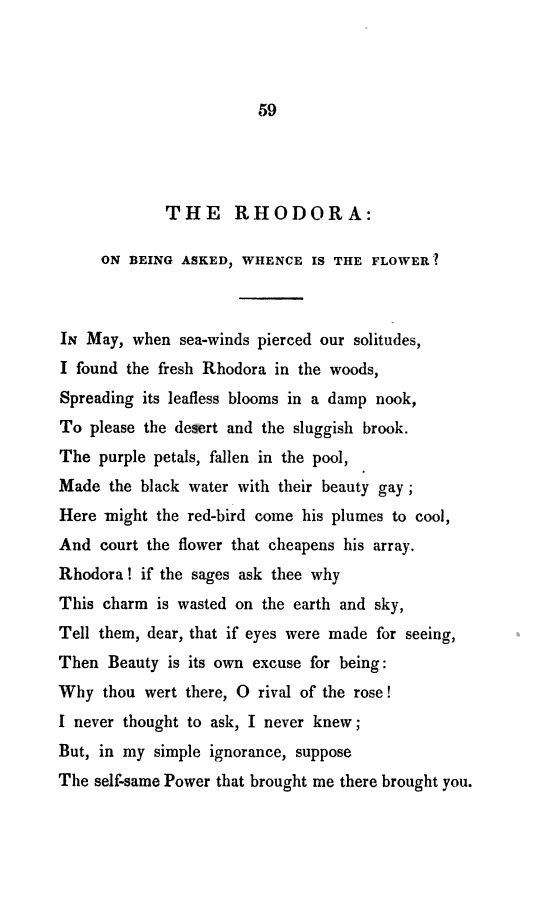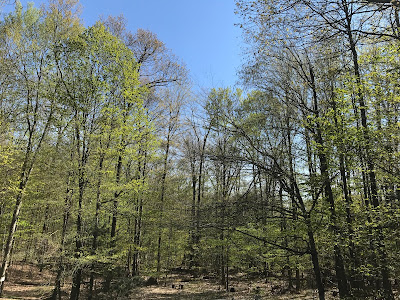
Showing posts with label rhodora. Show all posts

Friday, November 5, 2021

A Season for Muskrat-cabins (the tree sparrow comes from the north)


November 5.


P. M. -- To Hubbard Bathing-Place for shrubs.

Most of the muskrat-cabins were lately covered by the flood, but now that it has gone down in a great measure, leaving the cranberries stranded amid the wreck of rushes, reeds, grass, etc., I notice that they have not been washed away or much injured, as a heap of manure would have been, they are so artificially constructed.

Moreover, for the most part they are protected, as well as concealed, by the button-bushes, willows, or weeds about them.

What exactly are they for?

This is not their breeding season.

I think that they are merely an artificial bank, an air-chamber near the water, houses of refuge.

But why do they need them more at this season than in the summer, it may be asked.

Perhaps they are constructed just before the rise of the water in the fall and winter, so that they may not have to swim so far as the flood would require in order to eat their clams.

I heard some pleasant notes from tree sparrows on the willows as I paddled by.

The buds of the rhodora are among the more conspicuous now, and yet more its seed-vessels, many if not most of which are not yet dry, but purplish.

H. D. Thoreau, Journal, November 5, 1853

Most of the muskrat-cabins were lately covered by the flood, but I notice that they have not been washed away or much injured they are so artificially constructed. What exactly are they for? so that they may not have to swim so far as the flood would require in order to eat their clams? See September 20, 1855 ("Open a new and pretty sizable muskrat-house with no hollow yet made in it. "); September 26, 1857 ("I see musquash-houses"); October 15, 1851 ("The muskrat-houses appear now for the most part to be finished. Some, it is true, are still rising. They line the river all the way. "); October 16, 1859 ("I see the new musquash-houses erected, conspicuous on the now nearly leafless shores . .So surely as the sun appears to be in Libra or Scorpio, I see the conical winter lodges of the musquash rising above the withered pontederia and flags.") October 18, 1852 ("A few muskrat houses are going up abrupt and precipitous on one side sloped on the other I distinguish the dark moist layer of weeds deposited last night on what had dried in the sun."): November 2, 1851 ("The muskrat-houses are mostly covered by the rise of the river! — not a very unexpected one either"); November 4, 1855 ("Many new muskrat-houses have been erected this wet weather."); November 7, 1855 ("Opened a muskrat-house nearly two feet high, but there was no hollow to it. Apparently they do not form that part yet."); November 11, 1855 ("The bricks of which the muskrat builds his house are little masses or wads of the dead weedy rubbish on the muddy bottom, which it probably takes up with its mouth. It consists of various kinds of weeds, now agglutinated together by the slime and dried confervae threads, utricularia, hornwort, etc., — a streaming, tuft-like wad. The building of these cabins appears to be coincident with the commencement of their clam diet, for now their vegetable food, excepting roots, is cut off.”); November 15, 1859 ("I see several musquash-cabins off Hubbard Shore distinctly outlined as usual in the November light."); ;November 16, 1852 ("Muskrat-houses completed. Interesting objects looking down a river-reach at this season, and our river should not be represented without one or two of these cones. They are quite conspicuous half a mile distant, and are of too much importance to be omitted in the river landscape."); December 3, 1853 ("I see that muskrats have not only erected cabins, but, since the river rose, have in some places dug galleries a rod into the bank,") See also A Book of the Seasons, by Henry Thoreau, the Musquash

 heard some pleasant notes from tree sparrows on the willows as I paddled by. See November 4, 1860 ("White birch seed has but recently begun to fall. I see a quarter of an inch of many catkins bare. . . .To-day also I see distinctly the tree sparrows, and probably saw them, as supposed, some days ago. Thus the birch begins to shed its seed about the time our winter birds arrive from the north.")

Monday, May 18, 2020

This season of the tender foliage.


May 18.

May 18, 2020

The rhodora is one of the very latest leafing shrubs, for its leaf-buds are but just expanding, making scarcely any show yet, but quite leafless amid the blossoms. 

The Celtis occidentalis in bloom, maybe a day. Its shoots have grown two inches. It is as forward as the hickory at least; more than the elm. 

A red clover in blossom. 

A geranium budded; will open in a day or two.

Surprised to see a Ranunculus Purshii open. 

A choke-cherry blossomed in a tumbler yesterday, and probably outdoors. 

Finding the Linaria Canadensis yesterday at the Cliffs on a very close search for flowers makes me think that, by looking very carefully in the most favored and warmest localities, you may find most flowers out some weeks even in advance of the rest of their kind. 

We have had no storm this spring thus far, but it mizzles to-night.  Perchance a May storm is brewing.

This day it has mizzled  — as it were a dewy atmosphere, through which for the most part the sun shines. Methinks this is common at this season of the tender foliage, which requires a moist air and protection against the sun. 

A singular effect produced by a mass of ferns at a little distance, some rods square, their light yellow green tops seen above the dark masses of their fruit. At first one is puzzled to account for it. 

White ash fully in bloom.

H. D. Thoreau, Journal, May 18, 1853


The rhodora is quite leafless amid the blossoms. See May 18, 1855 ("Rhodora; probably some yesterday.") May 18, 1856 ("The rhodora there maybe to-morrow. Elsewhere I find it . . . to-day."); May 18, 1857 ("Pratt says he saw the first rhodora . . . out yesterday") See also May 14, 1859 ('Rhodora out, says C."); May 17, 1853 (“The rhodora is peculiar for being, like the peach, a profusion of pink blossoms on a leafless stem. This shrub is, then, a late one to leaf out.”); May 17, 1858 ("Rhodora at Clamshell well out.”)

The Celtis occidentalis in bloom, maybe a day. Its shoots have grown two inches. See May 18, 1855 ("Celtis will probably shed pollen to-morrow; shoots already an inch long.") See also May 27, 1857 ("Celtis occidentalis, perhaps yesterday. How the staminate flowers drop off, even before opening!"); September 28, 1857 (" And they have cut down two or three of the very rare celtis trees, not found anywhere else in town. The Lord deliver us from these vandalic proprietors! The botanist and lover of nature has, perchance, discovered some rare tree which has sprung up by a farmer's wall-side to adorn and bless it, sole representative of its kind in these parts. Strangers send for a seed or a sprig from a distance, but, walking there again, he finds that the farmer has sent a raw Irishman. . . with axe and stub-scythe to exterminate it, and he will know it no more forever. . . .If some are prosecuted for abusing children, others deserve to be prosecuted for maltreating the face of nature committed to their care.")

A red clover in blossom. See June 12, 1854 (“Clover now reddens the fields.”); June 15, 1851 (“the clover gives whole fields a rich appearance, -- the rich red and the sweet-scented white. The fields are blushing with the red species as the western sky at evening.”); June 18, 1860 (“I see very distinctly the redness of a luxuriant field of clover on the top of Fair Haven Hill.”)

Finding the Linaria Canadensis yesterday at the Cliffs on a very close search for flowers makes me think that, by looking very carefully in the most favored and warmest localities, you may find most flowers out some weeks even in advance of the rest of their kind. See May 17, 1853 ("The low black berry, apparently, on Cliffs is out, earlier than else where, and Veronica arvensis, very small, obscure pale-blue flower, and, to my surprise, Linaria Canadensis."); May 22, 1855 ("Linaria Canadensis on Cliffs open.")  See also February 28, 1857 ("It takes several years' faithful search to learn where to look for the earliest flowers."); April 10, 1855 ("As for the early sedge, who would think of looking for a flower of any kind in those dry tufts whose withered blades almost entirely conceal the springing green ones? I patiently examined one tuft after another, higher and higher up the rocky hill, till at last I found one little yellow spike low in the grass which shed its pollen on my finger. As for the saxifrage, when I had given it up for to-day, having, after a long search in the warmest clefts and recesses, found only three or four buds which showed some white, I at length, on a still warmer shelf, found one flower partly expanded, and its common peduncle had shot up an inch. These few earliest flowers in these situations have the same sort of interest with the arctic flora, for they are remote and unobserved and often surrounded with snow.") And see A Book of  the Seasons,, by Henry Thoreau, the Earliest Flower

This season of the tender foliage, See A Book of  the Seasons, by Henry Thoreau, May 18

Perchance a May storm is brewing. See May 17, 1852 ("Now the sun has come out after the May storm, how bright, how full of freshness and tender promise and fragrance is the new world!"); May 17, 1853 ("Does not summer begin after the May storm?”); May 19, 1853 ("A May storm, gentle and rather warm");  May 22, 1857 ("When the May storm is over, then the summer is fairly begun.");May 22, 1858 ("Something like this annually occurs. After this May storm the sun bursts forth . . . and we seem to have taken a long stride into summer.")

Saturday, May 16, 2020

This the first really warm day and thunder-shower.


E. Hoar saw the henbit (Lamium amplexi caule) a week ago from Mr. Pritchard’s garden. 

Celandine is out a day or more, and rhodora, trillium, and yellow violets yesterday at least. 

Horse-chestnut to-day. 

What handsome long yellow, threadlike peduncles to the staminate flowers of the sugar maple! three inches long, tassel-like, appearing with the leaves. 

A man is about town with a wagon-load of the Rhododendron maximum this evening from Gardiner, Maine. It is well budded; buds nearly an inch long; long, narrow, thick leaves, six inches long or more. He says it means the “rose of Dendrum" and will grow from a mere slip cut off and stuck in any soil, — only water it three times a day!!! No doubt of it. 

It has been oppressively warm to-day, the first really warm, sultry-like weather, so that we were prepared for a thunder-storm at evening. 

At 5 P. M., dark, heavy, wet-looking clouds are seen in the northern horizon, perhaps over the Merrimack Valley, and we say it is going down the river and we shall not get a drop. The main body goes by, there is a shower in the north, and the western sky is suffused with yellow where its thin skirts are withdrawing. 

People stand at their doors in the warm evening, listening to the muttering of distant thunder and watching the forked lightning, now descending to the earth, now ascending to the clouds. This the first really warm day and thunder-shower. 

Had thunder-shower while I was in Haverhill in April.

Nature’appears to have passed a crisis. All slimy reptile life is wide awake. The sprayey dream of the toad has a new sound; from the meadow the hylodes are heard more distinctly; and the tree-toad chirrups often from the elms (?). The sultry warmth and moister air has called him into life. 

We smell the fresher and cooler air from where the storm has passed. 

And now that it has grown dark, the skirts of the cloud seem to promise us a shower. It lightens incessantly right in the west; the right wing of the rear guard of the storm is steadily advancing and firing, and every flash shows the outlines of the cloud. 

We look out into the dark, and ever and anon comes a sudden illumination blinding our eyes, like a vast glow-worm, succeeded ere long by the roll of thunder. 

The first pattering of drops is heard; all west windows are hastily shut. The weak-eyed sit with their backs to windows and close the blinds. 

But we are disappointed, after all, and each flash reveals a narrow strip of evening red through the thin drops below the advancing cloud.

H. D. Thoreau, Journal, May 16, 1853

A man is about town with a wagon-load of the Rhododendron maximum. See June 4, 1853 ("I noticed next day one or more in every front yard on each side of the street, and the inhabitants out watering them. Said to be the most splendid native flower in Massachusetts . . . I hear to-day that one in town has blossomed.")

Yellow violets yesterday at least.  See May 11, 1860 ("Yellow violet, almost; say to-morrow."); May 18, 1856 ("E. Emerson finds half a dozen yellow violets."); May 25, 1852 ("The large yellow woods violet (V. pubescens) by this brook now out"); 

It is going down the river and we shall not get a drop. See June 15, 1860 (“A thunder-shower in the north goes down the Merrimack.”)

This the first really warm day and thunder-shower.   See  April 13, 1858 ("See through the dark rain the first flash of lightning, in the west horizon, doubting if it was not a flash of my eye at first, but after a very long interval I hear the low rumbling of the first thunder, and now the summer is baptized and inaugurated in due form."); May 9, 1859 ("The first thunder this afternoon."); May 10, 1857 ("Before night a sudden shower with some thunder and lightning; the first.”); May 11, 1854 (“ I feel the air cooled and hear the muttering of distant thunder in the northwest and see a dark cloud in that direction indistinctly through the wood. That distant thunder-shower very much cools our atmosphere. I make haste through the woods homeward ...It is surprising what an electrifying effect this shower appears to have had. It is like the christening of the summer.”); May 12, 1858 (“I see now, as I go forth on the river, the first summer shower coming up in the northwest, a dark and well defined cloud with rain falling sheaf-like from it, . . .The thunder-cloud is like the ovary of a perfect flower. . . .. It is not commonly till thus late in the season that the fertile are seen. In the thunder-cloud, so distinct and condensed, there is a positive energy, and I notice the first as the bursting of the pollen-cells in the flower of the sky.”); May 20, 1856 ("Was awaked and put into sounder sleep than ever early this morning by the distant crashing of thunder, and now ... I hear it in mid-afternoon, muttering, crashing in the muggy air in mid-heaven,... like the tumbling down of piles of boards, and get a few sprinkles in the sun. Nature has found her hoarse summer voice again.."); May 29, 1857 ("a first regular summer thunder-shower, preceded by a rush of wind,")

Sunday, May 26, 2019

The rhodora at Ledum Swamp is now in its perfection, brilliant islands of color..

May 26. 
RWE 1847


Thursday. P. M. — To Ledum Swamp and Lee's Cliff.

Eleocharis tenuis in bloom, apparently the earliest eleocharis. 

The rhodora at Ledum Swamp is now in its perfection, brilliant islands of color. 

Eriophorum vaginatum, how long? 

Ledum out apparently two or three days. 

Andromeda Polifolia out, how long? 

Tall swamp huckleberry just budded to bloom. 

Do I not hear the nuthatch note in the swamp? 

Do not detect the scheuchzeria there yet.

The air is full of terebinthine odors to-day, — the scent of the sweet-fern, etc. 


May 26, 2019
Moss Ledge
The reddish leaves (and calyx) of the Vaccinium vacillans, just leafed, are interesting and peculiar now, perhaps more or less crimson. 

See a flock of cowbirds, the first I have seen. 

Cows in water, so warm has it got to be. 

Geranium (how long?), behind Bittern Cliff, and wild pink. 

Pitch pine pollen at Lee's. 

Cherry-birds. 

Ascendant potentilla abundant, how long? 

Juniperus repens pollen, how long ? 

Interrupted fern pollen [sic]. 

The dicksonia fern is one foot high, but not fairly unfolded. 

The tender white-downy stems of the meadow saxifrage, seen toward the westering sun, are very conspicuous and thick in the meadows now. 

A purple finch's nest in one of our firs.

H. D. Thoreau, Journal, May 26, 1859

The rhodora at Ledum Swamp is now in its perfection, brilliant islands of color.   See May 17, 1853 (“The rhodora is peculiar for being, like the peach, a profusion of pink blossoms on a leafless stem. This shrub is, then, a late one to leaf out.”);  May 17, 1858 ("Rhodora at Clamshell well out.”); May 18, 1853 ("The rhodora is one of the very latest leafing shrubs, for its leaf-buds are but just expanding, making scarcely any show yet, but quite leafless amid the blossoms."); May 18, 1855 ("Rhodora; probably some yesterday."); May 18, 1856 ("The rhodora there [Kalmia Swamp] maybe to-morrow. Elsewhere I find it (on Hubbard’s meadow) to-day. "); May 18, 1857 ("Pratt says he saw the first rhodora . . . out yesterday");  May 19, 1854 ("The rhodora is late, and is naked flowering."); May 27, 2016 (“Kalmia in prime, and rhodora.”); May 31, 1857 (“Rhodora now in its prime.”).

See a flock of cowbirds, the first I have seen. See September 6, 1858  (“To Ledum Swamp. Going over Clamshell Plain, I see a very large flock of a hundred or more cowbirds about some cows.”); August 25, 1855 (“They keep close to the cow’s head and feet, and she does not mind them; but when all go off . . .at my approach, the cow (about whom they were all gathered) looks off after them for some time, as if she felt deserted.”).

Cows in water, so warm has it got to be. See July 12, 1857 (“It is exceedingly sultry this afternoon, and few men are abroad. The cows stand up to their bellies in the river, lashing their sides with their tails from time to time.”).

May 26. See  A Book of the Seasons, by Henry Thoreau, May 26

Tuesday, May 14, 2019

C. says he heard a yellow-legs yesterday.

May 14. 

Saturday. 

Surveying for Damon. 

Rhodora out, says C. 

Yorrick heard the 12th. 

Did I hear a bobolink this morning? 

C. says he heard a yellow-legs yesterday. 

Bought a black sucker (?), just speared at the factory dam, fifteen inches long, blacker than I am used to, I think; at any rate a very good fish to eat, as I proved, while the other common sucker there is said not to be. This had very conspicuous corrugations on the lips. I suspect that their other one is the horned chub. They have speared the former a long time there, and it is getting late for them. 

Vernal grass quite common at Willis Spring now.

H. D. Thoreau, Journal, May 14, 1859

Surveying for Damon. See May 6, 1859 ("Surveying for Willis & Damon at the factory [and] behind Willis's house on the shore of the mill-pond")

Rhodora out, says C. See  May 18, 1855 ("Rhodora; probably some yesterday."); May 18, 1856 ("The rhodora there [Kalmia Swamp] maybe to-morrow. Elsewhere I find it (on Hubbard’s meadow) to-day. "); May 18, 1857 ("Pratt says he saw the first rhodora . . . out yesterday"); May 17, 1858 ("Rhodora at Clamshell well out.")

Yorrick heard the 12th. See May 10, 1858 (" Hear in various woods the yorrick note of the veery.")
C. says he heard a yellow-legs yesterday. See May 18, 1855 ("See the yellow-legs feeding on shore. Legs not bright-yellow. Goes off with the usual whistle; also utters a long monotonous call as it is standing on the shore, not so whistling. Am inclined to think it the lesser yellow-legs (though I think the only one we see). Yet its bill appears quite two inches long. Is it curved up? "). Compare May 31, 1854 ( "See a greater telltale, and this is the only one I have seen probably. . .It acts the part of a telltale." "watchful, but not timid, ... while it stands on the lookout ... wades in the water to the middle of its yellow legs; goes off with a loud and sharp phe phe phe phe. ...")

Vernal grass quite common at Willis Spring now. See May 14, 1858 ("Look at White Avens Shore. See what I call vernal grass in bloom in many places. “)

So we get a late start on our walk which starts out as a short walk to the lower view but we press on this time down the rope trail and around on the logging road to the fort. I wear my rubber boots because it has been raining a lot lately so I can wade the stream here in the dark.The moon is past its first quarter and we haven’t seen it in days. But behind the clouds it is providing light and I notice shadows on the forest floor. Actually I notice  the shadows on the forest floor then turn around and see the moon through the clouds. The sky also is providing light enough to see the new leaflets silhouetted against it. It is spring and I’m happy to have spent more time on a daily basis here in the woods. I’m not thinking my blood pressure  on the trail. The moonlight and shadows of the new leaves already  in the canopy are pushing me to compose a haiku as we walk out.To avoid the wetness we go up to the base of the lower vies and then by the Lonepine Cliff Trail. I get hallucinations walking in the dark that I am in a bed of small leafy plants. The forest floor looks mottled dark and light but it is just after-images in my retina. In any event we  make it back without a headlamp and it is 10 PM.


Even behind clouds
tonight's moon casts shadows
on the forest floor.

Turning ‘round I see
a mist of leaflets
silhouetted against the sky.
Zphx20190514

Thursday, March 1, 2018

An open Winter

March 1
March 1, 2014

The divergent open capsules (?) of the rhodora, yellowish-brown, are quite interesting when the sun falls on them.

We have just had a winter with absolutely no sleighing, which I do not find that any one distinctly remembers the like of. It may have been as warm before, but with more snow. 

It was wonderfully warm and pleasant up to the 10th of February, and since then the greatest degree of cold I have heard of was —4°. 

The ground has been partially covered or whitened only since the 20th. It has been an excellent winter for walking in the swamps, or walking anywhere, and for lumbering operations in Maine, there being not too much snow, and yet the swamps, etc., frozen there.

H. D.Thoreau, Journal, March 1, 1858

We have just had a winter with absolutely no sleighing. See January 23, 1858 ("The wonderfully mild and pleasant weather continues. The ground has been bare since the 11th. . . .I have not been able to walk up the North Branch this winter, nor along the channel of the South Branch at any time") See also  note to January 23, 1857 ("I may safely say that -5° has been the highest temperature to-day by our thermometer."); and compare March 9, 1856 ("sixteen inches of snow on a level in open fields, hard and dry, ice in Flint’s Pond two feet thick, and the aspect of the earth is that of the middle of January in a severe winter."); February 24, 1856 (" there was as much snow as this in ’35, when [Dr. Jarvis] . . . drove in his sleigh from November 23d to March 30th excepting one day.”) See also February 11, 1852 (“Perhaps the best evidence of an amelioration of the climate - at least that the snows are less deep than formerly - is the snow-shoes which still lie about in so many garrets, now useless. No man ever uses them now, yet the old men used them in their youth.”)

It has been an excellent winter for walking in the swamps.
See January 29, 1858 ("I go through the northerly part of Beck Stow's."); January 30, 1858 ("To Gowing's Swamp. I thought it would be a good time to rake in the mud of that central pool, and see what animal or vegetable life might be there, now that it is frozen."); February 4, 1858 ("To C. Miles Swamp. Discover the Ledum latifolium, quite abundant over a space about six rods in diameter just east of the small pond-hole"); February 19, 1854 ("I incline to walk now in swamps and on the river and ponds, where I cannot walk in summer.")

March 1.  See A Book of the Seasons,  by Henry Thoreau,   March 1


A Book of the Seasons,  by Henry Thoreau,

A Book of the Seasons
,  by Henry Thoreau
 "A book, each page written in its own season,
out-of-doors, in its own locality."
 ~edited, assembled and rewritten by zphx ©  2009-2025

Saturday, February 24, 2018

On the side of the meadow moraine just north of the boulder field.

February 24
February 24, 2018

I see, at Minot Pratt’s, rhodora in bloom in a pitcher with water andromeda. 

Went through that long swamp northeast of Boaz’s Meadow. Interesting and peculiar are the clumps, or masses, of panicled andromeda, with light-brown stems, topped uniformly with very distinct yellow brown recent shoots, ten or twelve inches long, with minute red buds sleeping close along them. This uniformity in such masses gives a pleasing tinge to the swamp's surface. Wholesome colors, which wear well. 

I see quite a number of emperor moth cocoons attached to this shrub, some hung round with a loose mass of leaves as big as my two fists.

What art in the red-eye to make these two adjacent maple twigs serve for the rim of its pensile basket, in weaving them! Surely it finds a place for itself in nature between the two twigs of a maple. 

On the side of the meadow moraine just north of the boulder field, I see barberry bushes three inches in diameter and ten feet high. What a surprising color this wood has! It splits and splinters very much when I bend it. I cut a cane and, shaving off the outer bark, it is of imperial yellow, as if painted, fit for a Chinese mandarin.

H. D. Thoreau, Journal, February 24, 1858

I see, at Minot Pratt’s, rhodora in bloom in a pitcher. See May 17, 1853 (“The rhodora is peculiar for being, like the peach, a profusion of pink blossoms on a leafless stem.”); May 18, 1857 ("Pratt says he saw the first rhodora . . . out yesterday")

Boaz's Meadow. See  February 5, 1858 ("There is a plenty of that handsome-seeded grass which I think Tarbell called goose grass . . . at Boaz’s Meadow"); November 11, 1857 ("That cellar-hole off northwest of Brooks Clark’s is where Boaz Brown used to live, and the andromeda swamp behind is “Boaz's (pronounced Boze's) meadow,” says Jacob Farmer, who has seen corn growing in the meadow. "); November 18, 1857 ("There is the meadow behind Brooks Clark’s . . .. The stream which drains this empties into the Assabet at Dove Rock. A short distance west of this meadow, but a good deal more elevated, is Boaz's meadow, whose water finds its way, naturally or artificially, northeast ward around the other.")

Panicled andromeda, with light-brown stems, topped uniformly with very distinct yellow brown recent shoots . . . with minute red buds sleeping close along them. See November 23, 1857 ("The panicled andromeda is upright, light-gray, with a rather smoother bark, more slender twigs, and small, sharp red buds lying close to the twig"); December 11, 1855 ("I thread the tangle of the spruce swamp, admiring . . . the great yellow buds of the swamp-pink, the round red buds of the high blueberry, and the fine sharp red ones of the panicled andromeda."); January 25, 1858 ("The round red buds of the blueberries; the small pointed red buds, close to the twig, of the panicled andromeda; the large yellowish buds of the swamp pink."); February 13, 1858 (" I observed that the swamp was variously shaded, or painted even, like a rug, with the sober colors running gradually into each other, by the colored recent shoots of various shrubs which grow densely, as the red blueberry, and the yellowish-brown panicled andromeda")  See also February 17, 1854 ("In these swamps, then, you have three kinds of andromeda. The main swamp is crowded with high blueberry, panicled andromeda, prinos, swamp-pink, etc.. . . and then in the middle or deepest part will be an open space not yet quite given up to water, where the Andromeda calyculata and a few A. Polifolia reign almost alone. These are pleasing gardens.")

Emperor moth cocoons attached to this shrub, some hung round with a loose mass of leaves. See February 19, 1854 (“The light ash-colored cocoons of the A. Promethea, with the withered and faded leaves wrapped around them so artfully and admirably secured by fine silk wound round the leaf-stalk and the twig they are taken at a little distance for a few curled and withered leaves left on.”)

What art in the red-eye to make these two adjacent maple twigs serve for the rim of its pensile basket. See January 13, 1856 ("What a wonderful genius it is that leads the vireo to select the tough fibres of the inner bark, instead of the more brittle grasses, for its basket, the elastic pine-needles and the twigs, curved as they dried to give it form, and, as I suppose, the silk of cocoons, etc., etc., to bind it together with!"); May 27, 1854 ("I find the pensile nest of a red-eye between a fork of a shrub chestnut near the path.")  See also A Book of the Seasons,  by Henry Thoreau, The Red-eyed Vireo

On the side of the meadow moraine just north of the boulder field.  See November 3, 1857 (“Follow up the Boulder Field northward, and it terminates in that moraine.”); March 8, 1855 (“I cross through the swamp south of Boulder Field toward the old dam.”); April 21, 1852 ("In the pasture beyond the brook, where grow the barberries, huckleberries, — creeping juniper, etc., are half a dozen huge boulders, which look grandly now in the storm, covered with greenish-gray lichens, alternating with the slatish-colored rock. Slumbering, silent, . . .I look down on some of them as on the backs of oxen. A certain personality, or at least brute life, they seem to have."); November 3, 1857 (" It would be something to own that pasture with the great rocks in it")

February 24. See A Book of the Seasons, by Henry Thoreau, February 24

February 24, 2018


A Book of the Seasons, by Henry Thoreau,

A Book of the Seasons, by Henry Thoreau
"A book, each page written in its own season,
out-of-doors, in its own locality."
~edited, assembled and rewritten by zphx © 2009-2024
  

Wednesday, May 31, 2017

The navel of the universe

May 31. 
Gowing's Swamp
August 23, 1854

P. M. — To Gowing's Swamp and to Pinus resinosa.

In the ditches in Moore's Swamp on the new Bedford road, the myriads of pollywogs, now three quarters of an inch long, crowding close to the edge, make a continuous black edging to the pool a foot wide. I see where thousands have been left high and dry and are now trodden into the sand, yet preserving their forms, spotting it with black. The water looks too full of yellowish sediment to support them. 

That central meadow and pool in Gowing's Swamp is its very navel, omphalos, where the umbilical cord was cut that bound it to creation's womb. Methinks every swamp tends to have or suggests such an interior tender spot. The sphagnous crust that surrounds the pool is pliant and quaking, like the skin or muscles of the abdomen; you seem to be slumping into the very bowels of the swamp. 

Some seem to have been here to collect sphagnum, either for wells, or to wrap plants in. 

There grow the white spruce and the larch. The spruce cones, though now erect, at length turn down. The sterile flowers on lower twigs around stand up now three quarters of an inch long, open and reddish-brown. 

Andromeda Polifolia, much past its prime. 

I detect no hairy huckleberry. 

The Vaccinium Oxycoccus is almost in bloom! and has grown three inches; is much in advance of the common. 

The Pinus resinosa not yet out; will be apparently with the rigida. It has no fertile flowers or cones. The sterile flower-buds are dark-purple, while those of the rigida there are light-green. The largest tree is about ten inches in diameter. It is distinguished, at a distance even, by its lighter-colored and smoother or flatter bark. It is also very straight and perpendicular, with its branches in regular whorls, and its needles are very long. 

Rhodora now in its prime. 

I see in open land a hollow circle of Lycopodium dendroideum, ten feet in diameter; some of the inner portion is dead. This too, then, like the flowering fern, grows or spreads in circles. 

Also the cinnamon fern grows in circles. 

See an ants' nest, just begun, which covers the grass with sand for more than ten feet in one direction and seven in the other and is thickly pierced with holes.

H. D. Thoreau, Journal, May 31, 1857


In the ditches in Moore's Swamp on the new Bedford road, the myriads of pollywogs, now three quarters of an inch long . . . See note to May 19, 1857 ("See myriads of minute pollywogs, recently hatched, in the water of Moore's Swamp.")

That central meadow and pool in Gowing's Swamp . . . See  August 23, 1854 ("There is in the middle an open pool, twenty or thirty feet in diameter,. . .an abrupt edge next the water, this on a dense bed of quaking sphagnum, in which I sink eighteen inches in water, upheld by its matted roots, where I fear to break through. On this the spatulate sundew abounds."); August 30, 1856 ("Consider how remote and novel that swamp. Beneath it is a quaking bed of sphagnum, and in it grow Andromeda Polifolia, Kalmia glauca, menyanthes (or buck -bean), Gaylussacia dumosa, Vaccinium Oxycoccus, — plants which scarcely a citizen of Concord ever sees.")

Andromeda Polifolia, much past its prime. See May 24, 1855 ("Andromeda Polifolia now in prime. . . . "); May 24, 1854 ("Surprised to find the Andromeda Polifolia in bloom and apparently past its prime. . .A timid botanist would never pluck it."); February 17, 1854 ("In the open part of Gowing's Swamp I find the Andromeda Polifolia. Neither here nor in Beck Stow's does it grow very near the shore. . . . in the middle or deepest part will be an open space not yet quite given up to water, where the Andromeda calyculata and a few A. Polifolia reign almost alone. These are pleasing gardens.”)

Note HDT first discoverd Andromeda Polifolia on July 14, 1853 at Beck Stow’s Swamp (“Saw something blue, or glaucous, in Beck Stow's Swamp to-day; approached and discovered the Andromeda Polifolia, in the midst of the swamp at the north end, not long since out of bloom. This is another instance of a common experience. When I am shown from abroad, or hear of, or in any [way] become interested in, some plant or other thing, I am pretty sure to find it soon. “) On February 17, 1854 he first records finding it at Gowing’s Swamp. On November 15,1857 he finds ‘plenty 'at Miles swamp [Ledum Swamp]. See Vascular Flora of Concord, Massachusetts

The sterile flowers on lower twigs around stand up now three quarters of an inch long, open and reddish-brown. See May 25, 1857 ("The white spruce cones are cylindrical and have an entire firm edge to the scales, and the needles are longer."); June 10, 1855 (" The white spruce cones are now a rich dark purple, more than a half inch long.")")


May 31. See A Book of the Seasons,  by Henry Thoreau, May 31

A Book of the Seasons,  by Henry Thoreau
"A book, each page written in its own season,
out-of-doors, in its own locality.”


~edited, assembled and rewritten by zphx © 2009-2021

Tuesday, May 23, 2017

This is the time and place to hear the new-arriving warblers, the first fine days after the May storm.

May 23
May 23, 2017
(avesong)
P. M. — To Holden Swamp by boat. 

River still high generally over the meadows. Can sail across the Hubbard meadow. 

Off Staples wood-lot, hear the ah tche tche chit-i-vet of the redstart. 

Tortoises out again abundantly. Each particularly warm and sunny day brings them out on to every floating rail and stump. I count a dozen within three or four feet on a rail. It is a tortoise day. 

I hear one regular bullfrog trump, and as I approach the edge of the Holden Swamp, the tree-toads. 

Hear the pepe there, and the redstarts, and the chestnut-sided warbler. It appears striped slate and black above, white beneath, yellow-crowned with black side-head, two yellow bars on wing, white side-head below the black, black bill, and long chestnut streak on side. Its song lively and rather long, about as the summer yellowbird, but not in two bars; tse tse tse \ te tsah tsah tsah \ te sak yer se is the rhythm. 

Kalmia glauca yesterday. Rhodora, on shore there, a little before it. 

Nemopanthes, a day or two. 

This is the time and place to hear the new-arriving warblers, the first fine days after the May storm. When the leaves generally are just fairly expanding, and the deciduous trees are hoary with them, — a silvery hoari-ness, — then, about the edges of the swamps in the woods, these birds are flitting about in the tree-tops like gnats, catching the insects about the expanding leaf-buds. 

I wade in the swamp for the kalmia, amid the water andromeda and the sphagnum, scratching my legs with the first and sinking deep in the last. The water is now gratefully cool to my legs, so far from being poisoned in the strong water of the swamp. It is a sort of baptism for which I had waited. 

At Miles Swamp, the carpinus sterile catkins, apparently a day or two, but I see no fertile ones, unless that is one (pressed) at the southeast edge of swamp near grafted apple, and its catkins are effete! 

Hear the first veery strain. 

The small twigs of the carpinus are singularly tough, as I find when I try to break off the flowers. They bend without breaking. 

Sand cherry at Lupine Bank, possibly a day. Sassafras, a day or two. Fringed polygala, I hear of.

The first goldfinch twitters over, and at evening I hear the spark of a nighthawk.

H. D. Thoreau, Journal, May 23, 1857

Off Staples wood-lot, hear the ah tche tche chit-i-vet of the redstart. See May 29, 1855 (“But what is that bird I hear much like the first part of the yellowbird’s strain, only two thirds as long and varied at end, and not so loud, — a-che che che, che-a, or tche tche tche, tche-a, or ah tche tche tche, chit-i-vet? ”); June 4, 1855 ("Redstarts still very common in the Trillium Woods (yesterday on Assabet also). Note tche, tche, tche vit, etc.”); June 6, 1855 ("On the Island I hear still the redstart—tsip tsip tsip tsip, tsit-i-yet, or sometimes tsip tsip tsip tsip, tse vet. A young male.”)  See also A Book of Seasons,  by Henry Thoreau, The American Redstart

The chestnut-sided warbler. See May 20, 1856 ("I now see distinctly the chestnut-sided warbler (of the 18th and 17th), by Beck Stow’s. It is very lively on the maples, birches, etc., over the edge of the swamp. Sings eech eech eech | wichy wichy | tchea or itch itch itch | witty witty | tchea  ");  May 24, 1854 ("In woods the chestnut-sided warbler, with clear yellow crown and yellow on wings and chestnut sides. It is exploring low trees and bushes, often along stems about young leaves, and frequently or after short pauses utters its somewhat summer-yellowbird like note, say, tchip tchip, chip chip (quick), tche tche ter tchéa, —— sprayey and rasping and faint.")

Kalmia glauca yesterday. Rhodora, on shore there, a little before it. See May 27, 1856 ("Kalmia in prime, and rhodora. . . ."); May 26, 1855 ("To my surprise the Kalmia glauca almost all out; perhaps began with rhodora. A very fine flower, the more interesting for being early."); January 9, 1855 ("Make a splendid discovery this afternoon. Walking through Holden’s white spruce swamp, I see peeping above the snow-crust some slender delicate evergreen shoots . . . the Kalmia glauca var.rosmarinifolia.") Note: the Kalmia glauca var. rosmarinifolia is known as rosemary-leaf laurel or alpine bog laurel (Andromeda Polifolia) H. Peter Loewer, Thoreau's Garden: Native Plants for the American Landscape 32-33

This is the time and place to hear the new-arriving warblers. See note to May 18, 1856  ("The swamp is all alive with warblers about the hoary expanding buds of oaks, maples, etc., and amid the pine and spruce. They swarm like gnats now. They fill the air with their little tshree tshree sprayey notes.")

I wade in the swamp for the kalmia, . . . a sort of baptism for which I had waited. Compare May 13, 1860 ("The swamp is so dry that I walk about it in my shoes").

The first goldfinch twitters over. See May 4, 1856 ("Hear and see a goldfinch, on the ground."); May 5, 1854 ("Hear what I should call the twitter and mew of a goldfinch and see the bird go over with ricochet flight"); May 13, 1854 ("Goldfinch heard pretty often."); May 17, 1856 ("A goldfinch twitters over. ")

See A Book of the Seasons, by Henry Thoreau May 23

A Book of the Seasons, by Henry Thoreau\
"A book, each page written in its own season,
out-of-doors, in its own locality.”

~edited, assembled and rewritten by zphx © 2009-2021

Thursday, May 18, 2017

A wild apple tree in an old cellar-hole.

May 18


                                                           MAY 18, 2017

P. M. — To Bateman's Pond via Yellow Birch Swamp with Pratt. 

Pratt says he saw the first rhodora and cultivated pear out yesterday. 

Many are now setting out pines and other evergreens, transplanting some wildness into the neighborhood of their houses. I do not know of a white pine that has been set out twenty-five years in the town. It is a new fashion. 

Judging from the flowering of such of the plants as I notice, this is a backward season. 

There is a very grand and picturesque old yellow birch in the old cellar northwest the yellow birch swamp. Though this stands out in open land, it does not shed its pollen yet, and its catkins are not much more than half elongated, but it is very beautiful as it is, with its dark-yellowish tassels variegated with brown. 

Yet in the swamp westerly the yellow birches are in full bloom, and many catkins strew the ground. They are four or five inches long when in bloom. They begin to shed their pollen at the base of the catkin, as, I think, other birches do. 

In the yellow birch and ash swamp west of big yellow birch, I hear the fine note of cherry-birds, much like that of young partridges, and see them on the ash trees. 

Viola Muhlenbergii abundantly out, how long? 

The fever-bush in this swamp is very generally killed, at least the upper part, so that it has not blossomed. This is especially the case in the swamp; on higher ground, though exposed, it is in better condition. It appears to have been killed in the spring, for you see the unexpanded flower-buds quite conspicuous. 

Pratt shows me the fringed gentian stems by a swamp northeast of Bateman's Pond, but we find no traces of a new plant, and I think it must be annual there. 

The violet wood-sorrel is apparently later than the Oxalis stricta, not now so forward, lower, and darker green, only a few of the leaves showing that purplish mark. 

Hear the pepe, how long? 

In woods close behind Easterbrook's place, whence it probably strayed, several Canada plums now in bloom, showing the pink. Interesting to see a wild apple tree in the old cellar there, though with a forward caterpillar's nest on it. Call it Malus cellaris, that grows in an old cellar-hole.

Pedicularis, some time. 

The blossom-buds of the Cornus florida have been killed when an eighth of an inch in diameter, and are black within and fall on the least touch or jar; all over the town. There is a large tree on the further side the ravine near Bateman's Pond and another by some beeches on the rocky hillside a quarter of a mile northeast. 

In the swampy meadow north of this Pratt says he finds the calla. 

The Rubus triflorus is well out there on the hummocks. 

The white ash is not yet out in most favorable places.

The red huckleberry looks more forward — blossom-buds more swollen — than those of common there.

Some high blueberry. 

Pratt has found perfectly white Viola pedata behind Easterbrook place, and cultivated them, but now lost them. 

Says he saw two "black" snakes intertwined (copulating ?) yesterday.

H. D. Thoreau, Journal, May 18, 1857

Pratt says he saw the first rhodora out yesterday. See  May 18, 1853 ("The rhodora is one of the very latest leafing shrubs, for its leaf-buds are but just expanding, making scarcely any show yet, but quite leafless amid the blossoms");  May 18, 1855 ("Rhodora; probably some yesterday.") May 18, 1856 ("The rhodora there [Kalmia Swamp] maybe to-morrow. Elsewhere I find it (on Hubbard’s meadow) to-day. ") See also May 14, 1859 ('Rhodora out, says C.")

Viola Muhlenbergii abundantly out, how long? See May 22, 1856 ("Viola Muhlenbergii . . . abundantly out; how long? A small pale-blue flower growing in dense bunches,”)

The yellow birches are in full bloom, and many catkins strew the ground. They are four or five inches long when in bloom. See May 17, 1857 ("The yellow birch catkins . . .hanging straight down at a height from the ground on the end of the pendulous branches, amid the just expanding leaf-buds. ") May 5, 1859 (“ You see a great tree all hung with long yellow or golden tassels at the end of its slender, drooping spray, in clusters at intervals of a few inches or a foot. These are all dangling and incessantly waving in the wind, — a great display of lively blossoms (lively both by their color and motion) without a particle of leaf”); See also A Book of the Seasons,  by Henry Thoreau,  the Yellow Birch 

Pratt says he finds the calla. See June 7, 1857 (“Pratt has got the Calla palustris, in prime. . .from the bog near Bateman's Pond”); June 9, 1857 (“The calla is generally past prime and going to seed. I had said to Pratt, "It will be worth the while to look for other rare plants in Calla Swamp, for I have observed that where one rare plant grows there will commonly be others." ”); July 2, 1957 (" Calla palustris . . . at the south end of Gowing's Swamp. Having found this in one place, I now find it in another.”); September 4, 1857 (To Baeman’s Pond . . .Arum berries ripe.”)

Pratt has found perfectly white Viola pedata . . . but now lost them. See May 18, 1854 ("The V. pedata beginning to be abundant. "). May 20, 1852 ("the V. pedata is smooth and pale-blue, delicately tinged with purple reflections").

Judging from the flowering of such of the plants as I notice, this is a backward season. The white ash is not yet out in most favorable places. See May 18, 1853 ("White ash fully in bloom.")

A wild apple tree
grows in an old cellar-hole –
Malus cellaris.

Popular Posts Last 30 Days.

The week ahead in Henry’s journal

The week ahead in Henry’s journal
A journal, a book that shall contain a record of all your joy.
"A stone fruit. Each one yields me a thought." ~ H. D. Thoreau, March 28, 1859


I sit on this rock
wrestling with the melody
that possesses me.