Showing posts with label bats. Show all posts

Tuesday, July 20, 2021

The midsummer night's moon.


July 20.

 
July 20, 2012

To Nawshawtuct at moonrise with Sophia, by boat.

Moon apparently fulled yesterday.

A low mist in crusts the meadow, -- not so perceptible when we are on the water. Now we row through a thin low mist about as high as one's head, now we come to a place where there is no mist on the river or meadow, apparently where a slight wind stirs.

The gentle susurrus from the leaves of the trees on shore is very enlivening, as if Nature were freshening, awakening to some enterprise. There is but little wind, but its sound, incessantly stirring the leaves at a little distance along the shore, heard not seen, is very inspiriting. It is like an everlasting dawn or awakening of nature to some great purpose.

As we go up the hill we smell the sweet briar.

The trees are now heavy, dark masses without tracery, not as in spring or early in June; but I forgot to say that the moon was at first eclipsed by a vast black bank of cloud in the east horizon, which seemed to rise faster than it, and threatened to obscure it all the night.

But suddenly she rose above it, and when, a few moments after, we thought to look again for the threatening cloud-bank, it had vanished, or a mere filmy outline could be faintly traced beneath her.

It was the eclipse of her light behind it that made this evil look so huge and threatening, but now she had triumphed over it and eclipsed it with her light.

It had vanished, like an ugly dream.

So is it ever with evils triumphed over, which we have put behind us.

What was at first a huge dark cloud in the east which threatened to eclipse the moon the livelong night is now suddenly become a filmy vapor, not easy to be detected in the sky, lit by her rays.

She comes on thus, magnifying her dangers by her light, at first displaying, revealing them in all their hugeness and blackness, exaggerating, then casting them behind her into the light concealed.

She goes on her way triumphing through the clear sky like a moon which was threatened by dark clouds at her rising but rose above them. That black, impenetrable bank which threatened to be the ruin of all our hopes is now a filmy dash of vapor with a faint-purplish tinge, far in the orient sky.

From the hilltop we see a few distant lights in farmhouses down below, hard to tell where they are, yet better revealing where they are than the sun does.  But cottage lights are not conspicuous now as in the autumn.

As we looked, a bird flew across the disk of the moon.

Saw two skunks carrying their tails about some rocks. Singular that, of all the animated creation, chiefly these skunks should be abroad in this moonlight.

This is the midsummer night's moon.

We have come round the east side of the hill to see the moon from amid the trees. I like best to see its light falling far in amid the trees and along the ground before me, while itself is hidden behind them or one side.

It is cool, methinks with a peculiar coolness, as it were from the luxuriance of the foliage, as never in June. At any rate we have had no such sultry nights this month as in June.

There is a greater contrast between night and day now, reminding me that even in Hindostan they freeze ice in shallow vessels at night in summer (?).

There is a mist very generally dispersed, which gives a certain mellowness to the light, a wavingness apparently, a creaminess.

Yet the light of the moon is a cold, almost frosty light, white on the ground.

There are a few fireflies about. Green, their light looks sometimes, and crickets are heard.

You are pretty sure also to hear some human music, vocal or instrumental, far or near.

The masses of the trees and bushes would be called black, if our knowledge that they are leaves did not make us call them dark - green.

Here is the Pycnanthemum lanceolatum near the boat's place, which I scent in the dark. It has been out some days, for some flowers are quite withered.

I hear from the copses or bushes along the shore, returning, a faint everlasting fine song from some small cricket, or rather locust, which it required the stillness of night to reveal.

A bat hovers about us.

How oily smooth the water in this moonlight! And the apparent depth where stars are reflected frightens Sophia.

These Yankee houses and gardens seen rising beyond this oily moonlit water, on whose surface the circling insects are like sparks of fire, are like Italian dwellings on the shores of Italian lakes.

When we have left the boat and the river, we are surprised, looking back from the bank, to see that the water is wholly concealed under a white mist, though it was scarcely perceptible when we were in its midst.

The few bullfrogs are the chief music.

I do not know but walnuts are peculiarly handsome by moonlight, -- seeing the moon rising through them, and the form of their leaves.

I felt some nuts. They have already their size and that bracing, aromatic scent.


H. D. Thoreau, Journal, July 20, 1853

The moon was at first eclipsed by a vast black bank of cloud in the east horizon, which threatened to obscure it all the night  See June 1, 1852 ("The moving clouds are the drama of the moonlight nights")

Singular that, of all the animated creation, chiefly these skunks should be abroad in this moonlight. See June 20, 1853 (“ The moon full. . . . Saw a little skunk coming up the river-bank in the woods at the White Oak.”); July 12, 1851 ("I see a skunk on Bear Garden Hill stealing noiselessly away from me, while the moon shines over the pitch pines")

There are a few fireflies about.
See July 20, 1852 ("The stars are few and distant; the fireflies fewer still.") See also A Book of the Seasons, by Henry Thoreau, Fireflies

You are pretty sure also to hear some human music, vocal or instrumental, far or near. See June 14, 1851 ("How sweet and encouraging it is to hear the sound of some artificial music from the midst of woods or from the top of a hill at night, borne on the breeze from some distant farmhouse, — the human voice or a flute!"); July 12, 1851 ("I hear a human voice,"); August 5, 1851 ("I hear now from Bear Garden Hill — I rarely walk by moonlight without hearing — the sound of a flute, or a horn, or a human voice")

Saturday, May 9, 2020

To paddle now at evening when the water is smooth and the air begins to be warm.


May 9, 2020

Since I returned from Haverhill not only I find the ducks are gone but I no longer hear the chill lill of the blue snowbird or the sweet strains of the fox-colored sparrow and the tree sparrow. The robin's strain is less remarkable. 

I have devoted most of my day to Mr. Alcott. He is broad and genial but indefinite; some would say feeble; forever feeling about vainly in his speech and touching nothing. But this is a very negative account of him for he thus suggests far more than the sharp and definite practical mind. The feelers of his thought diverge — such is the breadth of their grasp — not converge; and in his society almost alone I can express at my leisure with more or less success my vaguest but most cherished fancy or thought. There are never any obstacles in the way of our meeting. He has no creed. He is not pledged to any institution. The sanest man I ever knew; the fewest crotchets after all has he? 

It has occurred to me while I am thinking with pleasure of our day's intercourse, “Why should I not think aloud to you?” Having each some shingles of thought well dried we walk and whittle them trying our knives and admiring the clear yellowish grain of the pumpkin pine. We wade so gently and reverently or we pull together so smoothly that the fishes of thought are not scared from the stream but come and go grandly like yonder clouds that float peacefully through the western sky. When we walk it seems as if the heavens — whose mother-oʻ-pearl and rainbow tints come and go form and dissolve — and the earth had met together and righteousness and peace had kissed each other. I have an ally against the arch-enemy. A blue robed man dwells under the blue concave. The blue sky is a distant reflection of the azure serenity that looks out from under a human brow. We walk together like the most innocent children going after wild pinks with case-knives. Most with whom I endeavor to talk soon fetch up against some institution or particular way of viewing things theirs not being a universal view. They will continually bring their own roofs or — what is not much better — their own narrow skylights between us and the sky when it is the unobstructed heavens I would view. Get out of the way with your old Jewish cobwebs. Wash your windows. 

Saw on Mr. Emerson's firs several parti-colored warblers or finch creepers (Sylvia Americana) a small blue and yellow bird somewhat like but smaller than the indigo-bird; quite tame about the buds of the firs now showing red; often head downward. Heard no note. He says it has been here a day or two. 

At sundown paddled up the river. The pump-like note of a stake-driver from the fenny place across the Lee meadow. 

The greenest and rankest grass as yet is that in the water along the sides of the river. The hylodes are peeping. 

I love to paddle now at evening when the water is smooth and the air begins to be warm. 

The rich warble of blackbirds about retiring is loud and incessant not to mention the notes of numerous other birds. The black willow has started but not yet the button-bush. Again I think I heard the night-warbler. 

Now at starlight that same nighthawk or snipe squeak is heard but no hovering. 

The first bat goes suddenly zigzag overhead through the dusky air; comes out of the dusk and disappears into it. 

That slumbrous snoring croak far less ringing and musical than the toad' s (which is occasionally heard) now comes up from the meadows edge. 

I save a floating plank which exhales and imparts to my hands the rank scent of the muskrats which have squatted on it. I often see their fresh green excrement on rocks and wood. 

Already men are fishing for pouts. 

This has been almost the first warm day; none yet quite so warm. Walking to the Cliffs this afternoon I noticed on Fair Haven Hill a season stillness as I looked over the distant budding forest and heard the buzzing of a fly.

H. D. Thoreau, Journal, May 9, 1853

I no longer hear the chill lill of the blue snowbird or the sweet strains of the fox-colored sparrow and the tree sparrow. See April 17, 1855 ("The fox-colored sparrows seem to be gone, and I suspect that most of the tree sparrows and F. hyemalis, at least, went yesterday.")
I have devoted most of my day to Mr. Alcott. See July 4, 1855 ("So we have to spend the day in Boston, —at Athenaeum gallery, Alcott’s, and at the regatta. Lodge at Alcott’s, who is about moving to Walpole."); September 11, 1856  ("Walked over what Alcott calls Farm Hill, east of his house."); January 17, 1860 ("Alcott said well the other day that this was his definition of heaven, 'A place where you can have a little conversation.'")

Several parti-colored warblers or finch creepers (Sylvia Americana) a small blue and yellow bird quite tame about the buds of the firs now showing red; often head downward. Heard no note. See May 9, 1858  ("The parti-colored warbler . . .— my tweezer-bird, – making the screep screep screep note. It is an almost incessant singer . . . utters its humble notes, like ah twze twze twze, or ah twze twze twze twze."). See also A Book of Seasons,  by Henry Thoreau, the parti-colored warbler (Sylvia Americana)

 The pump-like note of a stake-driver from the fenny place across the Lee meadow. See  May 9, 1857 ("Hear stake-driver"), See also  April 24, 1854 (" As I stand still listening . . . I hear the loud and distinct pump-a-gor of a stake-driver. Thus he announces himself.”)..

That slumbrous snoring croak far less ringing and musical than the toad's now comes up from the meadows edge.
See May 8. 1857 ("The full moon rises, and I paddle by its light, It is an evening for the soft-snoring, purring frogs (which I suspect to be Rana palustris).. . . Their croak is very fine or rapid, and has a soft, purring sound at a little distance")


Wednesday, November 6, 2019

The river is quite low,

November 6

The river is quite low, about four inches lower than the hub [?] I used in the summer, or lower than before, this year. 

Yet there is more water in the mill-streams; the mill-wheels are supplied now which were stationary in the summer. 

C. thinks that he saw bats last evening.

H. D. Thoreau, Journal,  November 6, 1859

The river is quite low . . . lower than before this year. See November 26, 1858 ("I begin to suspect . . . that this rise and fall extending through a long series of years is not peculiar to the Walden system of ponds, but is true of ponds generally, and perhaps of rivers, though in their case it may be more difficult to detect."). Compare October 19, 1857 ("The river is very high for the season and all over the meadow in front of the house, and still rising."); October 27, 1853 ("The river still rises, — more than ever last night, owing to the rain")

The mill-wheels are supplied now which were stationary in the summer. See August 26, 1859 ("Mill-wheels that have rested for want of water begin to revolve again.")

C. thinks that he saw bats last evening.
See November 1, 1855 (''Returning in the twilight, I see a bat over the river.")

Saturday, August 10, 2019

Behind a picture in R. W. E.'s dining-room.

August 10. 

2 p.m. — Air, 84°; Boiling Spring this after noon., 46°; Brister's, 49°; or where there is little or no surface water the same as in spring. Walden is at surface 80° (air over it 76). 

Aster dumosus and pennyroyal out; how long? 

Sand cherry is well ripe — some of it — and tolerable, better than the red cherry or choke-cherry. 


Juncus acuminatus aka paradoxus


Juncus paradoxus, that large and late juncus (tailed), as in Hubbard's Close and on island above monument and in Great Meadows, say ten days. 

Saw yesterday in Fitzwilliam from the railroad a pond covered with white lilies uniformly about half the size of ours! 

Saw this evening, behind a picture in R. W. E.'s dining-room, the hoary bat. First heard it fluttering at dusk, it having hung there all day. Its rear parts covered with a fine hoary down.

H. D. Thoreau, Journal, August 10, 1860

Aster dumosus and pennyroyal out; how long? See August 5, 1856 ("Aster dumosus, apparently a day or two, with its large conspicuous flower-buds at the end of the branchlets and linear-spatulate involucral scales."); August 11, 1853 ("Evening draws on while I am gathering bundles of pennyroyal on the further Conantum height. I find it amid the stubble mixed with blue-curls and, as fast as I get my hand full, tie it into a fragrant bundle.”)

Sand cherry is well ripe. July 28, 1856 ("Sand cherry ripe. The fruit droops in umble-like clusters, two to four peduncles together, on each side the axil of a branchlet or a leaf. . . . It is black when ripe.")

Juncus paradoxus, that large and late juncus (tailed), as in Hubbard's Close and on island. See August 30, 1858 ("Juncus paradoxus, with seeds tailed at both ends, (it is fresher than what I have seen before, and smaller), not done. Some of it with few flowers! A terete leaf rises above the flower. It looks like a small bayonet rush.")

August 10. See A Book of the Seasons,  by Henry Thoreau , August 10


A Book of the Seasons,  by Henry Thoreau
"A book, each page written in its own season,
out-of-doors, in its own locality.”
~edited, assembled and rewritten by zphx © 2009-2021

Saturday, May 27, 2017

May Training

alternate-leaf dogwood
May 27, 2017
May 27. 

P. M. — To Hill. 

I hear the sound of fife and drum the other side of the village, and am reminded that it is May Training. Some thirty young men are marching in the streets in two straight sections, with each a very heavy and warm cap for the season on his head and a bright red stripe down the legs of his pantaloons, and at their head march two with white stripes down their pants, one beating a drum, the other blowing a fife. 

I see them all standing in a row by the side of the street in front of their captain's residence, with a dozen or more ragged boys looking on, but presently they all remove to the opposite side, as it were with one consent, not being satisfied with their former position, which probably had its disadvantages. 

Thus they march and strut the better part of the day, going into the tavern two or three times, to abandon themselves to unconstrained positions out of sight, and at night they may be seen going home singly with swelling breasts. 

When I first saw them as I was ascending the Hill, they were going along the road to the Battle-Ground far away under the hill, a fifer and a drummer to keep each other company and spell one another. Ever and anon the drum sounded more hollowly loud and distinct, as if they had just emerged from a subterranean passage, though it was only from behind some barn, and following close behind I could see two platoons of awful black beavers, rising just above the wall, where the warriors were stirring up the dust of Winter Street, passing Ex-Captain Abel Heywood's house, probably with trailed arms. 

There might have been some jockey in their way, spending his elegant leisure teaching his horse to stand fire, or trying to run down an orphan boy. 

I also hear, borne down the river from time to time, regular reports of small arms from Sudbury or Wayland, where they are probably firing by platoons. 


May 27, 2017
Celtis occidentalis, perhaps yesterday. How the staminate flowers drop off, even before opening! 

I perceived that rare meadow fragrance on the 25th. Is it not the sweet-scented vernal grass? [Think not, but perceive that in any case.] I see what I have called such, now very common. 

The earliest thorn on hill, a day or more. 

Hemlock, apparently a day or two. 

Some butternut catkins; the leaves have been touched by frost. 

This is blossom week, beginning last Sunday (the 24th). 

At evening, the first bat.

H. D. Thoreau, Journal, May 27, 1857

I perceived that rare meadow fragrance on the 25th. See May 27, 1856 ("Often perceived the meadow fragrance. . . .”);May 27, 1855 ("The meadow fragrance to-day.”)

Some butternut catkins . . .See May 24, 1855 (“Butternut pollen, apparently a day or two”).

This is blossom week. See May 27 1852 ("The road is white with the apple blossoms fallen off, as with snowflakes.”) and note to May 25, 1852 (It is blossom week with the apples.”).

At evening, the first bat.
See May 9, 1853 (“The first bat goes suddenly zigzag overhead through the dusky air; comes out of the dusk and disappears into it.”)

Thursday, September 25, 2014

At a distance a fox or an otter withdraws from the riverside.


 September 25. 

P. M. — To boat opposite Bittern Cliff  via Cliffs. 

Do I see an F. hyemalis in the Deep Cut? It is a month earlier than last year. 

I am detained by the very bright red blackberry leaves strewn along the sod, the vine being inconspicuous.

On the shrub oak plain, as seen from Cliffs, the red at least balances the green. It looks like a rich, shaggy rug now, before the woods are changed. 

The button-bush leaves are rapidly falling and covering the ground with a rich brown carpet. 

At a distance a fox or an otter withdraws from the riverside.  

I see several smokes in the distance, of burning brush.  I think that if that August haze had been much of it smoke, I should have smelt it much more strongly, for I now smell strongly the smoke of this burning half a mile off, though it is scarcely perceptible in the air.

September 25, 2019

There is a splendid sunset while I am on the water, beginning at the Clamshell reach. 

All the lower edge of a very broad dark-slate cloud which reached up backward almost to the zenith was lit up through and through with a dun golden fire, the sun being be low the horizon . . . a clear, pale robin's-egg sky beneath. 

All the colors are prolonged in the rippled reflection to five or six times their proper length. The effect is particularly remarkable in the case of the reds, which are long bands of red perpendicular in the water.

Bats come out fifteen minutes after sunset, and then I hear some clear song sparrow strains, as from a fence-post amid snows in early spring.

H. D. Thoreau, Journal, September 25, 1854

Do I see an F. hyemalis . . . a month earlier than last year? See October 26, 1853 ("Slate-colored snowbirds."); See also September 3, 1857 ("A slate-colored snowbird back."); October 5, 1857 ("F.  hyemalis . . . only transiently visit us in spring and fall."); November 6, 1853 ("These little sparrows with white in tail, perhaps the prevailing bird of late, have flitted before me so many falls and springs, yet they have been strangers to me. I have not inquired whence they came or whither they were going,") See also A Book of the Seasons by Henry Thoreau, the Dark-eyed Junco (Fringilla hyemalis)

I am detained by the very bright red blackberry leaves strewn along the sod. See September 23, 1854 ("Low blackberry vines generally red. "); October 3, 1858 ("Have noticed a very brilliant scarlet blackberry patch within a week."); October 22, 1858 ("Blackberry and other small reddish plants are seen through the fine bleached grass and stubble"); October 23, 1853 ("Blackberry vines still red")

On the shrub oak plain . . . the red at least balances the green . . . like a rich, shaggy rug.
See   October 2, 1852 ("From Cliffs the shrub oak plain has now a bright-red ground, perhaps of maples."); October 13, 1852 ("The shrub oak plain is now a deep red,"); October 22, 1858 ("I see, from the Cliffs, that color has run through the shrub oak plain like a fire or a wave, not omitting a single tree"); January 30, 1853 (" What I have called the Shrub Oak Plain contains comparatively few shrub oaks, — rather, young red and white and, it may be, some scarlet (?).") See also A Book of the Seasons, by Henry Thoreau, The Shrub Oak.

The button-bush leaves are rapidly falling and covering the ground with a rich brown carpet See September 24, 1854 (The button-bushes, which before had attained only a dull mixed yellow, are suddenly bitten, wither, and turn brown, all but the protected parts. . . . The button-bushes thus withered suddenly paint with a rich brown the river’s brim."); See also September 24, 1855 ("The button bushes pretty well browned with frost . . . their pale yellowish season past."); October 8, 1858 ("The button-bushes and black willows are rapidly losing leaves, and the shore begins to look Novemberish"); October 10, 1858 ("November has already come to the river with the fall of the black willow and the button-bush, . . . letting in the autumn light to the water")

At a distance a fox or an otter withdraws from the riverside. 
January 30, 1854 ("How retired an otter manages to live! He grows to be four feet long without any mortal getting a glimpse of him.") See also A Book of the Seasons, by Henry Thoreau, The Otter

I think that if that August haze had been much of it smoke, I should have smelt it much more strongly. See August 25, 1854 ("Between me and Nawshawtuct is a very blue haze like smoke. Indeed many refer all this to smoke"): August 26, 1854 ("I hear of a great many fires around us, far and near, both meadows and woods; in Maine and New York also. There may be some smoke in this haze, but I doubt it."); August 28, 1854 ("I think that haze was not smoke;"); August 31, 1854 ("At nine this evening I distinctly and strongly smell smoke, I think of burning meadows . . .There must be more smoke in this haze than I have supposed. ")

There is a splendid sunset while I am on the water, beginning at the Clamshell reach. See July 15, 1854 ("Again I am attracted by the Clamshell reach of the river  running east and west, as seen from Hubbard's fields . . . My thoughts are driven inward, even as clouds and trees are reflected in the still , smooth water. "); September 4, 1854 ("Looking up the reach beyond Clamshell, the moon on our east quarter, its sheen was reflected for half a mile . . . and it looked like a sort of Broadway with the sun reflected from its pavements."); December 29, 1856 (“When I return by Clamshell Hill, the sun has set, and the cloudy sky is reflected in a short and narrow open reach at the bend there.”); February 12, 1860 ("Sunset Reach, where the river flows nearly from west to east and is a fine sparkling scene from the hills eastward at sunset; ") See also Ray Angelo, Thoreau Place Names, 44 (Clamshell Reach – an east-west stretch of the Sudbury River, referred as Sunset Reach after this date)

All the colors are prolonged in the rippled reflection. See September 14, 1854 ("Crossing Fair Haven, the reflections are very fine, prolonged by the ripples made by an east wind just risen. "); October 7, 1857 (" The effect of this prolongation of the reflection was a very pleasing softening and blending of the colors . . . reflected and re-reflected from ripple to ripple, losing brightness each time by the softest possible gradation, and tapering toward the beholder . . . This is one of the prettiest effects of the autumnal change.. . .The ripples convey the reflection toward us.")

Bats come out fifteen minutes after sunset. See September 4, 1854 ("Full moon; bats flying about; skaters and water bugs like sparks of fire on the surface between us and the moon."); September 7, 1854 ("The moon not yet risen, one star, Jupiter, visible, and many bats over and about our heads, and small skaters creating a myriad dimples on the evening waters.")

I hear some clear song sparrow strains
. See September 24,1854 ("Hear from a willow by river a clear strain from a song sparrow!")

September 25. See A Book of the Seasons, by Henry Thoreau, September 25

I am detained by
the bright red blackberry leaves
strewn along the sod.

At a distance a 
fox or an otter withdraws 
from the riverside.

A splendid sunset
all the colors prolonged in
rippled reflection.

A Book of the Seasons, by Henry Thoreau
"A book, each page written in its own season,
out-of-doors, in its own locality.”
~edited, assembled and rewritten by zphx © 2009-2024

https://tinyurl.com/hdt-540925


Thursday, August 22, 2013

Birding up Assabet to Yellow Rocket Shore.

August 22.

Monday. P. M. — A still afternoon with a prospect of a shower in the west. 

The immediate edge of the river is for the most part respected by the mowers, and many wild plants there escape from year to year, being too coarse for hay.  

I hear the muttering of thunder and the first drops dimple the river.

I hear but few notes of birds these days; no singing, but merely a few hurried notes or screams or twittering or peeping. I will enumerate such as I hear or see this still louring and showery afternoon. 
  • A hurried anxious note from a robin. Heard perhaps half a dozen afterward. They flit now, accompanied by their young. 
  • A sharp, loud che-wink from a ground-robin. 
  • A goldfinch twitters over; several more heard afterward. 
  • A blue jay screams, and one or two fly over, showing to advantage their handsome forms, especially their regular tails, wedge-formed. 
  • Surprised to hear a very faint bobolink in the air; the link, link, once or twice later. 
  • A yellow-bird flew over the river. 
  • Swallows twittering, but flying high, — the chimney swallows and what I take to be the bank ditto.
  • Scared up a green bittern from an oak by the riverside. 
  • Hear a peawai whose note is more like singing — as if it were still incubating — than any other. 
  • Some of the warble of the golden robin. 
  • A kingfisher, with his white collar, darted across the river and alighted on an oak. 
  • A peetweet flew along the shore and uttered its peculiar note. Their wings appear double as they fly by you, while their bill is cumberously carried pointing downward in front. 
  • The chipping of a song sparrow occasionally heard amid the bushes. 
  • A single duck scared up. 
  • The scream of young marsh hawks sounds like some notes of the jay. 
  • And two nighthawks flying high over the river. 
  • At twilight many bats after the showers. 
These birds were heard or seen in the course of three or four hours on the river, but there were not sounds enough to disturb the general stillness.

H.D. Thoreau, Journal,  August 22, 1853

I hear the muttering of thunder and the first drops dimple the river. See August 9, 1851 ("As I am going to the pond to bathe, I see a black cloud in the northern horizon and hear the muttering of thunder, and make haste")

I hear but few notes of birds these days; no singing.
See August 20, 1854 ("When the red-eye ceases generally, then I think is a crisis, — the woodland quire is dissolved. That, if I remember, was about a fortnight ago. The concert is over."); August 21, 1852 ("There are as few or fewer birds heard than flowers seen.”).


I hear muttering
of thunder and the first drops 
dimple the river.


A Book of the Seasons,  by Henry Thoreau,
A Book of the Seasons,  by Henry Thoreau
 "A book, each page written in its own season,
out-of-doors, in its own locality."

Thursday, June 10, 2010

A red bat

 
Another showery day, or rather shower threatening. A very cold day at this season. Yet I do not need fire in the house.

This violent and cool wind must seriously injure the just developed tender leaves. I never observed so much harm of this kind done. Leaves of all kinds are blown off and torn by it, as oak, maple, birch, etc.
  
As I sit under a white oak, I see the fragments torn off — a quarter or half the leaf — filling the air and showering down at each ruder blast, and the ground is spotted green with them. There are not many whole leaves of the white oak blown off, but these torn fragments rather.


At the Assabet stone bridge, the water along the shore is lined with a broad green mass of them, which have been blown into it, three or four feet wide, washed against the shore. Such a wind makes tearing work with them, now that they are so tender.

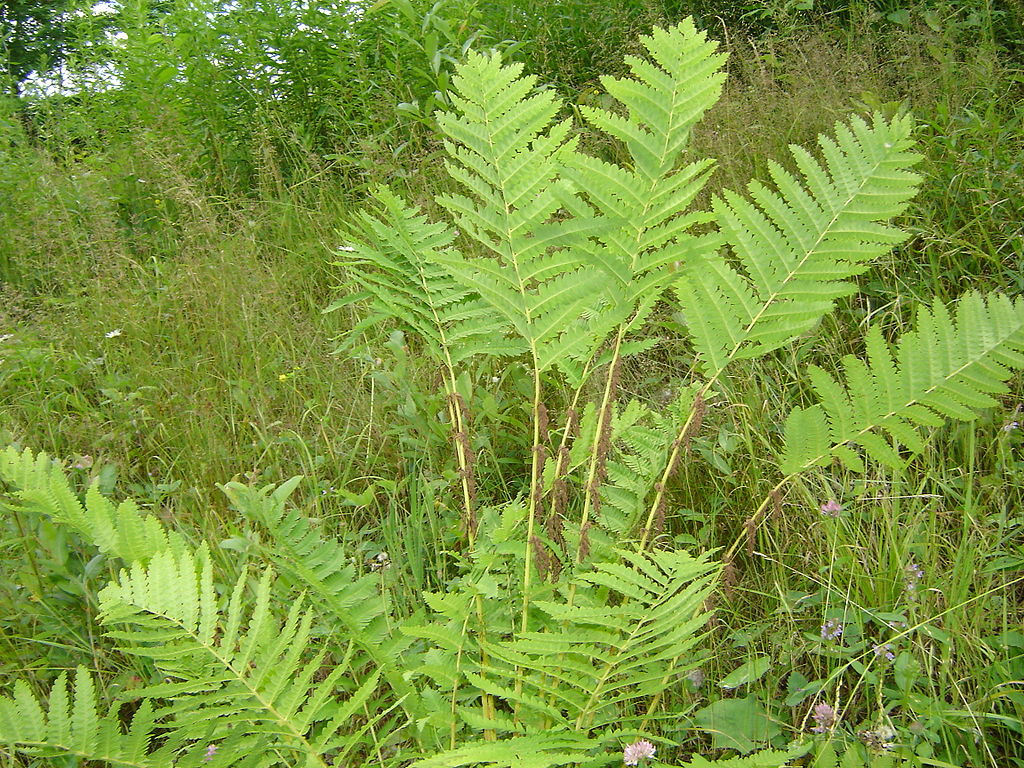
There is much handsome interrupted fern in the Painted-Cup Meadow, and near the top of one of the clumps we notice something like a large cocoon, the color of the rusty cinnamon fern wool. 

It is a red bat, the New York bat, so called. It hangs suspended, head directly downward, with its little sharp claws or hooks caught through one of the divisions at the base of one of the pinnae, above the fructification.  Its wings are very compactly folded up, the principal bones (darker-reddish) lying flat along the under side of its body, and a hook on each meeting its opposite under the chin of the creature. It does not look like fur, but more like the plush of the ripe cat-tail head, all trembling in the wind and with the pulsations of the animal.

I cannot but think that its instinct taught it to cling to the interrupted fern, since it might readily be mistaken for a mass of its fruit.

H.D. Thoreau, Journal, June 10, 1860

Another showery day, or rather shower threatening. 2 P.M. — To Annursnack.
A very strong northwest wind, and cold. At 6 P.M. it was 58º. This, with wind, makes a very cold day at this season. Yet I do not need fire in the house.


There is much handsome interrupted fern in the Painted-Cup Meadow, and near the top of one of the clumps we noticed something like a large cocoon, the color of the rusty cinnamon fern wool.

It was a red bat, the New York bat, so called. It hung suspended, head directly downward, with its little sharp claws or hooks caught through one of the divisions at the base of one of the pinnæ, above the fructification.

It was a delicate rusty brown in color, very like the wool of the cinnamon fern, with the whiter bare spaces seen through it early in the season. I thought at first glance it was a broad brown cocoon, then that it was the plump body of a monstrous emperor moth.

It was rusty or reddish brown, white or hoary within or beneath the tips, with a white apparently triangular spot beneath, about the insertion of the wings.

Its wings were very compactly folded up, the principal bones (darker-reddish) lying flat along the underside of its body, and a hook on each meeting its opposite under the chin of the creature.

It did not look like fur, but more like the plush of the ripe cat-tail head, though more loose, — all trembling in the wind and with the pulsations of the animal.

I broke off the top of the fern and let the bat lie on its back in my hand. I held it and turned it about for ten or fifteen minutes, but it did not awake. Once or twice it opened its eyes a little, and even it raised its head, opened its mouth, but soon drowsily dropped its head and fell.

It was more attentive to sounds than to motions.  Finally, by shaking it, and especially by hissing or whistling, I thoroughly awakened it, and it fluttered off twenty or thirty rods to the woods.

I cannot but think that its instinct taught it to cling to the interrupted fern, since it might readily be mistaken for a mass of its fruit.

Raised its old-haggish head.


Unless it showed its head wide awake, it looked like a tender infant.

Sunday, June 6, 2010

Nightfall after the rain

June 6

On river, up Assabet,  after the rain. Rain still (the second day) clears up before night, and so cool that many have fires.  

How full the air of sound at sunset  and just after, at the end of a rain-storm!  Every bird seems to be singing in the wood across the steam.  All sounds are more distinctly heard.

As the light is obscured after sunset, the birds rapidly cease their songs, and the swallows cease to flit over the river.  


Soon the bats are seen taking the places of the swallows, flying back and forth like them.  

After the bats, half an hour after sunset, the water-bugs begin to spread themselves over the stream, - now, when it is difficult to see them or the dimples they make, except when you look toward the reflected western sky.

H.D. Thoreau, Journal, June 6, 1860


Half an hour after sunset the water-bugs begin to spread themselves over the stream, when it is difficult to see them. See June 2, 1860 ("Water-bugs dimple the surface now quite across the river, in the moonlight, for it is a full moon.") See also  A Book of the Seasons,  by Henry Thoreau, the Water-bug (Gyrinus) and Skaters (Hydrometridae)

The reflected western sky. See October 20, 1858 ("There is one advantage in walking eastward these afternoons, at least, that in returning you may have the western sky before you."); November 15, 1853 (“Just after sundown, the waters become suddenly smooth, and the clear yellow light of the western sky is . . . reflected in the water . . . diffusing light from below as well as above”); December 25, 1858 ("How full of soft, pure light the western sky now, after sunset!”); January 17, 1852 ("In proportion as I have celestial thoughts, is the necessity for me to be out and behold the western sky sunset these winter days."); August 2, 1854 (“I am compelled to stand to write where a soft, faint light from the western sky came in between two willows.”); August 5, 1851 (“The light from the western sky is stronger still than that of the moon”) See also A Book of the Seasons,  by Henry Thoreau,  the Western Sky

Wednesday, June 2, 2010

A moonlit paddle

June 2.

A cool evening. A cold, white twilight sky after the air has been cleared by rain, and now the trees are seen very distinctly against it, - not yet heavy masses of verdure, but a light openwork, the leaves being few and small yet, as regularly open as a sieve.

Bats go over, and a kingbird, very late. Mosquitoes are pretty common.

There is more distinct sound from animals than by day, and an occasional bullfrog's trump is heard. Turning the island, I hear a very faint and slight sound once, and suspect a screech owl, which I after see on an oak. I soon hear its mournful scream, probably to its mate, not loud now, but, though within twenty or thirty rods, sounding a mile off.

Water-bugs dimple the surface now quite across the river, in the moonlight, for it is a full moon. 

The evergreens are very dark and heavy.

H.D. Thoreau, Journal, June 2, 1860

Water-bugs dimple the surface now quite across the river, in the moonlight, for it is a full moon. See June 30,1852 (“I see the bright curves made by the water-bugs in the moonlight . . .now at 9 o'clock. ”); August 8, 1851 (“As I recross the string-pieces of the bridge, I see the water-bugs swimming briskly in the moonlight . . .”)

Popular Posts Last 30 Days.

The week ahead in Henry’s journal

The week ahead in Henry’s journal
A journal, a book that shall contain a record of all your joy.
"A stone fruit. Each one yields me a thought." ~ H. D. Thoreau, March 28, 1859


I sit on this rock
wrestling with the melody
that possesses me.