Showing posts with label bream. Show all posts

Thursday, July 23, 2020

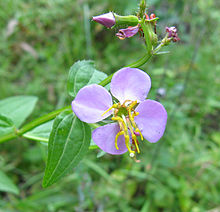
The rhexia is seen afar on the islets.


July 23.

P. M. – To P. Hutchinson's.

I cannot find a single crotalaria pod there this year.

Stone-crop is abundant and has now for some time been out at R. Brown's watering-place; also the water plantain, which is abundant there.

About the water further north the elodea is very common, and there, too, 
the rhexia is seen afar on the islets, — its brilliant red like a rose. It is fitly called meadow-beauty. Is it not the handsomest and most striking and brilliant flower since roses and lilies began? 

rhexia virginica

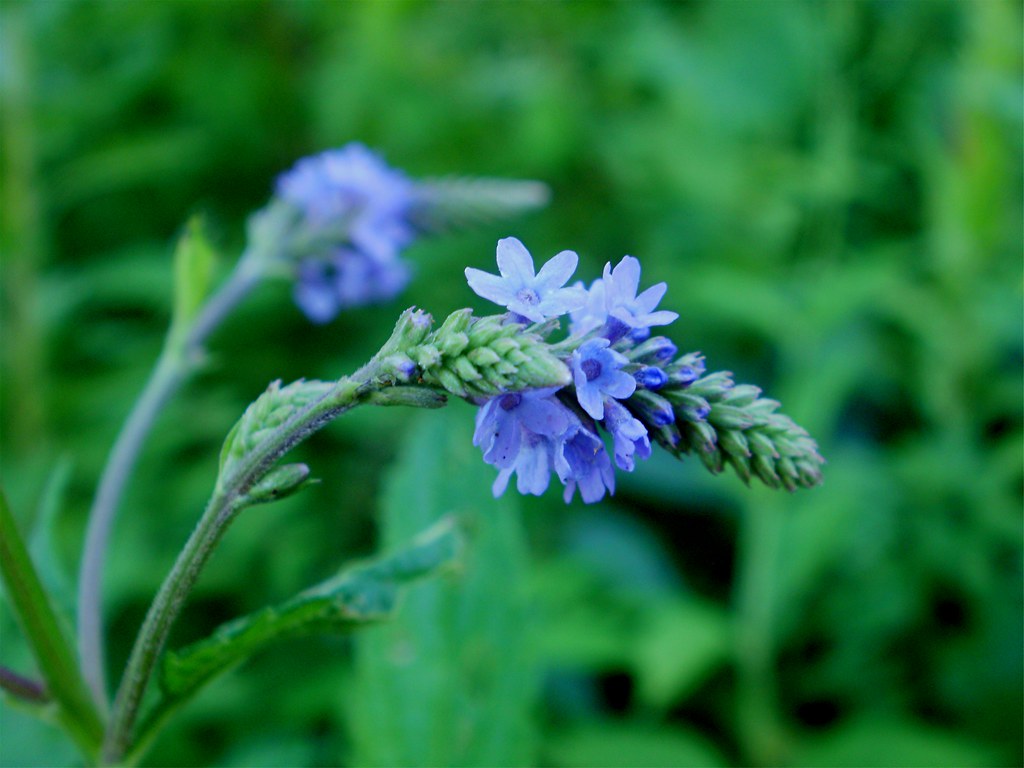
Blue vervain out some days. 

blue vervain

Bathing yesterday in the Assabet, I saw that many breams, apparently an old one with her young of various sizes, followed my steps and found their food in the water which I had muddied. The old one pulled lustily at a Potamogeton hybridus, drawing it off one side horizontally with her mouth full, and then swallowed what she tore off.

The young pouts were two and a half inches long in Flint's Pond the 17th.

H. D. Thoreau, Journal, July 23, 1853


I cannot find a single crotalaria pod there this year. See October 3, 1858 ("It is interesting to consider how that crotalaria spreads itself, sure to find out the suitable soil. One year I find it on the Great Fields and think it rare; the next I find it in a new and unexpected place. It flits about like a flock of sparrows, from field to field.")

Water plantain, abundant. See July 19, 1853 ("The alisma will open to-morrow or next day")

About the water further north the elodea is very common.  See July 22, 1853 ("The elodea out."): see also June 13, 1858 ("One of the prevailing front-rank plants [in Ledump Swmp], standing in the sphagnum and water, is the elodea. "); July 31, 1856 ("Elodea two and a half feet high, how long? The flowers at 3 p. m. nearly shut, cloudy as it is. Yet the next day, later, I saw some open, I think"); August 11, 1858 ("Saw the elodea (not long) . . . at Beck Stow’s")


The rhexia is seen afar on the islets.
See July 18, 1852 ("The petals of the rhexia have a beautiful clear purple with a violet tinge."); August 1, 1856 (" They make a splendid show, these brilliant rose-colored patches . .  Yet few ever see them in this perfection, unless the haymaker who levels them, or the birds that fly over the meadow. Far in the broad wet meadows, on the hummocks and ridges, these bright beds of rhexia turn their faces to the heavens, seen only by the bitterns and other meadow birds that fly over. We, dwelling and walking on the dry upland, do not suspect their existence..") See also   A Book of the Seasons, by Henry Thoreau, Rhexia Virginica (meadow-beauty)

Blue vervain. See August 6, 1852 ("Blue vervain is now very attractive to me, and then there is that interesting progressive history in its rising ring of blossoms. It has a story.")

An old bream with her young of various sizes, followed my steps and found their food in the water. See November 30, 1858 ("The bream, appreciated, floats in the pond as the centre of the system, another image of God. Its life no man can explain more than he can his own.")

The young pouts were two and a half inches long. 
See July 15, 1856 ("wading into the shallow entrance of the meadow, I saw a school of a thousand little pouts about three quarters of an inch long")

July 23. See A Book of the Seasons, by Henry Thoreau, July 23

A Book of the Seasons, by Henry Thoreau
"A book, each page written in its own season,
out-of-doors, in its own locality.” 
~edited, assembled and rewritten by zphx © 2009-2021

Sunday, May 3, 2020

I see at the Aquarium

May 3

To Cambridge and Boston. 

I see at the Aquarium many of my little striped or barred breams, now labelled Bryttus esobus. Compared with the common, they have rounded tails, a larger dorsal and anal fins, and are fuller or heavier forward. I observe that they incline to stand on their heads more. 

The proprietor said that some little fishes one and a half to two inches long, with a very distinct black line along the sides, which I should have called brook minnows, Agassiz was confident were young suckers, but Mr. Putnam thought that they were the Leuciscus atronarus, i. e. my brook minnow. 

I observe that a leuciscus  probably pulchellus, if not argenteus), five inches long, also has a broad line along the side, but not nearly so dark. 

He shows me the eudora (water-plant), which he has not seen east of the Connecticut.

H. D. Thoreau, Journal, May 3, 1860

At the Aquarium. See  May 1, 1858 ("I see many minnows from three quarters to two inches long, but mostly about one inch. They have that distinct black line along each side from eye to tail on a somewhat transparent brownish body, dace-like, and a very sharply forked tail. . . . Is it not the brook minnow?"); April 27, 1859 ("Saw at the Aquarium in Bromfield Street apparently brook minnows with the longitudinal dark lines bordered with light"). See also March 29, 1854 ("poised over the sand on invisible fins, the outlines of a shiner. . . distinct longitudinal light-colored line midway along their sides and a darker line below it”); July 17, 1856 (“They have . . . a broad, distinct black band along sides (which methinks marks the shiner)"); December 11, 1858 (“a minnow — apparently a young shiner, but it has a dark longitudinal line along side ”); December 18, 1858 (“They are little shiners with the dark longitudinal stripe”)

Saturday, June 1, 2019

The barberry flower is now in prime.

June 1

Farmer has heard the quail a fortnight. Channing yesterday. 

The barberry flower is now in prime, and it is very handsome with its wreaths of flowers. 

Many low blackberry flowers at Lee's Cliff. 

June-grass there well out. 

Krigia, how long? 

Breams' nests begun at Hubbard's Grove shore. They have carefully cleaned the bottom, removing the conferva, small weeds, etc., leaving the naked stems of some coarse ones, as the bayonet rush, bare and red. 

Young Stewart tells me that when he visited again that gray squirrel's nest which I described about one month ago up the Assabet, the squirrels were gone, and he thought that the old ones had moved them, for he saw the old about another nest. He found another, similar nest with three dead blind gray squirrels in it, the old one probably having been killed. 

This makes three gray squirrels' nests that I have seen and heard of (seen two of them) this year, made thus of leaves and sticks open in the trees, and I hear of some more similar ones found in former years, so that I think this mode of nesting their young may be the rule with them here. 

Add to this one red squirrel's nest of the same kind.

H. D. Thoreau, Journal, June 1, 1860


The barberry flower is now in prime, and it is very handsome with its wreaths of flowers. See May 29,  1852 ("Barberry in bloom. “); May 29, 1857 ("I perceive the buttery-like scent of barberry bloom from over the rock,”)

Many low blackberry flowers at Lee's Cliff.  See May 25, 1857 (“Also low blackberry on the rocks a day or two.”); May 28, 1859 (“Low blackberry in bloom on railroad bank.”); June 2, 1852 (“ Low blackberry in bloom. ”); June 5, 1855 (“Low blackberry out in low ground”); June 16, 1858 (“How agreeable and wholesome the fragrance of the low blackberry blossom,”)

Breams' nests begun. See June 6, 1855 (“I notice . . . two or three cleared or light-colored places, apparently bream-nests commenced.”); June 8, 1858 ("I see many breams’ nests”); June 11, 1856 (“See a bream’s nest two and a quarter feet diameter, laboriously scooped out, and the surrounding bottom for a diameter of eight feet (! !) comparatively white and clean”); June 26, 1857 (“Stand over a bream's nest close to the shore ”); July 1, 1852 (“From the bridge I see a bream's nest in soft sand on the edge of deeper water”); July 10, 1853 ("The bream poised over its sandy nest on waving fin”)


Three gray squirrels' nests that I have seen and heard of (seen two of them) this year, made thus of leaves and sticks open in the trees. See April 25, 1860 (“Mr. Stewart tells me that he has found a gray squirrel's nest up the Assabet, in a maple tree. I resolve that I too will find it.”);  May 29, 1860 (“In another white pine near by, some thirty feet up it, I found a gray squirrel's nest, with young”); . See also  January 24, 1856 (“That Wheeler swamp is a great place for squirrels. I observe many of their tracks along the riverside there. The nests are of leaves, and apparently of the gray species.”); March 6, 1856 (“ [A](probably) gray squirrel’s nest high in a pitch pine, and acorn shells about on it. ”); October 23, 1857 (“I see a squirrel's nest in a white pine, recently made, on the hillside near the witch-hazels.”); November 13, 1857 (“ I see, on a white oak on Egg Rock, where the squirrels have lately made a nest for the winter of the dry oak leaves . . . I suspect it is a gray squirrel's nest.”); May 31, 1858 (“go to see a gray squirrel's nest in the oak at the Island point. It is about fifteen feet from the ground,”); November 5, 1860 ([T]here are the nests of several gray squirrels in the trees.”)

Add to this one red squirrel's nest of the same kind. See May 29, 1860 ("Some eighteen feet high in a white pine in a swamp in the oak meadow lot, I climbed to a red squirrel’s nest. . . . This was a mass of rubbish covered with sticks, such as I commonly see (against the main stem), but not so large as a gray squirrel’s . . . I have thus found three squirrels’ nests this year, two gray and one red, in these masses of twigs and leaves and bark exposed in the tree-tops and not in a hollow tree, and methinks this is the rule and not the exception.")

Tuesday, March 26, 2019

What was that large rather grayish duck on Fair Haven Pond this afternoon?


March 26.

March 26, 2018

P. M. — To Conantum via Cardinal Shore and boat.

 The river has gone down considerably, but the rain of yesterday and to-day has checked its fall somewhat. 

Much earth has been washed away from the roots of grasses and weeds along the banks of the river, and many of those pretty little bodkin bulbs are exposed and so transported to new localities. This seems to be the way in which they are spread. 

I see many smallish ants on the red carcass of a musquash just skinned and lying on the bank, cold and wet as the weather is. They love this animal food. 

On the top of the hill at Lee's Cliff much wintergreen has been eaten; at least a great many leaves are lying loose, strewn about. 

I find washed up on the (Cardinal) shore a little bream about an inch and an eighth long, very much like those found at Walden last fall. It has about seven transverse bars, a similar dorsal fin, a reddish-copper iris, with the black vertical dash through the eye. I think it must be one of the common breams of the river, — though I see only the black spot on the operculum and not any red one, — and apparently all the young are thus striped (?) . 

What was that large rather grayish duck on Fair Haven Pond this afternoon? It was far off. Was it a last year's male sheldrake, or a female, or another?

H. D. Thoreau, Journal, March 26, 1859

Much earth has been washed away from the roots of grasses and weeds along the banks of the river, and many of those pretty little bodkin bulbs are exposed and so transported to new localities. See April 22, 1856 ("What is that little bodkin-shaped bulb which I found washed up on the edge of the meadow, white with a few small greenish rounded leafets? "); April 16, 1858 ("The bodkin-like bulb, . . . is probably the water-purslane. I see it floating free and sending out many rootlets, on pools and ditches. In this way it spreads itself.")

On the top of the hill at Lee's Cliff much wintergreen has been eaten. See November 16, 1858 (“Methinks the wintergreen, pipsissewa, is our handsomest evergreen, so liquid glossy green and dispersed almost all over the woods.”); November 19, 1850 ("Now that the grass is withered and the leaves are withered or fallen, it begins to appear what is evergreen the partridge-berry and checkerberry, and winter-green leaves even, are more conspicuous.”); December 23, 1855 (“At Lee’s Cliff I notice these radical(?) leaves quite fresh: saxifrage, sorrel, polypody, . . . checkerberry, wintergreen, . . .”); February 16, 1855 (“I see where probably rabbits have nibbled of the leaves of the Wintergreen.”); see also July 3, 1852 ("The Chimaphila umbellata, wintergreen, must have been in blossom some time.”)

A little bream about an inch and an eighth long, very much like those found at Walden last fall.  See November 26, 1858 (" a great many minnows about one inch long . . . shaped like bream, but had the transverse bars of perch. ... Yet, from their form and single dorsal fin, I think they are breams. Are they not a new species? "); November 27, 1858 ("They have about seven transverse dark bars, a vertical dark mark under eye, and a dark spot on edge of operculum. "); December 3, 1858 ("The largest of the four breams (vide November 26th) . . . Operculums tinged, streaked, and spotted with golden, coppery, greenish, and violet reflections. A vertical dark mark or line, corresponding to the stripes, through the eye. Iris copper-color or darker. ")

Tuesday, December 11, 2018

Walden is about one-third skimmed over.

December 11. 

P. M. — To Walden. 

An overcast afternoon and rather warm. The snow on the ground in pastures brings out the warm red in leafy oak woodlands by contrast. These are what Thomson calls “the tawny copse.” So that they suggest both shelter and warmth. All browns, indeed, are warmer now than a week ago. These oak woodlands half a mile off, commonly with pines intermingled, look like warm coverts for birds and other wild animals. How much warmer our woodlands look and are for these withered leaves that still hang on! Without them the woods would be dreary, bleak, and wintry indeed.  Here is a manifest provision for the necessities of man and the brutes. These leaves remain to keep us warm, and to keep the earth warm about their roots. 

While the oak leaves look redder and warmer, the pines look much darker since the snow has fallen (the hemlocks darker still). A mile or two distant they are dark brown, or almost black, as, still further, is all woodland, and in the most distant horizon have a blue tinge like mountains, from the atmosphere. The boughs of old and bare oak woods are gray and in harmony with the white ground, looking as if snowed on. 

Already, in hollows in the woods and on the sheltered sides of hills, the fallen leaves are collected in small heaps on the snow-crust, simulating bare ground and helping to conceal the rabbit and partridge, etc. They are not equally diffused, but collected together here and there as if for the sake of society. 

I find at the Pout’s Nest, now quite frozen over, air-holes and all, twenty-two pollywogs frozen in and dead within a space of two and a half feet square, also a minnow — apparently a young shiner, but it has a dark longitudinal line along side (about an inch and a half long)—with the bream.

The terminal shoots of the small scarlet oaks are still distinctly red, though withered. 

A “swirl,” applied to leaves suddenly caught up by a sort of whirlwind, is a good word enough, methinks. 

Walden is about one-third skimmed over. It is frozen  nearly half the way out from the northerly shore, excepting a very broad open space on the northwest shore and a considerable space at the pines at the northeast end; but the ice, thin as it is, extends quite across from the northwest side to the southwest cape (west side of the railroad bay) by an isthmus only two or three rods wide in its narrowest part. 

It is evident that whether a pond shall freeze this side or that first depends much on the wind. If it is small and lies like Walden between hills, I should expect that in perfectly calm weather it would freeze soonest along the south shore, but in this case there was probably wind from the north or northwest, and the more sheltered and smooth north side froze first.

The warmth reflected from the pines at the northeast corner may account for the open water there, but I can not account for the open space of the northwest end. [It must be because it is there open to the rake of the north Wind. the shore being flat and gently sloping backward a long way, while the protection of Heywood‘s Peak may account for the ice isthmus being met by the break-wind of the west railroad cape.]

It is remarkable that the south edge of the ice projects southward in a cape corresponding to the deep triangular bay in the south side, though it is in the middle of the pond, and there is even a rude correspondence else where along the edge of the ice to the opposite shore.  This might seem to indicate that the ice to some extent formed first over deepest water. 

When the ice was melting and the trees dripping, on the morning of the 6th, I noticed that the snow was discolored, — stained yellow by this drip, — as if the trees were urinating. 

The large scarlet oak in the cemetery has leaves on the lower limbs near the trunk just like the large white oaks now. So has the largest black oak which I see. Others of both, and all, kinds are bare. 

Some, being offended, think sharp and satirical things, which yet they are not prepared consciously to utter. But in some unguarded moment these things escape from them, when they are as it were unconscious. They betray their thoughts, as it were by talking in their sleep, for the truth will out, under whatever veil of civility.

H.D. Thoreau, Journal, December 11, 1858


Already, in hollows in the woods and on the sheltered sides of hills, the fallen leaves are collected in small heaps on the snow-crust. See December 9, 1856 ("Coming through the Walden woods, I see already great heaps of oak leaves collected in certain places on the snow-crust by the roadside, where an eddy deposited them."); January 28, 1857 ("Notice many heaps of leaves on snow on the hillside southwest of the pond, as usual.");  February 4, 1856 ("The oak leaves which have blown over the snow are collected in dense heaps on the still side of the bays at Walden, where I suspect they make warm beds for the rabbits to squat on.").. Also  January 7, 1857 ("Though the rest of the broad path is else perfectly unspotted white, each track of the fox has proved a trap which has caught from three or four to eight or ten leaves each."); January 8, 1852 ("almost every track which I made yesterday in the snow - perhaps ten inches deep - has got a dead leaf in it, though none is to be seen on the snow around.")

Walden is about one-third skimmed over. See December 9, 1856 ("There is scarcely a particle of ice in Walden yet, and that close to the edge, apparently, on the west and northwest sides. . . .This is, no doubt, owing solely to the greater depth of Walden."); December 19,1856 ("Walden froze completely over last night.This is very sudden, for on the evening of the 15th there was not a particle of ice in it. In just three days, then, it has been completely frozen over, and the ice is now from two and a half to three inches thick, a transparent green ice, through which I see the bottom where it is seven or eight feet deep."); December 20, 1858 (“Walden is frozen over, except two small spots, less than half an acre in all, in middle.”) December 21, 1855 (“Walden is skimmed over, all but an acre, in my cove.”); December 21, 1854 (“Walden is frozen over, apparently about two inches thick.”)


It is evident that whether a pond shall freeze this side or that first depends much on the wind. See December 29, 1855 ("Am surprised to find eight or ten acres of Walden still open, notwithstanding the cold of the 26th, 27th, and 28th and of to-day. It must be owing to the wind partly."); December 30, 1853 ("The pond [Walden] not yet frozen entirely over; about six acres open, the wind blew so hard last night.");


Monday, December 3, 2018

I walk with unbuttoned coat, taking in the influences of the hour.

December 3

December 3, 2011

P. M. — To Walden. 

A deliciously mild afternoon, though the ground is covered with snow. The cocks crowed this morning as of yore.

I carry hatchet and rake in order to explore the Pout’s Nest for frogs and fish, —the pond not being frozen. A small part of that chink of the 26th is not yet frozen, and is crowded with pollywogs, mostly of large size, and very many have legs more or less developed. 

With my small iron rake, about a foot long by four inches wide, I jerk on to the ice at one jerk forty five pollywogs, and more than as many more fall into the water. Many of the smallest pollywogs have bright copper-red bellies, prettily spotted, while the large are commonly pale-yellow, either clear or spotted. Many are dying. They have crowded so thickly along the open chink three or four inches wide by the side of a boat in the ice that, when I accidentally rock it, about a hundred are washed out on to the ice. 

One salamander among them, and four of the new breams, much larger, darker, and richer-colored than any I had found. 

I have often seen pollywogs in small numbers in the winter, in spring-holes, etc., but never such crowding to air-holes in the ice. All that is peculiar in this case is that this small pond has recently been cut off from the main pond by the falling of the water and that it is crowded with vegetable matter, chiefly target-weed, so that apparently the stagnant water has not only killed the breams and perch (of which last I find three dead) but many pollywogs, and compels others to seek the surface. 

As I return home by the Shanty Field and the railroad, I cannot help contrasting this evening with the 30th (on Fair Haven Hill-side). Now there is a genial, soft air, and in the west many clouds of purplish dove color. I walk with unbuttoned coat, taking in the influences of the hour. Coming through the pitch pines east of the Shanty Field, I see the sun through the pines very yellow and warm-looking, and every twig of the pines and every weed is lit with yellow light (not silvery). 

The other night the few cloudy islets about [the] setting sun (where it had set) were glitteringly bright afar through the cold air. Now (when I get to the causeway) all the west is suffused with an extremely rich, warm purple or rose-color, while the edges of what were dove-colored clouds have a warm saffron glow, finally deepening to rose or damask when the sun has set. The other night there was no reddening of the clouds after sunset, no afterglow, but the glittering clouds were almost immediately snapped up in the crisped air. 

I improve every opportunity to go into a grist-mill, any excuse to see its cobweb-tapestry. I put questions to the miller as an excuse for staying, while my eye rests delighted on the cobwebs above his head and per chance on his hat. 

The salamander above named, found in the water of the Pout’s Nest, is the Salamandra symmetrica It is some three inches long, brown (not dark-brown) above and yellow with small dark spots beneath, and the same spots on the sides of the tail; a row of very minute vermilion spots, not detected but on a close examination, on each side of the back; the tail is waved on the edge (upper edge, at least); has a pretty, bright eye. Its tail, though narrower, reminds me of the pollywog. Why should not it lose its tail as well as that?

The largest of the four breams (vide November 26th) two and nine twentieths inches long, by one inch broad and nine twentieths thick. The back, sides forward, tail, and anal fin black or blackish or very dark; the transverse dark bars few and indistinct except in middle of fish; sides toward tail yellowish-Olive. Rear of abdomen has violet reflections (and about base of anal fin). Operculums tinged, streaked, and spotted with golden, coppery, greenish, and violet reflections. A vertical dark mark or line, corresponding to the stripes, through the eye. Iris copper-color or darker. 

The others, about two inches long, are differently colored, not so dark, more olive, and distinctly barred. The smallest are the lightest-colored, but the larger on the whole richer, as well as darker. The fins, especially the dorsal, caudal, and anal, are remarkably pretty, in color a fine network of light and dark. The lower jaw extends about three fortieths of an inch beyond the upper. The rich dark, almost black, back, with dark-barred sides alternating with yellowish olive, and the fine violet purple reflections from the sides of the abdomen, like the nacre of a shell, as coin-like they lie flat in a basin, — such jewels they swam between the stems (clothed in transparent jelly) of the target-weed. 

R. W. E. saw quite a flock of ducks in the pond (Walden) this afternoon;

H. D. Thoreau, Journal, December 3, 1858

I have often seen pollywogs in small numbers in the winter, in spring-holes, etc., but never such crowding to air-holes in the ice. See December 21, 1857 ("They appear to keep in motion in such muddy pond-holes, where a spring wells up from the bottom till midwinter, if not all winter.”)

Four of the new breams, much larger, darker, and richer-colored than any I had found. See November 26, 1858 (" a great many minnows about one inch long . . . shaped like bream, but had the transverse bars of perch.”); November 27, 1858 ("I got seventeen more of those little bream of yesterday. “); November 30, 1858 (“How wild it makes the pond and the township to find a new fish in it!”)

The 30th (on Fair Haven Hill-side). . . .there was no reddening of the clouds after sunset, no afterglow, but the glittering clouds were almost immediately snapped up in the crisped air. See December 2, 1858 ("[November 30th] was at the same time the most brilliant of sunsets, the clearest and crispiest of winter skies."); November 30, 1858 ("At sunset, we saw a large, long, dusky cloud in the northwest horizon, apparently just this side of Wachusett, or at least twenty miles off, which was snowing, when all the rest was clear sky ") 

All the west is suffused with an extremely rich, warm purple or rose-color, while the edges of what were dove-colored clouds have a warm saffron glow, finally deepening to rose or damask when the sun has set. See December 14, 1852 ("Ah, who can tell the serenity and clarity of a New England winter sunset?"); See also  A Book of the Seasons, by Henry Thoreau, Winter Sunsets

December 3.
See A Book of the Seasons, by Henry Thoreau, December 3

This mild afternoon
I walk with unbuttoned coat
taking in the the hour.


A Book of the Seasons
, by Henry Thoreau
"A book, each page written in its own season,
out-of-doors, in its own locality."
~edited, assembled and rewritten by zphx © 2009-2024

https://tinyurl.com/hdt-581203

Saturday, December 1, 2018

A snow-cloud just this side of Wachusett.

November 30.

The river may be said to have frozen generally last night.

The short afternoons are come. Yonder dusky cloud mass in the northwest will not be wafted across the sky before yonder sun that lurks so low will be set. We see purple clouds in the east horizon. 

But did ever clouds flit and change, form and dissolve, so fast as in this clear, cold air?

Coming over the side of Fair Haven Hill at sunset, we saw a large, long, dusky cloud in the northwest horizon, apparently just this side of Wachusett, or at least twenty miles off, which was snowing, when all the rest was clear sky. 

It was a complete snow-cloud. 

It looked like rain falling at an equal distance, except that the snow fell less directly and the upper outline of a pat lof the cloud more like that of a dusky mist. It was [not] much of a snow-storm, just enough to partially obscure the sight of the mountains about which it was falling, while the cloud was apparently high above them, or it may have been a little this side. 

The cloud was of a dun color, and at its south end, near where the sun was just about to set, it was all aglow on its under side with a salmon fulgor, making it look warmer than a furnace at the same time that it was snowing. 

In short, I saw a cloud, quite local in the heavens, whose south end rested over the portals of the day, twenty and odd miles off, and was lit by the splendor of the departing sun, and from this lit cloud snow was falling. 

. . .. It was a rare and strange sight, that of a snow-storm twenty miles off on the verge of a perfectly clear sky. Thus local is all storm, surrounded by serenity and beauty. 

The terrestrial mountains were made ridiculous beneath that stupendous range. . . .

But it was merely an extensive flurry, though it may have lasted twenty minutes. Before we had got home I saw it in the east still further off, — not having seen it pass us, — a pale ethereal film, almost dissolved in the sky, as in distinct as a fabulous island. 

In these clear, cold days fear no cloud. They vanish and dissolve before the cloud-consuming air.

A cloud, then, which glows high above the portals of the day seven or eight minutes before the sun disappears, may be some twenty miles off only.

I cannot but see still in my mind’s eye those little striped breams poised in Walden’s glaucous water.  (continued)....

H. D. Thoreau, Journal, November 30, 1858

The river may be said to have frozen generally last night. See November 30, 1855 (“River skimmed over behind Dodd’s and elsewhere. Got in my boat. River remained iced over all day.”); November 30, 1854 ("Sail down river. No ice, but strong cold wind . . .")

The short afternoons are come. See note to December 11, 1854 (“The morning and the evening twilight make the whole day.”)

Lit by the splendor of the departing sun, . . . a snow-storm twenty miles off on the verge of a perfectly clear sky. See December 2, 1858 ("It was at the same time the most brilliant of sunsets, the clearest and crispiest of winter skies."); December 3, 1858 ("The 30th . . . .there was no reddening of the clouds after sunset, no afterglow, but the glittering clouds were almost immediately snapped up in the crisped air.") See also A Book of the Seasons, by Henry Thoreau, November Sunsets


A large, long, dusky cloud in the northwest horizon, apparently just this side of Wachusett, or at least twenty miles off. See November 12, 1852 (" a narrow white cloud resting on every mountain and conforming exactly to its outline — . . . distinct white caps resting on the mountains this side, for twenty miles along the horizon.”); January 27, 1858 (“I saw a cloud more distant than the mountain.”); See November 30, 1852 ("From Pine Hill, Wachusett is seen over Walden.”)

Thus local is all storm, surrounded by serenity and beauty. See January 17, 1852 (“”Those western vistas through clouds to the sky show the clearest heavens, clearer and more elysian than if the whole sky is comparatively free from clouds. As the skies appear to a man, so is his mind. Some see only clouds there; some behold there serenity, purity, beauty ineffable.”); August 9, 1860("a beautiful and serene object, a sort of fortunate isle in the sunset sky, the local cloud of the mountain.”); August 7, 1860 ("I am struck by the localness of the fogs. . . .If we awake into a fog it does not occur to us that the inhabitants of a neighboring town may have none.”); June 3, 1858 ("It was pleasant enough to see one man’s farm in the shadow of a cloud, — which perhaps he thought covered all the Northern States, — while his neighbor’s farm was in sunshine.”)


Wednesday, November 28, 2018

Do we know of any other so silent and sudden a change?

November 28 

A gray, overcast, still day, and more small birds —tree sparrows and chickadees — than usual about the house. 

November 28, 2023

There have been a very few fine snowflakes falling for many hours, and now, by 2 P. M., a regular snow-storm has commenced, fine flakes falling steadily, and rapidly whitening all the landscape.


In half an hour the russet earth is painted white even to the horizon. Do we know of any other so silent and sudden a change? 

I cannot now walk without leaving a track behind me; that is one peculiarity of winter walking. Anybody may follow my trail. I have walked, perhaps, a particular wild path along some swamp-side all summer, and thought to myself, I am the only villager that ever comes here. 

here is the track of 
a sportsman and his dog in 
my secluded path

But I go out shortly after the first snow has fallen, and lo, here is the track of a sportsman and his dog in my secluded path, and probably he preceded me in the summer as well. Yet my hour is not his, and I may never meet him! 

I asked Coombs the other night if he had been a-hunting lately. He said he had not been out but once this fall. He went out the other day with a companion, and they came near getting a fox. They broke his leg. He has evidently been looking forward to some such success all summer. Having done thus much, he can afford to sit awhile by the stove at the post-office. He is plotting now how to break his head. 

Goodwin cannot be a very bad man, he is so cheery. 

And all the years that I have known Walden these striped breams have skulked in it without my knowledge! How many new thoughts, then, may I have?

H. D. Thoreau, Journal, November 28, 1858


A regular snow-storm has commenced, fine flakes falling steadily, and rapidly whitening all the landscape. See December 14, 1859 ("Snow-storms might be classified. This is a fine, dry snow"}

Do we know of any other so silent and sudden a change? See November 13, 1858 (“Thus it comes stealthily in the night and changes the whole aspect of the earth.”); November 29, 1858 ("The snow has taken all the November out of the sky."); January 26, 1855 ("This morning it snows again,—a fine dry snow with no wind to speak of, giving a wintry aspect to the landscape . . . What changes in the aspect of the earth! ")

I cannot now walk without leaving a track behind me.  See  November 15, 1858 ("You are now reminded occasionally in your walks that you have contemporaries, and 
perchance predecessors. I see the track of a fox . . . and, in the wood-path, of a man and a dog."); December 12, 1859 ("[In the winter] you see the tracks of those who had preceded you, and so are more reminded of them than in summer."); compare January 19, 1852 ("It is pleasant to make the first tracks in this road through the woods . . . the fine, dry snow blowing and drifting still.")

Here is the track of a sportsman and his dog in my secluded path See November 15, 1858 ("I see by the cakes or balls of snow that have dropped from his shoes that a man has passed. This would be known for a man and a dog’s track in any part of the world. Five toes in a bundle, somewhat diamond-shape, forming a sort of rosette, are the print of the dog.")

Goodwin cannot be a very bad man, he is so cheery. See November 28, 1859 ("Goodwin is cutting out a few cords of dead wood in the midst of E. Hubbard's old lot."); See also October 22, 1853 ("One-eyed John Goodwin, the fisherman, was loading into a hand-cart . . . — though he is regarded by most as a vicious character, — whose whole motive was so easy to fathom, — thus to obtain his winter's wood, — charmed me unspeakably . . . Goodwin stands on the solid earth"); See November 4, 1858 ("I took out my glass, and beheld Goodwin, the one-eyed Ajax, in his short blue frock, short and square-bodied, as broad as for his height he can afford to be, getting his winter's wood; for this is one of the phenomena of the season.")

These striped breams have skulked in it without my knowledge! See November 26, 1858
("Looking more attentively, I detected also a great many minnows . . .shaped like bream, but had the transverse bars of perch . . . They have about seven transverse dusky bars like a perch! Yet, from their form and single dorsal fin, I think they are breams. Are they not a new species? "); November 27, 1858 ("I got seventeen more of those little bream of yesterday. “); November 30, 1858 ("How wild it makes the pond and the township to find a new fish in it! For more than two centuries men have fished here and have not distinguished this permanent settler of the township. When my eyes first rested on Walden the striped bream was poised in it, though I did not see it. But there it dwells and has dwelt permanently, who can tell how long?")

November 28. A Book of the Seasons,  by Henry Thoreau, November 28

So sudden a change –
the russet earth painted white
to the horizon. 
I cannot now walk
without leaving tracks behind.
A Book of the Seasons,  by Henry Thoreau
"A book, each page written in its own season,
out-of-doors, in its own locality.”
~edited, assembled and rewritten by zphx © 2009-2025

https://tinyurl.com/hdt-581128

Tuesday, November 27, 2018

This country is so new that species of fishes and birds and quadrupeds inhabit it which science has not yet detected.

November 27. 

Those barren hollows and plains in the neighborhood of Walden are singular places. I see many which were heavily wooded fifteen or thirty years ago now covered only with fine sedge, sweet-fern, or a few birches, willows, poplars, small wild cherries, panicled cornels, etc. 

They need not amount to hollows at all: many of them are glades merely, and all that region is elevated, but the surrounding higher ground, though it may be only five or ten feet higher, will be covered with a good growth. 

One should think twice before he cut off such places. Perhaps they had better never be laid bare, but merely thinned out. We do not begin to understand the treatment of woodland yet. 

On such spots you will see various young trees—and some of them which I have named —dead as if a fire had run through them, killed apparently by frost. 

I find scarlet oak acorns like this
in form not essentially different from those of the black oak, except that the scales of the black stand out more loose and bristling about the fruit. So all scarlet oak acorns do not regularly taper to a point from a broad base, and Emerson represents but one form of the fruit. The leaf of this was not very deeply cut, was broad for its length. 

I got seventeen more of those little bream of yesterday. As I now count, the dorsal fin-rays are 9-10 (Girard says 9-11), caudal 17 (with apparently 4 short on each side), anal 3-11, pectoral 11, ventral 1-5. They have about seven transverse dark bars, a vertical dark mark under eye, and a dark spot on edge of operculum. They appear to be the young of the Pomotis obesus, described by Charles Girard to the Natural History Society in April, ’54, obtained by Baird in fresh water about Hingham and Charles River in Holliston. 

I got more perfect specimens than the bream drawn above. They are exceedingly pretty seen floating dead on their sides in a bowl of water, with all their fins spread out. From their size and form and position they cannot fail to remind you of coins in the basin.

The conspicuous transverse bars distinguish them at once. The dorsal fin consists of two parts, the foremost of shorter stiff, spiny rays, the other eleven at least half as long again and quite flexible and waving, falling together like a wet rag out of water. So, with the anal fin, the three foremost rays are short (and spiny, as I see, and one of each of the ventral (according to Girard, and to me). These foremost rays in each case look like slender raking masts, and their points project beyond the thin web of the fin, whose edge looks like the ropes which stretch from masthead to masthead, loopwise. 

The stiff and spiny foremost part of the fins evidently serves for a cut-water which bears the brunt of any concussion and perhaps may serve for weapons of offense, while the more ample and gently waving flexible after part more especially guides the motions of the fish. 

The transverse bars are continued across these parts of the dorsal and anal fins, as the markings of a turtle across its feet or flippers; methinks the fins of the minnows are peculiarly beautiful. 

How much more remote the newly discovered species seems to dwell than the old and familiar ones, though both inhabit the same pond! Where the Pomotis obesus swims must be a new country, unexplored by science. The seashore may be settled, but aborigines dwell unseen only thus far inland. This country is so new that species of fishes and birds and quadrupeds inhabit it which science has not yet detected. The water which such a fish swims in must still have a primitive forest decaying in it.


H. D. Thoreau, Journal, November 27, 1858

I got seventeen more of those little bream of yesterday. See November 26, 1858 (" a great many minnows about one inch long . . . shaped like bream, but had the transverse bars of perch.")

So all scarlet oak acorns do not regularly taper to a point from a broad base. See September 12, 1854 ("[White oak acorns] are small and very neat light-green acorns, with small cups, commonly arranged two by two close together, often with a leaf growing between them"); January 19, 1859 ("Gathered a scarlet oak acorn . . .with distinct fine dark stripes or  rays, such as a Quercus ilicifolia has.");  September 18, 1858 ("the small shrub oak . . .with its pretty acorns striped dark and light alternately. [The black oak acorns also slightly marked thus.]") also  September 30, 1854 ("The conventional acorn of art is of course of no particular species, but the artist might find it worth his while to study Nature’s varieties again.")

This country is so new that species of fishes and birds and quadrupeds inhabit it which science has not yet detected. See September 9, 1856 ("The skin and skull of a panther (Felis concolor) (cougar, catamount, painter, American lion, puma) . . . gave one a new idea of our American forests and the vigor of nature here.").

November 27. See A Book of the Seasons,  by Henry Thoreau,  November 27


A Book of the Seasons,  by Henry Thoreau,  
A Book of the Seasons,  by Henry Thoreau
 "A book, each page written in its own season, 
out-of-doors, in its own locality."

Monday, November 26, 2018

A new species?

November 26


The various evergreens, large and small, may be said generally to turn green or to have turned reddish about the middle of November. 

Got in boat on account of Reynolds’s new fence going up (earlier than usual). 

A good many leaves of the sweet-fern, though withered now, still hold on; so that this shrub may be put with the oaks in this respect. So far as I remember, it is peculiar among shrubs in this.

Walden is very low, compared with itself for some years. The bar between pond and Hubbard’s pond hole is four feet wide, but the main bar is not bare. There is a shore at least six feet wide inside the alders at my old shore, and what is remarkable, I find that not only Goose Pond also has fallen correspondingly within a month, but even the smaller pond-holes only four or five rods over, such as Little Goose Pond, shallow as they are. 

I begin to suspect, therefore, that this rise and fall extending through a long series of years is not peculiar to the Walden system of ponds, but is true of ponds generally, and perhaps of rivers, though in their case it may be more difficult to detect. Even around Little Goose Pond the shore is laid bare for a space even wider than at Walden, it being less abrupt. The Pout’s Nest, also, has lost ten feet on all sides. 

Those pouts’ nests which I discovered in the spring are high and dry six feet from the water. I overhauled one, ripping up the frozen roof with my hands. The roof was only three inches thick, then a cavity and a bottom of wet mud. In this mud I found two small frogs, one apparently a Rana palustris less than an inch long, the other apparently a young R. pipiens an inch and a half long. They were quite sluggish and had evidently gone into winter quarters there, but probably some mink would have got them. 

The Pout’s Nest was frozen just enough to bear, with two or three breathing-places left. The principal of these was a narrow opening about a rod long by eighteen inches wide within six feet of the southwest side of the pond-hole, and the immediately adjacent ice was darker and thinner than the rest, having formed quite recently. 

I observed that the water at this breathing-chink was all alive with pollywogs, mostly of large size, though some were small, which apparently had collected there chiefly, as the water-surface was steadily contracted, for the sake of the air (?). There [were] more than a hundred of them there, or ten or a dozen in a square foot, and many more under the ice. 

I saw one firmly frozen in and dead. One had legs, and his tail was half eaten off by some creature, yet he was alive. There were also one or two frogs stirring among them. Here was evidently warmer water, probably a spring, and they had crowded to it. 

Looking more attentively, I detected also a great many minnows about one inch long either floating dead there or frozen into the ice,—at least fifty of them. They were shaped like bream, but had the transverse bars of perch. 

There were more pollywogs in other parts of the pond-hole, and at the north end I saw two perch about seven inches long, dead, close to the shore, and turned a bright green,— which are commonly yellow, — as if poisoned by the water or something they had eaten. Perhaps the fishes had suffered by the falling of this pond-hole and consequent isolation from the main pond, which has left this part still more shallow and stagnant than before. It is full of the target-weed. 

If the pond continues to fall, undoubtedly all the fishes thus landlocked will die. I noticed at the above-named chink tracks which looked like those of an otter, where some animal had entered and come out of the water, leaving weeds and fragments of ice at the edge of the hole. No doubt several creatures, like otter and mink and foxes, know where to resort for their food at this season. This is now a perfect otter’s or mink’s preserve. 

Perhaps such a mass of decaying weeds is fatal to the fishes here. It is evident that those frogs would have been frozen stiff the first colder night in such a shallow retreat. It is very likely that that hole (i. e. pout’s hole) was under water when they took refuge there, and, the water going down, they were chilled. In such cases, then, pollywogs and fishes, and even frogs, resort to the last part to freeze, the warmest water, where it is open longest. 

Examining those minnows by day, I find that they are one and one sixth inches long by two fifths of an inch wide (this my largest); in form like a bream; of a very pale golden like a perch, or more bluish. Have but one dorsal fin and, as near as I can count, rays, dorsal 19 (first, 9 stouter and stiff and more distinctly pointed, then 10 longer and flexible, whole fin about three times as long as average height), caudal 17 [?], anal 13 or 14, ventral 6, pectoral 10 (?). They have about seven transverse dusky bars like a perch! Yet, from their form and single dorsal fin, I think they are breams. Are they not a new species? Have young breams transverse bars? A little narrower than this.

H. D. Thoreau, Journal, November 26, 1858

Got in boat on account of Reynolds’s new fence going up (earlier than usual). See note to November 26, 1857 (“Got my boat up this afternoon. (It is Thanksgiving Day.) One end had frozen in. ”)

I find that not only Goose Pond also has fallen correspondingly within a month, but even the smaller pond-holes. See December 13, 1852 (“I judge from his account of the rise and fall of Flint's Pond that, allowing for the disturbance occasioned by its inlets and outlet, it sympathizes with Walden. “)

The Pout’s Nest was frozen just enough to bear, with two or three breathing-places left. "Pout’s Nest": HDT's name for Wyman's Meadow near Walden. See note to July 26, 1860 (I see a bream swimming about in that smaller pool by Walden in Hubbard's Wood. . . So they may be well off in the Wyman meadow or Pout's Nest."); also June 7, 1858 ("Where do the Walden pouts breed when they have not access to this meadow?")

If the pond continues to fall, undoubtedly all the fishes thus landlocked will die. See August 28, 1854 (“The meadow is drier than ever, and new pools are dried up. The breams, from one to two and a half inches long, lying on the sides and quirking from time to time, a dozen together where there is but a pint of water on the mud, are a handsome but sad sight, — pretty green jewels, dying in the sun. I saved a dozen or more by putting them in deeper pools.”)

A new species? See November 30, 1858 ("When my eyes first rested on Walden the striped bream was poised in it, though I did not see it...I can only poise my thought there by its side and try to think like a bream for a moment. I can only see the bream in its orbit, as I see a star...The bream, appreciated, floats in the pond as the centre of the system, another image of God. Its life no man can explain more than he can his own."). The fish shaped like a bream but with markings like a perch.is presented at the next meeting of the Boston Natural History Society an later ridentified as the Pomotis obesus Girard 1854 (banded sunfish).

Popular Posts Last 30 Days.

The week ahead in Henry’s journal

The week ahead in Henry’s journal
A journal, a book that shall contain a record of all your joy.
"A stone fruit. Each one yields me a thought." ~ H. D. Thoreau, March 28, 1859


I sit on this rock
wrestling with the melody
that possesses me.